
By Nivedita Kousik
Six months ago, under the glittering chandeliers amidst the joyous hum of family chatter in the AVM Rajeswari mandapam, I was married. It was the same bustling, festive hall in Chennai that had witnessed my sister’s vows a year and a half before, and thirty-two years prior, my parents'. The air, thick with the scent of jasmine, tube roses, and sandalwood incense, hummed with the celebratory melodies of the nadaswaram.
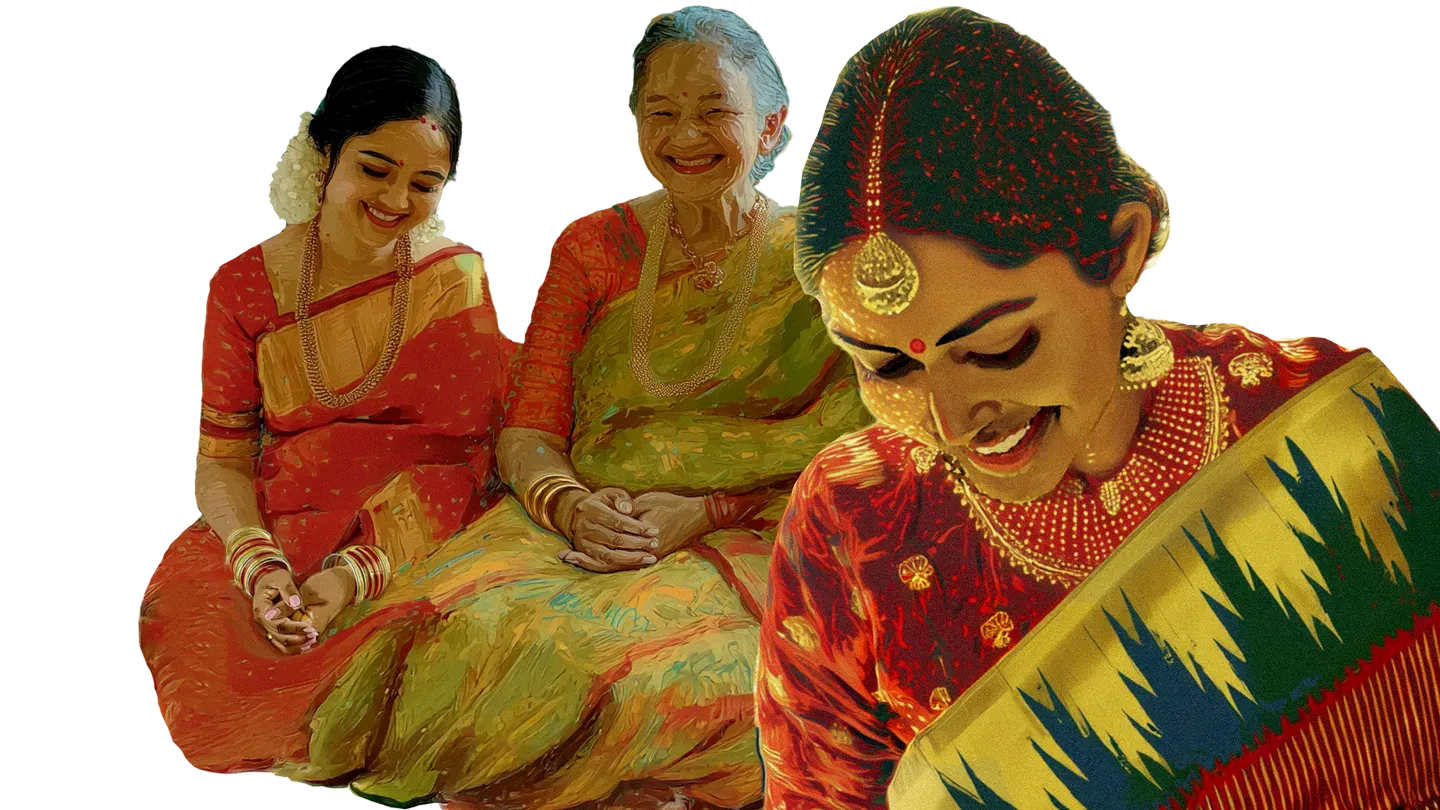
The garment I wore was more than a spectacular costume or cherished heirloom. An exquisite sari is living, moving art; a handwoven narrative of nature and culture that captures the pulse of life itself. It holds shimmering whorls of color and history, a powerful lineage passed from mother to daughter. It is a gift so profound that even when consumed by fire, it leaves behind only silver and gold, continuing to clothe and protect its wearer to the very end.
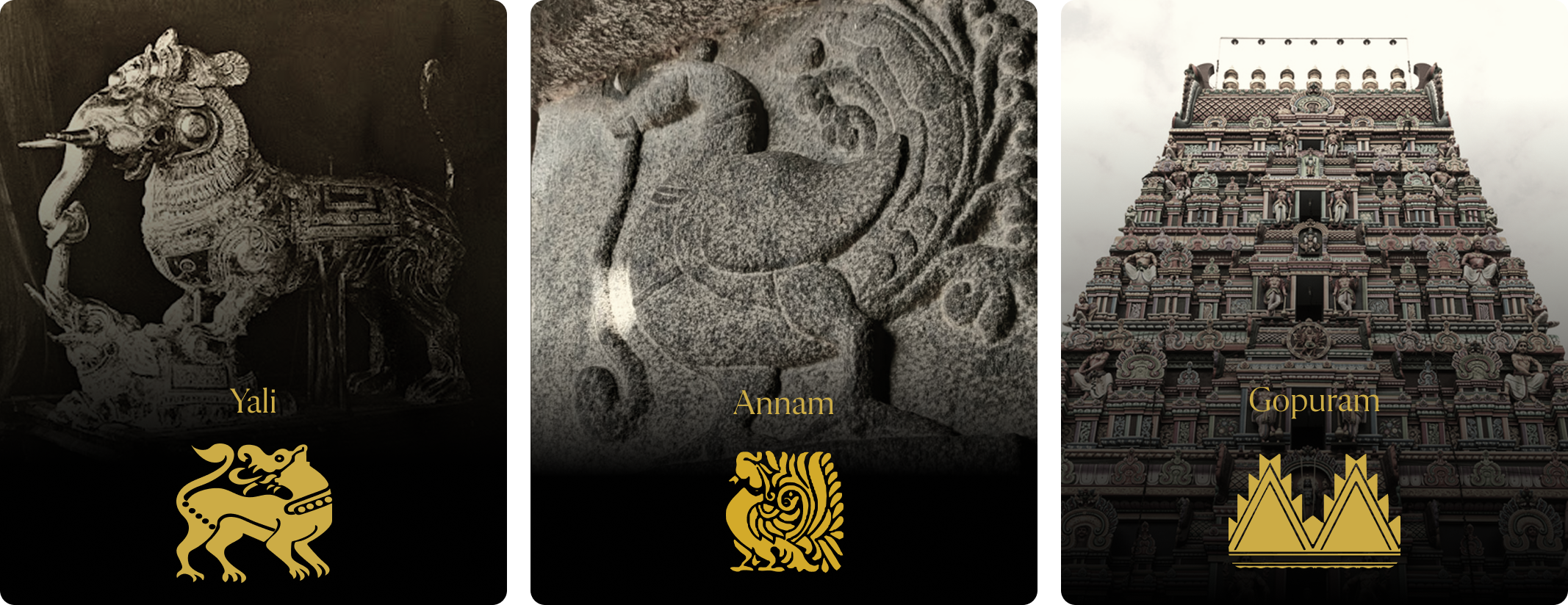
For a millennium, the Kanchipuram silk sari has been a form of wearable wealth. Upon a canvas of mulberry silk, a bestiary of mythical creatures like the lion-headed yali and the divine swan, the annam, stand guard beside towering temple gopurams rendered in thread.
The cornerstone of its magnificence is the zari. In its authentic form, this thread is a feat of precision: a central core of silk is tightly wound with a flattened strip of pure silver, then dipped in gold. It creates a flexible, gleaming thread that gives the fabric the weight and luster of jewelry.
This construction gave rise to a ritual that is both pragmatic and profound. In times of crisis, a grandmother could take her old saris, burn away the silk, and melt down the remaining zari. If the sari was genuine, the fire would leave behind a solid bar of silver and gold, a wearable insurance policy. It was a legacy that was liquid.
But today, the liquidity of the legacy is evaporating.
To understand the magnitude of the crisis, one must look towards metallurgy. A traditional antique sari, the kind my grandmother might have worn, contained zari that was approximately 80% pure silver and 1.5% gold, with silk making up the remaining core. It was heavy, soft, and possessed a deep, non-tarnishing luster. Today, even the “Pure Zari” sold in high-end emporiums has been diluted to roughly 45% silver and 0.5% gold to keep prices palatable in an exploding commodities market.
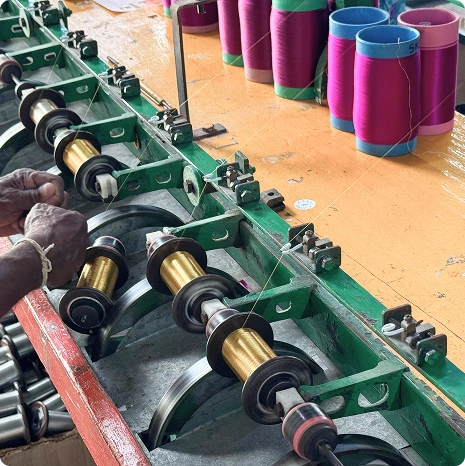
Worse still is the rise of the “Imitation.” If you were to burn a sari purchased from a modern emporium today, you might witness a different, darker chemistry. As the silk burns away, you would find no silver bar, but a brittle, blackened copper wire, or worse, the synthetic dust of a hollowed-out promise - a polyester filament coated in plastic film and lacquer. This fake zari is lighter, harsher to the touch, and chemically unstable; it will tarnish and fray after a dozen wears. The Kanchipuram sari risks becoming a ghost of its former self, its value degraded until all that remains is an inheritance of ash.
This material degradation is merely the physical symptom of a much deeper existential rot. To understand it, you must leave the wedding hall and travel seventy-five kilometers southwest to the town of Kanchipuram.
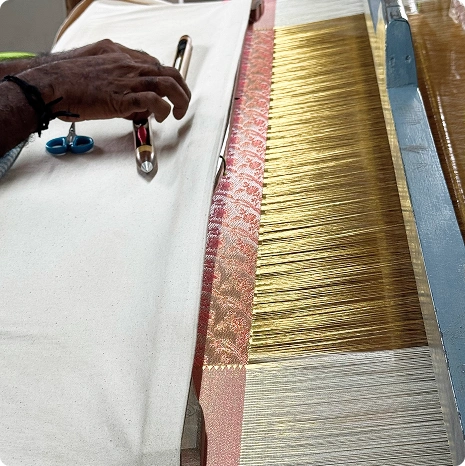
Here, in the government-run Silk Park—a sanitized, high-ceilinged attempt to provide weavers with a dedicated workspace—the air is stirred by industrial fans and the rhythmic thump-and-clatter of the Jacquard loom. It is a sound that for generations was the heartbeat of the town, emanating from the walls of every house.
You can read it in all its visual glory:

Alter Magazine’s Issue #3 is a story of handlooms to code, from AI design systems to microbial dyes and digital provenance, understanding physics without manuals, to motifs that behave like language, and colour that is grown rather than extracted. This is a deep-dive into a craft that’s stood the test of time.
The opening sequence of the article began as a spinning female figure, imagined by our Creative Director, Amritha, as a quiet loading motif and a soft tribute to Alter’s first issue on Begum Rokeya. Drawing from references ranging from The Ghost in the Jacquard to digital passports, Yalis, and the Picasso Problem, the page established the rhythm of the piece. From there, we traced the choreography of the loom, moving deliberately from form, back to process. The final fluttering saree was painted from scratch, closing the loop between making, motion, and meaning.

Our third issue is about how the future of saris is interwoven with the fabric of technology. Written by Nivedita Kousik, and designed by the Climate Studio team at Alt Carbon.
No posts
Comments
Nothing yet. Say the first thing.
Sign in to join the conversation.