
Wes Montgomery
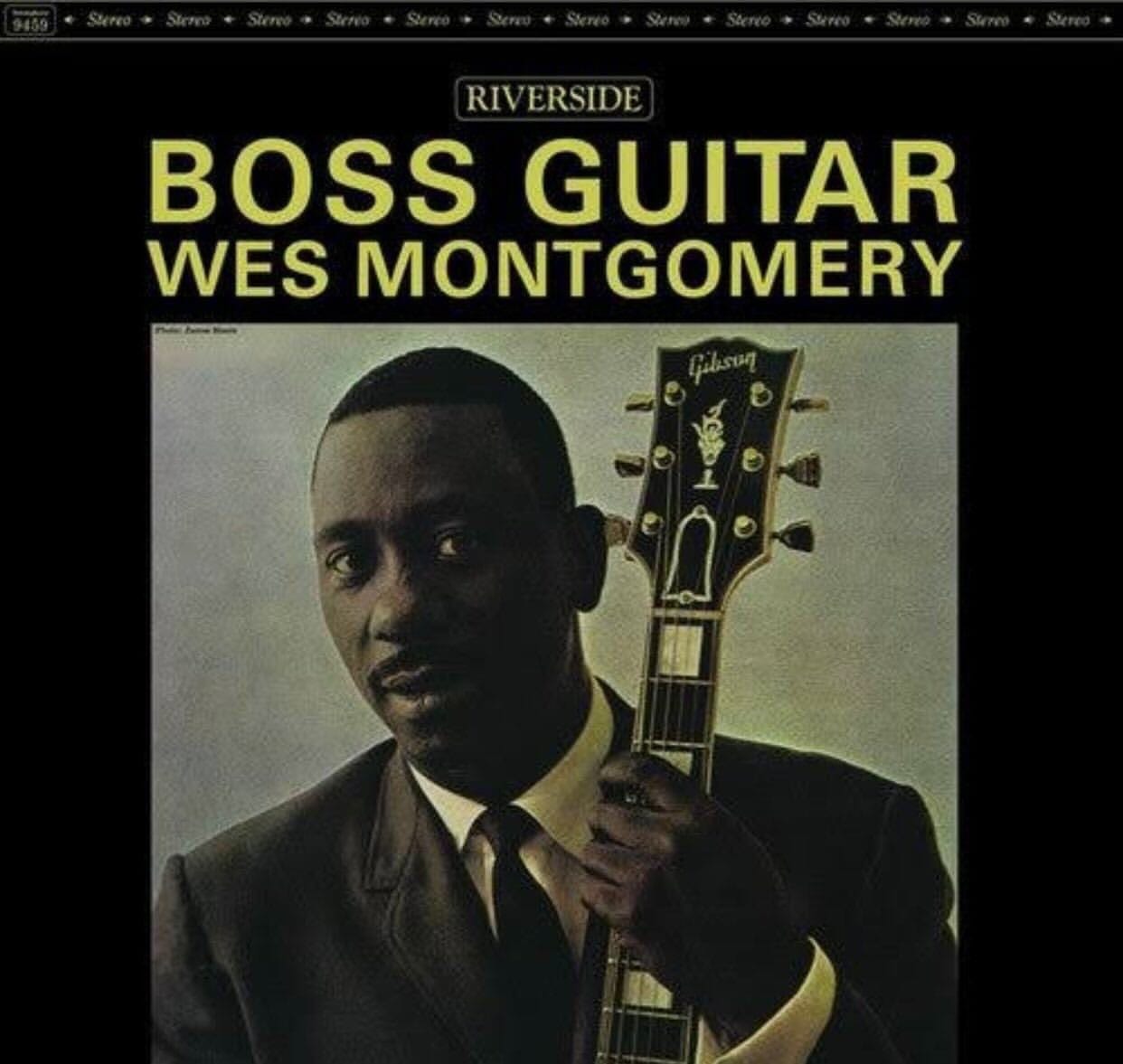
Boss Guitar (1963)
Wes Montgomery - guitar
Melvin Rhyne - organ
Jimmy Cobb - drums
Orrin Keepnews - producer
My favorite tracks
"Besame Mucho"
https://youtu.be/jHjvkOK7VFk?si=Iut2uaQGqVDXeUto
“Fried Pies”
https://youtu.be/woC7R1oiq2Q?si=GbaSN8O5HOHny1vM
Jazz guitar had spent decades searching for a voice that could match the horn players it was inevitably chasing, something with the fluidity of a saxophone line or the grit of a trumpet run that still carried the harmonic weight of a piano chord. This in no way discredits the work of legends like Django Reinhardt or Charlie Christian, but it was Wes Montgomery who finally closed that gap, answering the search almost by accident with a thumb instead of a pick and octaves stacked in a way that rebuilt the rules around jazz guitar.
By 1963, he had moved well past being Indianapolis’s best kept secret. In less than five years, he’d become one of the most important guitarists in jazz, a late blooming virtuoso whose playing other guitarists could study endlessly and still never quite reproduce. Boss Guitar catches him at the peak of his Riverside years, critically acclaimed yet still pushing forward.
Montgomery’s rise was sudden. Born in Indianapolis in 1923, he spent years developing off the industry’s radar, playing locally, working day jobs, and refining an approach built as much on instinct as formal technique. His breakthrough came relatively late, but once Riverside introduced him nationally through albums like The Wes Montgomery Trio, The Incredible Jazz Guitar of Wes Montgomery, and Full House, there was little debate about his standing. He had become one of the defining musicians of the era. Montgomery’s brilliance went beyond technique. He developed a language on the guitar completely his own, defined by single note lines that gave him the flexibility of a horn player.
Boss Guitar, recorded on April 22, 1963, finds Montgomery working with fellow Indianapolis musician Melvin Rhyne on organ, along with Jimmy Cobb on drums. The trio format itself fits Montgomery’s range perfectly. Without a bassist, Rhyne assumes more responsibility for the bottom end while also coloring the harmony. Montgomery, as he’d proven on his other hornless dates as a leader, seamlessly carries the melody and improvisational momentum. For a lesser musician, the sparsity of the lineup might expose limitations. For Montgomery, it creates freedom.
The album opens with “Bésame Mucho.” Montgomery immediately reshapes the familiar song into something elegantly bluesy. The romantic sentiment of the original remains, but the trio gives it greater rhythmic lift. Rhyne establishes a Latin leaning pulse while Cobb keeps the groove crisp and flexible. Montgomery states the melody cleanly before shifting into a lyrical solo that leans into conversational phrasing.
“Dearly Beloved” gives Montgomery room to stretch. His lines are sharp, but they never lose their melodic focus. Rhyne supports him with understated harmonic movement while Cobb keeps the rhythm section light enough to preserve the trio’s conversational quality.
“The Trick Bag,” one of Montgomery’s originals, allows the trio to push harder. The tempo increases, and Montgomery’s single note lines become more aggressive without sacrificing lyricism. He meticulously builds his solo through stages, starting with nimble blues phrasing that gradually thickens before using staccato runs as a transition into Rhyne’s solo. Cobb is crucial here. His cymbal work adds urgency without crowding the melody.
“Canadian Sunset” leans into Montgomery’s melodic discipline. He resists overcrowding the rhythm, phrasing slightly behind Cobb’s steady but understated timekeeping. Rhyne’s organ solo is warm, finding a comfortable pocket between Cobb’s stick work and Montgomery’s comping.
The bluesy Montgomery original “Fried Pies” is the defining moment of the album. The opening vamp gives way to a muscular lead in to Montgomery’s expansive solo, with his playing moving between blues phrases, bebop lines, and assertive punctuations without ever detaching from the rhythm. Rhyne and Cobb build a flexible but blues heavy pocket that gives Montgomery ample room to stretch.
Boss Guitar documents Wes Montgomery before the next phase of his career expanded his audience and changed the way he was recorded. His later work with Verve and producer Creed Taylor would bring strings, larger arrangements, and much deserved commercial success. Those records introduced Montgomery to millions of listeners, but Boss Guitar preserves the small group setting in which his musical personality could unfold without interruption.
The stripped down environment creates freedom. Despite the space, Montgomery’s playing never wanders into self aggrandizement. He does not force the listener to notice the difficulty of what he is doing. The technique serves the melody, and the melody serves the groove. Boss Guitar captures Wes Montgomery at a moment when his sound no longer needed explanation. He had already changed the possibilities of jazz guitar. Here, he simply trusts that vocabulary to speak for itself.
-All Things Jazz-
Comments
Nothing yet. Say the first thing.
Sign in to join the conversation.