
Horace Silver
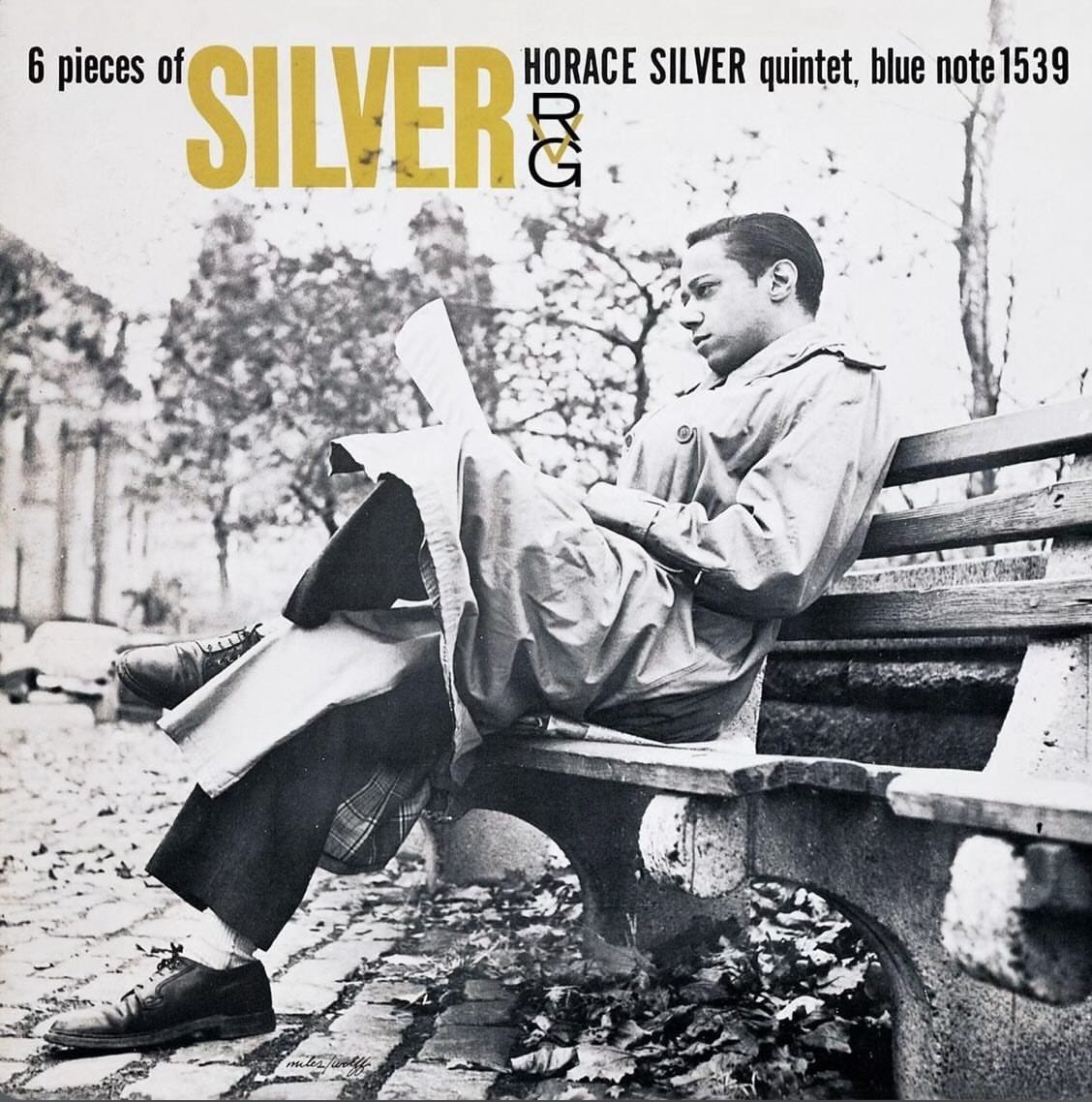
6 Pieces of Silver (1957)
Horace Silver - piano
Donald Byrd - trumpet
Hank Mobley - tenor sax
Junior Cook - tenor sax (CD Re-issue track)
Doug Watkins - bass
Gene Taylor - bass (CD Re-issue track)
Louis Hayes - drums
Bill Henderson - vocals (CD Re-issue track)
My favorite tracks
"Enchantment"
https://youtu.be/tZwJ5v8clm4?si=oIKrU8alafnpmJnR
"Señor Blues"
https://youtu.be/yKWphXfIsxs?si=ksfgh_vAzDq51YuO
What has come to be known as hard bop emerged as a necessary evolution of bebop. The bebop generation had revolutionized how jazz was played and consumed, embracing density, velocity, and harmonic complexity in a way that permanently changed the language of the music. But that revolution came at a cost. As bebop grew more abstract and cerebral, it drifted from the soul drenched gospel and blues roots that had always run through Black American music.
Horace Silver closed that gap. Where bebop had reached for speed and harmonic density, Silver brought the music back to the body. His bluesy approach was rhythmically direct without sacrificing the harmonic sophistication bebop had standardized. He didn’t reject bebop’s advances; he grounded them, taking Bud Powell’s language and Monk’s angular simplicity and fusing them with the blues shouters and gospel harmonies of his own upbringing until the music swung as hard as it thought. That fusion, formalized through his 1953 partnership with Art Blakey in the original Jazz Messengers, gave hard bop both its blueprint and its conscience, proving that sophistication and soul were never actually at odds.
Silver’s writing quickly became as influential as his piano playing. While many small group recordings still followed the familiar head-solos-head format, Silver quietly transformed the quintet into something more architecturally ambitious. Horn interludes appeared between solos. Rhythm section figures became part of the composition rather than simple accompaniment. Bass lines and piano vamps were written with the same attention to detail as the melodies themselves. Before long, what audiences recognized as the “Blue Note sound” owed as much to Horace Silver’s arranging instincts as it did to the musicians performing the music.
Recorded at Rudy Van Gelder’s Hackensack studio on November 10, 1956, 6 Pieces of Silver brought together an all-star band. Donald Byrd and Hank Mobley form one of the era’s great trumpet/tenor partnerships, Doug Watkins provides the steady pulse that allows every arrangement to breathe, and eighteen year old Louis Hayes’ timekeeping displays the rhythmic authority that would eventually make him a legend. Together they produce a cohesive album that embodies the best of what the era had to offer.
“Cool Eyes” wastes no time introducing Silver’s compositional philosophy. The memorable melody is built around concise blues phrases. Byrd and Mobley deliver the opening theme with crisp precision before separating into tightly voiced harmonies that make the quintet sound considerably larger than five musicians. Silver’s solo favors rhythmic punch over harmonic excess, while Hayes’ drumming demonstrates remarkable flexibility, constantly pushing the music without distracting from its momentum.
“Camouflage” moves through melodic twists and stop-and-start phrases that continually shift before settling into soulful solos and group interplay. Silver’s writing is intricate, but the composition never loses its accessibility. Byrd and Mobley navigate the arrangement effortlessly, their solos balancing bebop fluency with the earthy directness that had become Silver’s trademark.
“Enchantment” reveals another dimension of Silver’s writing. The melody carries a subtle Latin influence while the harmony unfolds with more layers than many of the album’s blues centered compositions. Silver avoids excess, allowing space and pacing to shape the atmosphere. Byrd’s trumpet takes on a warmer, more lyrical quality, while Mobley responds with one of his characteristically understated solos, proving once again that sophistication often arrives through restraint rather than complexity.
The most notable moment of 6 Pieces of Silver is “Señor Blues.” Built around a hypnotic 6/8 groove, the composition became Silver’s first widely recognized hit and remains one of the signature works of hard bop. Everything that made Silver unique comes together here. The repeating piano figure, the unforgettable horn melody, the blues foundation, the subtle Latin influence, and the irresistible rhythmic pulse all combine into something that is equally soulful and sophisticated. Hayes deserves particular praise throughout the performance. His drumming gives the groove a flexible backbeat without ever sacrificing precision. More than a successful composition, “Señor Blues” became a model for how hard bop could embrace accessibility without compromising its artistic integrity.
Part of 6 Pieces of Silver‘s enduring importance lies in how naturally it redefined the hard bop quintet. Silver understood that arrangements could shape improvisation rather than simply frame it. Ensemble passages appeared between solos. Written bass figures locked seamlessly with shifting piano patterns. Horn voicings became an essential part of each composition’s identity instead of functioning solely as introductions and endings. These ideas would soon become standard practice across Blue Note’s catalog, influencing everyone from Art Blakey’s later Jazz Messengers lineups to countless hard bop ensembles throughout the following decade.
The personnel assembled for this session reinforce that legacy. Donald Byrd would become one of Blue Note’s cornerstones and one of the A-list trumpeters of his generation. Hank Mobley would establish himself among the most lyrical tenor saxophonists of his era. Louis Hayes earned his stripes as an elite drummer before reaching his twentieth birthday. Silver had an uncanny ability to recognize musicians who understood not only how to improvise, but how to serve the larger vision of his compositions.
6 Pieces of Silver also illustrates why Silver remains one of jazz’s greatest composers. Nearly every original on the album feels immediately recognizable after a single listen, a directness that peers pointed to as his defining gift. Christian McBride called Silver’s music “very rooted, very soulful,” the kind that “gets in your blood easily,” while Jason Moran argued that Silver’s real legacy lies in composition itself, in “letting a story evolve” that younger writers still aspire to.
That clarity was never accidental. Silver himself described composing as a search for “being simple and profound,” insisting that a tune’s difficulty for the listener was a failure, not a virtue. It’s that same instinct, melody built to be remembered rather than admired, that runs through the album and through the standards it helped produce. 6 Pieces of Silver serves as a definitive landmark in the development of modern jazz, capturing the moment when hard bop stopped sounding like an offshoot of bebop and emerged as its own fully formed language: blues rooted, gospel tinged, and built for both the musician’s ear and the listener’s memory.
-All Things Jazz-
No posts
Comments
Nothing yet. Say the first thing.
Sign in to join the conversation.