
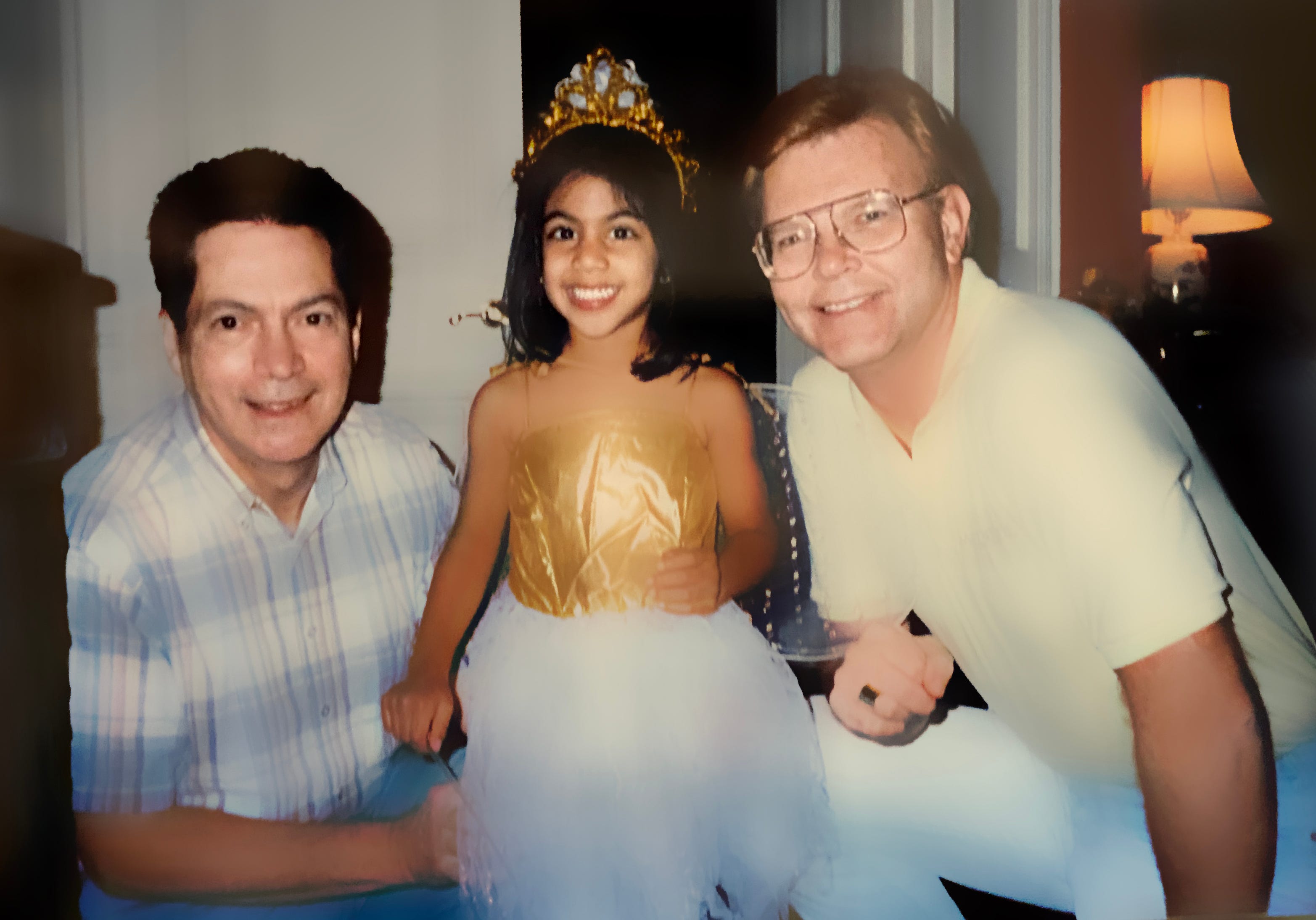
When my parents went looking to buy a house in metro Atlanta in 1986, their realtor said that they wouldn’t be welcome in the neighborhood near Evansdale. When Mom and Dad closed on our home, they became only the second family on their street that wasn’t white. As the realtor had predicted, one of our next-door neighbors didn’t talk to them for the first six months after they moved.
The neighbors on the other side, though, welcomed us. They were a couple who had lived there for some time. One worked in selling jewelry, the other worked in corporate recruiting.
Their names were Uncle John and Uncle Ron. They were one of the earliest examples in my life of a loving, committed couple. And when my parents separated for some time, Uncle John and Uncle Ron filled a particularly important role in my life.
Uncle John and Uncle Ron — affectionately, Uncle Jonald — watched our home when we were out of town. They picked big red flowers for me from their yard. We raked leaves together in the autumn. They were protective of me, my Mom, and my Dad. They were our family. And, Uncle John could make any day, even the darkest of days, feel like Christmas.
When I was late in elementary school, Uncle John and Uncle Ron moved south to Tampa. My Mom did a good job sending them holiday cards, but I did not, and I fell out of touch.
In June 2016, a Muslim man my age named Omar Mateen killed 49 people in the Pulse nightclub shooting in Orlando, an hour or so away from Uncle John and Uncle Ron. I felt a sense of betrayal and guilt that the perpetrator of a mass shooting hid behind religion — ostensibly, our religion. Perhaps Omar did not have an Uncle Jonald in his life, but by 2016, the Supreme Court had legalized same-sex marriage in the U.S. after a cross-cutting movement that had touched so many corners of American society.
When I heard about the shooting, I hurriedly asked my Mom for Uncle John and Uncle Ron’s Florida address and wrote them a letter. It was short and typed, whatever I could do to get it out the door as fast as possible. I knew Tampa and Orlando were not the same place, but they were close enough that I wanted to make sure that my Uncles were OK.
I heard back on my birthday, a day that I often would hear from them, with both a card and three full pages of doting cursive.
That year would be forever marked by the Pulse nightclub shooting. But as Uncle John shared in his letter, 2016 was also his and Uncle Ron’s 50th anniversary together. In every graceful curve of Uncle John’s pen, love pierced through that awful moment, much as he always had.
On nearly every social issue imaginable, there is a debate — can we make incremental change without betraying our cause, or must we settle for nothing less than the full picture of the future that we want to see?
And on nearly each of those issues, there are steps that represent true progress forward and steps that are distracting fluff.
In some of my work, we call those moments of true progress “rooftops.” You jump rooftops to get to the moon.1 From where I sit, nearly every pressing issue has legitimate, real rooftops — milestones along the way that are not yet the destination but are wins that should be celebrated to sustain forward momentum.
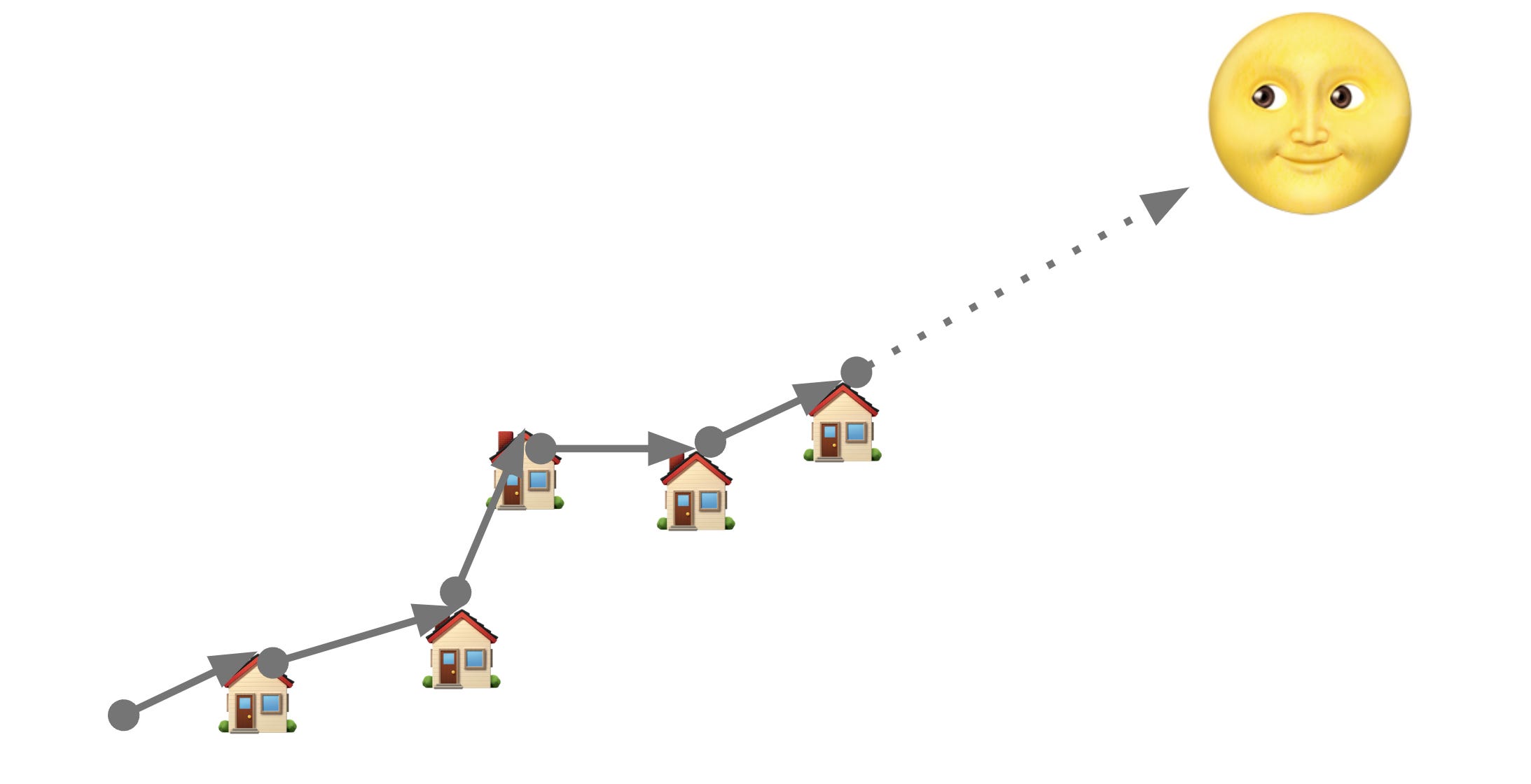
One of those moments in the LGBTQ movement was the sustained majority support for gay marriage — a feat that seemed impossible in the early 1990s, despite the many people with Uncle Jonalds in their lives. Among many other steps, part of how the movement got here was by focusing “on people who are ambivalent.”2 Researchers found that many Americans recognized and admired the commitment that couples like Uncle John and Uncle Ron demonstrated towards each other, despite barriers and discrimination. Helping people focus more on that admiration than on any anxiety they may feel about same-sex marriage helped move the public consciousness forward, towards marriage equality.
You don’t need to be a market researcher to find rooftops towards progress. The stories of your proverbial Uncle Jonalds are a powerful starting point to help move hearts and minds — a necessary part of an effective systems change. And much as we are all tempted to end a story like theirs with a proclamation about marriage equality, it is usually more powerful for the other person to make up their own mind. Our role is to help them through the process with story, values, and dialogue.
There is also a less scientific lesson here. Go see your Jonalds, or at least call them. I wanted for Uncle John and Uncle Ron to join for my wedding. I wanted so badly for them to see how I had taken their gift of love and brought it into my own life. Symbols, no matter how powerful they can be, are difficult to time, and the clock ran out. Uncle Ron died a few years after our letter exchange of lymphoma. Uncle John died soon after, and his next of kin called me during the beginning of the COVID pandemic to break the news. When Uncle John, in his 2016 letter, asked for a new photo of me to replace the childhood picture on his bookshelf, I didn’t send one back. I’m sure I felt I was too busy or hoped to figure out a way to send one digitally, but I regret it now.
Send your photos. Write your letters. Make your phone calls. And visit your Jonalds.
Hattaway, Doug. “Aspirational Communication.” Stanford Social Innovation Review 18, no. 1 (2019): 26–33. https://doi.org/10.48558/NSBV-HS10.
No posts
Comments
Nothing yet. Say the first thing.
Sign in to join the conversation.