
I watched Wuthering Heights (reluctantly), but I knew if I wanted to have a solid opinion, I had to actually see it.
Because as I kept seeing women on Instagram stories call it the ultimate yearning love story, part of me was like…
girlie, did we watch the same movie? did we read the same book?
This isn’t a piece about debating Wuthering Heights—there are more than enough Substacks and film critics doing that far better than I could. Let’s just say I gave it 2½ stars on Letterboxd (ouch).
It was pretty. The actors did a half-decent job. And emerald fennell did a hald baked job and translating “yearning” into sub part “sex” scenes that were supposed to be hot but felt almost comedic at how bad they were at what the story is actually about.
But it felt… hollow.
And maybe that’s because I couldn’t separate how problematic the director’s perspective felt in the film.
But what I did notice wasn’t just the film itself.
It was the longing around it.
Women wanting to yearn. (the women going to the movies)
I’m seeing it everywhere—on Instagram, on TikTok, even “yearning” becoming a Pinterest aesthetic.
And as a lifelong yearning woman, I get it.
We romanticize yearning, but very few people have the capacity to actually feel it.
Because yearning isn’t just soft or pretty or cinematic.
It’s tension.
It’s restraint.
It’s desire that doesn’t get resolved right away.
It asks you to stay.
And if I’m honest, much of how I learned to yearn wasn’t my first relationship.
It was through film.
Through watching stories unfold slowly, visually
stories that let longing breathe instead of rushing to satisfy it. and watches the stories within film yearning.
Films that understood the power of the almost.
So here are my favourite yearning films—and why I love them.
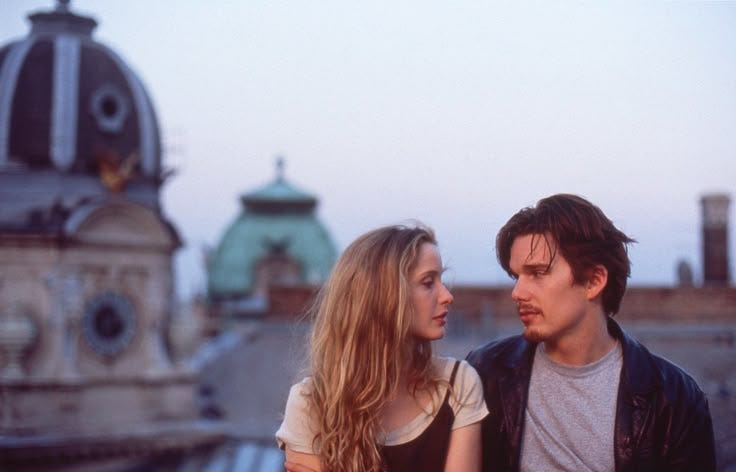
Ethan Hawke and Julie Delpy have my whole heart. I am ten toes down that this film and the entire trilogy is one of the best of all time, easily sitting in my Letterboxd top four. I’ve rewatched it at different points in my life, and each time it’s met me differently. The first time, I was too young to have ever experienced something like this. The second, I was deep in a situationship the kind of almost-love that never quite lands but never really leaves you either. And that’s when it clicked. This is what yearning looks like when it’s still innocent enough to believe in timing. Two people meet, and somewhere in their bodies, they know this isn’t built to last, and instead of rushing it, fixing it, or trying to force it into something permanent, they let it be exactly what it is a night, a conversation, a possibility.
To know that a connection isn’t meant to last forever and still allow yourself to fully enter it is a kind of emotional bravery most people don’t have, because sometimes those fleeting moments feel deeper than relationships that span years.
The yearning isn’t in whether they end up together, it’s in the decision to honour the chemistry now, to stay in the moment without collapsing it into a future. And even beyond the story, the film itself mirrors this. It’s slow, it lingers, it trusts conversation. It doesn’t rely on gimmicks or overproduced intimacy or those cheap, performative sex scenes that try to convince you something is deep when it’s not.
The tension here is different it lives in the pauses, the glances, the way two people circle each other without quite touching. It’s sensual without trying to be, and that’s what makes it feel so rare, especially in an era of fast, disposable, almost fast-food media. This film understands something most don’t: that yearning doesn’t need to be explicit to be felt in fact, it’s often stronger when it isn’t.
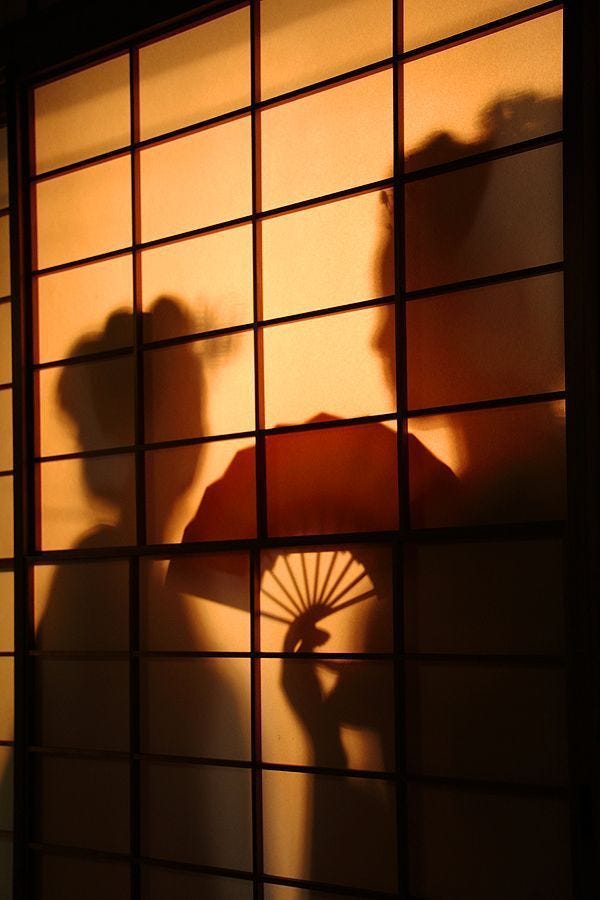
This is yearning stretched across years not the messy, impulsive kind that modern love stories default to, where everything is confessed, acted on, and consumed too quickly, but something far more restrained, more disciplined, more… elegant. It’s watching a woman claim her longing not through chaos, but through containment through devotion, through becoming. There’s a refinement to her desire. It isn’t loud, it isn’t reactive, it doesn’t demand to be seen or chosen in every moment. Instead, she allows it to shape her, to guide her evolution, to become part of the woman she is becoming. And there’s something deeply confronting about that, because it asks a question most of us don’t want to sit with: what if you didn’t rush your desire? What if you let it stay? In that waiting, desire becomes something else entirely something refined, something almost sacred.
This film understands that longing doesn’t always need to be expressed to be deeply felt, that there is a kind of freedom in restraint, in knowing what you feel and not needing to collapse it into immediate action. And while parts of her life are shaped by limitation, there is also a quiet agency in how she holds herself within it—a devotion not just to him, but to her own becoming.
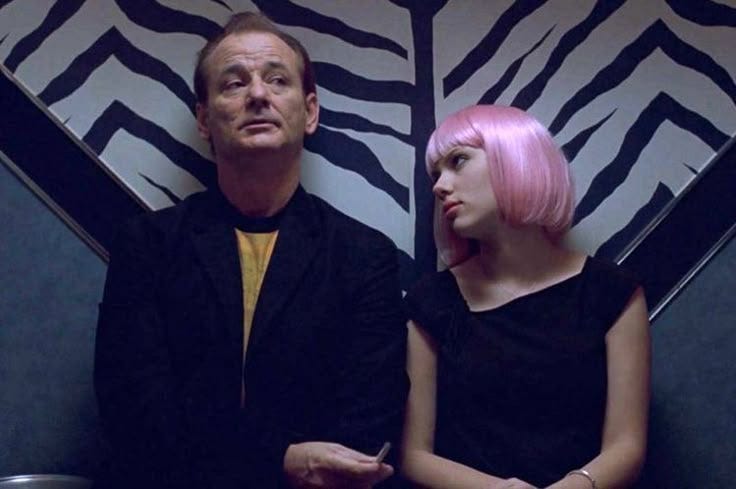
Some connections are only meant to exist in a single moment in time. And unlike Before Sunrise, this isn’t built on possibility it’s built on reality. Two people who are already in relationships, already living full lives, and still… something is missing. This film captures what it feels like to not be fully seen in your own life to be surrounded by people, commitments, and roles, and still feel slightly disconnected from yourself. And then, for a brief moment, you meet someone who gets it. Not in a dramatic, life-altering way, not in a way that requires you to blow up your entire world, but in a quiet, undeniable way. They see you, you feel it, and you don’t need to explain it.
What I love about this film is that it doesn’t try to turn that connection into something bigger than it is. There’s no rush to define it, no urgency to act on it, no need to make it permanent. Because part of the honesty of this kind of connection is knowing it exists because of the moment you’re in—not in spite of it. And that’s what makes it so specific. It’s not about what if we were together? It’s about this mattered, even if it never becomes anything. There’s a maturity to that to feel something real and not immediately try to build a future around it, to let it be contained to the time and place it belongs. And somehow, that’s what makes it stay with you longer.
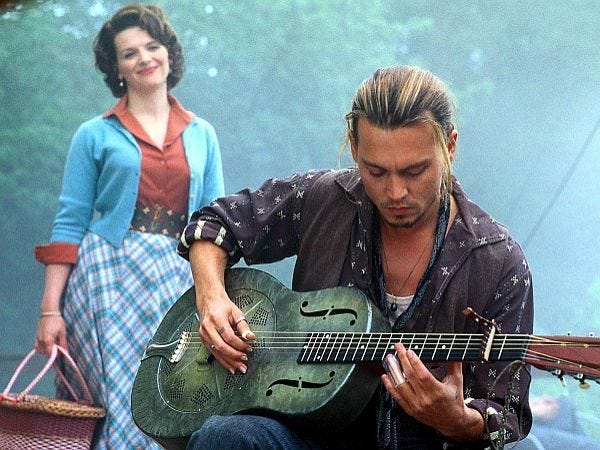
This is yearning but not for a person, for life itself. For pleasure, for softness, for sensation in a world that has learned to suppress it. What makes this film so effective is that it’s not really a romance it’s a critique. A small, rigid town built on control, routine, and quiet moral superiority is disrupted by a woman who doesn’t argue, doesn’t convince, doesn’t try to prove anything. She simply lives differently. She eats what she wants, wears what she wants, creates, indulges, and follows her own rhythm and that alone is enough to unsettle everything. Because what she awakens in others isn’t just desire for her, it’s desire for their own lives.
That’s the real yearning in this film. Not romantic longing, but a kind of bodily remembering of pleasure, of hunger, of what it feels like to want something without immediately denying it. And from a film perspective, it’s done subtly. The use of food, texture, and colour is designed to feel sensual without being overt, with the chocolate itself becoming a narrative device not just something to consume, but something that mirrors each character’s relationship to desire: who allows it, who resists it, who feels guilty for it. And at the center of it is a woman who doesn’t force transformation she models it. She simply exists in her pleasure, and the town slowly begins to reorganize itself around that.
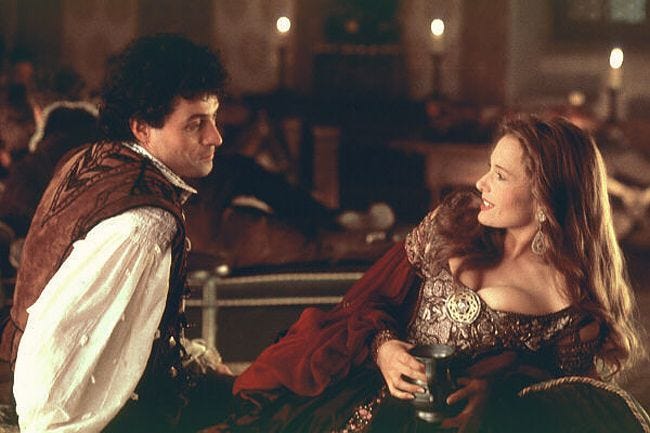
This is yearning that knows exactly what it’s doing. Not naive, not accidental, not something she simply falls into—but something she studies, refines, and learns how to wield. Because in this world, desire isn’t just romantic, it’s cultural. Women aren’t free to want openly; they’re positioned, chosen, and constrained within systems of power and class.
What makes this film so compelling is how she navigates that reality. She understands that desire isn’t just something you feel it’s something you can hold, shape, and use. Not in a cynical way, but in a deeply intelligent one.
Becoming a courtesan isn’t framed as a failure of options, but as a strategic choice within limitation—a way of accessing a form of agency that wouldn’t otherwise be available to her. And within that, she cultivates something rare: a woman who is fully conscious of her own longing and how it moves others.
This is where the cultural dimension of yearning comes in. It’s not just her desire for a man, but for freedom, expression, and a life that exists beyond the constraints she was born into. The film doesn’t separate those desires romantic longing and social mobility blur together, intimacy becomes currency, beauty becomes language. But what makes it land is that she never loses awareness. She knows what’s real, what’s being performed, and she moves between the two with precision. This film doesn’t just portray longing—it shows a woman who understands it, contains it, and chooses how to use it. And that’s what makes it dangerous.
Yearning isn’t something you can manufacture.
It isn’t just an aesthetic or a fleeting mood you slip into when it’s convenient. It asks something of you. It asks you to stay open, even when there’s no guarantee of resolution. To sit in desire without rushing to collapse it into something tangible.
And yes there is something deeply beautiful when longing is met. When desire lands, when connection becomes something real, something lived.
But that’s not where the transformation happens.
The transformation happens in the holding.
In the moments where you don’t know how it will unfold, and you choose to stay open anyway. When yearning stretches you, softens you, brings you into deeper honesty about what you want, what you feel, what you’re no longer willing to deny.
These films understand that.
They don’t just show love they show the space that shapes you before it ever arrives. The tension, the almost, the quiet becoming that happens when you allow yourself to feel deeply without rushing to the end.
Because yearning, when you let it, doesn’t just point you toward something else.
It changes you.
It makes you more honest.
More awake.
More available for the kind of love that doesn’t need to be chased or forced.
And maybe that’s why it lingers.
Not because it was fulfilled
but because of who you became in the presence of it. 💋
PS. What do you say—does this post deserve a part two (Maybe best yearning albums)? Comment below & tell me!
Comments
Nothing yet. Say the first thing.
Sign in to join the conversation.