
by Leah Martin
The Roots to Roofs affordable housing pilot legislation is absolutely necessary - here’s why…
Seattle is grappling with a severe housing crisis, a challenge shared by many American cities. The roots of Seattle’s crisis trace back to the early 2000s, driven by a population boom fueled by the tech sector. In response, then-Mayor Ed Murray convened a group of stakeholders in 2015 to assess how the city could expand its housing stock to meet growing demand. Their conclusion was clear: Seattle needed to add 50,000 residential units over the next decade to stabilize housing costs.
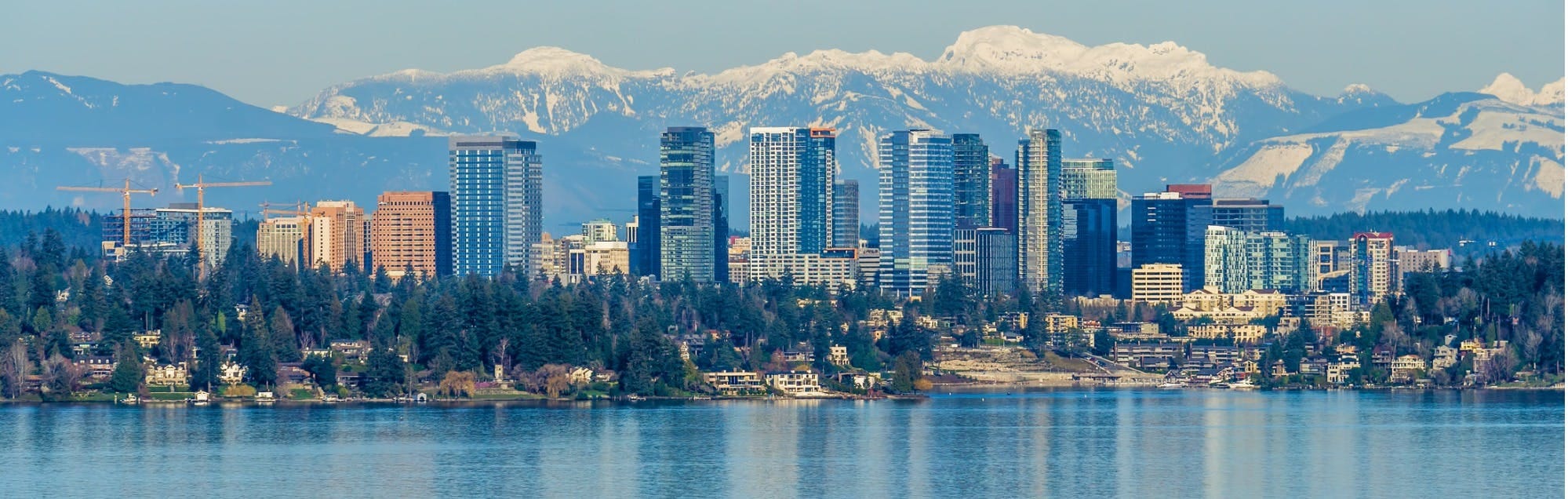
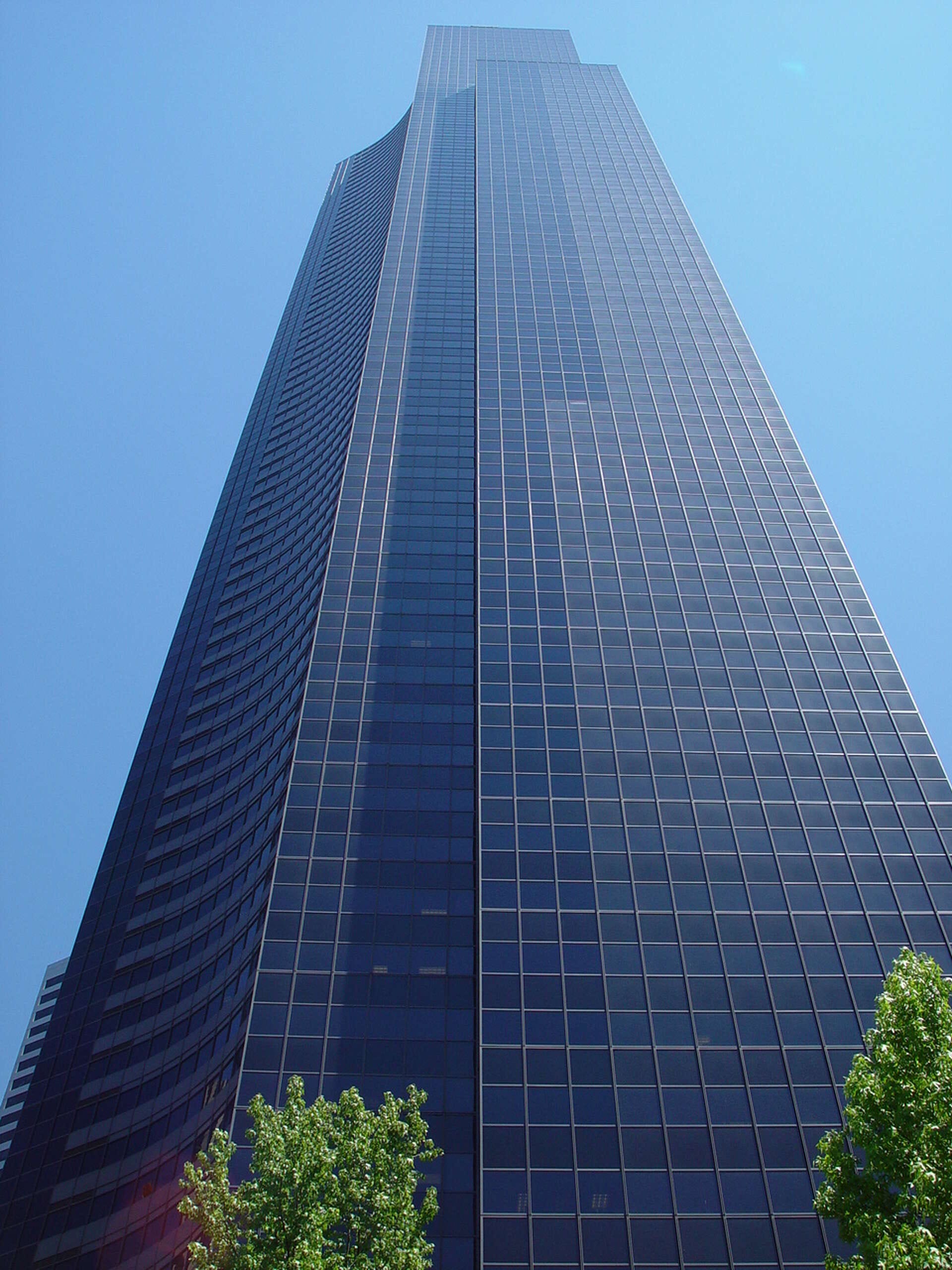
To understand what 50,000 units would look like, Allied8 did some analysis. We started by theoretically converting the Columbia Tower, Seattle’s tallest skyscraper, from a commercial tower to a residential tower. If the entire building were converted into 750-square-foot residential units, it would take 33 such towers to create 50,000 residential units. That’s equivalent to 30 downtown blocks, spanning from Madison Street to Union Street and from the waterfront to I-5. While this visualization helps, it’s still a little abstract. A more tangible comparison is the City of Bellevue, across the water from Seattle, which has a little over 50,000 residential units. The implication is that Seattle needed to add the equivalent of an entire Bellevue to its housing stock.
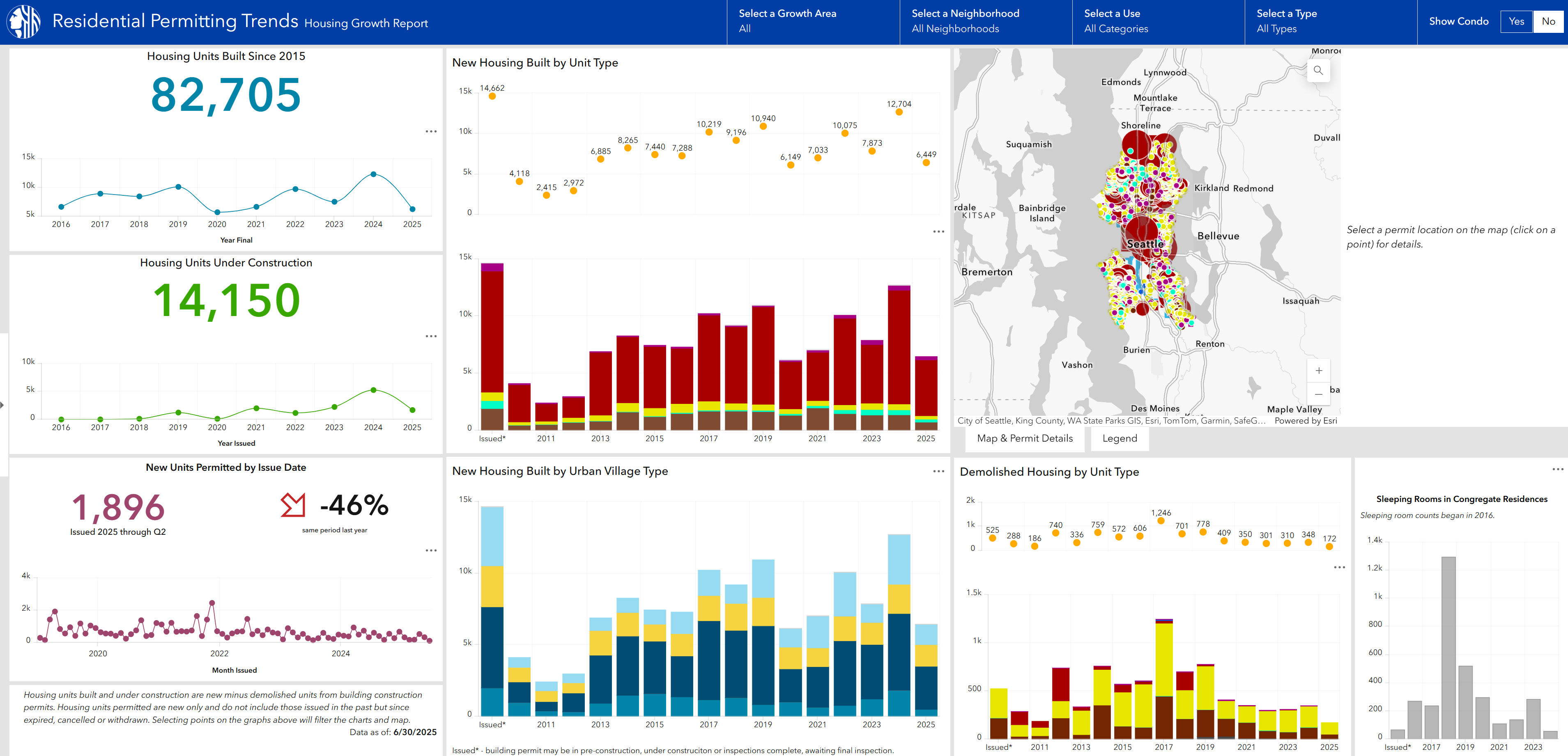
Remarkably, Seattle exceeded its original goal, adding 80,000 new residential units over the past decade. However, this surge in development did not alleviate housing affordability, indicating that the city must build even more—up to 120,000 additional units, according to the current Seattle One Plan. Over the past ten years, Seattle has constructed a wide variety of housing types, including 2,300 detached single-family homes, 5,600 townhouses, 3,100 row houses, 2,100 detached accessory dwelling units (DADUs), and most notably, 60,000 apartment units. (For data geeks, click here)
Despite this uptick in housing production, the affordability crisis in Seattle is worse now in 2025 than in 2015!
That’s because the majority of new units were market-rate. Affordable housing production has fluctuated significantly over the years due to outside economic forces such as interest rates, stubbornly high pandemic construction pricing and labor costs. In 2020, 7% of the new units built were affordable (1,359 affordable units), in 2021 we held steady at 7%. Production of affordable housing peaked in 2022 with 3,017 affordable units built. But affordable housing production plummeted to just 2% in 2023 as rising interest rates, material and labor costs soared. Data for 2024 and 2025 is not yet available, but the trend suggests a troubling slowdown in the production of affordable housing. (Data can be found here)
To meet the ambitious goal of adding 120,000 new units, Seattle must act decisively. More importantly, Seattle City Council has an opportunity to correct the slow down in affordable housing production by passing the Roots to Roofs Pilot legislation that is currently in committee (Co-sponsored by Council Members Rinck and Solomon). The current regulatory and interest rate environment poses a major obstacle, and waiting for rates to drop is not a viable strategy. Instead, the city must reduce regulatory barriers through temporary legislation to enable and accelerate development (more code recommendations can be found here). Only by taking bold, immediate action can Seattle hope to address its housing shortage and ensure affordability for its residents.
No posts
Comments
Nothing yet. Say the first thing.
Sign in to join the conversation.