
Fast food and junk food are bad for you. They are heavy on sodium, sugar, fat, and calories, and light on fiber. Their nutritional benefits are infinitesimal. As most people know, that’s why they are junk.

Whether you agree or disagree with that assessment, you should know that two of the richest and most famous men in the country are among the biggest fans of junk food. They are Donald Trump and Mark Zuckerberg. Both eat fast food because it is efficient, compact, and high in calories. The President also favors fast food because he sees it as protecting him from plots to poison him. No doubt fewer people think about poisoning the head of META (see Chowdhury and Rock, below).
Junk food and fast food are more politely known as UPFs, i.e., ultra-processed foods. The National Center for Health Statistics estimates that UPFs make up 55% of the average diet (see Williams). For Trump and Zuckerberg the percentage is much higher. For most people, UPFs are favored because they satisfy hunger quickly; nutrition and health are less important. Food choices today focus on efficiency and on feeling good, not on staying well.
To what do we owe this state of affairs? It is clear that people are busier than ever, if not as busy as Trump or Zuckerberg. Life moves faster, and food has to change with the times. Families who gathered at a table once or twice a day used to be the heart of food culture. No more. Changes in food production and marketing have helped to erode what was, until recently, a homogeneous culture of food consumption.
In many cultures, the family meal was, and continues to be, a respected custom and a cultural force. But the tradition of family dining is not as old as one thinks. Some sources link family meals to timekeeping practices introduced during the Industrial Revolution, which brought about the systematization of family life by regulating, on a massive scale, periods of work, eating, and rest.
With the Industrial Revolution, the time needed for work was reduced; time became a commodity. People began to talk about how they “spent” time because they had more “free” time to “spend.” These terms became standard. There had always been words for work and for leisure, however. The word “school” comes from the Greek skholḗ , which means “leisure” or “free time,” words that nobody would associate with “school” today. “Free” time is time we have to use.
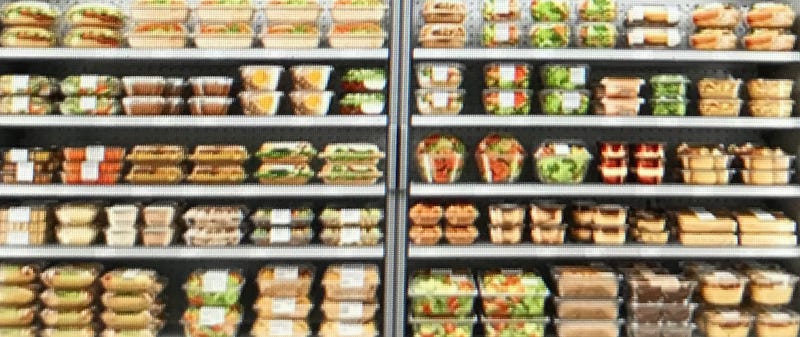
The “square meal” was also once a standard. As a nautical term, it referred to the wooden square that, on sailing ships, served as both a plate and a tray. For civilians, a “square meal” eventually became shorthand for satisfying food in balanced portions (vegetables, protein, grain).
The square meal has gone the way of the wooden square. Many families now eat on a “grab and go” basis. Families do things differently, however, and some family dining survives, at least on special days. Sources reported an uptick in family dining during the enforced confinement of COVID, that being one of the few bright spots in the history of the pandemic. Dinner at home was a practice that, in a stressful time, highlighted the comfort of sharing a table.
Our once-relatively homogeneous food culture did not survive the aggressive marketing of fast food and junk food. Now that 55% of the average diet is made up of UPFs, the “square meal” is gone and with it the idea of “right” or “set” times for eating. Dedicated times for eating interfere with the numerous activities that now press on us, many of them, such as workouts and wellness classes, new staples in middle-class life. The sharp increase in married-couple families in which both partners work is also factor; those families are about half the families in the U.S. These changes have increased reliance on UPFs.
The risks that prepared foods pose remain are seldom discussed. UPFs require preservatives and flavor-enhancing additives, especially salt and sugar. The high sodium and sugar levels in fast food and junk food lead to obesity and high blood pressure. Obesity is a gateway to other health problems, including heart disease, strokes, and cancer.
Obesity is common because UPFs are fast and easy. They are widely promoted through sports events and other forms of entertainment. When being entertained, people usually consume finger food, which is usually fast food or junk. UPFs handily complement a culture based on watching.

Like watching sports, junk food is about good times, not nutrition, and about bonding with peers. Anyone who paid attention to ads during the 2026 Super Bowl game (or other bowl games, or Super Bowl games in other years) knows how closely junk food and soft drinks are connected to big-time sports.
The more people look a screens, the more junk food they consume. Consider the place of junk and fast food in movie theaters. Food concessions “deliver the profits that keep theaters solvent,” writes Heidi Mitchell in The Wall Street Journal. She quotes a professor of film studies who says that the smell of popcorn reminds you “of every film you ever saw.” A big fan of popcorn, I can’t say I find that to be true. But I do know that, when you walk into a movie theater, the first thing you see is the concession stand, all of it UPFs.
Young people are targeted by advertising for junk food, leading to obesity, poor mental health, and chronic disease. Food producers say that they are only giving people what they want, failing to point out that their advertising creates the desire for salty and sweet food that is eaten from bags and boxes that are easy to stack.
Even schools are in on the act. Various forms of educational programming are sponsored by junk food companies, which might offer, for example, a 10-minute video of news (packaged as entertainment, of course) that is accompanied by 2 minutes of advertising aimed at children. Public service announcements warning about unhealthy food are, in comparison to these ads, rare.
Food producers know that the public wants salt, sugar, and taste that registers quickly and satisfies hunger. You might remember the “Betcha can’t eat just one” campaign by Lay’s Potato Chips from decades past. It tells us a lot about the psychology of junk food producers. The ad did not say that you might want more than one; it wagered that you could not stop yourself from eating more, even if you wanted to stop. You can’t eat just one: junk food is so good that the body says “more!” Listen to your body? Good advice, but not in this context.
Food producers know that junk food is addictive, just as Zuckerburg knows that his company’s programs are designed to addict users, especially children, and to prolong their “engagement” with small screens. He wants to sell more ads, his version of junk. He is a UPF addict himself. He reported in 2023 that his 4,000-calorie daily diet is based on UPFs, saying he needs the calories for his MMA workouts.
The success of food advertising can be measured by Americans’ waistlines, most of them belonging to people who do not do MMA. The Chan School of Public Health at Harvard University reports that 40% of the U.S. population is obese and that 18% of the population is severely obese. The National Institutes of Health concur that 40% of adults are obese and claims that about 10% of adults are severely obese.
Obesity is a particular problem among children. In a 2019 report, the Robert Wood Johnson Foundation showed that the rate of childhood obesity “has more than tripled over the last four decades—rising from 5 percent in 1978 to 18.5 percent in 2016.” It is estimated that 55% of children with obesity will be obese during their teenage years. Furthermore, 70% to 80% of obese adolescents will remain obese in adulthood.
The Prevention Institute, which focuses on health and safety in California, claims that food and beverage makers spend approximately $2 billion per year marketing to children. Nearly all of that food, as you would expect, is low in fiber and high in fat, sodium, and sugar.
Most Americans, parents included, are aware the ingredients of UPFs are unhealthy. But what people read (and think) about these foods seems not to affect how they shop or what they serve. Food companies stepped up with some health-sensitive ads in this year’s Super Bowl, but “classic commercial combinations” featuring movie stars and beer, junk food, and jeans topped audience surveys that were taken the next day. Budweiser and Dunkin’ were the vendors most discussed on social media (see Coffee, Hunt).
Some Super Bowl ads hinted that junk food might be getting a bad name. The most remarkable ad was sponsored by Make America Healthy Again. It featured Mike Tyson, who urged viewers to “eat real food” and warned that “processed food kills.” (Maybe he is not the best man to talk about eating. Remember that he took a bite out of Evander Holyfield’s ear in their 1997 fight.) His ad was all the more effective for being simple and stark. Boehringer Ingelheim, a biopharmaceutical company, aired a sobering ad called “Mission: SOS,” hoping to reach the 50% of Americans living with high blood pressure (often related to high-sodium diets).
Other adds nodded to nutrition. “Super Bowl Ads Maybe Healthiest Yet,” chirped The Wall Street Journal (Graham). The article pointed to signs that Pepsico, Unilever, and other advertisers were trying to put a healthy face on their products. Pepsi pushed a prebiotic soda called Poppi. Kellogg stressed dietary fiber. Better You plugged its magnesium energy drink.
To claim that the 2026 ads were “maybe [the] healthiest yet” is not saying much. There is some evidence that an anti-junk food movement is growing, as we can see in a recent Journal article by Betsy McKay, “Colorectal Cancer Is Now the Top Cause of Cancer Death in Younger People.” Near the end of her essay, McKay sums up the dangers of UPFs and alcohol. “Researchers have associated several risk factors with the rise in colorectal cancer cases,” she writes, “including obesity, physical inactivity and diets heavy in ultraprocessed food,” meats especially.
Younger people are leaders in poor food choices. Their generation has seen more public discussion of dietary dangers than any generation in American history. But the discussion seems to fly right by them. They are big consumers of UPFs, processed meats especially (hot dogs, bacon). Their low fiber intake raises the risk of cancer, as does their long-term tobacco use and heavy alcohol consumption, which is highest in those 20-30 years old, and higher in men than in women (see NIAAA, below).
Deaths from colorectal cancer are rising among young people, “while U.S. cancer mortality overall is declining,” McKay reports. The demographic we expect to be more health-conscious seems not to be getting the message. In February 2026, James Van Der Beek, who appeared in the teen drama Dawson’s Creek (1998-2003) died of colorectal cancer. He was 48 years old.
Heart attacks and early deaths are becoming more common. “The proportion of adults ages 18 to 54 who died in a hospital of a severe first heart attack rose 57% between 2011 and 2022,” McKay claims. Most who died were men, but, she adds, in a two-step we often see feminist writing in The Wall Street Journal, “women died at higher rates than men.” It is difficult to parse her claims. If more men died than women, what does it mean that “women died at high rates.” If, say, out of 100 people, 30 men died and 25 women died, more men died than women. Women died “at higher rates” of what, exactly?
A study in the Journal of the American Heart Association, cited by McKay, presents the sex difference clearly and shows that McKay narrowed her focus to women’s health, while pushing men’s health into the background. More than 75% of those who had “severe first heart attacks” were men, JAHA reports, and about 70% of them were men between 45 and 54. About 60% of those men had high blood pressure. More than half of them smoked and had high cholesterol. Men fare worse than women. McKay does not say so. Women are facing “serious heart risks,” especially hypertension, McKay notes. But men’s risks are higher.
Her article and other sources predictably hint that the medical profession neglects women. About 40% of those practicing medicine today are women, and women are the majority of medical school graduates and students. If women’s health is being neglected by health professionals, women in medicine are neglecting it too.
Women’s health problems are often blamed on a medical profession wedded to male norms and indifferent to women. We have listened to that narrative for a long time. But the fact is that individuals, not institutions or businesses, decide what they eat.
Women and men would be healthier if they ate healthier diets. The Cleveland Clinic’s recommendations are for everybody. First, “keep a weight that’s healthy for you.” Second, “eat nutritious foods.” Third, “cut down on sodium.”
What causes hypertension and leads to heart attacks? Bad diets. “Key contributors include high sodium intake, obesity, lack of physical activity, excessive alcohol, smoking, and chronic stress,” McKay writes. Each factor is a conscious choice.
What, if anything, can be done to alert people to the risks of a poor diet?
The obvious power to take on the corporate world is the government. The Make America Healthy Again (MAHA) movement is spearheaded by Health and Human Services Secretary Robert F. Kennedy, Jr. Although he is regarded by some as a scold who backs dubious public health policies, many others share his stand against junk food and fast food.
The government’s approach to battling junk food can be seen in the lawsuit announced last December by the city of San Francisco. Targets of the suit are ten manufacturers of ultra-processed foods (UPFs). Named in the suit are PepsiCo, Unilever, Kraft Heinz, General Mills, Conagra Brands, and others. Those food makers have, over the years, been big sponsors of big game broadcasts. Budweiser has sponsored over 140 Super Bowl ads and Pepsi nearly 100.
Although the healthier products advertised during the February 2026 Super Bowl did not arouse notable interest, the ads nonetheless framed a contrast between the government of San Francisco and consumer preference. Consumers enjoy junk food. Politicians in San Francisco want to take it away from them, or at least force changes in the recipes behind chips, soft drinks, and the rest.
The aim of the city’s suit is to control consumer choice by policing food production and shift responsibility for the harm caused by UPFs from the consumer to the manufacturers. This is shift expected to force the manufacturers to embrace expensive changes. It’s a familiar narrative. The government should go after the bad guys who trick clueless Americans into eating unhealthy food.
In fact, the government stepped in long ago. The Food and Drug Administration issues guiding decrees, including the Food Safety Modernization Act and the FDA’s guide to Current Good Manufacturing Practices. We can only assume that food choices would be even worse without the FDA and its agencies.
Three facts explain the success food manufacturers have in marketing unhealthy food even when government agencies criticize it.
First, sweet and salty foods are the most rewarding to the body’s pleasure sensors. Those foods satisfy our hunger quickly, and many people are hungry several times a day. Fruits and vegetables take longer for the body to process and for the brain to recognize as satisfying.
Second, the health considerations involved in food purchases are relative. Fresh apples are better than frozen apple slices, but those slices might be seen as better for the family than, for example, the ice cream bars or the “frozen treats” that line the cold cases of any grocery store. Not all prepared foods are equally bad.
Third, convenience trumps nutrition. Fresh foods like apples often have to be bagged by the shopper and weighed at checkout, which takes time. Then, at home, most fresh food requires more work. Fruits need to be washed; vegetables need to be cleaned and usually cooked. Consumers are advised to wash bagged salad greens, even though they are labeled as “triple-washed.”
You might be wondering about the role educational level plays in food choice, assuming that less-well informed consumers make less-healthy food choices. But it turns out that education and economics don’t work the way we might expect them to. A recent study shows that junk food consumption actually rises with income level. That’s because busyness increases as income rises (Zagorky and Smith). Both “soda consumption and hours of work are positively associated with fast-food consumption.” That is to say, busy people are always in a hurry and will eat what is handy, telling themselves that they will do better another day. Today, chips. Tomorrow, the apple.
We have living proof of the paradoxes of fast food in our President, who lives on McDonald’s and Diet Coke. Kennedy has criticized the Chief Executive’s diet in public. But today Trump weighs 20 pounds less than he did during his first term. He reportedly eats only one meal a day (fast food), and drinks Diet Coke all day. He stays healthy by consuming fewer calories and is said to maintain a calorie deficit, taking in fewer than the 2,300 “baseline” calories a man of his size is said to burn every day (Doescher).
Trump orders fast food (he says) because he can’t be poisoned by it; somebody outside the White House preparing an order might slip poison into it if the food is going to Trump. But the President knows nobody is going go mess with an order going to the White House if nobody knows which part of it Trump will eat.

Knowing what is good for you (as Trump does) might not have much to do with what you eat. But there is one thing you can do, no matter what you eat, and that is to move. If you move more and watch less, even watching sports won’t make you fat.
Take a manageable walk, say 20 minutes, five days a week. Or walk fast for ten minutes and work out with free weights for another ten minutes while you watch the game (with carrots, please; no chips). The target should be 25 minutes of moderate exercise five days a week, or vigorous exercise for three days a week. Any exercise three days is better than no exercise seven days. And to help exercise keep you well, reduce consumption of salt, sugar, and animal fat.
March 2026
Sources
Chowdhury, Hasan. “Shredded Zuck is apparently eating 4,000 calories a day, including McDonald’s Quarter Pounders, apple pies, and McFlurrys.” Business Insider. 2023. https://www.businessinsider.com/mark-zuckerberg-eating-habits-includes-mcdonalds-2023-8. Seen March 6, 2026.
Cleveland Clinic. “Hypertension: High Blood Pressure.” https://my.clevelandclinic.org/ health/diseases/4314-hypertension-high-bloodpressure#:~:text=Primary%20hyper tension:%20This%20means%20your%20genetics%2C%20family, that%20is%20 making%20your%20blood%20pressure%20high. Sept. 23, 2925. Seen March 1, 2026.
Coffee, Patrick. “AI Fumbles Its Ads For the Super Bowl.” The Wall Street Journal, Feb. 10, 2026. B1-2.
Cooper, Lisa, and Jesse Newman. “The Chips Are Down: PepsiCo to Cut Snack Prices After Outcry.” The Wall Street Journal. Feb. 4, 2026. B1-2.
Doescher, Tiana Lowe. “Donald Trump Disproves MAHA.” The Washington Examiner. Jan. 21, 2026. Pp. 9, 12.
Graham, Megan. “Super Bowl Ads May Be Healthiest Yet.” The Wall Street Journal, Feb. 7-8, 2026. B10.
Hunt, Emily. “All 21 Super Bowl 2026 Food Commercials, Ranked Worst To Best.” https:// www.tastingtable.com/2096461/super-bowl-2026-food-commercials-ranked-worst-best/. See Feb. 10, 2026.
Ireland, Robin, et al. “Commercial determinants of health: advertising of alcohol and unhealthy foods during sporting events.” Bulletin of the World Health Organization. Feb. 25, 2019. https://pmc.ncbi.nlm.nih.gov/articles/PMC6438257/. Seen Feb. 20, 2026.
Kikuchi, Emma, Alec Tyson, and Eileen Yam. “Americans on Healthy Food and Eating: About half say healthiness of food is important when deciding what to eat. But taste and cost matter more.” Pew Research Center. https://www.pewresearch.org/science/2025/05/07/ americans-on-healthy-food-and-eating/. Seen Feb. 8, 2026.
McKay, Betsy. “Americans Are Dying Younger By Heart Attack.” The Wall Street Journal, Feb.27, 2026. A3.
——. “Colorectal Cancer is Now Biggest Cancer Killer for People Under 50.” The Wall Street Journal, Jan. 23, 2026. A1-2.
Messiers, Mark. “Lays Chips.” https://www.facebook.com/oldcanada/videos/mark-messiers-1997-lays-chips-i-bet-you-cant-eat-just-one-commercial/2271679279590822/. Seen Feb. 15, 2026.
Mitchell, Heidi. “How Popcorn Took Over the Movies.” The Wall Street Journal, Feb. 17, 2026. R9.
NIAAA. National Institute on Alcohol Abuse and Alcoholism.https://www. niaaa.nih.gov/alcohols-effects-health/ alcohol-topics-z/alcohol-facts-and-statistics/alcohol-use-united-states-age-groups-and-demographic-characteristics. Seen Feb. 12, 2026.
National Library of Medicine (Australia). https://pmc.ncbi.nlm.nih.gov/articles/ PMC9967271/. Seen February 8, 2026.
Prevention Institute. “The Facts on Junk Food Marketing and Kids.” https://www.
preventioninstitute.org/facts-junk-food-marketing-and-kids. Seen March 4, 2026.
Purtell, Kelly M., and Elizabeth T. Gershoff. “Fast Food Consumption and Academic Growth in Late Childhood.” Clinical Pediatrics. August 2015. Vol. 54 (9):871-77. doi: 10.1177/0009922814561742.
Rock, Taylor. “Donald Trump’s McDonald’s habit is fueled by his fear of being poisoned, book says.” The Los Angeles Times. Jan. 4, 2018, https://www.latimes.com/food/ sns-dailymeal-1865500-eat-donald-trumps-mcdonalds-habit-fueled-by-fear-of-being-poisoned-010418-20180104-story.html. Seen March 2, 2026.
Schazenbach, Diane, interview. Robert Johnson Wood Foundation. “How Childhood Obesity Rates Have Changed Over Time.” https://stateofchildhoodobesity.org/how-childhood-obesity-rates-have-changed-over-time/. Seen Feb. 4, 2026.
Williams, Anne M., et al. NCHS (part of the Center for Disease Control). “Ultra-processed Food Consumption in Youth and Adults: United States, August 2021–August 2023.” https://www.cdc.gov/nchs/products/ databriefs/db536.htm. Seen Feb. 18, 2026.
Zagorsky, Jay L., and Patricia K. Smith. “The association between socioeconomic status and adult fast-food consumption in the U.S.” Economics of Human Biology, 2017 Nov. 27 (Pt A): 12-25. doi: 10.1016/j.ehb.2017.04.004.
Comments
Nothing yet. Say the first thing.
Sign in to join the conversation.