
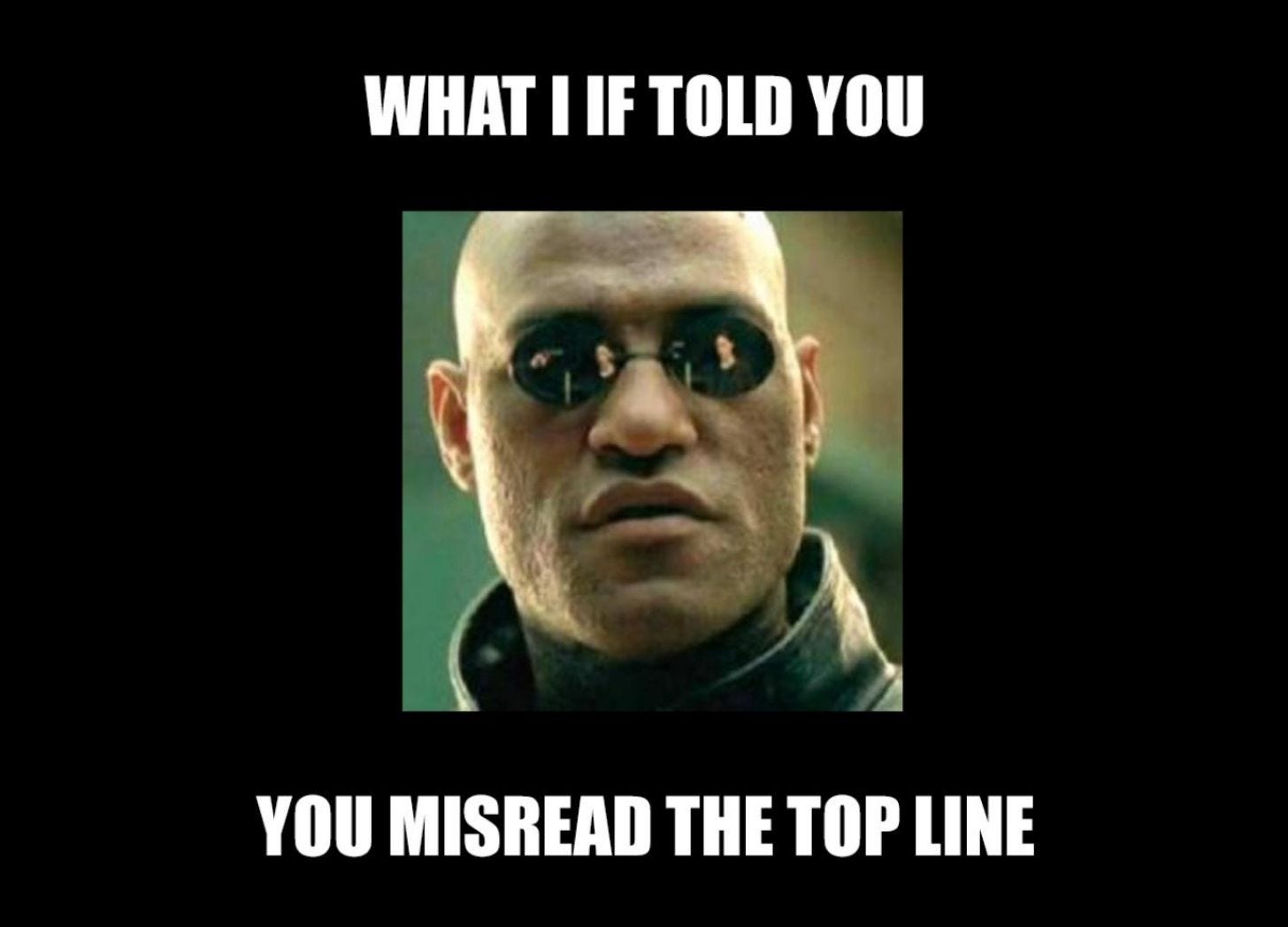
As someone who sweats the small stuff, I can think of few writing experiences more irritating than spotting a mistake just after you’ve sent the email, published the post, or submitted something important.
You looked at it carefully. You may even have read it more than once. It seemed fine. Then, the moment it’s out in the world, the error appears as if it had been waiting for its entrance all along.
It might be a repeated word. A missing word. A name spelled wrong. A sentence that somehow made sense while you were writing it but now looks strangely off. What makes the whole thing so annoying is that the mistake was not hidden. It was right there in front of you. You saw it, but somehow you didn’t quite see it.
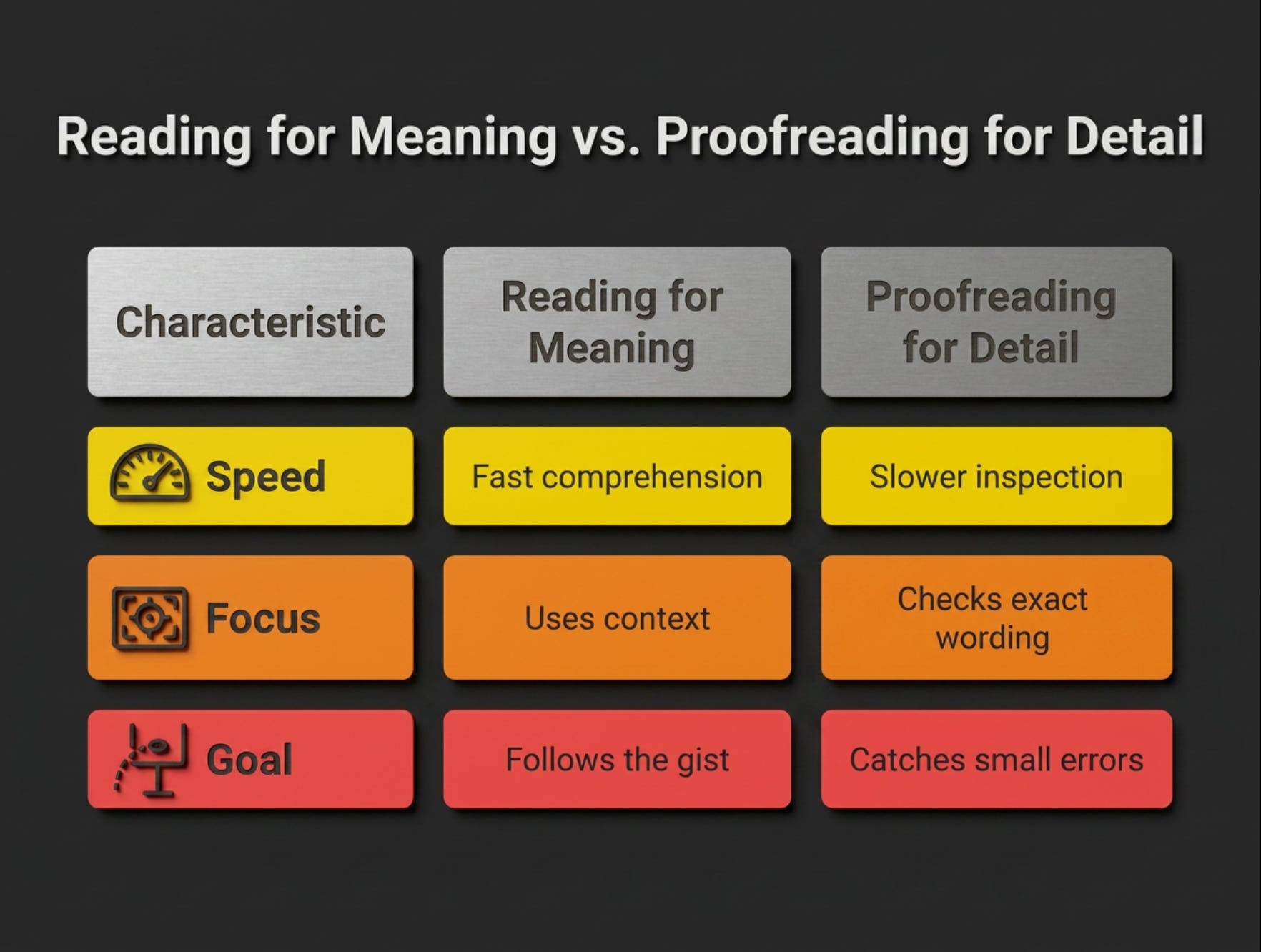
That’s what makes the proofreader’s illusion so interesting. It suggests that reading isn’t simply a matter of taking in what is on the page. Most of the time, the mind is doing something quicker and more efficient. It’s moving toward meaning. It uses context, expectation, and familiarity to make sense of what it’s reading, and that usually serves us very well.
The problem is that proofreading asks the mind to do something slightly unnatural. Instead of reading for meaning, it has to slow down and notice surface details that normal reading tends to smooth over or ignore. The same mental habits that make us fluent readers can also make us unreliable proofreaders.
This curious tendency has fascinated writers and psychologists for a very long time.
Long before emails, blog posts, newsletters, and autocorrect, people were missing mistakes in printed text and feeling thoroughly annoyed about it.
In 1871, the proofreader Annie Smith captured this frustration in a poem called “Proof-Reader’s Lament.” It’s a wonderfully human response to a professional hazard: the humiliation of missing the very thing you were meant to catch.
Here are the opening verses:
What news is this falls on my ear?
What next will to my sight appear?
My brain doth whirl, my heart doth quake
Oh, that egregious mistake!
“Too bad! too bad!!” I hear them cry,
“You might have seen with half an eye!
Strange! passing strange!! how could you make
So plain, so blunderous a mistake!”
What makes the poem so relatable is that it doesn’t treat the missed error as a small technical failure. It treats it as a tiny public embarrassment, which is exactly how it can feel. The mistake may be minor, but once it has escaped into the world, it seems to grow in size, even if nobody else spots it.
But this is only part of what makes the problem interesting. There’s also a deeper question: how can an error be visible on the page and still fail to register in the mind?
By the early twentieth century, that question had become part of psychological writing on perception and illusion.
In An Introductory Study of the Structure and Function of Human Consciousness, published in 1904, James Rowland Angell described misreading printed words as one of the most frequent illusions. His example was simple but revealing. If many readers come across the word mispirnt, they may read it quite confidently as misprint and never notice the difference.
That example still works because it captures the central puzzle. The letters are there. The error is visible. Yet the mind silently corrects it before awareness has a chance to object.
Arthur H. Pierce’s 1915 paper, “Imagery Illusions: The Non-Visual Character of the Proofreader’s Illusion,” explored the idea that this kind of misreading is not simply a failure of eyesight.
A few years later, June E. Downey published “The Proof-Reader’s Illusion and General Intelligence,” showing that the topic had become part of early psychological discussion about perception, error, and individual differences.
More than a century later, researchers have better tools and more precise theories, but the central question remains surprisingly fresh: why does the mind sometimes replace what is printed with what it expects to see?
Fluent reading feels effortless, but it depends on a remarkable amount of mental work.
When you read a sentence, you’re not usually stopping to inspect every letter, space, and punctuation mark. You’re moving through the text, automatically drawing on context, grammar, memory, and expectation to understand what it says. Most of the time, this works very well. It allows you to read quickly, follow an argument, understand a story, and skim familiar phrases without getting stuck on every small visual detail.
Proofreading asks for something different.
Instead of asking, “What does this mean?” it asks, “What is actually here?” That is a slower and more awkward question. It requires you to pay attention to the text as an object: the spelling, spacing, punctuation, names, dates, links, repeated words, missing words, and exact wording.
This is why being a good reader does not automatically make proofreading easy. Good reading often depends on moving efficiently toward meaning. Proofreading requires you to resist that pull and inspect the details that ordinary reading treats as secondary.
So the proofreader’s illusion is not simply a failure of attention. In many ways, it’s the byproduct of a successful reading system. The same habits that help you read fluently can also make small errors harder to catch.
And one of the clearest places to see this tension is in a well-studied effect from the psychology of reading.
Not all words receive the same level of scrutiny when we read. This is one of the things revealed by the missing-letter effect.
Words such as the, of, for, and, and to do a lot of work in a sentence, but they don’t usually carry much of its meaning. They help organize the grammar and show how the larger pieces fit together. But once they’ve done that job, your attention often moves on to the words that feel more important: the nouns, verbs, descriptions, and ideas.
In a typical missing-letter study, readers may be asked to search a passage for a particular letter. The surprising finding is that people often miss that letter more often when it appears inside a small, common function word than when it appears inside a more meaningful content word.
In other words, some words act more like scaffolding than scenery. They help hold the sentence together, but they don’t always draw close attention.
The effect is not only about visual familiarity. It’s tempting to assume that readers skip over a word like the simply because they’ve seen it so many times. Familiarity does matter, but studies using made-up words suggest that grammar and sentence structure matter too. When an unfamiliar nonword appears in a position where a function word would normally appear, readers can still become less likely to notice its letters.
That’s a strange thought. Even when a word is not familiar, the role it plays in the sentence can affect how closely it is inspected.
This helps explain why proofreading can be so slippery. The mind is not just looking at marks on a page. It’s constantly organizing those marks into meaningful structure. And once a word has helped build that structure, it can fade into the background before its letters have been fully checked.
Your own writing comes with built-in context. You remember the point you were making, the sentence you meant to write, and the direction the paragraph was supposed to take.
That familiarity can be useful when you’re editing for meaning. It helps you judge whether the piece says what you want it to say. But it can be less helpful when you’re checking the surface of the text. If your memory of the draft is already guiding you through the sentence, you may be less likely to notice that one of the words on the page doesn’t quite match what you intended.
This is why taking a break before proofreading often helps. A gap of time can make your own writing feel a little less familiar. You’re no longer reading it only as the person who just produced it. You’re closer to reading it as someone encountering it again.
But the familiar advice that you should never proofread your own work is too simple. In a 1993 study, Meredyth Daneman and Michael Stainton found that students detected fewer errors in their own essays than in essays written by someone else. More recent work has complicated that picture. In an eye-tracking study, Alexander Burgoyne and colleagues failed to find a clear self-generation effect, while other research on text familiarity has suggested that familiarity can sometimes help rather than hinder proofreading.
So the safest conclusion is not that self-proofreading is useless. It’s that self-proofreading needs support.
The goal is not to distrust yourself completely. It’s to recognize that your memory of what you intended to write can sometimes make it harder to see what actually made it onto the page.
Spell-checkers are useful. They can catch many obvious misspellings, and anyone who writes regularly is probably better off using them than ignoring them.
But they don’t remove the need to proofread.
One reason is that not all mistakes are the same kind of mistake. A nonword error produces something that is not a recognized word, such as teh instead of the. These are the kinds of mistakes spell-checkers are usually good at flagging.
A word error is different. It produces a real word, but not the word you meant. You might write form instead of from, pubic instead of public, or there instead of their. The word may be spelled correctly, but the sentence is still wrong.
This is where the proofreader’s illusion becomes especially irritating. Many of the mistakes that survive automated checks are the ones that depend on meaning, context, names, dates, links, and the exact wording of the sentence. A tool may help, but it may not know that the person’s name is spelled incorrectly, that the date is wrong, that a link points to the wrong page, or that the sentence says something slightly different from what you intended.
The same caution applies to AI proofreading tools. They can be useful as an extra pair of eyes, especially for spotting awkward phrasing, repeated words, or sentences that may not read clearly. But they are not a substitute for judgment. AI can miss context, overcorrect natural wording, flatten your voice, or suggest changes that make a sentence less precise. Used well, it can support proofreading. Used passively, it can become another way of handing responsibility to a tool that still needs checking.
Modern writing tools are improving all the time, and grammar checkers can catch some contextual errors that older spell-checkers missed. But the larger point still holds: proofreading is not just spelling-checking. It’s a check on meaning, form, accuracy, and context.
The best approach is not to choose between human attention and writing tools. Use the tools, but give your own attention a better setup.
Start by changing how the text looks. Before proofreading, try altering the font, increasing the size, widening the spacing, or moving the text into a different layout. The point is to stop the page from feeling quite so familiar. Even a modest visual change can slow you down enough to notice what is actually written.
Read the text in a different way. Reading aloud can make awkward phrasing, missing words, and odd rhythms easier to hear. Text-to-speech can also be useful because it gives the sentence back to you in a voice that is not guided by your memory of writing it. When a word is missing or repeated, hearing the sentence can make the problem stand out.
Give the text time when you can. For important writing, a break between drafting and proofreading can help you return with more distance. It doesn’t have to be a long break. Even stepping away for a short while can make the writing feel less automatic when you come back to it.
Use separate passes rather than one general read-through. Check spelling in one pass. Names in another. Links in another. Dates, headings, formatting, repeated words, and punctuation can each have their own pass when the stakes are high. Proofreading is easier when your attention has a specific job.
Ask someone else to read important work. Another reader doesn’t carry the same memory of what you meant to write, so they may notice things your own mind keeps smoothing over. This is especially useful for writing that will be published, submitted, sent to a client, or shared with a large audience.
None of these methods makes proofreading perfect. They simply make the task more realistic. Instead of relying on one ordinary read-through, you are giving mistakes more chances to become visible.
Before we finish, here’s one last challenge.
Look at the image below and see if you can spot the the error.
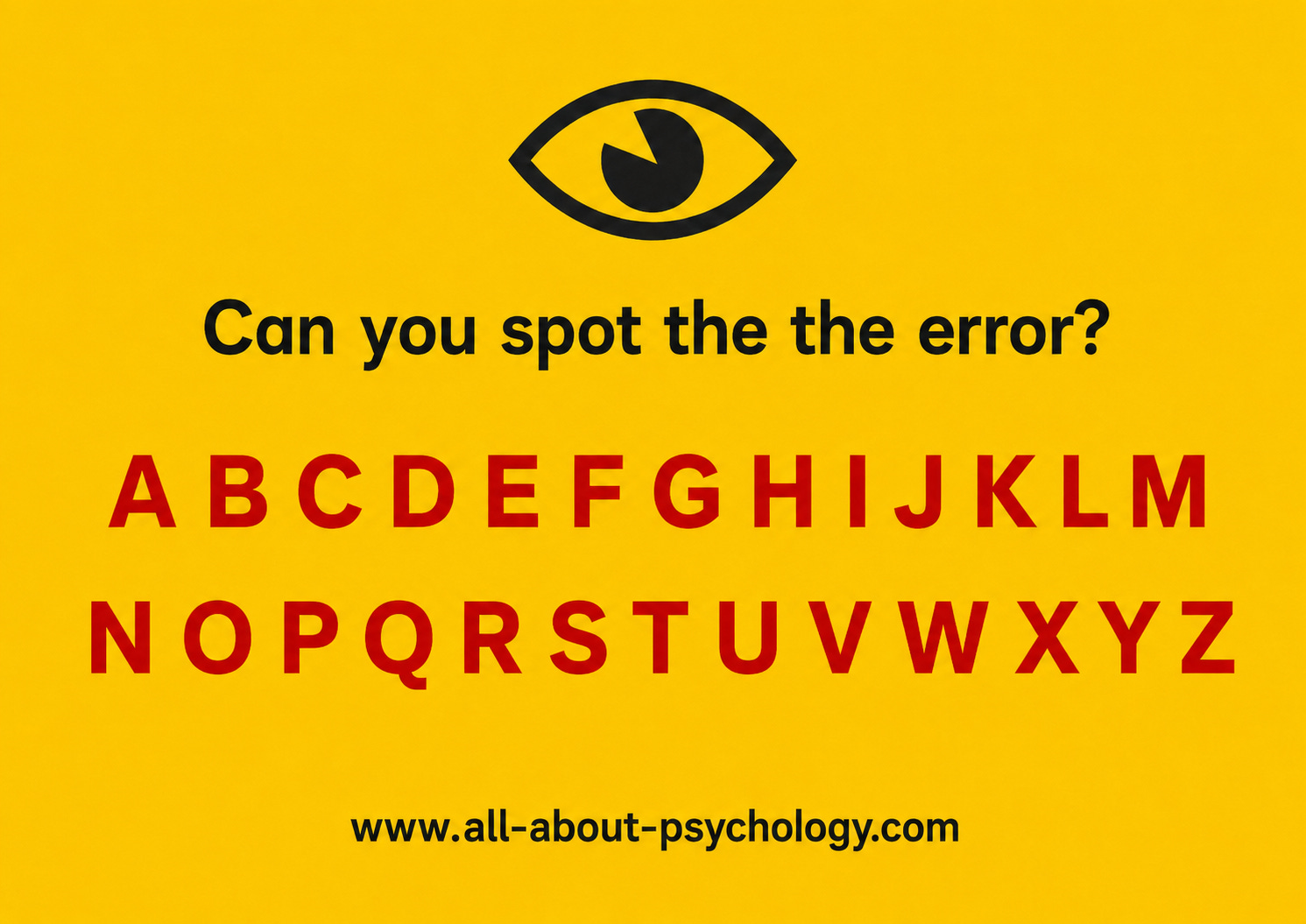
Don’t worry if it takes a moment. That’s the whole point. Even when we know we’re looking for a mistake, the mind can still move quickly through familiar words and patterns, especially when the overall meaning seems clear.
That’s why the proofreader’s illusion is more than a small annoyance. It shows how much ordinary reading depends on expectation. We don’t simply take in every detail with equal care. We move quickly toward what makes sense, and sometimes the details get tidied away in the process.
So the next time you spot a mistake just after sending something important, it may be irritating, but it shouldn’t be surprising. The mind that missed it was doing what minds often do: making sense of the sentence quickly, and sometimes overlooking the details along the way.
Let me know in the comments how long it took you to spot the the error, and whether you noticed anything else out of place in this section too.
Ecko Health’s founder and CEO, psychologist Marika Conomos, has just launched a new AI in Therapy LinkedIn group for psychologists, therapists, and mental health practitioners who want to explore how AI is shaping clinical practice.
The group is designed as a clinician-led space for discussing what works, what doesn’t, and what matters, from reducing non-billable admin burden to supporting continuity of care. The emphasis is on real-world experience, respectful discussion, and practical questions.
If you’re a clinical psychologist, therapist, mental health practitioner, or simply interested in how AI may shape therapeutic work, I highly recommend joining.
Join the AI in Therapy group here: https://www.linkedin.com/groups/22660017/
Learn more about Ecko Health here:
The All About Psychology Substack is your go-to source for all things psychology. Subscribe today and instantly receive my bestselling Psychology Student Guide right in your inbox.
Upgrade to a paid subscription and as an extra thank you, you’ll also get the eBook version of my book Psychology Q & A: Great Answers to Fascinating Psychology Questions.
Why Upgrade to Paid?
Every penny of paid subscriber support goes directly towards hosting and running costs, helping keep All-About-Psychology.com free for everyone.
Your support ensures that:
Students and educators can continue to access the most important and influential journal articles in the history of psychology, completely free.
Readers everywhere can hear directly from world-renowned psychologists, authors and leading experts in the field.
High-quality free content for students, educators, and the general public continues to be created and shared on a regular basis.

I’m David Webb, a psychology educator and author who has spent over twenty-five years helping people make sense of why we think, feel, and behave the way we do.
I founded the All About Psychology website in 2008 and have been building it ever since as a place where students, educators, and curious readers can explore the many branches of psychology, learn about the field’s history and most influential pioneers, and access thousands of full-text journal articles and other quality psychology materials. Today the site is home to one of the largest and most engaged independent psychology communities online. This Substack is the latest addition to the All About Psychology platform.
My books, including Why We Are The Way We Are, are written for anyone interested in what makes us tick.
You can explore more of my work and books on my Amazon author page.
Comments
Nothing yet. Say the first thing.
Sign in to join the conversation.