
The quality of a life is dependent on one’s perspective while living it. The legacy you leave behind, once you have moved on to whatever is beyond our little green earth, is also a perspective—a perspective of the people you have left behind. If you can tell yourself a good story about the situation you have found yourself in, you will enjoy your life. If you can leave a good impression on a few fine folks who are still orbiting the sun, your mythology has now transcended your aliveness. Your story can live on in history.
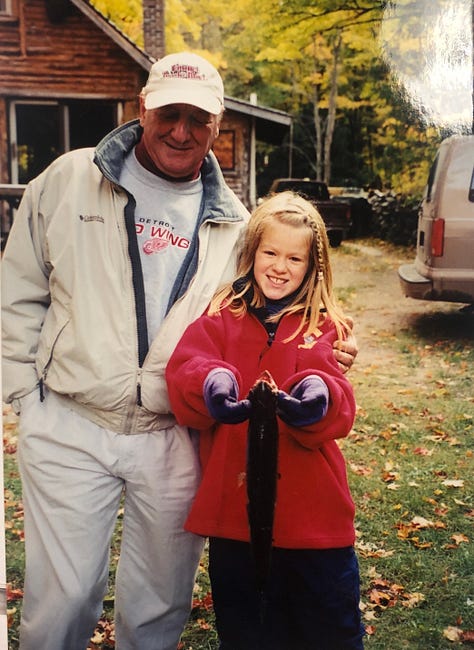
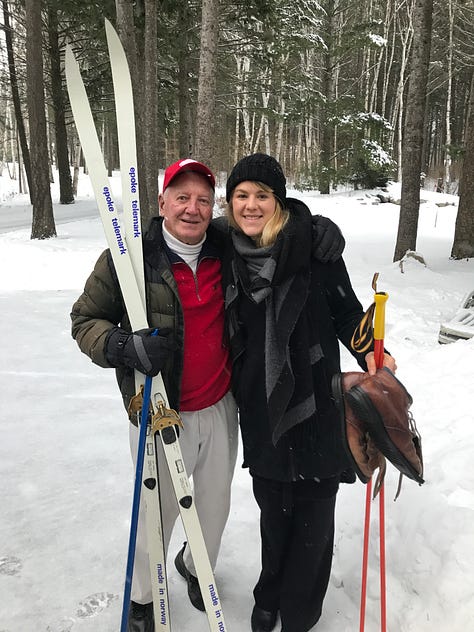
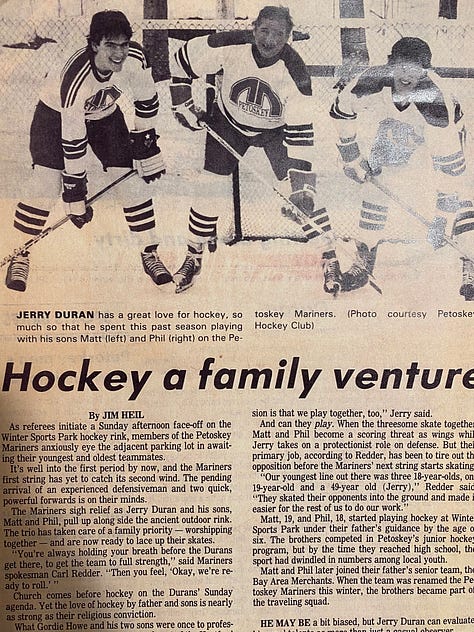
Grandpa Jerry loved a grand story and lived life as if his legacy was already carved in stone. He always had a little sparkle in his eye and a skip in his step, perhaps even at times when concern would have been appropriate. Leaving this earth on the same day you were born into it sounds akin to one of the noble endings to one of his many tall tales. To everyone’s surprise, one day before he would have turned 88 years old, he passed quietly out of this world.
It’s been a heavy week. Grandpa was followed days later—quite unexpectedly—by my Grandma Carolyn. Death from a broken heart, they say. They hadn’t been apart in over 60 years, and those few days were all that she wanted to face alone.
Grandpa was an idealist. Born outside of Detroit to a family of Polish immigrants in the 1930s, he grew up filling pączkis at the family’s Sunnyside Bakery. Looking back, the name seems like an early seed planted in his Leave-it-to-Beaver spirit. Life was a grand adventure on which he loved to pontificate to anyone who would listen. One of his favorite sayings was, “The best is yet to come.”
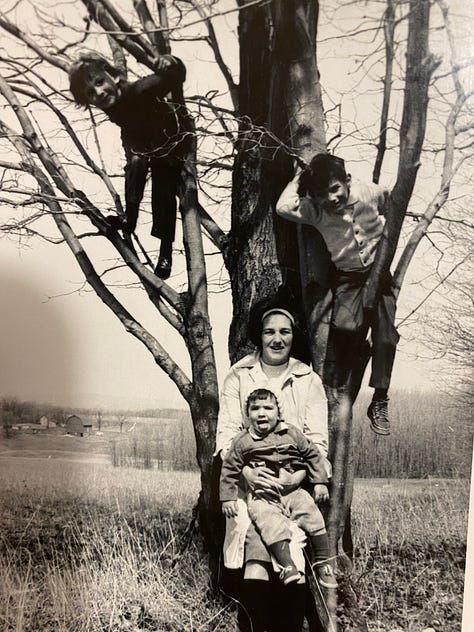
In the 1960s, my grandparents moved from the suburbs of Detroit to the rural outskirts of our small town in Northern Michigan, the town that I would come to know as home. Their first residence was a trailer on 40 acres of land, where they managed life with four kids and no running water while building their first home. Years later, my first home was also a trailer my parents were living in—and remodeling—when I was born. We had running water, but my mom tells me about times when she had to choose between buying milk or buying diapers.
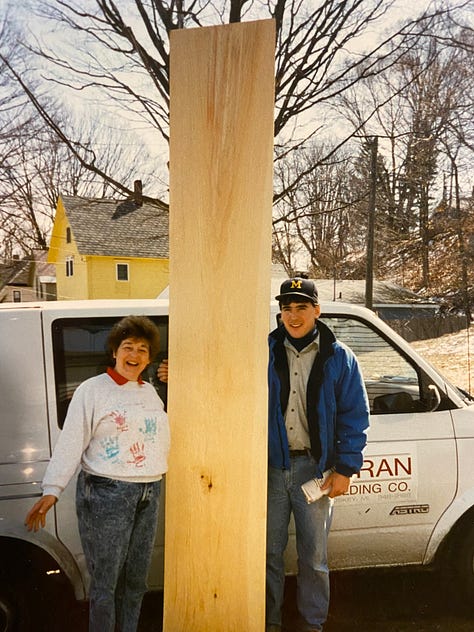
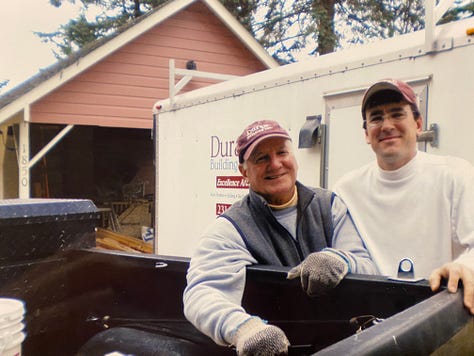
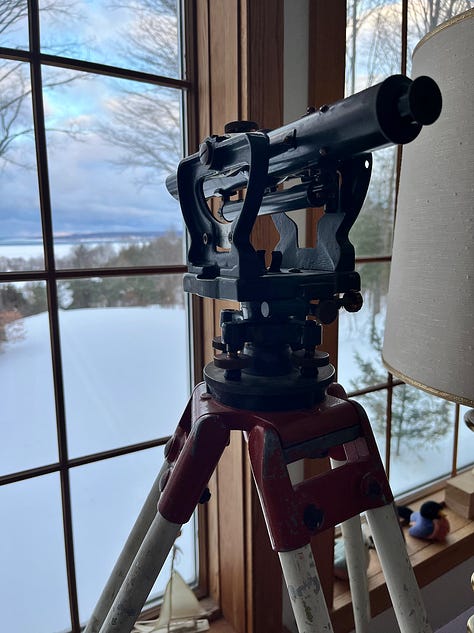
Following in the footsteps of his father, my dad would go on to become a home builder and help his parents with their house on the hill. It was nestled in the trees on a prime lot overlooking Lake Michigan in a real estate development that my grandpa and uncle spearheaded. A tall orange-and-white transit—better suited for the job site than a living room—was a permanent fixture by the tall windows. Grandpa and Grandma always kept an eye towards the water, ready to spot a sailboat skimming through Little Traverse Bay.
As kids, we’d sprawl belly-up in the living room on the plush lambskin rugs, souvenirs from their travels in New Zealand. Grandpa would wax poetic on his adventures sailing and camping in the picturesque islands and ask (again) if we’d read the story of Robin Lee Graham. Robin Lee Graham was The Boy Who Sailed Around the World. In Grandpa’s eyes he was the quintessential adventurer, only to be surpassed in glory by Ernest Shackleton. Engraved on the mantle of the fireplace was the word Endurance, a tribute to Shackleton’s dramatic story of survival and also our last name, Duran, living within the hand-carved letters.
After filling our bellies with black raspberries from the prickly backyard patch spooned over generous scoops of ice cream, we’d trample down to the basement to play table tennis. “Watch that corner! Watch that corner!” Grandpa would quip to an unsuspecting grandchild as he landed a well-aimed shot. He’d laugh heartily when he scored—there was no sympathy for the slow child.
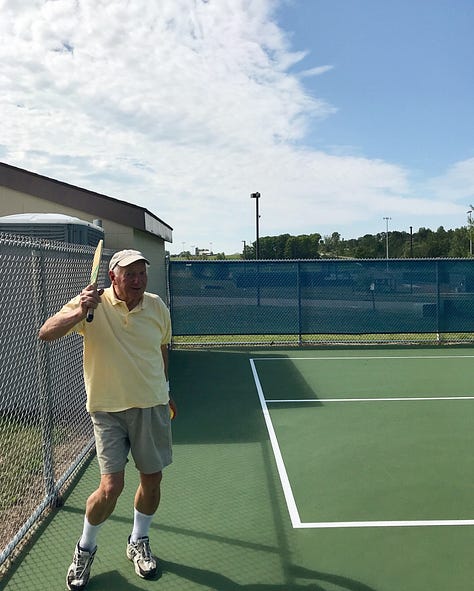
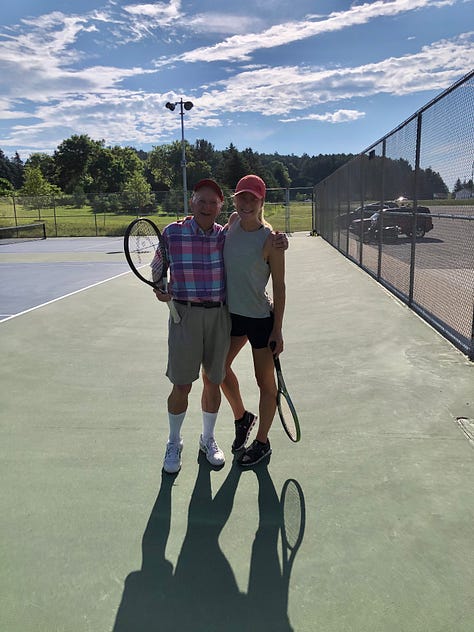
The tennis courts were no less of a training ground—emotionally and in sport. Serves were practiced over and over again until the ball landed directly on the centerline. The toss alone required repetition until the precise height was reached, enabling a wicked serve. Grandpa didn’t want to play with a sloppy opponent and had all confidence that his leggy granddaughter would be able to hold her ground on the courts once the topspin on her forehand was perfected.
It’s easy to miss how the little moments of childhood truly shape your core beliefs and ways of interacting with the world. The persistent themes of high standards, hard work, and sucking up your emotions for the greater good didn’t just birth themselves out of nowhere. I forget to give credit where credit is due.
When it comes to the question of nature versus nurture, I used to solidly plant my flag in a third, self-centered, and immature camp: “self-made.” I believed I was the captain of my own ship, that my individual choices made me the woman I am today. I notice the decisions I’ve made that came so easily—decisions others question:
Weren’t you scared?
What were you thinking?
How are you not worried?
When pressed, I have no real answers. It’s just the way I am.
I’ve been thinking a lot about legacy and the memories I share with my family this past week. As I’ve gotten older, I see my parents so strongly in the mirror. Perhaps a bit of my nature is inherited from my grandpa, too.
People are complicated, and losing them from our current reality brings a myriad of rippling emotions. I choose to find joy in remembering playful stories and treasured memories. Looking back, most of my childhood felt quite idyllic. I didn’t grow up thinking we were poor or keyed into the nuances of family politics. There’s something quite romantic about working hard and being with the people you love—who cares if avocados are an unheard-of luxury and a pound of ground beef is always mixed with a can of beans to “make it go a little further”?
Far from worrying about the price of an avocado at this point in life, I still do catch myself tiptoeing around the edges of puddles of uncertainty. Life has gotten too easy for later generations—we love to find the smallest things on which we can fixate our anxieties. My self-worth! My personal fulfillment! My therapist says! I wonder if a few hours of chopping firewood so I could stay warm at night wouldn’t cure me, sometimes.
Instead of pandering to emotion, I keep my mouth shut, say a prayer, and get back to work—choosing to remember how everything has worked out in the past and choosing to believe it will again in the future.
I’m learning that success demands both relentless effort and profound faith. The kind of effort that makes you roll up your sleeves, and the mental stoicism tinted with a trust in God that my grandpa seemed to possess. I fully believe in working your ass off to get what you want. I also fully believe that God has a plan for our futures that we simply can’t predict or destine for ourselves. My optimist must pull on her rain boots with a prayer and trudge on through the murky puddles. It’s a challenging paradox to grasp: We are 100% responsible, but God is 100% in control.
Grandpa Jerry’s stories were filled with blue-eyed wonder and grit—perhaps even a bit of denying reality. Everything will work out in the end, whether we like it or not. What if we actually chose to believe it? That our little lives are part of a bigger history, a mythical story beyond our imagination? Psalm 37 repeats over and over: “Do not fret… Do not fret.” Paul’s letters in the New Testament remind us of the hope that we are called to—not the desperate kind that we seek in times of frustration, but a hope that God requires of us. God’s promises are true no matter how we feel about it. So why should we not be relentlessly optimistic?
As Grandpa Jerry loved to say, “The best is yet to come.”
Comments
Nothing yet. Say the first thing.
Sign in to join the conversation.