
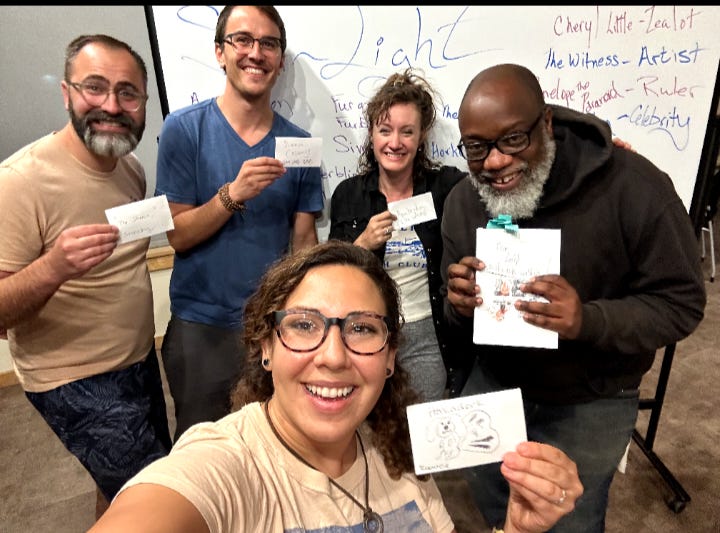
In times of social decay, when the drumbeat of fascism grows louder and the machinery of state repression rattles into motion, acts of joy, imagination, and collective storytelling become revolutionary. The United States stands on a precipice: with authoritarian tendencies creeping into the mainstream, books being banned, minorities scapegoated, and dissent criminalized, the terrain of everyday life becomes suffused with fear. Yet in the shadow of these realities, communities continue to gather around tables (physical or virtual) rolling dice, crafting worlds, and embodying characters who resist oppression, build solidarity, and dream of something better. Tabletop Roleplaying Games (TTRPGs), often dismissed as mere entertainment, can instead be acts of radical hope. In a time when fascism seeks to close off possibility, playing TTRPGs keeps the imagination alive, nurtures collective agency, and insists that joy itself is a form of rebellion.
Fascism thrives on control (of bodies, of narratives, of futures). Its first act is often to strangle the imagination. When authoritarianism rises, the range of what can be said, envisioned, or hoped for contracts. The imagination becomes dangerous because it refuses the inevitability of the present. Fascist ideology demands a single, rigid narrative: a “golden past,” an “enemy within,” and a “strong leader” who promises restoration through violence. Every deviation from that story…every improvisation, every collective “what if”...becomes subversive.
Tabletop roleplaying games are built on precisely the opposite principle. They are engines of improvisation, co-creation, and multiplicity. No single player controls the narrative; no one voice dictates the truth. Instead, players negotiate, adapt, and improvise a shared reality through conversation and imagination. A Game Master may describe a city under siege, but the players decide how to navigate it, how to resist, and who they choose to save. This cooperative storytelling directly undermines authoritarian values. It models a world where everyone has agency, where the story cannot be dictated by a single will.
In this sense, playing TTRPGs is not escapism. It is rehearsal. Every time players gather to build a world together, they practice democracy, mutual respect, and creative resistance. They cultivate a culture of dialogue over domination. In an age where fascism demands submission to a single truth, the act of rolling dice and saying “I want to try something different” is a radical refusal.
To play in the face of fear is an act of defiance. Authoritarianism thrives on despair. It requires people to believe that joy is impossible, that laughter and wonder are luxuries. The purpose of fascism is not only to command obedience but to crush the spirit. It teaches people to internalize hopelessness, to see beauty as naïve and compassion as weakness.
This is why joy matters. Joy is not apathy; it is evidence that the human spirit still resists. Joy asserts that life is more than survival. When people gather around a table and laugh, cheer, or mourn the loss of a fictional companion, they reaffirm their capacity to feel deeply, to connect, and to care. This is not trivial. It is sacred.
TTRPGs make joy participatory. Unlike passive entertainment, these games demand engagement, imagination, and empathy. They invite people to create beauty and meaning together, often from the simplest materials: a notebook, a pencil, and a handful of dice. In an era when fascism tries to isolate individuals and reduce relationships to transactions, collaborative play becomes an antidote. It creates communities that cannot be easily surveilled or commodified. It reminds people that they can still gather, still dream, still play.
Joy, in this context, becomes revolutionary precisely because it refuses to yield to fear. It says: We are still here. We are still imagining. And from that joy, resistance can grow.
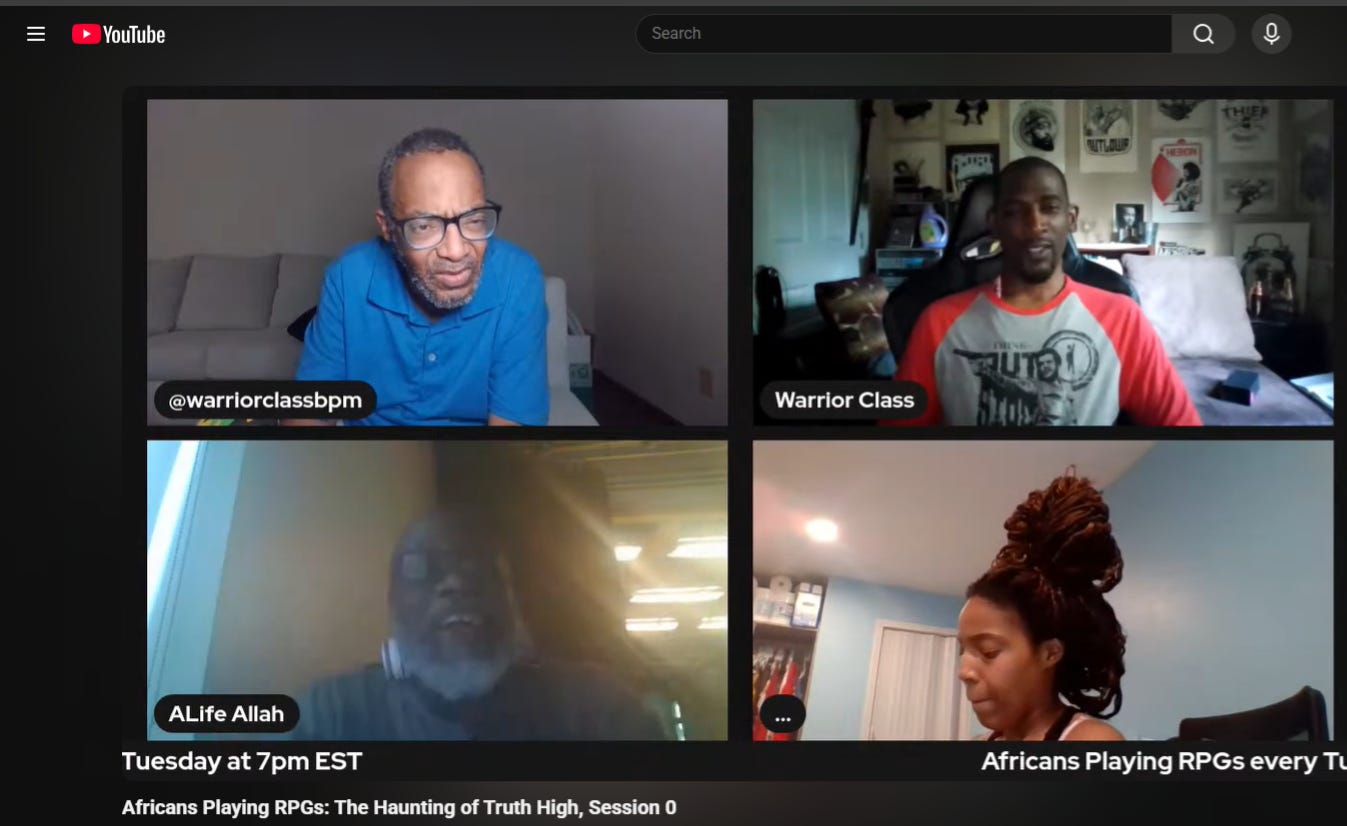
Every TTRPG table is a microcosm of society. Rules must be negotiated, power shared, and conflicts resolved through communication rather than force. Players must listen to one another, respect consent, and work toward shared goals. These are not just game mechanics. They are political lessons.
Fascism, by contrast, despises cooperation. It glorifies hierarchy, obedience, and violence. It seeks to turn all relationships into command chains. But in a TTRPG, no one can simply declare victory. The outcome of every action is uncertain, subject to dice rolls and group interpretation. This teaches humility and adaptability. These are the very virtues that fascism tries to destroy.
Moreover, TTRPGs allow players to imagine justice in new ways. They can build worlds where marginalized voices lead, where communities overthrow tyrants, where liberation is not just possible but playable. Players can reimagine systems of power, explore moral ambiguity, and tell stories that mainstream media often avoids. Games like Spire, Blades in the Dark, Thirsty Sword Lesbians, and Dream Askew explicitly center themes of resistance, identity, and solidarity. Even in more traditional games like Dungeons & Dragons, players can reinterpret tropes. They turn the dungeon crawl into an allegory for dismantling oppressive systems.
Every campaign, every session, becomes an experiment in collective worldbuilding. Around the table, players learn to trust one another’s voices, to hold space for vulnerability, and to build consensus in real time. These skills are not abstract. They translate into political consciousness. They prepare people to resist authoritarianism not through slogans, but through practiced empathy and mutual aid.
Stories shape what people believe is possible. Fascist movements understand this deeply, which is why they invest heavily in propaganda. They flood the culture with stories that simplify, dehumanize, and glorify violence. They reduce complexity to purity, nuance to loyalty.
TTRPGs offer an antidote: they restore complexity. Every character is a contradiction, every world imperfect, every moral choice uncertain. This is what makes the stories real…and what makes them dangerous to authoritarian simplicity. In these games, the heroes are not pure, and the villains are often the systems themselves. Players confront ethical dilemmas, not because they are required to, but because they choose to wrestle with them.
Through play, people can reframe narratives of power. They can tell stories where cooperation triumphs over domination, where monsters are misunderstood rather than slain, where communities heal rather than conquer. These stories ripple outward, shaping how players see the real world. A campaign about resisting an empire can inspire someone to resist injustice in their community. A story about solidarity among outcasts can affirm the dignity of those marginalized by society.
In this sense, the table becomes both a sanctuary and a forge. It becomes a place where the imagination can be sharpened into resistance. Fascism depends on a culture of silence, but roleplaying games create a culture of storytelling. Every tale told, every world built, chips away at the walls of authoritarian myth.
When fascism rises, isolation becomes deadly. People are encouraged to turn on one another, to fear neighbors, to report dissent. Communities fracture under the pressure of surveillance and suspicion.
TTRPGs push back against that isolation by fostering small, intentional communities of care. Players check in with each other emotionally, share snacks, talk through consent boundaries, and create safety tools like “X-cards” or “lines and veils.” These practices may seem trivial, but they represent a radical ethic of care. One that values emotional safety, trust, and communication.
This ethic is political. It mirrors the principles of mutual aid and solidarity that have sustained resistance movements throughout history. In playing together, people learn how to sustain one another. They learn how to collaborate even when things go wrong. They learn how to fail safely, how to repair harm, and how to continue the story together.
Communities built around TTRPGs often extend beyond the table. They go into conventions, online spaces, and grassroots creative networks. These spaces become refuges for queer people, people of color, disabled people, and anyone who has been told that their story doesn’t matter. In the face of rising fascism, these networks of belonging are not hobbies. They are lifelines.
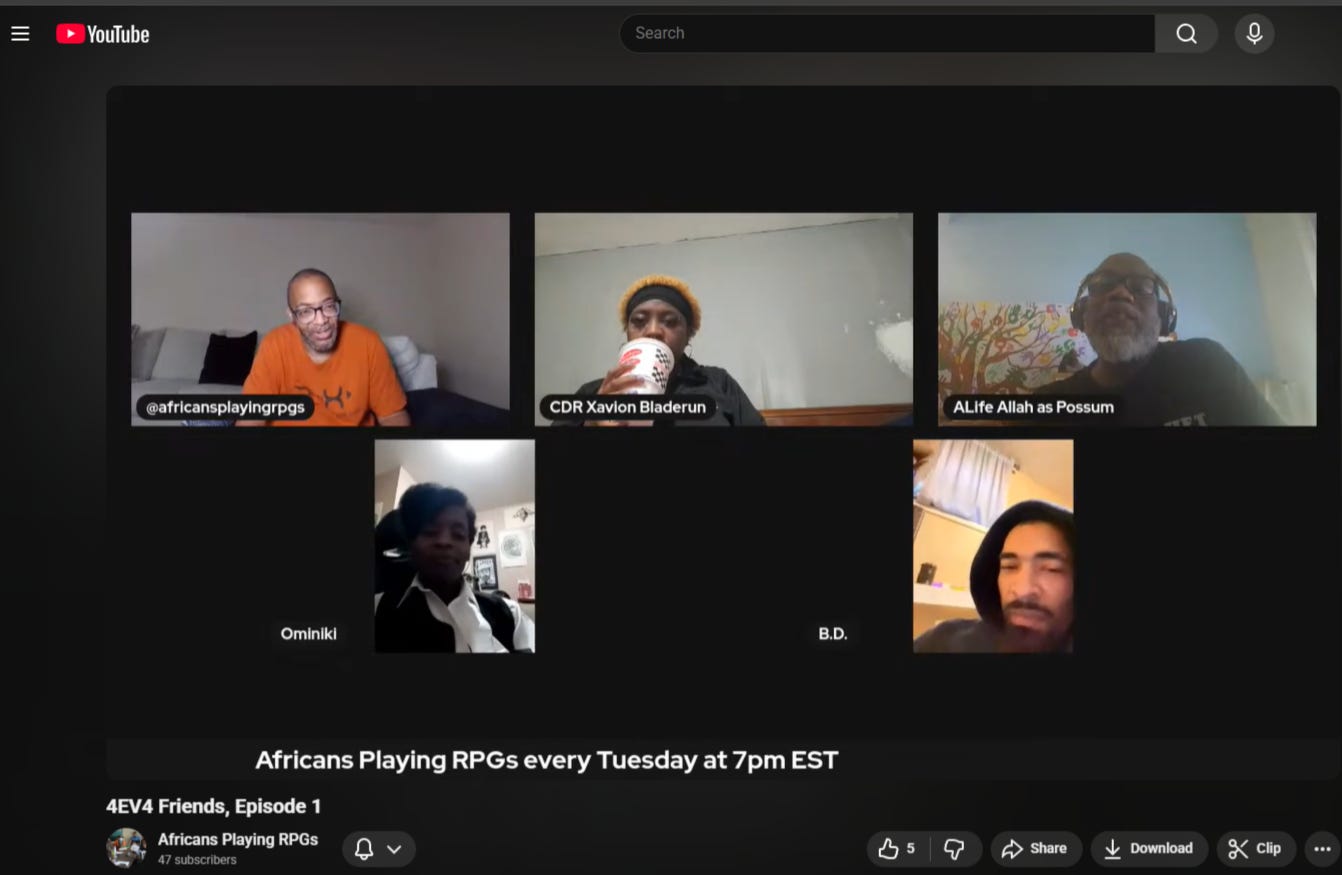
Hope is not optimism. It is not the belief that things will get better on their own. Hope, as Cornel West puts it, is “the courage to love, even in the face of despair.” It is the refusal to surrender the imagination to fear.
TTRPGs keep that hope alive. They remind players that even in impossible circumstances, there is always a choice. The dice may be cruel, the odds may be grim, but as long as there is a player willing to act, the story continues. That, too, is resistance.
In a world that feels increasingly scripted by authoritarian power, to play is to improvise. To imagine a different ending is to rebel against fatalism. Every time a group of players defeats a tyrant, saves a village, or simply survives another night in a cruel world, they rehearse the idea that resistance matters. They create a ritual of hope.
And when they leave the table, that ritual lingers. It shapes how they engage with the real world. They do so with courage, with creativity, and with care.
As fascism advances, it seeks to make the world smaller. It seeks to reduce the infinite possibilities of being human into obedience and fear. Tabletop roleplaying games do the opposite. They expand the imagination, nurture community, and affirm that everyone’s voice matters. They teach that stories are not dictated but negotiated, that hope is not given but made.
To continue playing in such times is not a retreat. It is a declaration. It is to say: we will not let the story end here. We will gather, roll our dice, and tell stories of courage, love, and resistance. We will imagine worlds where tyrants fall and communities thrive. We will remember, through the simple act of play, that freedom begins with the imagination.
So as the shadows lengthen, do not put away the dice. The table is a barricade. The story is a weapon. Joy is our rebellion. And imagination…wild, collective, and defiant…remains our most enduring form of freedom.
No posts
Comments
Nothing yet. Say the first thing.
Sign in to join the conversation.