
Maybe this is wrong of me—but I read every novel as being primarily about its own composition, or writing in general. (I also can hear (or so I imagine) when an author is laughing their head off while composing, and I can picture their handwriting. We all have our things.)
That central metaphor rises up like a mist, sometimes so fragrant and dewy that I I forego my serum du jour. And every so often it’s a bon bon I pop in my mouth and metabolize.

Such was the case when I came across the following passage in Mrs. Dalloway, which I just reread with a class of accordingly engaged grad students. It’s hard to avoid the cliché that every time you read a great book you see new things, so I won’t try. I saw new things. One that caught me this read was:
“But—but—why did she suddenly feel, for no reason that she could discover, desperately unhappy? … (She searches for the reason why, as she later searches for the reason Septimus may have jumped from the window, I’m not going to type the net few lines.) …something that Peter had said, combined with some depression of her own, in her bedroom, taking off her hat; and what Richard had said had added to it, but what had he said? There were his roses. Her parties! That was it! Her parties! Both of them criticized her very unfairly, laughed at her very unjustly, for her parties. That was it! That was it!
“Well, how was she going to defend herself? Now that she knew what it was, she felt perfectly happy. They thought, or Peter at any rate thought, that she enjoyed imposing herself; liked to have famous people about her; the great names; was simply a snob in short. Well, Peter might think so. Richard merely thought it foolish of her to like excitement when she knew it was bad for her heart. It was childish, she thought. And both were quite wrong. What she liked was simply life.
“That’s what I do it for,” she said, speaking aloud, to life.”
I popped that about-writing-bon bon in my mouth and felt the deliciousness spread through my veins. Yes, writing a novel is like throwing a party, and no wonder so many parties work their way into novels, the characters are en route from the jump, at least to a climax, and a party isn’t a bad way to get the major players into the same room. Short of that—the metaphor is reaching my fingers—even if there is no literal party, the novelist is throwing one, inviting the characters into her book, deciding the atmosphere and the order of events, choosing the decorations to set a tone, observing the weather, writing up a menu, shopping, cooking, and thinking what she should wear.
As I await the notes from my editor on the last party I threw, I am making early plans for a party that is in the campus novel vein. (“Dark” academia.) Thirteen years at girls’ school must get its due. Who shall I invite? What tone shall I wear? How long should the party last, what does it all mean?
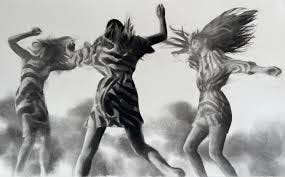
Thankfully, I am past the stage where I have men in my head (and in my life) questioning my right to write, as Clarissa felt criticized for her “parties.” And I agree with her—what I like is simply life.
Comments
Nothing yet. Say the first thing.
Sign in to join the conversation.