
Rook’s Nest in Hertfordshire was E.M. Forster’s childhood home until he and his mother were forced to move. This broke his heart. It had been owned by the Howard family, and a nostalgia-tinged representation of it appears in Forster’s sublime novel Howard’s End, where the house is central to the plot, and as a student of mine suggested a couple of weeks ago, possibly the narratorial point of view of the book. It is far from being a grand house; in fact the novel opens with a disclaimer, a description written by one sister to another, that begins “It isn’t going to be what we expected. It is old and little, and altogether delightful—red brick.” Yet the house is rich with symbolism and magic; it wants what it wants, and that is for a certain person to be its rightful owner and inhabitant. It is willing to wait for the twists and turns of the world and the plot to deliver Margaret Schlegel to its door, so it can carry on its place in traditional, comfortable, noble English bucolic life. Other houses may decay and fall into ruins, but not Howard’s End. A hundred and fifteen years after Forster wrote the house into his novel, it is still accessible to every reader who picks up the book.
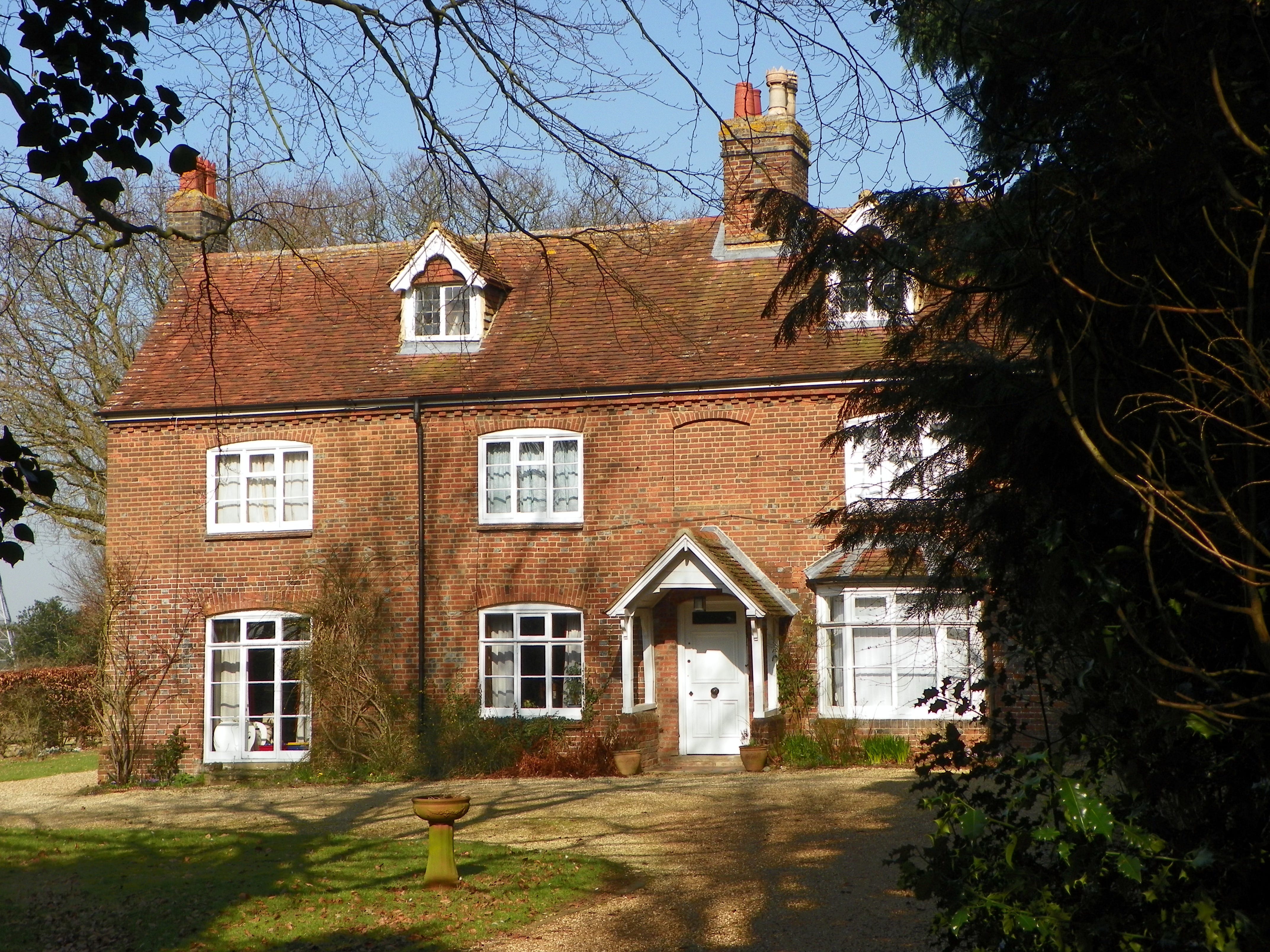
I am sympathetic to Forster’s loss of his first house, (pictured above) and his need to get it back, at least on the page. Though I have lost many people of inexpressable importance to me, there is nothing I have mourned with as much woe as the houses I have loved and been forced to leave. As with Forster, it has been the case that I was never the possessor of any of those houses and had no say. I was put into the position of forming an attachment to them only to have them yanked away when life took a turn for their lawful owner. I remember reading a famous author say she had never owned a house she loved, and that terrified me. If she couldn’t afford to buy a house that spoke to her imagination, what hope had I? Have I? I could now afford to buy the houses that were out of reach for me ten years ago. Will my finances and a house I want ever be in the same place at the same time?
Perhaps this doesn’t arouse the pity of anyone reading this. Perhaps I’d do better writing about when a family member died, and describing those griefs. What can I say except this pain has been very real for me. Like Fortser, the houses I have loved have been alive to me, and when I can no longer walk through the door, it is as confounding as passing a former lover or friend on the street. How can it be that we no longer know each other? I don’t believe in things coming to that, but my beliefs don’t stop such things from happening. So houses come and go. I just lost another one. It feels so wrong.
For the past twelve years there came a day every March when a particular house at the end of a gravel drive in a small town in Maine house took up lodging in my thoughts, kicking off the season of anticipation. For the next few months I pictured walking down the bigger road beyond the driveway in both directions, either out to the point or down to the harbor, scanning the road for snakes and shadows. I couldn’t wait to spend the day sitting on the deck; in our first hour there, I would move the furniture so it faced the ocean rather than the outdoor fireplace and I positioned the umbrella for reading. (It was good luck for an arc if I were reading it for a blurb under those conditions.) I would unpack my clothes into the familiar drawers and closet and set up my toothbrush and shampoo in the bathroom. When I’d moved in, I’d walk down to the rock beach and look out across the water, and on the way back take note of the ducks and egrets, and wonder how a whole year had passed without me getting a tattoo of the blue heron, my spirit bird. But the answer was in the question; how could I pin such an ethereal creature to my inner forearm? It was right to see it there, in the swath of marsh, in its grace.
I made lists of what to bring and every year tasked myself with bringing less. As I age, I better understand my mother’s vivid purges, her L.L. Bean wheelie bag as small as purse in which she packed for weeks away. But I have lost too much to feel comfortable with the minimum. I settled for bringing a bit more than I’ll need, leaving in the pile a few items I want for want’s sake. Who knows? I might need something dressy—the island had become fancy—or a few more books, pens, notebooks. A week before our departure date I placed everything out on the dining room table, then added and subtracted over the following days. I’d leave room for the purchase of an item or two from the local purveyor of summer indulgences, maybe a bottle of scent. I lined up visits with friends who had houses there, knowing I would feel envious of their security even as I enjoyed being in their worlds.
It was all fun until it wasn’t. At some point last winter, our landlord let us know he wouldn’t be renting the house anymore. This would be our last summer of that view, that breeze, those flowers, that angle on the starry night. That email was a blow that made all other losses of the year reverberate in my dreams, where water sluiced through my fingers or I dropped a precious vase or I left my grandfather’s watch in a cab. I know all is flux, all is change, I am well aware and even understand it…yet why can’t I have one thing that is stable? One beloved house. I was so aggrieved I considered cancelling. It had been one thing to pretend the house was mine all these years even though I knew perfectly well that some stranger had slept in the bed the night before we arrived and another one would be perched on the deck a few hours after we left. It was another to know my pretense was unwarranted. The facts were hard and cutting. Three last weeks, and then what? Maybe it would be best to plunge directly into mourning and never go again. But I coaxed myself into deciding that grieving in situ was a better choice and might actually help. We’d go to the house and say a proper goodbye. I’d lose another piece of my heart, but what else was new?
In August we made the drive from New Jersey to Mount Desert Island in Maine, arrived and walked into the familiar rooms and views, set up house as always, and were grateful to once again be in a place of such beauty. We did our vacation, took our walks and hikes, saw our friends. I kept track of the lastness of things even as I found it hard to believe it was over. How could that be? I didn't know quite how to commemorate the last day. Take pictures? I've taken a lot of pictures over the years. Spend an extra hour or two sitting at the window and looking out at this very particular view of a small cove in Maine? I did that every day, and one more time wouldn’t offer any special comfort. Instead I contacted a Realtor about a rental for next summer. She said, “I don’t have any houses available as nice as that one, but I’ll send you a few choices.”
I haven’t written her back yet. The little pictures she sent of other houses all seem strange. Though they look more like Maine than our house did. It wasn’t what you’d expect. A modern house built around a deck in a horseshoe, if horseshoes were squared off. Only two bedrooms, only one bathroom, nothing updated, a simple kitchen. If you shared it with others, you’d be on intimate terms, like it or not. Yet you could see the ocean and never hear a car. What you did hear were lobster boats every morning at 4:00 a.m. You could step out onto the deck and watch their lights traverse the dark water headed for the open sea. You could sit at the picture window inside and watch the light come up, the sun slanting across the rippling sea and lofting gold onto the pine trees lining the point. You could swim at the beach if you were a cold water swimmer. You could walk back the long way around, over the rocks, your shoes making noise like breaking china. You could pick your way along the trails through the woods and hope to come out at the house. You could play cards at night and watch fireworks set off on the point. You could amble down the road to watch the sunset over Blue Hill Bay, and be ever hopeful for a green flash sighting. You could leave the shades and the windows open and watch the night sky and hear the waves curl over onto the rock beach. You could be far away from it all, and happy.
If corporations can be people, how can houses be anything less?
I don’t have any illusions that there is a plot afoot that will slowly bring me back to that house, a la Margaret Schlagel. It is gone. I mourned mightily while we were there. Then the world turned, we drove away, and I didn’t look back. Maybe the bereavement will hit in March. Or maybe I have changed.
Comments
Nothing yet. Say the first thing.
Sign in to join the conversation.