
For those of you who prefer to read on paper (or e-reader) rather than in your Substack or email app, I have converted this essay into an easily printable PDF
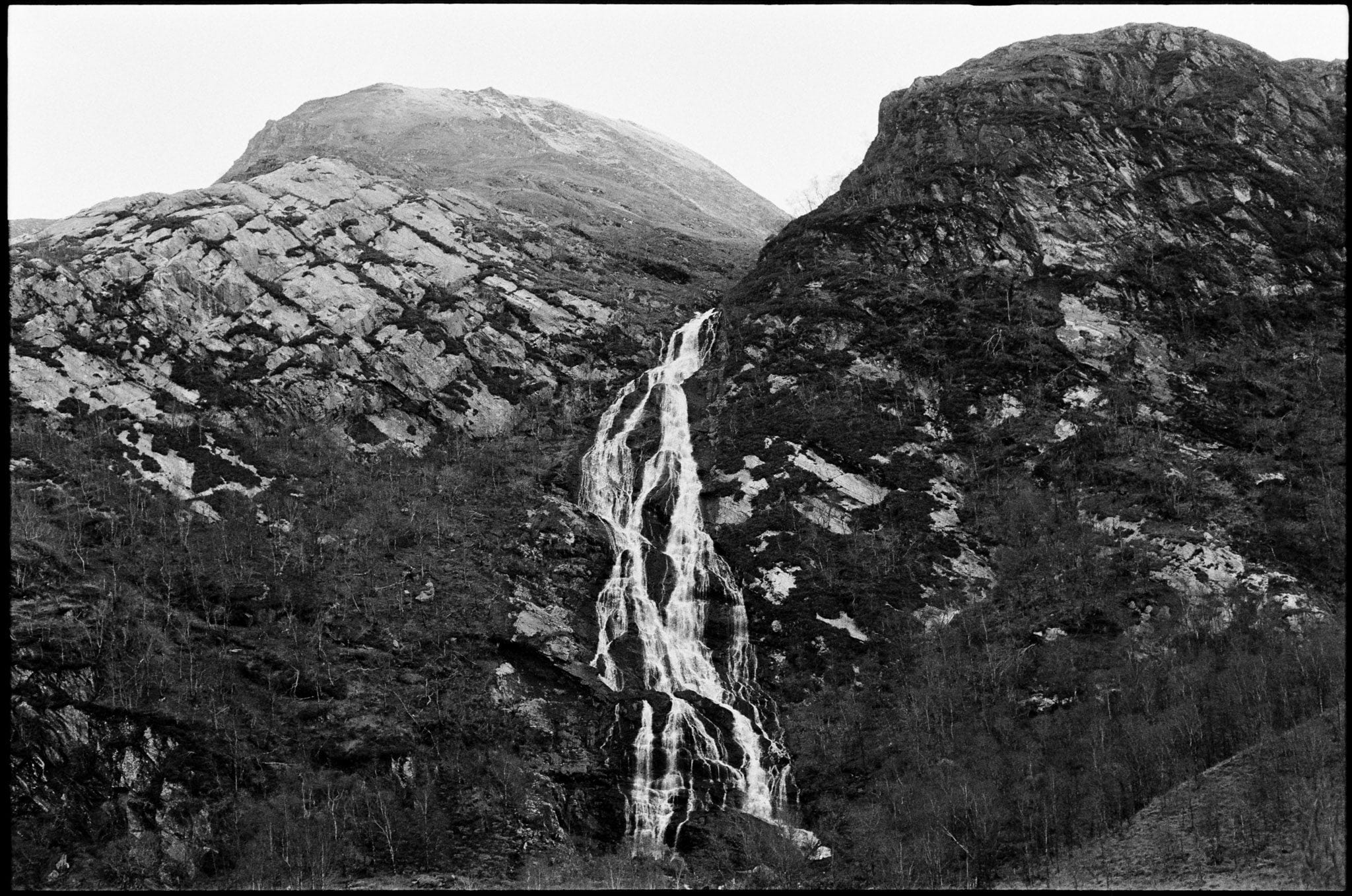
I’d made the start of my climb up from Glen Nevis as a bright November afternoon began to fade into the brief glory of evening. Behind me, the silver thread of Steall Falls cut into the deep black flanks of the Mamores, cast in silhouette by the colours growing more saturated up there in the sky, suspended for a moment or two longer than expected by a high wisp of cloud. But the light was all behind me. Ahead, as I climbed the brutally steep frozen slopes towards Aonach Beag’s southeastern shoulder, the sky had turned a rich and velvety navy blue through which a few stars already winked. Beneath this tapestry was an airbrushing of the freshest snow, reflecting just a tinge of pink alpenglow.
It was my first outing of a new winter season in the Scottish highlands. And it was my 20th winter season. I’d been doing this long enough to be receptive, or so I hoped, to the more delicate feelings particular to early winter in the Highlands; but 20 years was not long enough to banish the enthusiasm and the wonder. So when the snows came, I answered the call as I had always answered it, feeling 20 years old again as I checked my crampons and carried out the ancient ritual of scrolling through MWIS and interpreting phrases such as ‘changeable; breezy, trending towards fair’.
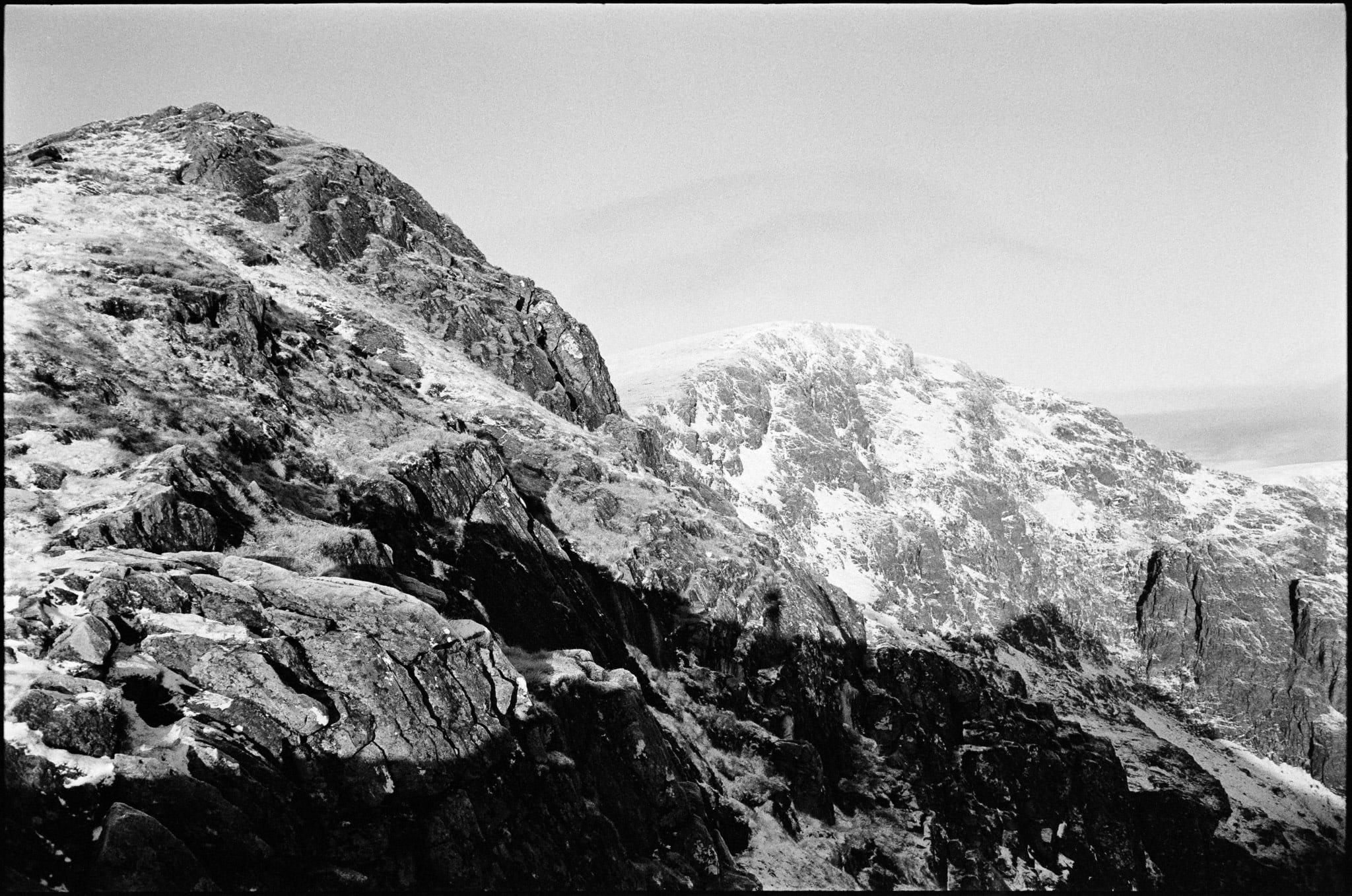
My boots crunched through a crust of frozen mud. It was a long haul up from Glen Nevis and the light was going fast. With a good forecast and a light pack, my plan was to bivouac high on the ridge of Aonach Beag before carrying on over Carn Mor Dearg, the famous CMD Arete, and Ben Nevis. These were big, serious mountains – Britain’s highest. It was an itinerary I’d done several times before, but I’d never climbed Aonach Beag the direct route from Glen Nevis, and it was quite the climb: at least 750m straight up to the area where I hoped to bivouac, and it’d be fully dark long before I got there. I just hoped I’d find somewhere flat enough for my bivvy bag. No guarantee on a mountain as rocky as Aonach Beag.
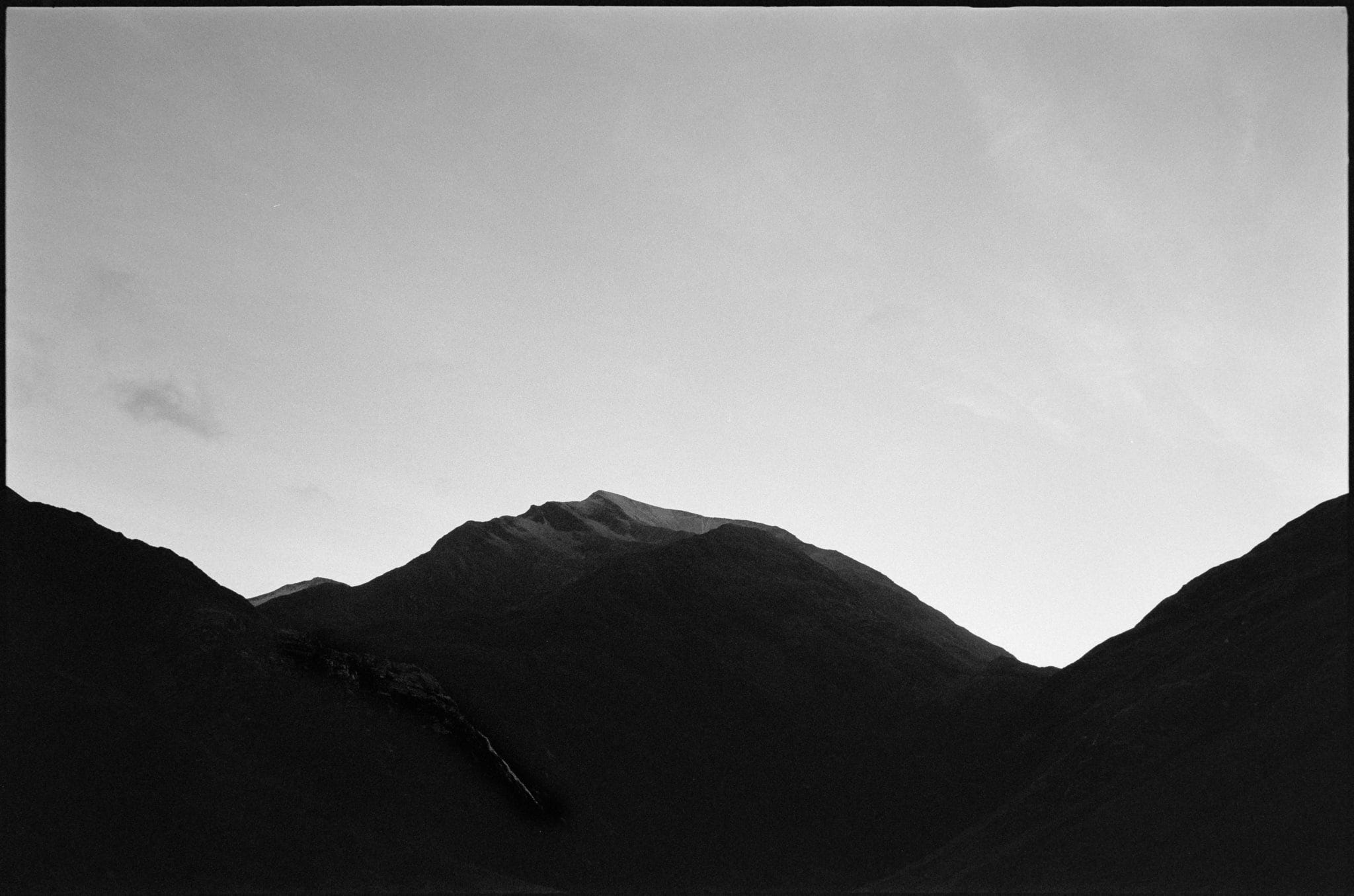
Above me, the waypoint of Sgurr a’ Bhuic presented as a vague pyramid of absolute black against a prickling blanket of stars. Higher and to its left, Aonach Beag’s greater snowy bulk still held onto a spark of the alpenglow that had died on every other peak. I delved into my pack and got out my headtorch.
Hours later, the path had disappeared and I was navigating by compass, my world constricted to the wavering cone of overbright light from my headtorch. The lamp picked out peat hags in stark relief, serrated shadows leaping behind tussocks as I took step after step, the light reflecting harshly from ice mirrors and the small drifts of snow hummocked across my way. Hard going, and with the tunnel vision of my headtorch I had no real concept of making progress.
I paused. It was about 8pm. Freed from the incessant crunching of my boots, the creaking of my pack, and rustling of my jacket, the night suddenly felt profoundly – luxuriously – silent. Not a hint of wind stirred the landscape. The cold pressed in on me. Acting unconsciously on some momentary impulse, I reached up to switch off my headtorch.
I saw nothing but darkness and retinal afterimages for a moment or two. Then, gradually, sympathetically, my sight grew back – at first just the striated white and black of snow and rock at my feet, then a circle of softer awareness spreading out around me in all directions. Out came the bolder stars here and there, then the smaller ones all at once. The black above me, I realised, was not black at all, but a rich royal blue that held just the barest hint of the alpenglow I had admired hours before. Cirrus streamers high in the atmosphere presented as ethereal veils, sailing to winds I could not feel.
My compass had been leading me due north up the steep ridge from Sgurr a’ Bhuic to Stob Coire Bhealaich, another of Aonach Beag’s lower tops. I had been trying not to venture too close to the ragged eastern cliff edge in the dark, eager to avoid being devoured by the gigantic void of Coire Bhealach – a void I could neither see nor feel but knew was there by the map alone.
Now I could feel it. Looking out to my right, the rock and snow fell away into a precipice holding close the inverted mass of a ghost mountain. What else is a corrie but a mountain of air rooted in the sky, its peak far below at the water collected in its lowest point? Such a thought would never come to me in daylight, but it came to me then as I looked out over the soft silverpoint drawing of the Grey Corries stretching into infinity to the east and away to Rannoch Moor: the great ridge of the Lochaber Traverse.
I was familiar with this place, knew every mountain, and yet I didn’t. By starlight a place has a character beyond what you think you know.
No moon was out. Yet the stars more than compensated. The brighter ones seemed to hang very close above me, and they pulsed rather than twinkled, as if they breathed light out in waves. This fragile but confident light washed over a landscape of snow and gave it texture and form – like an engraving in steel, all carved highlights and satin blacks. I could clearly see the ridge rising in a fractured shoulder to the apex where I hoped to bivvy, and then beyond to Aonach Beag’s domed crown higher yet, where the snow gleamed a purer white.
Then I saw the distinctive plough-shaped constellation of Ursa Major rising low over the ridge directly ahead, the two pointer stars leading directly to Polaris six spans above. The light from these stars depicted a pathway in the snow at my feet: an arrow-straight line cutting straight up the contours direct to the place where, I just knew, a safe bivouac ledge would be found. The vision hung there as if it had been conjured by a whisper.
Switching off my torch had been a moment inviting in vulnerability, but also a moment of trust that I would feel or sense something beyond what artificial light and compass could yield. Something beyond just darkness. Something subtler and more bountiful, or just more real. Something I would never feel again; a benediction for me and me alone, then and there, particular to that scrap of mountainside and that instant in time.
I stayed for a minute or two longer before I started moving again. I’d felt moments like this before, but rarely – a little olive branch extended by the mountain spectre to the blundering insensitive mortal, a rare gift, as if to show just the smallest taste of the deep truths that could be experienced by those with the sensitivity to really see. These rare moments are my most foundational core memories. Memories that extend far beyond my own self because they show the ultimate truth: that we are not separate from the universe, that we are the universe, and that this is beautiful.
But the moments can never be repeated. And like the Brocken Spectre, each is particular to that observer at that moment in time. I’ve never experienced such a moment in the company of others, and knew I never would. I’d rarely had one at civilised times of day.
Is this why I’d always felt the need to climb mountains alone at dusk, then sleep on their summits? Because of the chance, however small, to hear a snatched bar or two of the great symphony?
I looked again due north. The alignment was perfect between my position on the mountain, the two pointer stars, the apex of the ridge where I hoped to sleep, and Polaris high above. In only a few minutes the alignment would be broken. Feeling keenly the profound reverence of what I’d been granted to witness, and trusting in the bright starlight to guide me, I took a step and then another. I climbed.
I did not switch my headtorch back on again that night. I didn’t need to. Instead I climbed through a landscape suffused with impossible light. Starlight alone, I’d always believed, wasn’t bright enough to allow a mountaineer to find their way, but that night it was. That night the stars blazed for me.
Half an hour or so later, Polaris guided me to my eyrie: a perfectly flat bed of snow near the summit of Stob Coire Bhealaich from where I could make out the attenuated shapes of Aonach Beag’s grand northern buttresses. As I lay out my bivvy bag on the snow and made ready for a night under the stars, I knew I would sleep deeply and warmly. And I did.

Something in that night cried out to us, not low, not faltering, but clear, true, urgent – that this was not all: that not half the wonder had pierced the clouds of our blindness; that the world was full of divine splendour, which must be sought within oneself before it might be found without: that our task was to see and know.
—W.H. Murray, from Mountaineering in Scotland (1947)
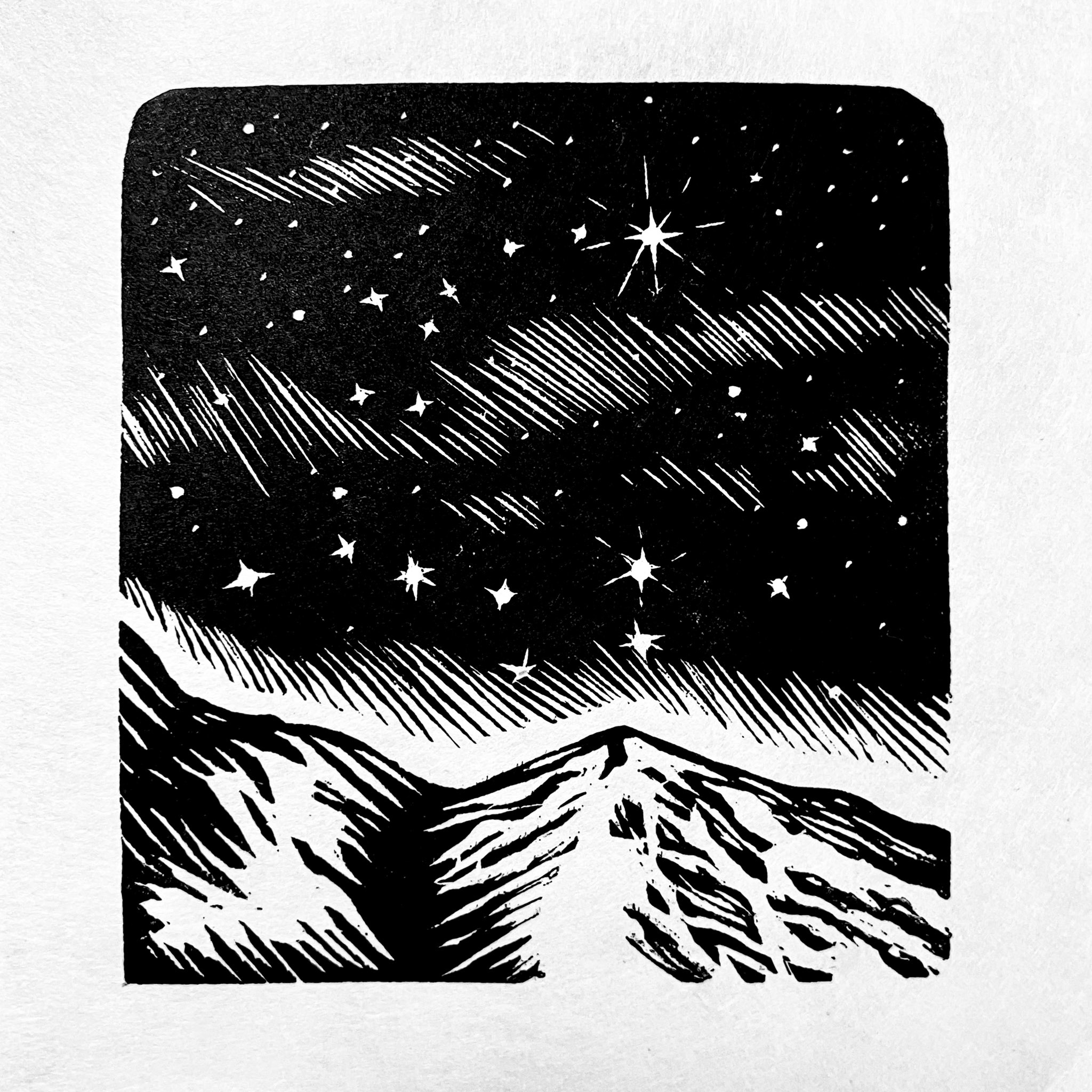
I carried only a film camera on this trip, so wasn’t able to capture a picture of the amazing Polaris alignment I witnessed on the ridge of Aonach Beag. However, the image was burned powerfully into my mind, so I decided to create a wood engraving. Here are some photos documenting the process. I also created an engraving for a new scene-break marker: it’s based around the star motif I’ve used for a number of years now, but with added aurora and Orion.
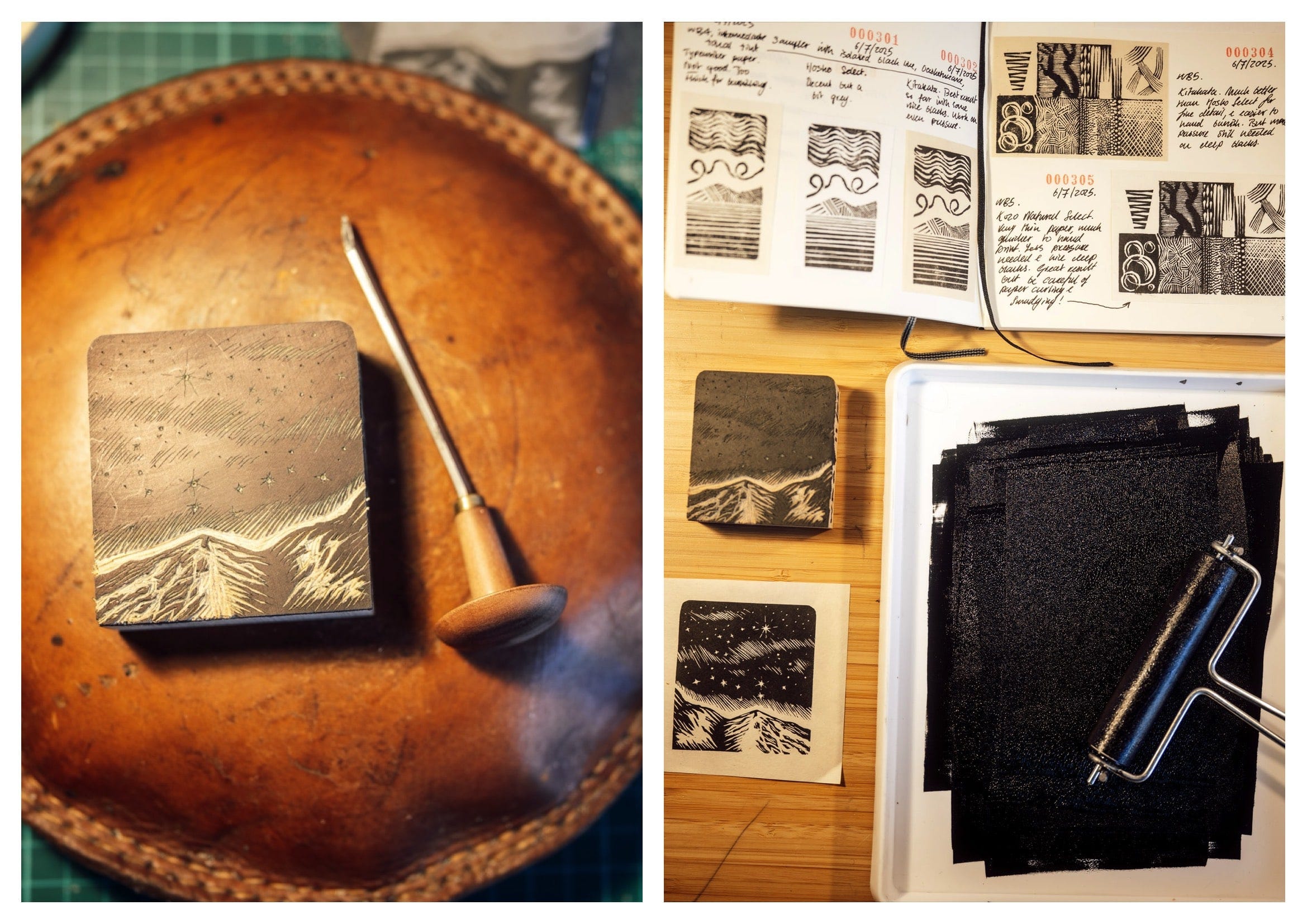
The other photographs were shot on my Pentax MX using Ilford HP5+ film exposed at ISO 800, then developed at home in Ilfotec LC29.

If you like what you’ve read, please subscribe to receive updates in your inbox and Substack app. Thanks for your support. And if you’ve enjoyed what you have read, please tell someone else about it!
Images and words © Alex Roddie. No AI has been used in the creation of any work on this page. All Rights Reserved. Please don’t reproduce this material without permission.
Comments
Nothing yet. Say the first thing.
Sign in to join the conversation.