
For those of you who prefer to read on paper (or e-reader) rather than in your Substack or email app, I have converted this essay into an easily printable PDF.
Outdoor Connections is a new B2B event at the start of the annual Kendal Mountain Festival (the UK’s biggest get-together of outdoor industry folk). Now, I wouldn’t usually be the target audience for a B2B event. But I was invited to participate in a short debate, ‘Slop or Substance?’, scheduled after Daniel Macaulay’s keynote speech, ‘Artificially Intelligent or Already Irrelevant?’ and… well, dear reader, you know me and my strong opinions about AI. This was one opportunity I could not refuse.
So how did it go? Did I hold my corner in the AI debate, and how did the floor react? Perhaps more importantly, what about the rest of the event – and what does it tell us about the state of the outdoor industry right now? Maybe (gestures vaguely) life, the universe and everything?
I scrawled down 10 pages of notes in my notebook, and I was encouraged to see a lot of other people taking notes on paper too. These are my hot takes and impressions a few hours after the event ended, including some quotes from other panelists and participants.
Overall: I was encouraged, and came away feeling far more hopeful than I expected.
I had preconceived ideas that most of the people in the room would be managers or execs who would be all on board the AI train in the name of increased profits, lower expenses, and less sticky human hassle to deal with… but unwilling to state this unpalatable fact outright, and instead hiding behind woolly terms such as ‘embracing innovation’ or ‘moving with the times’. I didn’t think there would be many creatives present, and I didn’t think ideas such as honesty, truth, meaning, beauty, art, and human connection would get much airtime.
Although the event could have done with being rooted a bit more in the whole, you know, actual outdoors(the thing we all supposedly love and what the outdoor industry is theoretically all about) in a lot of ways I’m glad to say I was wrong.
The general tone was set early on, with the concept of enshittification (internet platform decay and its economic causes) mentioned in the first few minutes by Tijana Tamburic. I was surprised to see such a strong defence of substance, traditional storytelling, creative craft, and moral values from so many of the speakers. Several of them spoke passionately about subjects I hold dear, such as the need to foster offline alternatives, questioning where culture truly resides (not with brands), the importance of art, and process-based versus outcome-based worldviews. I sensed a bit of a rallying around basic fundamentals and the need to embrace the fact that many people are looking to spend less time glued to their phones.
I was particularly impressed by the contributions from Tijana Tamburic, Sam Haddad, Gavin Fernie-Jones, Katie Moore, Jeffrey Bowman (whose ‘lightning talk’ was fantastic), Kesang Ball and Tom Wiltshire (who had some of my favourite slides and quotes of the day). I felt like I’d found my people. Great to chat with so many friends, colleagues and acquaintances too.
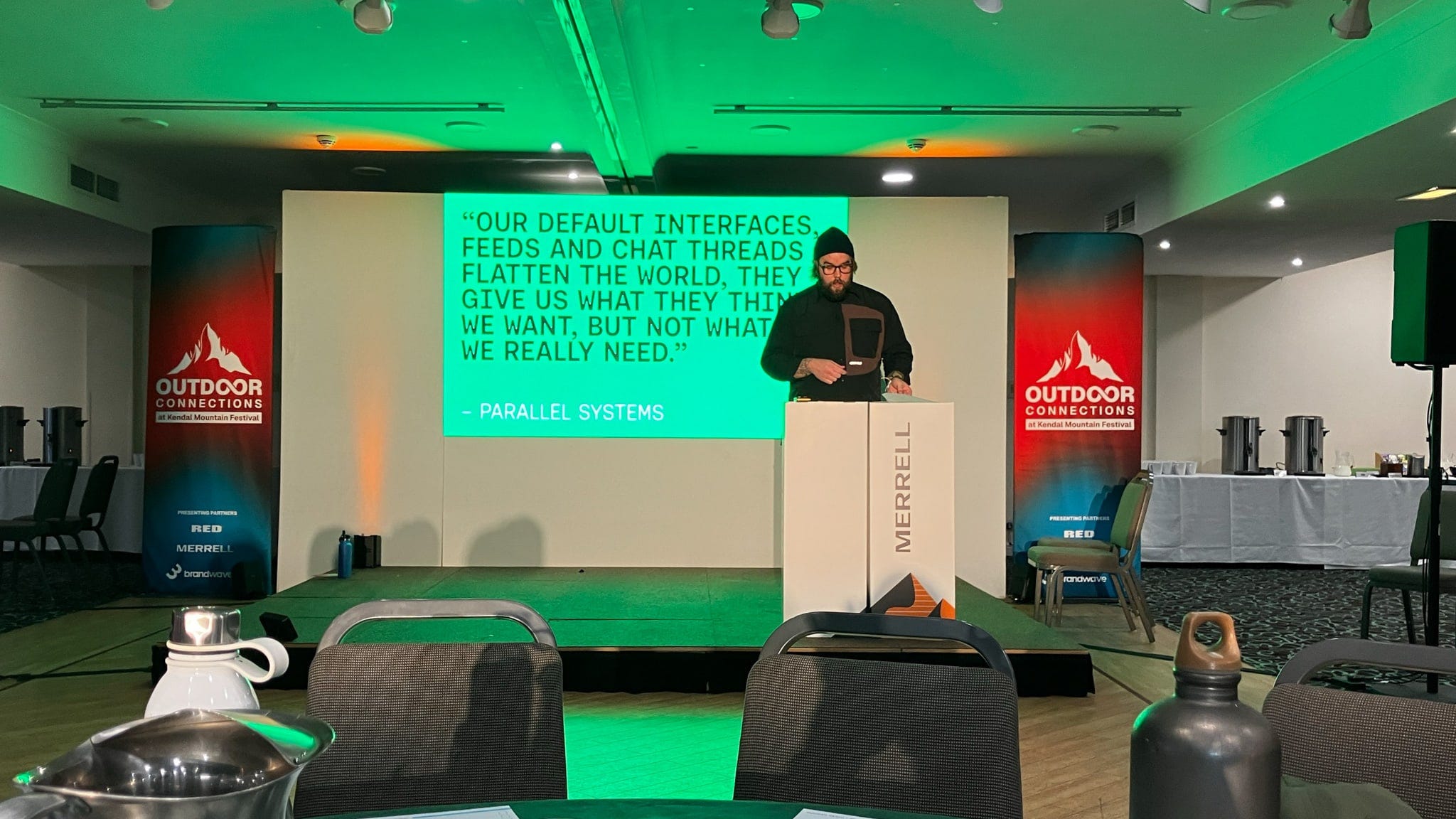
There was a strong undercurrent of tech scepticism – but perhaps not strong enough? Afterwards, I had a quick chat with Matt Barr, and he told me he thought the AI debate let big tech off the hook a little too easily. And I agree – it would have been great to get much more into this, and I could have gone harder myself. More on the debate in a moment.
‘Community’ was a term bandied around a lot, but I think we all know that when brands talk about community it’s almost always with an ulterior motive. It was refreshing to hear open chat about this. Can brands genuinely have a purpose beyond profit? This is the million-dollar question, isn’t it?
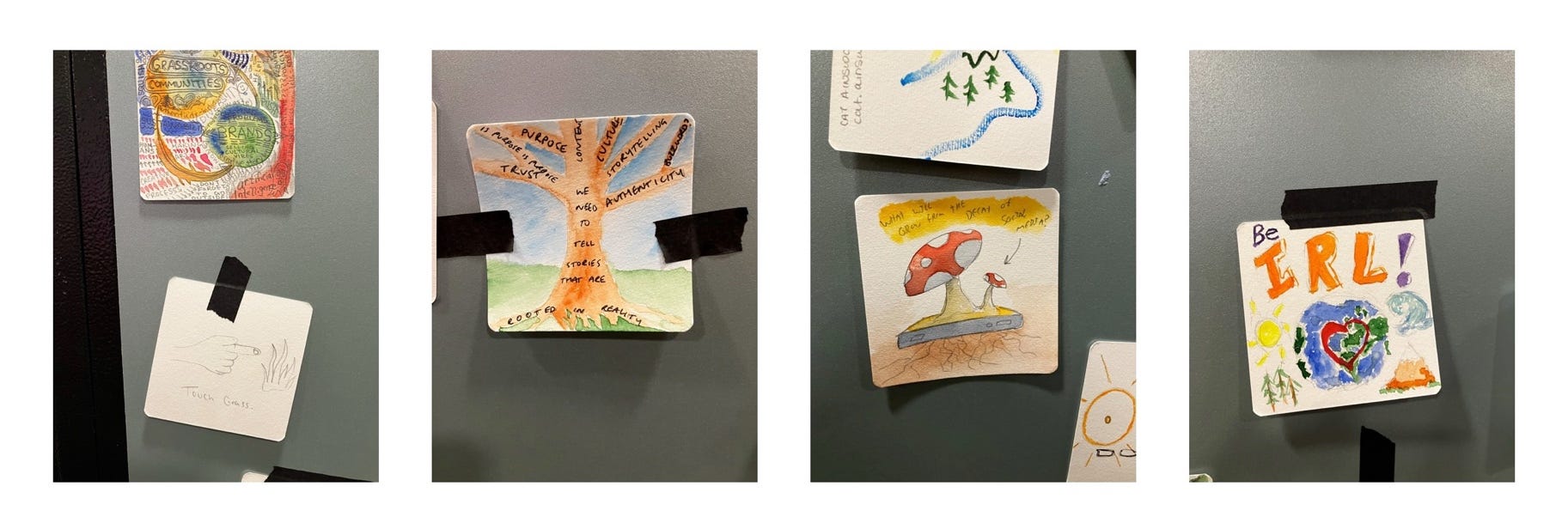
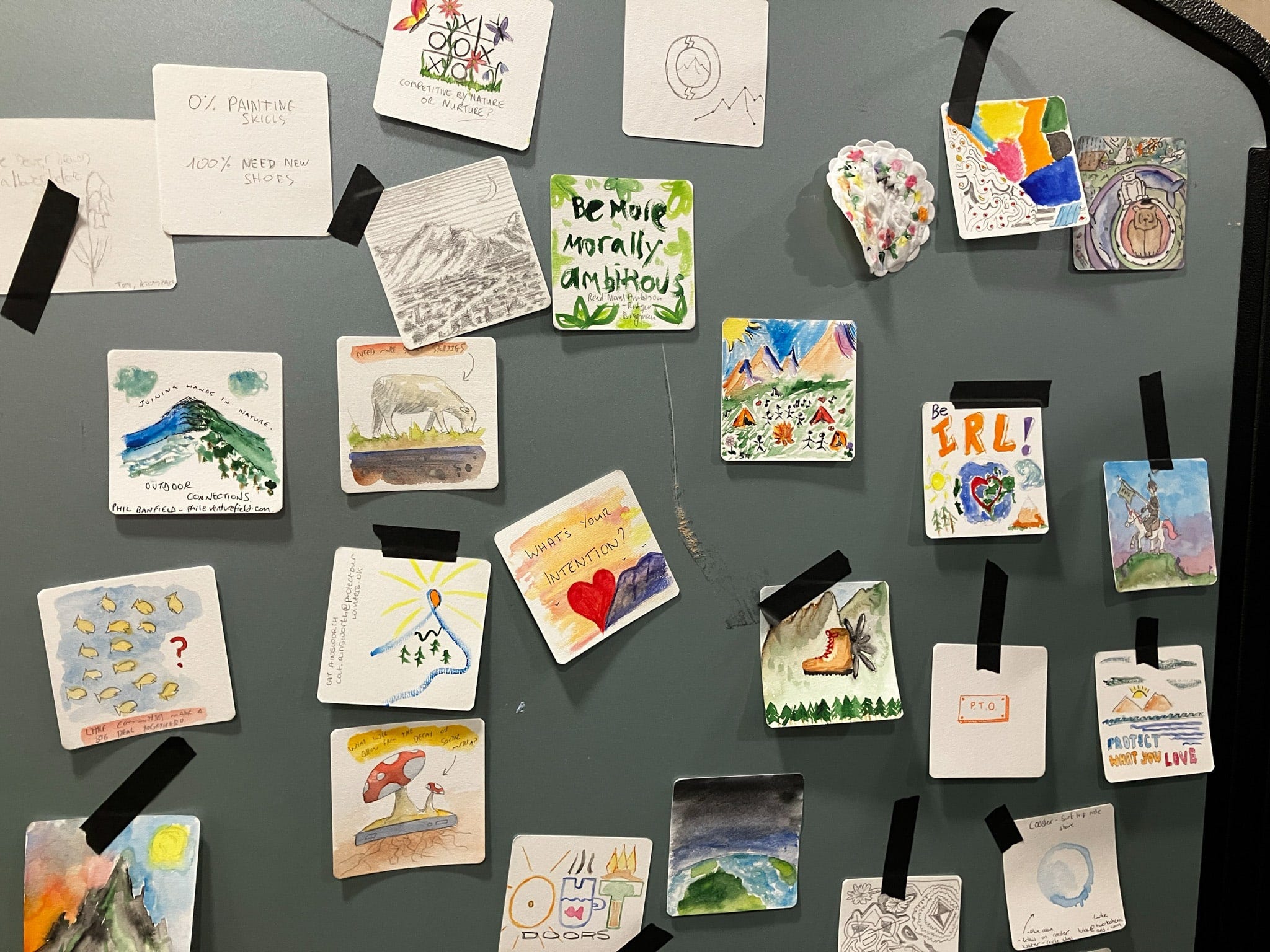
I LOVED the analogue creativity challenge. We were all given ‘napkins’ (squares of watercolour paper) to draw our ideas on. Some fantastically creative work got stuck up on the board at the end – and, again, the overall themes coming through were striking to me. A strong undercurrent of being rooted in human experience, in offering alternatives to the culture-stifling online world, in just getting outside and doing real stuff.
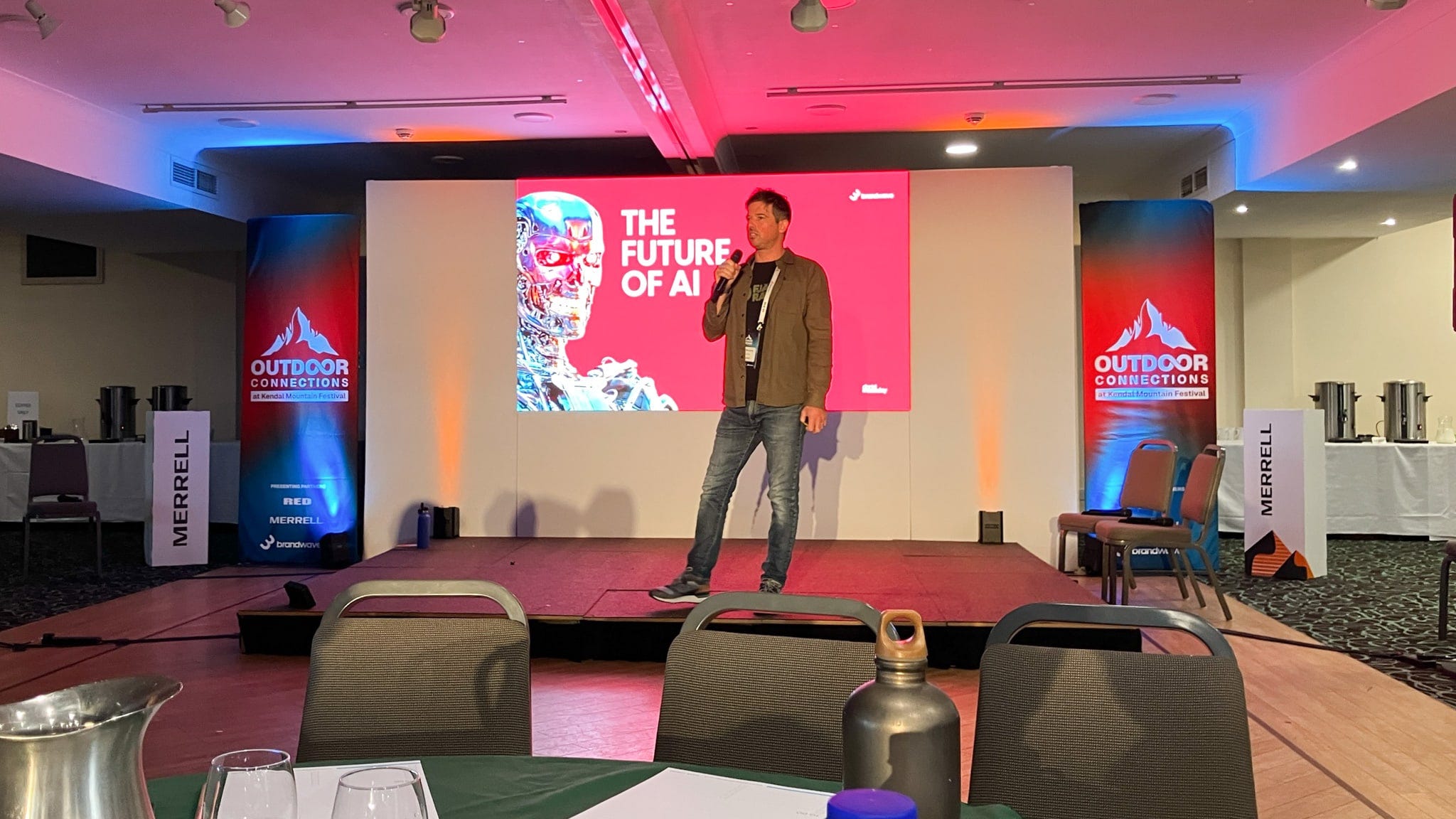
I’d already studied the version of Daniel Macaulay’s keynote I’d read online, which you can see here. Although time pressures played into this, I thought it was interesting that the version of the speech he gave today didn’t go anywhere near as hard on the ‘embrace AI or die’ angle. My view is that he read the room and calibrated his angle accordingly.
For example, when he asked how many people present used LLMs to write emails, I don’t think there were as many raised hands as he expected (for what it’s worth, I consider it rude if someone sends me an AI-generated email; it tells me they can’t be bothered to communicate with me in person). Perhaps more telling was the response to his question about how many people thought this controversial Google Gemini ad was acceptable. Not many people did. However, he did make an interesting point about shifting baselines regarding the acceptability of this stuff – a point later referenced in an audience question, when someone asked what we’re doing as a society if we allow children to have their formative experiences mediated by AI.
I was unconvinced by Daniel’s claim that the only solutions to climate change will come from AI, especially given that he’d just finished recounting facts about the sector’s mind-boggling energy use. I agree that AI might well yield breakthroughs in climate science. But there’s absolutely no doubt that its energy and water impact will accelerate dangerous climate change, and I’m convinced that the only lasting changes will come from people working together for a common goal. Systems change, in other words. Fundamentally, is AI capable of creating insights that go beyond the systems that gave birth to it? I doubt that. Even humans struggle, but I do have faith in the capacity for excellence in humans still, despite everything.
Anyway, the debate itself went well! I was on stage with Daniel, as well as event host Keme Nzerem and Tom Reding. After Tom and I introduced ourselves and our general take on AI in creative sectors (Tom broadly for, me broadly against), the debate was opened to questions from the floor.
Interestingly, most of the questions came from fellow creatives who were concerned about issues such as trust, authenticity, and retaining a connection between storytelling and actual embodied human experience in the great outdoors. I can’t remember exactly what I said, but two different people told me I was eloquent (as well as the best-dressed person in the room!) and I felt like I responded well. I made a point of asking brands how replacing human creatives with AI gels with their professed stances on social justice and equality. I also mentioned the fact that people are using chatbots as therapists and spiralling, in some cases ending up committing suicide.
Overall I think there was a consensus that AI is out there now, it’s a technology that has vast power, and it’s up to brands and individuals to use it wisely and transparently if they’re going to use it. Tools this powerful can cause massive damage if misused. I was pleased to see such an emphasis on trust; I do recall saying that people are eager to call out AI content if its use isn’t declared by the brand, and that once trust has been lost it’s hard to get back. I was encouraged by the fact that most of the room seemed to be broadly behind my point of view, which is that we need to put moral guardrails in place and pressure governments to regulate this stuff, because big tech is not going to regulate itself.
So as I said earlier, I was surprised, because this wasn’t how I thought this would play out. I expected to be one of the few voices speaking out in defence of these values. Instead, I almost seemed to be preaching to the choir.
I could write so much about this event, because it’s given me a lot to think about, but it’s late and I don’t want this to turn into a 5,000-word essay, so I’m going to keep the rest of it short.
Here are some quotes that set the overall mood I picked up on. I think I’ve got the attributions right, but was note-taking at speed so my apologies if any are misattributed. I’ve cherry-picked these because I found myself nodding so hard I thought my head would fall off:
Tijana Tamburic:
Content is being stifled by the algorithm.
Brands lack moral ambition.
Innovation comes from the arts.
Jolyon Varley:
We’ve reached peak brainrot AI sh*t, and next year we’re going outside.
The young mind doesn’t need to be engaged in the clickhole of social media. [Regarding the ban on young Australians having social media accounts]
Sam Haddad:
Brands want to buy credibility rather than build it.
Jonathan Weaver:
The best critiques of outdoor brands come from outside the outdoor community.
Gavin Fernie-Jones:
If you’re not telling authentic stories, if you’re not transparent, your audience will know.
Brands are still stuck in the consumer story. If you have to sell more stuff, it’s hard to break out of that mindset.
Katie Moore:
Everyone’s got a bit bored of ‘ex-athlete overcomes obstacle to get to the top’.
Stories are much more influential when they travel person to person.
Jeff Bowman:
Creativity can’t be measured with a KPI.
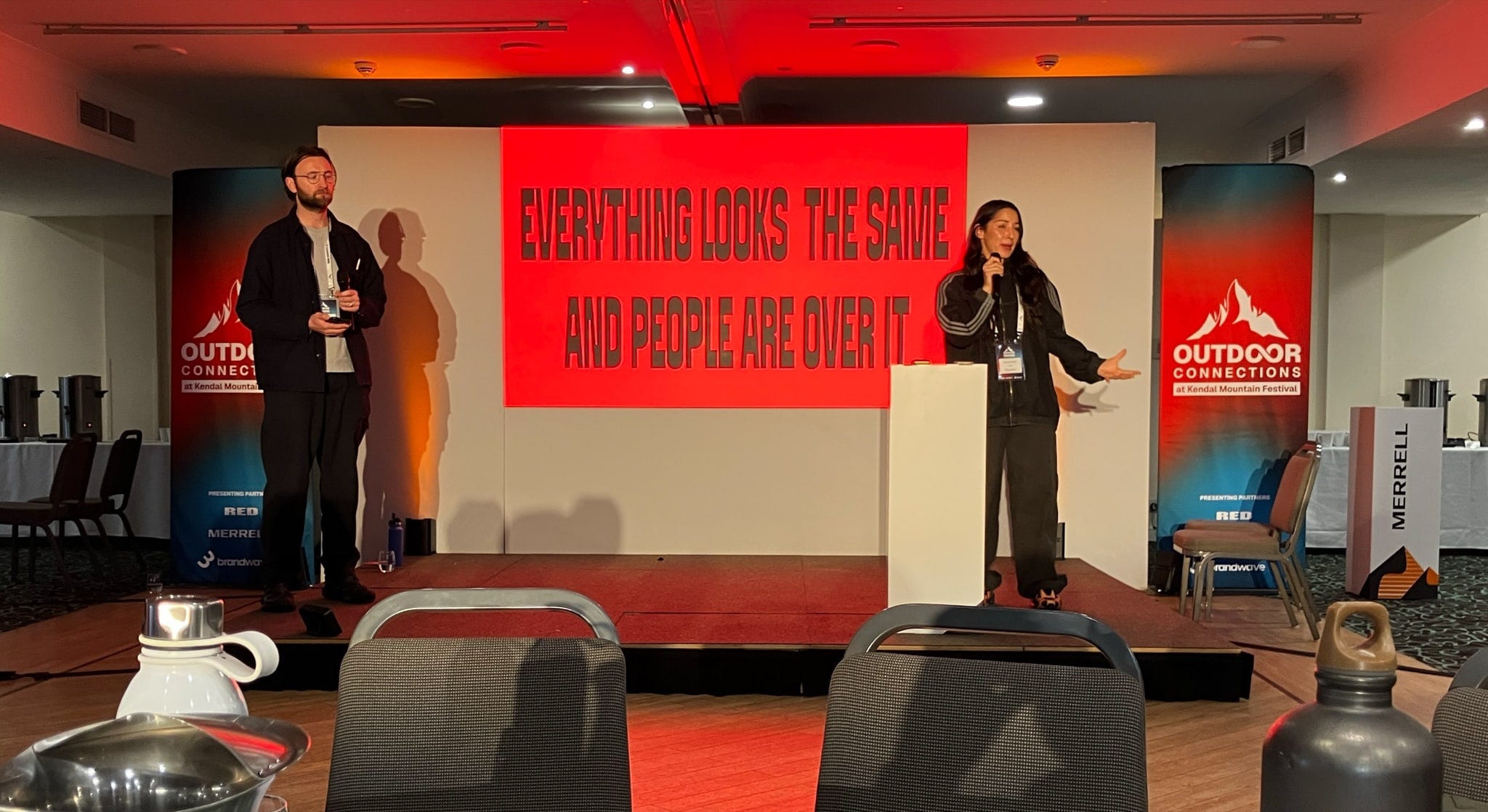
Is the algorithm flattening the world? Yes.
Algorithms exploit humans as data.
We’re optimising our way to the bottom.
Kesang Ball:
Everything is so f*cking mid and people are mad.
Algorithms are conditioning your taste.
How do you get out of that? Offline and IRL.
Brands are breaking away from the online world and becoming more decentralised.
We’re seeing culture move from cities to rural areas – for example the explosion of new photographic darkrooms around the UK.
Listen, then listen again.
If you like what you’ve read, please subscribe to receive updates in your inbox and Substack app. Thanks for your support. And if you’ve enjoyed what you have read, please tell someone else about it!
Images and words © Alex Roddie. No AI has been used in the creation of any work on this page. All Rights Reserved. Please don’t reproduce this material without permission.
Comments
Nothing yet. Say the first thing.
Sign in to join the conversation.