
Social media is broken. You already know this. But there’s one exception, and once I noticed it I couldn’t stop noticing it.
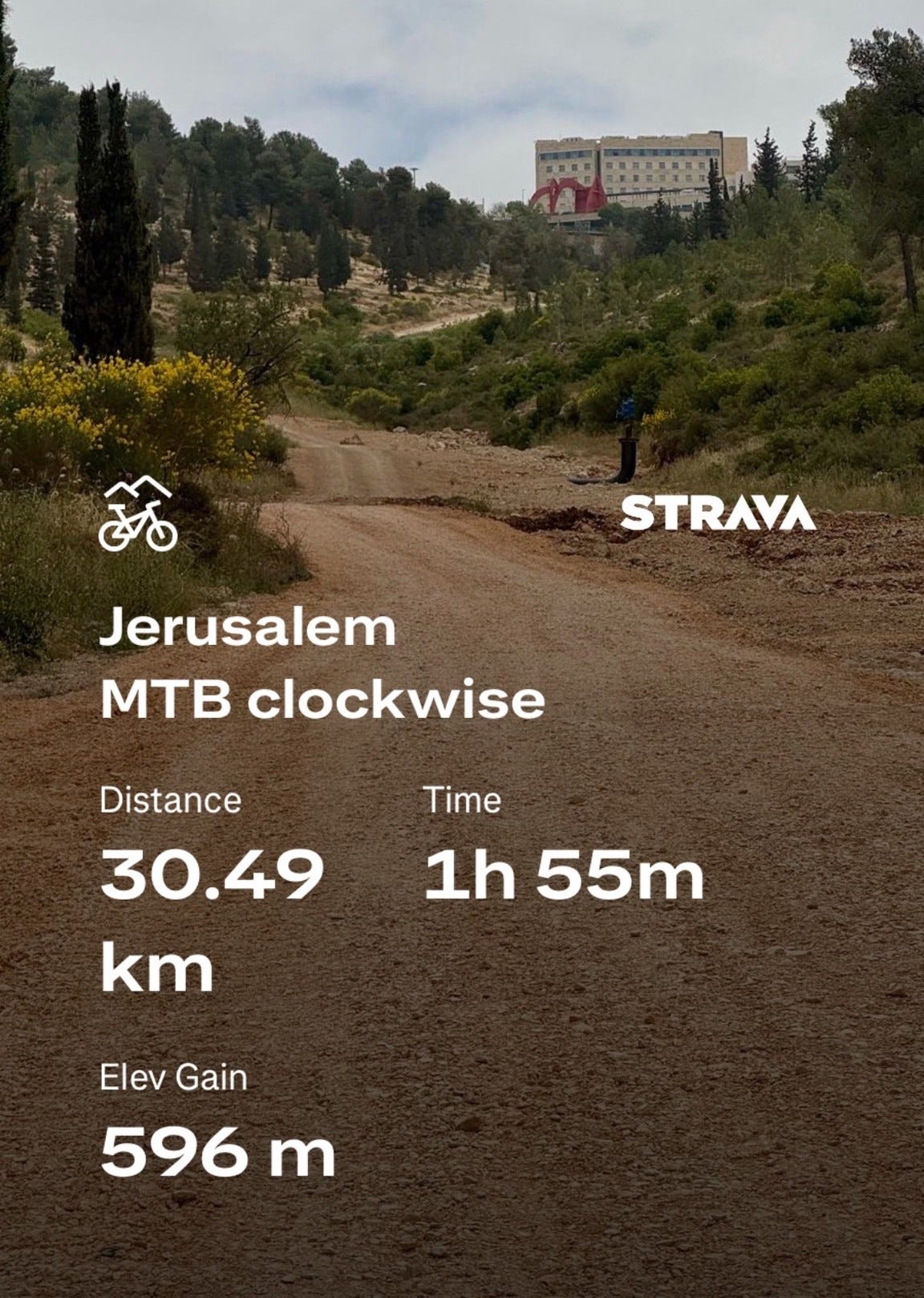
Strava is the last real social network left.
Not the biggest. Not the loudest. But the only one where I open the feed and actually know what the people I follow are doing. Where a post is a record of something that happened, not something engineered to drive leads. That used to be the entire point. A social network was a graph of people you knew and a feed that told you what they were up to. Somewhere along the way we forgot that was the goal.
I’ve been around for most of this. I was on Facebook when it was just a profile page, before the newsfeed even existed, when it felt like a directory of people you actually knew. I later worked on the Facebook IPO and studied the business closely. So I’ve watched these things get built, watched them work, and watched most of them rot.
Here’s the version everyone tells: TikTok built an engine that optimized for engagement over connection. It didn’t care who you followed. It cared what kept you watching. It worked so well that every other network panicked and copied it, terrified it would eat their lunch. Your feed stopped being your friends and became a slot machine. The graph went quiet. The algorithm took over. Every post from someone you actually follow now has to be over-designed to survive that algorithm, which means it drifts further and further from anything real.
That story is true. But it’s not the deepest thing going on. The deeper thing is architectural, and it’s the part that interests me as an investor.
The single player mode
Cut every social feature out of Strava and it still has value. Your rides, your runs, your splits, your training load over a season. That’s just you and your data, and it’s useful on its own. Garmin has this. Apple Health has this. A training log has this. The social layer is upside, not the foundation.
That used to be the whole pitch for a great network, and we’ve half forgotten it. The classic network effects argument has two parts. One, the product is more valuable the more people use it. Two, and this is the part that quietly dropped out of the pitch over the last decade, the product is valuable to a single person before anyone else shows up. A genuine single player mode. Value at n equals one. You might even call it SaaS.
When both halves are present, you get something durable. The single player mode pulls people in for functional reasons. The network effect keeps them once they arrive. But the order matters, because the single player mode is what determines what the network has to do to survive.
Recently a GCN presenter decided to quit Strava as an experiment to see how “addicted” he was to the feed. Two funny takeaways from the experiment. First, he still recorded everything on Strava (just didn’t publish it to the public). Second, he failed! He couldn’t resist posting one of his big rides. It speaks to the value of the tracking systems and analytics that they have built. When a professional cyclist wants to train in private, rides still get uploaded to Strava for analysis - they just don’t get published.
Facebook had a single player mode too, and most people have forgotten what it was. Photos. Before the feed, before the ads, before any of the engagement machinery, Facebook was where you stored and organized and tagged your photos. That was the utility that worked at n equals one. You’d have used it even if half your friends weren’t on it yet. The photos got you in, the social graph captured you, and once you and your photos were both locked in, the company was free to build whatever feed monetized you best. The single player mode was the hook. The network was the moat. And the feed became the extraction engine, because nothing about the architecture required it to stay honest.
Strava has stayed true to this single player mode as core functionality, and that one difference explains almost everything. (And yes, I am a paying subscriber of Strava.)
Why the architecture stays honest
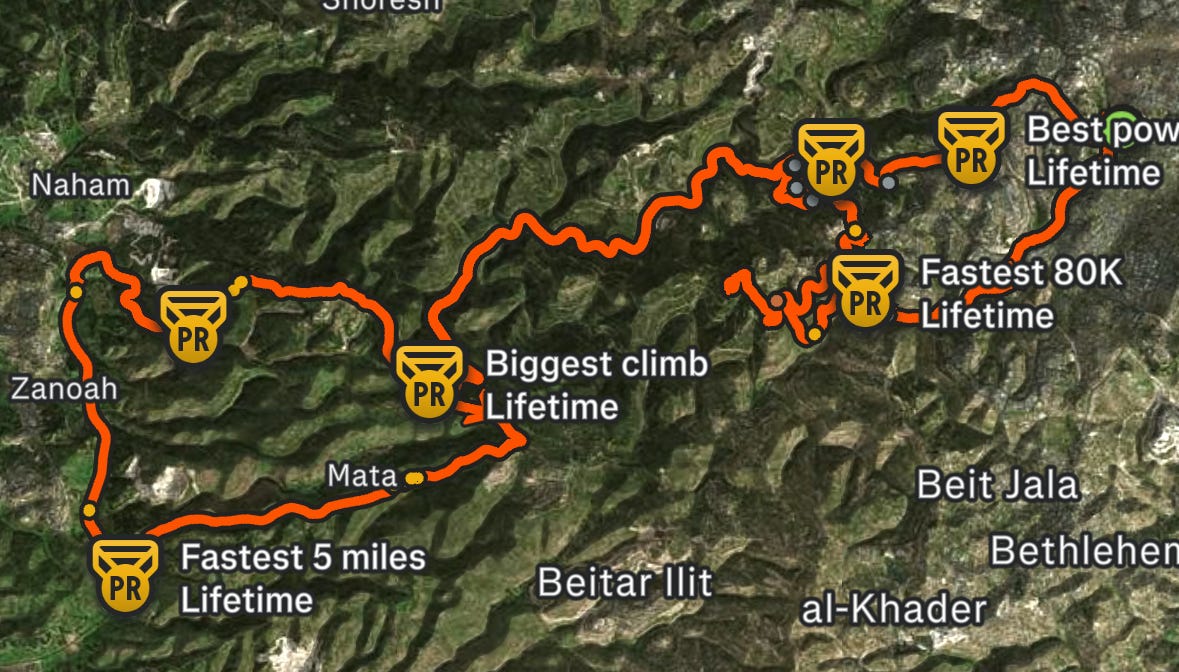
Strava’s single player mode is your own training data, and training data points outward. It only updates when you go do something in the real world. There’s no version of Strava that becomes more valuable to you by holding your attention longer inside the app. It becomes more valuable when you ride more, run more, climb more. So even if you are scrolling your friends’ rides and analyzing their power numbers, the idea is still that it’s going to wind up with you back out on the road. The product’s core utility is downstream of physical effort, so the product has a structural reason to send you back out into the world rather than keep you scrolling.
That’s why it never had to become a slot machine to justify itself. The utility was already there at n equals one, and that utility was honest, so the network layer got to be honest too. Compare that to a network whose single player mode is thin or nonexistent. If the product has no standalone value, the only thing it can sell is attention, and the only way to get attention is to optimize the feed for engagement over truth. The architecture forces the dishonesty. Strava’s architecture forbids it.
So yes, Strava optimizes for engagement. But it does it in the real world, because the only way to generate content for the feed is to physically go do the thing. You can’t perform a Strava feed the way you perform the others. A 40-mile ride is a 40-mile ride. A slow run on a bad day is a slow run on a bad day. There’s no filter that fakes the effort. People have literally hired so-called “Strava mules” to ride around with their phone to juice their numbers, and that makes the point better, not worse. Nobody builds an elaborate cheat for a metric that means nothing. The signal is real because faking it is hard.
What honest networks do to people
The payoff of all this is in what the feed does to you, and it’s the opposite of what the others do.
You don’t follow someone on Strava for their take. You follow them and think, I want to ride with that person. Or, I want to get faster so my tempo run could at least keep pace with their recovery day. The feed points back out at the world instead of pulling you deeper into the screen.
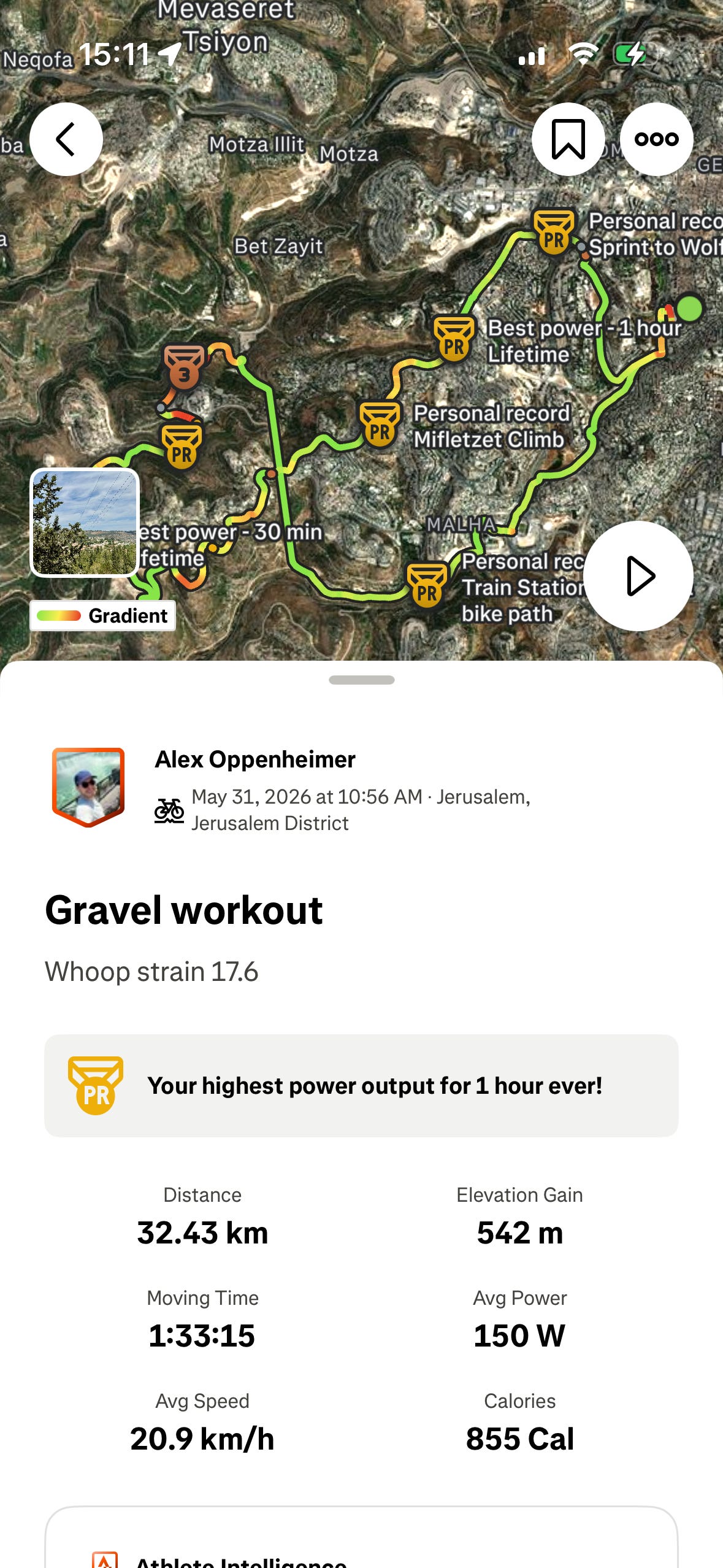
Here’s what I mean. I started following someone on Strava who is part of Geerz, which I recently also joined. (Great organization worth checking out and supporting). One honest dimension, his rides, nothing else. Then we actually rode together and met in person, and he did not disappoint. Strava had given me exactly the right context going in. I felt like I already knew one true thing about him, and just one was enough to make me excited to meet him. No other network does that. They give you a curated everything that adds up to nothing. Strava gives you one real thing you can stand on.
Even the small mechanics stay honest. Kudos are not likes. They aren’t an endorsement or a vote or a thing you hand out to be seen handing it out. They’re earned applause. Someone went out and did the work, and you saw it.
We don’t live on the network. We just use it to share and connect. That’s the whole job, and Strava is the one place that still remembers it, because it lives downstream of something you actually had to go out and do.
There are flickers of this returning elsewhere. Twitter’s “Following” tab is basically an admission that the algorithmic feed broke the original promise and that some people want the graph back. I hope that’s the direction. A version where the social graph comes back to life and the feed is people again.
And there’s a quieter thing underneath all of it. The last several years built a digital wall between us, and the stuff that travels fastest through that wall is the stuff that divides. Strava is the rare feed where shared physical experience does the connecting instead. It’s healthy in both senses, the body and the head. The worst argument it can start is whether road biking or mountain biking is the superior way to enjoy time on two wheels.
We’re not going to fix the other networks. But we can shift our time toward the ones that give us what we actually need while taking a lot less from us. The tell, every time, is the single player mode. Ask what a product is worth to one person, alone, before the crowd arrives and the algorithm takes over. That answer decides whether the network it grows into has any reason to stay honest.
If you really want to know what’s going on in my life, follow me on Strava.
It’s the real performance. The one you can’t hide or outsource. And remember to get outside. Go for a ride, a run, a walk, a workout. Record it if it helps you stay consistent and share it if it helps you stay motivated!
Comments
Nothing yet. Say the first thing.
Sign in to join the conversation.