
On July 19 (the date keeps getting pushed), Fable 5 leaves the paid Claude plans. The strongest model Anthropic has ever shipped will likely be pay-per-use: $10 per million tokens in, $50 out. That’s double Opus 4.8, and it makes Fable 5 the most expensive model in the current Claude lineup.
Fable 5 made a real difference in my operation this month, and if you used it for anything serious, you felt the same thing.
But the answer isn’t panic-paying for everything, and it isn’t quitting the model cold. The answer is knowing which jobs go to which model. I run my whole business on these three, so this decision stopped being theoretical for me a long time ago.
Here’s my routing system.
Three parts: know the lineup, run the test, set it once.

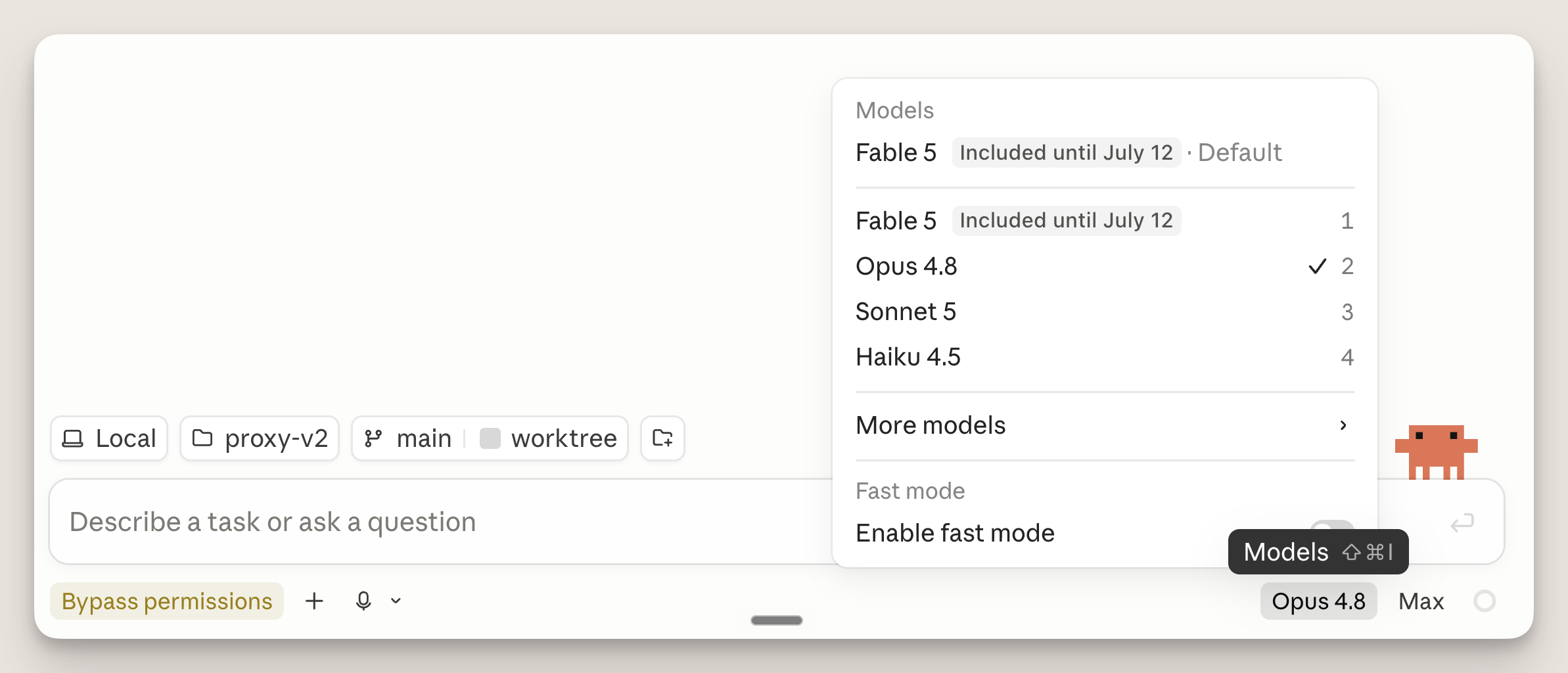
1 — Know what each model actually is
Anthropic’s own positioning, translated:
Sonnet 5: the volume layer
Anthropic calls it “the best combination of speed and intelligence,” and it’s the default model in Claude Code right now. Intro pricing runs $2/$10 per million tokens through August 31. Drafts/notes, general research, summaries, formatting, routine agent runs — anything you’ll review before it ships lives here happily.
Opus 4.8: the daily driver
“For complex agentic coding and enterprise work” is the official line, and Anthropic’s model docs literally say that if you’re unsure which model to use, start here. $5/$25. Real work: full pieces and deeper research, multi-step builds, content repurposing, the sessions where you and the model are actually working through something together.
Fable 5: the specialist
Anthropic’s description is “next-generation intelligence for long-running agents,” and it’s their most capable widely released model. $10/$50, and noticeably slower — the docs list it as the slowest of the three. It’s not a better everything-model. It’s a deeper one. I use this mainly for extremely deep research with 10+ subagents, building courses, creating dashboards, apps, and sites. I’s also my go-to for my actual system building.
2 — Run the 3-question test before any job goes to Fable 5
This is the whole decision, and you can run it in ten seconds. Before a job gets Fable prices, it needs two yeses out of three:
Question 1: the redo test
If a cheaper model runs this and comes back mediocre, will I run it again? Be honest. A double-run on Opus costs the same as one clean run on Fable, and takes twice as long. One-shot jobs that have to land the first time are Fable jobs.
Question 2: the stakes test
Does a wrong answer cost me more than the tokens? Client deliverables, decisions I’ll act on with real money, the final check on something already built. And the harder version of this question: can I even verify the output myself? When the work is beyond what you can personally check, you want the most capable model in the room, not the cheapest.
Question 3: the edit test
Am I going to rework this heavily anyway? Then the premium buys polish I’m about to sand off. First drafts, or drafts that don’t need a lot of context or thinking, don’t always need Fable prices.
The default direction matters as much as the test: route to the cheapest model that honestly does the job, and escalate only what fails. Not the other way around. Running everything through the top model “just to be safe” is how you end up with a surprise bill for work Sonnet was covering fine.
If this is useful so far, it’s useful to someone else you know!
3 — Pull the effort lever before you pay up
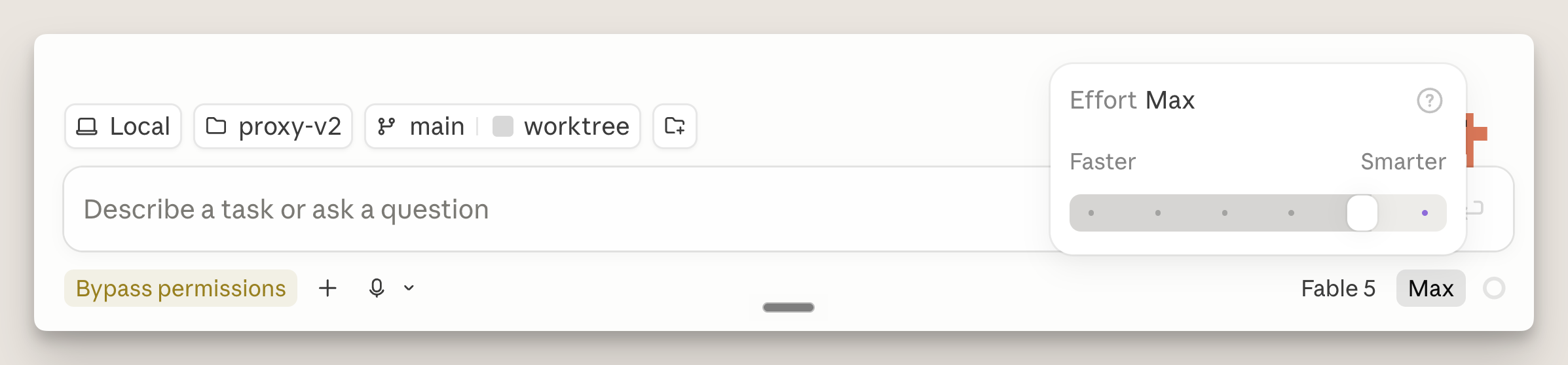
Every one of these models has a dial that controls how many tokens it spends thinking and responding, and it changes the math before you ever switch models.
Two lines from Anthropic’s own effort docs that are worth the whole page:
On Fable 5: “Lower effort settings on Claude Fable 5 still perform well and often exceed xhigh performance on prior models.” So when a job genuinely earns Fable, you can still pay less Fable: run the routine parts at lower effort and save the maximum setting for the genuinely hard reasoning.
On Opus 4.8: “Start with xhigh for coding and agentic use cases.” Which means before you reach past Opus for a hard job, crank Opus first. A lot of what feels like “I need Fable for this” is actually “I need Opus actually trying.”
Sonnet at high effort, Opus at xhigh, Fable by the job. That ladder covers more ground than most people’s top-model habit does, for a fraction of the cost.
4 — Set it once
Don’t relitigate this per task.
5 minutes today:
Write the routing into your CLAUDE.md: which work defaults to which model, and the three questions for anything that wants Fable. The decision lives in the system, not in your head at 11pm.
Enable usage credits now, not mid-task. If you want any Fable access after it leaves subscriptions, turn credits on before the window closes so nothing cuts out in the middle of a run you care about. (BEWARE: It’s expensive)
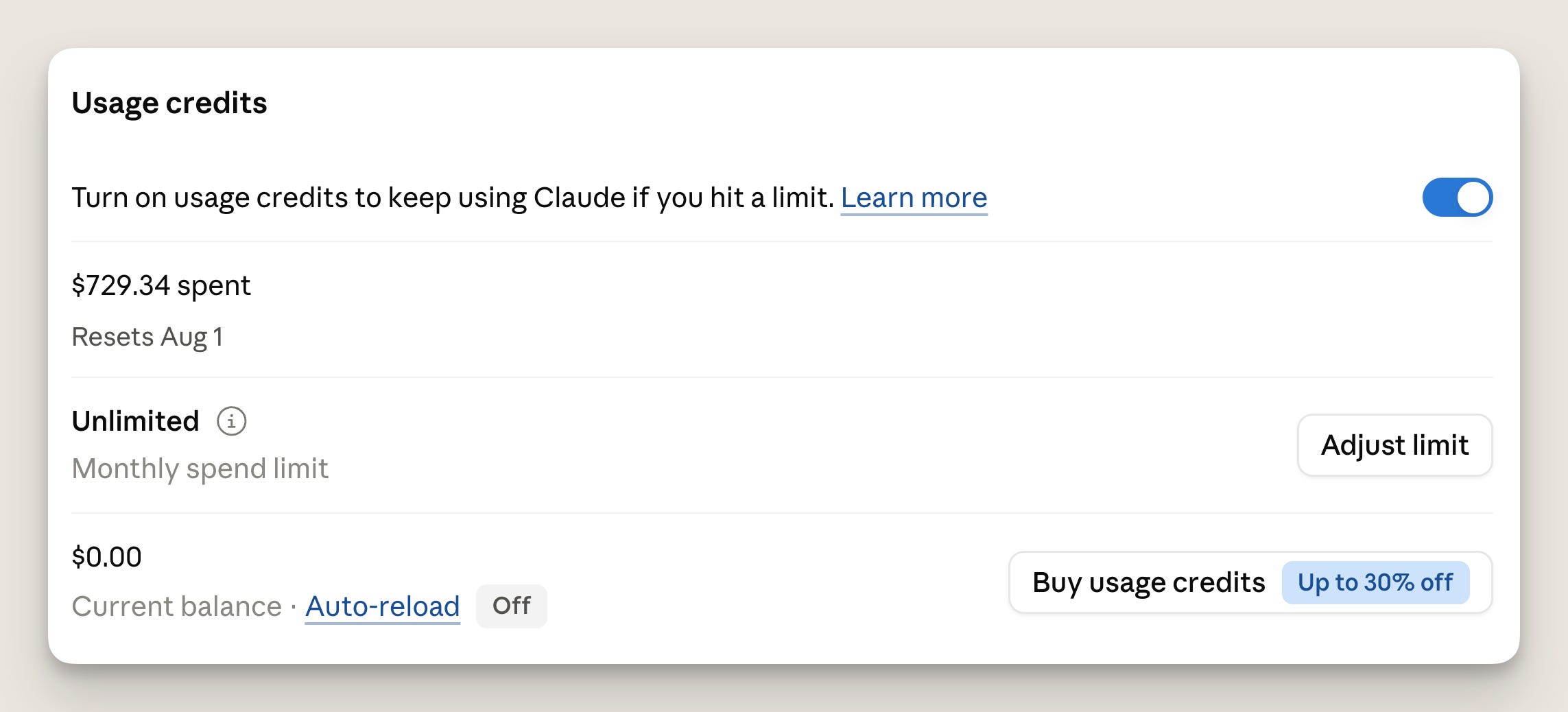
Watch your first week’s spend. Whatever you think your routing is, the first bill tells you what it actually is. Adjust from real numbers.
And one more thing worth knowing: Anthropic has said publicly they aim to restore Fable 5 as a standard part of subscriptions once capacity allows. This setup isn’t forever. But “temporary” with no date attached is exactly when a routing system pays for itself — you’re covered either way.
So here’s the whole play. Learn the lineup. Run the three questions. Set the defaults once. The best model in the world has a big price tag, and that’s not bad news for people with a system: you’ll find out exactly which parts of your work were being carried by frontier intelligence, because they’ll be the parts worth paying for.
Route the rest down the ladder and keep shipping.
—Alex
P.S. My first job I paid full Fable price for was an audit of my wiki (second brain). Deep synthesis across months of my own thinking. If you built your second brain, that’s your first candidate too. If you haven’t, built it here.
Comments
Nothing yet. Say the first thing.
Sign in to join the conversation.