
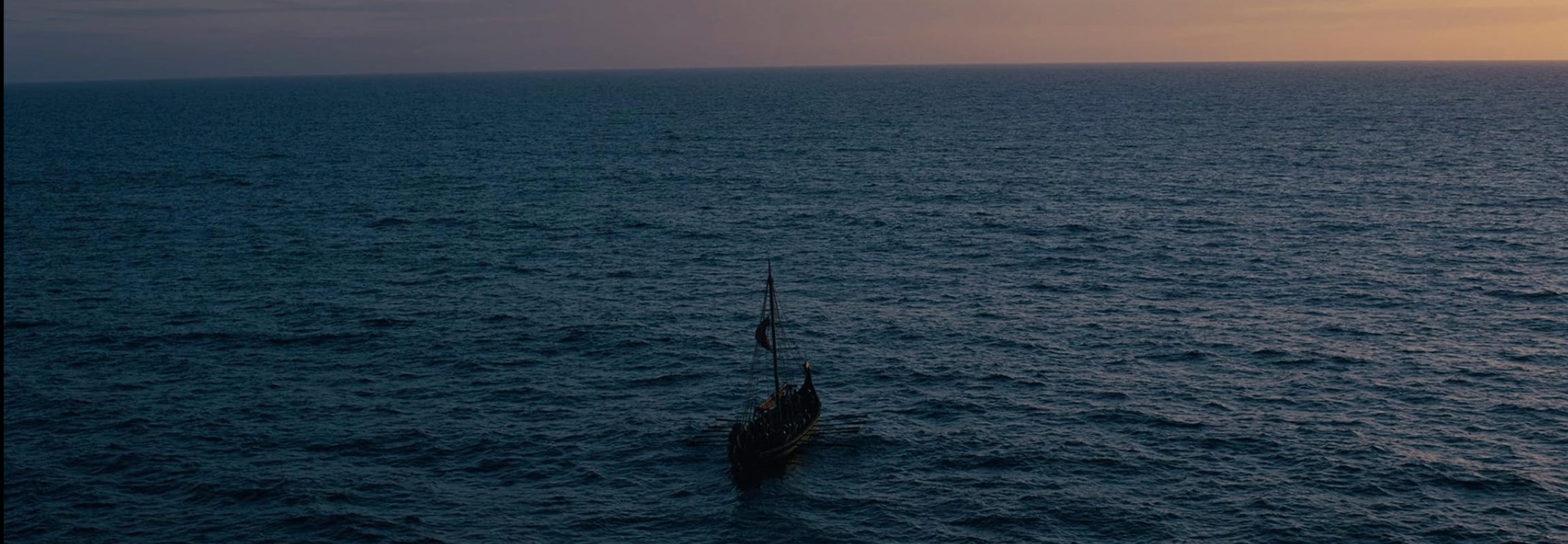
There are films that only a handful of directors could persuade a studio to finance, and there are films that only one director on Earth could actually make. Christopher Nolan’s The Odyssey is both.
Convincing a studio to bankroll a practical, IMAX-shot adaptation of a 3,000-year-old Greek epic is an achievement in itself. But no other filmmaker working today has the technical ambition, audience goodwill and sheer filmmaking confidence to attempt an odyssey across twenty years of myth and legend with this level of scale. This is blockbuster filmmaking that repeatedly asks, “What if we did it for real?”
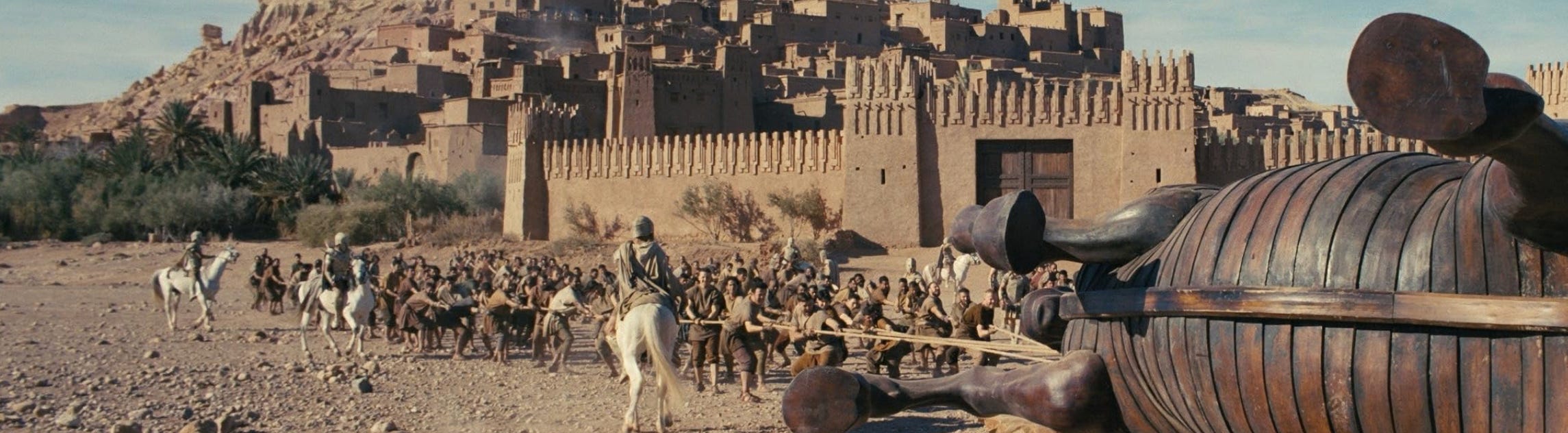
There’s an odd symmetry to that. Around twenty years ago, Nolan was reportedly linked with directing Troy. That never happened, but in hindsight, it almost feels inevitable that his path would eventually lead back to the Trojan Horse. His entire career has been building towards stories about time, myth, memory, and impossible journeys. The Odyssey doesn’t feel like a detour. It feels like the destination.
Universal Pictures
For me, the film naturally divides into two halves.
One belongs to Odysseus himself as he attempts to find his way home across a world populated by monsters, gods, and impossible landscapes. The other remains in Ithaca, following Penelope and Telemachus as they manage the political and emotional consequences of his absence. The Odysseus material is where the film truly comes alive.
Watching it, I was reminded less of modern fantasy than of films like 2001: A Space Odyssey and Lawrence of Arabia. Singular visions where technical innovation isn’t the attraction but the language through which the story is told. Nolan has always pushed the boundaries of what blockbuster cinema can look like, but here he raises the ceiling again. This is filmmaking on a scale that genuinely feels new.
The practical effects, enormous locations, and Nolan’s commitment to photographing real things create an overwhelming sense of physicality. You never feel like you’re watching actors wandering through digital environments. Every frame has weight, every landscape is real.
I was fortunate enough to catch the 00:01 am IMAX screening, and there were multiple moments where I simply sat there in disbelief at what Nolan and Hoyte van Hoytema had managed to put on screen. It isn’t spectacle for spectacle’s sake. It’s a spectacle that continually serves the mythology.
Van Hoytema’s cinematography deserves to sit alongside the very best work of his career. The scale is breathtaking, every image is carefully composed while somehow retaining the feeling that you’re witnessing something impossibly large. Visually, the film borders on the miraculous.
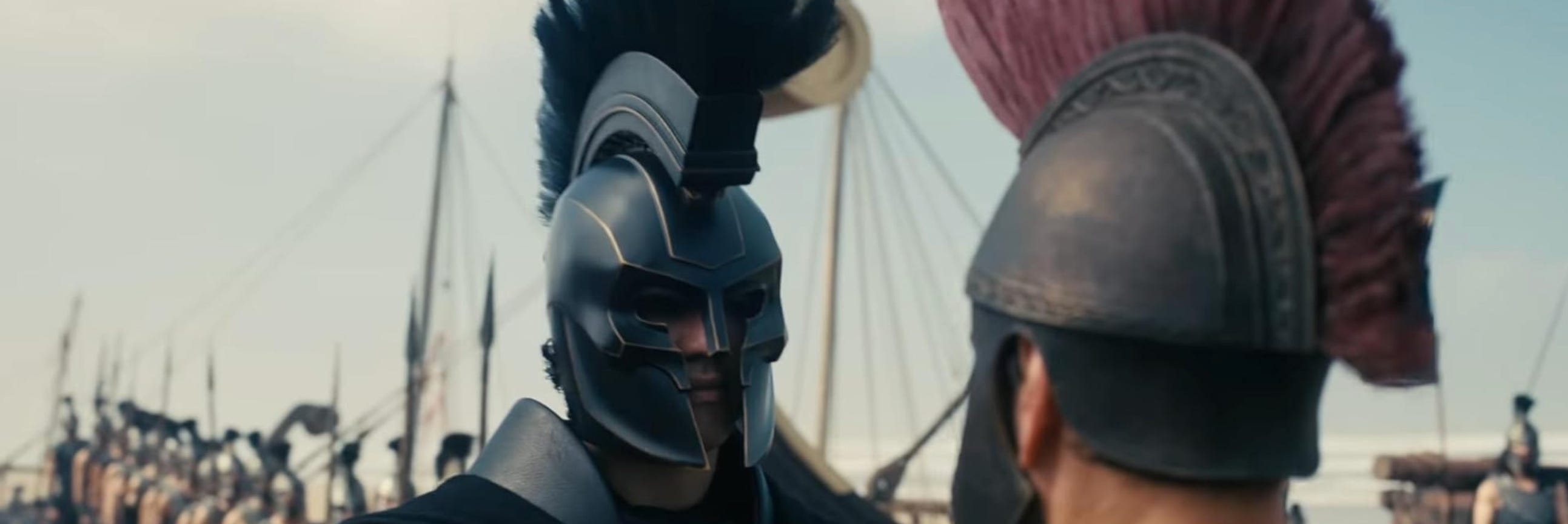
Three particular scenes I want to shout out. Agamemnon’s walk through Troy feels genuinely mythic. The non-historically accurate costume design, combined with the way Nolan photographs him, instantly elevates him into the realm of myth rather than history. The entire descent into Hades is my favourite sequence in the film and Eliot Page in particular stands out as Sinon. The Sirens sequence also absolutely worked for me, balancing beauty and terror in a way I’d hoped it would.
And that’s before mentioning the lightning storm, the Trojan Horse itself, the Cyclops, or one of the film’s unexpectedly tense dinner sequences. Nolan has assembled set pieces that don’t simply entertain, they linger long after the credits.
Universal Pictures
Ludwig Göransson also delivers what may prove to be one of his most understated scores. It’s less immediately showy than some of his previous collaborations with Nolan, but its emotional intelligence gradually reveals itself. The music swells without overwhelming the images, giving the film a swelling operatic grandeur that never slips into parody.
A lot has been discussed about Jennifer Lame’s editing, she deserves equal praise to Nolan for The Odyssey. Despite jumping across three timelines, the nonlinear structure remains remarkably legible. Nolan has always trusted audiences to keep up, but this may be the clearest complex structure he’s ever constructed. The constant movement between Odysseus’ journey, Penelope’s domestic challenges and Telemachus’ growth creates momentum rather than confusion. The film is long, but it never feels directionless.
The performances are uniformly strong. Matt Damon carries the enormous burden of playing one of literature's defining heroes. Crucially, he isn't asked to remain consistently likeable. Odysseus's pride and compulsion to defy the gods repeatedly push both the character and the audience to their limits before slowly winning us back. It's a remarkably narrow emotional tightrope, and Damon walks it with impressive control.
Anne Hathaway, Himesh Patel, John Leguizamo, Robert Pattinson, Benny Safdie, Charlize Theron, Zendaya, Lupita Nyong’o, Elliot Page and Samantha Morton are all superb, finding exactly the right register for Nolan’s heightened but emotionally sincere approach. Every performance feels perfectly pitched to the world the film creates.
Universal Pictures
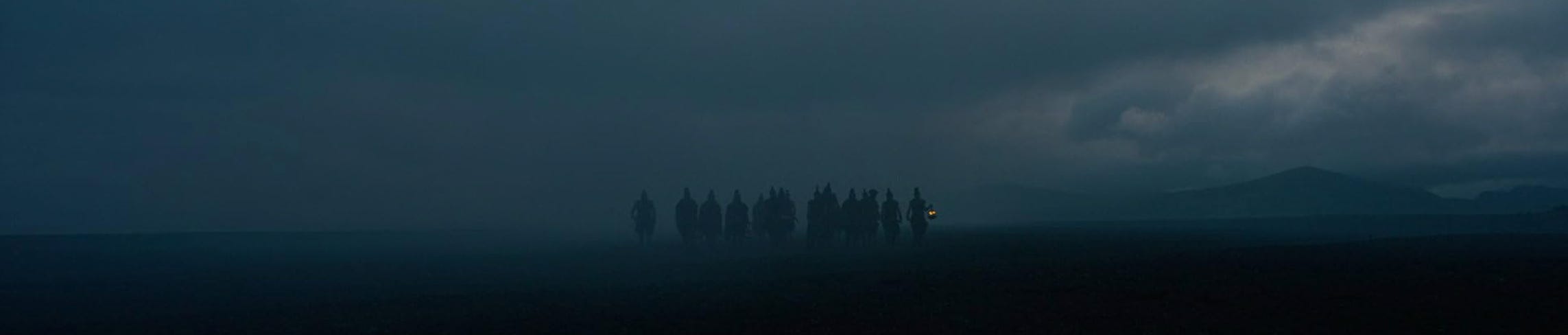
The film started to lose me during the sequences in Ithaca. Not because those scenes are poorly made, but because they lack the electricity of Odysseus’ journey and I found myself consistently wanting to return to the sea. There are too many scenes of Penelope and Telemachus rationalising the next political move while the genuinely astonishing adventure feels compressed. I’d happily sacrifice the third variation of those conversations for more time spent with Odysseus on the open water or a small lore dump. The film earns its considerable runtime while simultaneously feeling slightly rushed through sections of the journey itself.
Tom Holland is also the one significant casting choice that never entirely clicked for me. It’s not a disastrous performance by any means, but unlike almost everyone else in the cast, I remained aware that I was watching Tom Holland rather than his character.
Author's Note (July 28, 2026): Since publishing this review, I've revisited the film two more times. While I still don't think Tom Holland's performance reaches the level of the rest of the cast, it has grown on me considerably. More specifically, the Ithaca material, which felt like the film's weakest stretch on first viewing, plays much better once you know where the story is heading. I still consider it a flaw, but a noticeably smaller one than I initially suggested, and one that's been softened with each rewatch.
The film represents another step forward for Nolan’s writing of women, but not a complete breakthrough. Penelope is certainly stronger than many female characters in his earlier work, yet the film's emotional perspective ultimately belongs to the men around her. It’s progress, but it remains the area where Nolan’s screenwriting has the most room to grow. Those criticisms ultimately feel like quibbles against an achievement of remarkable ambition.
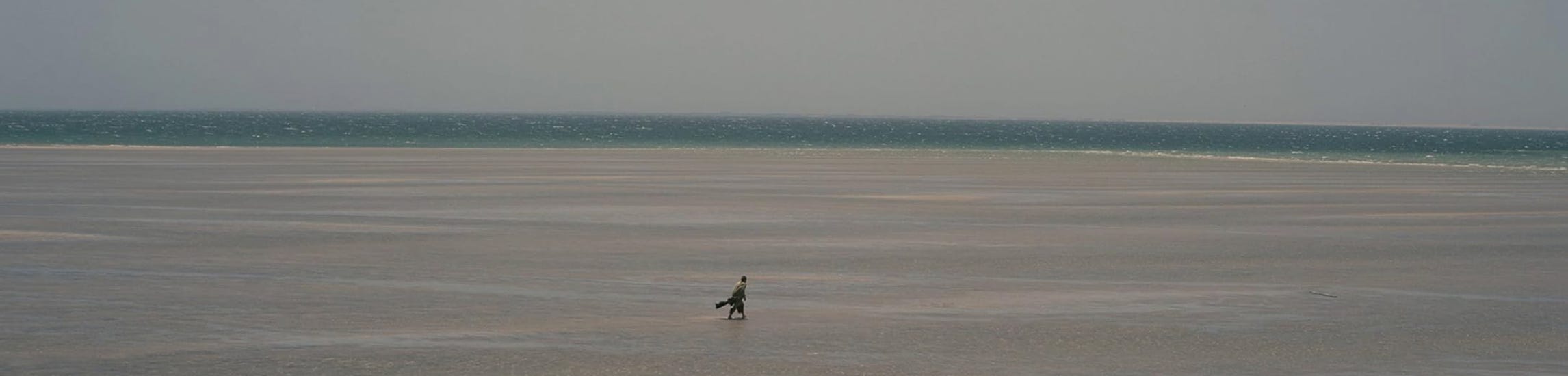
Universal Pictures
The Odyssey is a reminder that blockbuster cinema can still surprise us. It can still overwhelm us. It can still make us wonder how on earth something like this was physically accomplished.
How much you ultimately love the film will probably depend on how invested you are in the Ithaca material. For me, that’s the weaker half, but when everything comes together, the result is genuinely electrifying.
This is epic filmmaking operating at the highest possible level. It demands the biggest screen you can find, the loudest sound system available, and your complete attention. To see it is to believe it.
If you enjoyed this review, please check out my other work:
Why We Go To The Movies is a reader-supported publication. To receive new posts and support my work, consider becoming a free or paid subscriber.
Comments
Nothing yet. Say the first thing.
Sign in to join the conversation.