
The Debate is my attempt to bring fun film arguments into the open. The idea is simple: one question, multiple answers. A group of writers makes the strongest case they can for their position, and readers decide which argument survives.
Sometimes the goal is persuasion. Sometimes arguing is simply part of the fun. More often, it’s about understanding how intelligent people can watch the same film, see the same evidence, and reach completely different conclusions.
Which brings us to Christopher Nolan.
A few weeks ago, I published a ranking of my favourite Nolan films. The response surprised me, not because people disagreed with the order, but because the disagreements felt incredibly passionate. My Spielberg rankings sparked good-natured discussion.
Nobody gets particularly upset when you prefer Raiders of the Lost Ark to Schindler’s List. But suggest Batman Begins isn’t the best Batman film, or that Oppenheimer doesn’t quite live up to the hype, and suddenly the word “idiot” gets thrown around and I’m learning about Substack’s hidden replies feature.
So I recruited writers from across that spectrum: believers, skeptics, a historian, an academic, and an essayist. Each were given nine questions and the freedom to make their argument however they wanted, with no instructions beyond word limits.
Some arguments will persuade you to revisit a film. Some, depending on your stance, will infuriate you. Hopefully, all of them will make you think differently about Nolan’s filmography.
Welcome to The Debate.
Is Christopher Nolan’s reputation too high, too low, or about right?
: Underrated. The guy’s won Oscars, made billion-dollar blockbusters, and defined an entire era of filmmaking, yet you’d think he was some flash-in-the-pan journeyman judging by the discourse lately. Half the backlash seems to be responding to an argument nobody's making. Please show me a critic who seriously claims he's one of the greatest directors of all time, because I haven't found one yet, and people argue like it's the consensus position. He makes ambitious films that millions of people actually want to watch, and somehow that’s become condemnable.
: Much too high. I’m sure saying that will immediately anger most of his fanbase, but I find Christopher Nolan perhaps the most frustrating of modern filmmakers. He’s obviously a talented guy, he’s a superb technical craftsman, and most of his movies are based on BIG IDEAS that he rarely lives up to. Nolan fancies himself an intellectual, and perhaps he is on some level, but when you take a hard look at his most high-concept movies, especially The Prestige, Inception, and Interstellar, their stories don’t actually make a damn bit of sense. (And I think just about everyone will agree that Tenet is completely incoherent.)
His fixation with creating new gimmicks for each movie, new ways to structure the story to make viewers (and himself) feel smart for figuring them out, also leaves almost all his work lacking any true emotional core.
: Just right. We have done some course-correcting in what is a fairly sinusoidal career, but it seems to me that the general consensus on Nolan has steadied into the realm of the truth – he is one of our masters, working on a scale that few others can, and doing it in a way that melds populist cinema with technical brilliance.
/ Sarah: Nolan’s reputation is exactly where it deserves to be. He truly is a directorial living legend, and I feel like most cinephiles acknowledge that. I think he’s our generation’s Stanley Kubrick. Every piece he directs is deeply detailed, intentional, emotional, scientific, and philosophical. Oppenheimer and Interstellar, especially, are stories that challenge our understanding of science, morality, and existence itself.
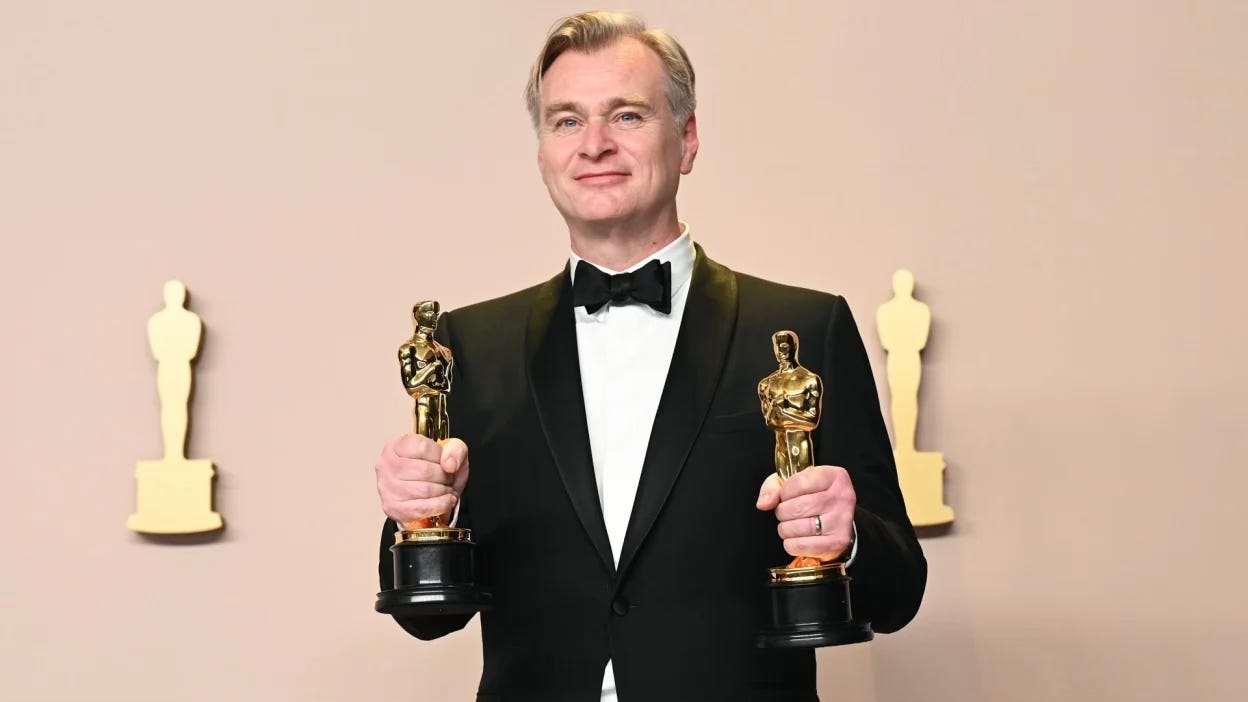
: In a world of tier-lists, Letterboxd stars, and Twitter polls, it’s not often that you can say the general perception of a filmmaker’s skills is ‘about right.’ Before his recent Oscar wins, Nolan had been underrated, or at least under-appreciated, by audiences and critics alike. A perpetual crafter of 8/10s, Nolan perhaps found his ability to make consistently very good films overshadowed by more ‘maverick’ filmmakers whose output oscillates between ‘masterpiece’ and ‘flop.’ But, thanks to Oppenheimer, I think Nolan finds himself squarely in the fairly rated bracket, appreciated as a filmmaker of great craft, vision, and consistency.
: Christopher Nolan’s reputation feels appropriate in the current moment as the most renowned and popular filmmaker currently working. While I would not conflate that reputation with being the best, there are few who can match the scale and cinematic grandeur of Nolan filmography. As perhaps the only director working who has continued to make legitimate blank check projects for over 15 years, his work stands up to scrutiny.
Credit: Photo by Gilbert Flores / Variety via Getty Images
What is Christopher Nolan’s best film?
Alessandro: The Dark Knight. A generational blockbuster that changed the game for everything else that followed it.
It’s the definitive Batman film. The definitive Joker performance. The definitive superhero movie. It permanently changed what audiences expected from comic book adaptations and influenced the next two decades of blockbuster filmmaking. Every discussion about “serious” superhero cinema starts here. At this point, praising The Dark Knight feels a bit like praising The Godfather.
Heath Ledger’s Joker remains one of cinema’s all-time great performances. Chaotic, quotable, he completely rewrites the rules of every scene he enters. Christian Bale, Gary Oldman, Aaron Eckhart, Michael Caine, Morgan Freeman… all working inside a screenplay that balances crime thriller structure with philosophical weight and genuine tragedy.
Nearly twenty years later, it still feels modern. The practical action is extraordinary, Wally Pfister’s IMAX photography remains breathtaking, Hans Zimmer and James Newton Howard deliver one of the great blockbuster scores, and Nolan’s direction somehow makes every set piece feel bigger than the last.
There’s a poll in my Nolan Rankings, and at the time of publishing, TDK is leading with 31% of the vote. A silent plurality knows the truth.
Joshua: For me, Nolan peaked with Memento and everything else has been downhill. That’s not to say that I don’t like some of his other movies, but he burst out of the gate with all his talent on full display and has been trying to live up to it ever since*.
Even if Nolan didn’t actually invent the “backwards” structure that had been used a few times before him, Memento is a perfectly assembled film, every piece of it in exactly the right place. Every scene, every line of dialogue, every moment is critical and the story wouldn’t work without them, nor without them placed precisely where they are. It also has characters I care about, which I can’t say for much else he’s done.
*Please don’t try to chastise me about Following technically being his first film. That one had almost no theatrical distribution and you wouldn’t even know it exists at all if the Criterion Collection hadn’t picked it up after he became famous. For all intents and purposes, Memento was the first Christopher Nolan movie anybody saw.
Will: Interstellar
This was a remarkably important film for me, I saw it at the right age, and marks a real inflection point in my passion for film as a medium.
Nolan has spent his entire career circling around several ideas about time, subjectivity, and the human condition, and only with Interstellar do all those things come together in the perfect way for me. There is something to love in here for everyone—tangible, hard science for anyone who cares about realism, paired with emotional beats that are among Nolan’s finest writing. Every actor is throwing their fastball, with Matthew McConaughey and Anne Hathaway delivering particularly revelatory performances. There is a reason Interstellar is one of the most common films in Letterboxd Top Fours. It asks a lot of its audience, but the emotional payoff as Cooper falls into the black hole is extraordinary.
Picking one standout scene is nearly impossible. The docking sequence is technically flawless, the tidal wave on Miller’s planet is overwhelming, but I have always loved the parallel climax between Cooper and Dr. Mann’s confrontation and Murph and Tom’s conflict back on Earth. We see humanity at both its best and worst.
Sarah: Oppenheimer
Oppenheimer gives an inspiring blend of science, philosophy, and poetry while perfectly capturing the contradictory nature of J. Robert Oppenheimer himself.
After reading the Sherwin and Bird biography that inspired Nolan’s screenplay, I became fascinated by Oppenheimer’s many contradictions. He was charismatic yet deeply melancholic, scientifically brilliant yet profoundly philosophical. He nearly pursued poetry instead of physics! These dual interests in the sciences and the humanities becomes piercingly clear in his famous comparison between himself and the Hindu Bhagavad Gita quote: “And now I am become Death, the destroyer of Worlds.”
Not only did Cillian Murphy excel at playing this duality, but Nolan himself made a film that matched this blend. The movie itself is deeply scientific and meticulous in every detail. Between Oppenheimer and Interstellar, Nolan’s love for science is clear. Yet, that science is portrayed with such beauty. The film’s opening montage has abstract cut-ins of raindrops and puddles as symbolism for the quantum mechanics principle of particle-wave duality. How visually beautiful and poetic to combine the two! In that same montage, Oppenheimer’s intelligence isn’t explained by showing a proficiency for numbers, it’s explained by Niels Bohr asking Oppie, “Can you hear the music?” Nolan didn’t make an average biopic about a stereotypical scientist nerd playing with his test tubes. He made a film about a man who toyed with the fabric of human existence, considered whether he was playing god, and regretted his creation. It’s incredible that Nolan made a film whose exploration of its subject mirrored the mindset of the subject itself. And without Oppenheimer’s real-life emotional depth, we wouldn’t have such a beautiful tragic story about a man who regretted his own achievements.
Zach: Tenet
The first watch of Tenet for most (including myself) is just about trying to understand it as a linear sci-fi spy-thriller and obviously failing to connect with it in such a manner. Dialogue is overwhelmed by Ludwig Göransson’s booming compositions. The exposition is dense and not grounded in obvious emotions or goals. The villain is not particularly scary, rather being a Russian Oligarc who spends a non-zero amount of time in an ill-fitting wet suit. The action is spectacular but largely delivered without context. The film’s core ideas and character arcs do not reveal themselves until the last possible moment. It is a spy movie removed from convention and history that turns its nose up at audience expectations.
The second watch of Tenet opens up to reveal a narrative that does technically make sense and thus becomes a tad more accessible. The dialogue still feels too technical. There is way too much time spent on Sator’s boat negotiating and trying to figure out his actual motives. Of course the suits look good, but costuming can only take you so far. Neil feels more at ease within the film with the understanding that he is from the future. The Opera House raid is such a memorable and chaotic opening. This time around, you also catch the building in the third act that implodes and explodes at the same time. Tenet on rewatch is slightly more comforting because those odd narrative movements are at least understood on a fundamental level.
The third watch of Tenet is where the magic happens. The mumbled dialogue does not matter because Göransson’s score is the stuff of legends, providing a propulsion and neofuturistic bend to the tactical action. The Protagonist and Neil are the ultimate bromance, finding solace in their humanity and differing perspectives on their friendship. Like Casablanca, it identifies the absolute joys of male friendship. The action setpieces sing as John David Washington sprints with the form of a former collegiate football player down hallways and fights himself in reverse. The spectacle of a Boeing-737 crashing into an airport hanger is the juice. It deconstructs the action hero and places him outside of the typical cinematic context. Tenet is an absurd technical exercise that overwhelms the senses and bends time to create the most magnificent spectacle possible. Exposition washes away at a certain point, revealing a true cinematic masterpiece.
Caleb: Interstellar.
On a sleepy autumn evening nearly two years ago, I wandered into the cavernous Dukes of York cinema in Brighton to watch a film I had seen countless times before. Inside, sinking into my plush red chair, I watched reams of others spill from narrow doorways into the auditorium, piling coats and scarves as they bedded in. I had no doubt this was no one’s first time, but even so, that big old room felt like the only place to be. When the lights dimmed, I smiled as if greeting an old friend. Half wondering if I could still get lost in such a familiar world, I found the floor swept from beneath me as the cornfield chase leapt into the room. At once I was in it.
Interstellar would be most directors’ best film. If you space out your watches right, it has the rare quality of being just the tiniest bit better than you remember it, every single time. It has entered the cultural consciousness and stayed there as only the very best do.
What makes Interstellar remarkable is how it stands out among Nolan’s filmography. In its most tense and defining moments, stillness is all we are afforded. Moments usually tightly knitted are left to hang loosely, allowing us to feel the aching love that drives everything onwards.
This stillness characterises the sound too. When the ship docking goes wrong, the future of humanity hurtling through space, Nolan chooses silence, placing us in that murky vacuum to feel the guttural emptiness made. For a film so concerned with science and rationality, so much space is afforded to human overreach and the broad spread of feelings shaping instinctive decisions. There’s no right answer, and every return to Interstellar leaves me torn about Miller’s Planet. Whether the means could ever justify the ends.
Interstellar has embedded itself so deeply that it will always be the film I come back to. Unflinchingly broad, beautiful, and tender, I can’t imagine a world on which this film wouldn’t be beloved.
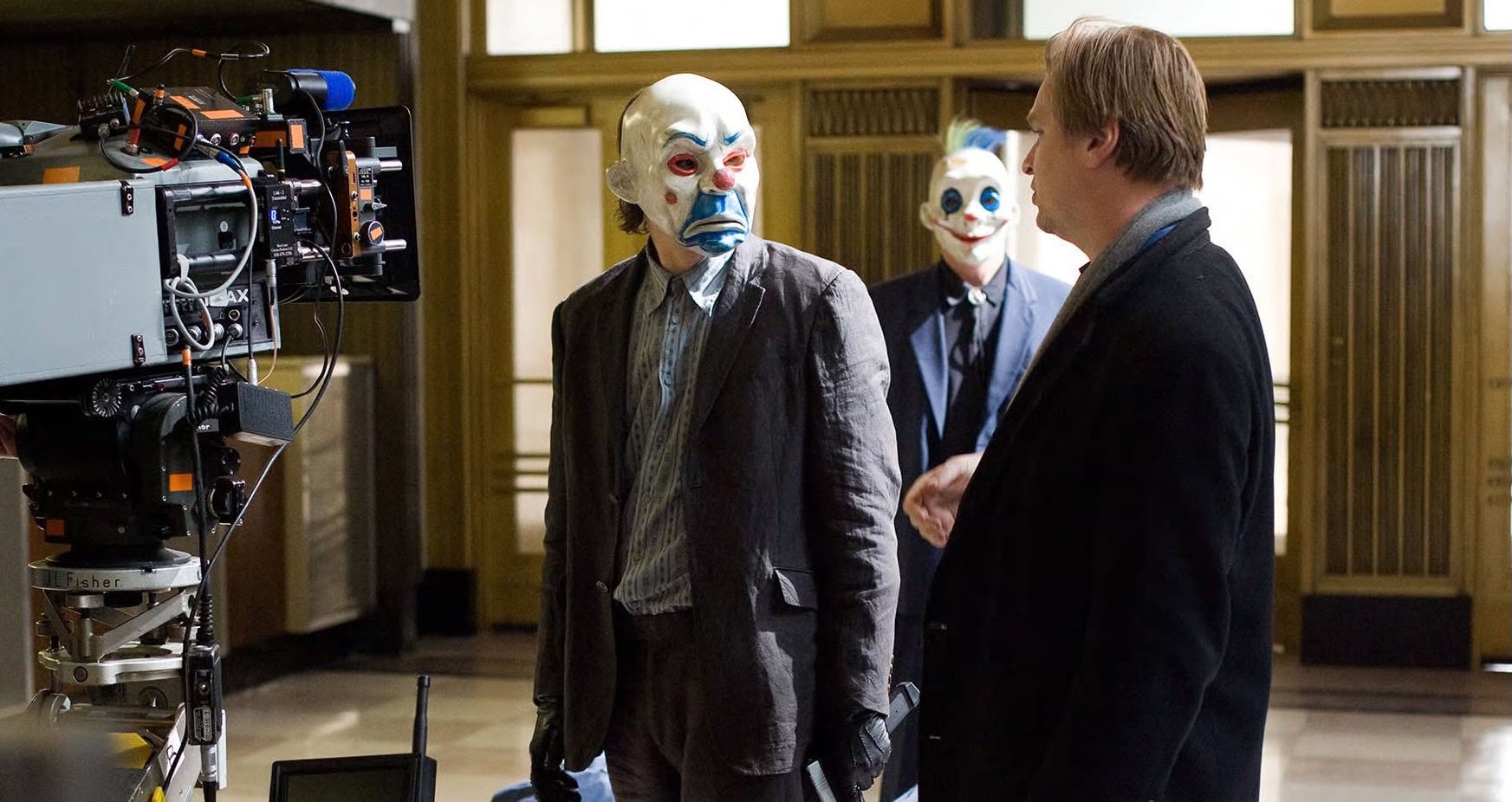
Image credit: Warner Bros. Pictures
What is Nolan’s most underrated film?
Alessandro: Dunkirk. Even I underrate it. It’s Nolan at his most purely cinematic, stripping the war film back to essentials. Tension comes from structure, sound, and craft rather than from lengthy character speeches and exposition. The aerial battles, the beach chaos, the sinking ships, it doesn’t feel like a recreation of Dunkirk so much as an experience of being there. Its restraint is what makes it special, and perhaps why it remains overlooked compared to his more obvious high-concept films.
Joshua: Given that every Christopher Nolan movie has been praised to high heavens, I’m not sure this question applies. I guess Insomnia tends to get buried at the bottom of Nolan’s filmography, but I think it’s a very solid film. Its biggest flaw is that it’s a remake of somebody else’s movie and follows it quite closely, hardly letting Nolan put his own stamp on it.
Will: Insomnia has always been Nolan’s forgotten masterpiece. It is his only feature that he directed but did not write, yet many of the themes that define the rest of his career are already present. It marks the beginning of his fascination with morally compromised protagonists and Hitchcockian psychological mysteries.
Sarah: Memento. Watching Memento lays the groundwork for understanding Christopher Nolan as a filmmaker. His recurring use of time as a motif begins here before evolving into Inception and Interstellar. It also introduces another recurring Nolan theme: men desperately trying to reunite with the people they love. Leonard searches for justice for his wife, Cooper struggles to return to his daughter, and The Odyssey will involve Odysseus spending 20 years trying to return home to Penelope and Telemachus.
Zach: Tenet. Tenet received a wide theatrical release in 2020, after the COVID-19 Pandemic was already plaguing the world. Like basically every film that was released that year, the film feels memory holed – which is perhaps fitting for the time bending thriller. Tenet requires patience and rewatches, something that audiences are typically not ecstatic to provide. The film, despite its massive scale, is wholly unique in the modern blockbuster landscape, but those beautiful qualities can and did lead to dismissive reactions rather than a desire to lean in and explore the oddities within the film.
Caleb: Inception. Is it possible to call a film starring the most famous actor of its time with a budget over $100 million underrated? I think it absolutely is. Released to acclaim but also some confusion, its amorphous structure soon became shorthand for pretentiousness. Before long it was a flanderized shell of itself and conspicuously missing from best-of-the-decade lists.But that is where it belongs. Huge and uncompromising, it bends time and consciousness so every viewing stays fresh, and every point drawn from it has merit.
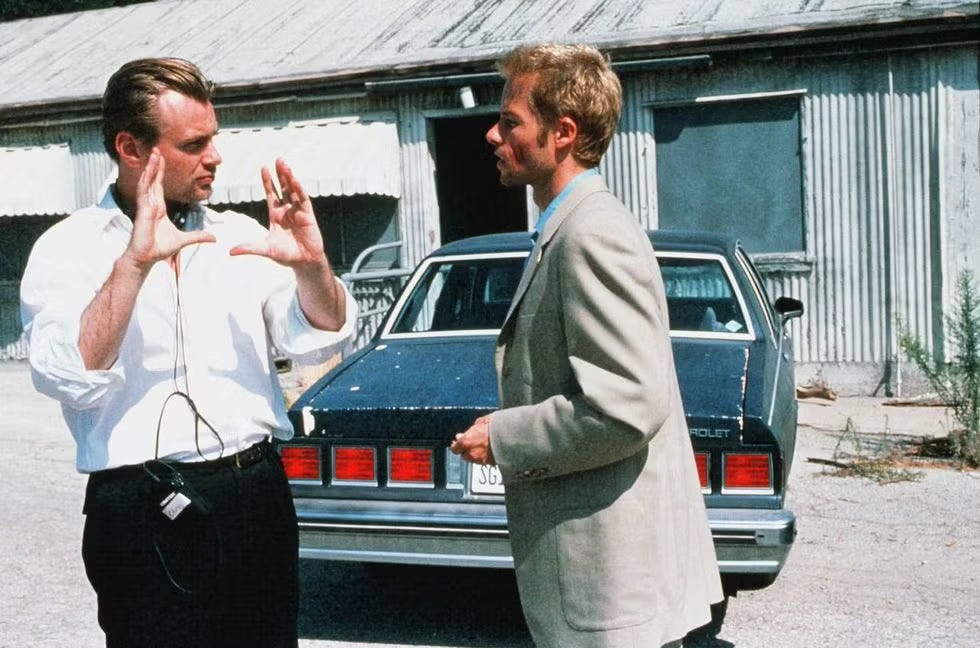
Image credit: Warner Bros. Pictures
Which Nolan film is the most overrated?
Alessandro: Oppenheimer. Technically, it’s among Nolan’s best work, and I’m glad he finally got his Oscars. But the film peaks with the Trinity test. The final hour becomes an extended epilogue that, for me, never matches the power of what came before. I’ll whisper it, RDJ is fine, maybe even good, but I don’t buy the performance as the masterpiece everyone’s decided it is. Nolan’s best? Not a chance.
Joshua: Interstellar is the most infuriating type of film, one that presents itself as being smart, meaningful, and deep, but is actually incredibly, incredibly stupid through and through. The story starts with a pretense of being the most scientifically accurate thing ever made, but throws all that in the trash and lights it on fire when the main character flies into a black hole without being crushed into oblivion, travels to the magical Fifth Dimension, and time-travels back to write his daughter a message in the dust. I feel like vomiting just thinking about it again.
Even more irritating is the attempt to fake emotion, like Nolan is a robot trying to simulate humans but hasn’t quite figured them out yet and thinks he can break it down to a scientific formula.
“Murph, my love for you is quantifiable. Mathematics will allow me to calculate exactly how many more love units I have for you than for your brother, whose name I cannot remember since he left the movie and has not been seen again. According to the data I have collated, speaking your name loudly will convey the message that I have expended several love units on your behalf. Therefore: MURRRRPPPPHHHHH!!! MURRRRPPPPHHHHH!!! MURRRRPPPPHHHHH!!!”
Will: I don’t think Nolan has made a bad film, but The Dark Knight has never affected me quite as deeply as it has many others. Compared to his more dreamlike original works, the constraints of Gotham and the Batman mythology limit some of Nolan’s fascination with existential ideas, at least for me.
Sarah: Dunkirk. World War II films can easily blend together, and while Nolan’s direction elevates Dunkirk, I ultimately found it less distinctive than films like 1917 or All Quiet on the Western Front. It simply didn’t leave the same lasting impression.
Zach: The Prestige falls into Nolan’s worst instincts as a filmmaker. Cinema is a sensory experience, but The Prestige forgoes visual storytelling in favor of being subsumed by its impending twist ending. Everything is in service of delivering expository information to set up the wrongfooting of the audience. Characters are disposable and inauthentic to any expression of humanity. The film is engaging enough because it is still Nolan piecing it together, but it is a similar experience to watching keys being dangled in front of a baby.
Caleb: Oppenheimer. Objectively fine, with a fine central performance and an equally fine cast of A-listers that fill every turn, Oppenheimer seems to be viewed with the collective appreciation of Nolan’s filmography, not for what it earned on merit. Its pacing never allows you to settle, and I couldn’t help but feel its score and sound design are clearly constructed for experience over story. The film feels like a snippet of something bigger, teetering on greatness without shaking off its restraints. A good film, but not one that should headline the career retrospective.
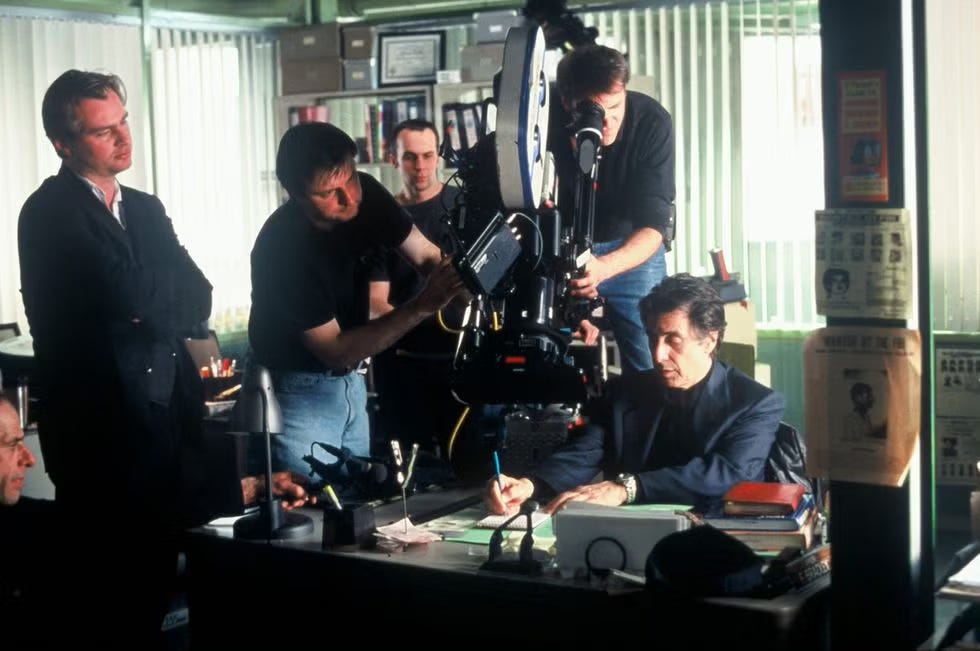
Image credit: Warner Bros. Pictures
What is your favorite performance in a Nolan film?
Joshua: Is this even a real question? How is there an answer other than Heath Ledger?
In all other cases, Nolan treats his characters and the actors who play them as pawns for him to move around. I watched Batman Begins with my son the other day (a rewatch for me, first time for him), and it’s crazy how bad the dialogue and most of the performances in that movie are. Every line is a speechifying attempt to deliver exposition, and all of it feels completely false.
Ledger was a real wild card who brought The Dark Knight to life in a way none of Nolan’s other movies have matched.
Alessandro: I agree with Joshua… Well, I don’t, but I do. Heath Ledger.
Will: Christian Bale in The Prestige. Bale’s dual performance requires him to simultaneously hide and reveal the central twist depending on whether it’s your first viewing or your fifth. It’s an astonishingly layered piece of acting.
Sarah: Cillian Murphy in Oppenheimer. Murphy perfectly captures Oppenheimer’s intelligence, charisma, insecurity, and emotional burden. Even learning Dutch for one scene reflects the same obsessive dedication that defined Oppenheimer himself.
Zach: Jessica Chastain as Murph in Interstellar is absolutely magnetic. Of course it takes a while for her to enter the film because Cooper must first go to Miller’s Planet in order to dilate his experience of time, but the second Chastain’s face appears in contrast to Mackenzie Foy’s (Young Murph), it instantly captures the weight of time. Her very existence shows over 30 years slipping away from Cooper. Chastain conveys a sense of empathy that even her family cannot muster. Despite them never sharing a second of screentime, Murph’s emotional connection to Cooper is palpable because of Chastain’s performance.
Caleb: Hear me out, it’s John David Washington and Robert Pattinson in Tenet. You’ll struggle to find better chemistry between two actors in any film, even when they’re across different time zones/pincers. For both actors, it would’ve been easy to act as though waiting for the other to be added in post, but, instead, we get something far more beautiful: one man watching a familiar story unfold and one experiencing the adventure for the first time. This is mirrored for the viewer, too. On first watch, we’re in the film, confused, but on the second watch, we rest above it, noticing all that we missed on the first go-round.
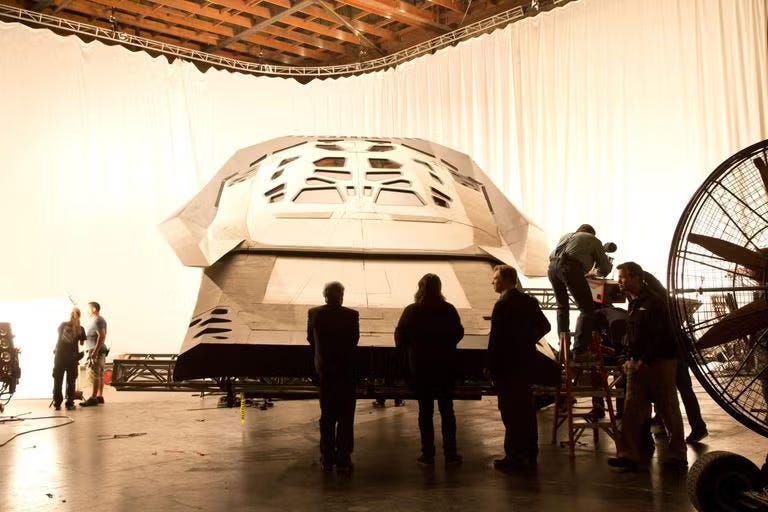
Image credit: Warner Bros. Pictures
Who is your favorite recurring Nolan collaborator?
Alessandro: Wally Pfister’s cinematography defined Nolan’s first half. The half-color, half-black-and-white split in Memento becomes central to the narrative. He shot Batman Begins, The Dark Knight, and Inception, won an Oscar, then left to direct Transcendence and a Taco Bell commercial. One of the great cinematographers of his generation just… disappeared. Come back Wally!
Joshua: Wally Pfister, I guess. The photography in Nolan’s movies is usually pretty good. Pfister’s decision to retire from cinematography to focus on directing obviously hasn’t worked out too well for him. In the meantime, Hoyte van Hoytema has been a decent replacement. In either case, I’m really sick of that IMAX variable aspect ratio crap. That needs to stop.
Will: Cillian Murphy. His towering performance in Oppenheimer speaks for itself, but even his smaller roles in Inception and Dunkirk provide emotional anchors that quietly strengthen both films.
Sarah: Anne Hathaway. Christopher Nolan is adept at capturing Hathaway’s emotional range and versatility. In The Dark Knight, Hathaway plays the sexy Selina Kyle. She pins her adversaries against the wall in red lipstick and a skintight catsuit. In Interstellar, she’s scientist capable of calculating the mathematical logistics for space travel. I’m especially excited to see what she brings to Penelope in The Odyssey.
Zach: Hoyte van Hoytema broke Nolan’s career open. The Dutch cinematographer, along with fully leaning into the large format 15perforation/70mm film, introduced Nolan to one of his most important cinematic influences, Andrei Tarkovsky. From the second he stepped on the set of Interstellar, Hoytema has provided a lens for emotion to seep into Nolan’s images. Prior to their collaboration, Nolan’s film felt a tad cold and mechanical, but Hoytema’s photography truly allows for immersion into his worlds.
Caleb: I’m not really a fan of Christian Bale, except in Nolan films. As a hero, Bale was a blank canvas, allowing audience projection and complex characters like the Joker to resonate. You don’t get a beloved Joker or Commissioner Gordon without that uncompromising morality beside him. Then, when grit was needed, Bale turned a Cockney magician into one of Nolan’s most compelling characters, and The Prestige into a classic thriller. If these are their only films together, it’s still my favourite pair, but I can’t help hoping for one more.
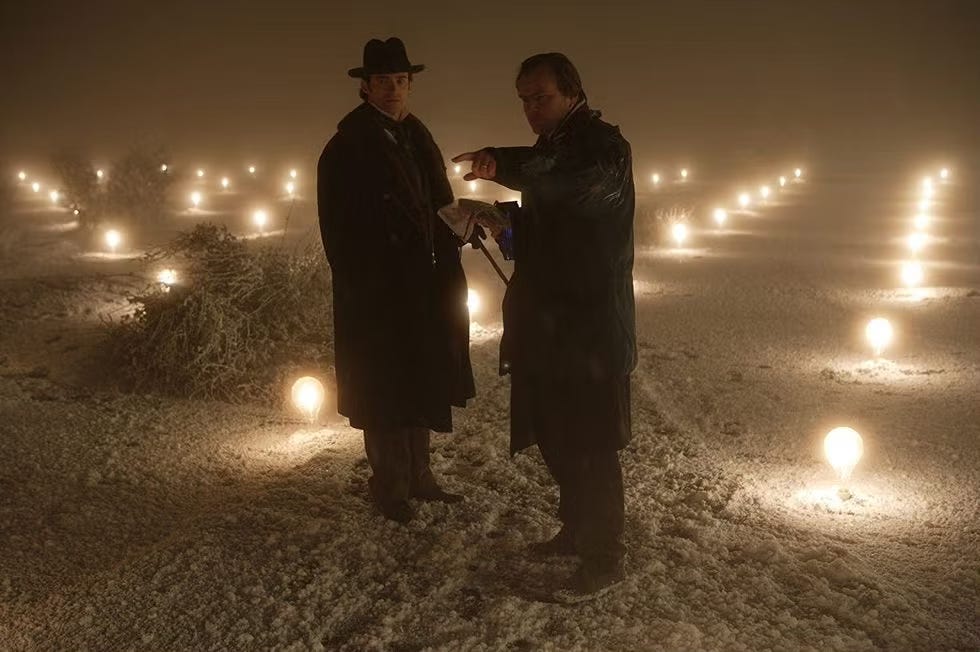
Image credit: Warner Bros. Pictures
Has Christopher Nolan made a genuine masterpiece?
Alessandro: Not yet. He’s come incredibly close. The Dark Knight remains his defining achievement. But I still think his defining statement is ahead of him. Kubrick has 2001. Spielberg has Jaws. Villenueve has Arrival. After two adaptations, with Tenet remaining his last fully original swing, I can’t shake the feeling that the next great idea is the one that finally brings everything together.
Joshua: Memento, as described above. (Alessandro’s note. Dear reader, I cannot believe he said yes either)
Will: Possibly Interstellar. Whether history ultimately declares it a masterpiece remains to be seen, but no Nolan film has affected me more personally. It awakened my love of both cinema and science, and remains the fullest expression of his recurring ideas.
Sarah: He already has. The only question now is whether Nolan can create a film that combines all of his greatest strengths into one definitive work: the existential depth of Oppenheimer with the structural inventiveness of Interstellar and Inception.
Zach: Nolan has two masterpieces in his filmography to date, Tenet and Interstellar. These films shine because they lean toward a vibrant emotionality and beating heart that is not as apparent in the rest of Nolan’s filmography. I honestly struggled to fully connect to Interstellar for quite a while, finding the final 20 minutes to be a saccharine slog. Learning that the space odyssey was initially developed under Steven Spielberg by Jonathan Nolan really allowed me to be enveloped by the intense sincerity that concludes the film.
Caleb: I think Nolan could have a fair argument that he has several masterpieces, especially within specific genres. Interstellar, his best, is among the greatest films of the 21st century, a rite of passage for young cinephiles and endlessly rewatchable in a way few heavy hitters are. Years from now, his Batman will likely be considered the peak of the superhero boom. While I’m hesitant to call Begins or Rises masterpieces, their role fleshing out The Dark Knight turns that film into the genre’s masterpiece. That’s without mentioning Memento or Inception, both of which could be easily argued as masterpieces without rebuttal.
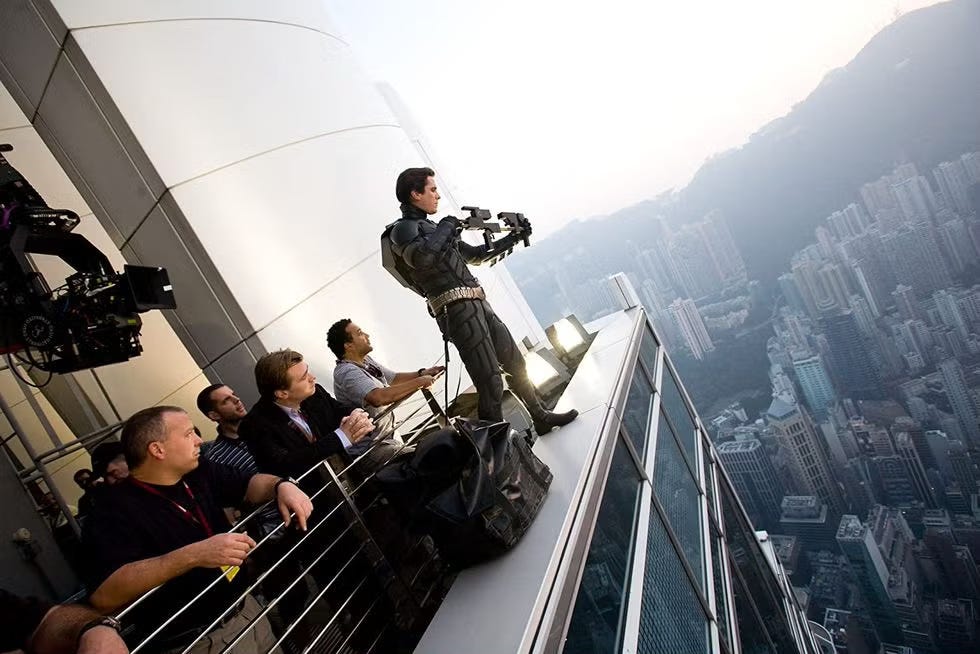
Image credit: Warner Bros. Pictures
What is Nolan’s legacy as a filmmaker?
Alessandro: One of the last of his species. He belongs to a dying breed, theatrical first, practically built, star-driven blockbusters that studios don't make anymore because nobody else can be trusted to make them profitable. In twenty years, we won't talk about Nolan as a living influence. We'll talk about him like a fossil, proof that a director once convinced a studio to fund a nine-figure fever dream in between Batman movies, and that audiences showed up in droves for an incomprehensible time war movie starring a guy fighting himself in reverse. The conditions that made Christopher Nolan possible have already disappeared. That’s what makes his career feel almost miraculous.
Joshua: A talented guy who made a few really good movies and a bunch more that overreached beyond his grasp.
Will: His legacy is already secure. Nolan has become one of the defining blockbuster filmmakers of the modern era, bringing intellectually ambitious filmmaking to mainstream audiences in much the same way David Lean or James Cameron did in previous generations.
Sarah: Like Stanley Kubrick, Nolan will be remembered as one of the rare directors capable of combining profound ideas with blockbuster filmmaking. His films consistently marry symbolism, spectacular visuals, ambitious storytelling, and emotional weight in ways very few contemporary filmmakers can.
Zach: His legacy is still in the works of course, but there are a few threads throughout his career. There is also a conversation to be had about him instigating the superhero era of blockbusters, but he has since clearly outgrown the Pandora’s Box that he cracked open with The Dark Knight trilogy. His legacy is also inextricably tied to IMAX. He is first and foremost a gifted technician, but he has translated that skillset into genuine big screen transcendence.
Caleb: Nolan will likely be remembered among the greatest filmmakers of the early 21st century, not least because of how squarely he exists within it. His films lack sentimentality, refusing to hark back to the ‘better’ days of directors who’ve straddled the millennium, and zeroing in on our place and the questions of now. As we reach for more control, his works tackle that which we cannot hold: time, space, heroism. As Marvel dominated cinema, he released the best superhero film. As stakes rose, he crafted a space epic using love as the through line. Never afraid to ask the biggest questions, if Nolan retired today he would be remembered among the very best.
What are your expectations for The Odyssey?
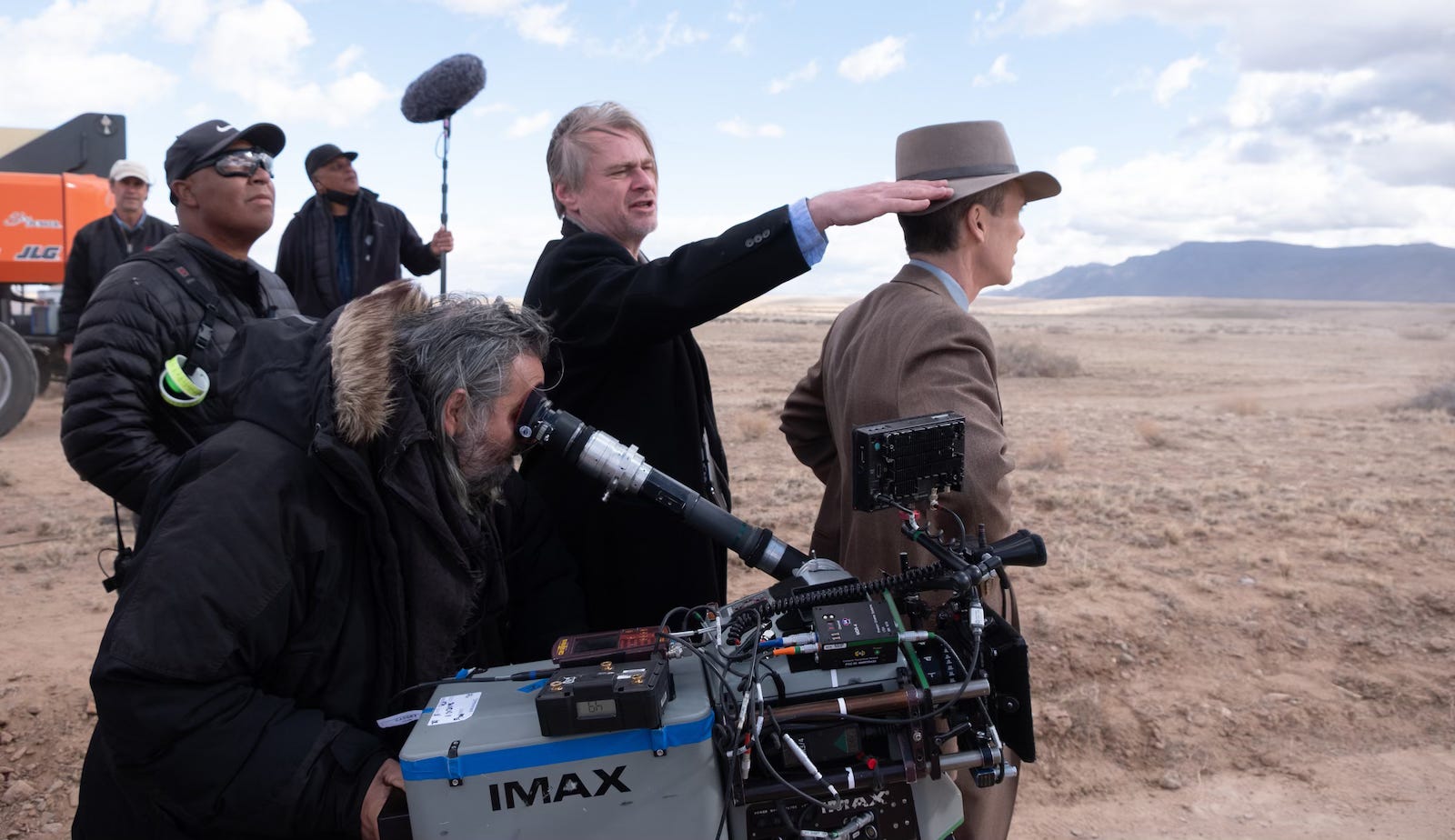
Alessandro: I’m expecting Nolan to do for Greek mythology what he did for Batman, strip away the iconography, ground it in psychology, and make a story that’s been told for nearly three thousand years feel contemporary. Whether that works is another question entirely, but I’d much rather watch Nolan attempt something this ambitious than play it safe. My prediction? It’ll be better than Gladiator II, not quite as good as Gladiator, and within twelve months I’ll have convinced myself it’s underrated and quietly moved it above Oppenheimer in my rankings.
Joshua: I have no interest whatsoever. The trailers for it give me strong “Brad Pitt in Troy“ vibes. I’ll probably skip it.
Will: I try not to approach films with fixed expectations, but Nolan is now competing with both himself and one of the foundational works of Western storytelling. I expect something enormous in scale, packed with an extraordinary cast, and another ambitious swing that only Nolan could attempt.
Sarah: I’m incredibly excited. As someone who loves ancient history, I’m looking forward to revisiting The Odysseythrough Nolan’s lens. If he succeeds, this could become his equivalent of Lawrence of Arabia or Doctor Zhivago—a sweeping historical epic that defines an era.
Zach: In my 25 Most Anticipated Films of 2026 article, I put The Odyssey as my second most anticipated behind Her Private Hell. The spectacle of The Odyssey is certainly in Nolan’s wheelhouse. I expect the film to be both modernized compared to other canonical epics such as Braveheart and Ben-Hur which slog through time. Shown through Inception, Interstellar, Tenet, and Oppenheimer, Nolan has a clear interest in deconstructing important men, and I expect no different in The Odyssey. I plan on driving three hours each way to see it opening weekend in IMAX 70mm.
Caleb: I’m really excited for The Odyssey, but at the point of anticipation where I wonder if I’ve set the bar a little high. My image of Nolan feels immiscible with myth and fantasy, so the excitement of how he’ll tackle realising this thematically and visually is what’s mainly built my excitement. Hoping for big swings, even if there are some big misses that come along with those.
I would have loved to include a poll, but Substack still insists on limiting them to five options. With six writers in the ring, we’ll have to settle this the old-fashioned way.
Who won the debate?
Let me know in the comments, and if one of these writers impressed you, please give them a follow and subscribe. They all bring something different to the conversation, and they’re well worth reading. Links to their pages are at the bottom of the article.
If you enjoyed this, you’ll also find my Christopher Nolan rankings and previous editions of The Debate linked below.
Until the next debate.
Comments
Nothing yet. Say the first thing.
Sign in to join the conversation.