
You know that moment when you're trying to read a recipe, and it starts with a three-page story about someone's grandmother picking tomatoes in Tuscany before eventually revealing what temperature to set the oven at? Forgive me, but I’d like to indulge that instinct for a moment before we start ranking Christopher Nolan movies.
Nolan was the first director who made me pay attention to directors.
Before that, I watched films the way most kids do, through franchises, studios, and whatever happened to be in the DVD cabinet. Pixar. Disney. Spider-Man. Batman. The films my dad showed me in carefully selected chunks when I was probably too young to be watching them. The first hour of Goodfellas. The fight scenes from Kill Bill. The Matrix whenever it was on television. Movies existed as individual experiences instead of parts of a larger whole.
I’ve always been fortunate with my birthday. It falls right around the start of the summer, which usually means a blockbuster birthday movie. July 18th 2008, my seventeenth birthday delivered the goods. The Dark Knight felt different from nearly every film I’d encountered before. Darker and more serious about what it was trying to do.
Two years later, I saw the trailer for Inception and experienced the kind of excitement only an eighteen-year-old can feel after watching a science fiction trailer that promises to rearrange reality itself. But, I was there opening night for one reason: “From Christopher Nolan.. The Director of The Dark Knight.”
The distinction matters. I wasn’t following Batman anymore. I was following Nolan.
I still remember sitting in the cinema trying to work out whose dream we were entering next, staring at folding cities and spinning hallways, and leaving with the realisation that I’d been watching movies backwards. Instead of following characters and franchises into the future, I should follow filmmakers into both the future and the past.
That summer, I tracked down Memento and The Prestige. If I liked Goodfellas, maybe I should watch The Departed and Taxi Driver. If I loved Inglourious Basterds, maybe I should finally see Pulp Fiction and Jackie Brown. Before long, I wasn't just watching movies. I was following filmmakers.
To this day, Nolan’s releases remain milestones in my life. Every few years, another Nolan film arrives and, for a couple of weeks, the culture collectively argues about timelines, sound mixing, and whether what we’ve just watched was genius or nonsense.
For better and worse, no filmmaker of the last twenty years has inspired more debate. His admirers see him as the director who proved ambitious original cinema could still dominate multiplexes. His critics see him as a director whose reputation exceeds his emotional reach. Few contemporary filmmakers inspire stronger opinions.
For a filmmaker often accused of being cold, his work can be surprisingly emotional. Beneath the conceptual games and intricate structures are stories about grief, guilt, obsession, sacrifice, and people unable to let go. The mechanics may be complicated, but the feelings rarely are (both insult and compliment).
So, in honor of the filmmaker who taught me to follow directors instead of franchises, and who somehow turned arguments about exposition and entropy into mainstream entertainment, here are all twelve Christopher Nolan films ranked.
Before I get to the ranking, here’s my review of The Odyssey. Check it out.
The Odyssey Review
·
Jul 17
There are films that only a handful of directors could persuade a studio to finance, and there are films that only one director on Earth could actually make. Christopher Nolan’s The Odyssey belongs firmly in the second category.
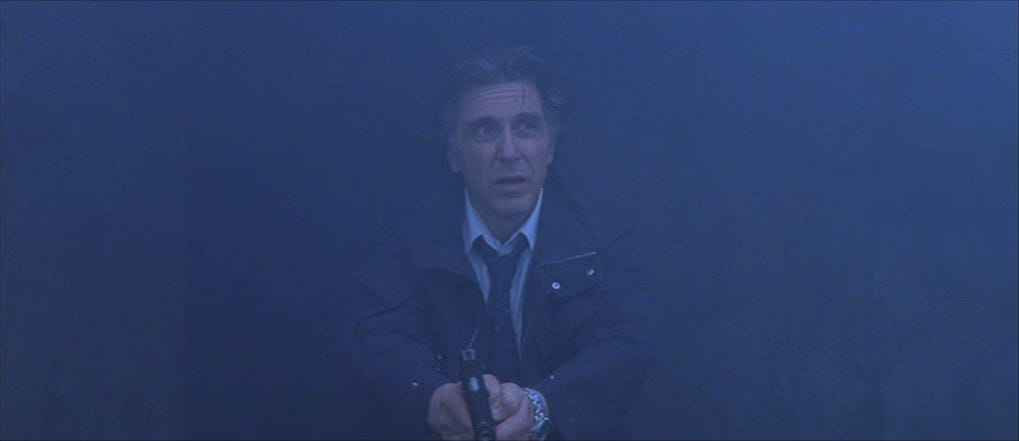
I like Insomnia. I would happily watch it again tomorrow. It just happens to be the Christopher Nolan film I enjoy the least (not strictly true), which says more about the strength of his filmography than this one film.
It also feels like the least recognisably Nolan film. Not because it’s bad, but because he’s unusually restrained.
The Alaskan setting does much of the work. Endless daylight becomes oppressive, denying everyone the relief that darkness usually brings. It’s one of the cleverest inversions of film noir.
Late-career Al Pacino is terrific, all desperation and mounting fatigue, while Robin Williams remains genuinely unsettling. He’s calm, polite, intelligent, and somehow all the more disturbing for it. He never raises the temperature of the film. He lowers it.
The film isn’t quite distinctive enough to stand alongside Nolan’s best work, but even Nolan’s least memorable film is the kind of intelligent, atmospheric thriller most directors would love to have on their resume.
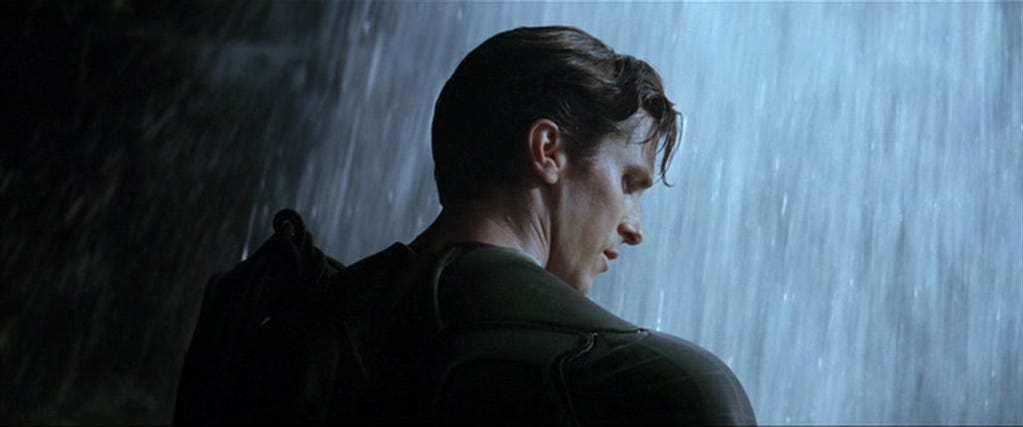
More than any other adaptation, this is the film that’s most interested in Batman himself. The gadgets have a purpose. The Batcave feels like a real headquarters rather than a cool set. Every piece of equipment has a believable origin, and Nolan spends as much time explaining why Bruce Wayne chooses to become Batman as he does showing him in the suit. Even something as simple as disappearing into the shadows or using fear as a weapon feels earned rather than just looking cool. It’s one of the best superhero origin stories put to film, and it understands that the costume is the least interesting part of becoming a hero.
Christian Bale isn’t just playing Bruce Wayne and Batman. He’s playing three different people. There’s the traumatised Bruce searching for purpose, the billionaire playboy persona he invents to fool Gotham, and Batman himself. Bale makes each version feel distinct, and it’s the most layered performance we’ve seen from Batman on screen.
The supporting cast is overqualified. Michael Caine, Morgan Freeman, Gary Oldman, Liam Neeson and Cillian Murphy elevate every scene they’re in. Not every casting decision lands, Tom Wilkinson never convinces as Carmine Falcone, Gotham’s “most feared” mob boss.
The film’s biggest stumble is in its final act. Scarecrow is a brilliantly unsettling villain but feels underused, while Ra’s al Ghul never quite reaches the level of threat the story requires. After such a careful, patient build centered on fear and psychology, the climax slips into the conventional superhero finale that the film had largely avoided.
You can also tell Nolan is still developing as an action director. The fight scenes are perfectly functional, but the rapid editing and close-up camerawork lack the clarity he’d later achieve.
Batman Begins remains the foundation for everything that follows. Before Nolan reinvented the comic book movie with The Dark Knight, he reminded us why Batman mattered in the first place.
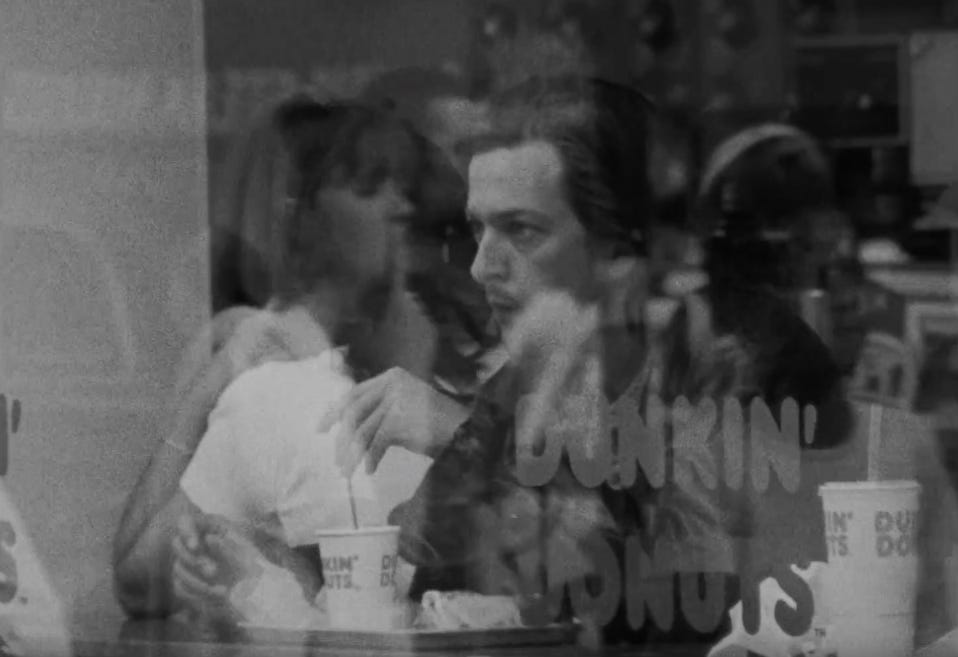
For a debut made on weekends with almost no money, Following is surprisingly assured and recognisably Christopher Nolan.
Watching it now is like discovering the blueprint for everything that comes after. The fractured chronology. The morally compromised men convinced they’re the smartest person in every room. Even some of the familiar blind spots are present. Almost everything Nolan becomes is hiding somewhere in here.
It’s striking how little fat there is. At just over an hour, Following has no interest in indulgence or atmosphere for its own sake. Every scene is functional. It lacks the scale of Inception or Interstellar, and there’s no late-film conceptual detonation like in The Prestige. This is Nolan stripped back to the things he cares about most. Structure. Misdirection. Control.
The black-and-white photography reinforces that discipline. London is anonymous, compressed, slightly threatening in its lack of personality.
There are rough edges throughout. The budget limitations are obvious, and the performances vary in their control. But what sticks is how clearly you can see the filmmaker Nolan is about to become.
Following isn’t just the beginning of Nolan’s filmography. It’s the proof that it was always going to look like this.
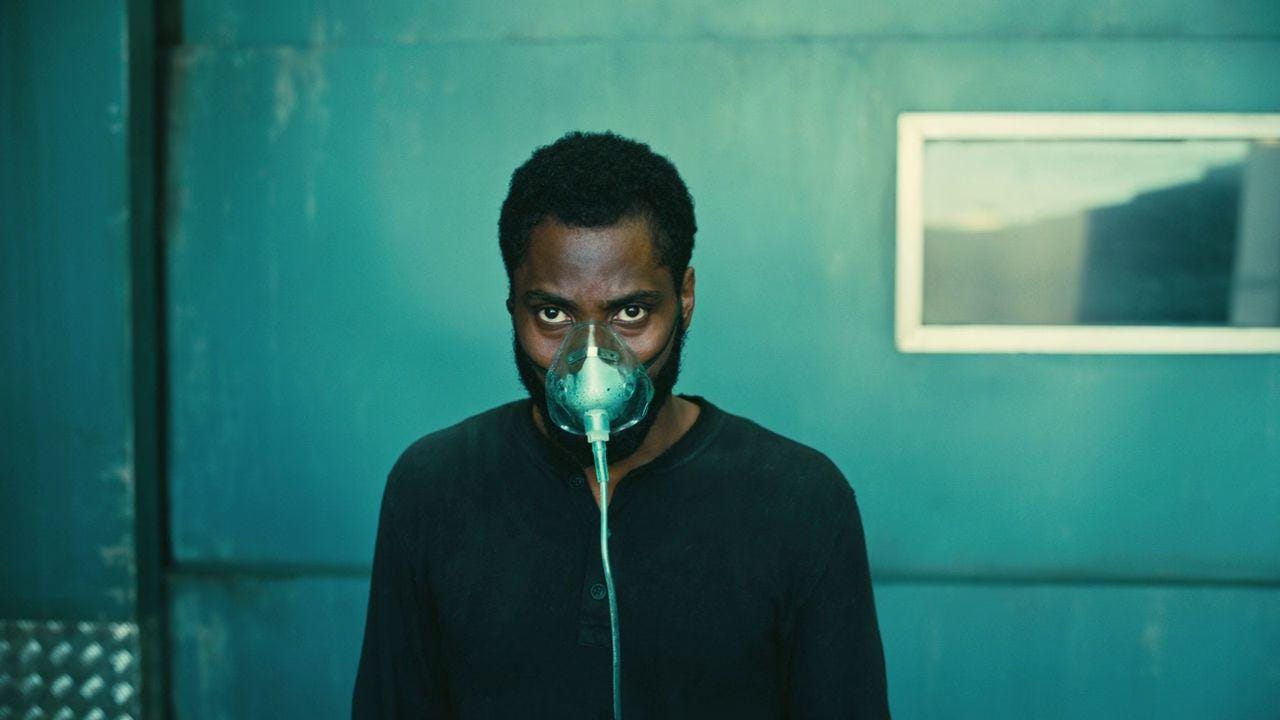
Nobody else makes films like Tenet. For better and for worse.
Christopher Nolan has always trusted audiences to keep up, and I love him for it. He’d rather ask too much of you than too little. Tenet is the logical endpoint of that philosophy. A blockbuster built around a genuinely original science-fiction idea and almost no interest in slowing down to make things easy for anyone watching.
The first half is exhilarating. It’s essentially a team-up film where James Bond (Robert Pattinson) and Jason Bourne (John David Washington) meet in a Christopher Nolan movie. I love The Protagonist and John David Washington, he’s exactly who the film needs him to be, a hyper-competent operative trying to solve a problem that keeps getting more impossible by the minute.
And when Tenet works, it really works. The airport fight and the motorway chase somehow manage to feel both meticulously engineered and completely chaotic. Watching inverted action unfold for the first time is one of those rare blockbuster moments where you genuinely have no idea how they pulled it off (filming movement backwards and splicing explosions/background vehicles moving forwards).
Where the film loses me is in the final hour.
Unlike Inception, where each new dream layer somehow makes the action clearer, Tenet‘s temporal pincer movement has the opposite effect. The mechanics click into place intellectually, but they’re much harder to follow visually. Instead of that satisfying “ah, of course” feeling Nolan usually delivers, I found myself thinking, “Right... I think I’ve got it.”
Kenneth Branagh’s Sator doesn’t help. Against one of Nolan’s most inventive concepts sits one of his least interesting villains, and the film never quite reconciles the scale of its ideas with the simplicity of his motivations.
Even so, I can’t help admiring it. The sheer confidence required to make a $200 million blockbuster this unapologetically weird deserves respect.
I don’t think Tenet completely solves the puzzle it sets itself. But I’m very glad Christopher Nolan was the sort of filmmaker willing to build it in the first place.
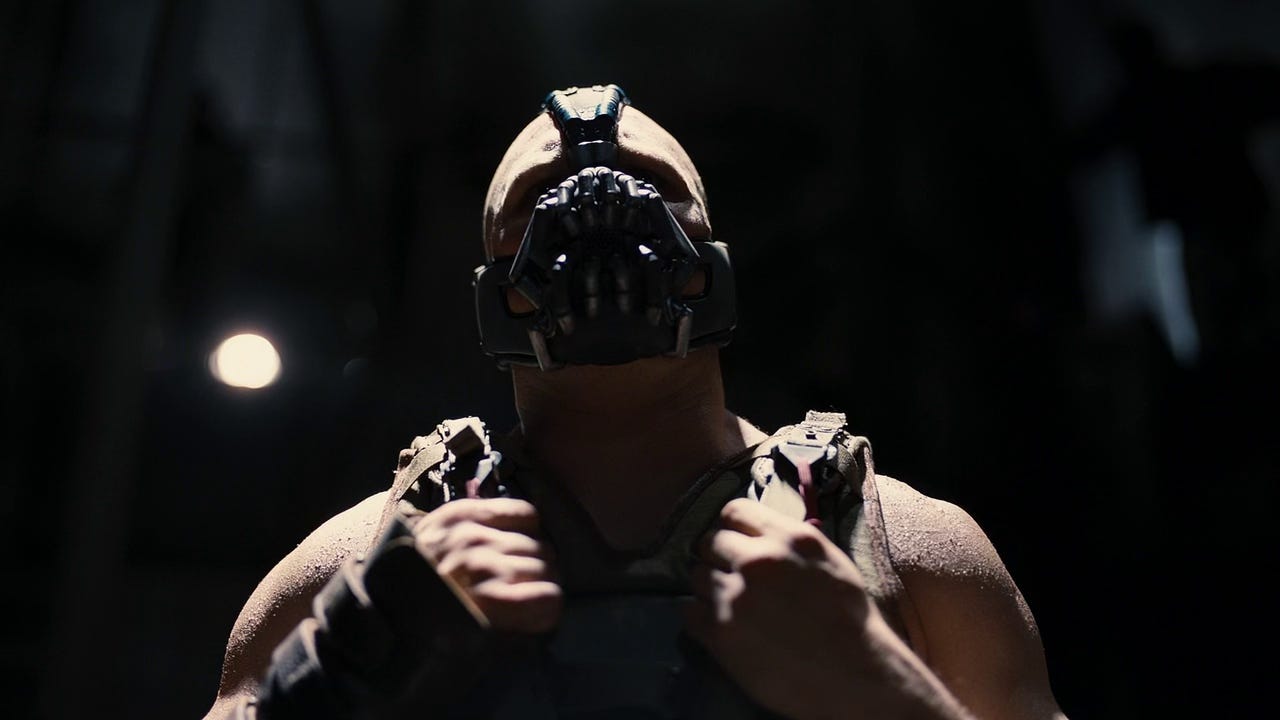
This film has to go down as having one of the greatest trailers ever made. The rhythmic chanting. Bane’s first appearance. The football stadium. The sheer sense of scale. And, for the most part, the film delivers on that promise.
Following Heath Ledger’s Joker felt like an impossible task, yet Nolan wisely doesn’t try to create another Joker. Instead, he gives us Bane, a completely different kind of villain. The physicality Tom Hardy brings to the role is utterly believable, making him the first villain who genuinely feels capable of breaking Batman physically and mentally.
Christian Bale is equally strong. This is my favourite version of his Bruce Wayne, older, broken, isolated, and questioning whether Batman still has a place in Gotham. After watching two films of him building the symbol, it’s satisfying to watch him struggle under its weight.
Technically, it’s another triumph. The plane hijacking remains one of Nolan’s greatest sequences and the practical effects give every action scene a scale that still feels enormous today.
That said, I don’t think everything works. Anne Hathaway is perfectly good as Selina Kyle and fits naturally into Nolan’s grounded Gotham, but I’ve never found her to be a particularly definitive Catwoman. Likewise, the Talia al Ghul reveal feels more like a nod to comic book fans than something the film has been building toward emotionally. It’s a fun twist, but one that slightly undercuts Bane’s role in the story.
I also wish the final confrontation between Batman and Bane had a little more weight. After spending two and a half hours building these two into unstoppable opposing forces, the climactic fight never quite reaches the emotional or physical payoff I’d hoped for.
But then there’s the ending. Every beat lands exactly as it should. The Dark Knight Rises isn’t as airtight as its predecessor, but as the final chapter in one of cinema’s greatest trilogies, it’s a satisfying farewell.
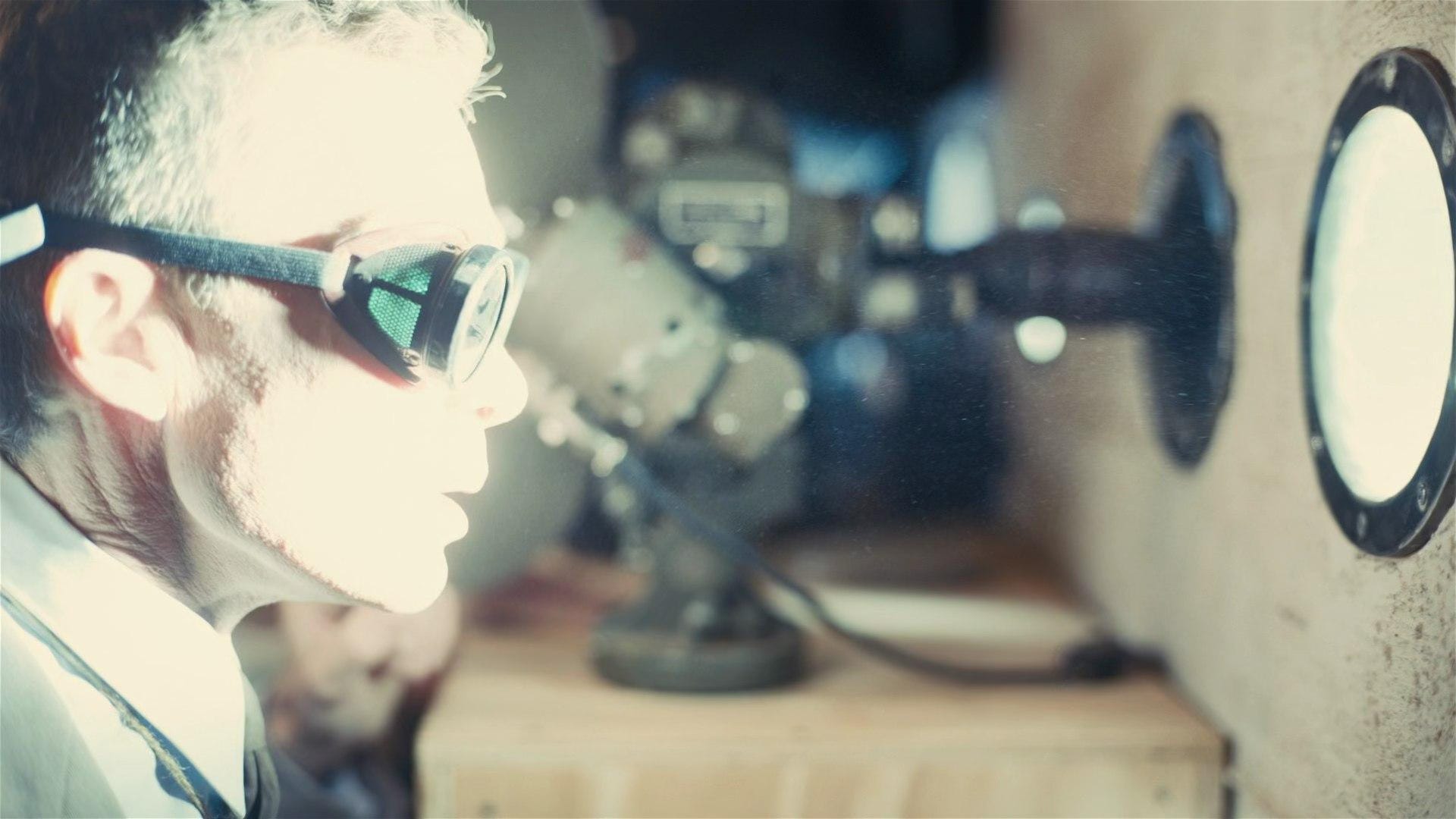
This was the biggest surprise of the entire ranking exercise. For context, I rewatch every film in the category before putting together one of these rankings, and if you'd asked me back in July 2023, Oppenheimer would've been comfortably in my top four. Rewatching it for the first time since opening weekend, it lost a surprising amount of its pull. In fact, it lost so much that I seriously considered putting it last. In its current form, this is the Nolan film I’m least likely to return to.
Don’t misunderstand me, on a purely technical level, it’s among the very best things Nolan has ever directed, and I’m glad he got the Oscar he deserves.
Ludwig Göransson’s score is phenomenal, one of my favourites of the century so far. When the music accompanies the sequences visualising atoms and quantum theory, it creates some of the most beautiful imagery Nolan has ever put on screen.
Cillian Murphy is extraordinary throughout and gives one of the defining performances of the decade. Even though the hearing scenes often leave him with little to do other than quietly absorb accusations, it’s a testament to Murphy’s performance that he’s still utterly compelling. Gary Oldman, Josh Hartnett, and the majority of the cast make every second count, even if a few smaller appearances feel more distracting than impactful.
An exceptional young physicist discovers his purpose, assembles a team of extraordinary minds, and races against time to build the most dangerous creation in human history. All culminating in the masterfully constructed Trinity test. The first two-thirds are brilliant. My problem is everything that follows.
The final hour becomes an epilogue that simply doesn’t justify its length. I understand why the security hearings and Lewis Strauss’ political downfall matter historically, but dramatically, they never grabbed me. Robert Downey Jr. is good, but I couldn’t shake the feeling that much of his material could have been dramatically condensed without losing the heart of the story.
Oppenheimer is still an exceptional achievement, one of the best-directed and best-crafted films of the decade. But for me, it also embodies Nolan’s biggest screenwriting weakness. When the spectacle ends, the characters too often explain their emotions rather than simply letting us sit with them. But roll credits after that gymnasium scene, and I genuinely think you’re looking at a near-perfect film.
Ok, ok, I’ve talked myself into it. One more watch.
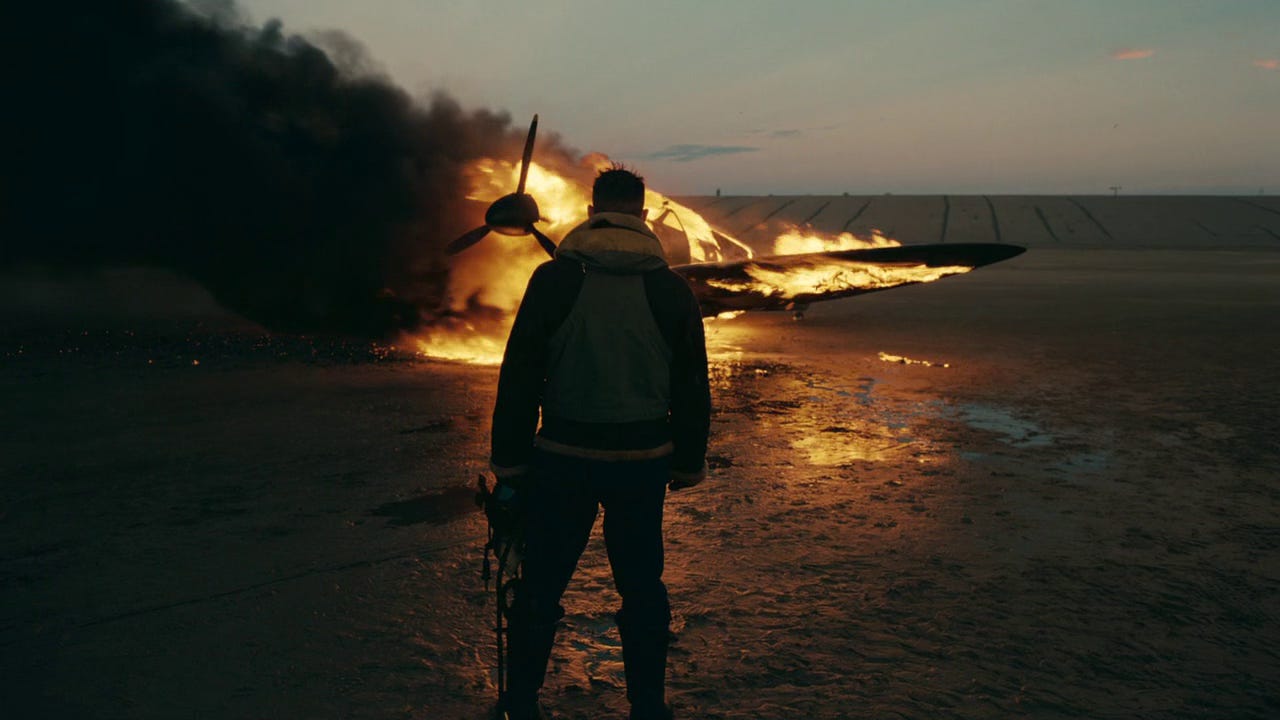
This is almost certainly the worst placement in my ranking and the one I’m happy for you to complain about. Dunkirk could be anywhere from number two to number six.
The truth is, I was a late convert. Coming straight off Interstellar, I remember being genuinely disappointed that Nolan’s next project was a lean World War II film about the Dunkirk evacuation. Add in the stunt casting that dominated the conversation at the time, and I struggled to buy into it. When I first watched it, I admired it more than I loved it. It felt cold and functional.
Then I watched it again.
Somewhere along the way, it clicked that Dunkirk isn’t trying to tell the story of the evacuation. It’s trying to make you experience it.
I now think it’s one of the greatest technical achievements of Nolan’s career. Every time the Stukas’ sirens begin to wail, your pulse spikes. Nolan doesn’t need soldiers screaming that enemy planes are coming, you’ve already been conditioned to fear the sound itself. It’s one of the best examples of filmmaking over exposition I can think of.
Visually, it may be Nolan’s most accomplished film. Hoyte van Hoytema’s IMAX photography is breathtaking, the practical effects have aged beautifully, and the aerial combat remains some of the most convincing ever put on screen. Tom Hardy’s Farrier, despite spending most of the film hidden behind an oxygen mask, is the most heroic character Nolan has ever written.
The characters are undeniably thinner than in most of Nolan’s work, and I understand why some viewers never emotionally connect with them. But I don’t think that’s the point. Dunkirk isn’t interested in individual heroics as much as collective survival.
It’s one of the greatest war films of the 21st century, and the only reason it isn’t higher is that the films above it all mean more to me.
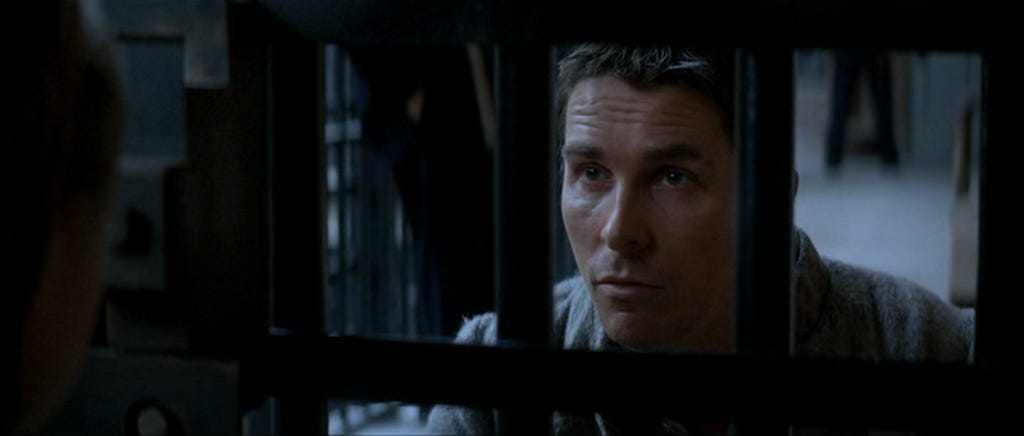
For years, The Prestige was Christopher Nolan’s “you have to see this” movie. Not the biggest, not the most acclaimed, but the one fans would inevitably insist was secretly his best. At this point, the secret’s out.
I’ve probably watched it a dozen times, and every rewatch turns into the same game, looking for a clue I somehow missed before. The remarkable thing is that Nolan never hides them. He leaves them sitting in plain sight, daring you to notice. Every time you do, you wonder how on earth you missed something that suddenly feels so obvious. It’s one of the rare twist endings that gets better once you know it, because the film isn’t concealing information, It trusts you to misdirect yourself instead.
The Prestige isn’t just about magic. It is a magic trick. Its structure mirrors the very illusion it spends two hours explaining: the Pledge, the Turn, the Prestige. Every revelation changes what you’ve already seen without ever feeling like a cheat.
The film works because the rivalry at its centre is so compelling. Christian Bale and Hugh Jackman begin as competitors and end as something much uglier, two men willing to sacrifice everything for the pursuit of greatness. The trick isn’t deciding who to root for, it’s realising neither deserves it. Obsession, not magic, is the film’s real subject.
It isn’t flawless. Nolan’s female characters are largely asked to absorb the emotional fallout of two men’s egos rather than exist as fully realised people in their own right. And Scarlett Johansson’s English accent occasionally sounds like she wandered in from a particularly enthusiastic community theatre production of Oliver!.
But The Prestige has aged better than almost anything else Nolan has made. It’s intricate without becoming mechanical, emotionally devastating, and rewatchable because every viewing feels like you’re being let in on another secret. It occupies the sweet spot in Nolan’s career. All the structural brilliance, with none of the bloat.
It isn’t Nolan’s biggest film, or even his most influential. But it may be his most complete, a puzzle box in which every revelation deepens the tragedy.
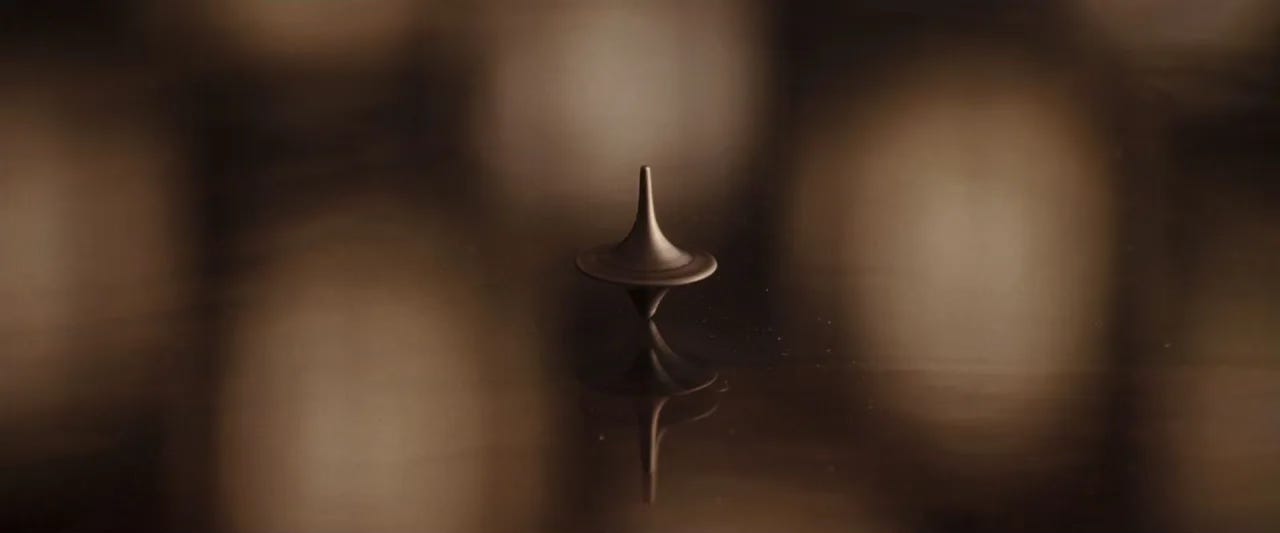
There was a time when I’d have told you Inception was Christopher Nolan’s masterpiece.
Then I watched it again. And again. And again.
Somewhere around the 10th viewing, I just started noticing the bits I’d previously been too dazzled to care about. It hasn’t stopped being great, but the exposition has started to feel relentless, with Ariadne existing largely to ask questions so everyone else can explain the plot to us. Cobb’s emotional journey is sincere, but Nolan has a habit of explaining his feelings with the same precision he explains dream mechanics.
And yet.
This film absolutely rocks.
The pitch alone is irresistible: Ocean’s Eleven inside people’s dreams. Every member of the crew has a clearly defined role, every dream level has its own internal logic, and every ticking clock feeds another somewhere else. Nolan isn’t just directing a blockbuster, he’s constructing an elaborate Rube Goldberg machine and inviting the audience to watch it run.
The spectacle remains astonishing. The folding streets of Paris. The zero-gravity corridor fight. The way time dilates across each dream layer until four action sequences unfold simultaneously at entirely different speeds. Few directors have ever staged this much action with this much clarity.
Not only did the spinning top become one of film cultures most enduring debates. Inception became the template for the modern original blockbuster. High-concept and visually spectacular. You can draw a straight line from this film to every studio executive asking for “the next Inception“ over the past 16 years.
I don’t think it’s quite the five-star masterpiece I once did. Familiarity has exposed the seams, and there are stretches of the final hour where I’m more eager to get back to the machinery than the emotion Nolan keeps insisting I feel.
But this remains a fun crime caper and one of the defining blockbusters of the 21st century. I just don’t think it’s quite Nolan’s best anymore.
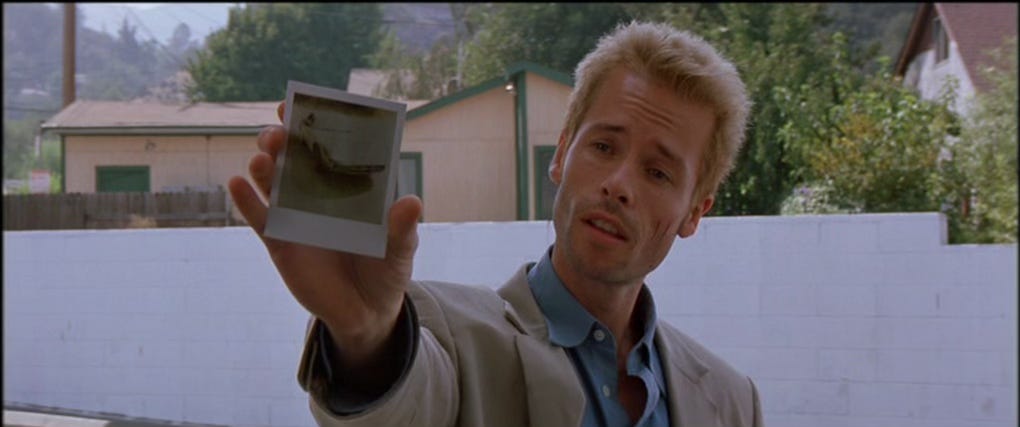
I came to Memento backwards. After The Dark Knight and Inception, I wanted to know how Christopher Nolan had become Christopher Nolan. So, during my first week back at university, I blew an irresponsible chunk of my student loan in a second-hand DVD shop.
That night, in the shared house where our living room had become my own private cinema, I watched it alone. As soon as it ended, I ran upstairs, found the only housemate who was home, and told him he had to watch it.
“No,” I said when he suggested tomorrow. “Now.”
We watched it. Then we found the chronological cut hidden in the DVD menu and watched that too. Three viewings in one night. I’ve never done that with another film.
The reason Memento inspires that kind of obsession is that its reverse chronology isn’t a gimmick. It’s the emotional engine of the film. Every conversation starts in the middle. Every stranger might be a friend or an enemy. Every answer only creates new questions because you’ve already forgotten how you got there. That creates a constant sense of disorientation, but more importantly, it forces you into Leonard’s condition. You are always slightly behind the truth, always reconstructing meaning from incomplete fragments.
Wally Pfister’s cinematography deserves its own mention. The half-colour, half-black-and-white split becomes a central part of the narrative. He went on to shoot Batman Begins, The Dark Knight, and Inception. Won the Oscar for Inception. Then left to direct Transcendence and a Taco Bell commercial. And then, one of the greatest cinematographers of his generation just... disappeared.
Pfister, I know you’re a subscriber. Come back!
Guy Pearce gives one of the defining performances of Nolan’s career, playing Leonard as intelligent enough to solve the mystery but emotionally incapable of accepting the solution. The tragedy is not that he cannot remember, but that he consistently chooses interpretations that preserve his need for revenge. He is both victim and author of his own reality.
That’s what makes Memento so much more than an ingenious puzzle. Beneath all the formal trickery is an unexpectedly devastating film about grief, revenge, and the stories we tell ourselves because the truth is simply too painful to live with.
"We all lie to ourselves to be happy."
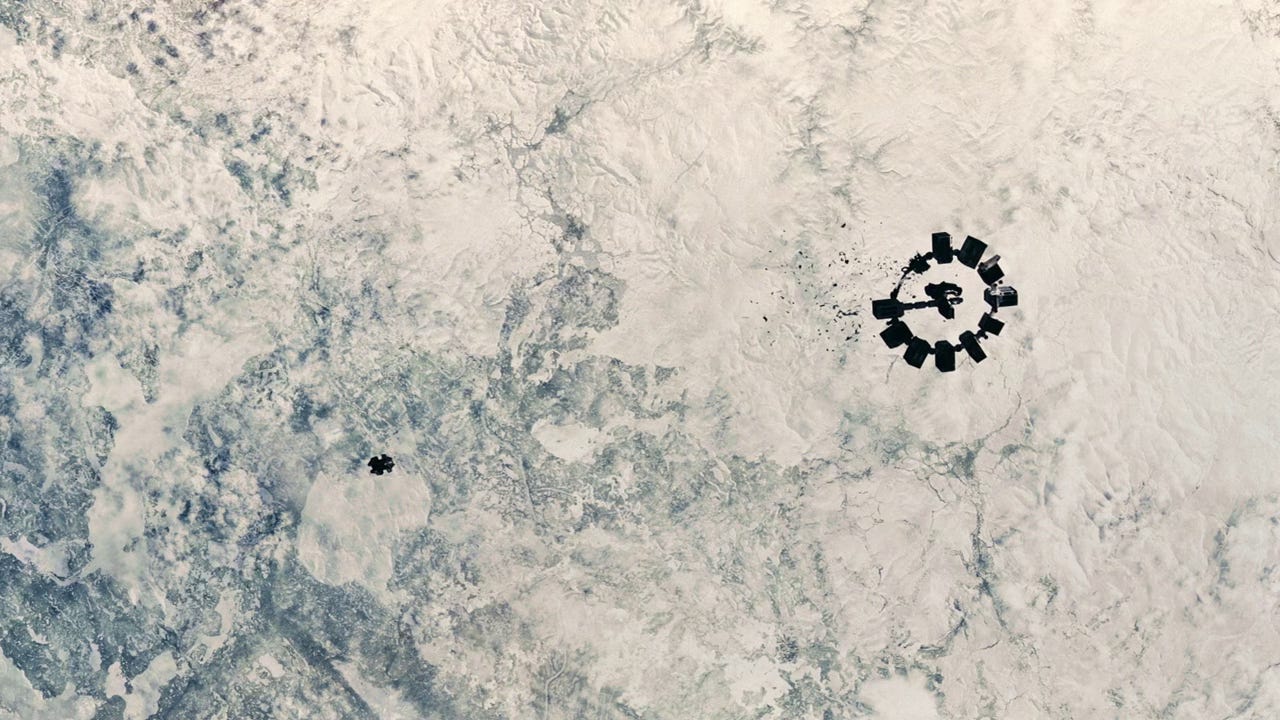
In some respects, Interstellar is my favourite film ever made. Is it Christopher Nolan’s best? Maybe not. Is it flawless? Absolutely not. Do I love it with every fibre of my being anyway? Without question.
I’ve seen Interstellar more times than any other Nolan film. Opening night. The next day. IMAX. 35mm. Digital. Home release. 4K. 480p on my iPhone 7. If there’s been a way to watch this film, I’ve probably experienced it. Hans Zimmer’s “No Time for Caution” has become less of a piece of music and more of a personality trait. I don’t revisit Interstellar like I revisit a film, I revisit it like I revisit an old friend. Enthusiastically, flaws and all.
Because almost everything about it lands perfectly for me.
The scale is breathtaking. Interstellar is visually spectacular in a way that only a few films have ever achieved. The dust-choked farmland of a dying Earth, the almost indescribable wormhole, the impossible scale of Gargantua, all of it feels designed to make the abstract physical. Nolan’s ambition is amplified by the fact that it is being applied to an entirely original story. This isn’t an adaptation or a continuation of something familiar, it’s a high-concept science fiction film built from scratch.
Matthew McConaughey gives what I still think is a career performance, especially during the devastating twenty-three years of video messages. Jessica Chastain is equally fantastic as the adult Murph, while Zimmer’s organ-driven score has become one of the defining soundtracks of modern cinema. Even over a decade later, the IMAX photography, and scientific ambition still make the film feel more tangible than most science fiction released today.
I’ll admit, I am exactly the target audience for this film. If someone offered me a one-way ticket into space tomorrow, purely to see what was out there, I would need embarrassingly little convincing. Black holes, relativity, impossible distances, the unknown. Interstellar scratches an itch that almost no other film can reach. It’s a science-fiction epic made by people who genuinely seem fascinated by science, not just the aesthetics of spaceships.
Yes, it has problems. The film’s central argument that love can transcend time and space is, on paper, a little bit silly, and Nolan doesn’t exactly deliver it with subtlety. The dialogue inside the tesseract borders on over-explanation, spelling out ideas the film had already communicated visually. Nolan’s dialogue can veer into characters explaining themes instead of sounding like people.
And yet...none of it matters to me.
The older I get, the more I realise my favourite films aren’t the ones without flaws. They’re the ones whose strengths overwhelm them. Interstellar reaches for something enormous. Scientifically, emotionally, and spiritually. And even when it occasionally stumbles, its ambition carries it somewhere extraordinary.
I actually sat down with the principled idea to rank this lower. Instead, writing about it reminded me why I keep coming back. Somewhere between Cooper’s docking manoeuvre, Zimmer’s organs, Gargantua, and that final handshake through time, this film moved itself higher on my list.
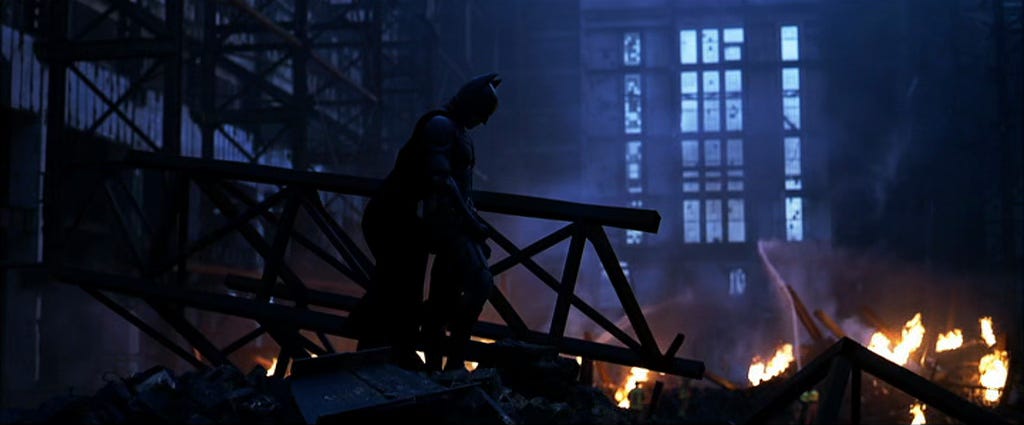
What can I possibly say about The Dark Knight that hasn’t already been said a thousand times?
It’s the definitive Batman film. The definitive Joker performance. The definitive superhero movie. It permanently changed what audiences expected from comic book adaptations and influenced the next two decades of blockbuster filmmaking. Every discussion about “serious” superhero cinema starts here. At this point, praising The Dark Knight feels a bit like praising The Godfather. You’re not making a hot take, you’re simply acknowledging reality.
Christopher Nolan took a character who had spent decades bouncing between gothic noir and toy-selling spectacle and built a crime epic that happened to feature a man dressed as a bat. Heath Ledger’s Joker remains one of cinema’s all-time great performances. Chaotic, quotable, he completely rewrites the rules of every scene he enters. Christian Bale, Gary Oldman, Aaron Eckhart, Michael Caine, Morgan Freeman… all working inside a screenplay that balances crime thriller structure with philosophical weight and genuine tragedy.
Nearly twenty years later, it still feels modern. The practical action is extraordinary, Wally Pfister’s IMAX photography remains breathtaking, Hans Zimmer and James Newton Howard deliver one of the great blockbuster scores, and Nolan’s direction somehow makes every set piece feel bigger than the last. THE TRUCK FLIP!!
It’s the obvious number one, but that doesn’t make it any less correct.
So instead of spending another 500 words telling you why The Dark Knight deserves the top spot, I’d rather leave you with this.
It’s everything that makes the film work distilled in 5 minutes. If, by the time the Joker pulls off his mask, you aren’t convinced you’re about to watch one of the greatest blockbusters ever made, nothing I could write here is going to change your mind.
And there we have it. The definitive Christopher Nolan ranking. I’m sure we can all agree I’m 100% correct, and absolutely nobody will be heading to the comments to explain why The Prestige is actually his greatest film, why Tenet is secretly misunderstood (about 20 people volunteered to debate for Tenet, so it isn’t underrated), or why I’ve committed an unforgivable crime by putting Oppenheimer where I did (before you do, rewatch it).
Every time I do one of these rankings, I voluntarily create an impossible task and then complain about how impossible it was. What makes the Nolan ranking so hard is that his filmography is absurdly consistent, and on any given day, I could probably reshuffle spots 2-8.
What I do know for certain is that there are very few directors whose new films still feel like genuine cinematic events. Whether you love him or find him infuriating, Christopher Nolan gets people talking about movies in a way almost nobody else can. Long may he continue to dominate film discourse every third July for the next thirty years.
Needless to say, I’ll be there for The Odyssey.
Try not to be too angry about where I put your favourite, but if you are so inclined, I’ll be happy to fight about it in the comments.
Editor’s note: Review here:
Try not to be too angry about where I put your favourite, but if you are so inclined, I’ll be happy to fight about it in the comments.
No posts
Comments
Nothing yet. Say the first thing.
Sign in to join the conversation.