
Steven Spielberg has always been there for me. I truly don’t have a memory of a time before I’d watched his movies.
As a kid at the start of every summer break, I would rewatch every VHS I owned. No order, no system. I’d ask one of my parents to pick one at random, and I would do this until the pile was finished. Then I’d start again. In that rotation: Jurassic Park, E.T., Hook, The Lion King, Toy Story, and Jumanji. Every year I’d add a few new films to the collection, but the practice continued, summer after summer, until the tapes wore out and were replaced with DVDs.
His films didn’t just shape my taste in movies. They shaped what adventure looked like. What wonder felt like.
Most great directors are associated with a genre. Spielberg somehow became synonymous with cinema itself. The shark movie, the Holocaust drama, the sci-fi spectacle, the suburban alien story, the adventure serial, the war epic. Different genres, but the same emotional language.
Underneath his films is a sentimentality that serious film culture has occasionally held against him, as if feeling things too directly is a form of weakness. But the sentimentality is not incidental to what he does. It is the engine.
He has spent fifty years making films about broken families, absent fathers, loneliness, reconciliation, and people searching for connection. E.T. is as much a divorce film as it is science fiction. Hook is about a father learning how to be present. Even Jurassic Park, beneath the dinosaurs and chaos theory, is ultimately about reluctant parenthood.
So, in honor of the filmmaker who is, more than anyone else, the reason I love cinema, here are the seventeen best Steven Spielberg movies.
(I don’t think a genuinely objective Spielberg ranking exists. This is a personal list that I also believe to be categorically correct.)
I picked seventeen because it felt like the right number before I started and as the task got harder, sticking to seventeen felt more fun.
That means some genuinely great films missed the cut. Not because they aren’t, but because the man made too many classics, and I eventually had to stop somewhere.
Munich - Spielberg at his coldest and most morally unresolved, a revenge thriller about revenge corroding the people carrying it out.
Empire of the Sun - Visually stunning and anchored by a genuinely astonishing child performance from Christian Bale.
Duel - The blueprint for Spielberg’s entire career: suspense, movement, and ordinary people trapped in extraordinary situations.
West Side Story - Beautifully staged and directed, even if the central casting never fully clicks.
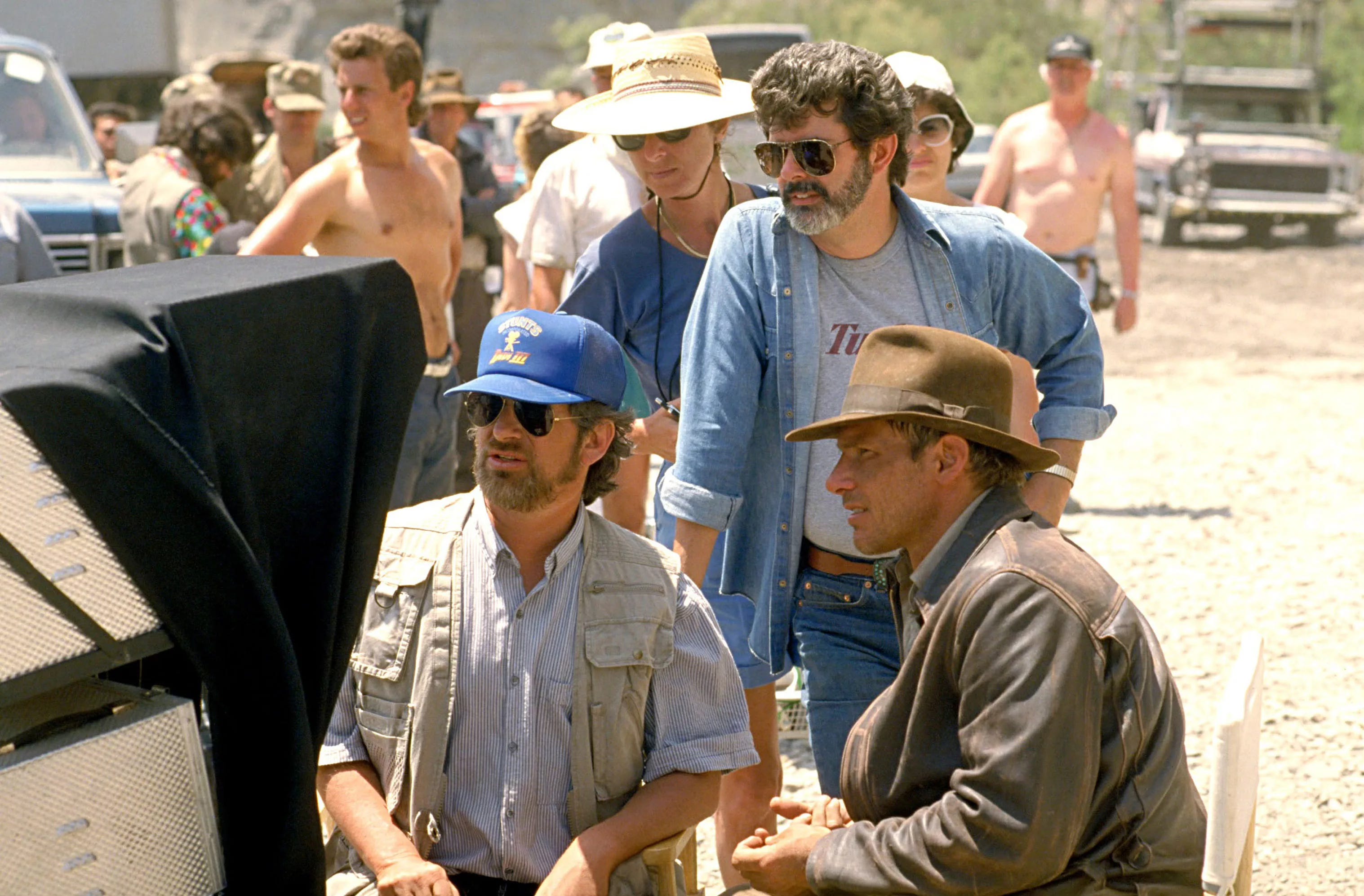
Super Eight - Not technically Spielberg, but maybe the closest anyone else has come to capturing his sense of suburban wonder. The best Spielberg film Spielberg didn’t direct.
I start with a deeply stupid movie.
The script is nonsense. Characters repeatedly make decisions that range from irrational to openly suicidal. Nobody behaves like a person who knows the first Jurassic Park was a real event. A T-Rex is running around Downtown San Diego?
And yet. Every set piece works. The Raptors in the long grass is arguably the best use of Raptors in the entire franchise. The hunt. The waterfall sequence. The T-Rex revenge story.
Also, the smash cut to Malcolm on the subway still makes me laugh every time.
One of the smartest things the film does is make the corporate villain the centrepiece. The original gave us the lawyer eaten alive on the toilet, the embodiment of greed rendered briefly and then disposed of for laughs. The Lost World takes that same archetype and builds an entire antagonist around it. Pete Ludlow isn’t comic relief. He’s the threat, and the film is better for treating him as one.
It is still the second-best dinosaur movie ever made.
I hated this when I first saw it, which puts me in line with a lot of people who encountered it expecting something much warmer and more straightforward.
Watching it again years later, it feels like Spielberg’s most misunderstood film. Dark, deeply strange, and visually arresting. For me, it is the best Pinocchio adaptation ever made. Not the most faithful, not the most friendly and warm, but the one that actually understands the longing to be real. The price of being almost human but not quite.
Jude Law is really extraordinary in it. His performance as Gigolo Joe is almost entirely physical. It’s the best work of his career.
The much-maligned ending is, in my view, the best thing about it.
When The Post came out in 2017, I resisted it. Its defence of journalism and institutional courage felt almost self-congratulatory, another liberal reassurance that the system would correct itself. Watching it now, it lands very differently.
The idea that major institutions might still contain people willing to risk something meaningful in defence of the public good no longer feels comforting or inevitable. It feels fragile.
As a piece of filmmaking, it is very obviously, very consistently well made. Streep and Hanks are doing exactly what you expect them to do.
Its earnestness never tips into being didactic. Although there is a moment that Hanks is approximately one degree of eye contact away from looking directly down the lens to make sure you understand the importance of freedom of the press.
It has a Return of the King too-many-endings problem. But the story is tense in the way that good journalism films are, the tension of people deciding whether to do the right thing when the cost of doing so is real.
“The only way to protect the right to publish is to publish.”
In 2017, that felt like a rallying cry. Now it feels like an epitaph for something we are in the process of losing.
The consensus is that this is the worst of the trilogy, and while the consensus is right, it’s by no means The Godfather Part Three.
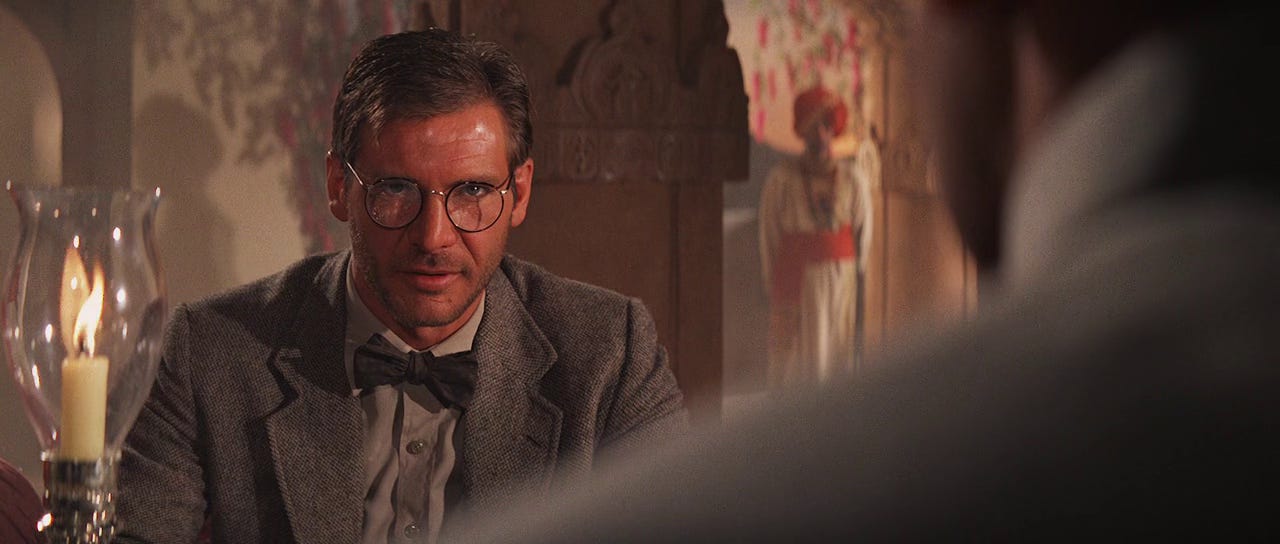
Temple of Doom feels like Spielberg and Lucas trying to see how far they could push pulp adventure toward horror without breaking the blockbuster entirely. Once the film reaches the palace, it barely relaxes. Child slavery, ritual sacrifice, bug tunnels, heart-ripping cult ceremonies, lava-filled caverns. The whole thing has a sweaty, nightmarish intensity that the other Indiana Jones films never attempt.
It’s also one of the most visually aggressive films Spielberg ever made. The opening musical sequence. The lava-lit temple interiors. The rope bridge. The mine cart chase.
Temple of Doom is also Spielberg and Harrison Ford doing their best James Bond impression, and it is better than any Bond film the eighties actually produced.
Short Round gave an entire generation of children genuine hope that they were going to end up on an adventure this big. We are still waiting.
A final note: Temple of Doom is also personally responsible, or to blame (depending on your perspective), for the ongoing trend of men wearing slutty reading glasses with no prescription lenses.
In his fifth decade as a filmmaker, Spielberg pulled another genre out of the bag and somehow made a genuinely great coming-of-age film that also doubles as a high school teen drama.
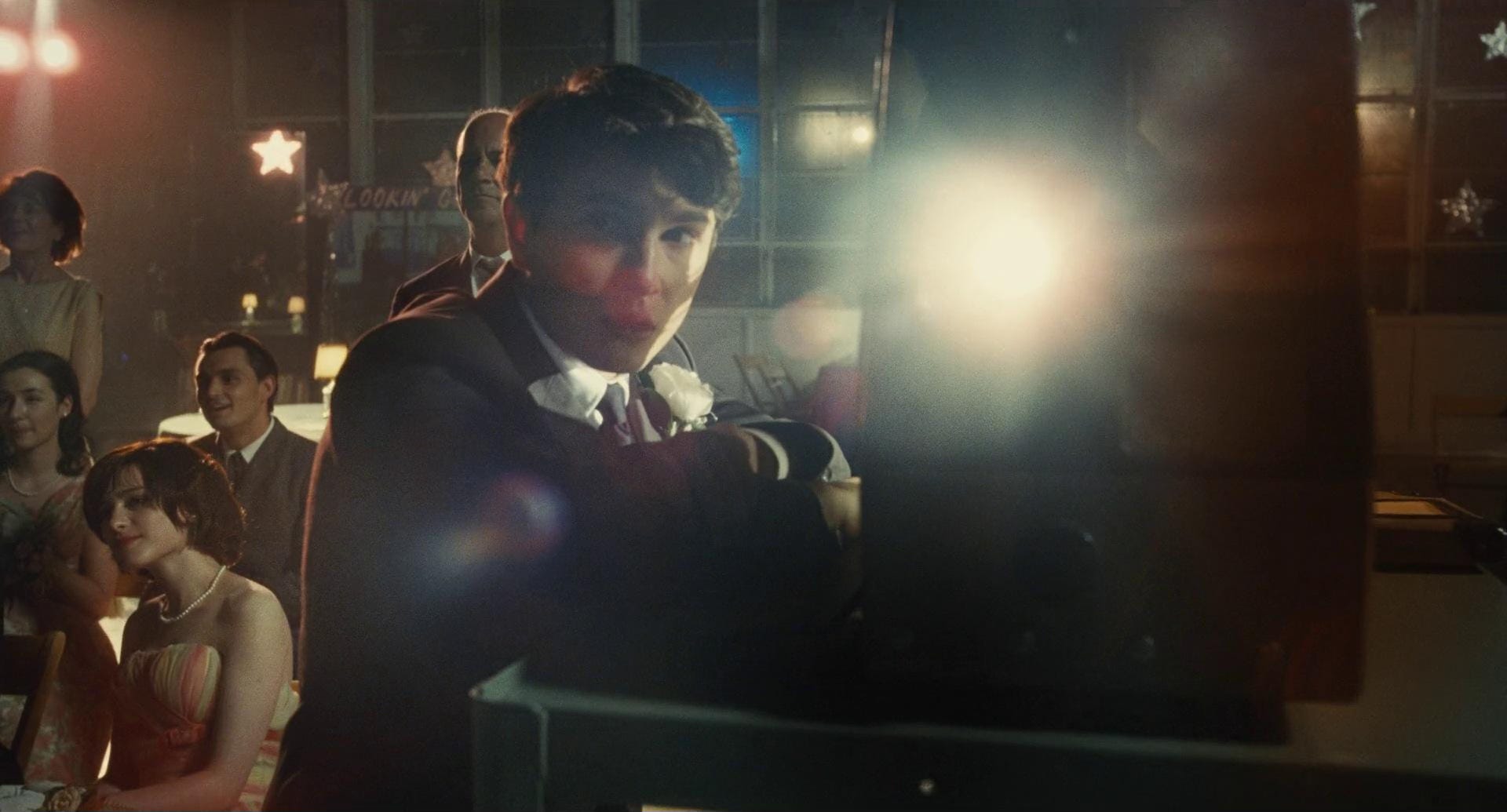
The Fabelmans is Spielberg finally making a film about himself without hiding behind genre first (unless he actually did meet an alien).
Michelle Williams is extraordinary here. Her performance never settles into a single interpretation of Mitzi. She’s loving, impulsive, selfish, magnetic, sad, occasionally unknowable. The film’s emotional maturity comes from refusing to simplify her into either victim or villain.
The standout sequence is Sammy discovering painful truths about his family while editing vacation footage. Spielberg has spent his entire career controlling what audiences see and feel through images, and here he turns that instinct inward. It shows how cameras can reveal things people don’t always mean to expose.
David Lynch appearing for two minutes as John Ford and somehow delivering both a joke and a genuine lesson in visual storytelling is a great late-career flex. Spielberg ending his most personal film on a horizon-line gag tells you almost everything you need to know about what cinema means to him.
A lot of science fiction imagines the future. Minority Report mostly just noticed where the present was heading before everyone else did.
The personalised advertising. Retinal scans. Predictive policing. Constant surveillance. Algorithmic suspicion. In 2002 it felt inventive. In 2026 it feels inevitable.
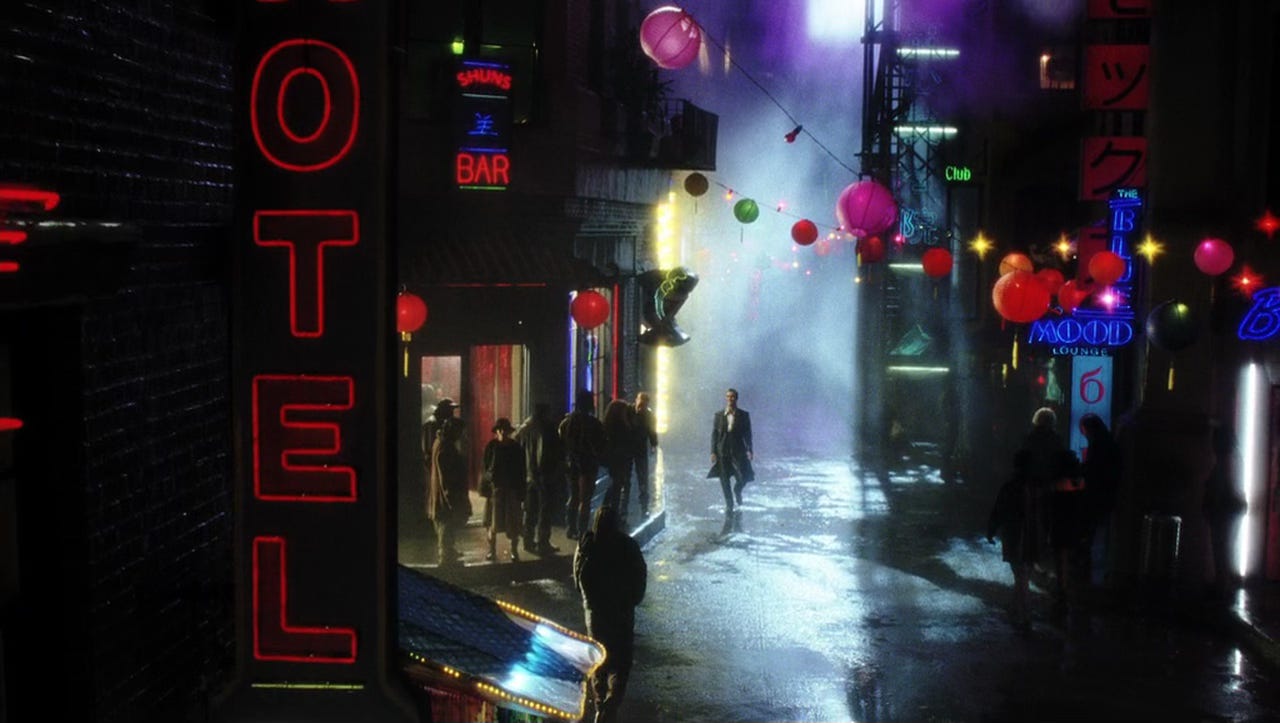
Spielberg’s direction is phenomenal here. The cold blue-grey palette gives the entire film a drained, sleepless quality, while the noir structure keeps the story tense even when it’s buried under world-building and philosophy.
Tom Cruise is also perfectly cast because Spielberg understands that Cruise works best when his confidence starts cracking under pressure. Anderton isn’t invincible. He’s exhausted, grieving, paranoid, constantly scrambling to stay ahead of systems larger than himself.
The action scenes have a frantic physicality most modern sci-fi still struggles to match. The spider sequence alone is enough to spike your blood pressure.
But what holds all of it together is the central question. What happens when punishment becomes preemptive? Twenty years later, with everything we now know about predictive algorithms and state power, it has only gotten more uncomfortable.
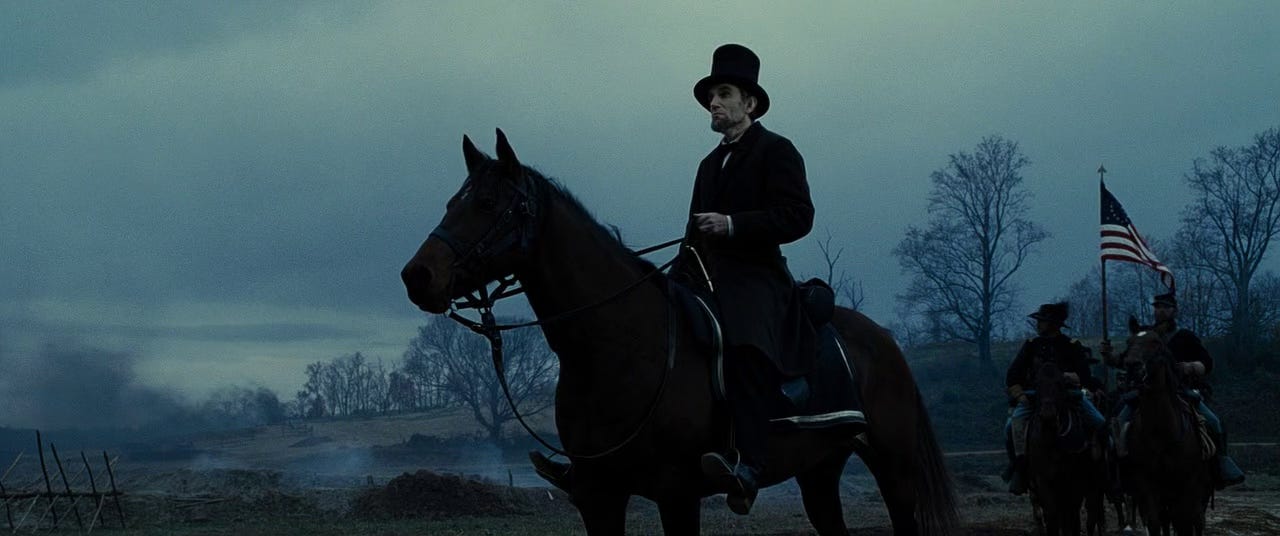
There are great performances, and then there are performances that temporarily erase your awareness of performance altogether. Daniel Day-Lewis in Lincoln belongs in the second category.
Rewatching the film, I repeatedly found myself forgetting I was watching an actor at all. Not metaphorically. Literally. The analytical part of my brain that normally stays active during movies just switched off for stretches at a time because there was nothing visible to analyse.
That invisibility is what makes the work so convincing. Most performances invite you to admire technique. Day-Lewis somehow removes the sense of technique altogether.
Tommy Lee Jones is fantastic as Thaddeus Stevens, bringing sharpness and humour to a character who could easily have become one-note moral authority. The warmth gradually revealed underneath Stevens’s abrasiveness gives Lincoln some of its most human moments.
Everything else is what you would expect from late-period Spielberg operating at this level. Elegant staging, gorgeous lighting, and command of pacing. The fact that a film largely about congressional procedure in 1865 feels this engaging is an achievement in itself.
But the film ultimately belongs to Day-Lewis. Spielberg gives him the space to work, and he fills every inch of it.
This is Spielberg at his most effortlessly charming.
Catch Me If You Can isn’t trying to be more complicated than it is. Films this easy to watch are usually much harder to make than they look. A cat-and-mouse story between an FBI agent and a con man, which lets you side with the con man without needing to reevaluate your morality.
Leonardo DiCaprio gives one of his loosest and most charismatic performances as Frank Abagnale Jr., but the film’s heart belongs to Tom Hanks and Christopher Walken.
Hanks turns Carl Hanratty into something much funnier and sadder than the role appears on paper. He’s lonely, persistent, socially awkward, and permanently exhausted. A man whose entire life has narrowed to chasing someone else’s.
Walken, meanwhile, gives the film its emotional centre. Frank’s entire identity is built around trying to impress his father, and Walken plays him with just enough dignity and disappointment to make that motivation genuinely affecting.
Capers are one of cinema’s most reliable pleasures, and we simply don’t make enough.
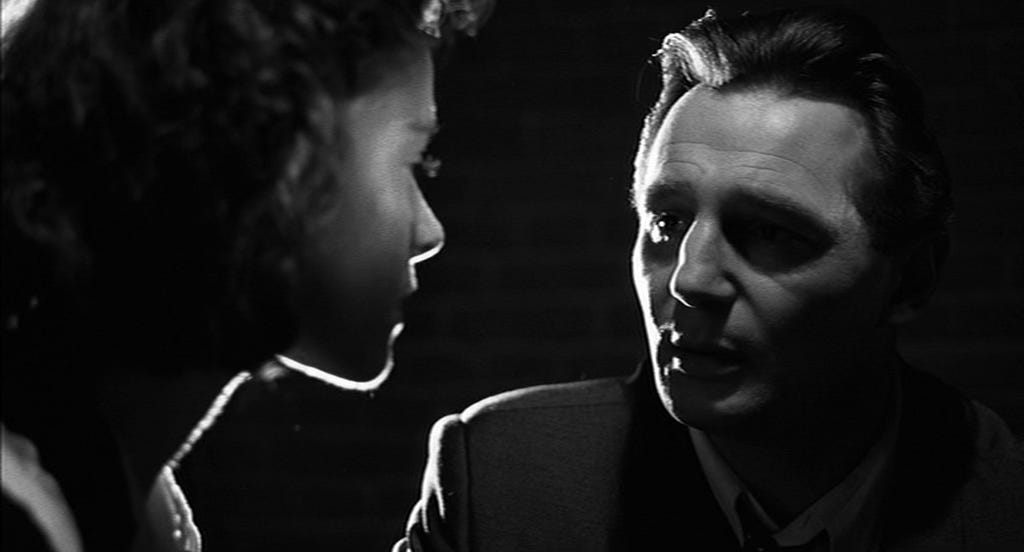
I have seen this film once.
I do not say that as a criticism. I say it as the most honest thing I can tell you about what it is like to watch it. You sit with it for three hours and fifteen minutes, and you leave in a kind of silence that does not have anywhere to go.
I had the same experience with The Zone of Interest. One of the few films where the formal control actually makes the subject harder to sit with, one I have never once recommended and find almost impossible to review. Not because it fails. Because of what it asks you to sit with. There is a category of filmmaking where the usual critical language, pacing, structure, and cinematography feel not just inadequate but slightly beside the point.
Schindler’s List lives in that category. It is one of the most technically accomplished films Spielberg ever made, but what stays with you is not the craftsmanship so much as the cumulative moral weight of the experience.
I admired it enormously. I also found it emotionally exhausting in a way I have very little desire to voluntarily repeat.
Some films entertain you. Some films educate you. Some films simply stay with you whether you want them to or not.
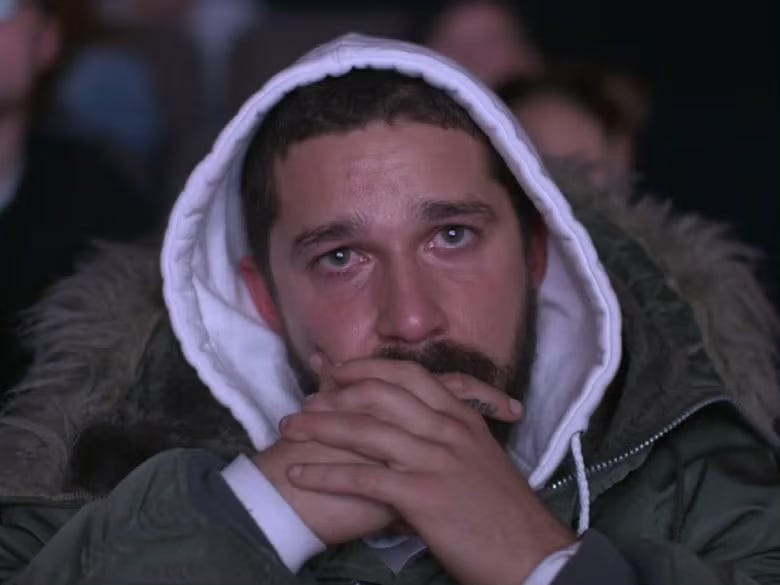
Nothing about Hook should work.
A live-action sequel to a beloved animated classic is exactly the kind of film I have spent considerable time arguing against. The sequelisation of childhood is, in my considered critical opinion, a plague. And yet I put Hook this high on the list anyway, so let me explain myself.
It absolutely rocks.
Neverland feels built rather than rendered, which is why the film works.
Robin Williams is Robin Williams, which is to say he is operating at a frequency no other human being except Jim Carey has ever quite accessed.
But the secret weapon, the thing that elevates this beyond nostalgia and into something that works, is Dustin Hoffman and Bob Hoskins. Hoffman’s Captain Hook has an all-timer of a character entrance, ready to end it all, before daring and then pleading for someone, anyone, to talk him out of it. And Hoskins’s Smee is a masterclass in the comedy of loyalty. Undercutting while praising. Rolling out the red carpet while pocketing the silverware. Pivoting from devotion to self-preservation the moment the situation deteriorates. They are a perfect double act.
Is it too high on this list? You might think so. But you had to be there. Every 1991 kid was there, and I am confident they are on my side.
After the fever dream intensity of Temple of Doom, Spielberg made the smartest possible decision and made a film that feels warm, relaxed, and genuinely fun.
The opening sequence alone would justify its place on this list. Young Indy in the canyon does in ten minutes what most origin stories can’t manage in two hours. It tells you exactly who this man is and why he became that person. It is economical and entertaining and does the thing great prologues do, which is make you feel like you have already been on an adventure before the title card appears.
The Last Crusade is also the funniest Indiana Jones film, and the comedy works because it grows entirely out of character rather than undercutting the adventure.
Sean Connery and Harrison Ford together are one of cinema’s great double acts, built entirely on mutual irritation and barely concealed affection. Their dynamic gives the film emotional warmth. There is a genuine feeling underneath the comedy, a story about a father and son who have spent decades failing to properly see each other, and the film earns its ending because the emotional resolution matters more than the grail itself. They do not just find the cup. They find each other, which in lesser hands would be unbearable, and here it’s exactly right.
The Holy Grail mythology helps too. It gives the film a slightly more reflective, spiritual tone without losing the pulp energy that makes Indiana Jones work in the first place. And the tank sequence absolutely rips.
Yes, structurally, it echoes Raiders quite heavily. The same Nazis, the same religious mythology, the same globetrotting structure. But refinement is not the same thing as repetition. The film knows exactly what works about Indiana Jones and executes it almost perfectly.
Also, this was clearly intended as the ending to the franchise.
A lovely ending.
A complete ending.
An ending nobody ever revisited.
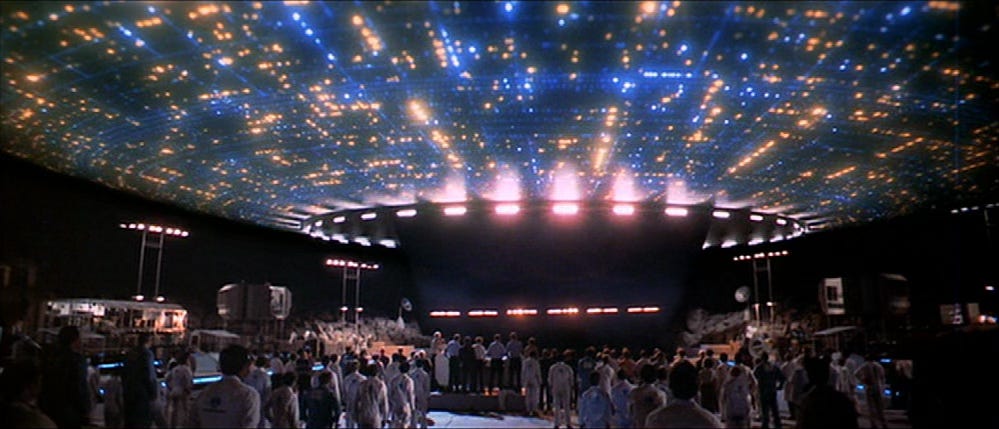
Most alien contact films are built around fear. This one is built around awe.
What makes the movie fascinating is that Spielberg treats Roy Neary’s obsession as both transcendent and destructive at the same time. Richard Dreyfuss isn’t playing a heroic explorer. He’s playing a man whose need to understand something larger than himself, but the pursuit slowly destroys his ordinary life. The film never fully resolves whether that sacrifice is noble or selfish, which is part of what makes it linger.
The aliens feel curious rather than threatening, which still feels unusual for this genre. They aren’t invaders or conquerors. They’re mysterious. Curious. The entire final act plays less like a battle than a spiritual encounter.
The visual effects, Douglas Trumbull’s work, remain astonishing. The UFOs feel luminous and physical in a way that digital effects rarely achieve. The final thirty minutes are among the greatest sustained sequences in Spielberg’s filmography. Minimal dialogue, overwhelming imagery, The idea that first contact might happen through music rather than language, is one of those ideas that feels obvious the second someone finally thinks of it
What holds all of it together is the commitment. Close Encounters believes in wonder completely and without irony.
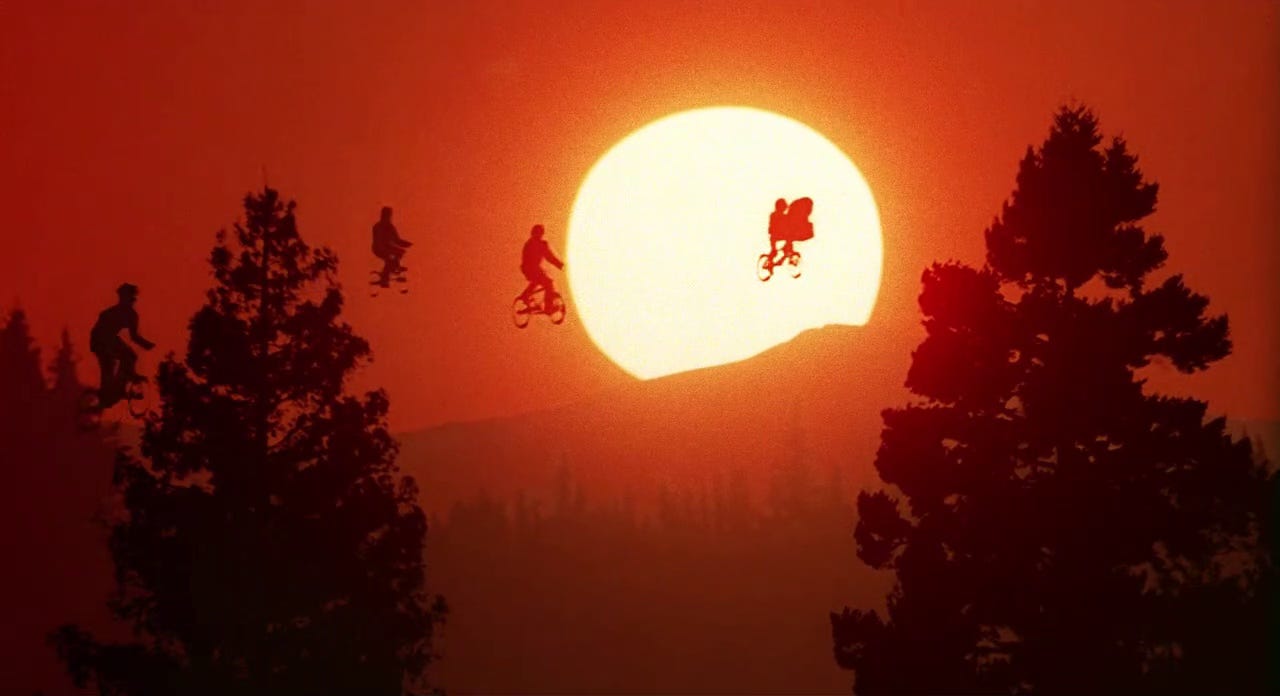
E.T. exists in my memory the way summer does, something that’s just always been there. I wish there was a before point so I could remember seeing this for the first time.
At its heart, this is an ode to childhood, to summers that felt infinite, to riding your bike until the streetlights came on, to making a new friend, to staying up too late and to keeping secrets that feel enormous.
Steven Spielberg is, and I mean this as a compliment, an expert emotional manipulator. He knows exactly which buttons to press and exactly when to press them. You see the emotional wave of E.T. building long before it arrives, but Spielberg’s sincerity is so complete that resisting it feels impossible.
Credit where it’s due, the casting is perfect across the board, the lighting gives suburbia texture and then there’s John Williams. The score is doing more than accompanying the film, it is a shaman guiding the emotional journey.
The medical sequence remains slightly jarring, arriving with a cold sterility the rest of the film largely avoids. But what follows in the final twenty minutes is a testament to the power and beauty of cinema and a reminder of why film endures.
Pure storytelling, pure emotion, pure wonder. The bike chase still feels transcendent, perhaps because its destination is already etched into me.
“I’ll be right here.”
By the time Saving Private Ryan arrived in 1998, Spielberg had already made definitive texts across an almost implausible range of genres. Then he made a war epic and changed the visual language of war cinema almost overnight.
Of course he did.
The first twenty-five minutes are unlike anything that had come before and, despite everything that has tried to follow, remain almost impossible to replicate. The handheld camera, the desaturated imagery, the sound design that captures the snap of bullets and the muffled disorientation of an explosion and the distant screaming all at once. Spielberg deliberately strips out heroism in those opening minutes, and the result is one of the few battle sequences that genuinely feels disorienting rather than exciting.
Soldiers shake. They hesitate. They die suddenly and without meaning. The camera does not look away and it does not make it beautiful.
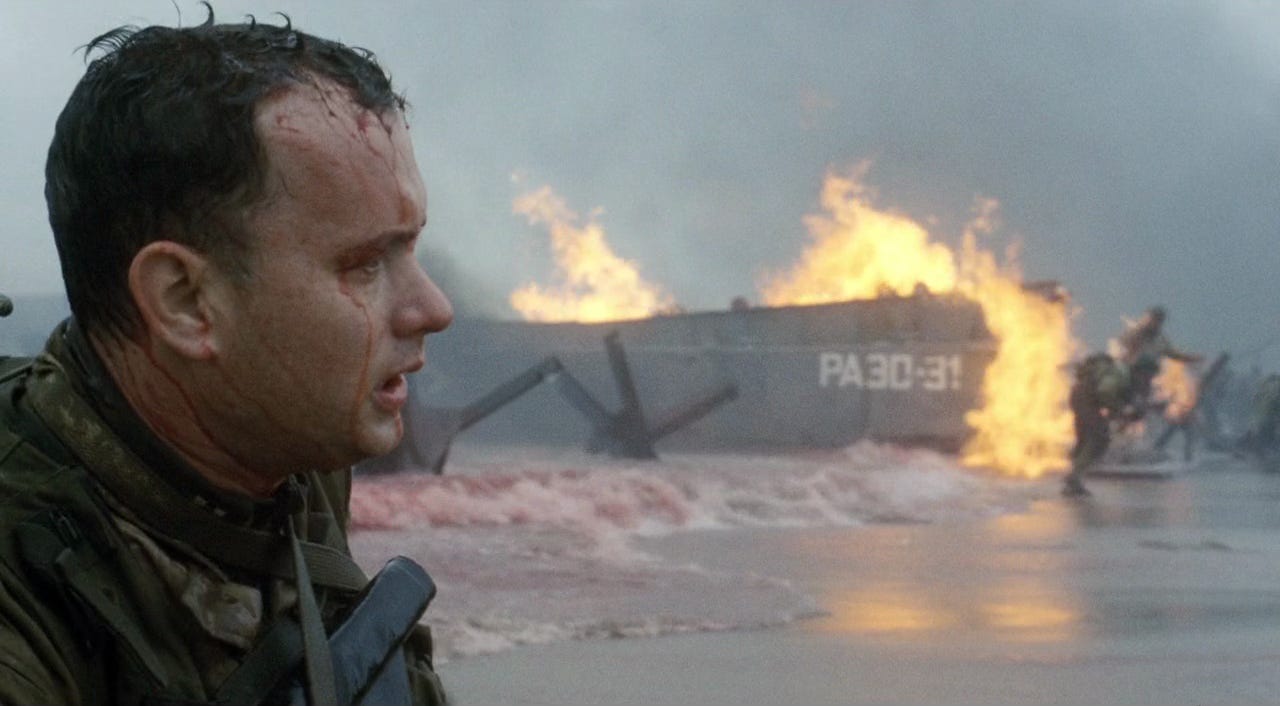
What follows the beach is a film of equal intelligence. The quieter scenes between battles are as carefully constructed as the combat, conversations about fear and memory and home and duty that give the violence emotional weight. Tom Hanks’s Captain Miller is one of the great performances in Spielberg’s filmography. He is weary, humane, and visibly held together by will rather than strength.
Arguing over whether saving one man can justify risking several others. Spielberg understands that war films only work when the audience feels the humanity underneath the war machine.
Its influence on everything that came after is almost impossible to overstate. The aesthetic and tone of Saving Private Ryan reshaped war cinema, television, and video games for the following two decades. The you-are-there realism became the new template. But no one has fully replicated it, because replication requires not just technique but the specific moral seriousness Spielberg brings to every frame.
Saving Private Ryan is a masterpiece in every sense of the word.
Now things get almost impossible.
Raiders of the Lost Ark is one of the most purely enjoyable films ever made.
The opening temple sequence remains one of the cleanest character introductions, Spielberg shows you everything important about Indiana Jones entirely through action. His intelligence, greed, improvisational instincts, competitiveness, bad luck, and vulnerability all emerge naturally from the sequence itself. Nothing is explained. Everything is shown.
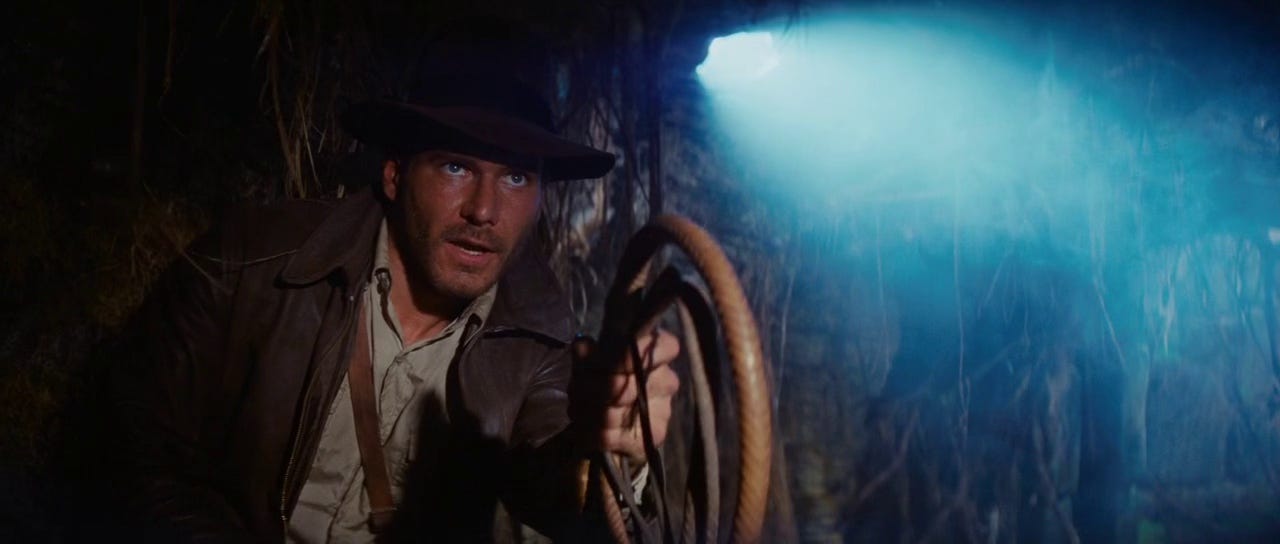
The film barely sits still long enough for you to question it. Nearly every scene introduces a new obstacle, location, betrayal, or complication without ever feeling rushed or mechanical.
Harrison Ford is the engine of all of it. What makes Indy work, what has always made him work, is the vulnerability. He is charismatic precisely because he is not invincible. He succeeds through persistence and improvisation and occasional dumb luck rather than superiority. He gets beaten up. He gets tired. He makes mistakes. He is outmatched more often than not and wins anyway, which is far more satisfying than a hero who was never really in danger.
The truck chase shows the precision Spielberg brings to his set pieces. Indy being thrown through the windshield and dragging himself back underneath a moving vehicle while being kicked by Nazis is a masterclass in action filmmaking. The sequence keeps finding new obstacles without ever losing momentum or geography.
The film shifts between comedy, horror, romance, pulp serial energy, and genuine mythology without any of those elements cancelling each other out. The face-melting finale is disturbing. The comedy is genuinely funny. The romance has actual heat.
John Williams’s Raiders March is one of those themes that permanently rewired what adventure sounds like onscreen. To hear it is to feel momentum.
Every frame feels made by filmmakers who are delighted by storytelling itself, and that delight is contagious in a way that very few films ever manage.
It is not just a great adventure film. It is the adventure film, the one everything else is measured against, and it got there by being so purely and completely itself that comparison feels almost irrelevant.
Forty-five years later it has not aged a single day.
Jaws changed Hollywood so completely that it’s difficult to separate the film itself from everything it created afterward. The idea of a summer blockbuster as a cultural institution, of a film as an event, effectively begins with Jaws.
Spielberg was twenty-six years old (what?) and making a production that, by all accounts, was going wrong in almost every conceivable way. The mechanical shark barely worked. The shoot ran over schedule and over budget. By any reasonable assessment, it should have been a disaster.
Instead, he made one of the most influential films in cinema.
Because the mechanical shark barely worked, Spielberg was forced to imply its presence rather than constantly show it. The result is one of the great suspense films ever made. Ripples in the water. Yellow barrels. POV shots. John Williams’s score quietly announcing danger before the audience can fully process what they should be afraid of.
The shark becomes terrifying largely because Spielberg understands that anticipation is usually more powerful than revelation.
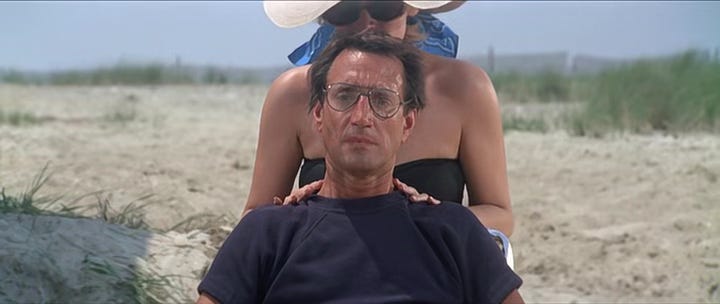
Jaws becomes even better once everyone gets onto the Orca. Roy Scheider, Robert Shaw, and Richard Dreyfuss create a great ensemble dynamic. What begins as a monster movie quietly becomes a chamber piece, three flawed and very different men trapped together at sea, drinking and arguing and comparing scars and slowly realising the scale of what they are facing.
The Indianapolis monologue is still the film’s defining scene. Robert Shaw, recounting the shark attacks after the sinking of the USS Indianapolis, transforms Quint from eccentric fisherman into a traumatised war survivor. The scene begins in warmth and camaraderie and ends somewhere close to existential dread, and Shaw delivers in such a way that the room seems to stop.
The final act steadily removes every illusion that these men are in control. The boat deteriorates. The plans fail. Panic takes over. The escalation is relentless, and the emotional stakes are genuine because by this point, you are not watching a shark attack a boat. You are watching three people you care about face something they probably cannot survive.
Fifty years later it remains the standard. Not just for blockbusters. Not just for suspense filmmaking. For what cinema can do when craft, instinct, performance, and pure storytelling all arrive at exactly the same moment.
It is a perfect movie and one of the best films ever made.
Placing it at number two on any list feels unforgivable but..
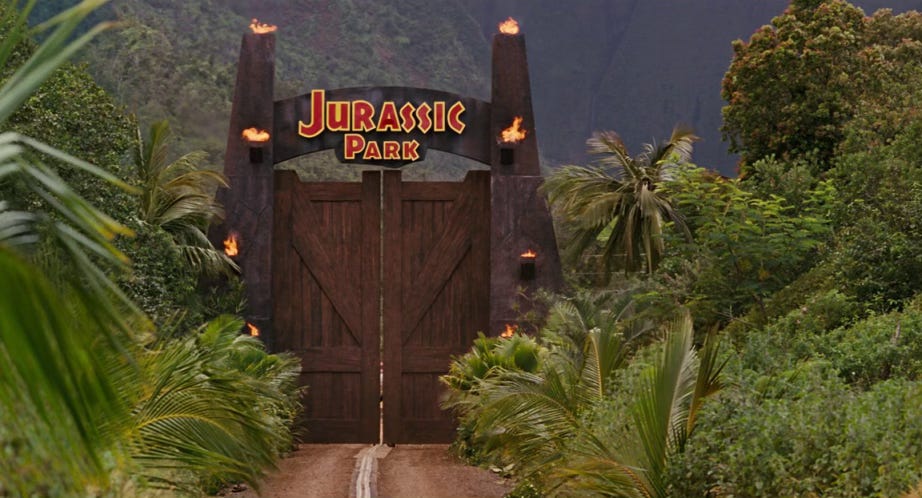
I have seen this film more times than I can count. I mean that literally. At some point in my childhood, the number became untrackable, somewhere in the repeated summer rotations and the afternoons where it was simply the thing I turned on. Jurassic Park is not a film I watch. It is a place I return to.
Which makes it almost impossible to be objective about, but also means I am probably more objective about it than anything else on this list. I have seen it too many times to be fooled by it. The magic should have worn off. It never has.
Jurassic Park invented the dinosaur movie and simultaneously made it impossible for anyone else to make one. It created a genre and set a standard so complete that everything following it has been, at best, an imitation. The Lost World is great fun. The later entries exist. None of them touch this, because what Spielberg did here was not just make a dinosaur film. He made you believe in dinosaurs.
Spielberg doesn’t just make dinosaurs exciting. He makes them believable. That’s the real achievement. The first Brachiosaurus reveal still works because the scene is built entirely around reaction and delay. Grant rips off his sunglasses. Williams’s score swells. Spielberg lets the audience experience awe through Alan Grant’s face before fully revealing the animal itself. And then, the camera follows his eye line to something vast and alive and impossible, moving across a valley.
The T-Rex sequence is similarly precise. Water trembling in the cup. Distant footsteps. Fences failing. Rain reducing visibility. Spielberg stretches the tension so methodically that by the time the animal is fully visible, the audience has already been terrified three times by things they could not see. The reveal is a release, not the scare.
And then the movie seamlessly pivots into horror. The raptor kitchen scene, the Dilophosaurus, “clever girl”, I could go on and on and on.
Jurassic Park somehow holds all of these modes together without any of them overwhelming the others. It’s funny, frightening, awe-filled, adventurous, and genuinely thoughtful about scientific hubris.
Jeff Goldblum’s Ian Malcolm is one of cinema’s great supporting performances. The irony, the charisma, the looming warning dressed as intellectual provocation. “Your scientists were so preoccupied with whether they could…”
The practical animatronics and ILM’s CGI work together so completely that they still hold up in a way that most modern effects do not, which is both a tribute to the craftspeople involved and a quietly damning statement about what the industry chose to do afterward. We had this. We had people who could build a living, breathing dinosaur that you could photograph from any angle in natural light and believe completely. We decided that was too difficult and replaced it with whatever is happening in Jurassic World: Rebirth. It would be easy to say we do not make them like this anymore. The truth is that we never made them like this before either.
It would be so easy to put Jaws at number one on this list. Jaws is fifty years old and perfect and one of the most important films ever made.
And then I think about being six years old and watching a Brachiosaurus raise its neck above the trees for the first time, and the goosebumps rise again on my arms, and I think about every summer that followed, and I think about the fact that thirty years later I still feel something in my chest when John Williams’s theme comes in.
Jurassic Park is number one. Of course it is.
There we have it. Seventeen films. One filmmaker. And, genuinely, one of the most enjoyable months I’ve had revisiting cinema like this.
I rewatched twenty-two Spielberg films to write this piece, and what other director could you even say that about?
There has never been anyone quite like him, and I do not think there will be again. The range alone should be impossible. The consistency on top of it is almost unfair. Five decades, no real decline, and an almost unbroken run of films that shaped what cinema looked and felt like for everyone who came after. He did not just make great films. He made the films that taught a generation what great films were supposed to feel like.
He taught me. That much should be obvious by now.
Also, and I mean this sincerely, I cannot wait for Disclosure Day.
If you made it this far, thanks for taking the time to read it. Next week brings the second edition of The Debate. Where I give other people the chance to tell me their number one.
No posts
Comments
Nothing yet. Say the first thing.
Sign in to join the conversation.