
There was a time when the studio comedy felt like a pillar of Hollywood. A dependable lane with its own stars. Jim Carrey was opening films. Will Ferrell was carrying them. You knew what you were getting, and more importantly, you knew who could deliver it.
That lane has thinned out. The mid-budget comedy has all but disappeared, and with it the idea of the standalone comedic movie star. There are still funny people working, but not in the same way, and not at the same scale. Someone like Tim Robinson is brilliant, but he is not yet anchoring global releases.
In that space, something else has happened.
Some of the funniest films of the last decade have not really been comedies at all. The Nice Guys. The Wolf of Wall Street. Genre films have become home to the funniest work in the last 10 years. Which led me to a different question.
If the studio comedy has receded, and the leading comedian has gone with it, then:
Who is the best comedic actor working today?
The Debate is an attempt to bring film arguments out into the open. Not hot takes, not knee-jerk contrarianism, but positions that can be argued, defended, and, when necessary, dismantled. One question. Two answers. One writer makes their case, I make mine, and we settle it the only way I know how, a public vote.
A few ground rules.
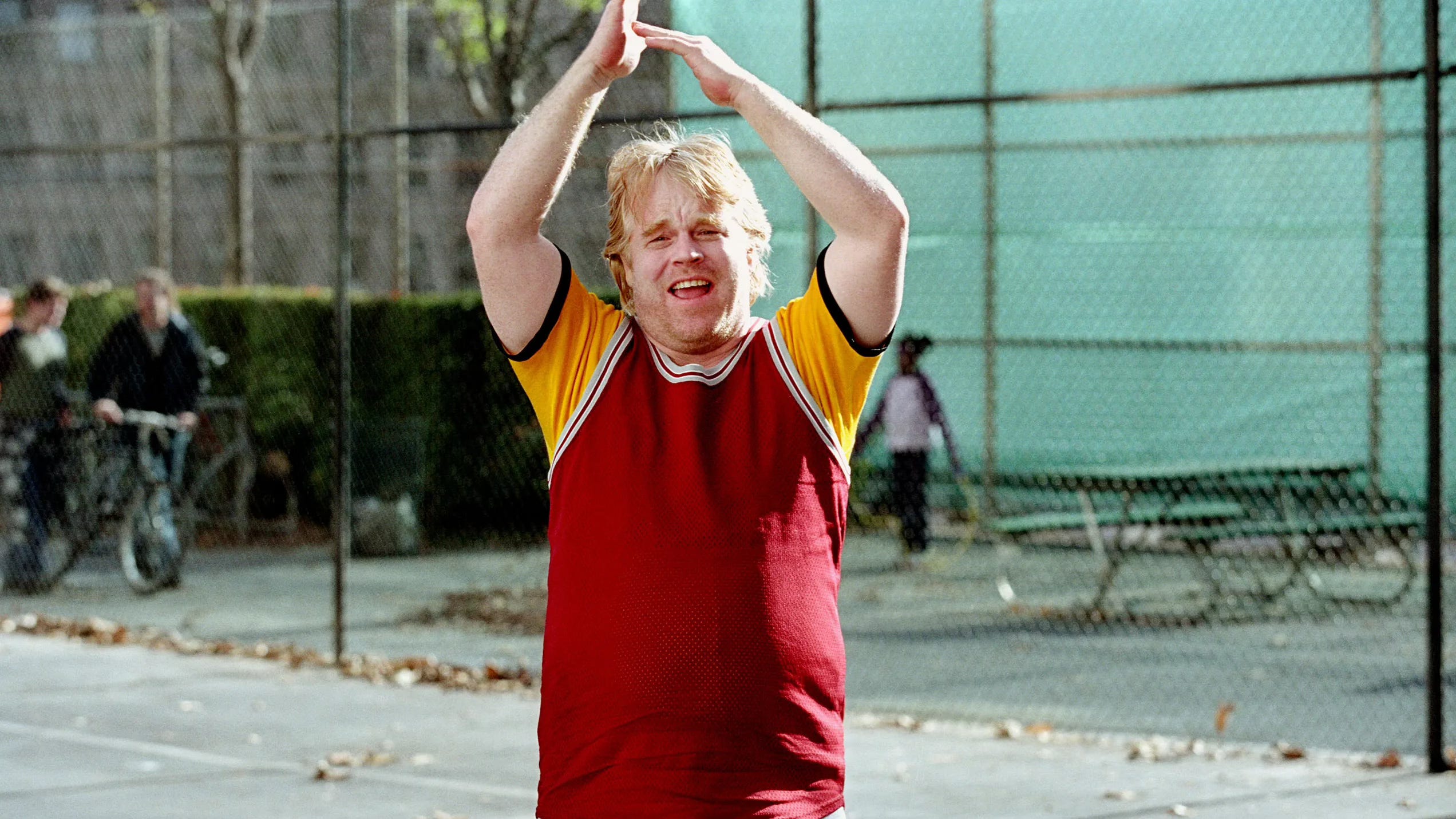
They have to be active and working regularly and working to a high standard (sorry, Bill Murray). They have to be alive (sorry, Philip Seymour Hoffman). And they have to be actors first, not comics carrying a fixed persona from film to film (sorry, Adam Sandler or Kristen Wiig). They also have to be English-speaking (sorry, Roberto Benigni).
This is not about who is the funniest person in real life. It’s not about volume either. This is about actors and their ability to perform comedy.
Which means range matters. Timing matters. Control matters. The ability to make something funny when it is not written that way matters. Some actors are always funny, and others can switch it on.
So we are judging not just who gets laughs, but how they get them.
Why We Go To The Movies is a reader-supported publication. To receive new posts and support my work, consider becoming a free or paid subscriber.
Near Misses
There were a few that came painfully close. Colin Farrell was the hardest to leave out. He is brilliant and has a mainline to my funny bone, but so much of his best comedy is tied to Martin McDonagh that it becomes difficult to separate the performance from the material. Ralph Fiennes is consistently hilarious, but often in a very specific mode, playing it straight while everything around him unravels. Olivia Colman was right there as well, with her incredible ability to flip between sincerity and absurdity. And Hugh Grant, particularly in his later work. All of them and a few more have a case.
So after all that, the debate is set.
And one writer is making the case for Ryan Gosling.
The other side, mine, will come later.
For now, read the argument in full. Take it seriously. Then decide if it actually holds up. Everything below is written by . If you don’t follow them you should, they’ve got one of the best niches on Substack.
The Case for Ryan Gosling
He commits completely, no matter how absurd the bit
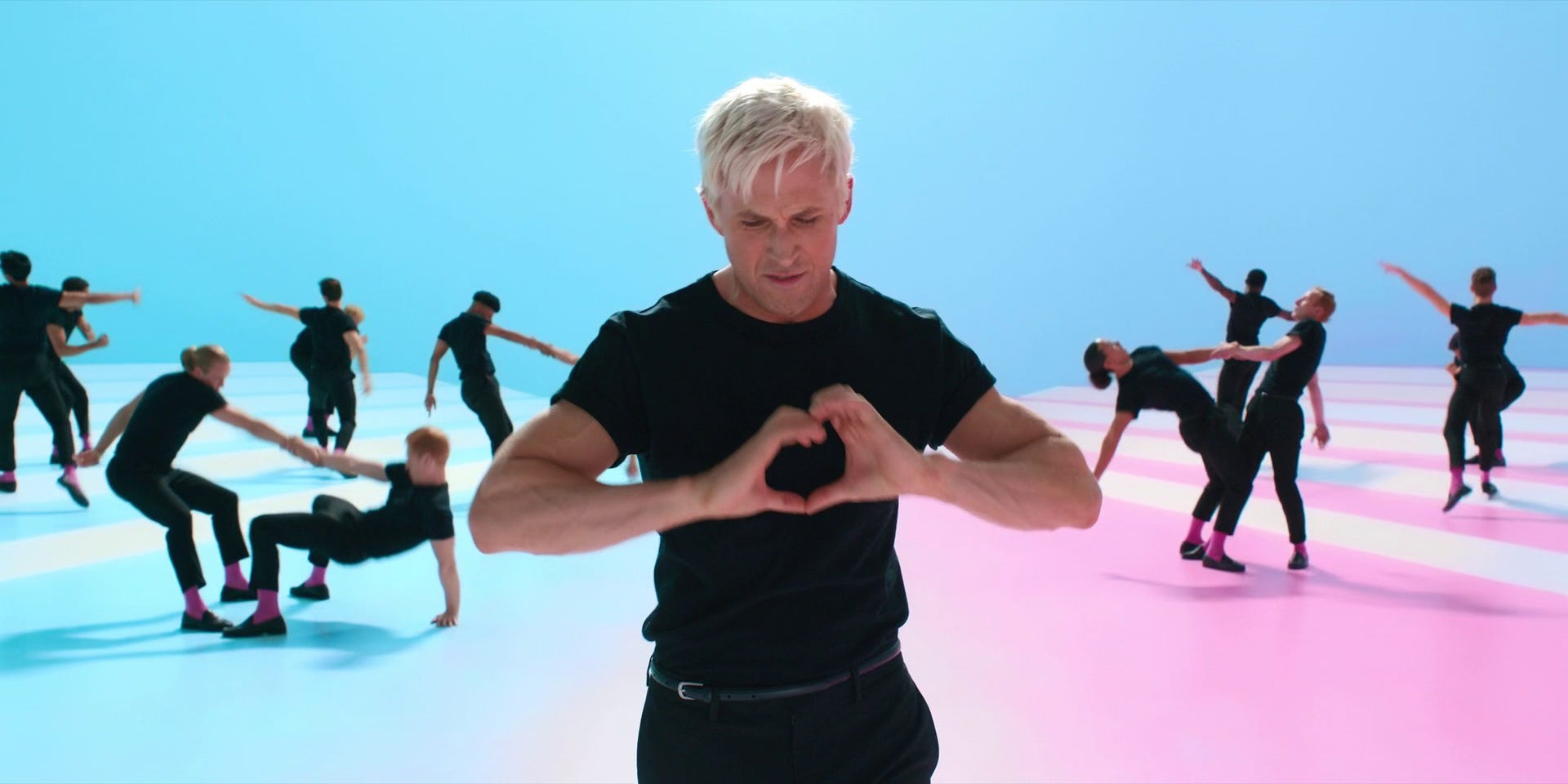
The mark of a great comedic actor isn’t mugging for laughs. It’s playing material with total sincerity, as if the stakes are life and death. Gosling does this better than almost anyone working today. His Ken in Barbie is the perfect example: he played a man-child having an existential crisis about horses and the patriarchy with the earnestness of a Shakespearean tragic hero. He treated a choreographed beach dance-off like it was the storming of Normandy.
He’s funniest when he’s trying not to laugh
His repeated breaks on SNL, most famously the Papyrus sketch and the alien abduction skit, have become the stuff of internet legend. What makes them iconic isn’t just that he broke. It’s how hard he fought to hold it together, the way his whole body seemed to be physically rebelling against his professionalism. His shoulders shake, his jaw tightens, and he stares at the floor. That visible, losing battle with his own laughter means the audience ends up laughing at the effort as much as the break itself, and somehow it only makes him more watchable.
He plays humiliation better than anyone
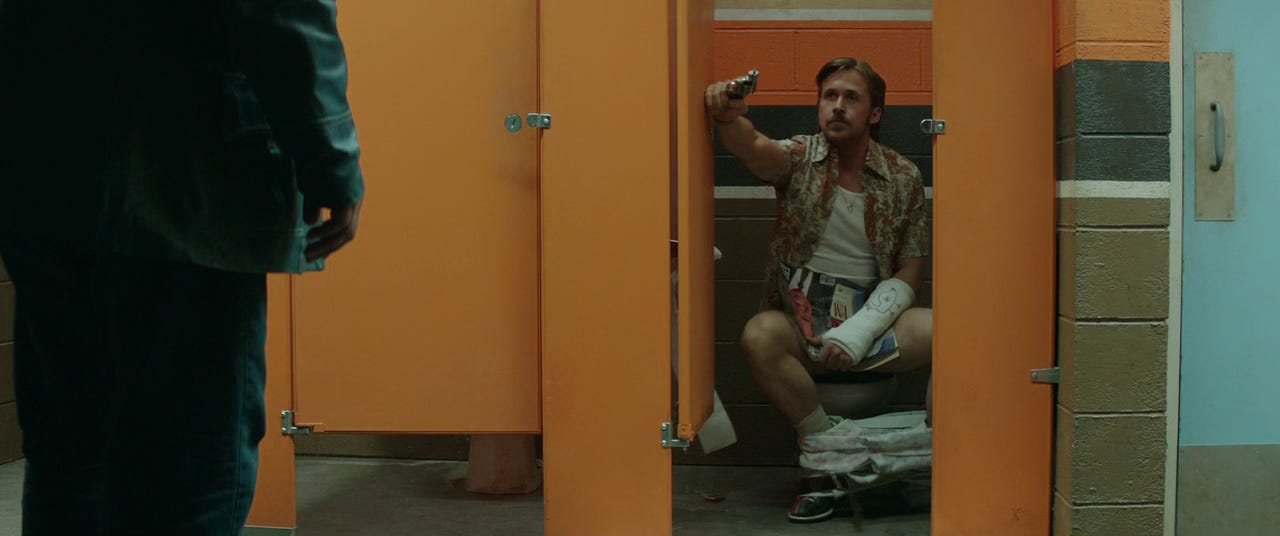
Not just embarrassment but humiliation. In The Nice Guys he spends the entire film panicking, screaming, falling over, getting outsmarted, losing control of his body, and somehow never loses the audience while doing it. That balancing act is unbelievably difficult because most actors either overprotect themselves or lean so hard into patheticness that the character becomes exhausting to watch.
His timing is impeccable
Comedy is like a rhythm, and Gosling has it in a way that can’t really be taught. His deadpan delivery, the long pause before a reaction, the slightly-too-casual response to something completely insane, demonstrates a technical understanding of comedic timing that most dramatic actors simply never develop. He understands that sometimes the funniest thing you can do is absolutely nothing, just let the moment breathe until the audience fills the silence with laughter.
He makes his co-stars funnier
In The Nice Guys, Russell Crowe delivers one of the funniest performances, and a significant part of why it works is Gosling playing the perfect foil. In Barbie, Margot Robbie’s increasingly grounded and bewildered performance lands better because Gosling is so completely unhinged next to her. A truly funny actor doesn’t just get laughs for themselves. They create the conditions for everyone around them to be funnier too. Gosling does this consistently, generously, and without seeming to try. A certain someone coming later in the piece is incredibly funny, but I’d argue doesn't elevate everyone around them.
He’s willing to look completely ridiculous
A lot of conventionally handsome leading men are quietly protective of their image. They’ll do comedy, but there’s a ceiling. Gosling has no ceiling. He wore the Ken fur coat. He performed “I’m Just Ken” with the full vocal commitment of a man auditioning for a Las Vegas residency. He has spent entire interviews deadpanning increasingly absurd statements with a completely straight face. Plus, there’s ‘Knife Guys’.
There is no bit too silly, no premise too strange, no costume too embarrassing. That total lack of vanity, from one of the most objectively good-looking people on the planet, is itself part of what makes him so funny.
The bottom line: in an era where comedy often defaults to improv chaos or self-aware irony, Gosling’s approach, sincere, committed, technically precise, and completely without ego, makes him something genuinely rare. He is not a comedian who occasionally does drama. He is a serious actor who has quietly become one of the funniest people in the room.
Back to
He is very funny. In fact, he is probably more naturally funny than my pick. Comedy seems to come to him effortlessly, and there’s a looseness to his performances that makes even small reactions or throwaway moments land.
My hesitation is really about the degree more than the ability. For all the great comic performances, I can’t think of a single moment where he’s had me completely gone, struggling to breathe in the way the very best screen comedy can. And while he almost always improves a film, I’m not sure he elevates weaker material quite as effortlessly. This is something I found myself thinking during The Fall Guy and, more recently, Project Hail Mary (I’ll save that rant for another time).
My pick is an actor who has produced some of the funniest moments of recent years, including arguably the funniest physical comedy of this century, but someone who isn’t defined by it. Someone with real dramatic weight, an Oscar winner, someone who can drop into comedy without losing seriousness, and just as quickly step back out of it.
That level of range is harder. Because it isn’t a style he lives in, it’s something he can turn on and off.
And that’s why my answer is Leonardo DiCaprio.
The Case for Leonardo DiCaprio
Hear me out.
He is just straight-up funny
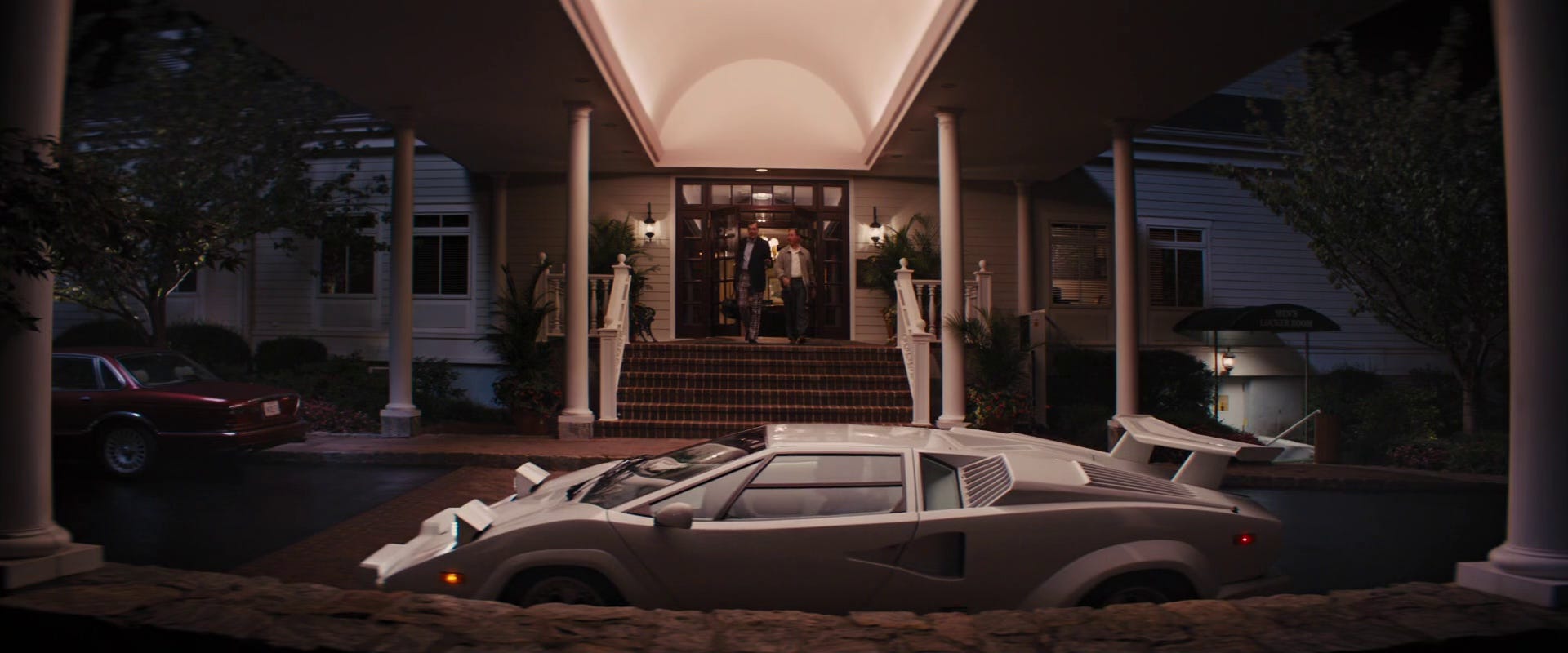
Not “funny for a serious actor.” Not “surprisingly comedic given his filmography.” Funny. The man is genuinely, properly hilarious, and the reason it might catch people off guard is that he’s spent thirty years being so good at everything else that the comedy gets filed away under “other achievements.” It shouldn’t. When DiCaprio is in a comic mode, he doesn’t just hold his own, he takes over. The Quaalude scene in The Wolf of Wall Street is one of the greatest pieces of physical comedy this century. He crawled across a car park, folded his malfunctioning body into a car, and looked completely insane. It’s the purest form of slapstick.
He has a switch.
Gosling is brilliant. But, give DiCaprio the Ken role at the same age, and I think he kills it, give Gosling The Revenant, and we never speak of it again. He has a genuine on/off between comedy and drama, a clean switch, where most actors who are funny have a setting. Gosling’s deadpan commitment is becoming his brand. DiCaprio’s comedy arrives like weather. The Revenant to Once Upon a Time in Hollywood. The Departed to The Wolf of Wall Street. He moves between registers cleanly, without one undermining the other, and that freedom is the rarer skill. It feels like he has this muscle that every 3-4 films he flexes, reminds us how good he is, and then retreats back inside the shelter of a dead bear.
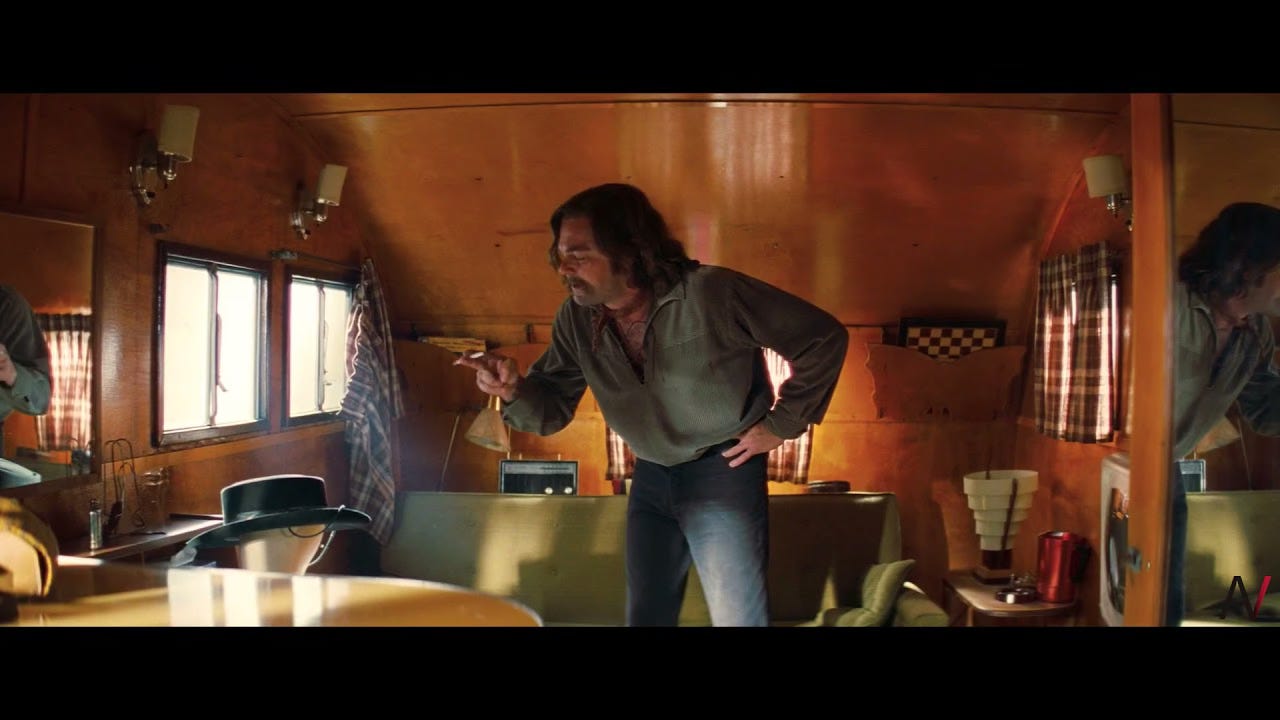
Once Upon a Time in Hollywood is his most complete comedic performance. Or it was.
The Rick Dalton scenes are some of the funniest in his career precisely because they’re played with total dramatic sincerity. The trailer meltdown, the flubbed line, the fury, and the mirror monologue are hilarious because DiCaprio plays it completely straight. The comedy and the pathos run on the same track, and he doesn’t let either one derail the other. What makes the trailer scene even better is that the scene was completely improvised.
He can do the full range.
What separates Leo from the pack is that he can do every kind of funny. Broad physical comedy. Dry wit. Escalating panic. Delusional grandeur. Bumbling incompetence. Most actors who are known as comedic performers have a lane. DiCaprio has the whole motorway.
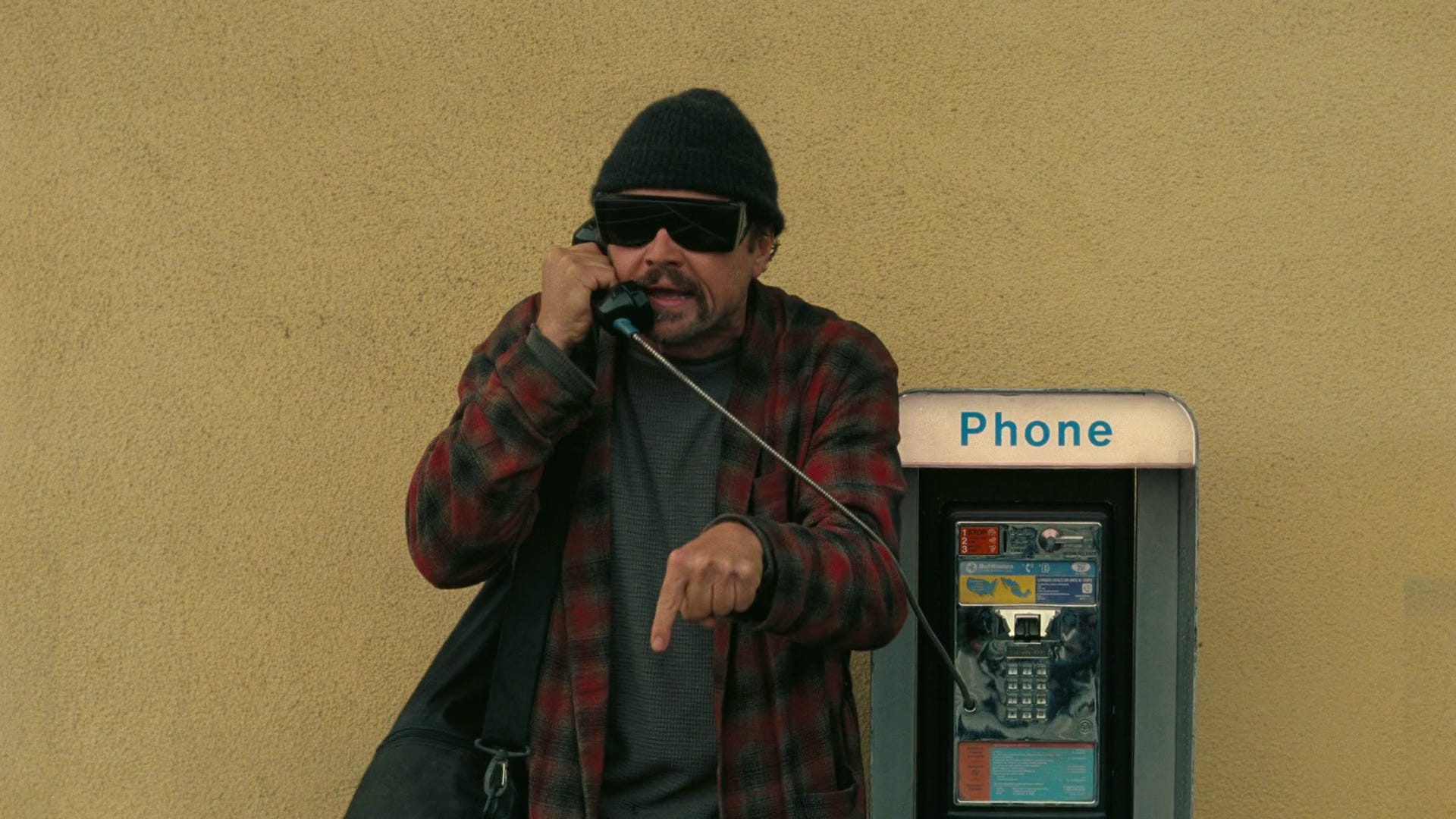
One Battle After Another is the proof, and it is the most complete comedic performance of his career. He plays Bob Ferguson, a washed-up revolutionary who drifts through the film with total confidence and very little control. There are moments of full physical chaos. He can go quiet and deadpan, or he can go BIG and broad. The phone call, trying to remember the code phrase, the hunt for a charger, these are scenes that should be throwaways but become proper belly laughs.
You see it across his work. The physical chaos of The Wolf of Wall Street. The controlled spiral in Once Upon a Time in Hollywood. The flashes of dark in The Departed. Different modes, same level of control.
And now I have to watch OBAA again.
His laugh is a weapon
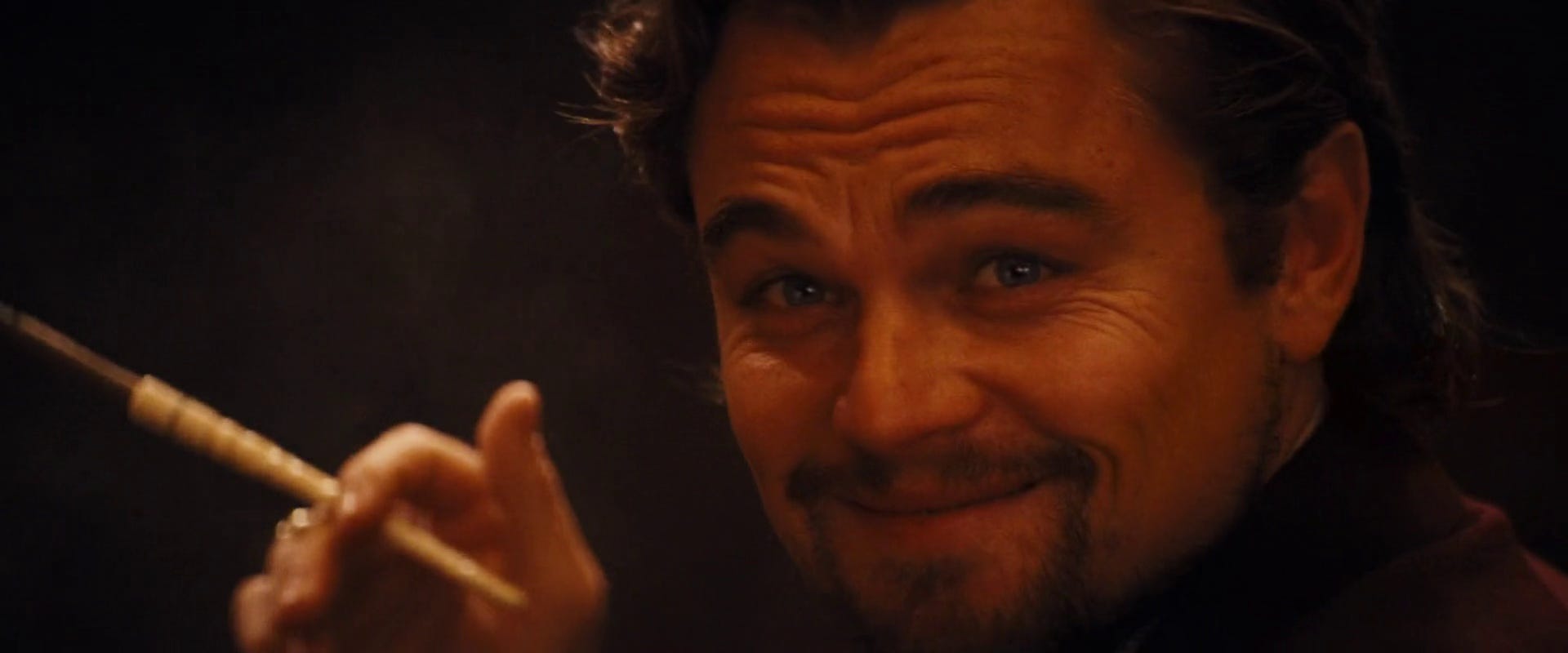
Very few actors have weaponised a single physical reaction the way DiCaprio has weaponised his laugh. It’s loud, sudden, slightly too long, and carries a quality of barely-contained mania that gets funnier every time it appears. Calvin Candie’s laugh in Django Unchained became a meme for a reason, it feels dangerous and delighted simultaneously. When DiCaprio laughs on screen you cannot look away.
The vanity question
He crawled across a car park. He got eaten by a bear. He has been humiliated, panicked, deluded, and undignified across thirty years of work.
And here’s the thing: he doesn’t have to. DiCaprio is one of the few actors alive who can genuinely choose anything. Any director, any script, any role. He is not taking these parts because they’re what’s available, he is actively choosing these roles and helping to develop them. The argument that he is funny because he just works with great writers doesn’t land with DiCaprio because the choices themselves are part of his case.
The bottom line
DiCaprio doesn’t get called a comedian because, well, I don’t know why. Maybe because he is so constantly in awards contention. Underneath all the prestige and the intensity and the legacy, there is a deeply funny actor who doesn’t need a comedic persona to be one of the best in the business. He just needs the right role. And when he gets it, he’s as funny as anyone.
Conclusion
So there we have it. I had a lot of fun researching this. Hopefully, we’ve done a good job setting the table. Thanks to for taking part.
Two arguments. Two very different ideas of what makes someone funny. Now it’s over to you. Who makes the stronger case?
This is going to be a regular thing. Future matchups, topics, and arguments will come from the people reading this.
If you want in, make your case.
Comments
Nothing yet. Say the first thing.
Sign in to join the conversation.