
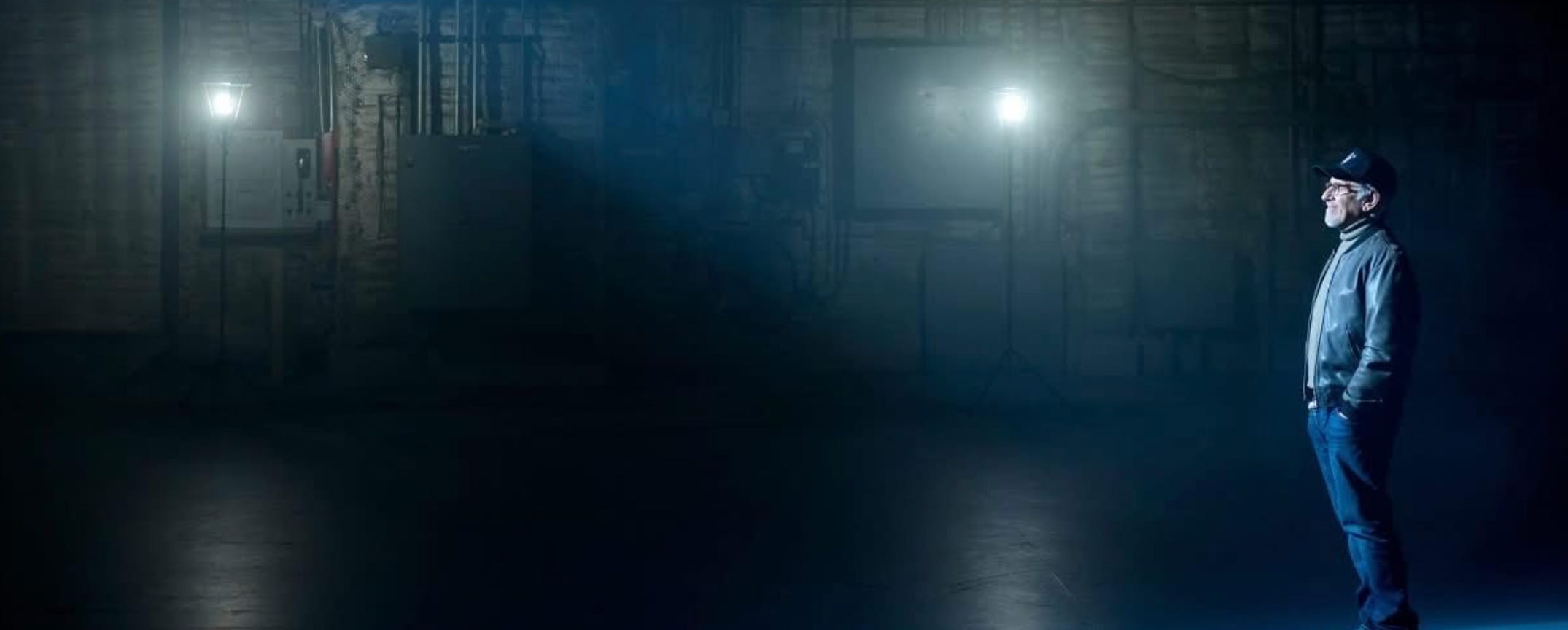
We are not in a particularly hospitable moment for sincerity. Contemporary culture has become highly fluent in interpretation. Before a film has had a chance to mean anything, it has often already been sorted into a category. It is discourse bait, a legacy sequel, a nostalgia exercise, corporate positioning, an algorithmically assembled product.
Even the idea of wonder feels slightly contaminated by how often it has been packaged, sold back to us, and gently drained of its original temperature. It is not that audiences no longer want to believe things. It is that belief itself has become something you have to justify in advance or apologise for feeling after.
So it is a strange time, or perhaps a very precise one, for Steven Spielberg to still be doing what he has always done.
Because whatever else you want to say about him at this point in his career, he has not really updated his operating system. He is still making films that assume an audience is willing to look up. Still building stories around the possibility that an encounter with another intelligence, another person, another way of being in the world might draw us toward one another rather than further apart. In other words, he is still making films about contact.
In 2026, that old assumption feels less secure than it once did.
Spielberg has never really been interested in just “aliens” as a subject in themselves. He keeps returning to a simpler and harder to sustain idea: the problem of connection. Not just how we communicate with something other. But whether we are capable of interpreting otherness without immediately converting it into a threat. In that sense, the alien is less a character than a pressure test, revealing how we respond to what we do not fully understand and, in doing so, how we respond to one another.
Across his filmography, the shape of the question barely changes, even if the answers do. In Close Encounters, contact feels like revelation. In E.T., intimacy. In A.I., longing. In War of the Worlds, rupture. The encounter remains the same, but Spielberg’s confidence in what follows it has become progressively less certain.
In Disclosure Day, the question has expanded beyond the individual. The issue is no longer whether a person can confront the unknown, but whether a society can. What happens when an entire world is forced to look at the same thing? Does shared attention still produce shared understanding? Or have we become too fragmented, too suspicious of one another, for even the most extraordinary revelation to bridge the distance between us?
The film feels like Spielberg is far less secure in his worldview than during his earlier work, less a belief in collective transformation than a question about whether such transformation is still possible at all.

Disclosure Day imagines a near-future United States on the brink of global catastrophe, where evidence of extraterrestrial contact has existed for decades but is managed in secrecy by WARDEX, a privately contracted intelligence infrastructure, operating at the intersection of military security and technocratic corporate governance. Crucially, WARDEX operates in direct coordination with the United States government but without public disclosure or democratic oversight.
When Daniel Kellner (Josh O’Connor), a former cybersecurity specialist within the organisation, accesses and removes a complete archive of suppressed contact data, spanning decades of terrestrial intelligence gathering and non-human encounters, he triggers a containment response from WARDEX leadership, led by Noah Scanlon (Colin Firth), who views disclosure not as transparency but as destabilisation.
At the same time, Margaret Fairchild (Emily Blunt), a Kansas City meteorologist, begins experiencing perceptual and linguistic disruptions that cannot be rationally explained. Her trajectory appears unrelated to Kellner’s, until both are drawn toward a point of convergence. The narrative establishes a dual structure: a whistleblower thriller on one side, and Margaret’s developing perceptual disturbance on the other.
The setup has all the ingredients of a classic Spielberg thriller. There are whistleblowers, shadow organisations, government secrets, mysterious technology, and enough paranoia to fuel an entire season of The X-Files. More importantly, there is a genuinely compelling question sitting underneath it all.
Not whether aliens exist.
But who gets to decide what everyone else is allowed to know.
For a while, Disclosure Day seems poised to become Spielberg’s most sustained exploration of information, secrecy, and institutional power since The Post. The film repeatedly returns to the idea that knowledge itself can be privatised and that reality can become something managed by organisations whose authority derives not from public consent but from exclusive access.
That is where the film first hooked me. Not in the promise of alien life, but in the possibility that Spielberg might use that premise to explore a world where truth has become another resource to be owned.
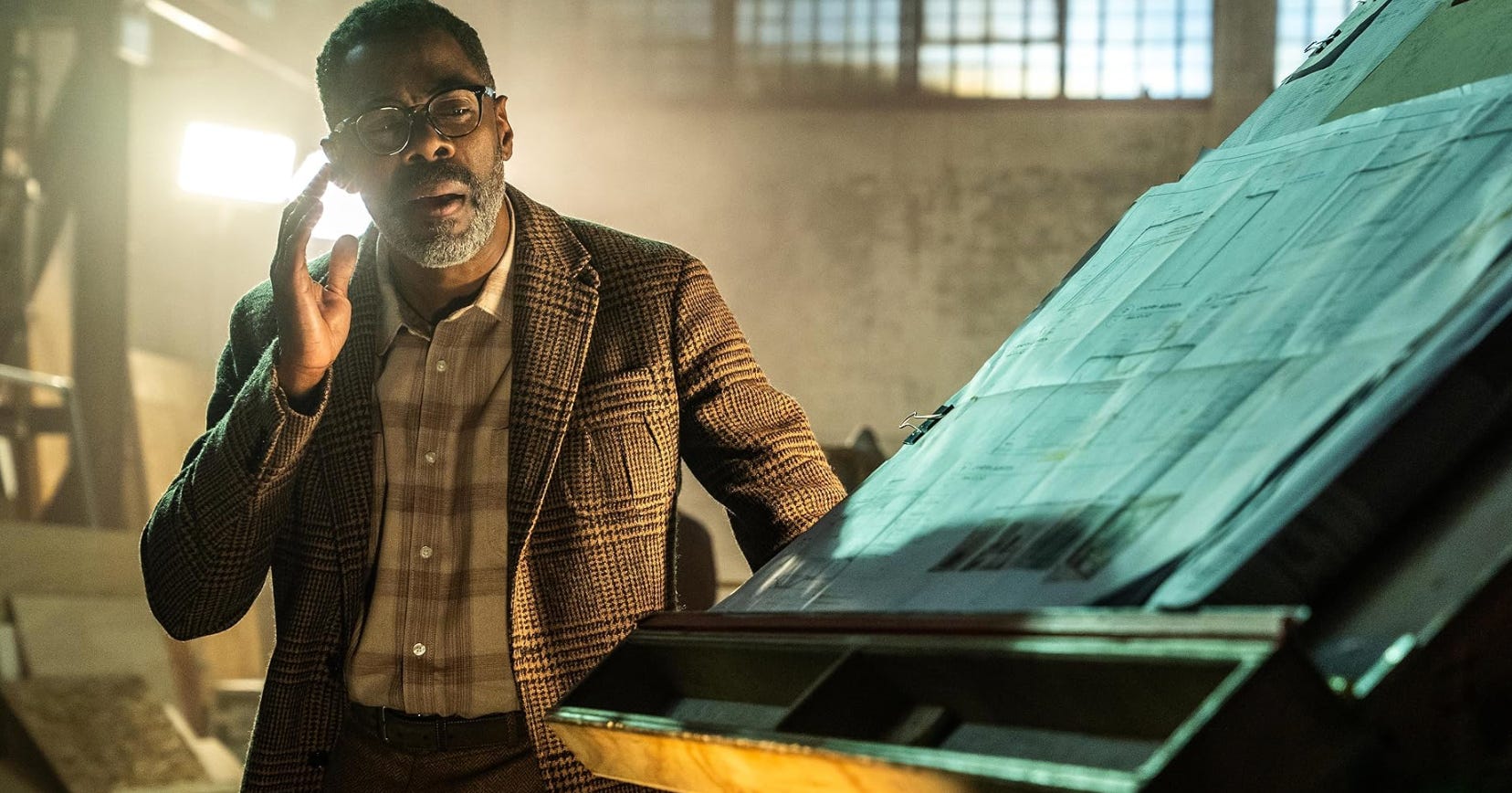
What keeps Disclosure Day moving is Spielberg’s extraordinary control of cinematic momentum.
For roughly its first hour, the film operates as a genuinely gripping conspiracy thriller. Information is revealed in carefully measured increments. Questions generate further questions. Every answer seems to expose a larger architecture hiding behind it. The pleasure comes not from individual revelations but from accumulation and the sense that each discovery is widening the shape of the world rather than simply advancing the plot.
Spielberg has always been one of cinema’s great directors of attention, and Disclosure Day repeatedly demonstrates how much can be achieved through clarity alone. The camera rarely calls attention to itself, but its movements are constantly guiding the eye toward what matters. Conversations are staged with a precision that makes exposition feel active rather than explanatory. Characters move through frames that remain legible even as the amount of information within them increases.
What struck me most was how often Spielberg finds visual excitement in the act of looking itself. Some of the film’s strongest sequences are built around people watching screens, reviewing evidence, examining archives, or reacting to information they don’t fully understand. Discovery becomes a cinematic action. The camera doesn’t simply record revelation, it participates in the process of uncovering it.
Janusz Kamiński’s cinematography is crucial to this effect. The image carries the slightly desaturated texture that has defined much of Spielberg’s twenty-first-century work, but there is a restlessness to the framing that recalls Minority Report in particular. Characters are constantly being observed through glass, screens, reflections, mirrors, surveillance feeds, and mediated images.
For a while, Spielberg keeps everything airborne through sheer craftsmanship. The editing remains propulsive, Williams’ score knows exactly when to recede and when to swell, and individual set pieces continue to deliver moments of genuine excitement. But there comes a point where the film begins expanding sideways rather than forward, and the tight focus that initially made the conspiracy so compelling starts to loosen.
The imbalance extends to a screenplay that is uneven in how fully it realises its characters. Except for Emily Blunt’s Margaret, most of the characters are underwritten to varying degrees.
Blunt has the most difficult assignment and the more rewarding one. She is asked to occupy several registers at once: funny, frightened, confused, strangely intuitive, and increasingly untethered from ordinary experience. Blunt manages the balancing act remarkably well. Even when the screenplay pushes her into some of its more outlandish territory, she never loses sight of the character’s humanity. The performance carries a sense of humor and curiosity that prevents Margaret from becoming merely a vehicle for the film’s ideas. What is most impressive is how precisely she calibrates each shift in the character’s understanding, allowing Margaret’s growing sense of wonder to feel discovered rather than performed.
Josh O’Connor’s Daniel is shaped more by narrative function than psychological depth. He is effectively a conduit through which information moves rather than a character whose interior life develops in parallel with the plot. The role itself rarely expands beyond its procedural purpose within the conspiracy structure.
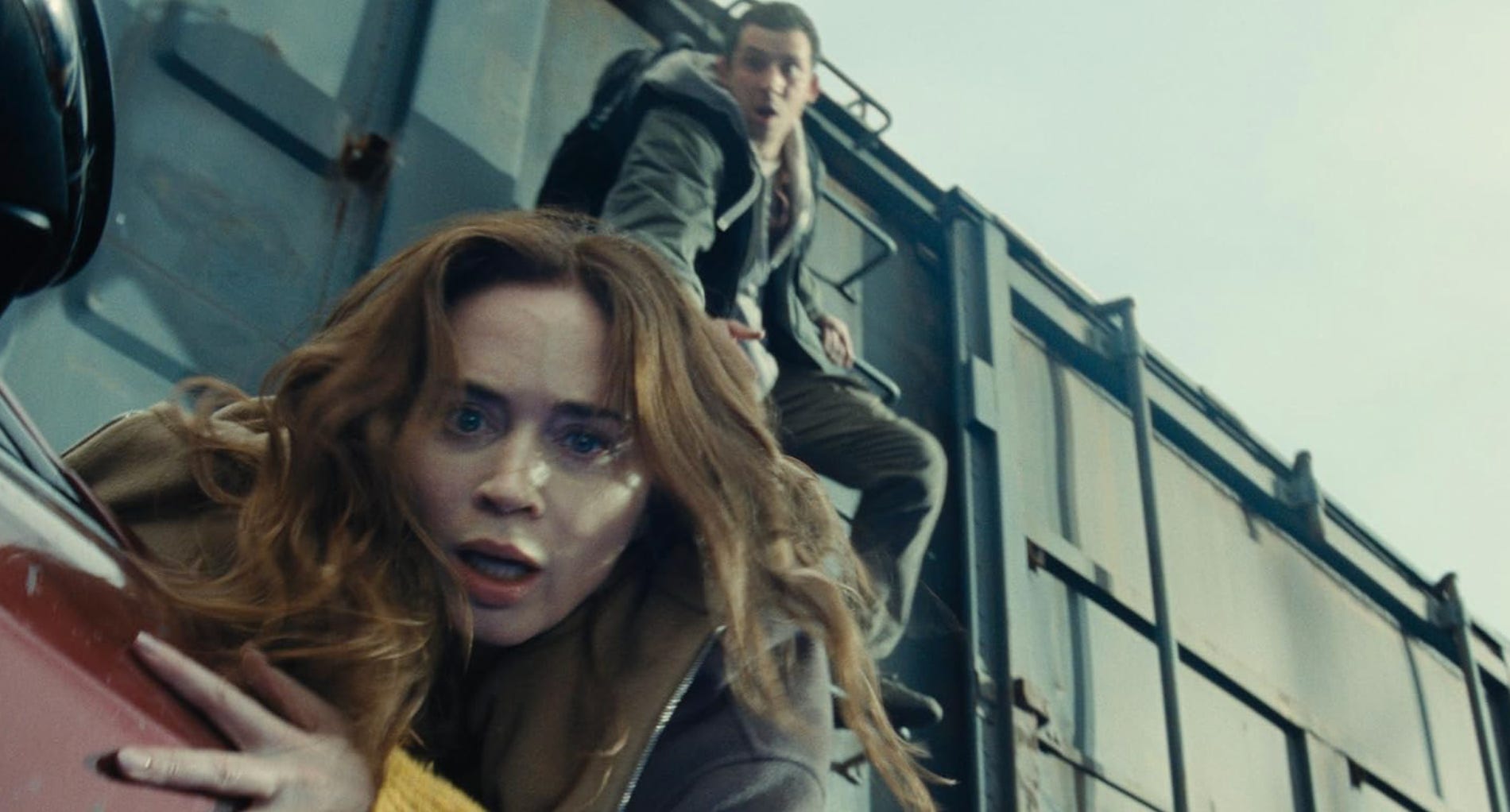
Colman Domingo’s Hugo is similarly limited by design, positioned as an authoritative intermediary within the whistleblower network. Domingo brings warmth and conviction to the role, and his presence helps stabilise exposition-heavy sequences, but the character is rarely allowed to develop beyond his function as a source of direction and reassurance.
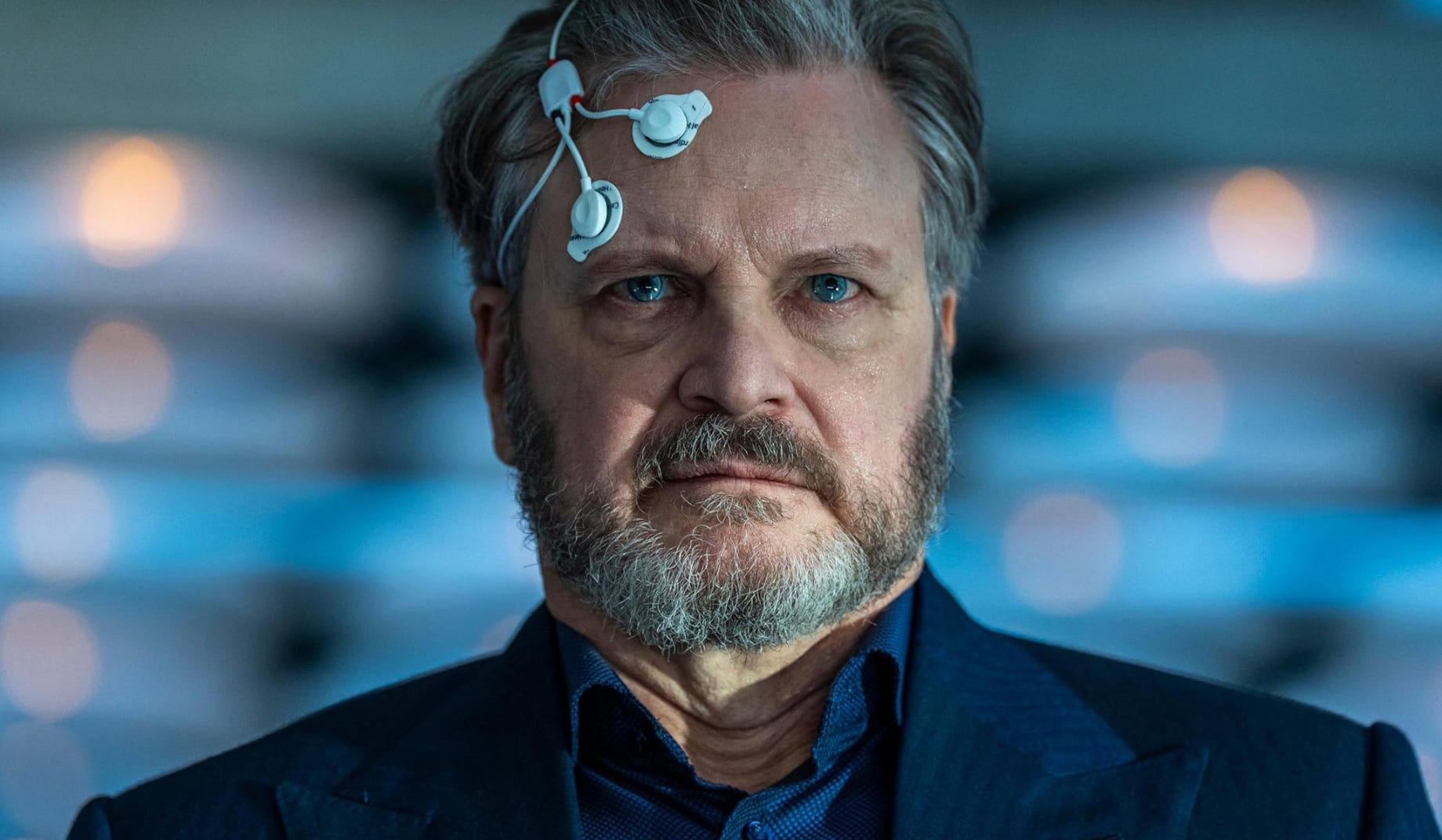
Colin Firth’s Noah sits at the opposite end of the same problem. As the figure through whom WARDEX’s authority is articulated, he begins with a clear sense of institutional control but gradually becomes a mechanism for introducing new layers of plot complexity. The further the narrative progresses, the more the character is absorbed into exposition itself.
That shift ultimately points toward the film’s biggest structural problem. The first hour generates tension through secrecy, carefully controlling the flow of information to sustain pressure and uncertainty. The second increasingly relies upon complication, expanding the narrative into increasingly elaborate layers of alien technology, hidden histories, and quasi-mystical explanation.
What initially feels like accumulation gradually becomes overextension: new material is added less to deepen the mystery than to account for it. At this stage, the film starts to feel noticeably overlong and, rather than intensifying the sense of enigma, each new revelation diffuses it further. Momentum gives way, and what was once tightly controlled begins to feel slightly exhausting in its insistence on further elaboration.
The irony is that Disclosure Day is at its most interesting when it remains closest to the ground. The further it moves away from that foundation, the more uneven it becomes.
There is a lineage here, the most obvious reference point is Minority Report, another conspiracy narrative organised around information systems, institutional prediction, and the policing of what can be known in advance. The comparison is instructive because Disclosure Day begins with a similar precision, before gradually expanding beyond the tighter architecture that made Spielberg's earlier thriller so compelling.
There is also a clear echo of The Post, in the sense that disclosure is treated as an ethical act rather than a narrative twist.
Against that background, Disclosure Day keeps sliding between two central questions.
The first is political. If a small group of people possesses information capable of altering humanity’s understanding of itself, do they have the right to withhold it? WARDEX insists that they do. Their argument is not simply that the public cannot handle the truth, but that truth itself carries consequences. Knowledge destabilises institutions. It challenges religious belief. It reshapes political power. Once released, it cannot be recalled.
The film’s whistleblowers take the opposite position. Whatever the consequences, no government, corporation, or billionaire should be permitted to decide reality on everyone else’s behalf. The truth belongs to the public because the public must live inside it.
For a while, this tension gives Disclosure Day its strongest dramatic engine. Spielberg and screenwriter David Koepp are clearly interested in a world where power no longer resides solely in governments but in sprawling entities that operate somewhere between state authority and corporate influence. WARDEX is an embodiment of that anxiety: an institution whose reach extends everywhere and whose accountability extends nowhere.
The film gradually becomes more interested in a second question. Not whether people have the right to know, but what happens after they know.
Again and again, characters return to the same concern. The problem facing humanity is not a lack of information but a lack of empathy. Several times the film suggests that our inability to recognise ourselves in one another is what has pushed the world towards conflict, isolation, and eventually the brink of self-destruction. The aliens, we are told, envy humanity for precisely that capacity. At the heart of this is a belief that collectivism might still be produced through shared attention, that if people can be made to look at the same thing at the same moment, the distance between them might briefly collapse.
It is an undeniably Spielbergian question.
It is also where I began to feel some resistance, and I felt myself at a remove from the film and its message.
Much of Disclosure Day’s conclusion remains difficult to reconcile with the optimism of its ideas. The world Spielberg depicts, similar to ours, seems too fractured, too conditioned, for a single act of disclosure to do the work the film asks of it. The idea that a single global moment might meaningfully reorient a fractured world reads less like the outcome of the film’s logic than an idea the film needs to be true. The film insists on the possibility, but I found myself increasingly aware of how difficult it was to imagine such an outcome.
(Spoilers on the film’s final act).
In its final movement, Disclosure Day abandons the logic of the conspiracy thriller entirely and becomes something closer to a global broadcast. Emily Blunt’s character appears on television, and what follows is an unfolding wave of images transmitted to the entire world: fragments of evidence, encounters, histories that have been suppressed for decades, now made visible all at once.
This is the point at which empathy and information begin to converge. It is precisely the convergence that I earlier found myself resisting. And yet Spielberg has spent much of his career working according to a different logic. Again and again, he creates forms of collective feeling powerful enough to temporarily suspend the objections his narratives generate.
The film begins to cut across countries, languages, and environments. The effect is no longer simply informational. It becomes cumulative, people everywhere reacting at once, images arriving without pause or hierarchy. The separation between viewer and event begins to thin, as though everything is being held inside a single continuous act of witnessing.
And suddenly I wasn't analysing it anymore. I didn't notice when that happened. It wasn't a decision. Somewhere along the way, the distance I had been maintaining from the film simply disappeared.
I felt, briefly, like I was watching something real.
Like we were all looking at the same thing.
That we are not alone.
I can’t quite describe the effect without diminishing it. Not because the film had resolved the questions I had been carrying through it, but because the distance I felt briefly collapsed. For a few minutes, it stopped feeling like I was watching a film about collective experience and started to feel like something I was participating in.
I was moved in a way that doesn’t resolve into interpretation, and even days later I still can’t fully account for it.
I don’t know what to do with that feeling.
But I know I felt it.
Thanks for reading! What were your thoughts on the film? What worked for you and what didn’t? How do you think it holds up in Spielberg’s filmography?
No posts
Comments
Nothing yet. Say the first thing.
Sign in to join the conversation.