
⸎
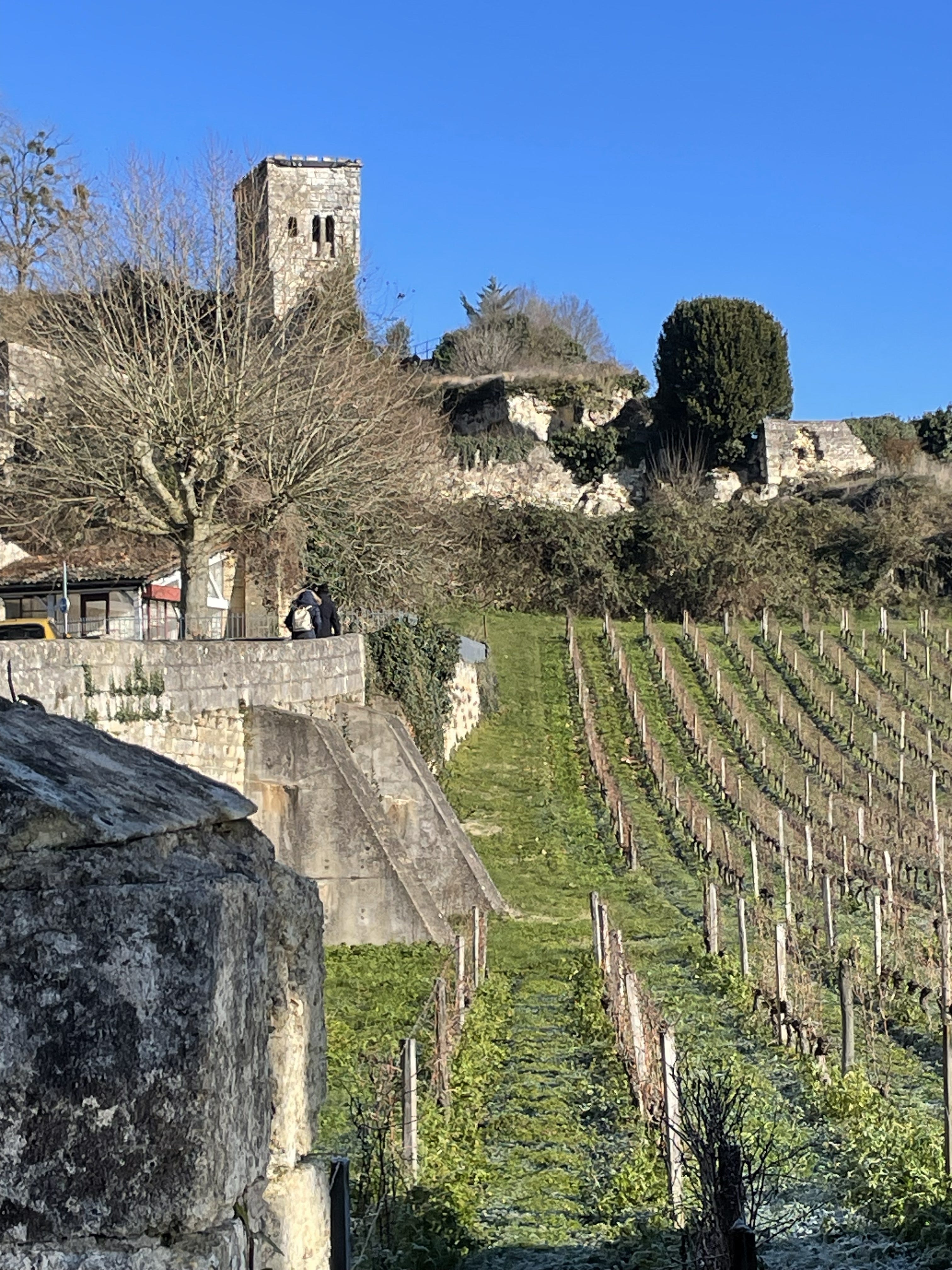
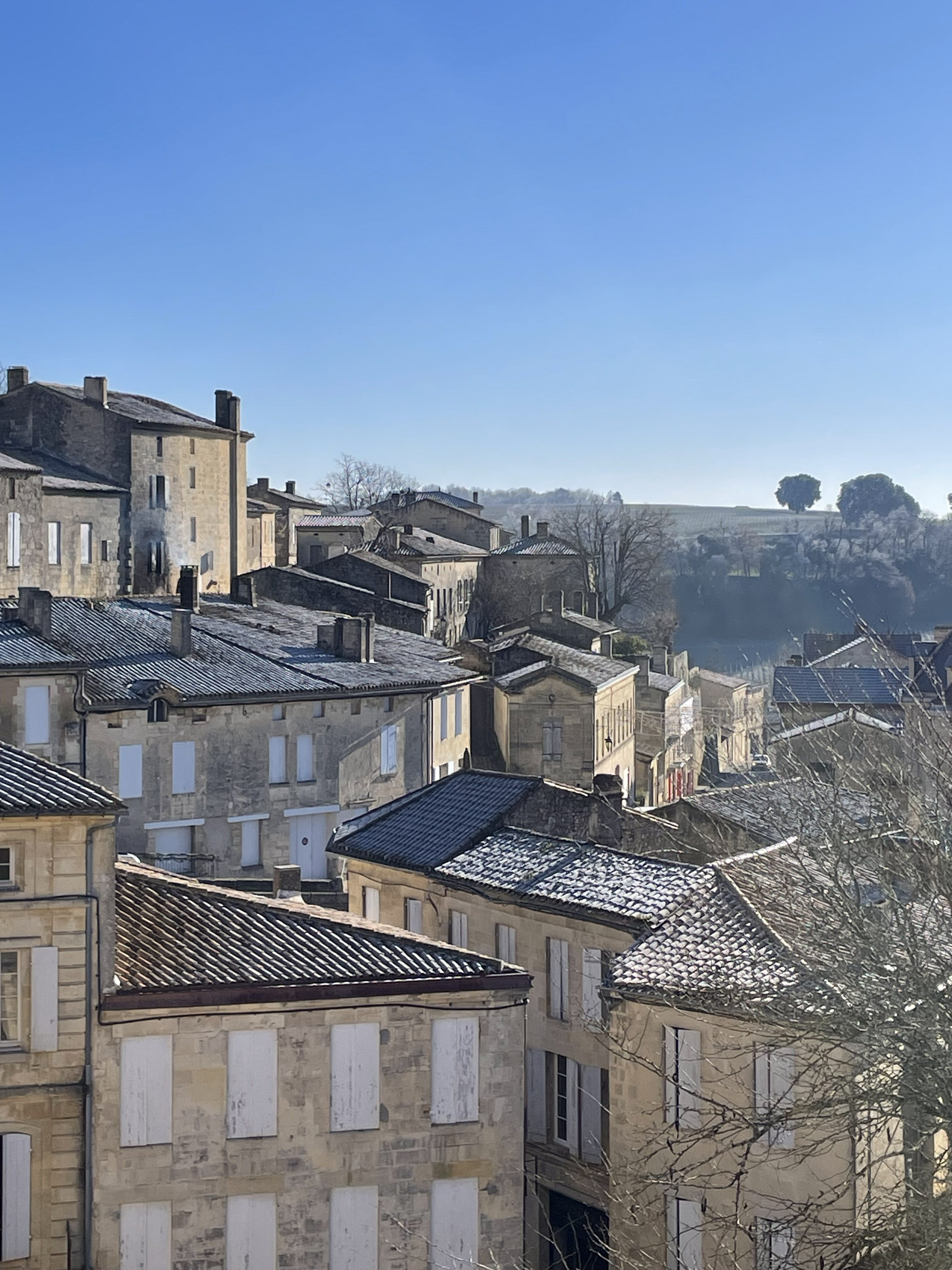
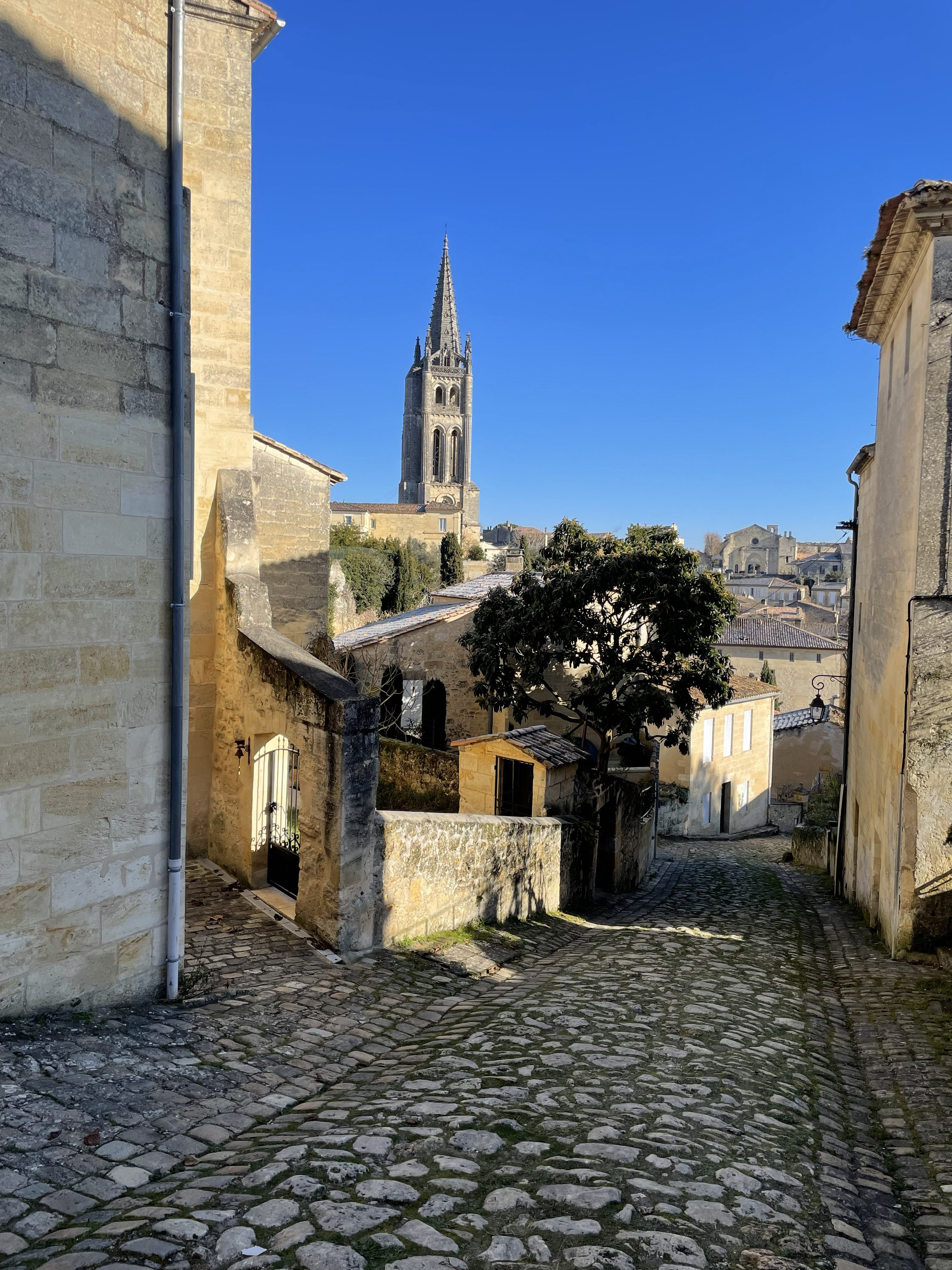
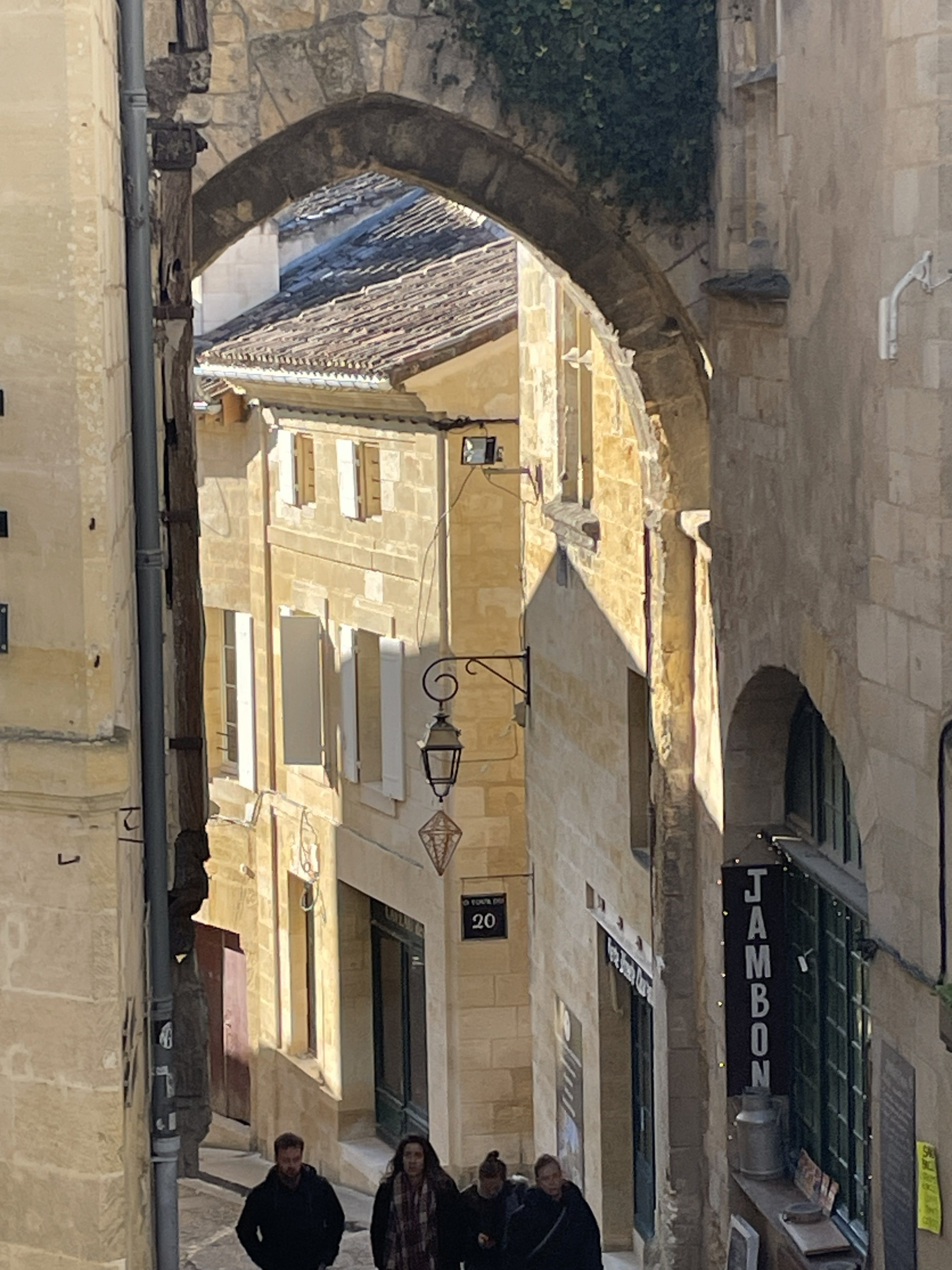
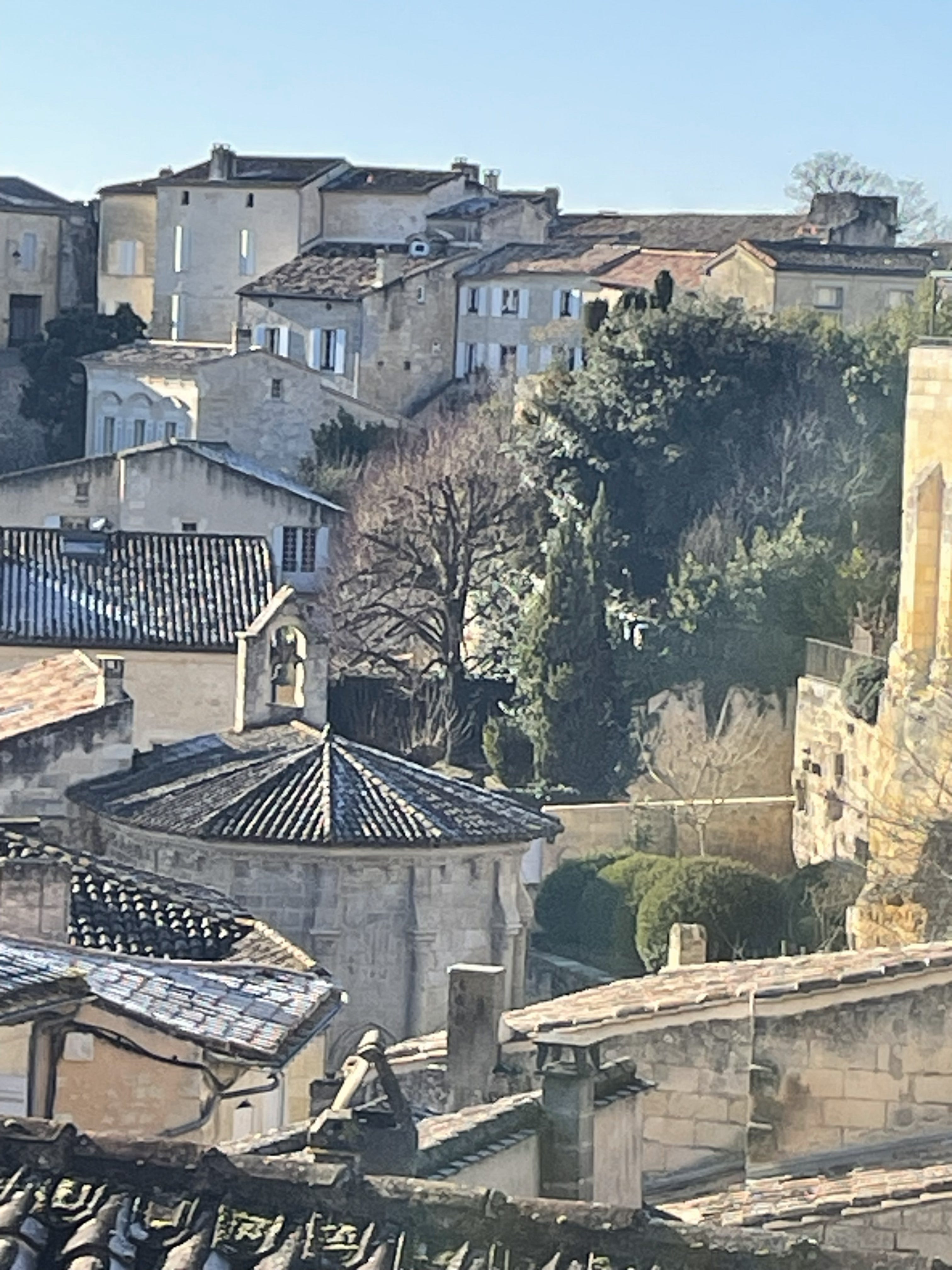
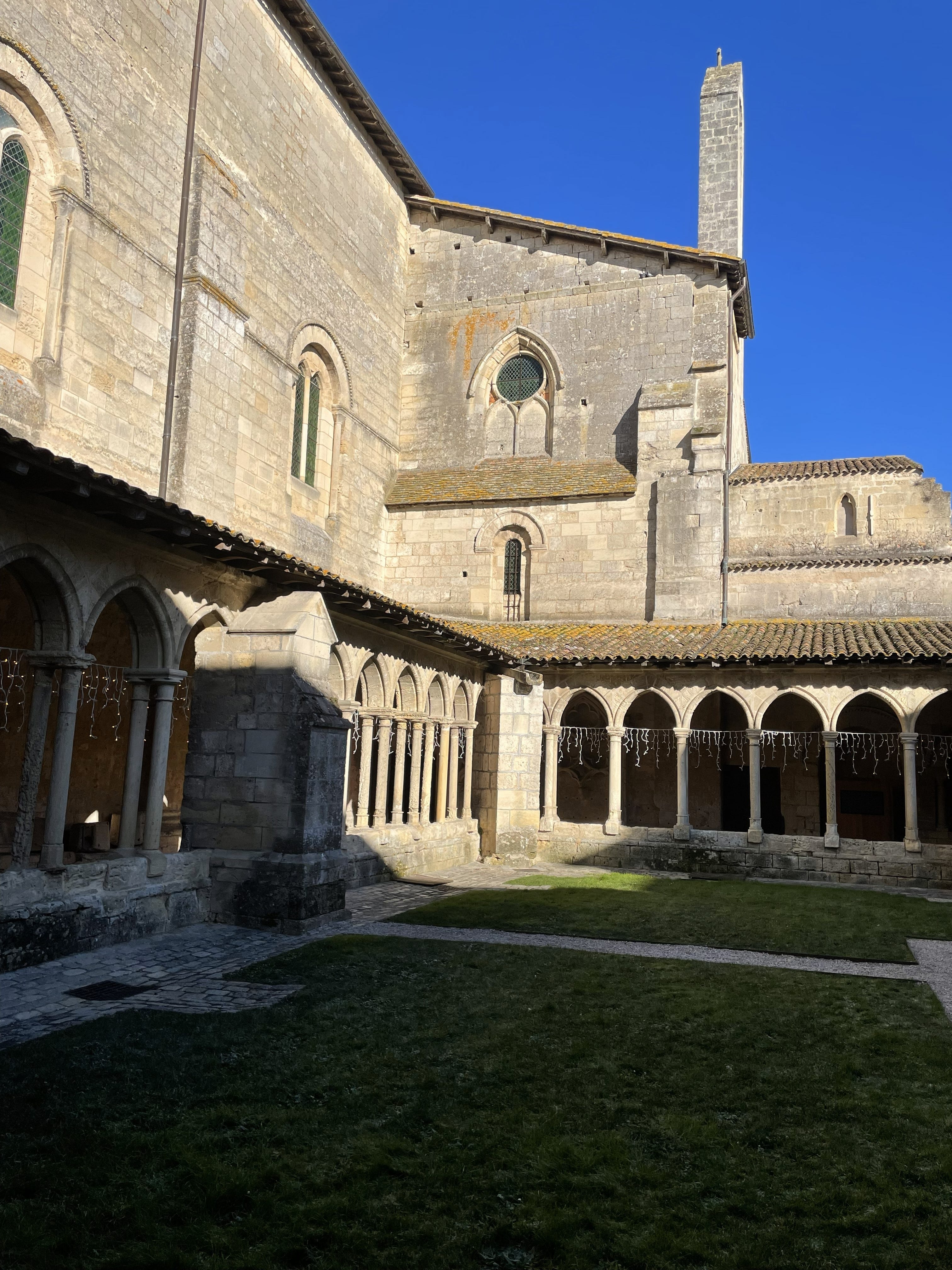
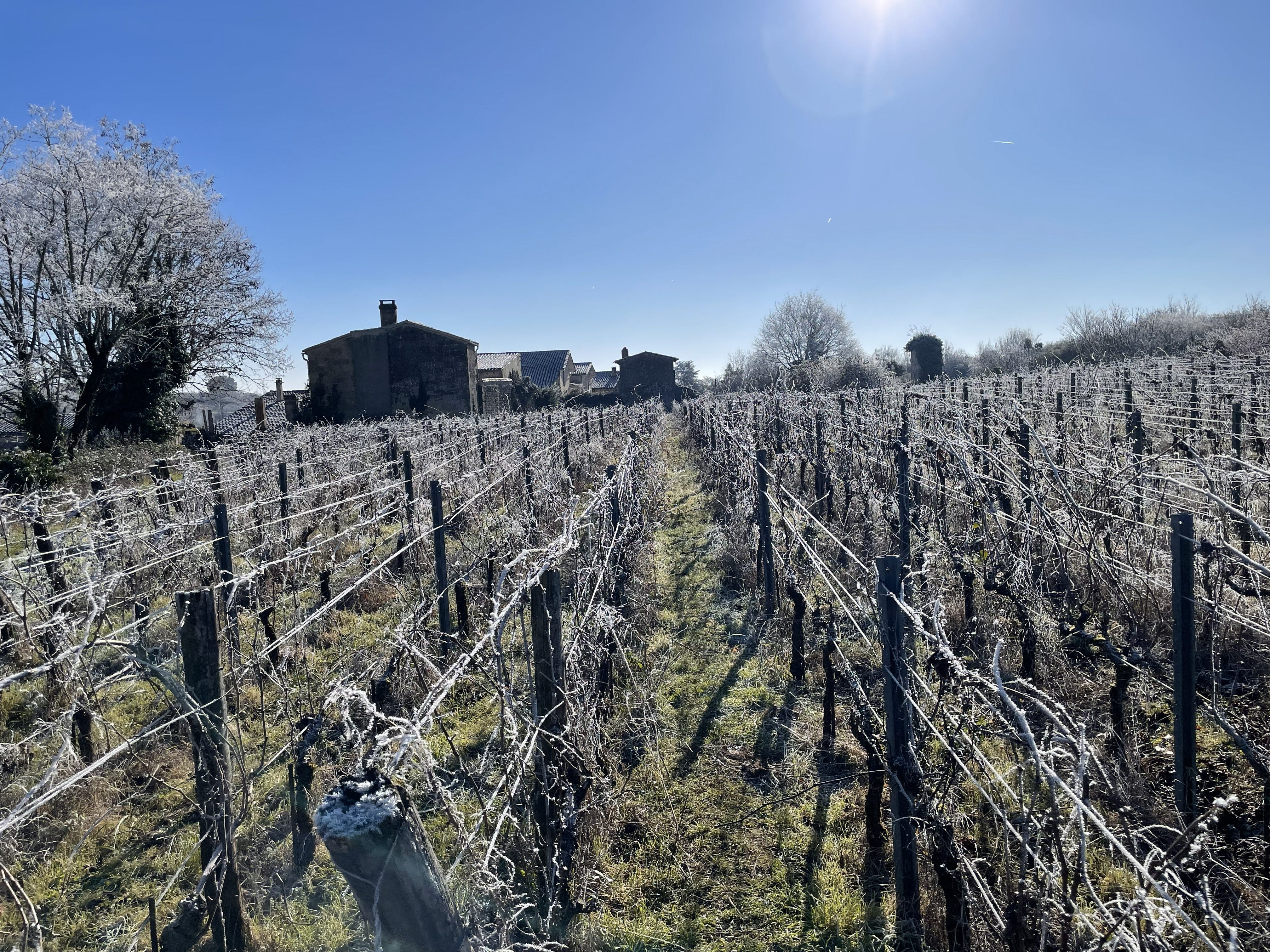
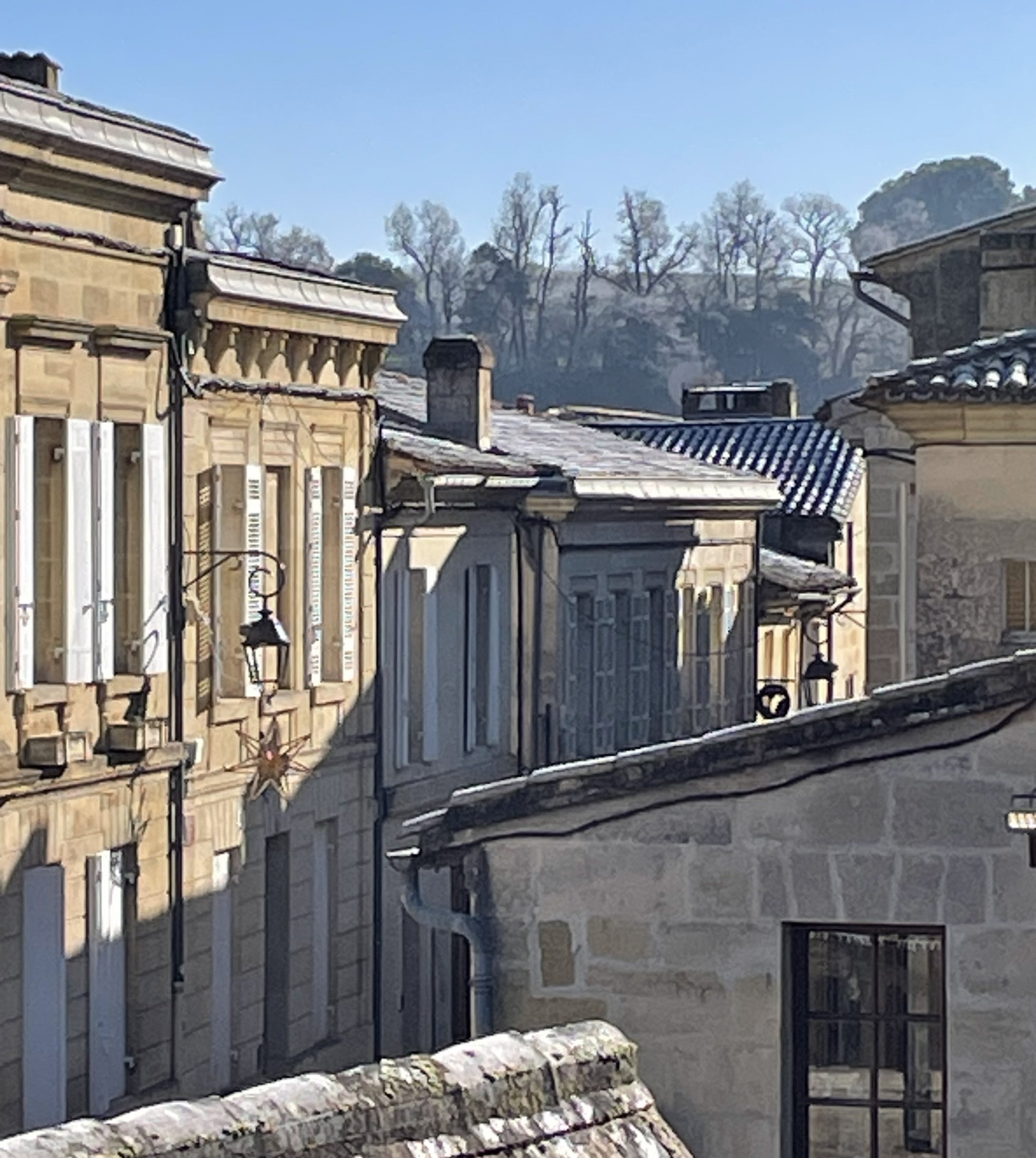
We took the train to a little village just east of Bordeaux called St. Emilion. It’s picturesque, with medieval stone walls mounting the hillside, red-tile roofs, narrow pedestrian passageways running higgledy-piggledy, solemn church with spire overlooking the town, and all pretty quiet because the frost didn’t melt off until after noon. We mostly walked through and took pictures of the architecture but spent some time in the cathedral and adjoining courtyard fashioned much like the one we saw at Mont St. Michel in Normandy. Went for a private wine-tasting because that’s a big thing there. Something about wine and all its appurtenant goings-on bespeaks civilization in place of barbarism, especially among the French, whose purpose in life seems to be pursuit of la dolce vita, starting with quality food and drink.
While I wrote this the female half of the sketch blustered in with new acquisitions, including most prominently berets in two new colors which is great because the one she already has—and I’m not complaining here—has not left her head once, even in sleep, I’m pretty sure. If I haven’t mentioned it already, it’s cold here, even unusually so for this area in January. It’s supposed to snow tomorrow. We’re prepared, but one must not stint on necessaries like fashionable headgear.
⸎
Jet lag gone now, I’m on French time. It’s never an easy transition for me, going east, but for some reason just fine going west. We’re also at the point in our trip when being here in Bordeaux seems normal and we’re no longer on fire to get out and try new things. Not that we won’t, but that taking half a “day off” was fine. I napped, we did laundry, and didn’t leave the apartment until almost noon. Goofed around in the bougie shops in the neighborhood of our apartment and then moseyed over to an interesting museum on Aquitaine. Tomorrow’s plan is a day trip to Bayonne so I’ll be sure to report in.
I used to understand only the most rudimentary facts about the French Revolution. Then I read a book about social interaction among intellectuals of the early Romantic era, in Jana in Thuringia. Thuringia was at that time a German state but this was long before its unification with others following the Franco-Prussian war in 1871 to form the nation-state of Germany. The book drove me crazy because it was big on gossip and light on philosophy and I gave up on it, but before doing so read about these Germans being fans of Napoleon. They would’ve been considered leftists at the time, the first decades of the nineteenth century. They were fans of Napoleon even though he was running around attacking neighboring German states. His wars were backed by the ideology of the Revolution, so basically it was left vs. right throughout Europe, not just state vs. state. It helps to explain why Napoleon could run amok, in some places, but have to fight hard, in others. Excepting most notably Britain and Russia, many Europeans welcomed Napoleon for his advancing of Revolutionary ideas because they seemed to promise individual liberty.
On a visit to Egypt a few years ago I was surprised to see so many references to Napoleon. The Egyptians are proud of that moment in history, when Napoleon conquered Egypt in the last years of the eighteenth century. Napoleon put up monuments still on display there, and to my mind his presence is mostly felt by—oddly enough—adoption of the word “cartouche” to describe the shape of a prevalent symbol in Egyptian hieroglyphics. “Cartouche” is the French word for the cartridge of a rifle round.
One more little note from my reading. You may not realize it, but if you’re American you owe a debt of gratitude. Yes, to the French Revolution, of all things. I’ll give you two reasons, one obvious and one not. The ideas of the Revolution, against aristocracy and church hegemony, and for individual rights, are famously enshrined also in U.S. founding documents. They were in the air, at the time.
The less obvious reason is this. The French Revolution gave cover to the vulnerable new American republic, at a time when it could have easily been strangled in the cradle. The French nemesis at the time was Britain, and Britain soon became way more concerned with the upstart French, than its distant colony now calling itself America. And likewise France became way more concerned with British aggression and other occasional continental resistance, than with things happening on the other side of the world where only primitives and traitors lived.
Eventually the financial pressure would cause France to give up its tenuous claim to the Mississippi and all of its drainage from the west, the middle third of today’s continental U.S. But even more importantly, our sheer distance from aggressive but distracted European belligerents allowed us to grow to adolescence unhindered except by the constraints of nature and the sometimes bloody “depredations” of existing inhabitants.
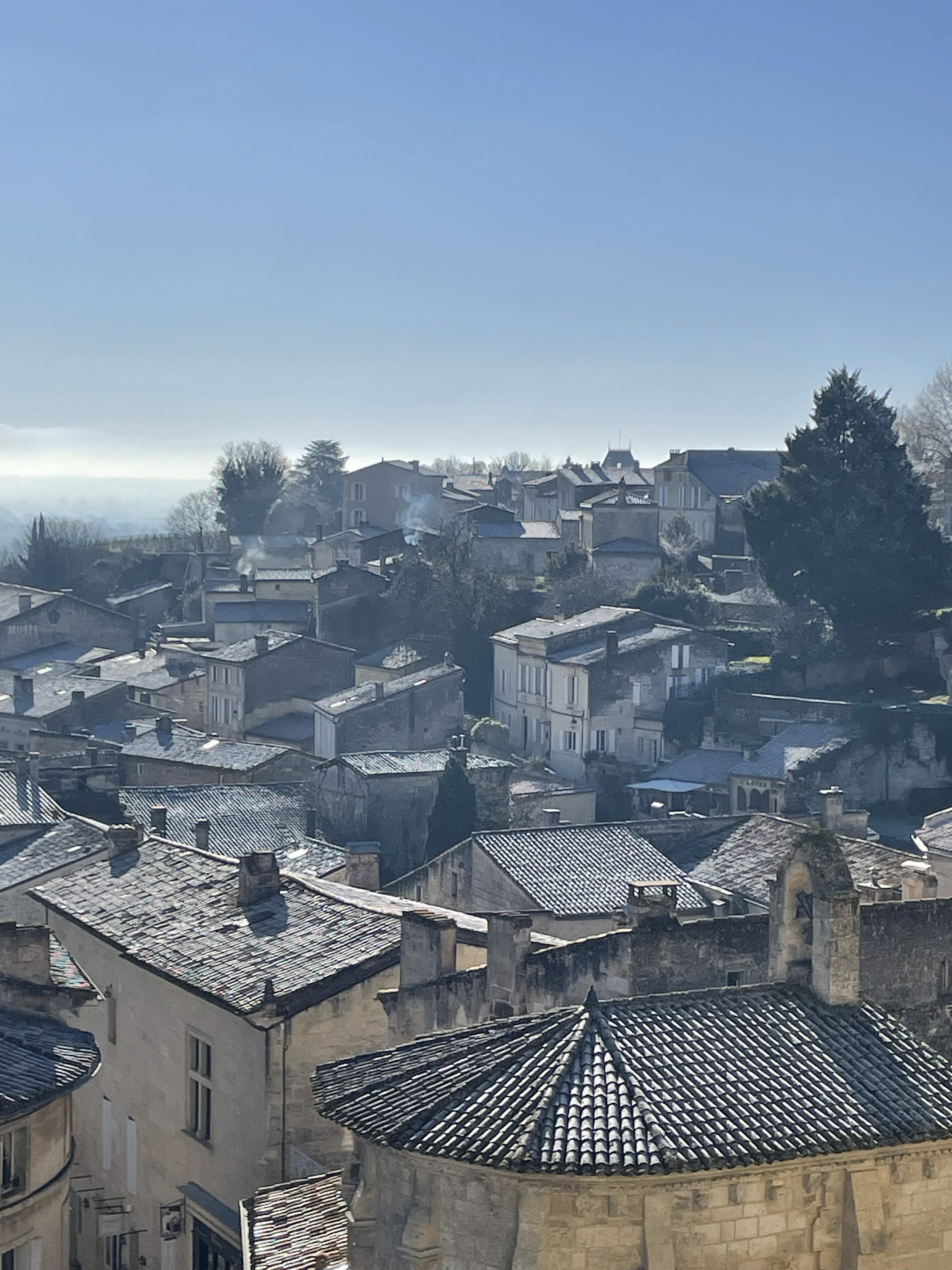
The Louisiana Purchase of 1801 created a vacuum soon to be filled by the rushing of many waters, the expanding population of Americans eager to stake out their plot of Eden. We won the continent because we were willing to go on the move. You decide if it was all worth it. We have nothing like the sense of place that almost everyone else in the world enjoys, like the people here in Bordeaux and in St. Emilion.
Comments
Nothing yet. Say the first thing.
Sign in to join the conversation.