

I’ve spent the last few weeks in the grip of two excellent oral histories
The first is Second Hand Time by Nobel Laureate Svetlana Alexievich
The second is The Scaling Era: An Oral History of AI 2019-2025 by Dwarkesh Patel
The former is about the USSR falling apart and its effects on the human beings living through the fallout; the latter engages with the big questions of how AI hyperscaling works and what it will mean for technological progress.
One seeks to evoke, in emotional and highly visceral fashion, what it felt like to live through the collapse of the Soviet Union; the other aims to capture the intellectual excitement and high-stakes problem-solving at the knowledge frontier of the AI Revolution/Bubble/Boom/*insert term according to your outlook and biases here*.
One seeks to illuminate and evoke, to bear witness, to add up the human cost, to speak from the bottom up; the other to map, to explain and to understand.
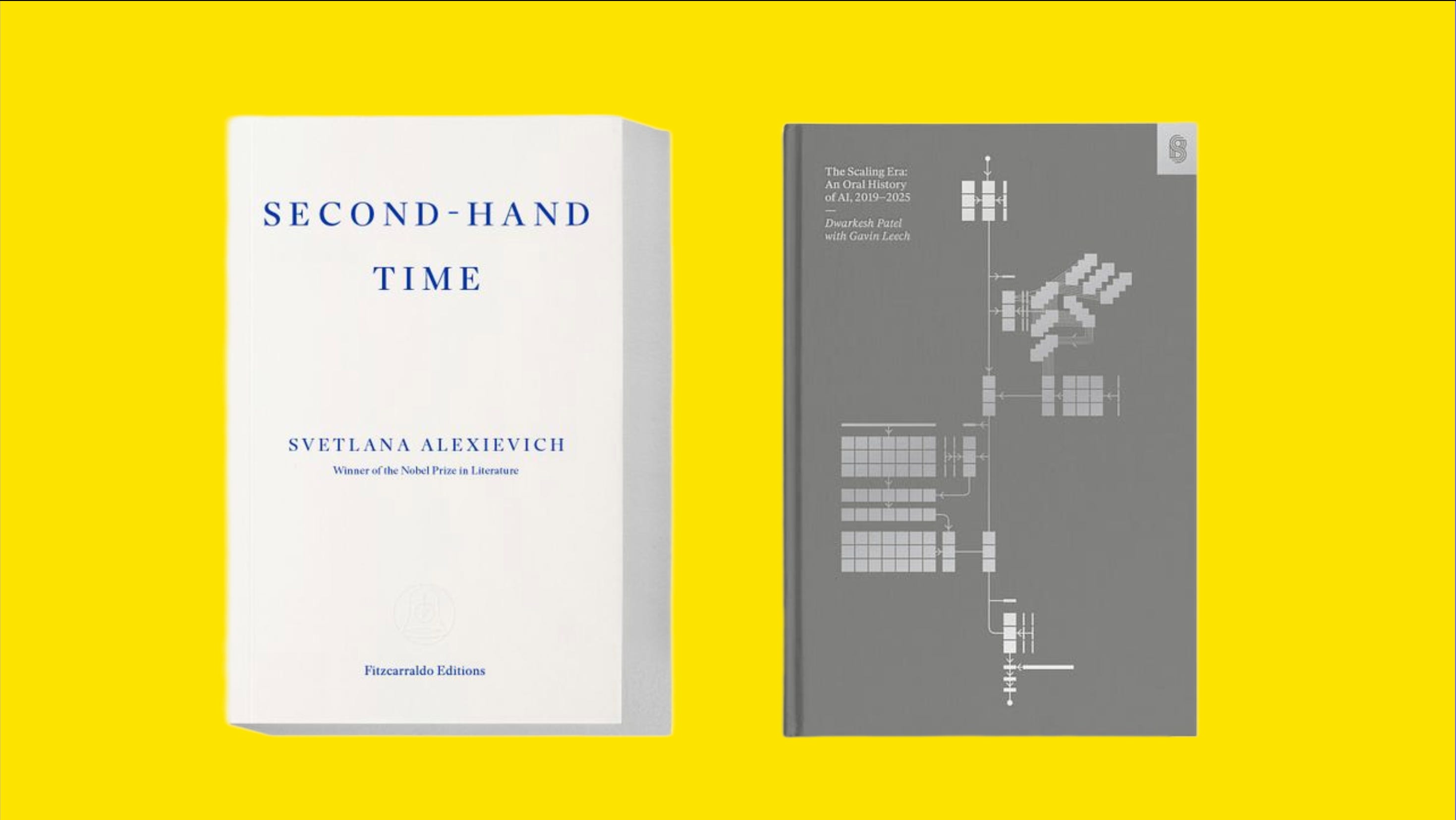
Alexievich aims to represent the view of those on whom power is wielded; Patel is interviewing those at the heart of the action, shaping a technology that is likely to have significant consequences for a lot of people.
Although the two books are geographically, temporally, stylistically and thematically worlds apart, they are an attempt at a similar project: trying to make sense of periods of massive upheaval through one of literature’s oldest forms - oral storytelling.
Both, to me, offer significant inspiration about how the possibilities of the form might reinvigorate both literature and publishing in novel ways.
Thanks for reading Fiction & Persuasion! Subscribe to receive new posts
Witness Energy > Main Character Energy
The most refreshing thing about Alexievich’s approach is how it offers an antidote to the myopia and narcissism that characterises a lot of auto-fiction, faux-memoir and life-writing.
If one of the side-effects of online life is amplifying the innate human tendency to self-narrate to the point of delusion, to channel our own main character energy to the point where we can’t imagine the lives of others any more, Alexievich’s approach offers a literary escape hatch. As the author herself says1 ,

Not everyone can be a main character in the collapse of The Soviet Union or The Chernobyl Meltdown, but it’s often the voices and perspectives of witnesses at the bottom of the food chain that are the most haunting and illuminating.
Who am I? We’re just people... nothing but faces in the crowd. Our life is mundane, insignificant, though we do our best to live. We love, we suffer. It’s just not that interesting to anyone else, no one is going to write a book about us. The crowd... The masses. No one has ever asked me so many questions about my life before, that’s why I’m talking so much. Mama, put your soul away, my girls will say.
I defy anyone to read it without feeling a deep respect for the sheer dedication required to shape a book like this out of the mess of human lives and history. Alexievich must have spent countless dogged hours conversing with people, going down conversational dead-ends, and coaxing their darkest secrets and buried family histories from them.
Some of the testimony it records is truly appalling - not since A Little Life have I blanched so openly whilst reading on the Tube due to the brutality of a book, and it records the stories of both victims and executioners - one of the recurrent and unsettling themes of the book is that the line between the two is far less clear than we might think. Even the killers get to deliver their side of the story.
People who don’t handle corpses think that they’re silent. That they don’t make a sound. Actually, they make all sorts of noises. Air comes out of them, their bones crack. Strange scratching noises. It’s enough to drive you crazy.
The author treads lightly across the pages, and as a result this book is also a hymn to the particularity of human voices: it takes an especially selfless kind of artist to want to immerse themselves so completely in their source material that they disappear, and part of this is the moral prerogative to give marginalised and silenced people a hearing without authorial interference.
This book is also a paean to the power of the spoken word - captured in Moscow kitchens, in protests that seemed to promise a new beginning, and in conversations stalked by the possibility of labour camps, torture and murder. Before talking about cancel culture in the west, read this book for a taster of what a lack of freedom of speech can look like:
Standing up at a meeting and telling the truth was so dangerous, it was as good as a deed. It was all such a rush, so much adrenaline, we were so earnest. The word was everything…..It’s difficult to believe it now. These days, you have to do something, not just say it. You can say whatever you want, but the word has no power at all
Some of the most striking and anachronistic sections evoke the preciousness of genuinely free writing at a time when the wrong rumour in the wrong ear was enough to condemn innocent people to years of torture in Siberia. In reading it, I felt a renewed appreciation for how a form as simple as oral history can make a reader feel just a little of what it might have been like to live through such a monumental chapter of history.
The approach is not new - all books are a story told by one person to another person, after all - but it’s spectacularly powerful and moving.
This book seems, in a stroke, to resolve two of the fundamental tensions of modern literature: the first, the creeping myopia of auto-fiction where every writer has main character syndrome; the other is opening up the scope for a wider range of voices without being accused of cultural appropriation for the imaginative act of trying to represent someone else’s voice or story.
Second Hand Time is perhaps a classic expression of what an oral history can do, but as a contrast, The Scaling Era shows how the form can point towards the future in both its theme and shape.
Inside the AI Boom/Bubble
The Scaling Era is another excellent book from a that is running red-hot when it comes to the quality of their releases and launch playbook (if anyone can show me a non-fiction imprint publishing books with quite such an inimitable house style, attention to detail and flair, I’m all ears2.
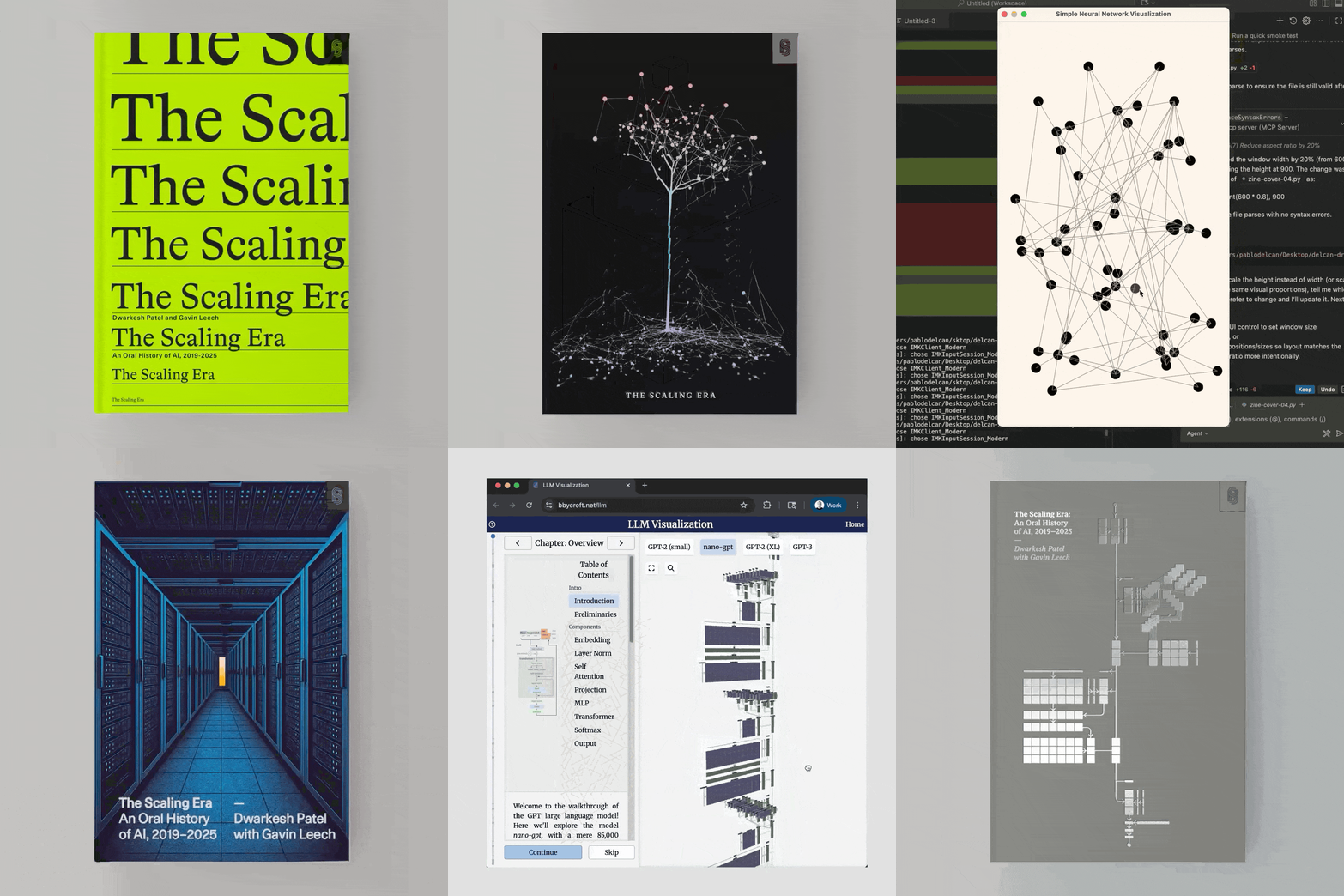
It also provides an interesting new model for how a book might be made and bought to market: host a podcast first, then re-sequence the conversations with explanatory footnotes, references and supporting material into an object that will appeal both to its listeners, and anyone hoping to get a firmer grip on its subject matter.
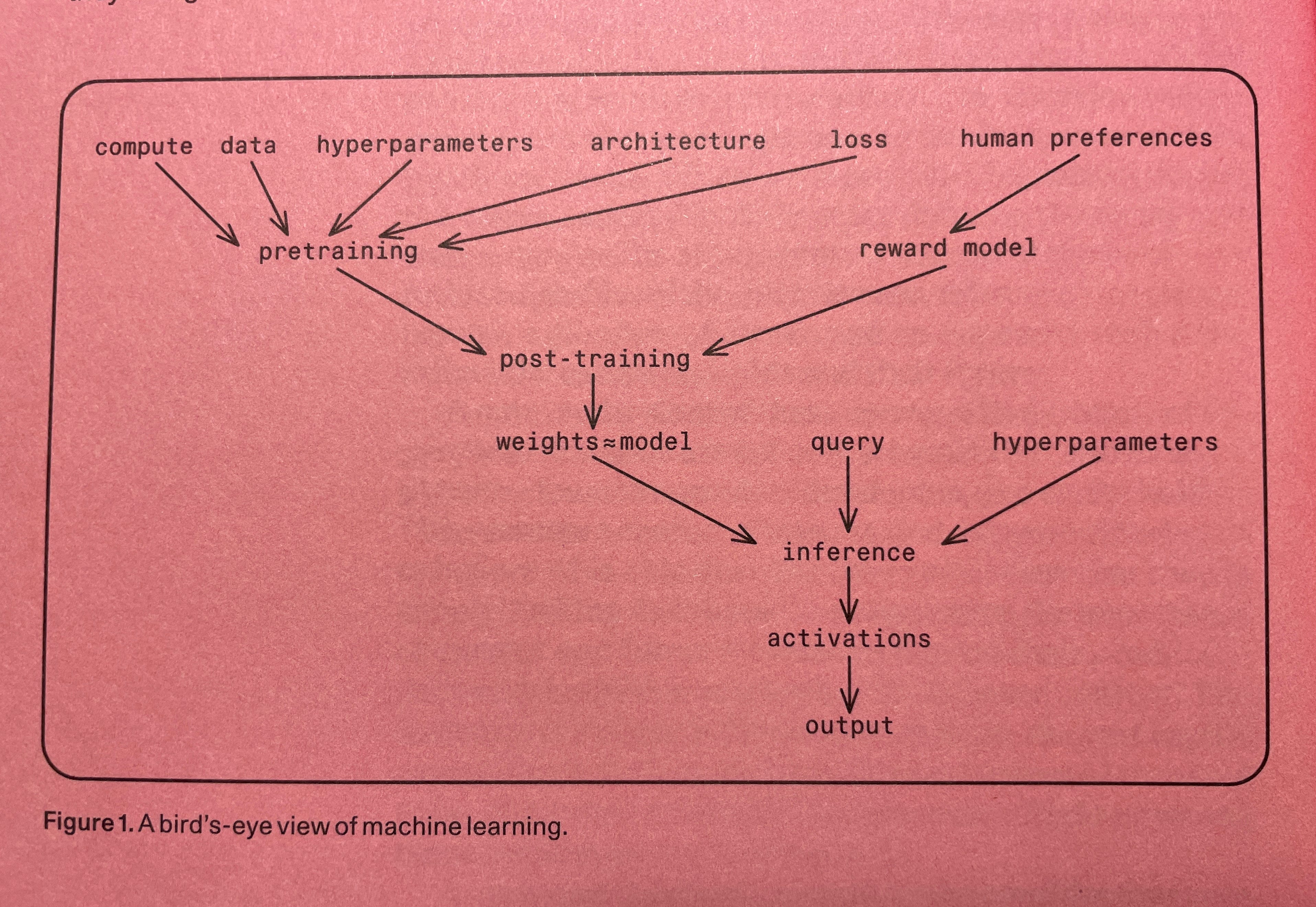
Its focus is nothing less than trying to map how a new system of technological power is being built, and where it’s going. Its knowledge cut-off was November 2024 (just before Deepseek caused a market panic) and it left me with a heightened awareness of just how many aspects3 of this expanding field I don’t understand (I’ll be asking Claude to explain some of them to me), and an enormous list of questions which I will publish in a separate post, including:
Can we keep scaling these models if we run out of data to train them on? How will synthetic data help? What is that going to do to their epistemic grounding and the likelihood of bias and error perpetuation?
Will material limits and energy consumption in particular slow down scaling, even if nuclear and renewable energy output is likely to keep growing?
How does the less ‘brute force’ approach that Chinese companies are applying to the likes of Deepseek affect the scaling approach outlined in this book?
Can LLMs really reach the point where they will accelerate idea discovery and AI research? When is that likely to happen?
To what extent is the relationship between parent and child a useful ethical prism for the process and responsibilities of treating and training LLMs?
How is it possible that these companies are spending billions of dollars on chips, data and energy but seem to think that paying writers for high-quality text is too expensive?
How useful a parallel are nuclear non-proliferation treaties in guiding international co-operation on so powerful a technology?
What’s the most effective methodology for testing LLMs for general intelligence? Especially when we struggle to define what general intelligence is.
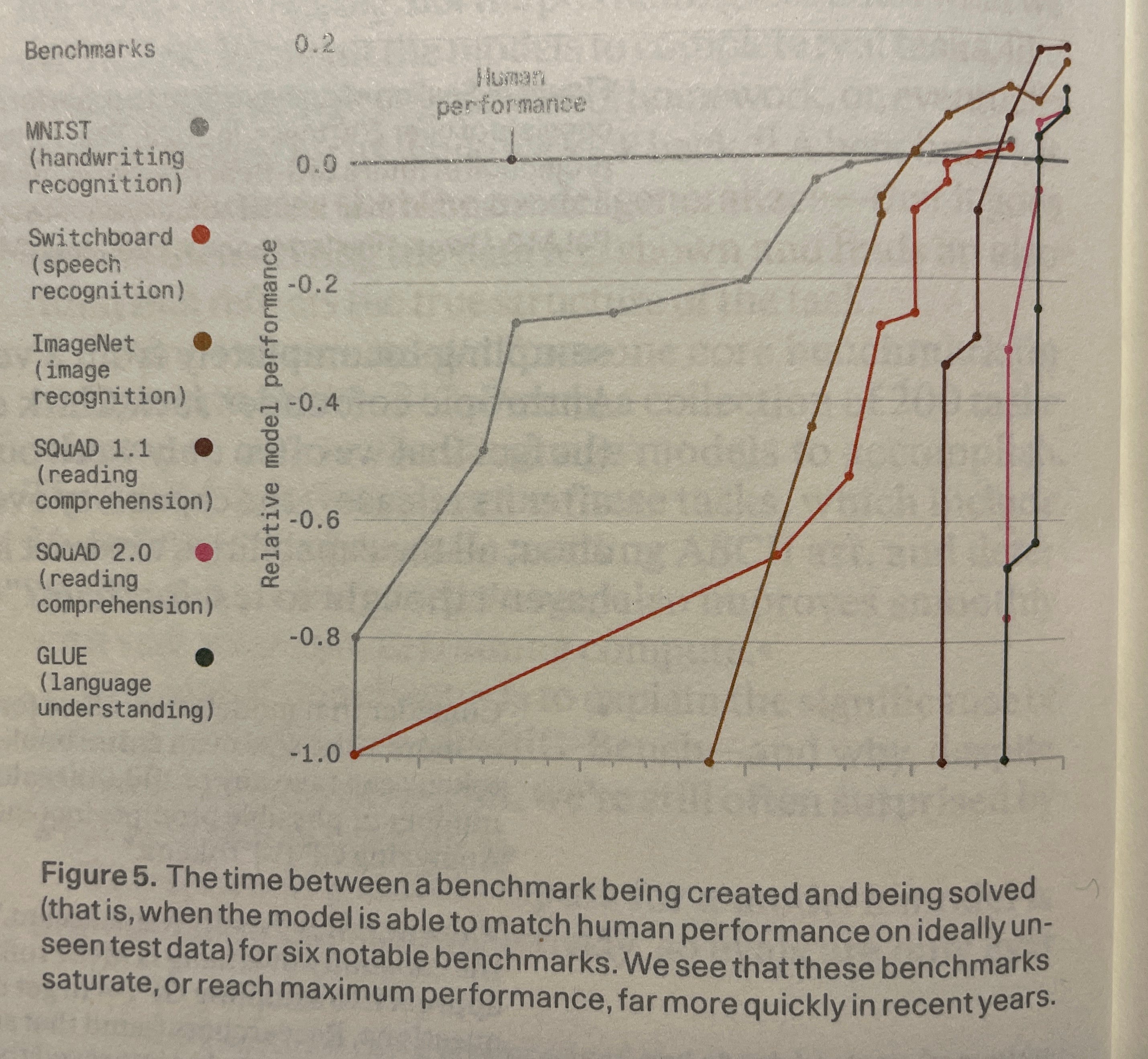
The book is full of strikingly novel insights from a range of fields, as you might expect from a podcast whose guests are some of the most intelligent and forward-thinking technological experts in the world. Unlike Second Hand Time, The Scaling Era interviewees are not marginalised voices on the receiving end of history. Patel has hosted some of the most interesting and powerful figures at the heart of the AI boom and the modern tech world, including Demis Hassabis, Mark Zuckerberg, Dario Amodei, Ilya Sutskever and many others.
If I had any criticism of this book, it’s that as you might expect, it’s so excited about the technological possibilities of the field that it has little interest in any of the individual human costs or associated dangers.
It’s fascinated by the technical and philosophical questions posed by the possibility of a superintelligent AGI, but only marginally concerned about what that might mean for ordinary people. There is little space in this book for discussion of IP and artistic ownership, the climate impact of these models, AI psychosis, the ethics of AI companionship or erotica, or some of the more distressing potential societal implications that rapid adoption could cause.
None of this means that it is anything less than excellent or illuminating, but people reading this book would do well to accompany it with something that engages on some of the above questions to achieve a balanced AI-centric information diet.
Even so, the book itself is far less hype-y than one might imagine, and the final section where Patel presents the differing predictions from various luminaries about when we might reach AGI makes it clear that no-one really knows how it’s all going to play out (he’s at 70% chance of AGI by 2040).
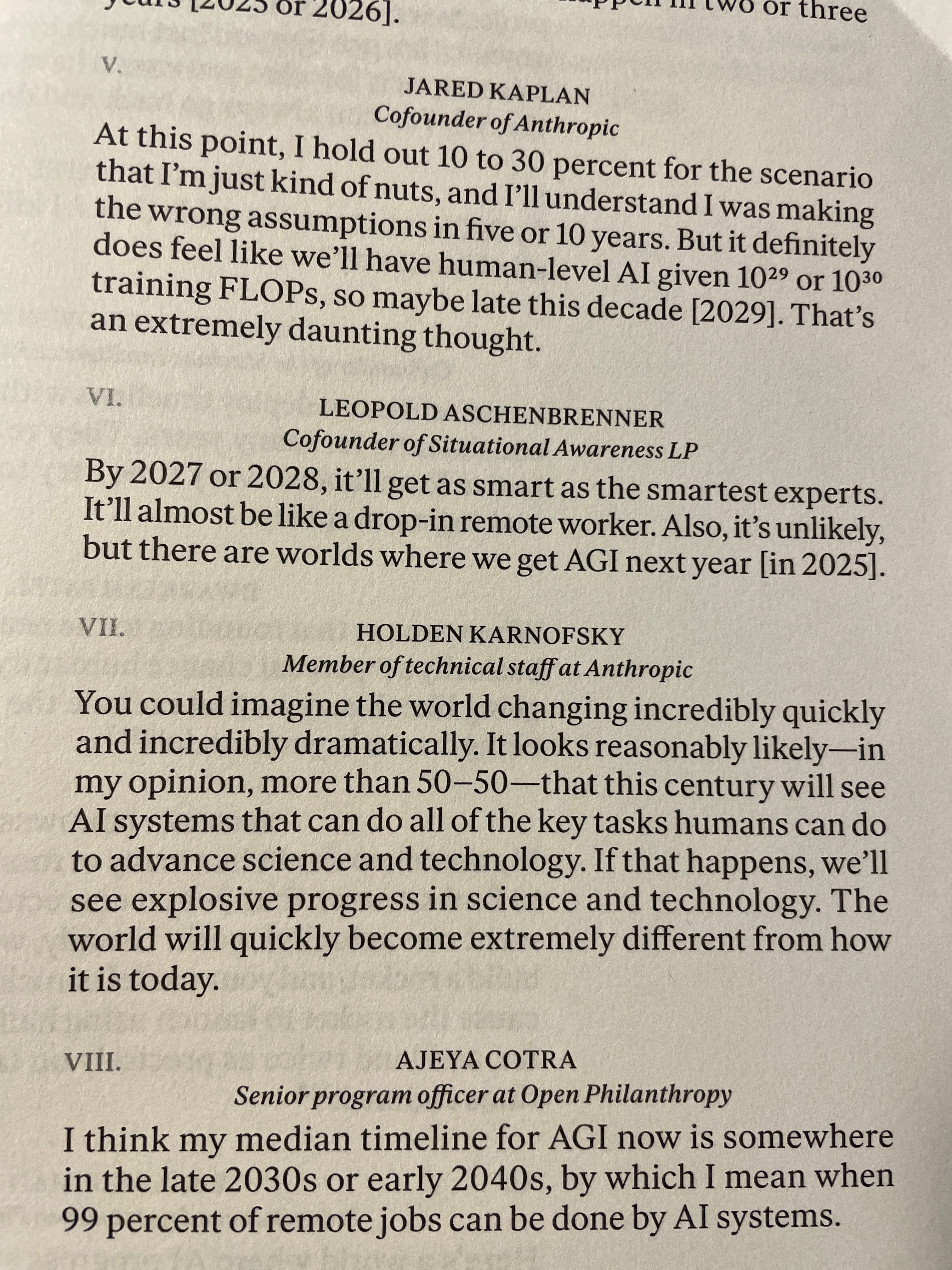
This book is a vital companion for thought, Patel’s work in creating it is a public service, and we should be very grateful that someone is conducting this kind of deep enquiry into something moving so fast.
And no less interesting than its subject matter is the inspiration it provides about how AI might help fuel a new era of oral history.
A Scaling Era of AI-Powered Oral History?
Amidst the hysteria about whether AI will obliterate creative writing craft, it appears that one topic which has been rather neglected is how it might reinvigorate a form like oral history. To me, reading these books offered plenty of inspiration as to how that might happen.
The first is in how interviews themselves are researched. In Alexievich’s work, she invites ordinary people into discussions that take in religion, fate, the state of the Russian Soul, trauma, dictatorship vs democracy, communism vs capitalism, and what might unite victims and executioners in an autocracy. In Patel’s, the intellectual range of the conversations is, for someone without a technical background, somewhat dizzying: these people are having highly demanding conversations that touch philosophy, speculative fiction, policy, engineering, physics, neuroscience, politics, national security, history, and economics.
Patel has spoken about how he uses AI to prepare for these conversations4, and whilst there’s also plenty of old-fashioned weapons-grade human intelligence on display in these conversations from some of the smartest applied thinkers on the planet, he offers a template for how to use these new tools for learning to follow one’s curiosity across a vast surface area of subject matter for the benefit of the audience. Interviewers can use AI to research, fill in their blind spots and ask better questions.
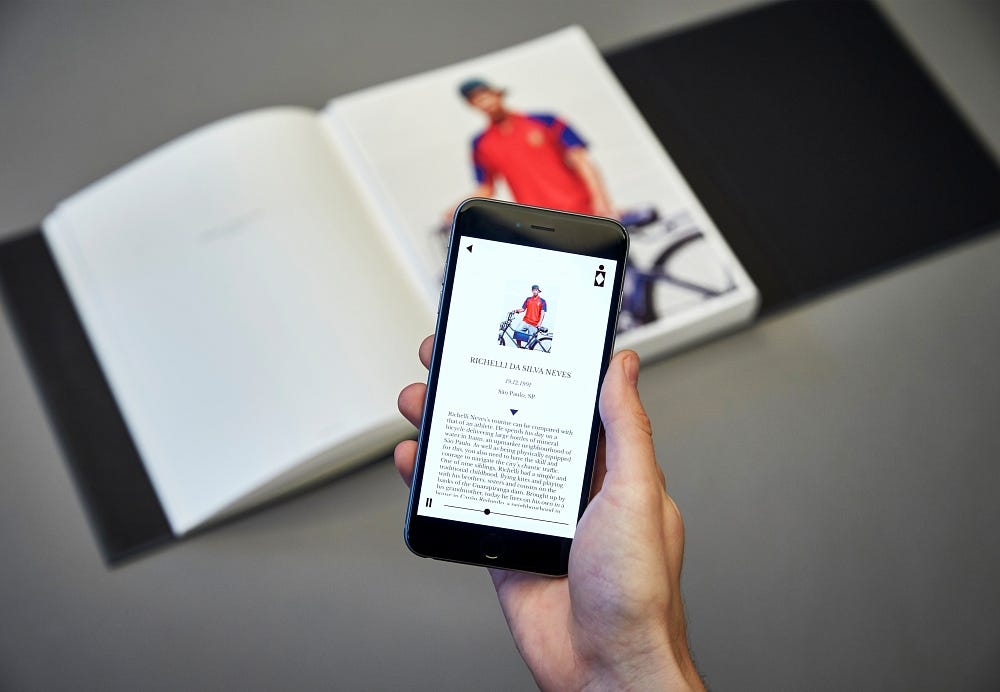
The second possibility they offer is in how oral history books might be packaged in future, particularly when they’re intended as a time capsule. There’s potential for future editions to update in tandem with their subject matter: imagine a book where the cover price gives you access to a more continuously updated ‘living’ version which continues to evolve as a field develops and more interviews are staged.
I also think that the modern oral history can and should create room not only for the written versions of people’s voices, but the sound of them too - so that readers can hear the timbre, pitch and range of that most musical of instruments, the human voice. We learn something new about who a person is when we hear them speak.
The third is about sense-making, and what to do with all those endless conversations once you’ve interviewed people with enough skill to get the truth out of them.
The scope and sweep of oral history - and in particular, these kind of vastly ambitious ones that seek to make something like the collapse of the USSR or the AI boom legible for a human mind - is something that AI could augment in a very real way.
The flipside of the current debate about the decline in reading is that internet culture is increasingly oral culture: the podcasting explosion is driven by the fact that very few people don’t want to be interviewed by someone who will listen carefully (why else do we go to therapy?). Audio books are also expanding5, headphone sales continue to grow, and the real-time voice-to-text transcription capabilities that AI offers mean that it is now easier than ever to capture and knit together a wide range of voices into something larger.
It appears that the conditions are in place to create a flowering of dramatically expanded oral history, and in particular the polyphonic oral work.
If nothing else, oral historians and researchers can now gain a faster and more exhaustive grasp of their interview material. Alexievich’s book is the crystallisation of years of patient listening, transcription and reflection. If part of the challenge of such works like these is organising, making sense of and sequencing what you’ve heard, there have never been better tools to help. What might such a tireless archivist and patients documentarian of human experience do with the technologies that we have at our disposal now?
Steven Johnson6 has written about what this might look like already, but the space feels massive and exciting: people working in this field now have an opportunity to fuse the empathy, curiosity and patience of the old-fashioned oral historian with the technologically-augmented erudition and tools of the new breed.
Judging by these two works, it’s a narrative form will remain healthy for a long time. For a feel of the possibilities of this oldest and newest of literary traditions, buy both these books and read them. You have my word that you won’t regret it.
I’ve always waited for someone, whether a good or a bad person, to come and listen to my story - I don’t know who exactly I had in mind, but I was always waiting for someone. My whole life, I’ve been waiting for someone to find me and I would tell them everything - Second Hand Time
Thanks for reading Fiction & Persuasion! Subscribe to receive new posts.
https://lareviewofbooks.org/article/the-storykeeper-a-conversation-with-svetlana-alexievich/
If anyone from Stripe Press is reading this and interested in publishing fiction, please hit me up.
Some things I still haven’t got a firm enough grasp on: gradient descent, what synthetic data looks like, etc etc
https://every.to/podcast/dwarkesh-patel-s-quest-to-learn-everything
https://www.thebookseller.com/news/audiobook-sales-reach-record-268m-while-fiction-soared-in-2024-pa-report-reveals

Comments
Nothing yet. Say the first thing.
Sign in to join the conversation.