
The first thing I noticed was her hands.
Deep blue. Indigo-blue skin.
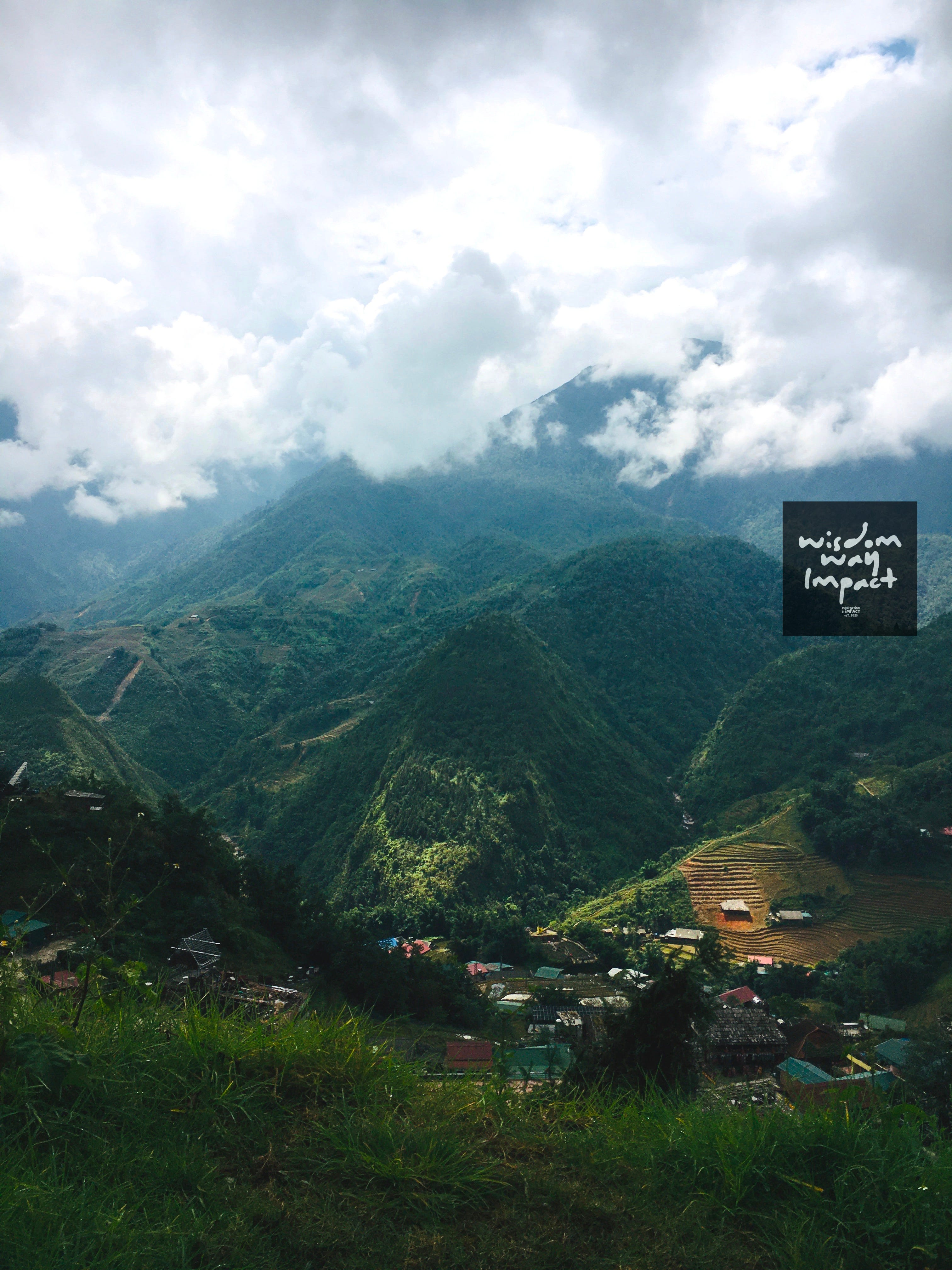
I was deep in the mountains of Sapa in northern Vietnam, walking through mist-covered rice terraces that seemed to disappear into the clouds. Sapa is often called the Switzerland of Vietnam, and for good reason. Endless layers of emerald-green terraces cascaded down valleys and mountainsides, wrapped in shifting curtains of fog.
Google Maps was nearly useless. I simply followed dirt roads and mountain paths wherever my intuition led me. I walked through communities inhabited by the Hmong and Dao peoples, ethnic groups whose ancestors migrated centuries ago from southern China into the mountainous regions of Vietnam, Laos, and Thailand.
The women were impossible to miss.
Tiny in stature compared to many Western tourists—most of them smaller than I am, despite being my age or much older—they climbed steep mountains carrying enormous woven baskets on their backs. From sunrise until evening, they guided trekking tours, farmed, cared for children, dyed fabric, embroidered clothing during breaks, and sold handmade crafts.
Everywhere I walked, I encountered women working.
One afternoon, while resting at a small café, an elderly woman quietly approached me.
Her weathered face carried decades of life etched into every wrinkle. She held indigo-dyed cloth in one hand and a walking stick in the other. But what caught my attention was the color of her skin.
Her hands were completely stained deep blue.
The indigo dye had penetrated every crease of her fingers, every wrinkle, and every nail bed. I had never seen anything like it. Curious, I gently held her hand.
It was warm.
Strong.
Extremely rough and dry.
Beautiful.
The cloth she sold was dyed through a painstaking process passed down through generations. Indigo plants are harvested, fermented, transformed into dye, and used repeatedly until the fabric gradually develops its rich blue color. The process takes time, patience, and labor.
Looking at her hands, I realized they were more than stained by dye.
They carried history.
They carried tradition.
They carried survival.
They carried generations.
The Buddha taught that suffering is an inherent part of human existence.
Sure, life is suffering. But when I look at the lives of these women in the valleys of Sapa, at mothers across Africa and Asia, and at my own mother's life, the suffering inherent in life often seems more visible—and at times more unevenly carried—across gender. I feel exhausted just imagining a fraction of what they have endured and continue to shoulder every single day.
Mothers’ lives demonstrate the reality of suffering quite clearly to me.
So did the Buddha think women were inferior?
Did he believe women could not awaken?
The answer, based on the earliest Buddhist texts, is no.
Comments
Nothing yet. Say the first thing.
Sign in to join the conversation.