
“Mind precedes all phenomena. Mind is their chief; they are all mind-made.
If with an impure mind one speaks or acts, suffering follows him like the wheel follows the foot of the ox.”
— Dhammapada
The Buddha said that the one who understands dependent origination understands the truth.
Life, in a way, is like a single piece of cloth woven by countless threads of intention and choice. Thought by thought. Emotion by emotion. Action by action.
And what’s interesting is this:
Buddhism emphasizes cause and effect deeply—yet it is not fatalistic.
Fate and dependent origination are not the same thing.
Because cause and effect always point us back to now.
Back to this moment.
There is always another choice available here. Another direction. Another way to respond. Even if only slightly. The thread of one decision becomes the condition for another result. Another relationship. Another unfolding.
This is why Buddhists speak often about karma and past lives. Not because life is predetermined, but because actions continue. Causes continue. Conditions continue.
What we plant does not always bloom immediately.
Some seeds bloom next week.
Some bloom years later.
Some perhaps in another lifetime (not even necessarily the next one!).
We do not know when or how consequences ripen.
And because we do not know—there is still only this life.
This breath.
This moment.
Often, it no longer matters as much what happened, why it happened, or why it happened to me.
Because while I am replaying:
Why me?
Why then?
Why this person?
Why this timing?
—this precious moment is already disappearing again.
And suddenly this moment, too, becomes filled with regret, delusion, resentment, fear, and imagined scenarios.
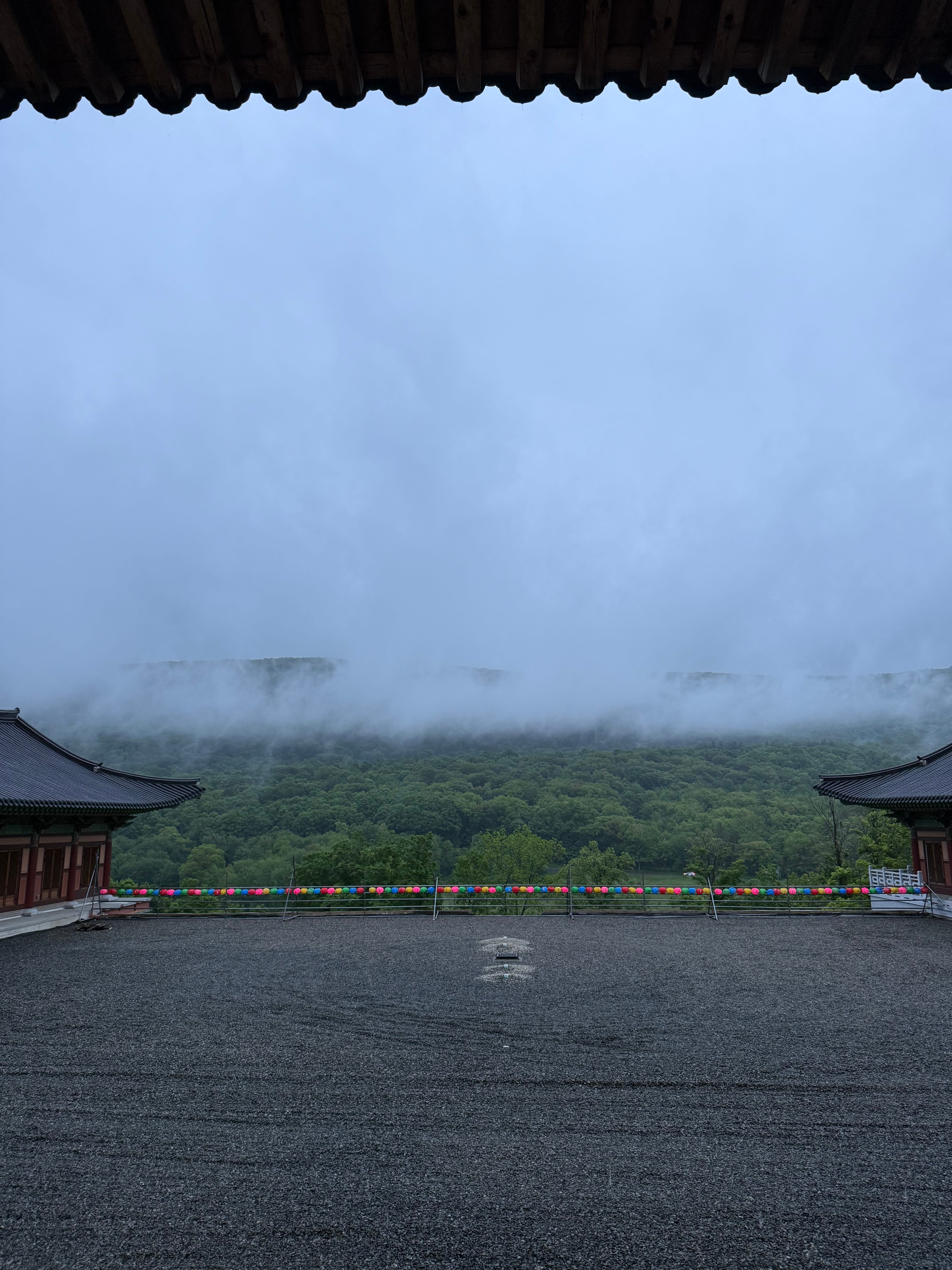
During *Vesak this year, I met so many new people at the temple.
People from completely different lives.
Different states.
Different struggles.
Different histories.
Different reasons for arriving there.
And yet somehow, all of us stood together in front of the Buddha—celebrating his birth, enlightenment, and parinirvana.
Some briefly shared pieces of their stories with me.
A self-made man who once sold jeans on the street.
Someone who suddenly found themselves in a wheelchair one day.
Someone who had recently survived cancer.
Someone who had lost a child.
And listening to all these lives pass before me like short fragments of film, I felt the same realization returning again and again:
How beautiful it is that we are still here. Still breathing. Still able to hear one another’s stories.
There have already been countless possibilities for death, danger, or disappearance.
A different timing.
A different road.
A different decision.
We could have been hit by a car.
Robbed.
Attacked.
Caught in war.
On a plane that crashed.
(You might have experienced them, yet you are still here reading this!)
Especially looking back at my own travels, I realize how many situations could have gone terribly wrong. I traveled alone constantly—through isolated villages, unfamiliar cities, politically unstable regions, places people warned me not to go.
At any point, somewhere in the middle of nowhere around the world, something could have happened.
And yet—I am still here.
You are still here.
That means we still have something to offer to the world we belong to. That means we still have chances to love more, give more, be useful, and be diligent in whatever we do and strive for — even in these spiritual practices.
*Vesak — also called Buddha’s Birthday or Buddha Day — is the most important holiday in Buddhism. It commemorates three major events in the life of the Buddha: his birth, enlightenment, and passing into nirvana (parinirvana). Different Buddhist traditions and countries celebrate it on slightly different dates, but it usually falls around April or May according to the lunar calendar.
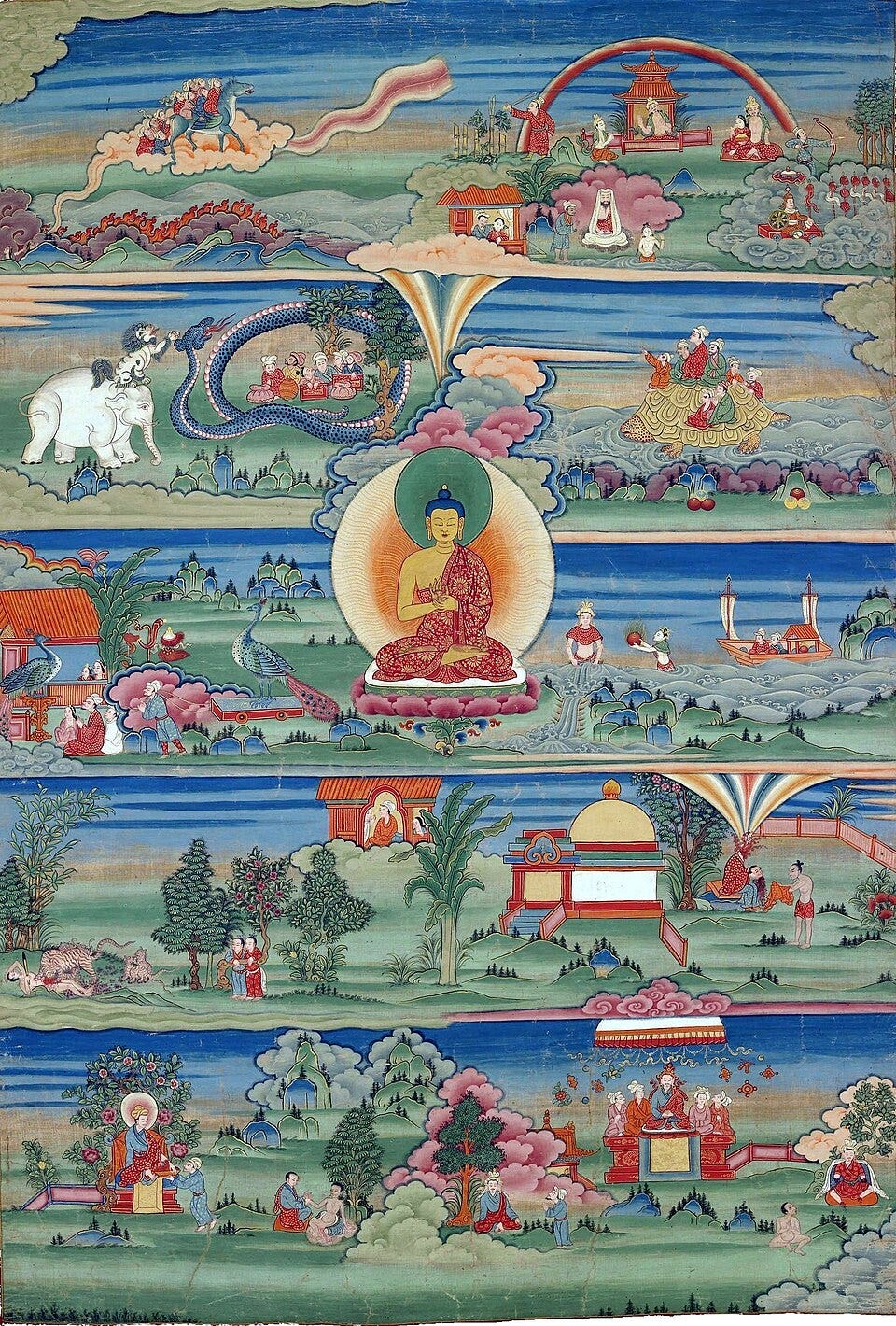
In the Jataka Tales, there are stories of the Buddha’s previous lives told through ancient Indian fables and parables.
The Buddha himself is said to have appeared in many different forms across lifetimes. Animal. Human. King. Ascetic.
The stories are less about fantasy and more about continuity—how compassion, intention, and practice accumulate over time. How awakening itself was cultivated through countless choices, acts of generosity, restraint, and wisdom across many lives before enlightenment.
And maybe that perspective softens something in us.
Because regardless of what our past life may have been—
or what happened last year,
or yesterday,
or even this morning—we can still live today lightly.
We can still make a better choice now.
The Buddha did not teach helplessness.
He taught responsibility within impermanence.
Not: “Everything is fixed.”
But: “Everything is conditioned.”
And if things are conditioned, then they can also change.
That means this moment matters.
The way you speak right now matters.
The way you think right now matters.
The way you hold pain right now matters.
Because this moment, too, becomes a cause.
So perhaps awakening is not somewhere far away.
Perhaps it begins very quietly—when we stop obsessing over the stories of the past long enough to meet the life still unfolding in front of us.
Right here.
Before this moment also disappears into memory.
No posts
Comments
Nothing yet. Say the first thing.
Sign in to join the conversation.