
Every few months, abortion becomes one of those topics that pulls people into opposite corners of the room. One side speaks about women’s rights, bodily autonomy, safety, and dignity. The other speaks about the sanctity of life, unborn children, and moral responsibility.
The conversation quickly becomes emotional, political, and ideological.
My 3-min Tiktok video on abortion recently sparked exactly this kind of reaction. The comment threads were intense, especially from people who had not seen my broader content on Buddhism and life and only encountered that one clip.
It reminded me how quickly this topic activates deep sensitivity on all sides.
First of all, Buddhism and its ethical framework are traditionally deeply compassionate toward life.
Not only human beings. Animals. Bugs. Tiny invisible beings. Forests. Rivers. Nature itself.
When I was in the monastery at age 19, learning about the role of the morning ritual (Doryangseok - Wakeup Chant*), I was taught to strike the moktak (wooden handbell) in a gradually increasing volume, rather than the typical method of use. The reason behind this stayed with me deeply…!: it is done so as not to startle even the smallest unseen beings with the sound of the moktak at dawn. How mindful and thoughtful is that???
*Doryangseok (道場釋) is the first ritual performed in the daily schedule of a Buddhist monastery. It carries the meaning of purifying the sacred space, while also awakening all beings in the universe from sleep and, symbolically, from ignorance and delusion. It is typically conducted around 3 a.m., though it may begin at 4 or 5 a.m. depending on circumstances. Monastics walk around the monastery grounds chanting sutras and gently waking others as part of the practice.
The very first Buddhist precept is to refrain from taking life. In the Dhammapada, the Buddha reminds us that all beings fear harm and cherish life.
As a child, did you ever try to step on an ant or swat a mosquito?
Notice how desperately that small being tries to survive.
It runs.
It hides.
It struggles.
Every living being wants to live.
Every living being fears death.
For Buddhist practitioners, this recognition becomes the foundation of compassion and an essential ethical orientation. Life itself is considered precious.
This is why abortion is not something Buddhism traditionally encourages. The intentional ending of a developing life is generally understood within Buddhist ethics as involving the taking of life.
But that is only one part of the conversation.
Because Buddhism is not a tradition of blind judgment.
Many people want morality to be simple, wanting to know what is right or wrong, who is good or bad. But Buddhism rarely works that way.
The Buddha consistently pointed toward cause and effect.
Actions have consequences. Not because an external authority punishes us. Not because a divine being rewards or condemns us. But because causes naturally produce effects.
This is one of the most practical teachings in Buddhism. Every choice shapes future conditions. Every action leaves traces in the mind. Every intention matters.
The question is not only: “What am I allowed to do?”
But more deeply: “Do I fully understand what I am doing?”, “And am I prepared to accept the consequences that follow, and take full responsibility for them?”
Because nobody escapes consequences.
Not politicians.
Not monks.
Not parents.
Not activists.
Not you.
Not me.
Whether consequences appear physically, emotionally, psychologically, socially, or internally, they remain part of lived reality.
This is why Buddhism places such emphasis on awareness and responsibility.
Yes, human life is complex and messy.
Pregnancies occur under vastly different circumstances. Some are celebrated. Some are unexpected. Some arise within loving partnerships. Others arise through violence, coercion, poverty, or crisis. Some involve serious medical risks. Some involve impossible choices.
And Buddhism understands complexity deeply.
This is why Buddhism encourages us to look beyond ideological reactions and examine causes and conditions.
What circumstances led here?
What suffering exists?
What intentions are present?
What options are available?
What consequences may unfold?
These are questions of wisdom, not judgment.
Another reason this conversation remains difficult is that modern society itself has never fully agreed on what constitutes human life.
Science.
Medicine.
Law.
Ethics.
Religion.
Philosophy.
Each approaches the question differently. Some define life beginning at conception. Some emphasize neurological development. Some focus on viability outside the womb. Some focus on consciousness or sentience. Different societies create different laws. Different cultures develop different moral frameworks. Different individuals arrive at different conclusions.
Understanding is not the same as forcing agreement.
One thing I deeply appreciate in Buddhism is that it refuses to reduce human beings into categories.
Mothers, children, fathers, families, poverty, violence, health risks, education, and economic realities—all arise through causes and conditions.
This is the teaching of dependent origination.
Nothing exists independently.
Everything emerges through interconnected conditions.
This is why Buddhism encourages us to look deeper than surface-level opinions.
Compassion does not require denying reality. And wisdom does not require pretending difficult choices do not exist. The goal is clarity.
Whatever action we take in life, we should understand it clearly and accept responsibility consciously.
This applies not only to abortion.
It applies to marriage and divorce.
Money and career decisions.
Relationships.
Having children.
Not having children.
Life itself is a continuous unfolding of causes and consequences.
A few years ago, I was facilitating a program for women in Tanzania.
By the third week, I was already leading the final session for a group of young women.
I expected some delays in arrival due to transportation and daily responsibilities, but the session was significantly delayed as participants slowly began to arrive.
When they entered the room one by one, they were holding babies.
Almost every participant was already a mother.
Some carried infants in their arms.
Some balanced toddlers on their hips.
One of the youngest mothers was only nineteen years old.
The image I had in mind of a “young women’s group” disappeared instantly.
The reality before me was something entirely different.
Young women raising children while still trying to understand their own lives.
As we sat together in a circle, they smiled shyly. These participants had no choice but to show up with their babies, as they had no place to leave their children while attending the session and gathering. Many already looked exhausted.
Babies cried, crawled across the floor, and demanded constant attention.
I imagined the long walks they had taken that morning, carrying their children just to attend the session.
As introductions continued, I realized how difficult it was for many of them to speak openly. They were still young. Still uncertain. Still forming their sense of identity. Yet they were already carrying responsibilities that many adults struggle to bear.
Eventually, they began to share their concerns. Among the women in that particular group, the concerns sounded strikingly similar.
“My husband cheats on me.”
Again.
And again.
And again.
They carried stress from infidelity. Domestic labor. Childcare. Financial pressure. Loneliness.
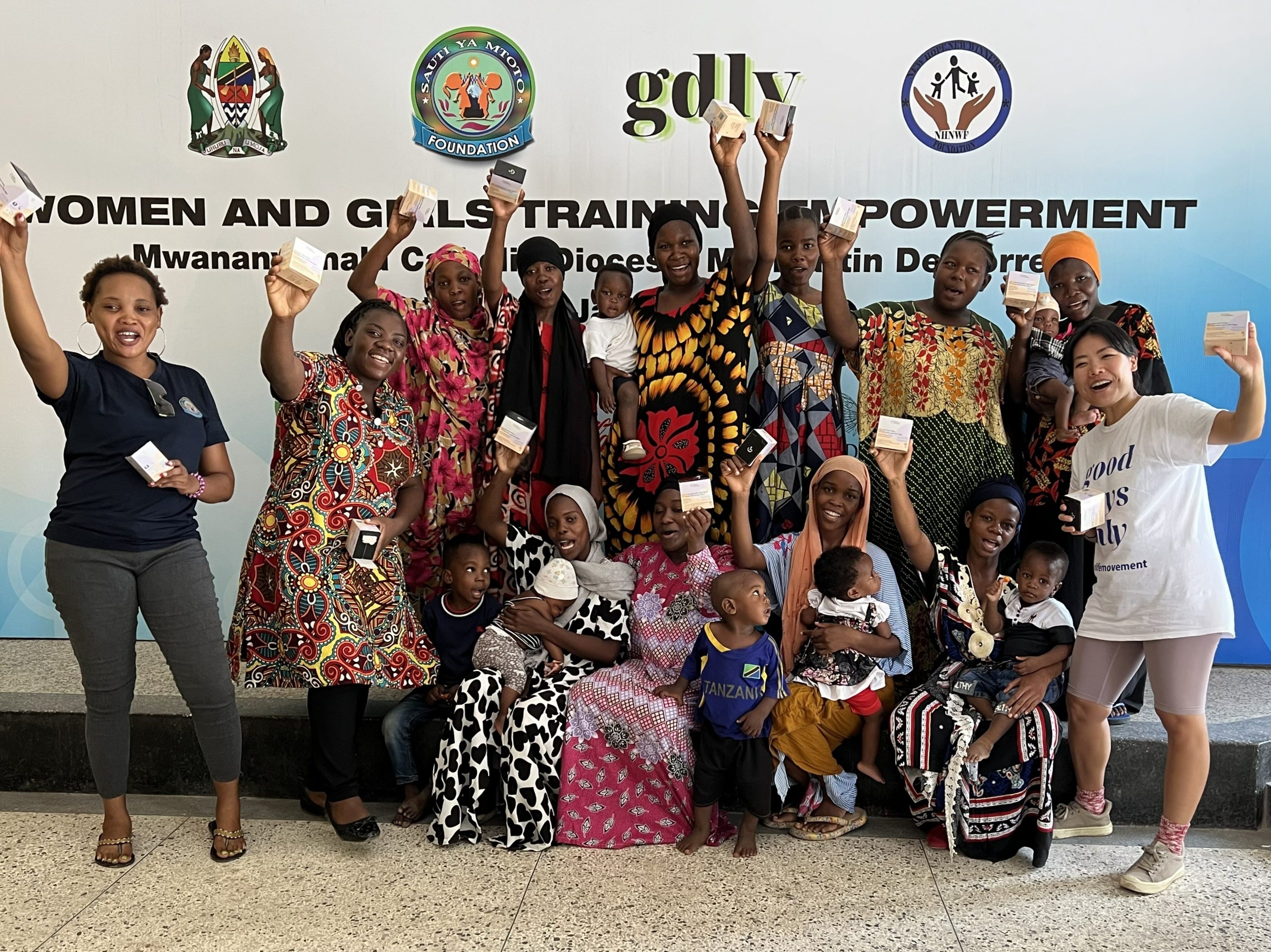
During the session, babies moved freely across the room. One mother held sleeping twins while filling out a reflection worksheet. Another breastfed her child while writing with her free hand. At one point, I found myself holding a baby while facilitating the session.
It no longer felt like a workshop.
It felt like life unfolding in real time.
The reality of womanhood.
The reality of motherhood.
The reality of endurance.
Despite everything they carried, what concerned them most was not success or status.
It was how to find peace.
How to care for themselves.
How not to lose themselves completely.
Whenever I was stubborn as a teenager, my mom would joke:
“One day you’ll have a daughter just like you, and then you’ll understand me better.”
The thought alone was overwhelming. Even now, I am not certain I possess the capacity for that level of sustained sacrifice. I value freedom. Peace. Solitude. My own ambitions. (I often think I am being very selfish.) The idea of placing another life ahead of my own every single day for decades feels immense.
Perhaps this is why mothers continue to humble me. Not because they give birth. But because they keep giving, and of course mothers always say how magical, happy, and invaluable it is to give to their children.
Their time.
Their sleep.
Their energy.
Their bodies.
Their attention.
Their love.
When life becomes difficult, many of us return to our mothers for comfort, wisdom, shelter, and understanding.
In that sense, motherhood is not only biological.
It is one of the deepest expressions of human care.
And perhaps this is why conversations about abortion become so emotionally charged.
Because underneath the politics are fundamental questions about life, responsibility, sacrifice, suffering, freedom, and love.
Questions that do not fit neatly into slogans.
Buddhism does not ask us to react immediately. It asks us to see clearly. Know what you are doing. Know why you are doing it.
Whether the circumstances were chosen or not, reality remains reality. Buddhism encourages us to see clearly what is happening, understand the consequences, and respond wisely. That may sound harsh, but there is wisdom in accepting what is true.
Seeing clearly does not remove difficulty, but it brings wisdom.
Because suffering often grows when our expectations refuse to meet what is actually happening.
Wisdom begins when we stop demanding simple answers and start looking honestly at life as it is.
And life, as it turns out, is almost always more complex than our opinions about it.
No matter what happens, or what decision is made, may the intention always be rooted in compassion, love, peace, and freedom—for oneself and for life itself. In the end, each person meets their own reality, shaped by their conditions, and must choose what is most honest and workable in that present moment, with as much awareness, care, and responsibility as possible.
At the same time, I recognize that the ability to even have choices—access to abortion, healthcare, and contraception—is itself a profound privilege in the world many of us live in. Not every woman has this space, safety, or freedom. That reality calls for humility, awareness, and deeper compassion in how we hold these conversations.
May we meet life not through ideology, but through clarity. And may that clarity always lead us toward less suffering, not more.
Share Wisdom in Motion: Letters & Dispatches on Peace & Wellbeing
No posts
Comments
Nothing yet. Say the first thing.
Sign in to join the conversation.