
Welcome to this week’s AI round-up! In this edition, we evaluate the impact of Claude Opus 4.6 and present an in-depth, longitudinal study of India’s AI ecosystem, tracking its development from 2023 to 2025. We also present a selection of frontier research and highlight startups that are innovating in the fields of clinical diagnostics, information integrity, and sustainable mobility.
This week at a glance:
Claude Opus 4.6, leader of the leaderboards: an analysis of the latest benchmark performance and what it means for the current lead in proprietary model competition.
Mapping India’s AI ecosystem - a snapshot from 2023 to 2025: a multi-year data review tracking the evolution of regional research output and the shifting of strategic investment capital over a 24-month horizon.
Weekly funding: Data & Cloud dominated the investment landscape this week, with companies securing more than $268 billion overall.
Research papers: our selection of five notable publications exploring the latest technical and governance breakthroughs in the field.
Startup spotlights: a look at three high-impact companies leveraging AI to address systemic challenges in healthcare, disinformation defence and the logistics of the circular economy for electric vehicles.
Anthropic has officially released Claude Opus 4.6, a model that has quickly become the best performer on several industry-standard evaluation platforms, securing first place on the LMSYS Arena leaderboard. Its high scores in reasoning and multi-step workflows on objective benchmarks such as LiveBench suggest significant resilience against test-set contamination.
In addition to standard metrics, the model incorporates structural enhancements tailored to complex enterprise and research environments. These include expanded contextual capacity (a 1 million-token context window, currently in beta), adaptive thinking, and dynamic effort controls. Independent data from Artificial Analysis underscores the model’s superiority in agentic task metrics, especially in multi-domain problem solving.
As a result of these technical advancements, Claude Opus 4.6 now leads our AIW Model Leaderboard.
→ Explore the interactive chart for a detailed view
From 2023 to 2025, India’s AI ecosystem was characterised by a growing synergy between academic output and financial support. Research activity maintained a robust national presence, driven by a diverse network of institutions, including the SRM Institute of Science and Technology, Saveentha University and the Vellore Institute of Technology.
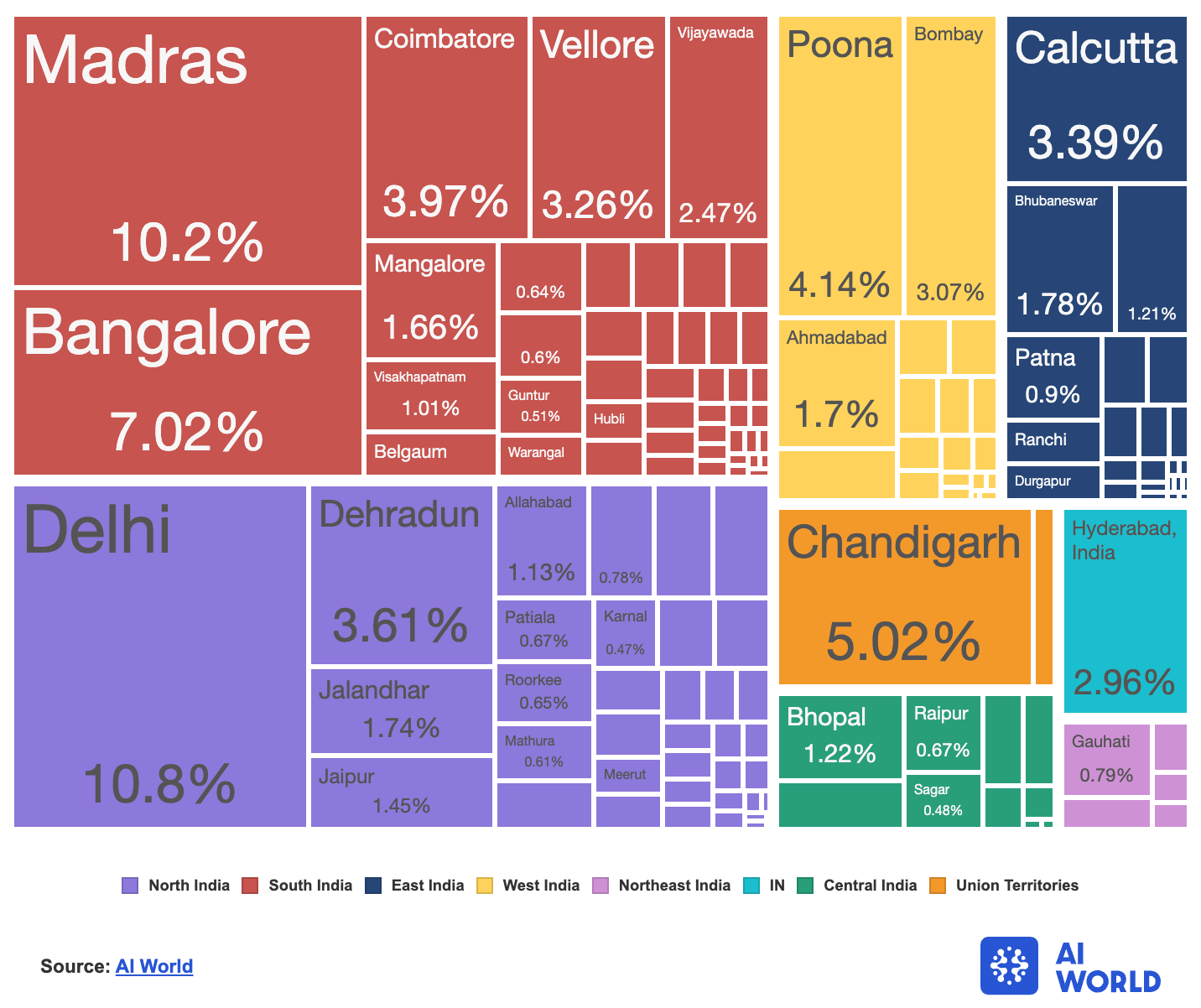
By 2025, Madras and Delhi were leading the country in scientific output, with rising contributions also coming from Bengaluru, Chandigarh and Poona. Investment patterns increasingly mirrored this research density in 2025, with capital flowing towards regions with high concentrations of innovation.
The Indian ecosystem is currently characterised by a narrowing gap between where knowledge is generated and where it is financed. Unlike other markets with regional disparities, India is moving towards a self-sustaining cycle in which distributed research excellence reliably precedes future capital allocation across the subcontinent.
→ Read the full analysis on aiworld.eu
Last week, global AI financing reached a significant $ 268 billion, maintaining the momentum of capital deployment across the broader AI ecosystem. High-profile funding rounds were led by🇺🇸 OpenAI $40 billion, 🇦🇺 Firmus Technologies $10 billion, 🇸🇪 IFS $3.42 billion, 🇨🇳 Inspur Cloud $2.88 billion among others.
Most active sectors in AI investment this week:
Data & Cloud: Scale (US), Crusoe AI Data Center (US), Databricks (US), Inspur Cloud (CN)
Education: OpenAI (US), Thinking Machines Lab (US)
Finance: xAI (US), Anthropic (US), Polymarket (US)
→ Explore the interactive chart for a detailed view of these trends
This week’s research focuses on the impact of AI on human capital, the mitigation of bias through architectural reasoning, and the integration of AI as a strategic collaborator in complex decision-making processes.
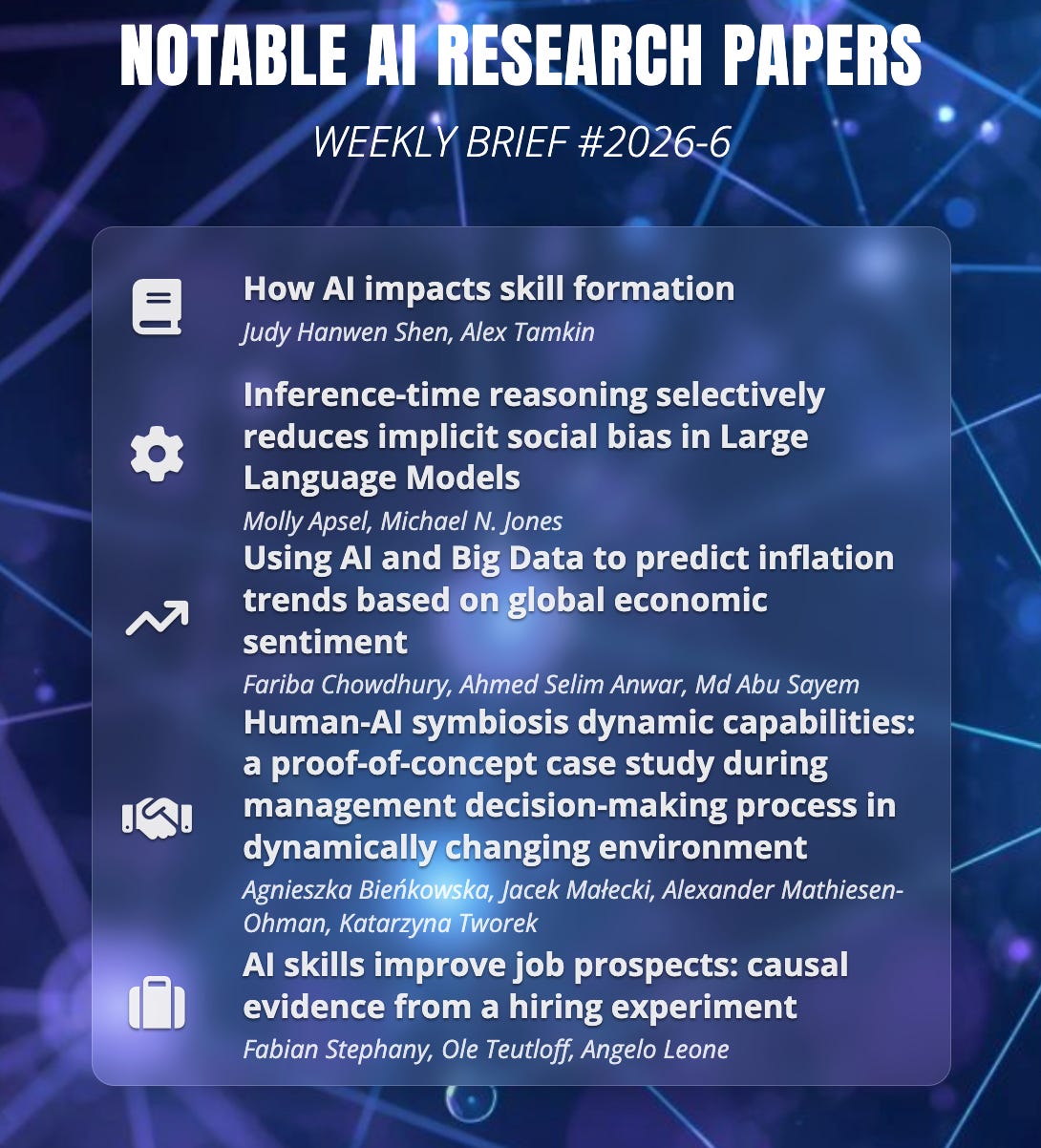
Curious for more? Explore this week’s 5 most notable AI research papers to stay up to date on the latest insights and developments in the field.
This week’s startup selection showcases the application of AI to challenges in sustainable mobility, information integrity and life sciences.
🇱🇺 R3robotics provides an AI-driven dismantling platform aiming at automating the recovery of vital components from electric vehicles once they reach the end of their lifecycle. The Luxembourg-based company recently secured €20 million in Series A equity and grants to expand its infrastructure.
🇬🇧 Refute offers an AI platform designed to identify and neutralise disinformation, providing response strategies to protect state and corporate institutions. The company secured £5 million in seed funding led by Amadeus Capital Partners to establish its technology as a core pillar of the modern information security ecosystem.
🇪🇸 Biorce delivers an AI-native platform that aims to optimise the structurally inefficient clinical trial process by automating the creation of trial protocols and identifying regulatory risks before they delay drug development. The company recently closed a $52 million Series A funding round, led by DST Global Partners, to accelerate its global expansion and product development.
For more updates, research, and insights across the AI ecosystem, visit aiworld.eu. Subscribe to receive next week’s roundup directly in your inbox and stay ahead of key developments.
Have a great week ahead!
Gaia Cavaglioni
On behalf of the AI World Team
Comments
Nothing yet. Say the first thing.
Sign in to join the conversation.