
Welcome to this week's AI round-up! In this edition, we cover what AI system prompts reveal about lab priorities, the energy economics of AI scaling, three policy briefs and three startups closing rounds in food quality control, renewable energy markets, and pharmaceutical compounding.
This week at a glance:
System prompts as a signal: Anthropic’s Fable 5 system prompt now runs to around 25,000 words, the longest in the field, with safety and user wellbeing guidance making up a larger share than any other provider.
AI energy economics, five studies: renewable expansion mainly relaxes the AI scaling constraint without displacing fossil generation, and past 2030 grid reliability will determine where frontier AI infrastructure gets built more than raw capacity will.
Three policy briefs on energy, safety, and grids: the IEA projects data centre electricity demand roughly doubling to 950 TWh by 2030; the Future of Life Institute gives Anthropic the field’s top safety score of C+, with Mistral among three labs failing outright; and 60% of European grid operators already use AI on their networks.
Startup spotlights: Polysense, Bohr Energie, and CurifyLabs each closed rounds this week across food production quality control, independent renewable energy market access, and automated pharmaceutical compounding.
Before every conversation with a major AI model, the lab loads a system prompt that shapes how the model behaves. Tracking these prompts over time reveals how lab priorities have shifted. The strongest trend is length: Anthropic's Fable 5 now runs to around 25,000 words, approximately 70 pages, driven by the compounding weight of personalisation instructions and behavioural guidance.
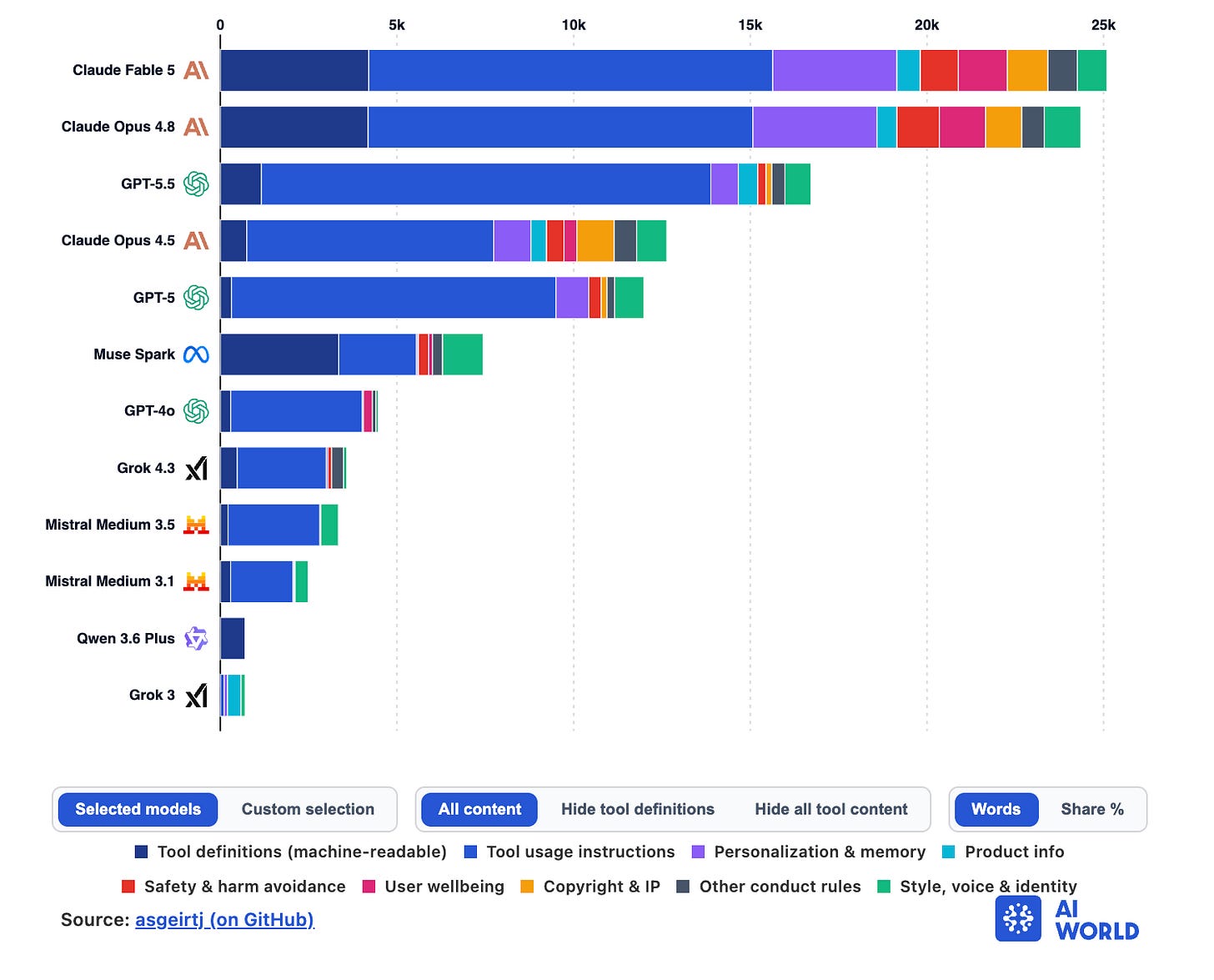
Safety and user wellbeing content accounts for a larger share of Anthropic's prompts than any other provider in the field. At the other end, Grok keeps system prompts minimal. The differences are a direct signal of what each lab considers worth encoding before a conversation begins.
→ Read the full article at AI World
This week's selection examines the energy economics of AI scaling across five studies, from the hardware and electricity constraints binding US output to the adaptation trap that makes renewable expansion a scaling enabler, and the spatial specificity of where European grid reliability will determine AI infrastructure deployment past 2030.
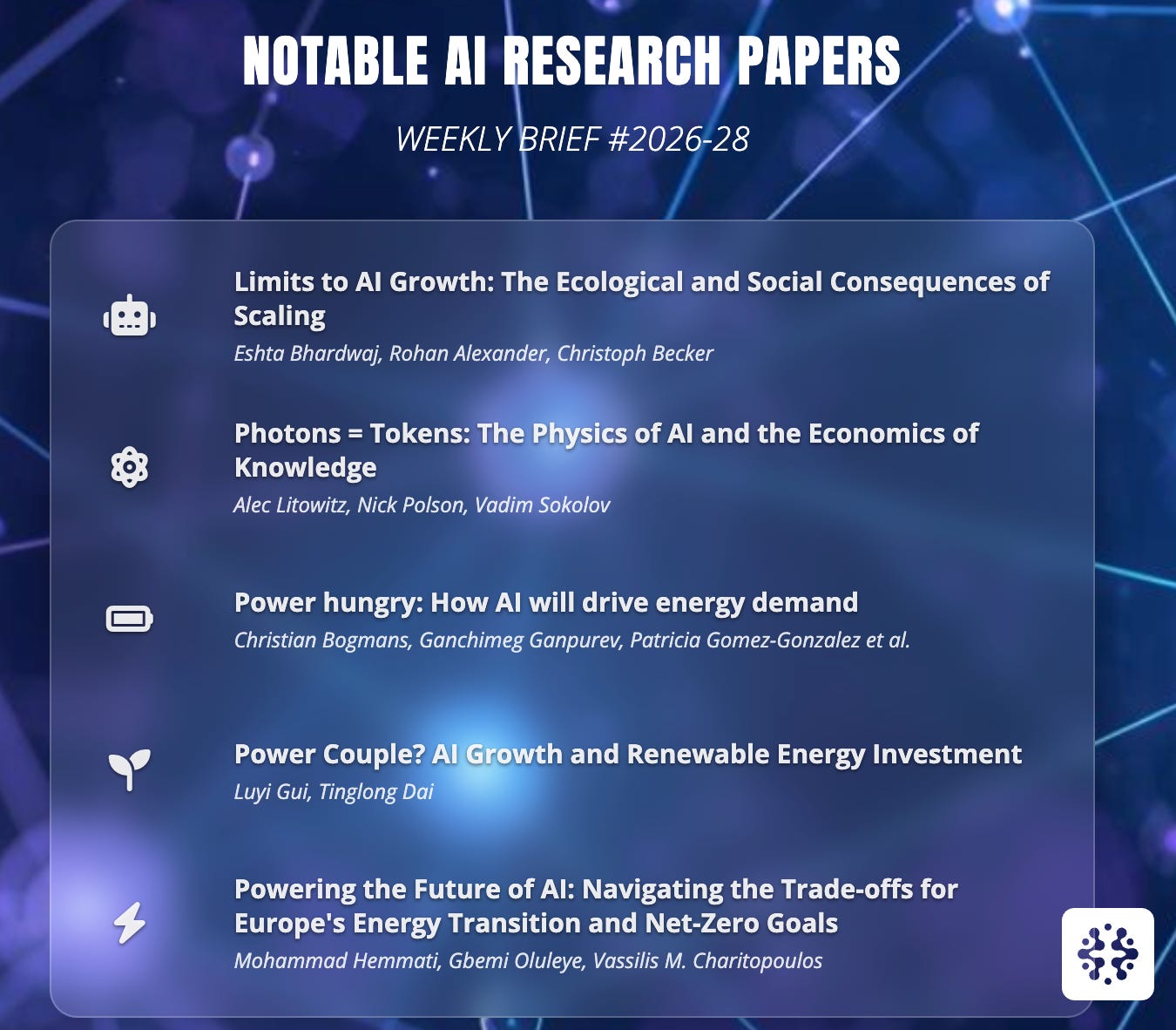
→ Read the full paper summaries on AI World
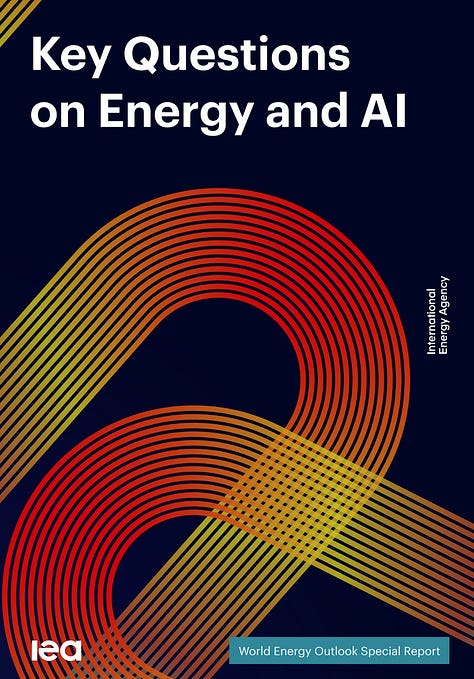
The IEA’s special report on AI and energy projects predicts that data centre electricity demand will roughly double to around 950 TWh by 2030, with energy per AI query falling fast as video, reasoning, and agent tasks consume hundreds of times more per query than basic text generation. However, AI could also save over 13 exajoules of energy by 2035. The problem is that grids, transformers, and chips are unable to scale up as quickly as models are being developed.
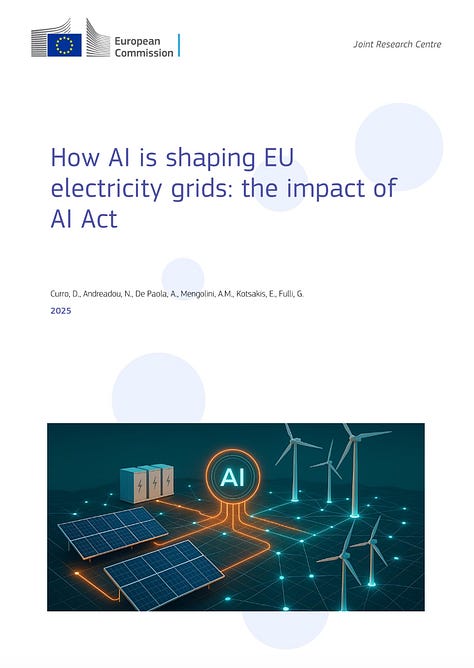
The Future of Life Institute’s Summer 2026 AI Safety Index grades nine companies across 37 indicators. Anthropic leads with a C+, the highest score in the field, and Mistral is among three companies that fail outright. Existential safety is the weakest domain across the industry, with no company scoring above a C-, and four major labs have weakened the pause commitments they made when the capability thresholds seemed far off. A JRC report on AI in European energy infrastructure found that 60% of grid operators were already using AI to forecast demand and manage networks, 70% were using it to save energy and 90% were aware of the AI Act. However, awareness was not yet translating into compliance.
→ Read the full analysis on AI World Linkedin page
This week's selection showcases the application of AI to structural gaps in food production quality control, independent renewable energy market access, and pharmaceutical compounding.
🇧🇪 Polysense: Belgium-based, co-founded by Yarne De Munck, Lucas Van Dijck, and Jarne Bogaert. Polysense places cameras on existing production lines for continuous unit-level inspection, combines quality and process data into a single intelligence platform, and automatically adjusts machine parameters in response to changing ingredient conditions without operator intervention. Raised $10.7 million in an oversubscribed seed round led by Felix Capital, bringing total funding to approximately $12.9 million.
🇫🇷 Bohr Energie: Toulouse-based, founded 2020 by Julien Haure, Luis Urday, Julien Chollet, and Jean-Pierre Mader. Bohr Energie gives independent renewable energy producers access to production forecasting, real-time operational control, regulatory compliance, and direct electricity market trading through a managed service that does not require in-house trading capability. Raised €10 million in a Series A led by Suma Capital through its SC Net Zero Ventures fund.
🇫🇮 CurifyLabs: Finland-based, founded 2021 by Charlotta and Niklas Sandler Topelius. CurifyLabs integrates software, GMP-manufactured excipient bases, and 3D printing hardware into an end-to-end automated pharmaceutical compounding system that generates digital batch records and audit trails, reducing compounding time by up to nine times compared to manual processes. Raised €12 million in a Series A co-led by Sandwater and HealthCap, bringing total funding to approximately €18.7 million.
For more updates, research and insights across the AI ecosystem, visit aiworld.eu. Subscribe to receive next week’s round-up directly in your inbox and stay ahead of key developments.
Have a great weekend!
Gaia Cavaglioni
On behalf of the AI World Team.
Comments
Nothing yet. Say the first thing.
Sign in to join the conversation.