

The moment your product can send mail, spend money, write to a calendar, or change production state, the design question shifts. It is no longer “is this response helpful?” It is “who owns the final click?”
Human-in-the-loop checkpoints are that click. Not a disclaimer. Not a buried undo. A visible gate where a person reviews the exact action before it becomes irreversible.
I wrote the full build playbook here: How to Design Human-in-the-Loop UX. This post is the shorter version: what HITL actually means, the three postures worth stealing, and the one product decision that does most of the work.
Human-in-the-loop is simple in principle. The model proposes or stages an action. A person reviews and approves before it executes.
The AI can draft, plan, and prepare. The human owns send, purchase, deploy, or any other irreversible effect.
Two frameworks own different halves of this problem:
Trust Scaffolding treats checkpoints as pre-commit control: visible evidence, reversible actions, and calibrated uncertainty before side effects leave the product.
Agentic UX treats them as an autonomy gradient: suggest, confirm, then execute, with consent scoped by action risk, not by a single global toggle.
If you only keep one distinction: HITL gates a specific action with explicit review. Autonomy budgets bound how long or how many steps an agent may run unattended. Most agent products need both.
Start with the plain checkpoint. AI prepares the work. A person confirms, edits, or rejects.
This is table stakes for email clients, code tools, and anything where auto-apply feels like a betrayal. Gemini’s Gmail card is the clearest shipped version: Cancel and Send as co-equal choices over a real draft.
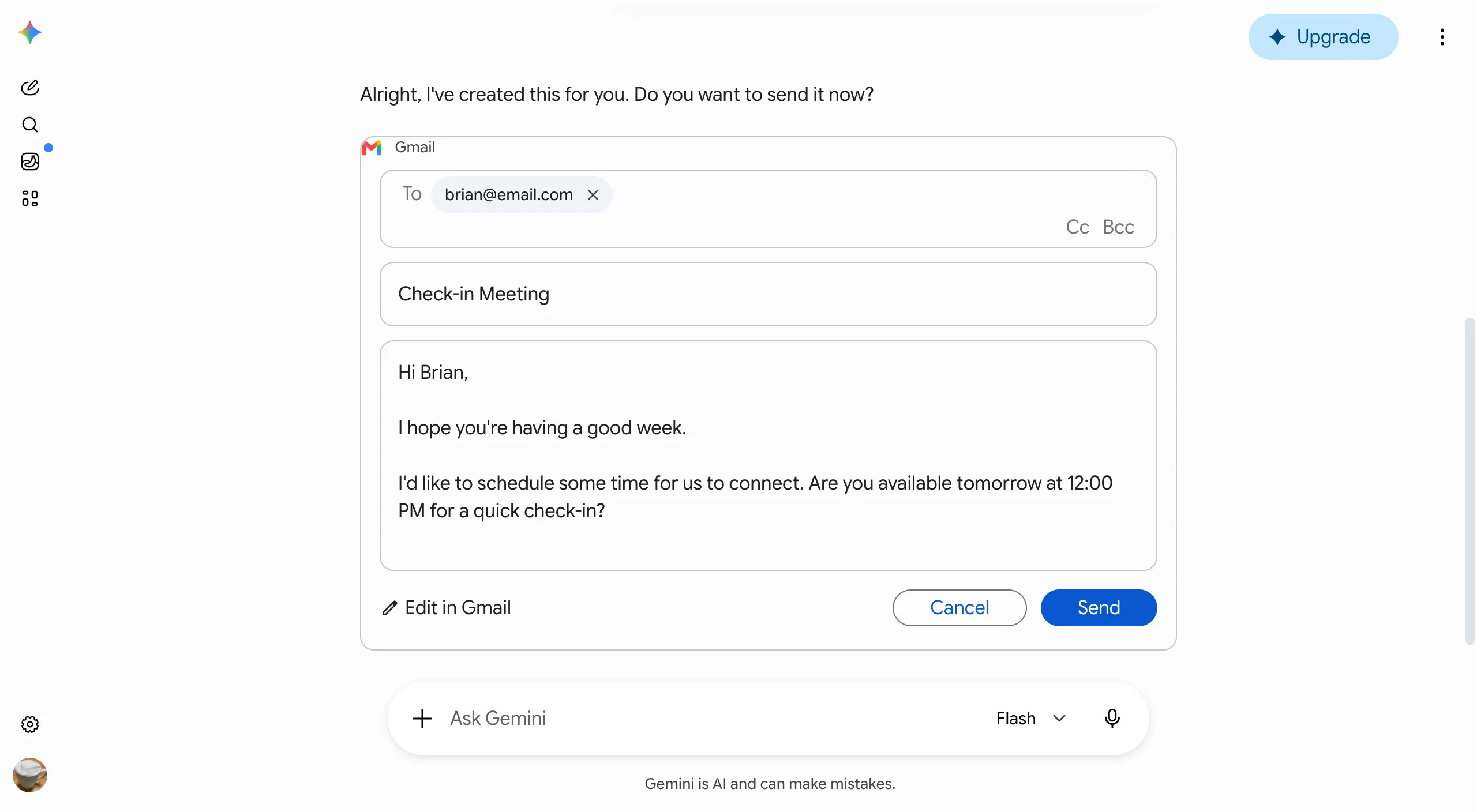
The presence of an override changes the relationship even when users rarely click it. Design the gate so the payload is inspectable. Empty confirm dialogs do not count.
One confirm button is not a system, though. Shipped products usually compose HITL with siblings:
Approval workflows — who approves, what is shown, what happens on reject
Granular consent — read vs write risk, per-tool Allow before the agent runs
Suggest / confirm / execute — autonomy as a ladder, not a switch
Human handoff — transfer the whole job when the agent cannot or should not continue
You do not need all four on day one. You need one irreversible action with a real payload, then add siblings only when standing tools or multi-step review demand them.
The same trust job produces three different interfaces. Steal the gate that matches how often, and how deeply, your agent touches sensitive tools.
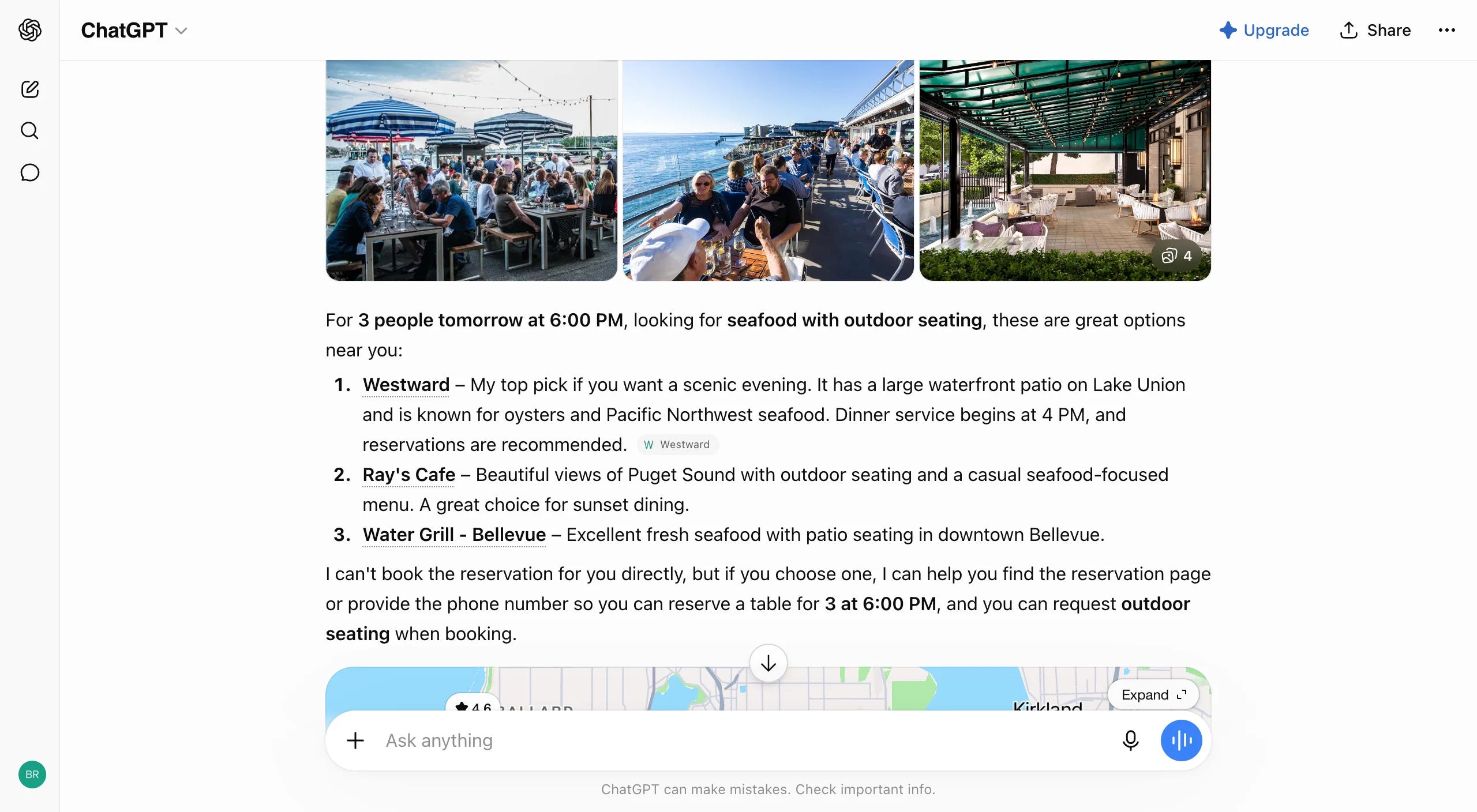
When ChatGPT cannot complete an action, it states the limit, asks structured questions, and hands the final step to a trusted external surface. When it can draft email, Send routes through Gmail, Outlook, or the user’s default mail app. It never pretends the reservation is done.
Steal this when you cannot complete the action yet but still need to keep the user moving.
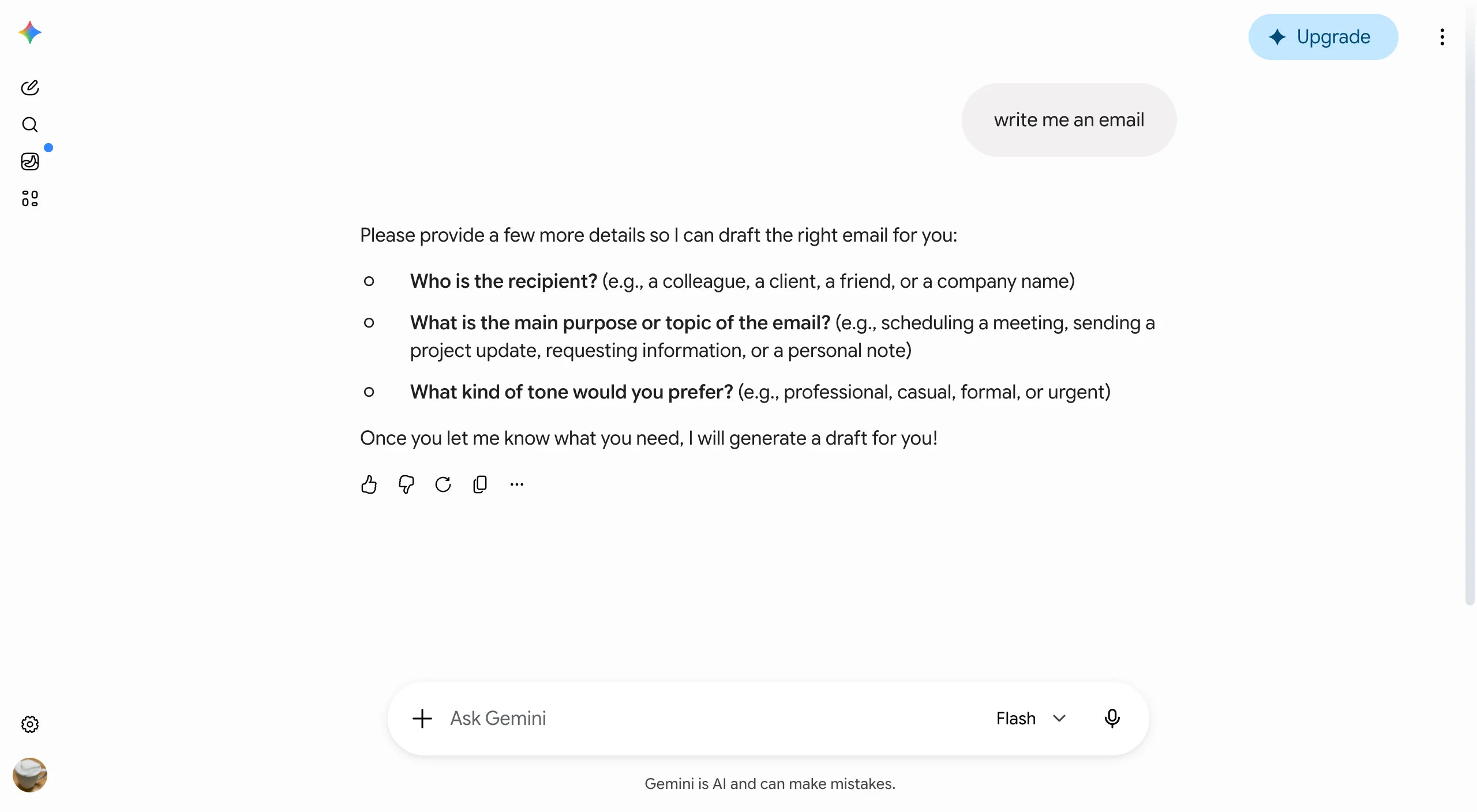
Gemini clarifies recipient, purpose, and tone up front, then drafts inside a native Gmail card. The product bet is ecosystem depth: approval feels native because it reuses the app users already trust.
Steal this when you can draft into a real destination app the user already knows.
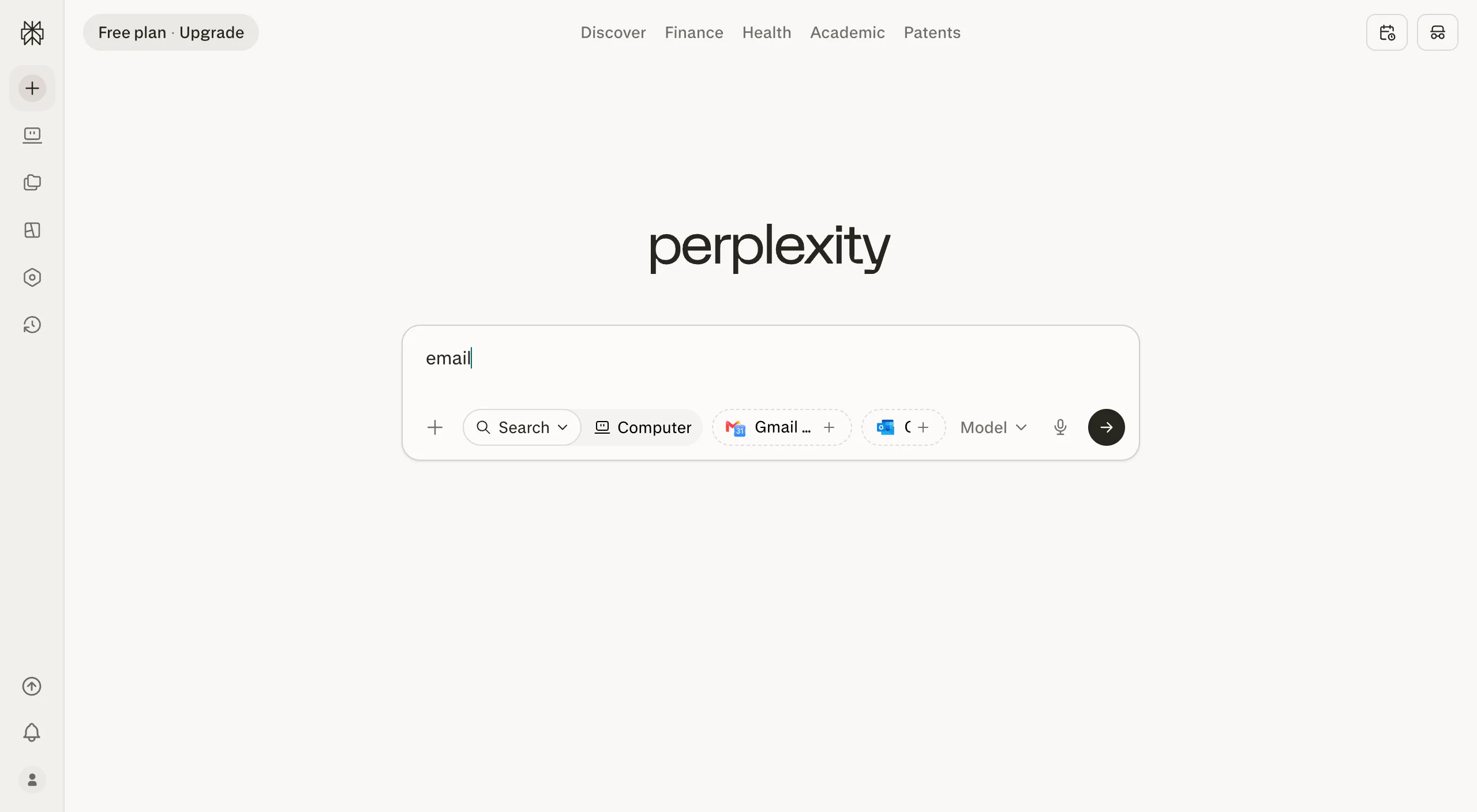
Perplexity surfaces connector chips in the composer when a query touches personal data. Once tools are allowed, the agent acts without a second per-message gate. Consent is a matrix, not a chat confirmation.
Steal this when agents need standing access to sensitive tools like email.
Full side-by-side and steal rules live in the HITL comparison.
This is the highest-leverage product decision in the whole pattern family.
Gate before the run when the agent needs standing access to sensitive tools. Perplexity’s matrix is the reference.
Gate after the draft when each action is a one-off with a clear preview. Gemini’s Send and ChatGPT’s draft card are the reference.
Use both when long agent runs touch tools and still produce consequential artifacts. Budget the run. Approve the blast radius.
If you ship only a global “always allow,” you are buying convenience with silent risk drift. Re-prompt when the action class gets more dangerous.
Prefer selective gates on publish, send, or spend over constant confirm spam. Friction that protects trust is good. Friction that teaches users to click Approve blind is not.
Ship the checkpoint when:
The action is hard to reverse
It spends money or contacts other people
It changes production systems
It carries compliance or privacy risk
The user cannot see the payload they are authorizing
Skip or lighten when:
The edit is local, low-stakes, and easy to undo
You already have hard budgets, rollback, and clear failure alerts for batch work
You would otherwise interrupt every micro-edit on a creative canvas
Silent auto-send or auto-apply with only a buried undo
Approval UI that does not show the exact payload
One global “always allow” that never re-prompts for higher-risk actions
Approval after the side effect already happened
Fake completion when the agent cannot act (implying a booking is done)
Cheerful failure copy that hides missing permissions or failed tool calls
If your gate cannot explain what changes, it is not a gate. It is trust theater.
Pick a posture from the comparison, then wire one checkpoint into your agent flow.
Steal one rule that matches your agent’s access model from the HITL comparison.
Spec the primary checkpoint against the human-in-the-loop pattern (and try the interactive demo).
Add consent granularity or a formal approval process only if standing tools or multi-step review demand it.
Measure how often users edit before confirming. That edit rate is your trust signal.
The longer binder version, with product shots and pattern referrals for approval workflows, granular consent, suggest/confirm/execute, and handoff, is here:
How to Design Human-in-the-Loop UX
Start with one irreversible action. Show the full payload. Own the final click on purpose.
No posts
Comments
Nothing yet. Say the first thing.
Sign in to join the conversation.