
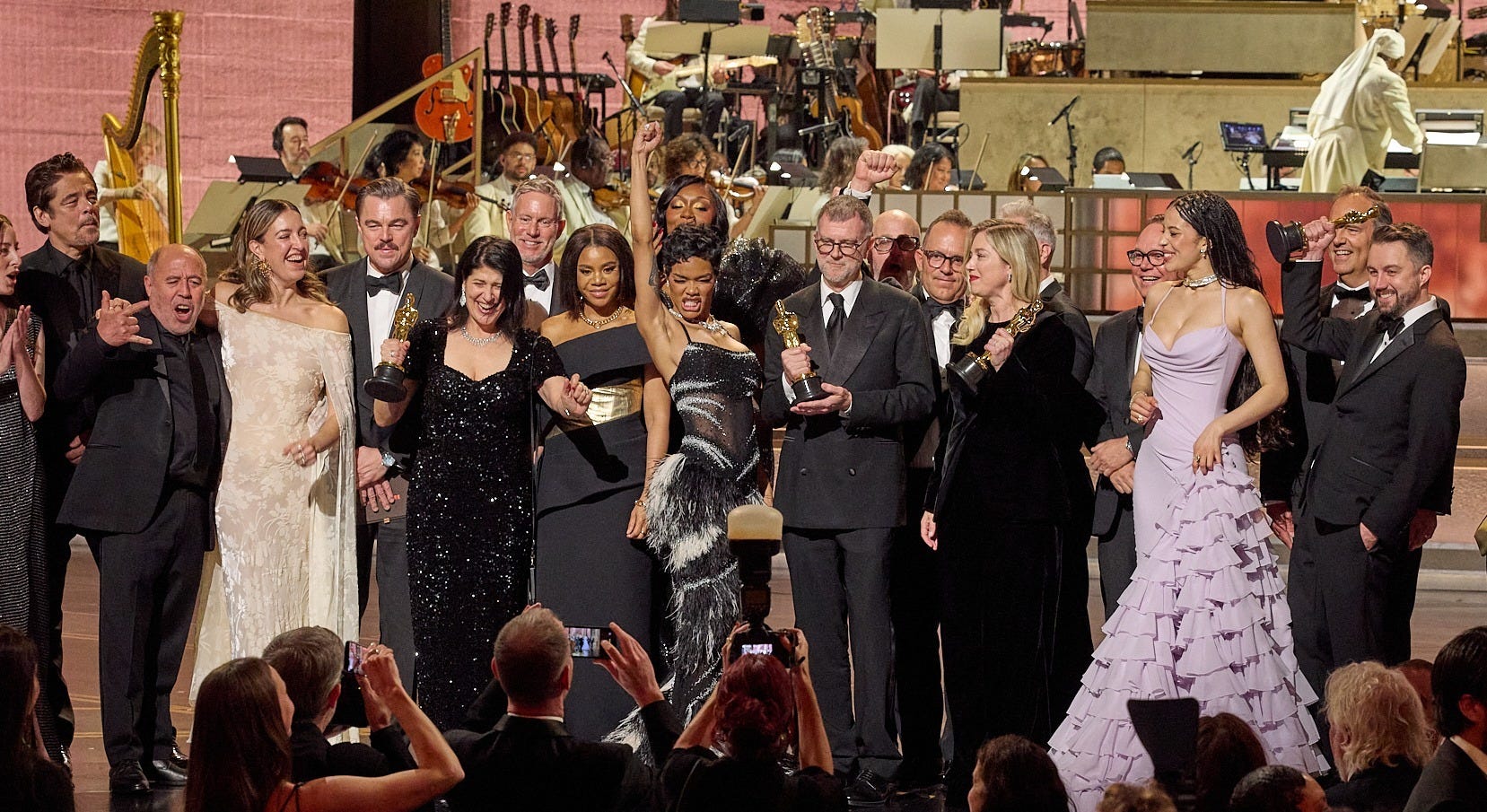
The Oscars have always been about the middle ground between high art and mass entertainment. At the very first Academy Awards, held on May 16, 1929, the Academy of Motion Picture Arts and Sciences gave out not one prize for Best Picture, but two: Wings, a silent war epic, received the award for “Outstanding Picture”, while Sunrise, F.W. Murnau’s magnum opus, received the award for “Best Unique and Artistic Picture.” The distinction was clear: there would be one award for the literary types and another for general audiences—those who liked to be entertained. The award for Best Unique and Artistic Picture was dispelled the following year, but the intention was clear: the Oscars would seek to reward films that appealed to critics, the masses, and industry players alike. They would straddle the line between high and low, art and schlock.
Over the last few years, the Oscars have increasingly leaned toward the art side of things. Since Parasite’s watershed Best Picture win in 2019, we have been living in a stranger, more arthouse-forward era of the Academy that is often more aligned with the Cannes Film Festival than it is with box office receipts, a time in which Everything Everywhere All At Once and Anora succeed over mid-budget crowd pleasers like The Fabelmans and Conclave. Part of this can be attributed to the expansion and internationalization of the Academy that has occurred in the wake of the #OscarsSoWhite campaign of the mid-2010s, which rightly diversified the Academy from geriatric homogeneity. But the Academy itself cannot be fully blamed: moviegoing audiences are simply less interested in going to watch traditional Oscar winners than they once were. Where films like Forrest Gump and Schindler’s List would easily be among the highest grossing movies throughout the mid-90s, the Best Picture winners of today (Oppenheimer excepted) often struggle to crack the top 25.
In this way, One Battle After Another and Sinners, the two winningest films at the 98th Academy Awards, are no different. With worldwide grosses of $209 million and $369 million respectively, these are hardly box office megahits in the mold of Zootopia 2 ($1.86 billion) or Avatar: Fire and Ash ($1.48 billion). But they are hits, particularly compared to recent winners like Anora ($59 million) and Nomadland ($40 million). This year’s nominees also did very well: between F1, Marty Supreme, Weapons, Hamnet, Frankenstein, and KPop Demon Hunters,1 the Oscars were able to nominate and award a range of genres and interests that represent a good chunk of what The People actually watched in 2025.
That’s a good thing. It’s good when the Academy includes and elevates films that genuinely connect with audiences in the year they were released, because audiences should be interested in the Academy Awards and what they represent. This is all very wishy-washy, but I do believe that, at their very best, the Oscars capture not only the best cinema of the year, but also the value they hold for society at large. This is why the war for Best Picture between One Battle After Another (the big-scale, star-studded, “It’s Time” film from an established filmmaker) and Sinners (the out-of-nowhere, genre-bending hit loved by The People) was such a thrilling one. Both films had clear Best Picture narratives behind them, and both would have been worthy winners.
Still, I’m quite happy that One Battle came away as this year’s victor. It’s possible that this take will not age well over the next decade, but I believe that Paul Thomas Anderson’s masterpiece is The Godfather of its time: a decade-defining work that is as period-specific as it is thematically universal. It exists in the same mold as all the great Best Picture winners—films like Casablanca, Amadeus, and Schindler’s List, which can be shown regardless of setting or context despite being deeply rooted in their time and place. One Battle, with its uniquely incisive insights into our particular moment of unrest and encroaching fascism, is the film that deserves to be awarded. It captures the spirit of the day in a way that few films ever do, all while being a thrilling tale of a father’s pursuit of his daughter against evil forces.
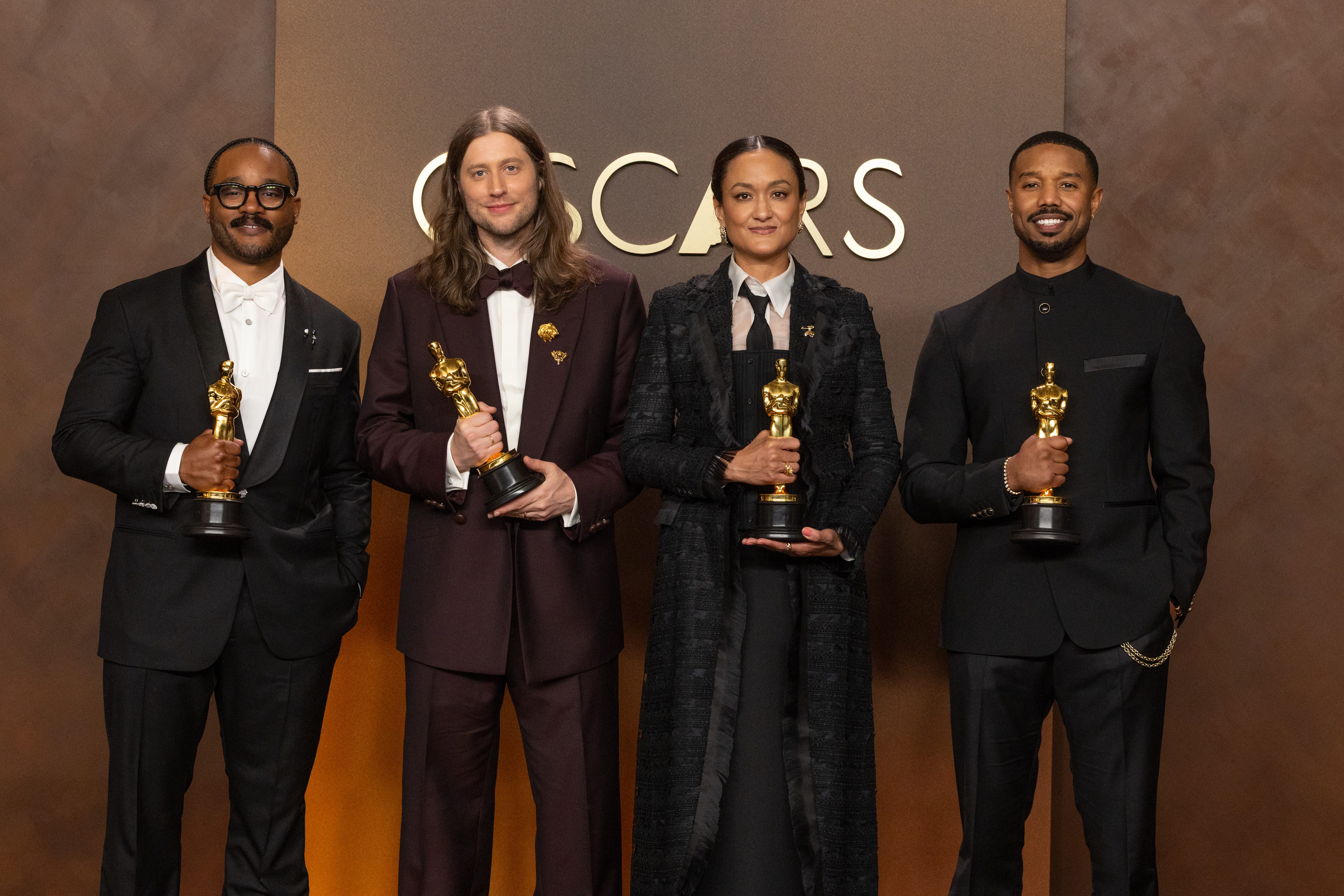
Here’s another take I may come to regret: In years to come, I believe that One Battle will be remembered with greater reverence than Sinners, a wonderful but flawed film that will mark the first step in a career that is hurtling towards golden statuettes. Ryan Coogler, having now directed a successful string of blockbusters in all manner of genres and franchises, has achieved Christopher Nolan levels of box office influence. Between Creed, the Black Panther films, and now Sinners—his first original screenplay since Fruitvale Station, and his first at blockbuster scale—Coogler has proven himself able to command marquee audiences based on his name alone. I predict that Coogler, like Nolan, who directed eleven films and pulled in billions of box office dollars before winning his Oscars, will have his time in the Oscar sun. On the other hand, if PTA didn’t win on Sunday night, he likely would not have won at all. It was his time.
This isn’t to take away from any of the trophies Sinners took home. The wins for Score, Cinematography, Original Screenplay, and Best Actor resulted in some of the night’s best moments, not least of which included Autumn Durald Arkapaw—the first woman and person of color to win Best Cinematography—asking all the women in the audience to stand in honor of the work that came before her, as was Michael B. Jordan’s astonishing (and deserved) win for Best Actor, marking a deserved triumph over Timothée Chalamet.2 Coogler’s win for Best Original Screenplay moreover solidified him as a blockbuster filmmaker par excellence, and as the nicest man in Hollywood. He will be a force for good over the coming decades.
This was an excellent Academy Awards.3 Between One Battle After Another and Sinners, the Oscars managed to straddle the line between high art and mass entertainment, and while their Best Picture decision may have erred on the art side of things (a continuation for this phase of the Academy) that decision was also hedged against Sinners’ very conspicuous wins. It was a tit-for-tat battle that split the difference between The Critics and The People—a hopeful indicator that the future of Hollywood filmmaking is in good hands.
Despite being released exclusively on Netflix, both Frankenstein and KPop Demon Hunters pulled massive viewership numbers, and are worth including in this list.
MBJ’s win was, much like PTA’s, the right choice at the right time. Unlike Chalamet, whose stature and import will grow into Academy Award maturity over the coming years, Jordan’s time in the Oscar limelight is less certain. Now is the best chance he has to win, and it was right that he took it home for his dual performance as the Smokestack twins—it’s his most enduring performance to date, and a worthwhile awardee.
More specifically, the awards were excellent; the telecast was not. Conan’s opening monologue was a dud compared to last year’s, and the onstage bits from celebrity presenters ranged from decent to atrocious.
No posts
Comments
Nothing yet. Say the first thing.
Sign in to join the conversation.