
Among the many reasons for Sinners’ success at both the box office and the 2026 Academy Awards was that this movie—which released in the historically middling month of April—was, in fact, a movie. Which is to say that this Delta blues vampire musical was not a franchise play or an unasked-for sequel, but a movie, in the classical, crowd-pleasing sense of the word in which audiences are entertained and transported, exchanging the mundanity of their present world for a time and place both beguiling and unfamiliar. Coogler’s film entertained and engrossed its way into the hearts of average moviegoers and Academy voters alike—not just because of its qualities as a film, but also on the sheer unexpectedness of being such a damn good time.
I know I sound something like an AMC spokesperson trying to resurrect the Nicole Kidman speech from its untimely death, but I do believe it is worth waxing lyrical about the success of original blockbusters in a market that struggles to keep them around.1 Case in point: Project Hail Mary, a deeply imperfect film, is exactly the kind of big-budget thrill ride that deserves celebration. Here is a well-made blockbuster that justifies its $200 million budget with sweeping visual grandeur, practical special effects, and a movie star performance by Ryan Gosling that earns its stripes. It is a sign of hope for the future of original (or at least non-franchise) blockbusters, and a sign that actor-driven spectacle can drive revenue as much as spandex and capes.
Airplane Mode is a free weekly newsletter that provides film reviews, analysis, and cultural commentary. Subscribe to get my writing sent straight to your inbox!
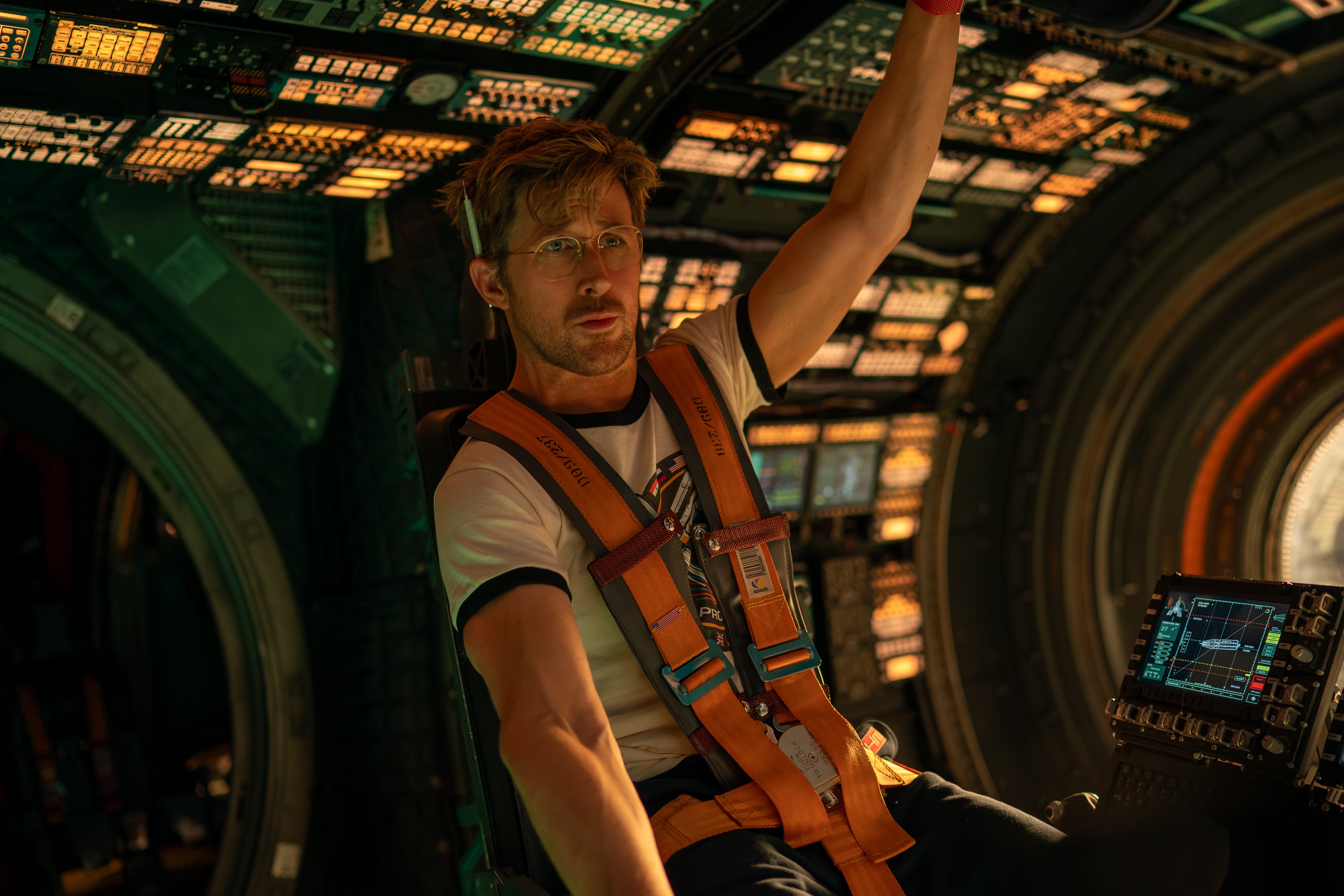
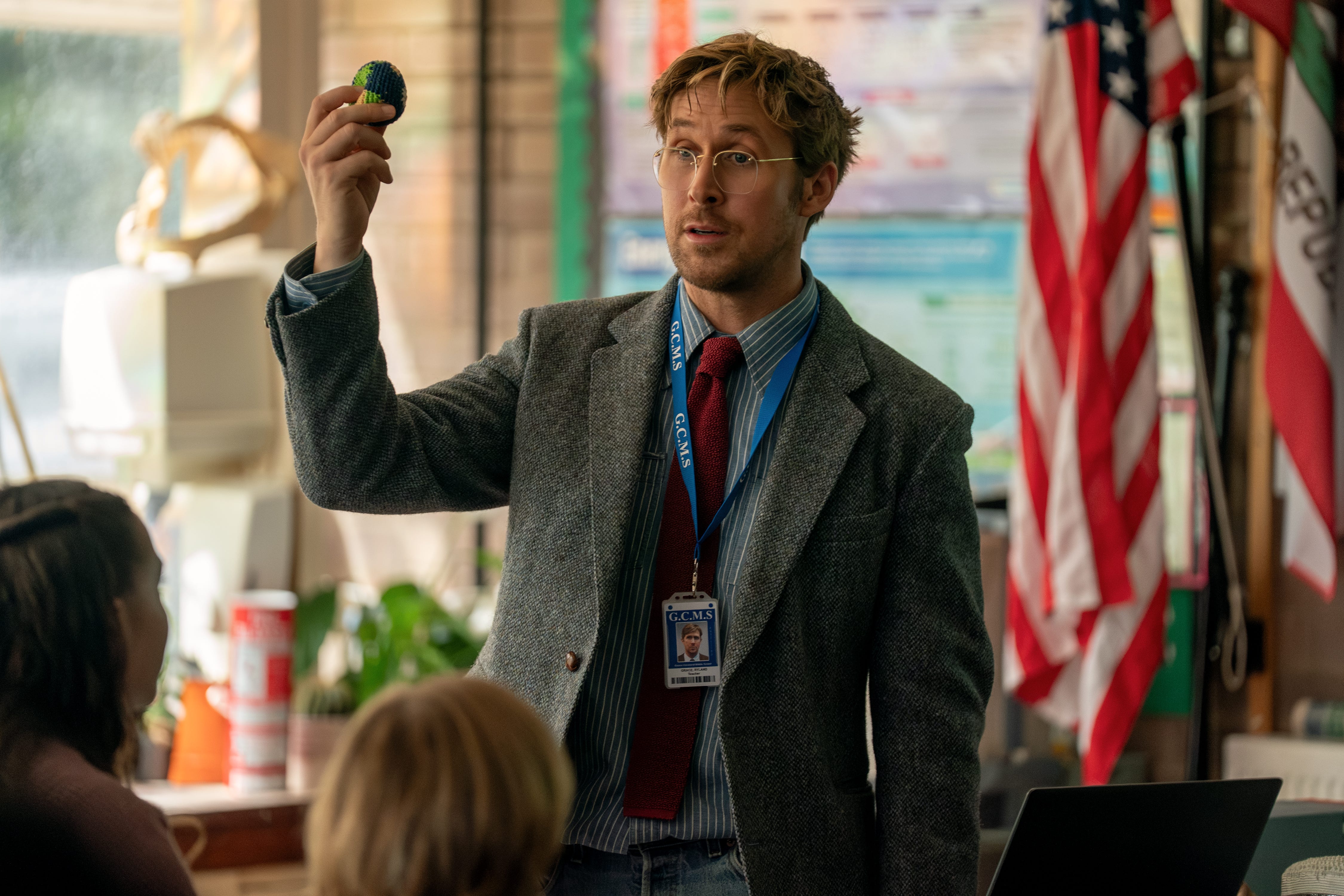
Adapted by Drew Goddard from Andy Weir’s novel of the same name, Project Hail Mary treads a very similar path to 2015’s The Martian—another film adapted by Goddard from the eponymous Andy Weir novel. Then as now, a lone scientist finds himself stranded from his crew after an interstellar mission gone wrong: Dr. Ryland Grace (Gosling) awakens from an induced coma aboard a spaceship with no memory of how he got there. Through flashbacks, we learn that Grace was a molecular biologist-cum-middle school teacher (à la Walter White) who was recruited by the U.S. government to help study Astrophage, a star-eating microorganism threatening life across the entire galaxy. Astrophage, as it turns out, is consuming stars across the entire galaxy, and will soon do much the same to the sun, putting all life on Earth on a 30-year countdown clock to destruction. This inevitably leads to a do-it-or-die ultimatum from Eva Stratt (Sandra Hüller), head of what comes to be known as the Hail Mary project: using the Astrophage as intergalactic fuel, Grace must embark on a suicide mission to Tau Ceti, the only star in the galaxy inexplicably unaffected by Astrophage.
This setup works largely on the back of Gosling’s funnyman appeal, upon which directors Phil Lord and Christopher Miller are willing to hoist the entirety of the film’s act of intergalactic prayer. A substantial portion of the film’s runtime centers on Dr. Grace monologuing against the grand, lonely spectacle of outer space, which Lord and Miller render with a childlike wonder that is aided suitably by Daniel Pemberton’s verging-on-treacly synth score. Gosling’s stardom here is centered less on personal backstory than many of his contemporaries: where other leading men would relish in the historical details that made their characters who they are, Dr. Grace is presented almost as an enigma—an everyman charmer whose likeability will override any feelings of unfamiliarity. By centering so much on Gosling, the film runs the risk of making his joke-a-minute schtick overbearing. But Lord and Miller, ever the disciples of Steven Spielberg, know just when to counter Marvelesque humor with a sense of scale.
A similarly Spielbergian inspiration can be found in Rocky, the five-legged, mineral-laden alien who Grace meets upon his arrival in Tau Ceti. The middle chunk of the film is defined by Grace and Rocky’s attempts to connect with the other, both logistically and emotionally: they build bridges between the other’s ships, they translate their respective languages, and eventually they bond as they attempt to investigate the anomaly of Tau Ceti and solve their shared Astrophage problem. (Rocky’s home planet is faced with similar star-eaten annihilation.) For an alien creature, Rocky is surprisingly human, which is to say that he is a wonderfully empathetic creation: the product of extensive handmade puppetry by James Ortiz (who also provides the alien’s translated-by-AI voice). The lack of VFX artists and green screens here is evident and deeply felt—there is a handmade quality to Rocky that makes the relationship between human and rock-creature feel as believable as it does. Rocky is an indelible creation.
The film falters as it transitions into its third act, which is when its overextended runtime fully reveals itself. At 156 minutes long, Project Hail Mary runs a good 20-30 minutes longer than it should; the film eventually finds itself stuck in a neverending series of emotional climaxes whose sincerity is never quite earned. Lord and Miller’s feel-good sensibility—they possess an insistent need to show the audience a good time—eventually grows tiring, and we never fully invest ourselves in Dr. Grace’s self-sacrificial arc because the directors refuse to take it that seriously. A last-ditch suicide mission that spanning galaxies and lightyears should feel weighty and significant, but 80% into the film’s runtime, Gosling is still cracking jokes, and Pemberton’s score morphs into syrupy pop music.
It’s a frustratingly saccharine end to an otherwise entertaining potboiler, though on the other hand, sentimentality is clearly what the filmmakers were aiming at. Project Hail Mary is fundamentally a crowd pleaser, and while that doesn’t absolve it of its cloying emotionality, it is more worth celebrating the film’s triumphs. Like Sinners, this is a movie whose familiar genre frameworks are deployed with creativity and artisanship, resulting in a hit film that bridges the gap between critical and box office success. The film took home a sensational $140 million at the global box office this past weekend, marking the first genuine box office smash from Amazon MGM studios, who have managed to turn a popular novel into a blockbuster megahit. In our post-COVID, post-merger filmgoing landscape, the notion that a star-driven science fiction epic as well-constructed as Project Hail Mary might succeed is a shock to the box office wisdom of the past decade, and a sign of hope that something other than franchises can keep the theatrical experience alive. (And if the Sinners comparison extends to the end of the year, who knows—Project Hail Mary may have a shot at a Best Picture nomination.)
Thanks for reading Airplane Mode! This post is public so feel free to share it.
Two weeks ago, I wrote a disparaging review of “Wuthering Heights”, and while I stand by those opinions, I should have done more to celebrate the film’s success. A steamy adaptation of a 179-year-old English novel might still technically be IP, but is still far more original than the regurgitative drivel Marvel pumps out twice a year.
Comments
Nothing yet. Say the first thing.
Sign in to join the conversation.