
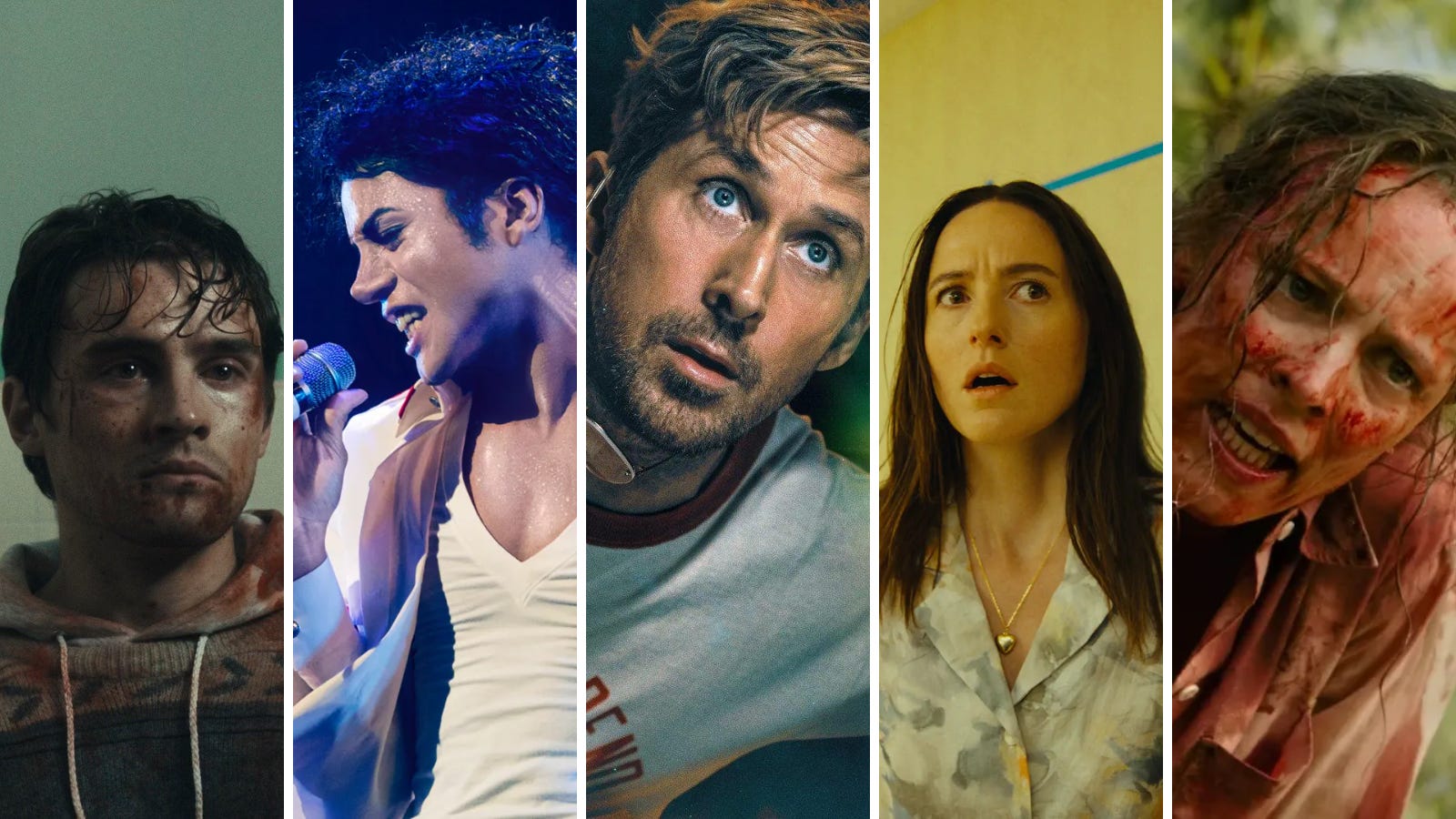
Hear ye, hear ye! There is good news to share! Moviegoing in the first half of 2026 is HOT!
Have you felt it? Have you seen Project Hail Mary, or The Drama, or Obsession, and felt that moviegoing is not just limping forward on the backs of zombified franchises and IP plays upon which Hollywood has now depended for decades?
Because lemme tell ya: I have! For the first time since 2019, it feels as though the American box office has achieved something akin to genuine health, with a steady balance of mid-budget risk-takers—including some lovely overperformers—and megabudget franchise films. Of the ten highest-grossing domestic movies of the year through the end of June, at least half are what I would deem “non-cynical IP” plays—films whose originality of vision supersede their corporate greed.1 And while a 50% hit rate might feel poor at first glance, it’s far better than we’ve been getting in years past. Consider 2024, when every single movie in the top 10 was a sequel. (How far we have come from those dark days.)
At this time last year, I decided against writing a “Best of the Midyear” post, the nominal reason being that the first half of the movie year tends to be much worse than the second, so why even write about it? And while that may well prove true at the end of 2026 (as it tends to do) it is striking to me just how much better the first half of this year is compared to the last. So much of this has to do with the power of surprise: If there is a theme to the moviegoing of 2026 to date, it would be that low-, mid-, and even big-budget risks do sometimes pay off—and pay off big—just when they need to.
This year, we have seen a number of films that have bucked the rather depressing trends of cinema’s last decade and a half. With this in mind, I want to spend this midyear post parsing through some of the trends that got us here, and to champion some of the films that have delighted me the most (and if not me, then at least the American box office). Here are the five movies that have helped make 2026 the biggest box office year since the pandemic.

There is nothing more fun to write about than a mid-budget film that performs solidly at the box office. Hence: When a movie like Send Help—a vicious survival thriller from horror maestro Sam Raimi—performs above its box office expectations (it made $94 million on a $40 million budget2), the movie fan inside me is thrilled; it is a sign that the film itself, and just the film itself, was the reason for its own success, rather than some pre-branded IP ploy with baked-in audience appeal. (What a terrible thing to admit that IP-driven slop is the defining mode of theatrical engagement in the 2020s.)
What is it, then, that would bring audiences to watch Send Help in theaters? For one thing, Rachel McAdams, here playing Linda Liddle, a garishly nerdy mid-level manager of a financial management company intent on receiving a long-promised promotion from her recently deceased CEO boss. It’s wonderful to watch a film ask us to believe McAdams could be anything other than beautiful, and she does wonderful work playing up her character’s discomfiting eating habits and wimpish obsession with Survivor. It is equally delightful to watch Dylan O’Brien play Bradley Preston, the douchey inheritor of his father’s financial empire—a caddish bro who ends up disregarding Linda’s promised promotion in favor of someone more, uh, masculine. (“I need somebody who golfs,” quips O’Brien.)
But the real reason that audiences came to watch Send Help, I suspect, comes from the gratuitous violence posited in the film’s trailer. After a business trip gone awry—which is to say, a charter plane ferrying Linda and Bradley to Bangkok goes down somewhere over the Pacific Ocean—our two protagonists are left stranded on a deserted island. With Bradley injured and immobile, Linda’s endless Survivor bingeing suddenly turns her into the alpha, thus converting Send Help into an exceedingly brutal game of cat-and-mouse, and one layered with a delightful dash of rivalrous 1990s gender politics.
Like last year’s One of Them Days, Send Help succeeded amid the historically backwash month of January. That first month is quickly turning into one of my favorite times of the year, as the off-kilter nature of the films released during this time have proven delightfully unpredictable. If we can count on at least one weirdo breakout hit at the beginning of each year, we’re in good hands.
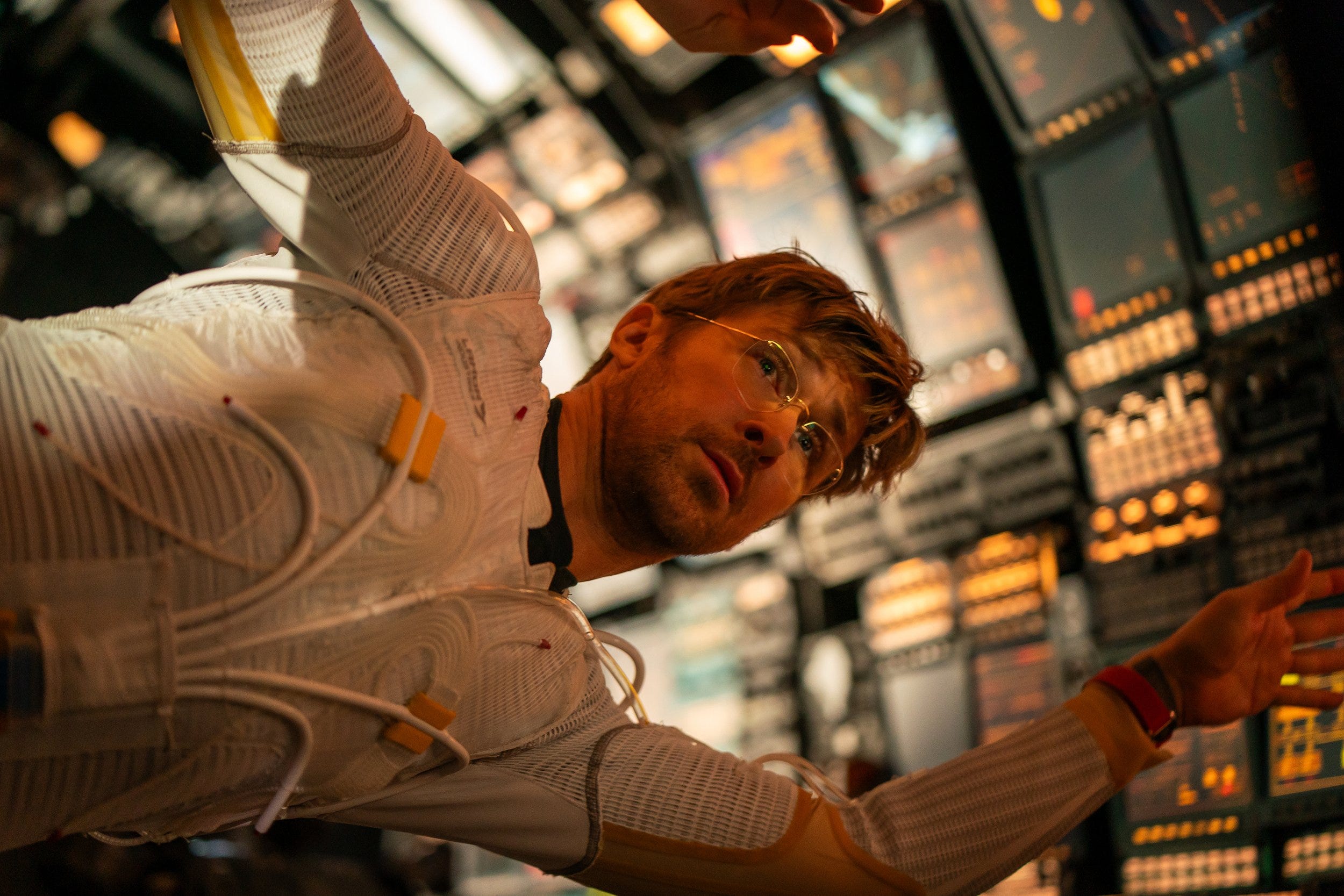
I already wrote a whole review proclaiming Project Hail Mary as a damn good time, a title which in retrospect is much too effusive given the film’s more obnoxious qualities—the treacly dialogue and saccharine synth score are just a few frustrating tendencies in a film hyper-focused on extracting tears directly out of your retinas.
But I was effusive for a good reason, god dammit! It’s thrilling to see filmmakers earnestly construct a non-IP-driven, Close Encounters of the Third Kind-style blockbuster epic through the power of movie stardom and practical effects, and I got carried away! And you know what? Audiences agreed with me! They showed up and showed out to the tune of $680 million worldwide! Let’s fucking go, big dog!
I’m curious to see how long Project Hail Mary will last in the cultural conversation—whether it becomes a Guardians of the Galaxy-esque rewatchable or Yet Another Blockbuster of the 2020s lost to time. Whatever the case (and I suspect the former; the power of Ryan Gosling and a rock puppet in space is substantial), the film’s popularity is an indicator that megabudget filmmaking need not always be so parasitically dependent on IP to be successful.3
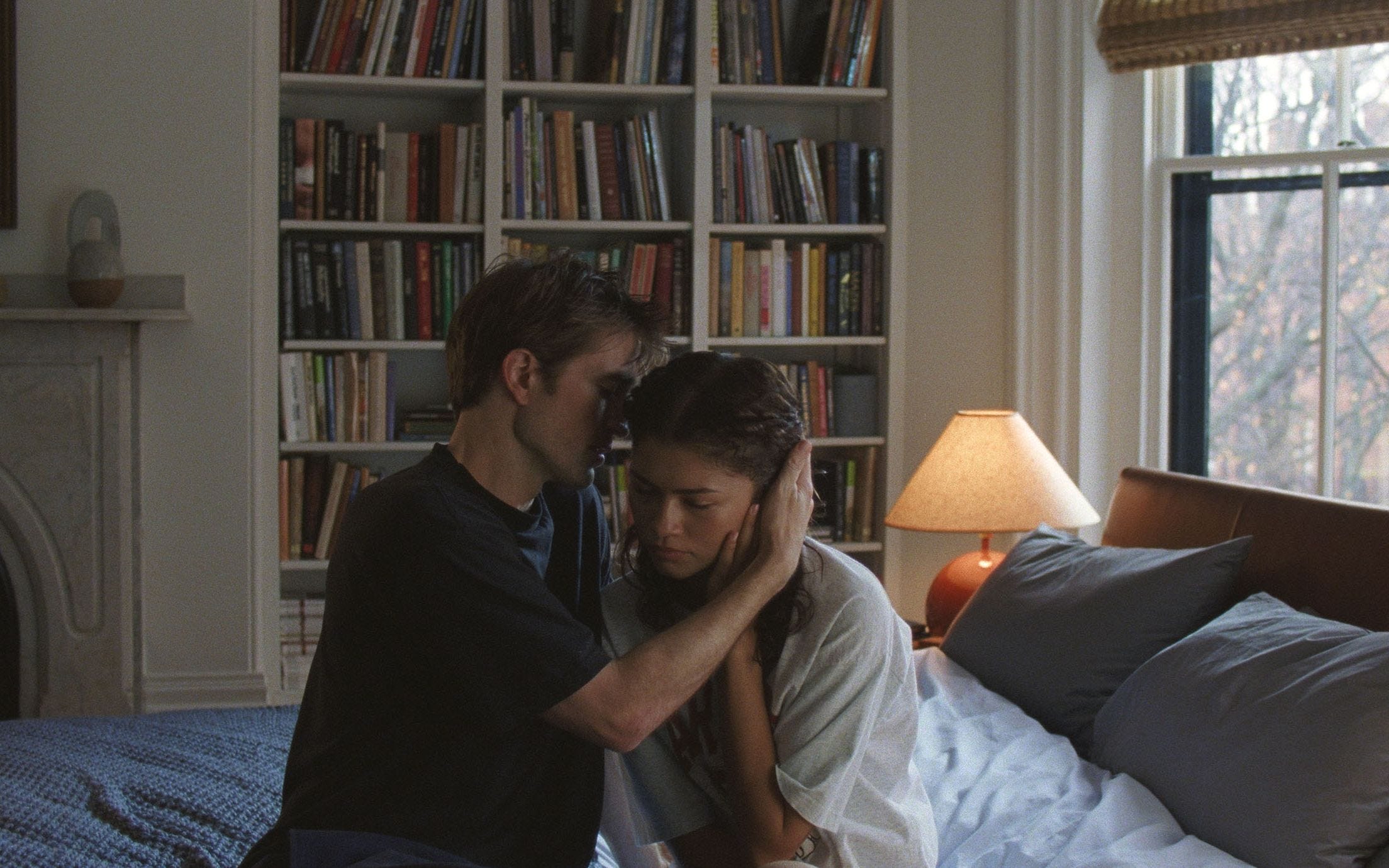
A high-concept cringe-comedy from writer-director Kristoffer Borgli, The Drama catapulted its way to genuine hit status ($132 million globally on a $28 million budget!) on the basis of provocation and taboo—a slightly different mid-budget success story than Send Help, whose box office was predicated on the derangement factor of Rachel McAdams engaging in gratuitous acts of onscreen violence. The Drama, on the other hand, roped in its audiences with a question: What is the worst thing you’ve ever done? And what thing could possibly be horrible enough that would alienate your friends, family, and fiancé?
Such is the question asked of engaged couple Emma (Zendaya) and Charlie (Robert Pattinson) at a dinner held the week before their wedding. The answers from their friends Mike (Mamoudou Athie) and Rachel (Alana Haim) are horrifying (using an ex-girlfriend as a human shield against a rabid dog, locking a mentally disabled child in an abandoned trailer overnight), yet somehow socially acceptable; the two can hide behind the minimal scale of their actions. Yet when Emma confesses to having almost—but not quite—gone through with a school shooting as a depressed teenager, the room is enraged.
The manner in which The Drama negotiates the moral-philosophical questions that arise from such a taboo (which is worse: to have done something terrible, or to have thought of doing something even worse?) is brilliant, not least because the film is less interested in providing straight answers than it is in examining how we respond to them being posed in the first place. As Charlie, Pattinson plays the poster child of anxious masculinity—a tragic dope unable to cope with the social detritus of his bride-to-be’s newly unveiled thought crime.
Here is a social problem rom com with a deliciously cynical edge, and one whose commercial success depended on the right phrasing of its hot-button issue. Put another way, it needed a good marketing campaign, and while it certainly helps to have two of the world’s biggest stars on the front of your movie poster, The Drama’s hit is primarily the result of a captivating trailer that left viewers wondering what possible act of evil could cause Rob Pattinson to fall out of love with Zendaya, of all people. That’s a difficult gambit to live up to, and one that is surmounted with the impossibly tricky subject of school shootings—a topic so forbidden, it had to be seen in theaters to be believed.
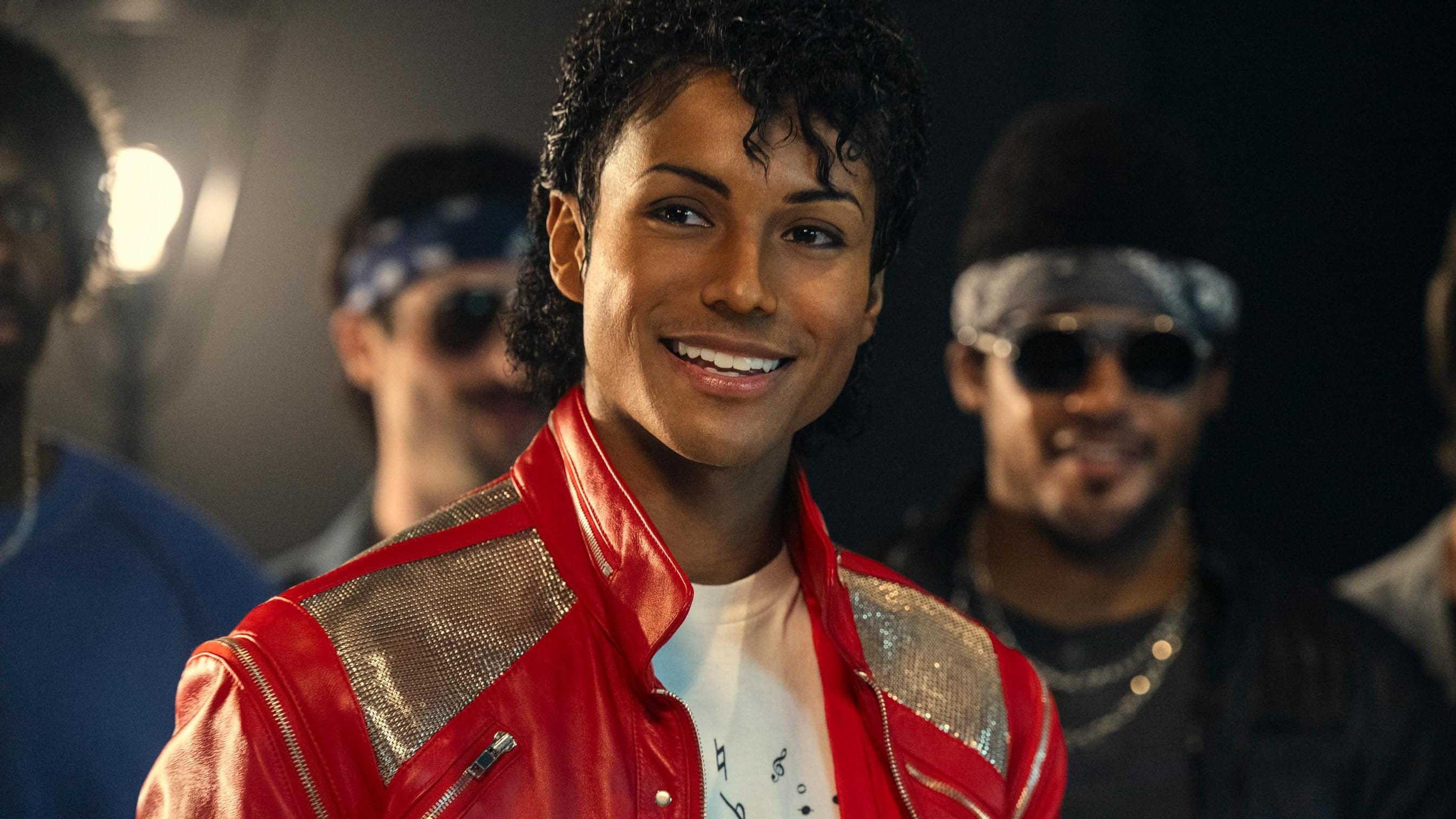
Unlike the preceding movies on this list, and despite being the second film to surpass $1 billion at the global box office in 2026 (after The Super Mario Galaxy Movie, go figure), Michael is not an achievement worth celebrating. The film is bad, plain and simple, but is a case in which audiences will happily ignore bad screenwriting and deliberate misrepresentation of the truth in favor of spectacle and musical recreation. And to the film’s credit, there is spectacle. Jaafar Jackson (playing his uncle, Michael) has all the moves, and director Antoine Fuqua is more than willing to magnify his moonwalk with sweeping camera moves and movie star close-ups. They are a potent pair who know how to accentuate the singular power of a Jacksonian hip thrust—the two would surely make millions as Michael Jackson impersonators on a multi-year Las Vegas residency. But the spectacle is vapid and dumb, deifying its Christ-like musical subject just like all the other hagiographical pop biopics of recent memory.
Not that any of this is surprising! Bad music biopics have been essential box office currency over the past few decades, so it makes perfect sense that a biopic about Michael fucking Jackson would become the genre’s highest grosser ever. Yet it is still worth considering Michael in its contemporary context. At a transitional time in which blockbusters like The Mandalorian and Grogu, Supergirl, and Minions & Monsters are struggling at the global box office—a time, in other words, in which the ore at the bottom of the Star Wars, superheroes, and Minions mines has finally run dry—Michael is evidence that nostalgia still sells—so long as it hasn’t been sold to us a million times before.
It is frankly remarkable that this is the first MJ biopic we’ve ever seen,4 but the fact that it is the first means that it is, for general audiences, a fresh piece of IP to chew on. Having overplayed the franchises that have made them billions of dollars over the past two decades, Hollywood must now go in search of new IP to make them money. Michael fit the bill. (It’s worth noting that this “new to them” logic could surely be applied to videogame franchises (The Super Mario Galaxy Movie) and millennial nostalgia (The Devil Wears Prada 2). But I have not seen these movies, So I will not comment.)
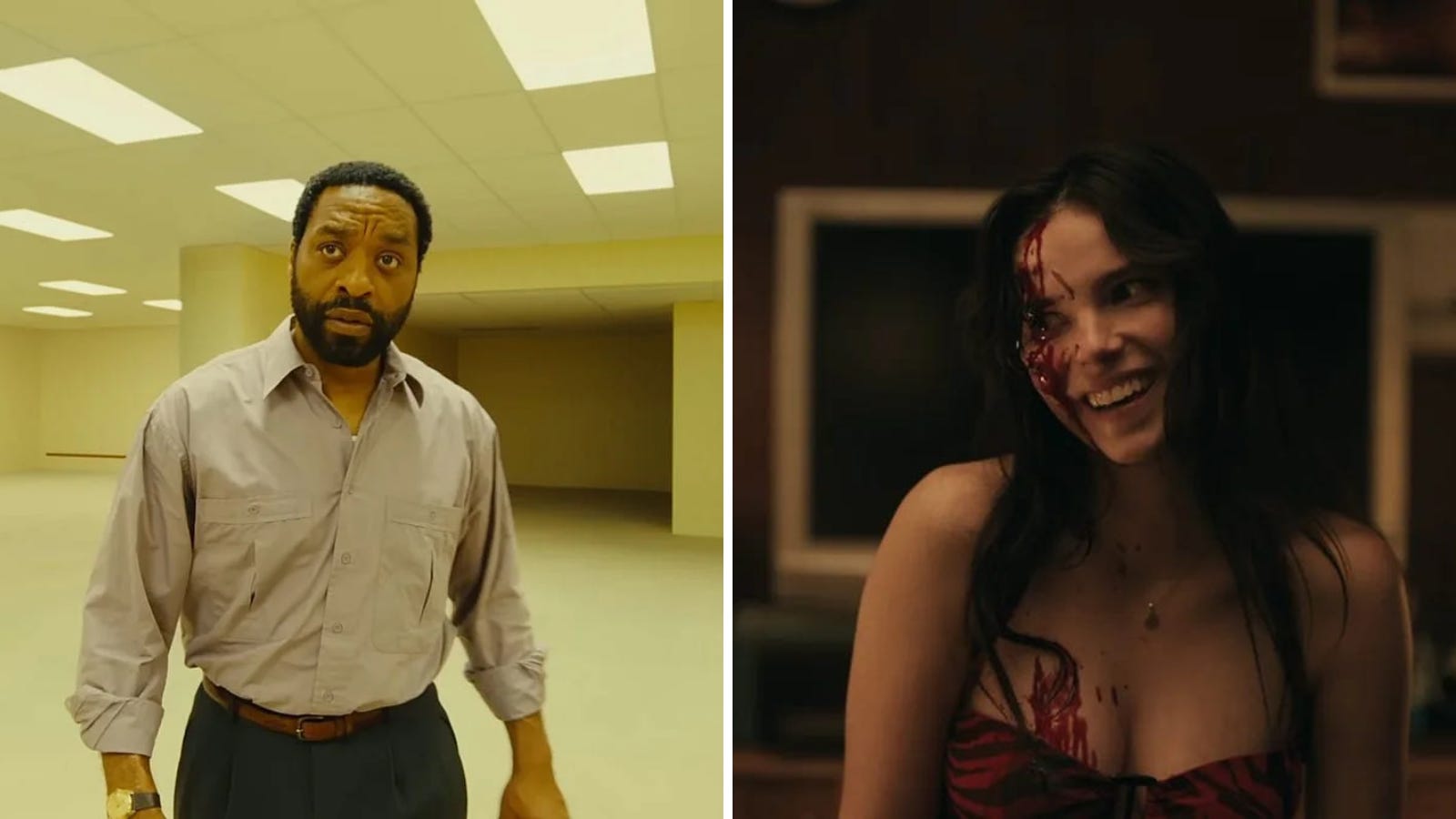
I’m tying Obsession and Backrooms together here, which is perhaps a wrong-footed gesture given the obvious differences between the two, and indeed because the simultaneity of their release inspired a whole bunch of “Gen Z YouTube Filmmakers Are Taking Over!!!!” thinkpieces that massively overinflated the supposed YouTube-to-Theatrical pipeline—a concept that I’m not convinced is real, or at least well enough understood, in the first place. On the other hand, their simultaneous release did lead to an upswell in Gen Z movie attendance, and perhaps more importantly the recognition that Gen Z has already been leading theatrical charge for some time now.
But a newfound recognition of Gen Z’s recent box office dominance is not a sufficient explanation for the absurd revenue levels that these two films have brought in since their May debuts. And the numbers are absurd: Obsession has now grossed over $426 million on a budget of $750 thousand, about 75% from people between the ages of 18-25, whereas Backrooms has grossed $368 million on a $10 million budget, with 85% of its audience under the age of 35.
But apart from this box office data—and the fact that Obsession director Curry Barker and Backrooms director Kane Parsons are under-27 filmmakers who began their careers on YouTube—the similarities between the two films end there. Whereas Obsession is a rather traditional hard-R horror flick about sex, death, desire, and coercion, Backrooms is something altogether different, and altogether new: a big-screen adaptation of a tremendously popular internet horror phenomenon known as the Backrooms: a series of neverending extradimensional interior spaces, fluorescently lit and cavernous.
With this in mind, Backrooms’ success makes perfect sense, and certainly more than Obsession. In its opening weekend, Backrooms made $80 million—a tremendous pull—before falling off a cliff in week two. For an IP-based release such as this (remember: Backrooms is IP!5), a front-loaded release such as this is to be expected.
Obsession, on the other hand, has found incredible success as a micro-budget endeavor acquired out of the Toronto International Film Festival, and is much more difficult to parse. After opening better than expected in its first weekend, the film inexplicably went on to make more money in its second, third, fourth, and fifth weekends—a shocking, gravity-defying statistic, and the first film to do so (outside of Christmas weekend releases) since E.T.: The Extraterrestrial did the same in 1982.
What caused this? What is it about this “Monkey’s Paw”-esque tale of lust and love that has caused such a stir? The honest answer is that I don’t fully know. (How wonderful it is to be in awe of a hit film’s success, to not know from whence it came). As such—and as with Send Help and The Drama—the answer to that question can only be found within the film itself. The very fact of Obsession being a word-of-mouth mega-hit suggests a deep subtextual power; there is a feeling that the film has expressed something unexpressed; it said something that needed saying.
As the film tells us, that something has to do with desire, masculinity, and punishment. Obsession follows twentysomething Bear (Michael Johnston), a young man with romantic feelings for his friend Nikki (Inde Navarette), and who, like so many men his age, lacks the wherewithal and self-awareness to express them. Failing to muster up the courage to confess his love, Bear stumbles into a crystal shop and discovers a “One Wish Willow” (it does exactly what it says), and on a whim decides to wish that Nikki loved him more than anyone in the world.
The hard-hitting horror film that follows from that decision traces a fairly predictable path, with Navarette delivering a tremendously unruly performance as the film’s psycho-obsessed girlfriend, into which the film consistently weaves smart, unsettling questions of consent and control. I suspect it is this eerie vision of love—a love created accidentally through the One Wish Willow, but sustained coercively through Bear’s unwillingness to give it up—is the thing that has touched a $400 million nerve. For a generation of young adults who have been plagued by years of internet-derived social perversion—who are only just now beginning to try and establish lasting, mature relationships—there is some sense as to why Obsession would establish such a chokehold on the box office.
But I’d be lying if I said I completely understood the film’s success. Obsession is a well-executed horror concept, and one that I deeply respect—but its mega-hit status (and a reminder that this is a mega-hit film, particularly for its budget) continues to surprise me. The E.T. comparison is here particularly apt. Spielberg’s film is an all-time classic that has established a permanent place in the cinematic pantheon. Obsession, I predict, won’t be substantively remembered for longer than a decade.
I’d love to be wrong, and it is certainly no bad thing that an accomplished, uncompromising horror film like Obsession would be the runaway hit of the year. If anything, the combined successes of Obsession and Backrooms—and all those aforementioned thinkpieces ushering in a new era of horror filmmaking, internet filmmaking, and Gen Z filmmaking—may very well predict the next five years of American cinema. The self-fulfilling nature of public opinion is a powerful force, one that is often able to write its own future. In this interim period of stodgy IP and incumbent young stars, that self-fulfilling prophecy could very well be a good thing. Let’s bring the next generation on board.
Thanks for reading Airplane Mode! Please do share the blog if you enjoyed it, and keep an eye out for more writing to come your way soon.
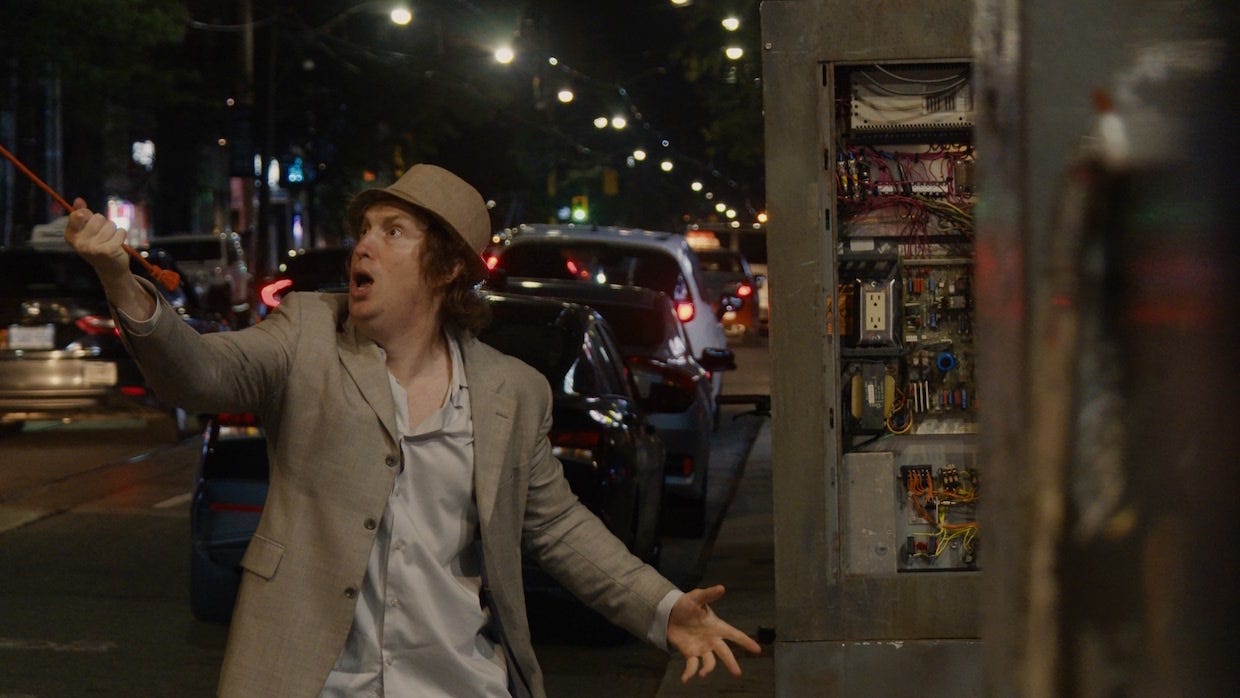
Nirvanna the Band the Show the Movie (Read my review)
28 Years Later: The Bone Temple (Read my review)
Sundays
Renoir
The Stranger
Rose of Nevada
The Drama
Blue Heron
The Furious
Pillion
For example: “Wuthering Heights”, despite being based on a popular novel, is “non-cynical IP”, since Emerald Fennell’s deliberate filmmaking vision—terrible though it may be—comes across as authentically her own. Contrast this with The Super Mario Galaxy Movie, Michael, and The Devil Wears Prada 2: films whose raison d’etre stems less from the desire to create good art than the desire to get paid.
Lest I be called out for calling this movie a hit, I should note that $94 million on a $40 million budget does not pass the standard “2.5x its budget” rule of thumb for box office profitability. Send Help still probably made back its money if we include VOD sales and other income sources. But the films is at best a moderate success, and not a smash hit.
You could quibble and say that Project Hail Mary is actually based on IP because it is adapted from a popular novel—or you could just be happy that original novels are getting adapted into well-made blockbusters! (Also: Non-cynical IP! See footnote 1 for more detail.) By this same token, “Wuthering Heights”—a very bad movie—deserves its own round of celebration for turning a 179-year-old novel into a hit film. Literary adaptations are up right now!
Reportedly, the film took so long to make because every major Hollywood studio decided to pass on the film, afraid of engaging with Jackson’s child abuse allegations. I find this astonishing. Warner Bros., Paramount, and Universal weren’t willing to engage with an MJ biopic due to the controversies involved, and instead Lionsgate was able to see the billion dollars lurking behind the American public’s willingness to ignore those facts? Are the major studios seriously not cynical enough to see through that??? (This is a terrible case of Monday-morning quarterbacking, I know; please take these thoughts with several grains of salt. But still—it’s Michael Jackson! The people are more than happy to ignore sex crimes when “Billie Jean” is in the payment plan.)
And is, in its own way a kind of Gen Z, internet-centric mirror image of Michael, which is to say an adaptation of a massively popular and unmined source of IP that is finally getting its day in the sun. The difference, of course, is that—despite some evident flaws, mostly from Will Soodik’s overripe script—Backrooms is actually pretty good, with Parsons cooking up some genuinely unsettling atmospheres that are nicely attuned to the experience of living within the darker corners of the internet. This is a film—and I say this with praise—that could not have been made before the twenty-first century, and which is lent credence through Parsons’ years of experience making YouTube short films on Blender.
No posts
Comments
Nothing yet. Say the first thing.
Sign in to join the conversation.