
I hear “How do we calculate the ROI on AI?” on a regular basis – and ROI is a common marketing tactic for vendors making the case for their products. It makes perfect sense; the Profession is built on measurement, quantification, and on the discipline of turning ambiguity into numbers.
But here is the truth, I recently spoke with a technology leader at a top 25 firm who told me that any ROI numbers he has seen around their AI implementations is BS. Not because the tools are not working, but because the measurement frameworks have not caught up to what AI actually does inside an organization. And the data backs him up. Deloitte’s AI ROI research found that only 29% of executives can measure AI ROI with any real confidence, and that most organizations expecting payback in 7–12 months are actually seeing returns take 2–4 years, with just 6% reporting returns within the first year. We are applying the wrong ruler, and wondering why the measurement feels off.
This is where I think we need to zoom out.
AI is not a capital expenditure with a predictable payback schedule. It is not a software subscription you can run a cost-benefit analysis against in the traditional sense. In fact, AI is collapsing time — the time required to do the work, generate the output, move the information, and make the decisions. Which means the efficiency gains are the consolation prize. The real question is what your firm chooses to do with the capacity and leverage that AI creates, and that is a strategic question, not a financial one.
So if ROI is the wrong frame, what is the right one?
The profession is staring down a structural labor crisis that no amount of recruiting spend is going to solve. A new report from Accounting Today drives the point home: the average company now has 17 open accounting and finance roles, up from five in 2025 and just two in 2024. First-time CPA exam candidates have fallen more than 40% since 2016. These are not fluctuations. These are structural conditions, and they are compounding.
The ROI of AI, in that context, starts to look a lot cleaner. Not because you can show time-to-close improved by 12%, but because AI is the mechanism by which a lean team delivers the work that the market cannot staff. Capacity creation is the return. The firms treating AI as a tool to push more hours through the same model are going to plateau faster than they expect. The firms using AI to rethink what a team of five can actually deliver, that is where the durable competitive advantage is being built.
We are still early, and the measurement frameworks will mature. But I would caution any firm waiting for a clean ROI calculation before they make a decision to implement: the cost of inaction is compounding faster than any model currently captures.
∼Kacee Johnson, Executive Director
For this episode, I sat down with Carla McCall, Managing Partner and CEO of AAFCPAs and past Chair of the AICPA. Carla is one of the most recognized firm leaders in the profession and a voice I have been wanting to bring to this podcast for a long time. Carla has built a reputation for leading with intention: on firm culture, on talent strategy, and increasingly, on how technology fits into the kind of firm she is trying to build for the long term.
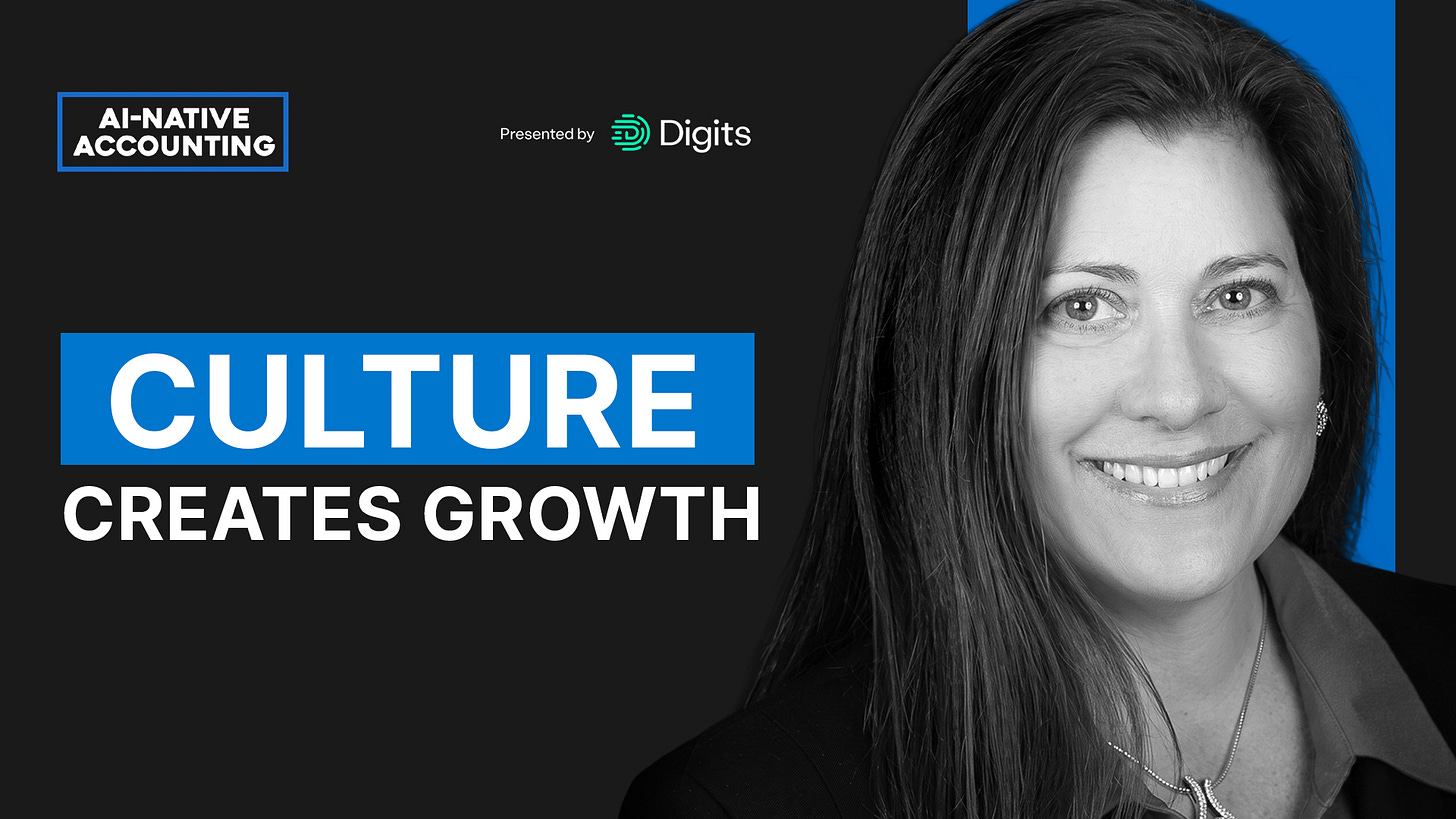
We get into the leadership questions sitting underneath all of the AI noise: what it actually means to lead through this moment, how to hold the line on culture while the operating model is shifting, and why the firms that get this right are probably not the ones chasing every new announcement.
A few things we explored:
• Why its critical to not separate AI strategy from your people strategy
• What it takes to build a firm people actually want to be a part of
• How AAFCPAs has continued to remain independent and drive organic growth
• The leadership posture required to move fast without losing who you are as a firm
Stream it now on YouTube or your favorite podcast platform. CPE is available via Earmark. Watch the full episode here.
Bonus! At the end of every episode we wrap with some rapid fire questions. Unfortunately, we had to cut some of Carla’s due to a copyright concern, but its well worth the watch: see what got cut here.
The inaugural AINA Awards have been decided. After closing nominations and putting the Advisory Council through a rigorous review process, we are proud to announce that winners will be revealed live at the Scaling New Heights Conference, directly before the Monday morning keynote. If you are attending, do not miss it. If you are not, follow us on LinkedIn and we will publish the full list of winners and the stories behind their innovation shortly after.
This inaugural cohort represents something we did not fully anticipate: the breadth of what meaningful AI adoption actually looks like across the profession right now. Our Advisory Council had this to say about the process:
“What stood out most in reviewing this inaugural group of award recipients is how broad the field of AI adoption has become. From sole practitioners to top-25 firms, leaders of every size are making meaningful progress. The firms and individuals we recognized are proof that size is no longer a barrier to doing something significant with AI. Whether you’re a one-person practice or a national firm, the opportunity is the same, and so is the urgency. There has never been a better time to start.”
— Barry Brown, Founder of EBITDA Advisors
“It was a pleasure to review the innovative applicants and vote to select these winners. While many more could easily win, this represents the best of the best.”
— Randy Johnston, Founder of NMGI Group
The accounting profession’s talent gap is not going away, and bolt-on AI tools are not solving the problem. This report from Fieldguide makes the case for a fundamentally different model: AI agents embedded directly inside engagement workflows, not layered on top of them. If you are thinking seriously about how your firm’s operating model needs to evolve, this is worth the read.
If you want one document that separates signal from noise on AI right now, the Stanford Human-Centered AI Institute’s annual AI Index is it. The 2026 edition is the most comprehensive independent look at where AI actually stands — across research, industry, adoption, policy, and public trust — and it is produced by academics with no commercial agenda. Download it free from Stanford.
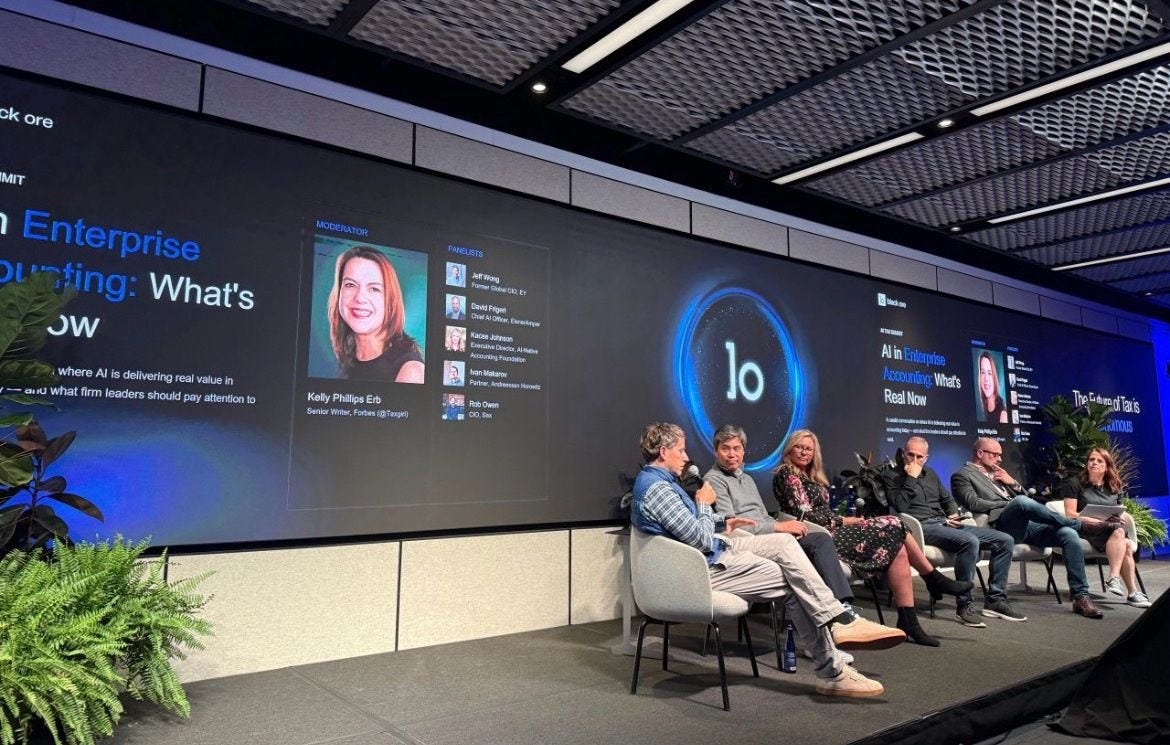
I joined the panel on Enterprise AI at Black Ore’s AI Tax Summit at the Nasdaq Tower in New York City — and it was one of the more substantive conversations I have been part of this year on where AI and tax are actually heading. The room was full of firm leaders and financial services executives who are actively building, not just evaluating, which made for a different kind of conversation than most conference panels.
Got a question or topic suggestion?
Comments
Nothing yet. Say the first thing.
Sign in to join the conversation.