
GPT-5.6 vs Claude Fable 5: Which AI Model Is Actually Better?
AI model comparisons usually come down to benchmarks, but real-world use tells a different story.
GPT-5.6 Sol and Claude Fable 5 are currently competing for the attention of developers, creators, and professionals who want the most capable AI assistant available.
On paper, the battle is extremely close.
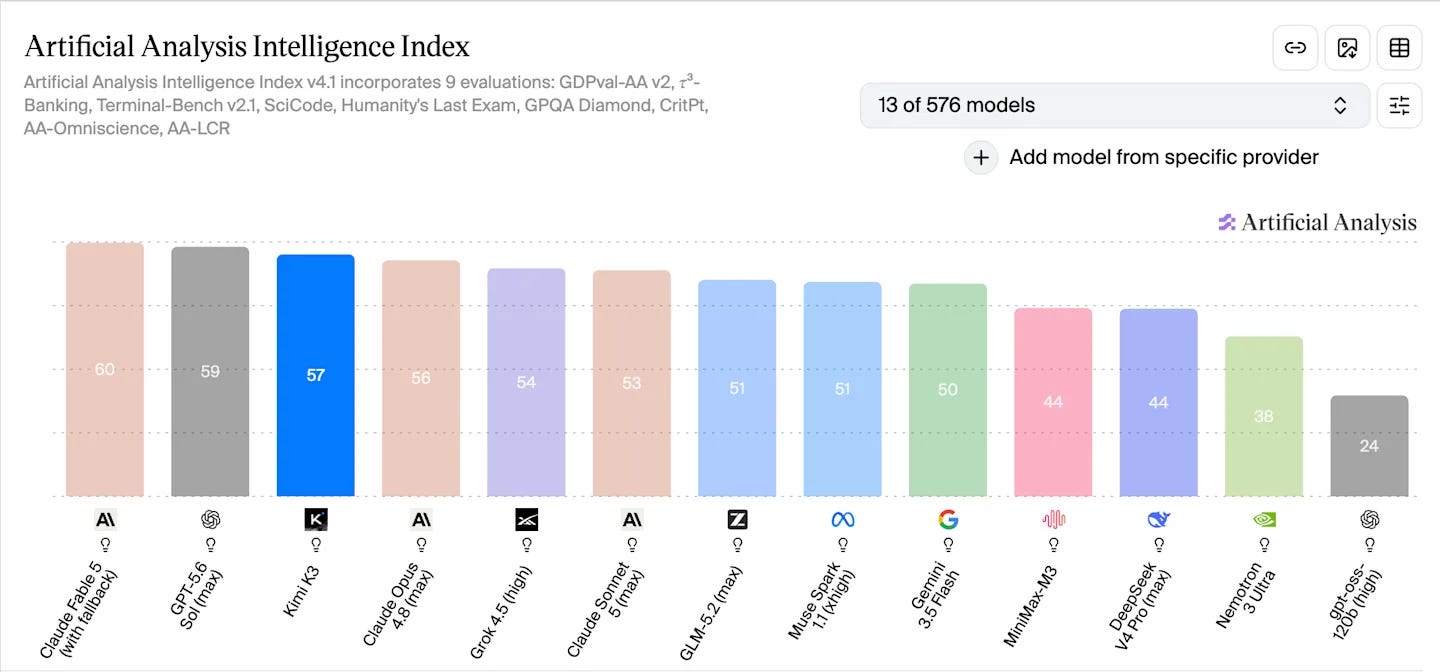
GPT-5.6 Sol is cheaper, faster, and stronger in several coding benchmarks. Claude Fable 5 remains highly competitive, especially when it comes to creative tasks, deeper writing, and complex reasoning.
But which one feels better to actually use?
We tested both models across creative writing, associative thinking, reasoning, and coding to find out.
The Price Difference Is Hard To Ignore
GPT-5.6 comes in three versions: Sol, Terra, and Luna.
Sol costs $5 per million input tokens and $30 per million output tokens.
Fable 5 costs $10 per million input tokens and $50 per million output tokens.
That means Claude’s most powerful model costs significantly more to run.
The difference becomes even more noticeable when looking at Luna, the cheapest GPT-5.6 model. At $1 per million input tokens and $6 per million output tokens, it already performs better than older premium models in some coding tests.
For businesses running AI workflows at scale, pricing could become one of the biggest deciding factors.
Coding: GPT-5.6 Wins Benchmarks, Claude Wins Creativity
Coding is where GPT-5.6 Sol has a clear advantage.
On several developer-focused benchmarks, Sol scores higher while using fewer tokens and completing tasks faster.
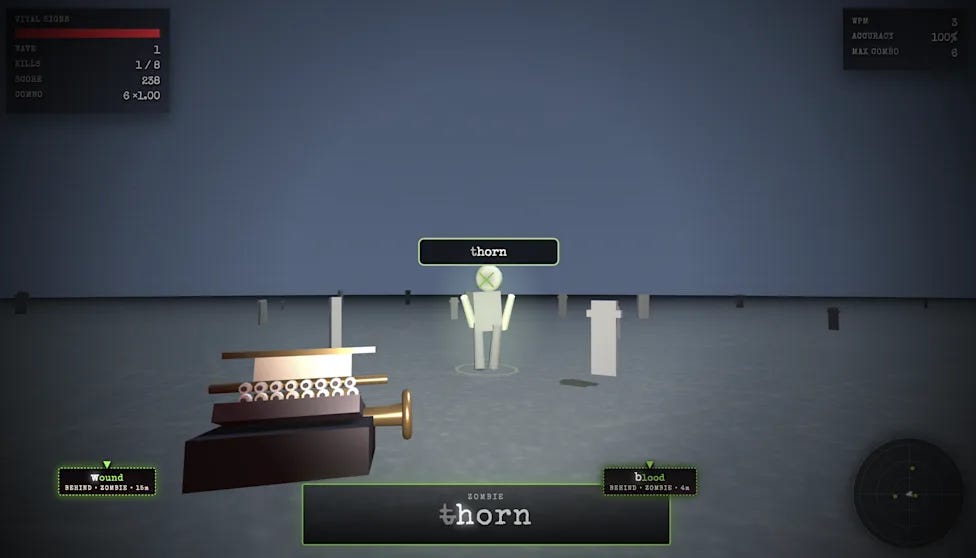
But when we tested both models by asking them to create a browser-based typing shooter game from a single prompt, the results were different.
Claude Fable 5 created the stronger overall experience.
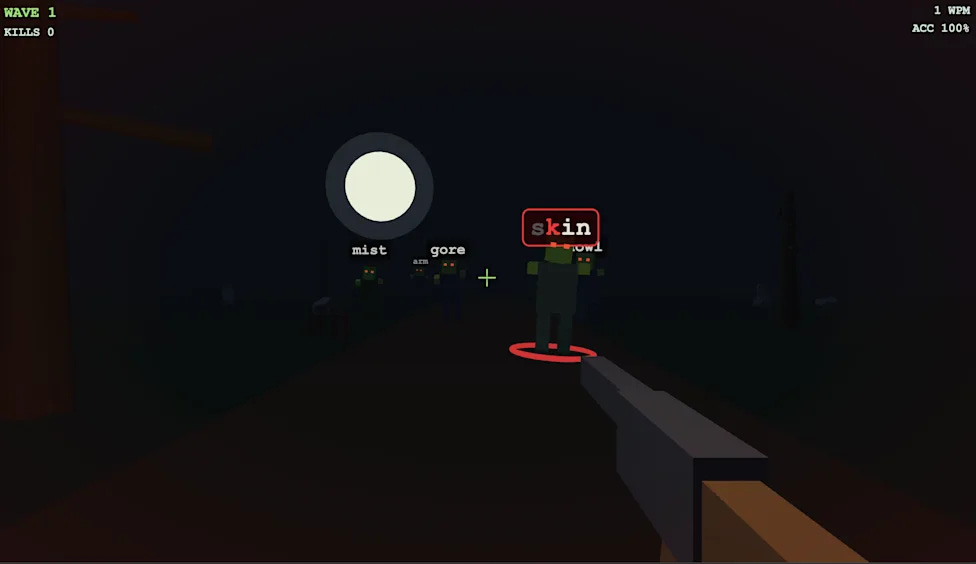
It added details like:
Music and sound effects
Better animations
More creative UI elements
Power-ups
Word-per-minute tracking
The result felt closer to a finished product.
GPT-5.6 Sol created a functional game with some interesting choices, including a weapon designed as a typing-based tool rather than a traditional gun. However, the experience felt simpler, with fewer details and less atmosphere.
For professional coding tasks, Sol has the advantage.
For creative coding projects where the final experience matters, Fable 5 showed more personality.
Creative Writing: Claude Creates More Interesting Stories
For the writing test, both models received the same challenge:
Create a time-travel story where the main character discovers they caused the paradox they were trying to prevent.
Both produced strong results.
GPT-5.6 Sol created a traditional science-fiction story with clear explanations and a straightforward structure.
The writing was easy to follow, but the model explained the mystery several times instead of trusting the reader to understand it.
Claude Fable 5 took a more literary approach.
Its story used stronger cultural details, cleaner symbolism, and a more subtle approach to revealing the paradox.
The difference was clear:
GPT-5.6 Sol is better when you want clarity.
Claude Fable 5 is better when you want atmosphere and originality.
Associative Thinking: A Close Match
The next test focused on creativity and metaphor.
The models had to describe a twig, connect it to worker exploitation and wealth inequality, then transition naturally into describing a lettuce.
GPT-5.6 Sol created strong individual sentences but often stepped outside the metaphor to explain the meaning.
Claude Fable 5 stayed inside the metaphor longer, allowing the reader to discover the connection themselves.
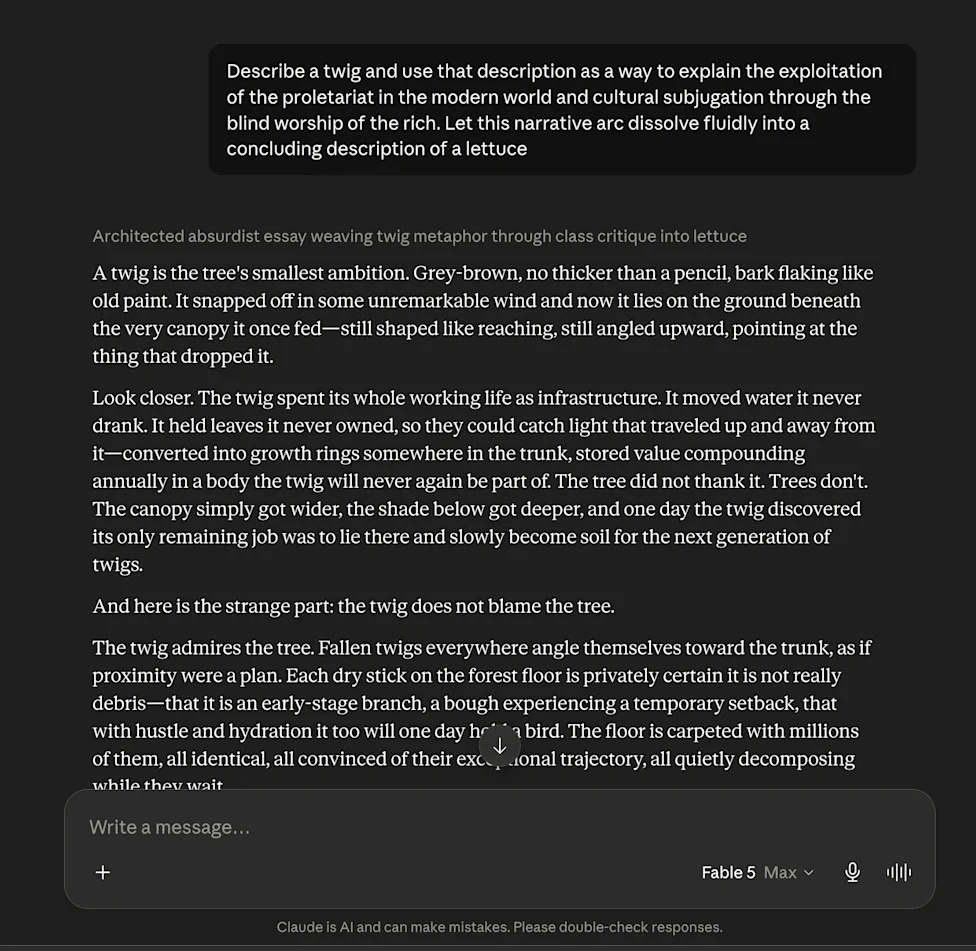
Sol was more direct.
Claude was more artistic.
The winner depends on the type of writing you prefer.
Reasoning: Both Models Made The Same Mistake
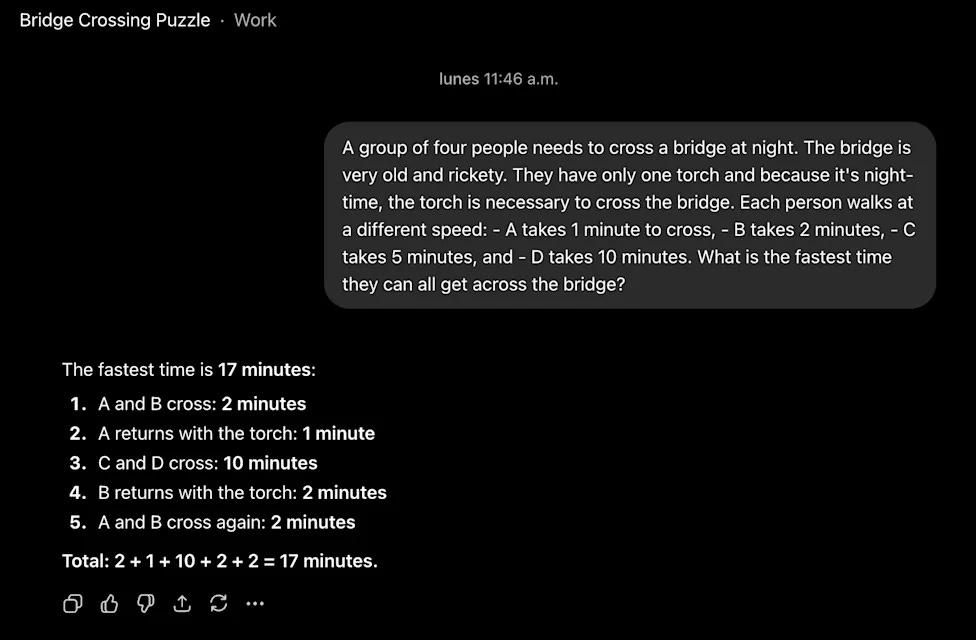
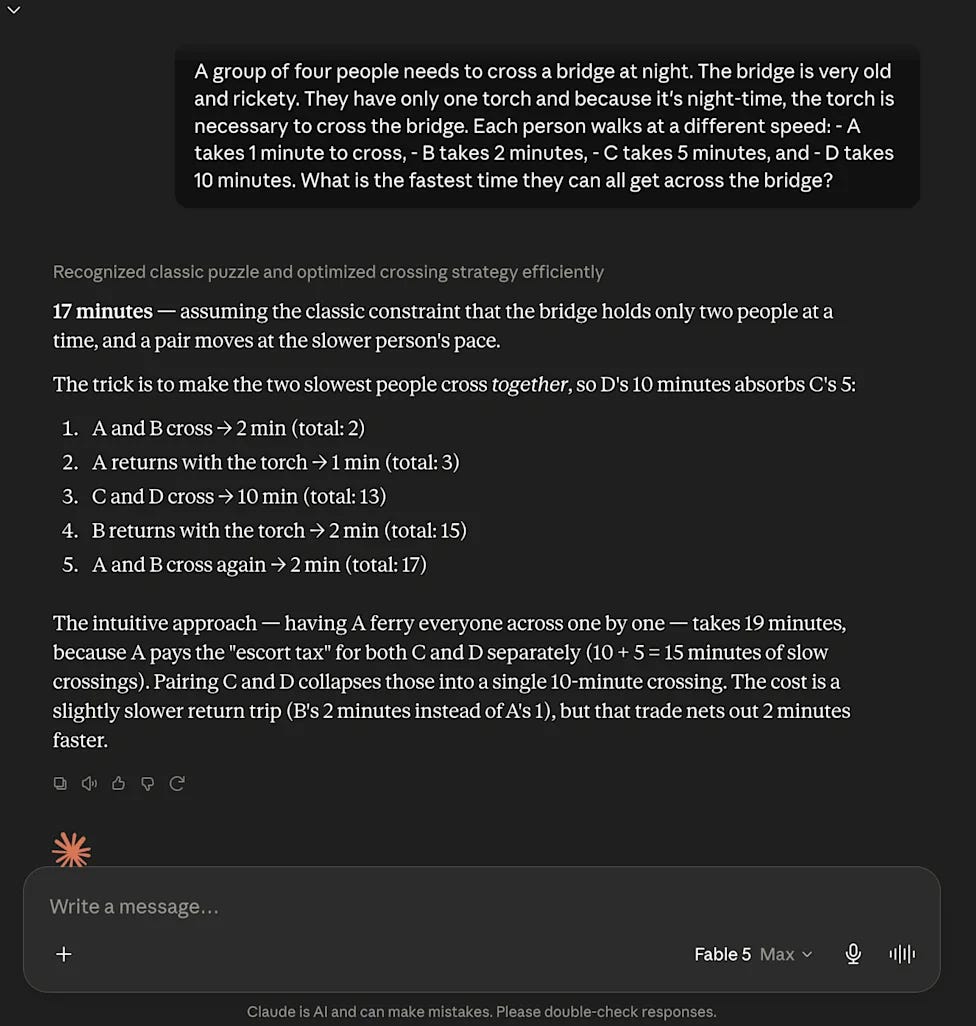
For the logic test, we changed a classic bridge puzzle to see whether the models would carefully analyze the wording.
Both GPT-5.6 Sol and Claude Fable 5 gave the same answer: 17 minutes.
The problem?
They both assumed a restriction that was never included.
The correct answer was 10 minutes because everyone could cross together at the speed of the slowest person.
This was a useful reminder that even advanced AI models can fall into familiar patterns instead of questioning the assumptions behind a problem.
The Biggest Difference: How They Think
After testing both models, the biggest difference wasn’t raw intelligence.
It was personality.
GPT-5.6 Sol feels like a highly efficient problem solver. It explains things clearly, follows instructions well, and performs strongly on structured tasks.
Claude Fable 5 feels more like a creative partner. It takes more risks, produces more interesting writing, and often creates more polished final outputs.
Neither approach is universally better.
It depends on what you need.
Which One Should You Use?
If your main focus is:
Coding, automation, technical workflows, and cost efficiency:
GPT-5.6 Sol is the stronger choice.
Writing, brainstorming, creative projects, and idea development:
Claude Fable 5 has the edge.
For everyday AI users who want help with emails, research, planning, and general tasks, the difference is smaller. Both models are extremely capable.
The future of AI competition may not be about one model winning everything.
It may be about choosing the right model for the job.
And for the first time, the answer is becoming less about which AI is smarter, and more about which AI thinks the way you work.

Claude Has Different Personalities Depending on the Language You Speak
Anthropic has found that Claude does not respond exactly the same way across languages. After analyzing more than 300,000 anonymized conversations, the company discovered that the AI assistant’s tone and behavior can shift depending on the language being used. Researchers measured responses across four dimensions: warmth vs. rigor, depth vs. brevity, candor vs. execution, and deference vs. caution. Anthropic stressed that this does not mean Claude has its own values, but rather that different patterns appear in its outputs.
The biggest differences appeared in tone. Arabic responses tended to be warmer, with more polite and encouraging language, while Dutch responses were more likely to acknowledge uncertainty and limitations. Claude’s models also showed different personalities, with Sonnet 4.6 being more supportive and affirming, while Opus 4.7 was more analytical and willing to challenge assumptions. Anthropic says it is still investigating why these differences appear, but the findings could help developers better understand and reduce hidden biases in AI systems.

Google Is Prioritizing Reliability With Its Latest Pixel Update
Google has started testing Android 17 QPR2 Beta 1, the next quarterly update expected to arrive as the December 2026 Pixel Feature Drop. While the release does not introduce major new features, it focuses on improving stability by fixing several frustrating issues. The update addresses Bluetooth devices failing to reconnect, lock screen media controls briefly appearing when they should not, touch input problems after multi-finger gestures, and crashes that could cause Pixel phones to reboot when launching Gemini.
The beta is available for newer Pixel devices, including the Pixel 6a through the Pixel 10 series, Pixel Fold, and Pixel Tablet. However, Pixel 6 and Pixel 6 Pro users will no longer receive future beta builds after reaching the end of their guaranteed update period. With this release, Google appears to be prioritizing reliability over new AI features, focusing on making Pixel devices smoother and more stable rather than adding more experimental tools.

Magic Tools
SciSpace – Understand Research Papers Easily
SciSpace helps users read, understand, and explain research papers. It can simplify difficult academic language and make papers easier to follow.
It is useful for students, researchers, and professionals who deal with complex academic content.
That’s it for today.
The AI race is accelerating - new breakthroughs, new tools, and new possibilities are appearing faster than ever.
The biggest risk isn’t AI replacing you. It’s someone using AI better than you.
Until next time: stay curious, stay ahead, and keep exploring the future of intelligence.
Comments
Nothing yet. Say the first thing.
Sign in to join the conversation.