
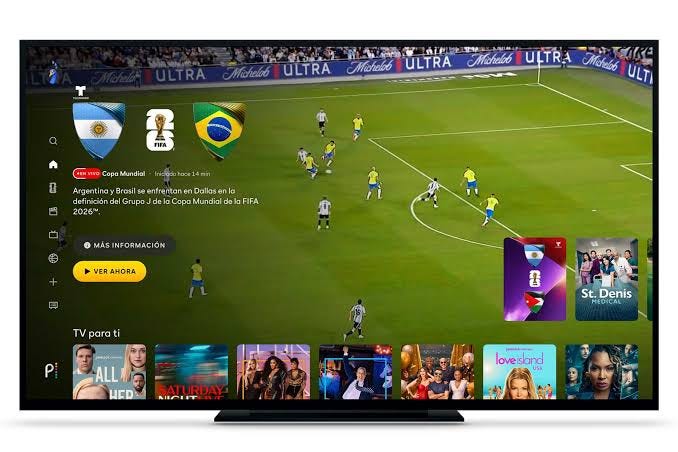
It took me some weeks to figure out what happened in streaming during last month an a half for the World Cup, and I am talking not everything else which filled the media cycle beyond the core sport aspects.
I collected a lot of sources, starting from the great work Dan rayburn does in these occasions and tried to distill some findings.
The 2026 World Cup produced more disclosed streaming and delivery data than any football tournament before it. The basic fact is that this time we had more matches, but that is not the only thing explaining it. It cannot be set against 2022, against the match played three hours earlier on a different network, or in several cases against the same match as counted by the broadcaster next door. Every rights holder published a record, but that does not mean making sense of it was easy, as very few published the same metric twice, and the ones that had a genuinely uncomfortable number simply published something else instead.
The tournament proved that streaming can carry a global live event at a scale nobody had tested before, and it proved at the same time that the industry has no agreed way of describing what happened. FIFA’s fully audited global engagement report, the equivalent of the document that confirmed five billion people engaged with Qatar 2022, has not appeared yet, we will need to wait a bit more and that will be a great guide for this type of analysis. On the Qatar precedent it should land within roughly six to nine months of the final, though a single prior cycle is a thin basis for calling that a pattern. Until it arrives, everything below is assembled from what broadcasters, measurement firms, regulators and infrastructure vendors chose to disclose, which is exactly the point.
Spain beat Argentina 1-0 after extra time on 19 July at New York New Jersey Stadium, Ferran Torres scoring in the 106th minute. Here are ten things to consider about how the world watched it.
We have been reading for years about the battle between streaming and linear. What if not the World Cup in north and central America the reignite the debate.
On 30 June, Mexico beat Ecuador in the Round of 32. Telemundo and Peacock reported a match-window audience of 18.9 million, at that point the largest for a World Cup match in Spanish-language television. Within that window, Sports Media Watch reported a streaming average minute audience of 9.7 million tracked by Adobe Analytics against a linear audience of 8.7 million measured by Nielsen. Those two components do not add up to the headline number, most likely because the linear figure covers Telemundo alone while the tournament totals run across Telemundo, Universo and Peacock, so read them as the two largest parts of that window, with something else making up the difference. It is the first publicly reported instance I can find of streaming exceeding linear for a World Cup match in the United States.
It is a genuine milestone and it arrives with an asterisk that most coverage skipped. The two halves of that comparison come from different companies using different methodologies on different panels, added together by the rights holder. Across the full tournament Telemundo reported streaming at 48% of Total Audience Delivery against 30% in 2022, with a streaming average minute audience of 3 million versus 767,000 four years earlier. Those growth rates are large enough that the methodology quibble does not overturn them.
There is a deeper problem underneath all of it, and Dan Rayburn has been the loudest voice on it: the 2026 tournament is the first World Cup measured under Nielsen’s Big Data plus Panel methodology, and the first measured with Nielsen’s expanded out-of-home viewing sample. Both changes lift reported audiences by design. So every growth figure in this article, and every one you will read anywhere else, sets a 2026 number produced one way against a 2022 number produced another way. Viewership went up. By how much is unknowable, and anyone quoting a clean percentage against Qatar is quoting an artefact of the measurement system mixed in with whatever real growth occurred.
The final itself shows how wide the gap gets. Rayburn totals it at 61.5 million across both broadcasters, combining Fox’s 38.9 million full-telecast average with 22.6 million for Telemundo and Peacock. Sports Media Watch and Front Office Sports reached 66.4 million by taking Fox’s 42.5 million match-only figure and Telemundo’s 23.9 million. Same match, same night, and a five million gap created entirely by which window each publisher chose to count. Rayburn also notes the Fox numbers are final Nielsen figures while the Telemundo and Peacock numbers were preliminary and could still move.
If in the linear broadcast-only era audience number were accepted by all even if the science behind it was at least shaky, with streaming we all expected a huge number of precise stats for great and deeper analysis, just beacuse the technology allows that in theory. Bad news. till not the case.
Fox Sports closed its coverage with a detailed release: 38,937,000 average viewers for the final, a peak of 51,685,000, a tournament average of 7,737,000 across 104 matches on Fox, FS1 and Tubi, up 116% on Qatar under a measurement system that did not exist in Qatar. The digital section runs to seven bullet points covering 17.2 billion content views, 16.5 billion social impressions, 542 million social video views on the day of the final, a 974-hour continuous stream that generated 1.2 billion minutes of watch time, more than two million YouTube comments and a 73% increase in time spent on editorial coverage.
The release carries no Fox One average minute audience, no peak concurrency, no streaming share of the tournament total and no subscriber figure. For the 2022 final, Fox’s most-streamed match carried a published average minute audience of 1.3 million, so a comparable number has existed before and was reported before. Telemundo published 13.9 million for the 2026 final. Dan Rayburn has been consistent all tournament that the absence of a measurement standard is what makes these numbers uncomparable, and his final World Cup episode walked through the different methodologies used by YouTube, CazéTV, TikTok, Fox and Telemundo.
Rayburn puts the streaming share of the combined Fox and NBCUniversal final audience somewhere in the 15 to 20% range. That is an informed estimate from the analyst who follows this most closely, and it is an estimate, which is the situation the industry has accepted for its largest television event. He also notes that Fox never specified which Nielsen methodology produced its figures, while NBC Sports disclosed its full stack: Nielsen Big Data plus Panel, live plus same day, the match window for Total Audience Delivery, and Adobe Analytics for streaming.
beIN Sports, exclusive broadcaster across 24 MENA markets, reported 6.2 billion cumulative viewers across the 39 days on independent Ipsos measurement, with the final drawing 245.4 million viewers, equivalent to 68.6% of the region’s adult population, and 22 matches passing 100 million. Its own streaming platform, beIN CONNECT, recorded 9.9 million cumulative views and a little over 95 million minutes watched across the entire tournament. Set those side by side and streaming in MENA reads as a rounding error on a broadcast business.
This is one of the projects I had my eyes on, and wanted to udenrstand how it delivered after all those promises of being the new thing.
CazéTV, the Brazilian channel run by Casimiro Miguel and owned by LiveMode, held free digital rights to all 104 matches. Brazil’s opener against Morocco on 13 June peaked at 12,693,207 concurrent viewers according to Streams Charts, which measures channels on the general livestreaming platforms it covers, YouTube, Twitch and Kick, and called it the first individual channel outside China past ten million on any of them. The same night took YouTube itself past 20 million platform-wide for the first time at 20,202,476.
The genuine concurrency records sit on the Indian OTT sports apps that fall outside that scope, where JioHotstar peaked at 65.2 million for the India against England T20 World Cup semi-final on 5 March 2026, which the ICC calls the highest ever recorded for a live event on any digital platform.
Other outlets reported the same match at 12.2 million, 12.4 million and 12.7 million. Later matches were reported at 16 million, 17.8 million and 21.2 million depending on the source, and on whether the source was counting viewers, streams or devices. TVU Networks, a vendor, put the tournament peak at 21.2 million concurrent devices and more than 100 million unique devices across the run.
Set that against the same match on traditional television. Globo reported reaching 49.9 million people for Brazil against Morocco across TV Globo, sportv and ge TV, with SBT adding an estimated 15.7 million.
The verdict: free creator-led digital did not (yet) replace broadcast reach in Brazil, but it arrived at a scale that makes it a serious bidder for the future.
Globally, YouTube reported more than 1.7 billion unique viewers of World Cup-related videos, over 550 million of them watching on television sets, and a combined average minute audience above 21 million for the final across its official broadcasts in more than 40 markets, together peaking above 27 million concurrent viewers. FIFA's own channel took more than 4 billion views and 7.5 million new subscribers between 11 June and 19 July, ending the tournament above 34 million subscribers. All of those are YouTube's own platform-defined counts.
The access experiment inside that deal deserves its own note. In March, FIFA named YouTube a preferred platform and gave rights-holding broadcasters the option to stream the opening ten minutes of every match live on their own YouTube channels, plus a small number of full matches depending on territory. FIFA called it game-changing. The stated logic was an appetiser: hook a mobile-first viewer at kickoff and move them to the full broadcast.
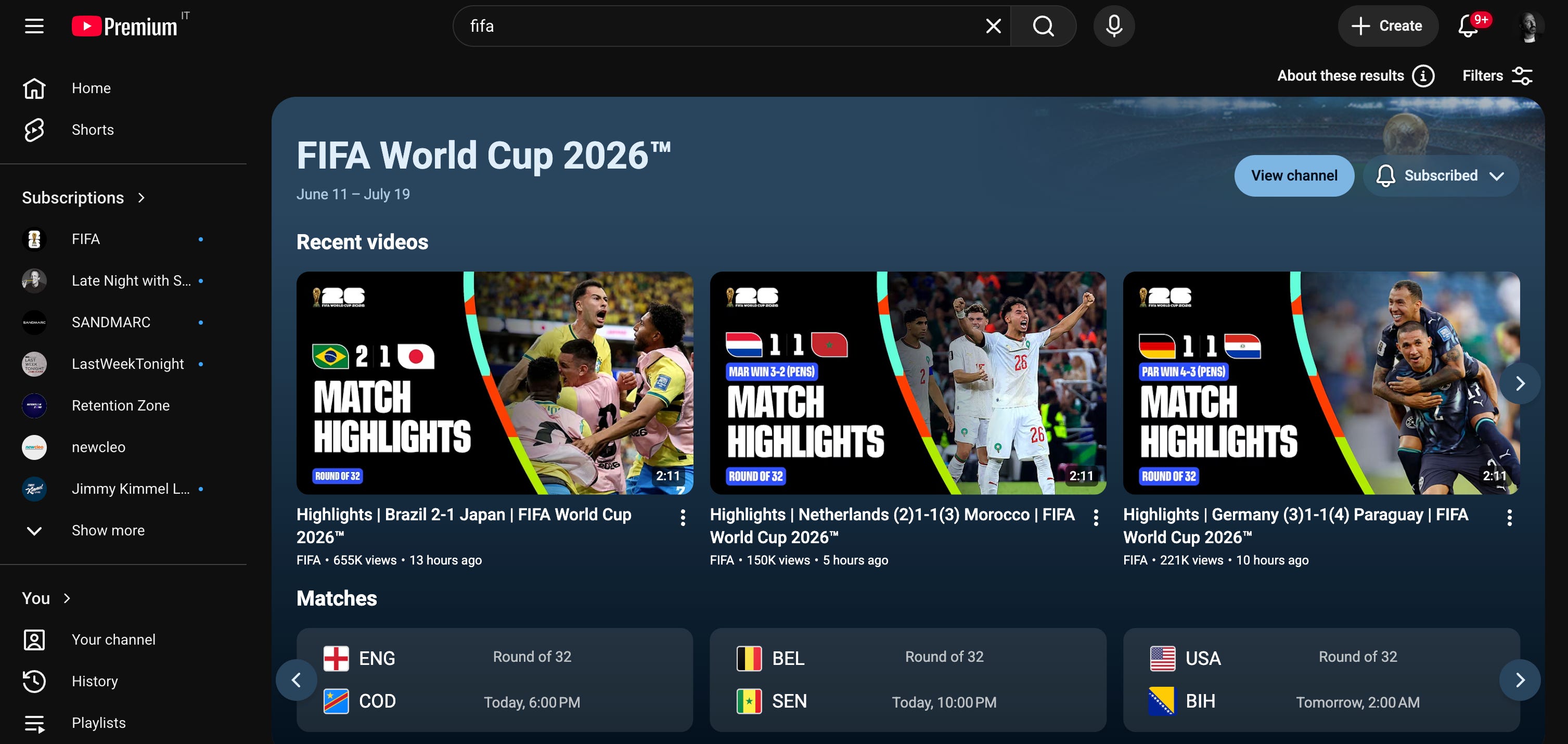
Broadcasters took it up. The BBC ran build-up and the first ten minutes of home nations fixtures and selected marquee matches on the BBC Football YouTube and TikTok channels, and YouTube’s own guide pointed viewers to Fox Sports, Telemundo, TSN, TUDN and Deportes RCN among others. Then the tournament ended and no result appeared from FIFA, from YouTube or from any of the broadcasters I checked. The BBC’s closing release, which is otherwise the most transparent disclosure any rights holder made all summer, reports 100 million views on the new BBC Football YouTube channel, a figure that bundles the ten-minute windows together with digital-first shows, highlights and clips, and separates none of it.
I was really waiting to understand how the 10 minutes idea worked in the end but I guess I do have to sill keep my curiosity at bay for now.
I saw one global record metric on a lot of media and linkedin post and it obviously comes from the infrastructure side of things, which normally, means it has to be partial as no vendor for however big they are can control the whole internet - or do they?
Amazon CloudFront reported delivering more than 117 Tbps as Spain broke the deadlock in extra time, across more than 40 broadcasters and 54 countries, describing it as the largest live-streaming peak in the platform’s history. AWS attributes the surge to replay requests, second-screen clips and viewers hurrying back. The comparison AWS drew is the useful part: the 2022 tournament peaked at 23 Tbps on the same network. More than five times the traffic in a single World Cup cycle. In this case as we are talking about a peak, the 2022 less matches impact is zero.
Opening day hit 35 Tbps, already above the 2022 final. The group stage topped out at 45 Tbps, and nine matches across the tournament went past 70 Tbps. The final beat the semi-final record by 17%, and traffic grew 3.3 times from opening day to the last whistle.
Treat all of it as what it is. This is a supplier publishing selected figures about its own infrastructure, with no independent audit, covering one CDN among several serving a tournament delivered by more than forty different architectures. They are internally measured, unaudited and published to sell a product, which makes them useful, partial, and you-need-to-trust-me-unverified at the same time.
UHD, HDR etc… we have been promised amazing quality for years, and what better occasion than the world cup to make it to fruition.
Meh.
The industry seems to backtrack a bit from the race to the moon is what I have understood.
Host Broadcast Services delivered all 104 matches in UHD HDR, on its own account and those of its technology partners, generating close to 9,000 hours of content from a 45,000 square metre International Broadcast Centre in Dallas, with 45 cameras per match, Verizon carrying around 7 Tb/s of contribution across sixteen venues, a converged ST 2110 network using JPEG XS, and a post-production hub in London. Rights holders receiving content from the IBC could take the main match feed in UHD HDR with immersive audio, or take 1080p HDR, or take 1080p SDR.
Fox took the 1080p HDR flavour and upconverted it. Dan Rayburn reported the workflow change in November 2025 and Fox has never explained it publicly. NBCUniversal confirmed the same approach to CableTV.com, describing Peacock’s 4K presentation as an up-conversion of a 1080p HDR feed. Both platforms marketed every match in 4K throughout, which is a legitimate description of the output and tells you nothing about the capture.
The audio and the dynamic range came out of this better than the resolution did. Peacock carried all 104 matches of Telemundo's Spanish-language coverage in Dolby Vision and Dolby Atmos using Dolby AC-4, which Dolby and NBCUniversal describe as the first commercial deployment of AC-4 by a video streamer, after more than a year of joint engineering to fit Dolby Vision into a live sports workflow.
The BBC took the UHD feed and delivered it, and the delivery data corroborates it. AWS describes a major public broadcaster streaming every match in full ultra-high definition for the first time at any World Cup, at 25 Mbps per stream, reaching 1.43 million concurrent viewers in the UK during the knockouts.
The BBC then published the demand side, which is the part that settles the argument. Across the tournament it recorded 29.6 million UHD stream starts, more than three times the 2022 figure, including 2.4 million for the final alone. Match stream starts reached 237 million across iPlayer and the BBC Sport website and app, against 104.7 million in 2022, with World Cup content accounting for a third of everything streamed on iPlayer. These count sessions begun, which is the BBC’s long-standing methodology, and a single viewer generates several across a match.
Latency is kind of THE buzzword during the world cup, I have done my best through the years to demistify that as possible and also shift the focus on syncronized experiences.
Independent testing by What Hi-Fi during a group match, using two identical 65-inch sets side by side, put Freeview via aerial at 8 seconds behind live, Sky Q satellite at 10, Sky Glass and Stream with the new Real Time feature at 13, standard Sky Stream at 26 and BBC iPlayer at 31. HD and UHD on iPlayer showed no meaningful difference, so the delay sits in the delivery architecture and bitrate has nothing to do with it.
Sky’s Real Time mode cut thirteen seconds off its own streaming delay, and it required the viewer to notice an on-screen prompt and switch to a separate version of the channel. Sky has published no adoption figures, so how many people found it is unknown. Default behaviour for everyone else stayed at twenty-plus seconds behind an aerial. Low-latency HLS and DASH, tuned player buffers and broadcaster-side delivery changes address the same problem, and none of them arrived as the default this summer.
See my latest article on the subject:
I did not have a lot to say on the hydration breaks dilemma - too much has been said already - but now that some numbers are out, why not having a look.
United States advertising revenue around the tournament reached an estimated $1.19 billion according to Guideline, cited by Sportico, up 170% on 2022 (with less matches though). The single largest driver was structural, and technology had nothing to do with it.
Mandatory hydration breaks, introduced for the first time, manufactured the commercial pod that football had never had if compared to traditional US sports.
Be careful with the numbers attached to them, because most of the widely quoted figures are forecasts made while the tournament was still running. The Hollywood Reporter, writing on 22 June from media-buyer estimates, put Fox’s take at a minimum of $250 million with a plausible ceiling of $500 to $600 million, with 30-second spots reportedly selling between $200,000 and $750,000 depending on the fixture and the round. The better figure came later from Sportico, which reported Fox booking close to $200 million in bonus sales during the group stage alone and tracking towards roughly $450 million across the tournament. Set that against a rights fee reported at $485 million. Three minutes of drinking water, twice a match, came close to paying for the entire event.
Combined streaming advertising revenue for Fox and NBCUniversal grew 839% to $166 million. Read those two figures together. After the largest streaming World Cup ever staged, streaming accounted for roughly 14% of the American advertising take.
Fox Sports chief executive Eric Shanks has said he is unsure whether hydration breaks survive into 2030 in Iberia and Morocco. Leagues elsewhere are already looking at them. David Levy, formerly of Turner, told ESPN that going backwards is difficult once the revenue is demonstrated, and if it is not hydration breaks it will be something else.
This is a recurring question if your focus is streaming monetization, especially in a subscription business, as often big sport events are considered a great way to increase long term value, but demonstrating that is still art and science.
Antenna estimated 2.8 million Fox One sign-ups in June, the service’s largest acquisition month since its August 2025 launch, with 400,000 arriving on opening day alone. The previous high was 1.1 million during the NFL playoffs in January. 93% were new subscribers, which Antenna reads as a first-time acquisition event with very little reactivation inside it.
The distribution mix moved sharply, with direct subscription accounting for 40% of June sign-ups. Amazon Channels, which had driven 58% of acquisitions from launch through May, fell to 19%. YouTube Primetime Channels took 15% having only added Fox One on 1 June.
On the other side of the ledger, Comcast’s Q2 results showed Peacock’s first positive quarter in six years at $189 million EBITDA. The retention question gets its first reading in September when the NFL season starts, and it will be a murky one, since pricing, promotions, billing cycles and the rest of the Fox slate all sit inside whatever churn number emerges.
What if not the world cup and the current scenario of smorgasbord of streaming offering in every country, is a great opportunity for piracy, in a variety of forms.
The US Department of Justice concluded Operation Offsides on 20 July, announcing the seizure of more than 1,000 domains across three enforcement waves, the first of which took down close to 400 sites by the end of June. The department itself makes no historical-scale claim. The description of this as the largest sports piracy action in American history, and the comparison against 78 domains seized around Qatar 2022, come from Tech Times, and the DOJ release says neither, so both should travel with that attribution attached.
The international story gives us more info. Running alongside the US action, Operation Red Card coordinated enforcement across Latin America with results that vary enormously by market: 1,140 illegal streaming sites blocked in Colombia, 309 in Brazil, 256 in the Dominican Republic, 223 in Ecuador, 28 in Peru and 14 in Argentina. Europol’s Operation Kratos 2, running from September 2025 to April 2026 with thirteen participating countries, removed more than 27,000 illegal streaming URLs, a count of addresses where one site can carry many, alongside 29 arrests and nine organised crime groups dismantled. The Trustworthy Accountability Group separately pushed for the removal of around 1,400 sites.
A caution before drawing the obvious conclusion. Enforcement totals measure enforcement, so none of this establishes why illegal viewing grew. Audience size, the expanded 104-match format, improved detection and better-funded rights-holder intelligence all plausibly contributed.
This seems the obvious one: fans follow results, if a big nation team is out… streaming traffic may decrease, even if the final still has its own appeal globally. I surprisingly noticed how with the family we may have watched more games than the average when Italy plays, which is now a far memory.
The infrastructure detail that matters most from this tournament has nothing to do with peak throughput. On 12 June, day two, a third-party CDN went down mid-match and a broadcaster failed over live. AWS says CloudFront absorbed the failover and viewers carried on watching, which is a claim about infrastructure continuity from the party that absorbed it, with no independent check on what appeared on anyone’s screen. Taken at face value, that single sentence in an AWS blog post describes the thing every rights holder should actually be buying.
Demand reshaped itself with every result. Latin American broadcasters ran at 2.4 times their tournament average when Argentina played. England matches drove 3.7 times more UK traffic. One Colombian broadcaster entered the group stage at 2.6 Tbps and was at 9.1 Tbps one knockout round later. Origin load ramped between ten and seventeen times in the minutes before kickoff. A fixture list alone forecasts none of that, because it depends on who wins. Capacity planners can model scenarios and ranges across a bracket, and AWS says it pre-positioned capacity and raised concurrency limits ahead of demand, so the work is probabilistic and difficult, and impossible overstates it.
Device behaviour split by market in ways that should reshape encoding ladders. At the moment of the final, connected TV accounted for 65% of US traffic with Roku leading, 61% in London with Samsung dominant, 55% in Germany and 74.5% in Vietnam at 4:57 in the morning. Turkey was the outlier, the only market where desktop beat connected TV, with mobile at 40% and connected TV at 10%.
The largest single global traffic deviation of the tournament came from Argentina against Switzerland in the quarter-finals, ahead of the final and both semi-finals. Request volumes roughly doubled in countries where matches fell between midnight and 8am, since fans who stayed up were online at hours when almost nobody is. And in most markets, traffic rose during halftime and during the hydration breaks themselves, as viewers reached for a second screen in a three-minute gap.
It was a good streaming world cup.
Even if I say it more anedoctally than with data behind it.
It seems we kind of solved engineering 90%.
Live sport streams at global scale now, and it holds.
No industry system is yet in place to tell us how it went exactly.
Is there somebody that could enforce transparency based on a global standard for streaming stats? Do we need it? I would say yes, from my partial observation point.
Some innovations and new streaming experiences started to become mainstream which makes me happy.
In the end, I have to admit I enjoyed the streamed football, also because of my son’s passion for football and my passion to build interactive digital experiences like
https://worldcupbracket.aguywithascarf.com/
Almost every disagreement in this piece comes from people comparing numbers that were never built to be compared. The categories used above:
Average minute audience (AMA). The average number of people watching at any given minute. This is the closest thing the industry has to a like-for-like audience figure, and the one most streaming services avoid publishing.
Total Audience Delivery (TAD). Telemundo’s composite of Nielsen-measured linear viewing plus Adobe Analytics-measured streaming, added together by the broadcaster.
Peak concurrent viewers. The highest simultaneous count at a single moment. Sensitive to whether the platform counts viewers, streams, accounts or devices, which is why the CazéTV figure has four versions.
Reach. The number of individuals who watched for some minimum duration, usually three or fifteen minutes. Much larger than AMA, and the two are not interchangeable.
Stream starts or requests. Sessions begun. The BBC’s 237 million counts these, and one viewer can generate many.
Unique viewers. Platform-defined, based on accounts and viewing signals. YouTube’s 1.7 billion is this, and it is not a Nielsen-style deduplicated audience.
Cumulative viewers. Audiences for individual matches added together across a tournament. beIN’s 6.2 billion counts the same person once per match watched, so it measures viewing occasions across a population of a few hundred million.
Content views and social impressions. Activity counts on any piece of content of any length. Fox’s 17.2 billion is this. It carries no audience information whatsoever.
CDN throughput (Tbps). Bits delivered per second across a network. A measure of infrastructure load, self-reported by the supplier, with no fixed relationship to the number of people watching.
One further caution that sits above all of these. The 2026 tournament is the first measured under Nielsen’s Big Data plus Panel methodology and the first using its expanded out-of-home sample, so United States year-on-year comparisons against 2022 carry a methodology change inside them that nobody has quantified.
Where a figure below is an estimate, a forecast or a supplier disclosure, I have said so in the text.
FOX Records 38.937 M Viewers for FIFA World Cup 2026™ Final, Most-Watched Soccer Telecast in U.S. History: https://www.foxsports.com/stories/presspass/fifa-world-cup-2026-final-etches-place-record-books-most-watched-soccer-telecast-u-s-history
FOX Sports Smashes FIFA World Cup 2026™ Group Stage Records: https://www.foxsports.com/stories/presspass/fox-sports-smashes-fifa-world-cup-2026-group-stage-records-usmnt-global-superstars-shine-bright
Telemundo and Peacock Redefine Soccer Fandom in the US with Record-Breaking Audiences for Spanish-Language Coverage of FIFA World Cup 2026™: https://www.nbcsports.com/pressbox/press-releases/telemundo-and-peacock-redefine-soccer-fandom-in-the-us-with-record-breaking-audiences-for-spanish-language-coverage-of-fifa-world-cup-2026
Telemundo and Peacock Deliver Record-Breaking Viewership of FIFA World Cup 2026™ Group Stage in Spanish: https://www.nbcsports.com/pressbox/press-releases/telemundo-and-peacock-deliver-record-breaking-viewership-of-fifa-world-cup-2026-group-stage-in-spanish
Streaming audience surpasses linear for Mexico’s latest World Cup match on Telemundo (Sports Media Watch): https://www.sportsmediawatch.com/2026/07/telemundo-streaming-audience-surpasses-linear-mexico-ecuador-world-cup/
World Cup Final combines for more than 66 million across Fox, Telemundo (Sports Media Watch): https://www.sportsmediawatch.com/2026/07/world-cup-final-audience-exceeds-66-million-combined-fox-telemundo/
Episode 177: Roku’s Hardware Price Increase; Peacock Turns a Profit; Final FIFA World Cup Numbers from YouTube, TikTok, Fox and Telemundo (The Dan Rayburn Podcast): https://www.danrayburnpodcast.com/1893312/episodes/19551804-episode-177-roku-s-hardware-price-increase-peacock-turns-a-profit-final-fifa-world-cup-numbers-from-youtube-tiktok-fox-and-telemundo
Episode 2: The Sports Streaming Podcast, with Dan Rayburn & Eric Black: https://www.danrayburnpodcast.com/1893312/episodes/19483481-episode-2-the-sports-streaming-podcast-with-dan-rayburn-eric-black
A List of the Largest Live Streaming Events in History and How They Are Measured (Dan Rayburn, StreamingMediaBlog): https://www.streamingmediablog.com/2023/10/largestlivestreaminghistory.html
CazéTV Breaks Livestreaming Record: 12.4M Viewers FIFA World Cup (Streams Charts): https://streamscharts.com/news/cazetv-youtube-new-record
Brazil’s Cazé TV Takes Streaming Into the World Cup’s Big League (Brazil Stock Guide): https://brazilstockguide.com/insights/brazils-cazetv-takes-streaming-into-the-world-cups-big-league/
Part 3 of 4: CazéTV, The YouTube Channel That Became Brazil’s World Football Championship Broadcaster (TVU Networks): https://www.tvunetworks.com/story/part-3-of-4-cazetv-the-youtube-channel-that-became-brazils-world-football-championship-broadcaster/
How a free YouTube channel is using the World Cup to destroy the broadcaster paywall (TechRadar): https://www.techradar.com/vpn/vpn-privacy-security/how-a-free-youtube-channel-is-using-the-world-cup-to-destroy-the-broadcaster-paywall
YouTube Sets Record Audience for FIFA World Cup 2026 (Señal News): https://senalnews.com/en/digital/youtube-sets-record-audience-for-fifa-world-cup-2026/amp
Which country gets the most free World Cup 2026 streams? (Yahoo Sports): https://sports.yahoo.com/articles/country-gets-most-free-world-124504889.html
How Amazon CloudFront delivered traffic for the FIFA World Cup 2026 (AWS): https://aws.amazon.com/blogs/networking-and-content-delivery/how-amazon-cloudfront-delivered-traffic-for-the-fifa-world-cup-2026/
How the 2026 World Cup affected Internet traffic (The Cloudflare Blog): https://blog.cloudflare.com/2026-world-cup-internet-traffic/
World Cup 2026 Internet traffic: which matches moved the web most (Tech Observer): https://techobserver.in/news/business/world-cup-2026-internet-traffic-cloudflare-data-326814/
HBS prepares for record-breaking FIFA World Cup (TVBEurope): https://www.tvbeurope.com/live-production/hbs-prepares-for-record-breaking-fifa-world-cup
How Decentralized Production May Well be the Legacy of the 2026 FIFA World Cup (Sports Video Group): https://www.sportsvideo.org/2026/06/12/how-decentralized-production-may-well-be-the-legacy-of-the-2026-fifa-world-cup/
FIFA World Cup 2026: RefCam, VAR and 45 cameras per match (RedShark News): https://www.redsharknews.com/fifa-world-cup-2026-hbs-broadcast-45-cameras
How JPEG XS powered all 104 FIFA World Cup matches: https://www.design-reuse.com/blog/56390-how-jpeg-xs-powered-all-104-fifa-world-cup-matches/
How To Watch the 2026 World Cup in 4K (CableTV.com): https://www.cabletv.com/sports/watch-fifa-world-cup-in-4k
Ultra HD 4k news on Fox’s World Cup workflow change, via Dan Rayburn:

Ultra HD 4k news 📺@UHD4k
.@FOXSports has made a change to its FIFA World Cup 2026 video workflow. The stream will no longer be in native 4K, as the source feed will now be in 1080p HDR, and upconverted to 4K. FOX didn't disclose why the change was being made. linkedin.com/posts/danraybu… via @DanRayburn
linkedin.com
#streamingmedia #svod #fifaworldcup | Dan Rayburn | 50 comments

7:26 PM · Nov 3, 2025 · 43.5K Views
7 Replies · 6 Reposts · 25 Likes
I tested every major way to watch the World Cup live – here’s which one lags the least (What Hi-Fi?): https://www.whathifi.com/tv-home-cinema/televisions/i-tested-every-major-way-to-watch-the-world-cup-live-heres-which-one-lags-the-least
Streaming live TV isn’t really live - but there’s an easy fix (Pocket-lint): https://www.pocket-lint.com/live-stream-delay-behind-broadcast-fix/
The World Cup generated a record $1.19B in ad revenue. Now comes the TV rights battle (The Current): https://www.thecurrent.com/media/the-world-cup-generated-record-ad-revenue-soccer-tv-rights-battle
The 2026 World Cup broke viewership records. Now what? (The Current): https://www.thecurrent.com/media/2026-world-cup-broke-viewership-records-now-what-soccer-fandom
FOX Sports Reportedly Earned FIFA World Cup 2026 Rights at Discount Over Qatar Tournament Schedule Change (Barrett Media): https://barrettmedia.com/2026/05/26/fox-sports-fifa-world-cup-rights/
FIFA World Cup 2026 delivered big sign-ups for FOX One (Antenna): https://www.antenna.live/insights/fifa-world-cup-2026-delivered-big-sign-ups-for-fox-one
World Cup Spurred 2.8 Million Sign-Ups To Fox One Streamer, June Data Reveals (Deadline): https://deadline.com/2026/07/world-cup-million-sign-ups-fox-one-streamer-antenna-data-1236998864/
United States Seizes Hundreds of Internet Domains Used to Illegally Stream World Cup Matches (US Department of Justice): https://www.justice.gov/opa/pr/united-states-seizes-hundreds-internet-domains-used-illegally-stream-world-cup-matches
Free World Cup Streams Infected Devices: DOJ Seizes 1,000 Domains in Historic Crackdown (Tech Times): https://www.techtimes.com/articles/321142/20260721/free-world-cup-streams-infected-devices-doj-seizes-1000-domains-historic-crackdown.htm
Over 27,000 illegal streaming sites shut down in massive piracy crackdown ahead of World Cup (Dexerto): https://www.dexerto.com/entertainment/over-27000-illegal-streaming-sites-shut-down-in-massive-piracy-crackdown-3374217/
Major Crackdown On Sites Illegally Streaming World Cup Games (Yahoo Sports / The Spun): https://sports.yahoo.com/articles/major-crackdown-sites-illegally-streaming-201434793.html
Fox’s coverage of 2026 World Cup final set U.S. soccer viewership record (NewscastStudio): https://www.newscaststudio.com/2026/07/22/fox-2026-world-cup-final-ratings/
Telemundo says 2026 World Cup sets Spanish-language audience records (NewscastStudio): https://www.newscaststudio.com/2026/07/22/telemundo-2026-world-cup-ratings/
World Cup Final Averaged More Than 66 Million Viewers (Front Office Sports): https://frontofficesports.com/world-cup-final-viewership-fox-telemundo-us-television-soccer-record/
FOX One and Skreens Announce Multiview Technology Partnership (Sports Video Group): https://www.sportsvideo.org/2026/04/17/fox-one-and-skreens-announce-multiview-technology-partnership/
FIFA World Cup 2026™ captivates global audiences (FIFA): https://inside.fifa.com/news/world-cup-2026-captivates-global-audiences
BBC draws 15.8 million audience for World Cup final broadcast (Inside World Football): https://www.insideworldfootball.com/2026/07/21/bbc-draws-15-8-million-audience-for-world-cup-final-broadcast
BBC thrashes ITV in World Cup Final viewing figures (Advanced Television): https://www.advanced-television.com/2026/07/20/bbc-thrashes-itv-in-world-cup-final-viewing-figures/
24 million watch England’s World Cup defeat (IBC): https://www.ibc.org/monetisation/news/24-million-watch-england-s-world-cup-defeat/22794
BBC to show first ten minutes of World Cup fixtures on YouTube & TikTok (Broadcast): https://www.broadcastnow.co.uk/broadcasting/bbc-to-show-first-ten-minutes-of-world-cup-fixtures-on-youtube-and-tiktok/5216915.article
How to watch the FIFA World Cup 2026 on YouTube (YouTube Blog): https://blog.youtube/news-and-events/watch-fifa-world-cup-youtube/
YouTube and Fifa strike ‘game-changing’ World Cup streaming deal (The Independent / AP): https://www.aol.com/news/youtube-fifa-strike-game-changing-140238037.html
World Cup 2026: How to follow on the BBC (BBC Sport): https://sports.yahoo.com/articles/world-cup-2026-bbc-053317353.html
29 arrested as law enforcement strikes criminal networks behind illegal streaming (Europol): https://www.europol.europa.eu/media-press/newsroom/news/29-arrested-law-enforcement-strikes-criminal-networks-behind-illegal-streaming
United States Seizes More than 1,000 Internet Domains Used to Illegally Stream World Cup 2026 Matches (US Department of Justice): https://www.justice.gov/opa/pr/united-states-seizes-more-1000-internet-domains-used-illegally-stream-world-cup-2026-matches
U.S. World Cup Exit Isn’t So Bad for Fox, Thanks to Hydration Breaks (Sportico): https://www.sportico.com/business/media/2026/fox-us-loss-world-cup-ratings-advertising-hydration-breaks-1234938165/
Those World Cup “Hydration Breaks” Have Fox Rolling in Dough (The Hollywood Reporter): https://www.hollywoodreporter.com/business/business-news/world-cup-hydration-breaks-fox-results-scores-1236627644/
Why World Cup hydration breaks have media ‘salivating’ (ESPN): https://www.espn.com/soccer/story/_/id/49326566/hydration-breaks-world-cup-soccer-broadcast-rights
BBC hits 15.8m peak for World Cup Final (Broadcast): https://www.broadcastnow.co.uk/broadcasting/bbc-hits-158m-peak-for-world-cup-final/5218746.article
World Cup Final Ratings Skyrocket Across Europe, Despite England and France Losses (Variety): https://variety.com/2026/tv/global/world-cup-ratings-show-final-big-draw-home-teams-beaten-1236816547/
FIFA World Cup broadcast technology blueprint for the future (Integrated Systems Europe): https://www.iseurope.org/news/fifa-world-cup-2026-broadcast-technology-blueprint-future
2026 World Cup Viewership Numbers Across TV and Streaming Sources (Dan Rayburn, LinkedIn): https://www.linkedin.com/pulse/2026-world-cup-viewership-numbers-tv-streaming-sources-dan-rayburn-s66yc/
Dan Rayburn on the 2026 FIFA World Cup final audience across FOX and NBCUniversal (LinkedIn): https://www.linkedin.com/feed/update/urn:li:activity:7478586025821503488/
How the world experienced the FIFA World Cup 2026 on YouTube (YouTube Official Blog): https://blog.youtube/culture-and-trends/youtube-fifa-world-cup-2026-viewership-stats/
FIFA WC 2026 drives record 6.2bn cumulative viewers for beIN Sports (BroadcastPro ME): https://www.broadcastprome.com/news/fifa-wc-2026-drives-record-6-2bn-cumulative-viewers-for-bein-sports/
BBC Sport case study (Pixotope): https://www.pixotope.com/case-studies/bbc-sport
Comments
Nothing yet. Say the first thing.
Sign in to join the conversation.