
This week, the Aging Almanac is trying something new: its first dedicated book review. I’ve recommended titles before, but always woven into the middle of a piece, in passing. This is the first time I’ve set aside a whole edition for the books themselves — and since summer is when most of us finally sit down with the stack we’ve been promising ourselves, it seems as good a time as any to begin.
I’m sharing three books I’ve read recently and can wholeheartedly recommend: Julian Barnes’s novel Departure(s), Jerald Winakur’s memoir Memory Lessons, and Ezekiel Emanuel’s non-fiction guide to living a long and healthy life, Eat Your Ice Cream. Each comes at the subject of aging from a different direction: Barnes is a writer composing his own ending, Winakur a geriatrician watching the system fail the old, and Emanuel a doctor and public health expert cutting through the wellness noise to what actually helps. Together they turn out to make a surprisingly good conversation.
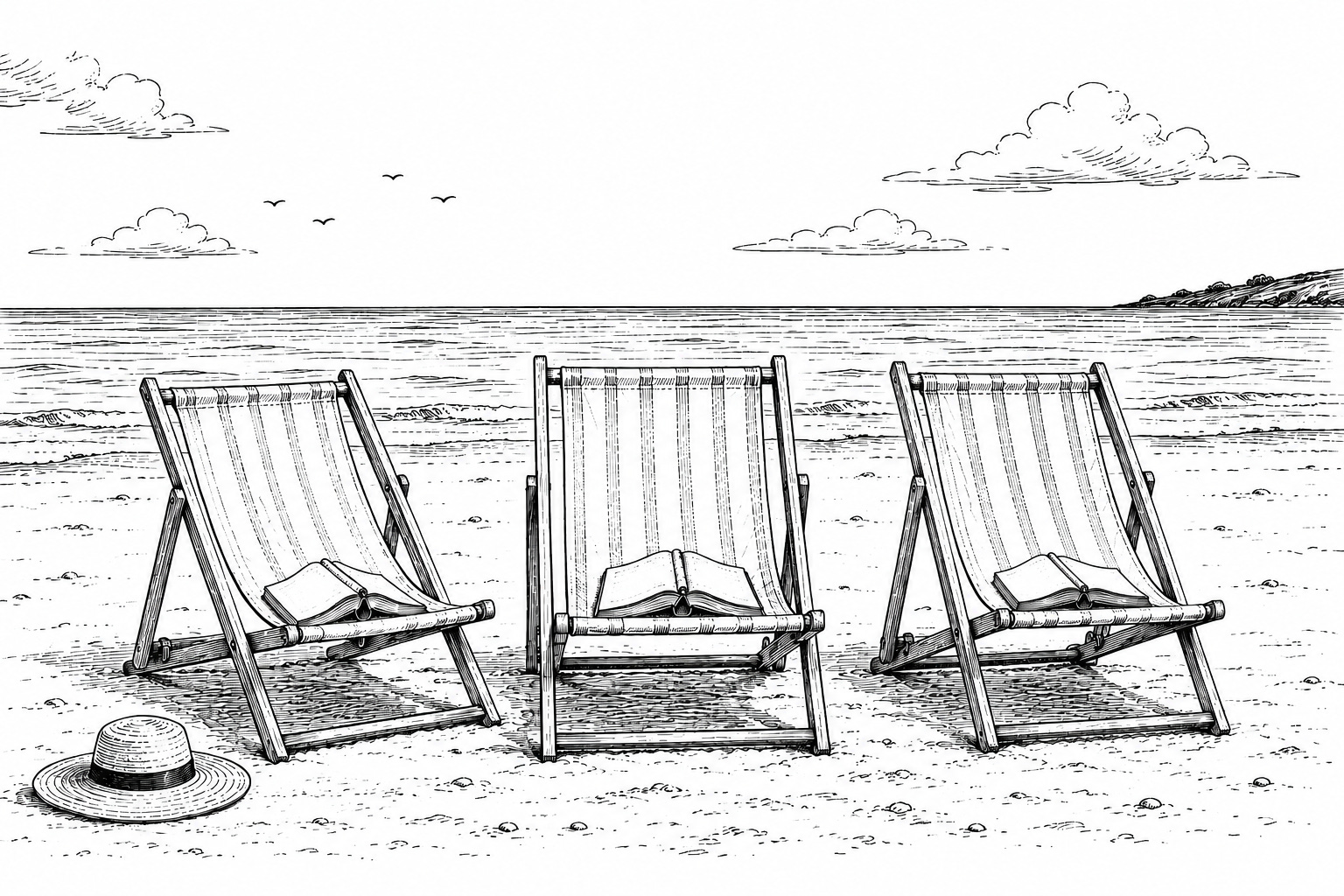
Two caveats. First, I won’t only write about new releases: Winakur’s memoir came out in 2009, but I was inspired to reread and it resonated in a new way. And second, I may write about books, film, television or theater, and they will always be connected to aging in some way. Whatever I share here will be something I’ve actually read or seen and believe is worth your time. And since this is an experiment, I’d love to hear from you. If you enjoy it, let me know in the comments and I will make it an occasional feature. Better still, if you read and enjoyed a book about aging, retirement, caregiving, illness, memory, or the art of growing older, please share the title. I’m always hunting for my next one and I suspect your fellow readers are too.
Julian Barnes turned eighty this past January, and to mark the milestone, the Booker Prize-winning author gave us what he swears will be his final book. It is a slim volume that you can finish in an afternoon, yet it lingers far longer than its page count might suggest. In Departure(s), Barnes playfully blends fiction, memoir, and essay until you stop trying to sort out which is which. The narrator is a writer named Julian, living in north London, managing an incurable blood cancer diagnosed in 2020, and mourning the wife he lost years earlier to a brain tumor while now settled in a new relationship. The autobiography is barely disguised, and Barnes knows it: he all but dares us to check the facts ourselves.
The story Barnes eventually tells, after confessing that he promised the protagonists never to tell it, belongs to two friends he first introduced at Oxford in the 1960s. Stephen and Jean fall in love, drift apart after university, and reunite some forty years later to try again. What follows is tender and merciless in equal measure: late-life love here is not a consolation prize but a genuine second chance, with its own betrayals and disappointments.
For readers of this newsletter, Departure(s) earns its place on the summer reading pile for what it reveals about the second half of life. With some amusing digressions into the writings of Proust and other French writers, Barnes is interested in how memory thins as we age: how lived experience consolidates first into anecdote, then into something we are no longer certain happened at all, or if it did, whether we were as central to the story as we perceived ourselves to be. He is honest about the body’s slow betrayals, and clear-eyed about death without ever turning grim. When his narrator shrugs that his blood cancer is “incurable yet manageable” and adds that this rather sounds like life itself, Barnes hands his aging reader a small piece of wisdom, packaged in smart comedic timing.
My favorite character in the book is Jimmy, an elderly Jack Russell who is enviably unburdened by any knowledge of his own mortality. The dog becomes a small reproach for the rest of us, who carry the awareness of our endings around like so much luggage. Barnes writes, “We all have different attitudes to aging and its terminus, from blank denial to insistent, life-smothering over-attentiveness.” That, finally, is the book’s subject: not dying, but the particular human work of knowing and accepting that it’s coming and deciding how to spend whatever time is left.
It is a strange thing to call a book about last things a pleasure, but this one is. After 27 novels over more than four decades, Barnes is leaving on his own terms, wit intact, and there is a lesson in that for any of us thinking about how we’d like to leave the party.
I came back to this 2009 memoir after reading Dr Jerald Winakur’s March essay in Health Affairs, “A Geriatric Geriatrician Speaks Out.” (1) Now 77 and retired for several years, he describes how he still fields midnight calls from frightened families and visits patients with the cracked leather doctor’s bag he has carried since medical school. The title is more than wordplay: he has now joined the demographic he spent a career serving. Rereading his memoir with that essay in mind, I found it had aged into something more urgent than it was the first time around.
Winakur practiced internal and geriatric medicine in San Antonio for 36 years, much of it among the “oldest old” — patients past eighty-five, the fastest-growing segment of American society. He spent a career mapping how the body ages and ultimately fails and yet, as he writes, watching his own father slide into Alzheimer’s Disease was “no easier for me than for anyone.” That admission is the engine of the book: all the training in the world does not spare a son from the helplessness, guilt, and flashes of anger that caregiving exacts.
His father Leonard was a gifted artist whose Depression-era family steered him into running a Baltimore pawnshop, and an avid birder who passed that love on to his son. As Leonard descends into dementia, his wife serves as primary caregiver, and Winakur shuttles between two roles that he cannot reconcile: the doctor who knows precisely what is coming, and the son who cannot stop it.
This is the rare caregiving book that withholds any easy reassurances. Winakur is unsparing about the hard machinery around aging: managed care, the question of whether to prolong life at any cost, and the long shadow cast by test cases around aggressive treatment at the end of life. He delves into how our healthcare system rewards procedures over presence: how the cognitive work of an unhurried doctor at the bedside, using the judgment and patience that aging patients need most, is the very thing our payment system rewards least. Geriatrics, he points out, is the one subspecialty where the extra years of training actually lower your pay.
Seventeen years after the book was published, Winakur’s warning is even starker. The ranks of practicing geriatricians have stalled near 7,000 even as the over-75 population is set to grow by more than half by 2036. He ends the Health Affairs essay by explaining that this is why, retired and 77, he still picks up the phone and it is “why I still fetch my bag and go.”
The cultural obsession with longevity has become a din of supplement ads, biohacking guides, and billionaire wellness gurus. Dr. Ezekiel Emanuel’s new book cuts through the noise with straight-forward advice and good humour. Emanuel is an oncologist and bioethicist, one of the architects of the Affordable Care Act, and he has written a wellness book whose central message is to stop obsessing over wellness. He originally wanted to call it Don’t Be a Schmuck; the publisher talked him into the more light-hearted title, but the bracing, no-nonsense spirit of that first idea runs through every page.
Emanuel sets out to help readers tell sound health advice from “the speculative, deceptive, and just plain stupid.” He takes a scalpel to all the extreme regimens, unproven supplements, and bio-hacking he considers not just useless but occasionally dangerous. He is openly contemptuous of the outlive-at-all-costs school of thinking that treats life as a contest to be the last one standing, and he has no patience for the wellness-industrial complex that sells you complicated remedies you don’t need. But he doesn’t only clear the ground; he builds on it. In prose that is easy and often funny to read, he lays out clear, evidence-backed habits that anyone can actually adopt: sensible, low-effort steps that make the most difference to your health. For an audience bombarded by targeted ads for anti-aging miracles, this is a genuine public service.
The first chapter — and my favourite — got the book’s original title: “Don’t Be a Schmuck,” which is exactly as good as it sounds. Boiled down, it is a plea not to do the risky, stupid things you already know are bad for you, like smoking, heavy drinking, and skipping your vaccines, and not to be fooled by the snake-oil salesmen. It may sound obvious, but most of what actually lengthens a life is unglamorous and nearly free, while the costly, complicated stuff is where you will find most of the quacks. The other five rules, in his words: talk to people (cultivate friends and family); expand your mind (stay mentally sharp); eat your ice cream (eat and drink well); move it (exercise regularly); and sleep like a baby (get the rest you need). Fittingly, the book ends on its mirror image, an afterword called “Be a Mensch” — a reminder that a long life is only worth wanting if it’s lived with purpose.
Emanuel argues that a wellness regime built on constant self-deprivation never survives the years it would need to pay off; so the habits have to be ones you enjoy. This is why the occasional bowl of ice cream stays on the menu. His single biggest piece of advice for living long and well is not a molecule or a metric but social connection: building and keeping your relationships. For readers thinking about how they want to age, Eat Your Ice Cream is permission to put down the tracker, ignore the gurus, and get on with living. Wellness, he insists, should be the invisible background of a good life, not its exhausting main event.
In next week’s Aging Almanac, we turn to dementia, opening a multi-part series on the diagnosis so many of us dread as we grow older.
Comments
Nothing yet. Say the first thing.
Sign in to join the conversation.