
In September 2011, a collector purchased a golden pendant from a car-boot sale in Berinsfield, Oxfordshire. The buyer later recalled that the seller told him that the pendant had been discovered by a metal detectorist, but that he knew little else about the find. The pendant is a characteristic artefact of a type known to archaeologists as bracteates (cf. Latin bractea ‘gold leaf, gold foil’), and the decoration of the pendant bought at Berinsfield is typical of bracteates made in the period between the years 475 and 500 in Scandinavia. The decoration even includes a sequence of letters which run about the circular edge, just like a modern coin. The letters don’t make much obvious linguistic sense and some of them appear to only mimic the shapes of Roman characters. This is typical of bracteates from the late fifth century, however, and it is often reasonably clear what the inscriptions were meant to record.
The bracteate bought at Berinsfield is the third early Saxon pendant of this type known from the Upper Thames Valley. In the spring of 1992, a metal detectorist discovered a similar golden pendant at Kingston Bagpuize, and an earlier find discovered at St Giles’ Field in Oxford has been known to antiquarians since the seventeenth century. Three golden bracteates all unearthed in the same area is remarkable in the UK and it indicates a concentration – a concentration of wealth usually associated with kings.
The three pendants are each decorated with profiles of the heads of men with likenesses that are not otherwise recorded, although all three are modelled generally on those depicted on Roman coins, as is typical with the earliest bracteates. Both the Kingston Bagpuize and Berinsfield finds include an inscription, the Kingston Bagpuize text reading C S N A V. The sequence C S N is presumably a shortened form of the name of one the fourth-century emperors who bore the name Constantinus or Constantius, and A V appears to be an abbreviation of augustus ‘emperor’.
The inscription on the Berinsfield bracteate is longer, but its letterforms do not make much sense either at first. They read ? I ? O C N I V ? X O ? V S I ? I I O and seem to reflect an attempt by an illiterate craftsman to copy the inscription of the Roman coin the bracteate was modelled on. The sequence O C N I V ? seems to be an erroneously written form of Con … ius ‘Constantius’ and ? V S I may be a slightly scrambled form of the imperial epithet pius ‘pious’ that is often found in Roman coin legends.
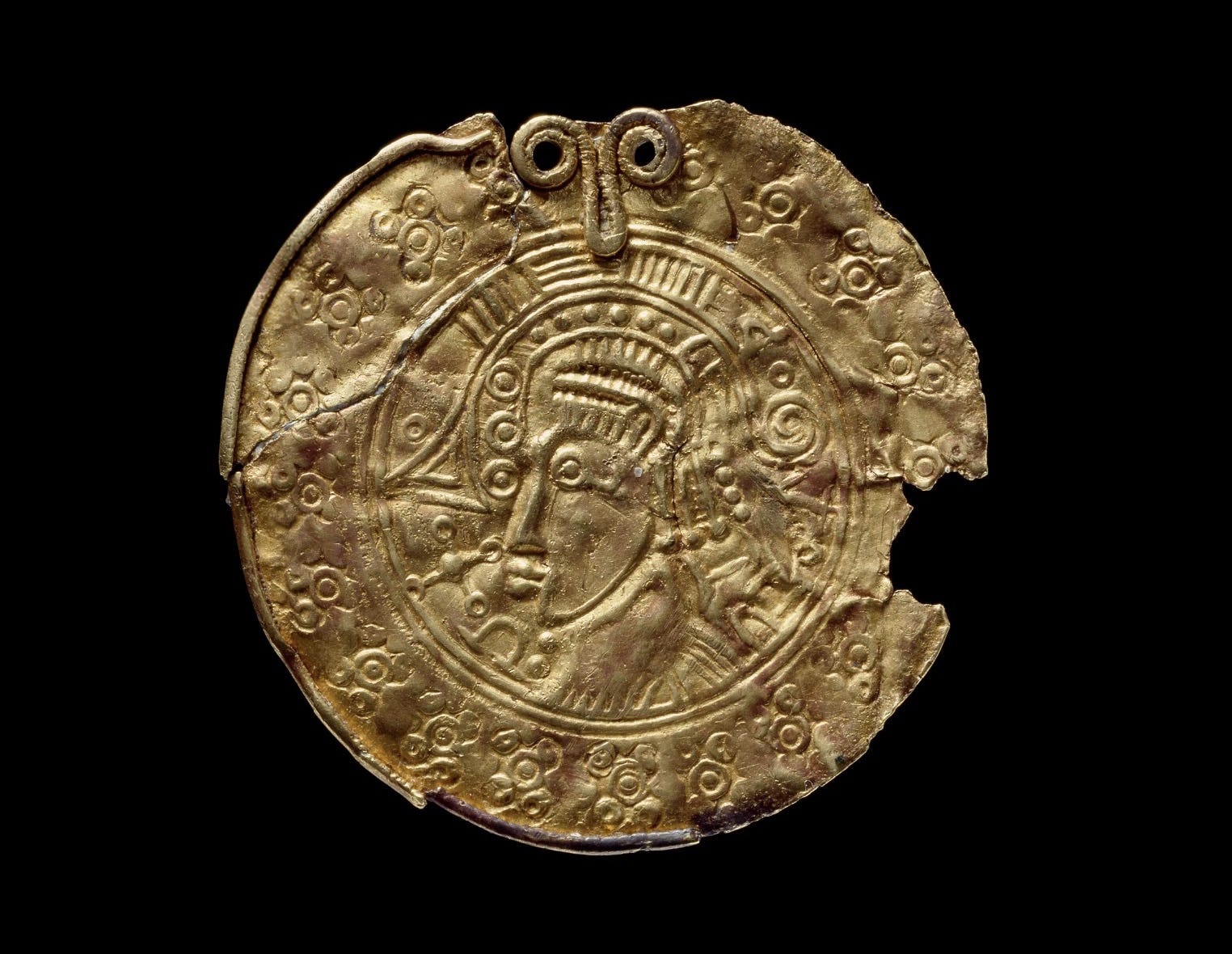
Each of the three bracteates from the Upper Thames Valley is decorated with a bust, as is typical of Roman coins. The head on the find from St Giles’ Field is represented most clearly, the man wearing a diadem and other imperial regalia. Yet what the heads that appear on bracteates represent has long been disputed. Some historians have argued that they are busts of the god Woden, while others, pointing to the variation in the way the busts are represented, argue that they are more likely to be those of local kings. The bracteates from Berinsfield, Kingston Bagpuize and Oxford may preserve images of early kings of Wessex.
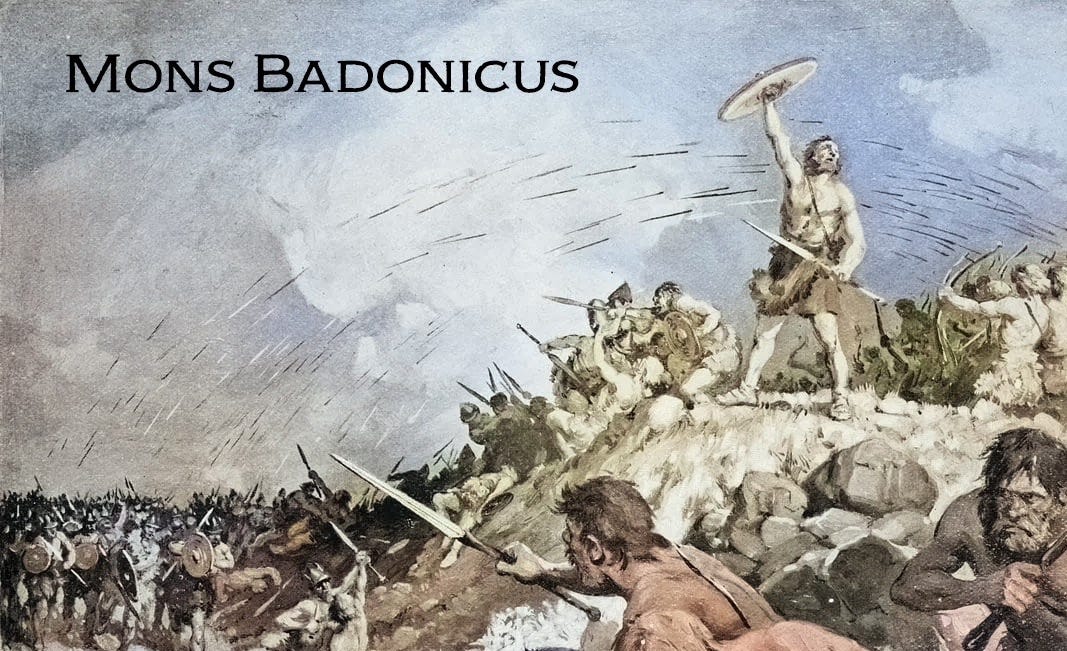
Yet who were these early kings? According to the Anglo-Saxon Chronicle, the first king of Wessex was called Cerdic (pronounced Cherdich), and later medieval tradition records that Cerdic was King Arthur’s opponent at the Battle of Mount Badon. The Battle of Mount Badon is recorded by the British cleric Gildas and in the Welsh annals, so it is clear that it was a historical event, a significant victory won by the Britons. The earliest sources do not indicate which early Anglo-Saxon people the Britons defeated in the battle, but it is generally thought to have been the West Saxons.
In the fourteenth century, Ranulf Higden surmised that the battle of Mount Badon was fought between forces led by King Arthur and Cerdic of Wessex, and that the two must have entered into a treaty after the battle. The Welsh annals record that Arthur’s great victory occurred in 516 and the Anglo-Saxon Chronicle attests that Cerdic founded the Kingdom of Wessex in 519. The two kings seem likely to have been contemporaries, but is there any truth to the tradition recorded by Higden?
Like Arthur, Cerdic of Wessex is a controversial figure, some historians doubting whether he even existed. But most of the sceptical assessments of Cerdic rely on approaches to historical records that are quite eccentric, and when new evidence is discovered, the sceptics are usually shown to be wrong.
Cerdic is first mentioned in the Anglo-Saxon Chronicle in an entry for 495 that records him apparently arriving on the shores of the Solent in Hampshire:
Her cuomon twegen aldormen on Bretene, Cerdic ⁊ Cynric his sunu, mid .v. scipum in þone stede þe is gecueden Cerdicesora ⁊ þy ilcan dæge gefuhtun wiþ Walum.
In this year two chieftains, Cerdic and his son Cynric, came to Britain with five ships, (arriving) at the place which is called Cerdicesora, and they fought against the Britons on the same day.
But can this record be trusted? All sorts of doubts have arisen concerning the early entries in the Anglo-Saxon Chronicle, including those that mention Cerdic. The description of Cerdic landing at Cerdicesora (‘Cerdic’s shore’) seems to be stereotypical – the early Anglo-Saxon kings are all described arriving in similar manners. But that does not mean that the early kings whose names are recorded in the Anglo-Saxon Chronicle never existed. The linguistic, historical and archaeological evidence seems to indicate that Cerdic was a historical king who lived during the late fifth and early sixth century – at the same time as the bracteates from the Upper Thames Valley were manufactured.
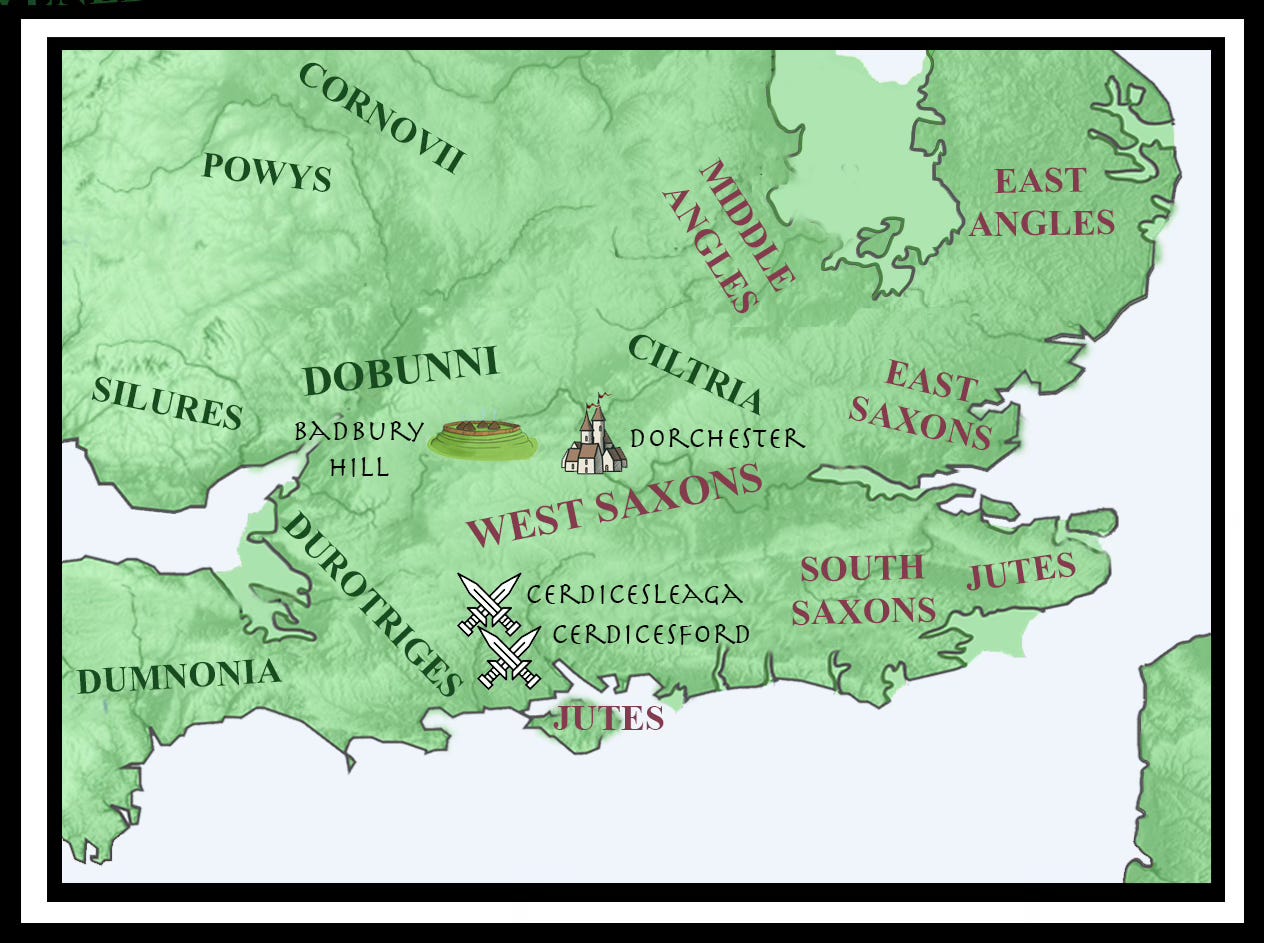
It has long been considered likely that the early kingdom of Wessex was ruled from Dorchester on Thames. In the late nineteenth century, several early Saxon burials dating from the fifth century were discovered nearby at Dyke Hills, and the first bishopric in Wessex appears to have been founded in the seventh century at Dorchester. The West Saxon capital moved later to Winchester, but Cerdic’s kingdom is most likely to have been centred on the Upper Thames Valley.
It is usually accepted that Cerdic was a historical king because of the linguistic derivation of his name. Since the 1920s, it has been generally acknowledged that Cerdic has an etymologically Celtic name, cognate with the ancient British form Caraticus recorded for another man on a Roman pot from Richborough in Kent. Cerdic’s name has undergone linguistically Celtic development that seems to have occurred during the fifth century (Caraticus first developing to Caradic) and the loss of the second syllable (Caradic then becoming Cerdic) indicates that his name was borrowed into English before the seventh century.
So Cerdic’s name checks out as a genuine fifth- or sixth-century linguistic form. He seems to have been a British figure (wholly or partly) who joined up with a warband of Saxons and was later treated as if he was an Englishman himself.
Cerdic is also recorded in the Anglo-Saxon Chronicle winning battles at places called Cerdicesford ‘Cerdic’s ford’ and Cerdicesleaga ‘Cerdic’s field’. These Old English place-names are reflected in those of the contemporary villages of North and South Charford in Hampshire and the name Chardele recorded as the birthplace of a servant who is recorded as the victim of an assault in 1338 at Fordingbridge, also in Hampshire. The account regarding Cerdic in the Anglo-Saxon Chronicle features several names of places apparently called after him that later evidence demonstrates did actually exist. It may reflect Cerdic’s conquest of Hampshire, striking out south from Dorchester rather than arriving by ship.
The story of the founding of Wessex recorded in the Anglo-Saxon Chronicle is also preserved in a slightly different form in a document known as the West Saxon royal genealogy. This document records Cerdic coming to Hampshire by ship in much the same manner, but it also records how long Cerdic and all the kings who descended from him reigned. Rather than the entry for 495 representing a contemporary record, it seems very likely that the date given for Cerdic’s arrival in Hampshire was calculated during the ninth century by the compilers of the Anglo-Saxon Chronicle employing the list of the reigns of the kings of the House of Wessex preserved in the West Saxon genealogy. But were their calculations reliable?
The reign lengths given in the West Saxon genealogy vary somewhat in the various versions of the text that have survived. Yet the uncertainty regarding the lengths of the reigns can be resolved statistically. Ancient Greek historians calculated that kings tended to reign on average for 27 years and used this number to estimate the length of reigns of kings when not enough historical records had survived to be certain how long they had lived. The same numbers (or slightly higher) are usually accepted to be applicable to the reigns of early medieval kings, and when all the reign lengths of the early members of the House of Wessex are added up and averaged, it seems very likely that the year recorded in the Anglo-Saxon Chronicle for the arrival of Cerdic and the foundation of his kingdom are broadly accurate.
Arthur and Cerdic were probably contemporaries, but the evidence that links the two early kings goes further than that. The Battle of Mount Badon has long been connected with one of the sites called Baddanburg in Old English and one of those sites, Badbury Hill, lies only ten miles west of Kingston Bagpuize. The hillfort at Badbury Hill has never been excavated, but it makes the Battle of Mount Badon seem very likely to have involved the early West Saxons.
It is not too difficult to think of reasons why forces led by Arthur and Cerdic may have clashed at Badbury Hill. Not enough evidence has survived, however, to clearly connect Badbury Hill with the location of Arthur’s most famous battle. The Anglo-Saxon Chronicle does not even mention the battle, although the early clashes it does name are usually Saxon victories, so the omission from the chronicle of a reference to the great English loss to the Britons at Mount Badon should not be surprising.
Yet it is clear that the famous British victory occurred at a time that saw West Saxon expansion halted for over 30 years. No battles with the Britons are recorded in the Anglo-Saxon Chronicle after Cerdic’s reign ended until the year 553. This period seems to correlate with the extended period of relative peace mentioned by Gildas as occurring after the Battle of Mount Badon, the ‘peace of Arthur’ as the historian John Morris characterised it. The archaeological and linguistic evidence all seems to confirm that Cerdic truly was the first recorded king of the West Saxons, and his face may even be recorded on one of the bracteates from the Upper Thames Valley. Higden may well have been correct to see Cerdic as the main opponent of Arthur at the time of the famous British triumph at the Battle of Mount Badon.
The Age of Arthur is a reader-supported publication. To receive new posts and support my work, consider becoming a free or paid subscriber.
Comments
Nothing yet. Say the first thing.
Sign in to join the conversation.