
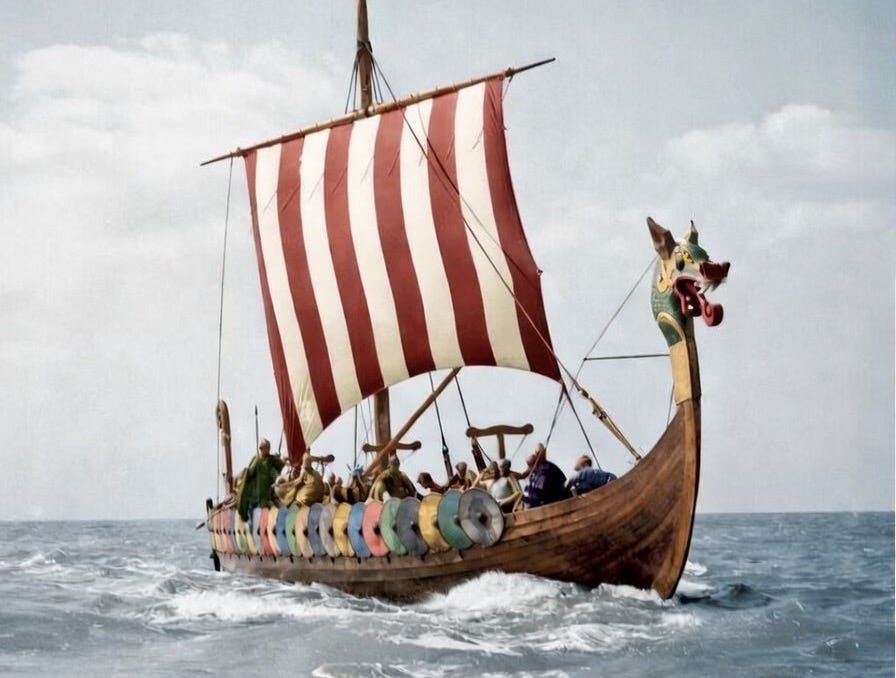
Since the 1960s it has become increasingly common to see the historical reality of Hengist and Horsa questioned by English historians. Several early sources record that the two brothers led the first Anglo-Saxon migrants to Britain and they were long held to be real historical leaders. But in the 1950s, Hengist and Horsa were compared to Romulus and Remus, the legendary founders of Rome, and the twin gods Castor and Pollux who protected shipwrecked sailors. The names of Hengist and Horsa were declared to reflect “a recognised formula, and its origin is to be sought in religious beliefs.” Hengist and Horsa were claimed to be divine twins who had been turned into historical figures by later writers.
The mythological process that sees gods turned into heroes is known as euhemerization and the idea that Hengist and Horsa were divine rather than historical leaders has been accepted by many Anglo-Saxonists. Many accounts of Anglo-Saxon England now claim that Hengist and Horsa were not real people, but were instead early Anglo-Saxon gods – or other figures from mythology. But is there any evidence for the supposition?
In the 1950s and 1960s, all sorts of figures recorded in early historical works were claimed to be dimly remembered gods. It was a time when studies of comparative mythology were especially popular, just as ecocriticism and intersectionality are all the rage in universities now. But most of the claims made by comparative mythologists at the time are no longer accepted by historians.
The main problem with claims that early figures such as Hengist and Horsa were gods is the lack of evidence for the proposal. No evidence has ever been put forward that Hengist and Horsa were the objects of a cult other than their names. Yet the idea persists regardless.
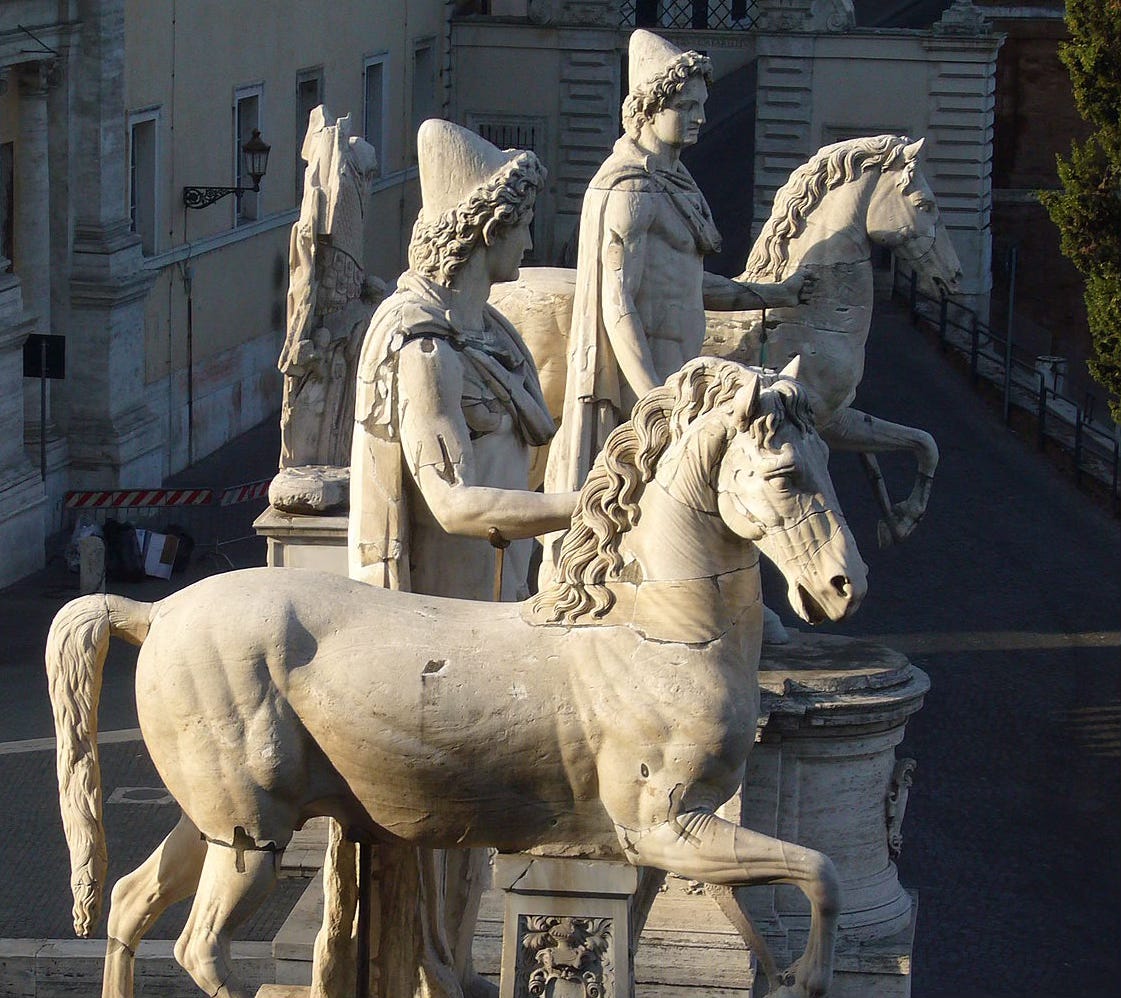
So what is the basis for the theory? The name Hengist means ‘gelding’ or ‘tamed horse’ in Old English and his brother’s name Horsa is clearly derived from hors, the usual Old English word for ‘horse’. It was common, however, for Anglo-Saxon parents to give their children alliterating names. St Chad’s brothers are recorded in early accounts as Cedd, Cynibil and Caelin, and no one has yet thought it sensible to claim that they were semi-divine figures. The Old English name Horsa appears to just be a shortened form of a compound name like Horserat or Horsewine and it is not clear that the semantic relationship of Hengist to Hors- had a mythic or cultic basis.
As there is no other evidence that the Anglo-Saxons worshipped horse gods, the proposal that Hengist and Horsa were mythological twins appears to be little more than a guess. But is there any evidence that would make it more likely that the two brothers were historical? Some tell-tale signs have survived that Hengist and Horsa were real figures.
The most obvious indication is Bede’s recollection in his Ecclesiastical History that a memorial to Horsa could be seen in his time in Kent near the site of the Battle of Agælesthrep where Horsa is recorded to have been slain during the early wars between the Britons and the Saxons. Bede was relying on information sent to him by Nothelm, a priest from London, and Albinus, the abbot of Canterbury, so the existence of such a monument is likely enough. Prehistoric megaliths can still be found in the area and memorials with runic inscriptions on them are also known from early Anglo-Saxon Kent. In contrast, divine figures do not usually have tombstones erected in their memory.
An extended story is also set out in both the Anglo-Saxon Chronicle and the Historia Brittonum that details the battles fought between the Saxons and the Britons during the time of Hengist and Horsa. In the Anglo-Saxon Chronicle, the battles are recorded as if they were mostly English victories, but in the Historia Brittonum they are held to be Saxon defeats. These battles seem unlikely to have been falsely ascribed to a pair of divine twins. But linguistic evidence has also survived for how old the accounts are.
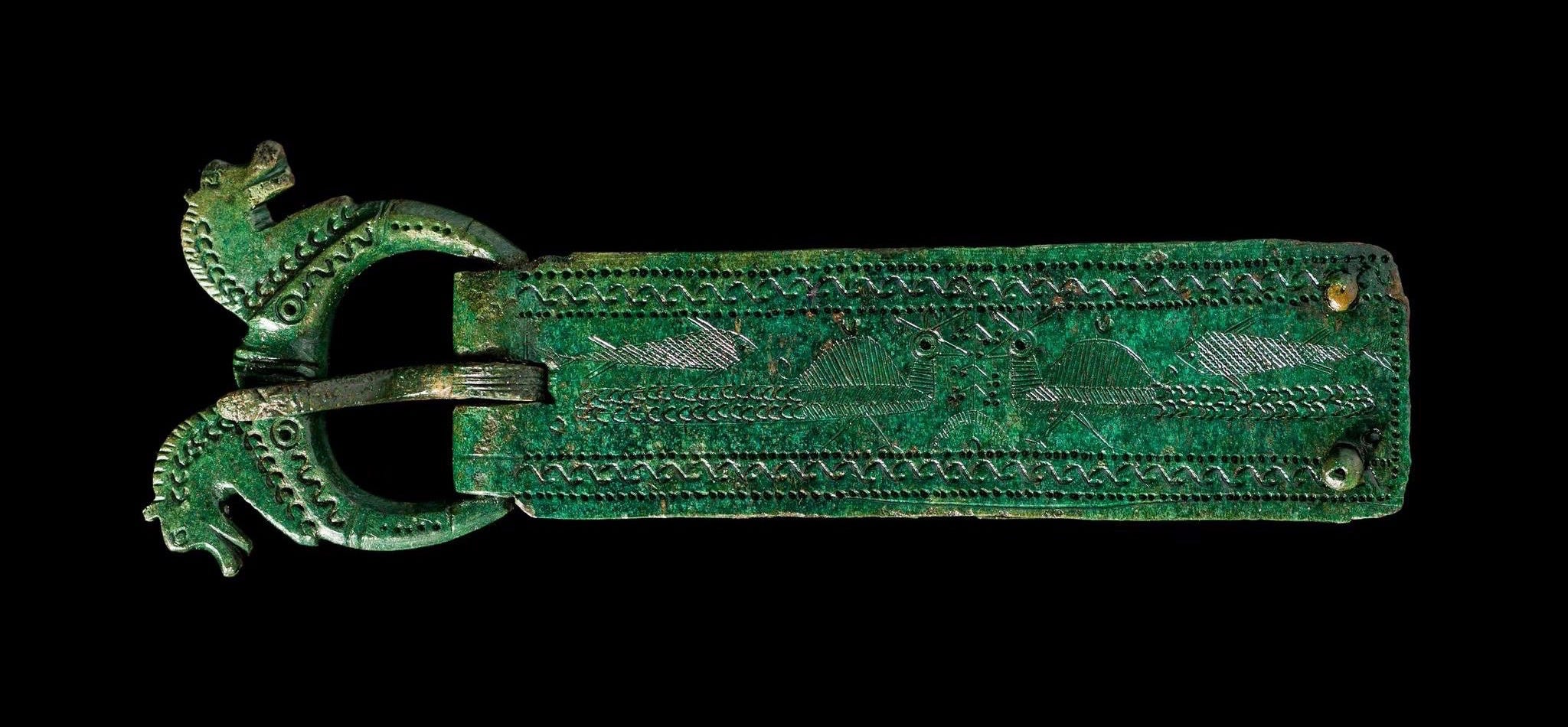
One of the stranger things in the account of the battles in the Historia Brittonum is that Horsa is called by a slightly different name in the Welsh work. He is just called Hors as if the Britons did not know about the -a recorded by Bede and in the Anglo-Saxon Chronicle as the final syllable of Horsa’s name.
This omission is striking from a linguistic perspective. The sixth-century Anglo-Saxon king Ida of Bernicia is recorded in Welsh accounts as Ida or Eda. So why was the final -a lost from the name of Horsa?
The loss of grammatical endings is a well-known linguistic development of Cornish, Breton and Welsh, and it has long been dated to the early sixth century. Maria lost its final -ia to became Mair in Welsh and Helena similarly became Elen. The loss of the -a from Horsa in the Historia Brittonum would be expected if his name was known to Welsh or Cornish speakers in the fifth century, but not if it were borrowed from an Anglo-Saxon source at a later date. That suggests that some part of the account of Hengist and Horsa in the Historia Brittonum is very old – that it has its origins within living memory of the Anglo-Saxon migrations.
Hengist and Horsa are also called Hors and Hengist in Welsh tradition – the customary English order of their names is always reversed in Welsh sources. This is another sign that their names were not taken by the author of the Historia Brittonum from an Anglo-Saxon account.
The reason for the reversal of the order of the names of the two brothers is not immediately clear. It may be that the names were reversed in Anglo-Saxon tradition after Horsa died and Hengist fought in his later battles alongside his son. But the Welsh order Hors and Hengist seems important as it may explain how Hengist received his name. Hengist may have been called ‘gelding’ or ‘tame horse’ as a nickname – because his older brother was called Horsa.
Hengist may have been considered a less ferocious warrior than Horsa and received his name in a manner that men’s nicknames are still formed today, particularly if he had a long face, a large jaw and prominent teeth – in other words, if he was considered to have a face reminiscent of that of a horse.
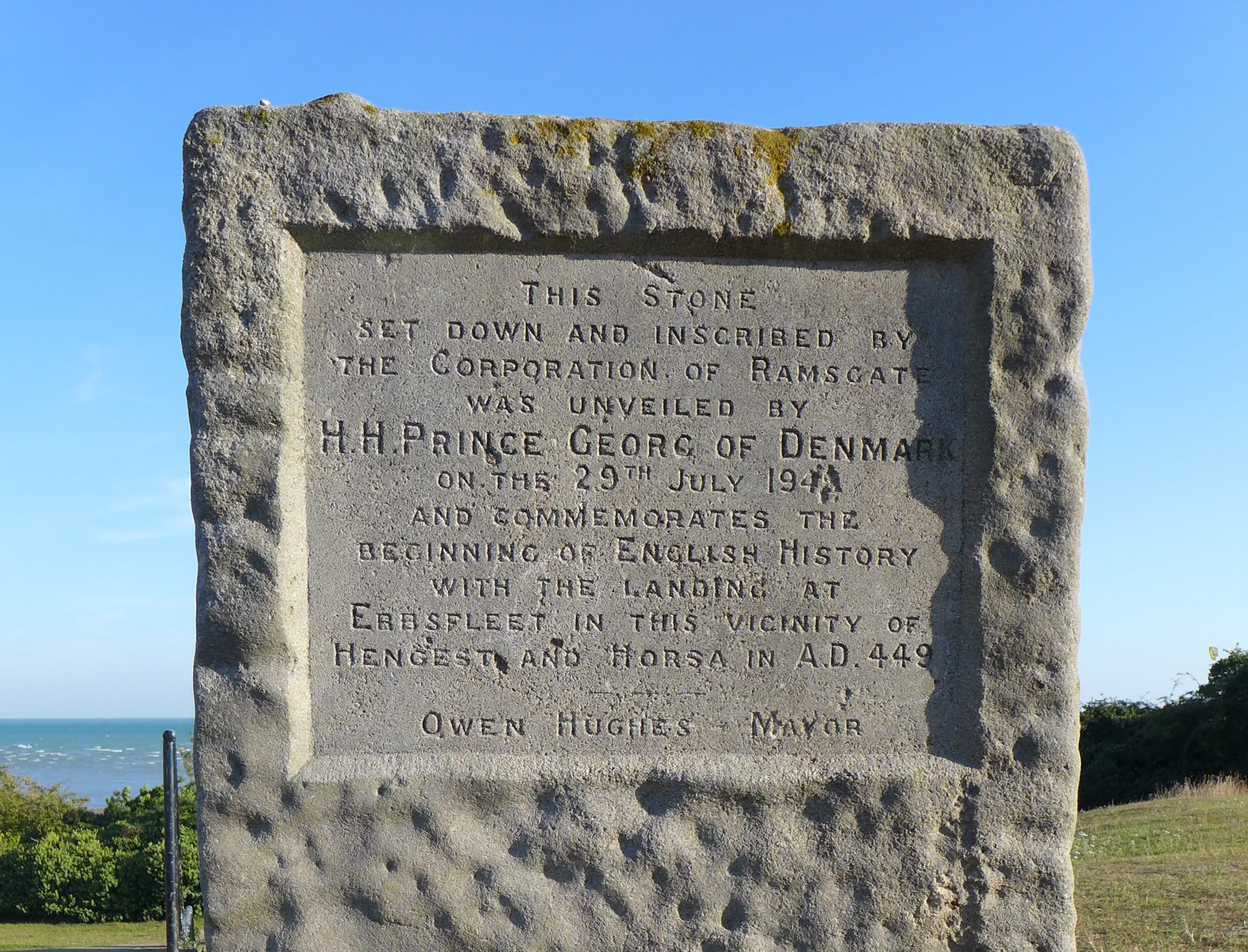
Yet after Horsa was slain at the Battle of Agælesthrep, the Anglo-Saxon Chronicle relates that Hengist fought alongside his son Æsc, and independent evidence has survived that Æsc was a historical figure.
Bede records that the kings of Kent were Oiscingas – that they traced their lineage back to a figure called Oisc. Oisc is called Æsc in the Anglo-Saxon Chronicle, a slightly altered form of his name, where he is described as a son of Hengist who fought alongside his father against the Britons.
But Oisc also seems to be recorded in a seventh- or eighth-century work called the Ravenna Cosmography. The Ravenna Cosmography describes the geography of the late Roman Empire and it recounts:
there is an island called Britain in the west ocean where the Saxons, coming from Old Saxony with their leader Ansehis, now live.
The name Ansehis has long been supposed to be a slightly miscopied form of Anschis and Anschis is the expected fifth-century spelling of Oisc in English. Over the course of the sixth century, the name Anschis would be expected to lose its -n- and change its A- to O- in much the same way as German Gans ‘goose’ is related to English goose. The resultant form Oschis would then regularly become Oisc in early Old English.
Linguistic analysis makes it likely that Horsa was known to the Britons in the fifth century when his name passed into Welsh tradition and eventually became Hors. The two brothers who led the Saxons appear to have originally been known as Horsa and Hengist, the customary order of their names being reversed in later Kentish tradition after the death of Horsa. But it also seems likely that Horsa was a historical figure because Bede reports that a memorial to him could still be seen in Kent during the early eighth century, and there is independent evidence that his nephew Oisc was also a real person.
The idea that Hengist and Horsa were mythological figures, divine twins who had been turned into kings of the Jutes by later writers, lacks any supporting evidence. It reflects little more than an assertion first made in the 1950s, despite there being no clear reason to suppose that Hengist and Horsa were anything other than historical leaders of the Anglo-Saxons.
Thanks for reading The Age of Arthur! Subscribe for free to receive new posts and support my work.
Comments
Nothing yet. Say the first thing.
Sign in to join the conversation.