
“Old gets such a bad rap… Being old is not the end of the world” - Prue Leith
As you know, one of our core themes this year at Ageism Is Never In Style is age liberation: empowering each other - and ourselves - to break free from outdated, restrictive narratives, ideas, and systems that limit us based on age.
This isn’t about toxic positivity or pretending that everything about ageing is wonderful. It’s about recognising that every age and stage of life brings both light and shade. And, in doing so, having the confidence to reframe our thinking by letting go of the spaces where age simply shouldn’t be a limitation, and understanding when, where, and how it is relevant.
In short, it’s about bringing far more nuance and balance to one of the few universal experiences we all share: ageing.
And, as you also know, alongside a number of our global workstreams and activations, a key part of this has been exploring the language and storytelling around ageing. Because how - and when - we talk about ageing, from a governmental and systemic level down to everyday conversations, plays an indisputable role in shaping perceptions, influencing behaviour, and ultimately reengineering structures, business, and culture. And yet, it remains a continued blind spot. A costly one at that…
Sometimes we need to reframe language.. Sometimes reclaim it. And in other cases, simply rejecting age-related language altogether.
And one word I’ve felt we are increasingly ready to reclaim is:
It should not be a pejorative. Not something negative or a dirty word weighed down by stereotypes of decline and frailty. Instead, it should simply be factual, neutral, and normalised.
Because the reality is, people grow old. And surely, that’s the goal right? To live a life long enough where we’ve become old, simply as a matter of fact.
But if we continue to reject the word “old,” we don’t dismantle ageism - we reinforce the youth-centric narratives that sustain it.
So ‘old’ is one word it increasingly feels time to reclaim. Of course, these shifts take time - and the right moment. And I’d argue we’re not fully there yet. But encouragingly, change is happening.
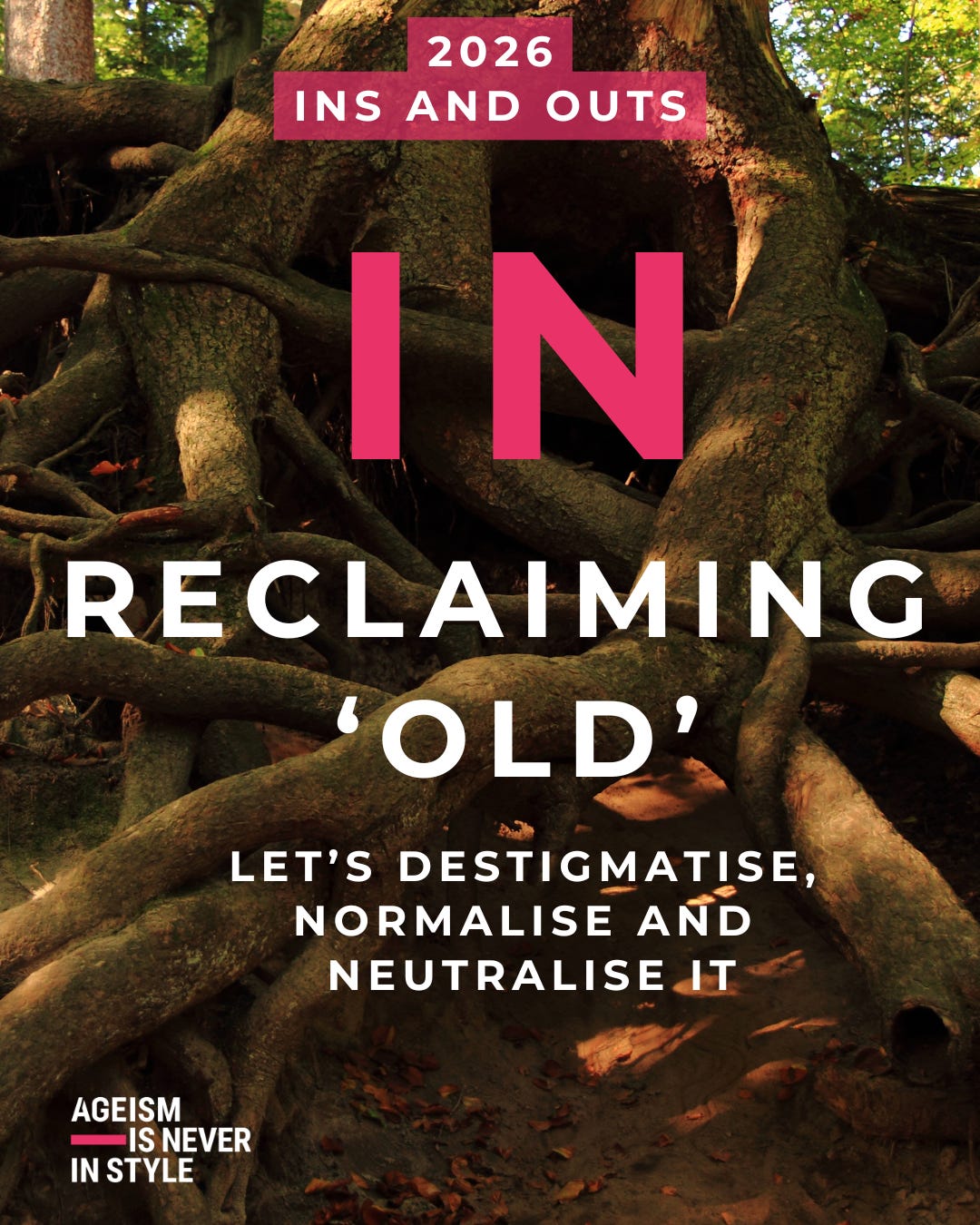
Across media, culture, and communities, we’re seeing a growing openness to discussing ageing with greater honesty and depth. We’ve been testing this directly with our own community, including specifically reclaiming the word ‘old’, and I was enthused how many people shared and celebrated this specific graphic we posted on social media at the start of this year, as part of our ‘ins and outs for 2026':
There are other signs too. There are podcasts, channels, substacks and books dedicated to reframing ‘old’. There’s more posts by leading influencers and content creators on social media encouraging embracing it. And organisations like Next50 are launching an upcoming podcast series such as ‘The Future Is Old’ (watch this space for an episode featuring yours truly).
And then there’s Dame Prue Leith.
When we discovered that Prue Leith had published a new book titled Being Old…And Learning to Love It, I let out a huge internal cheer.
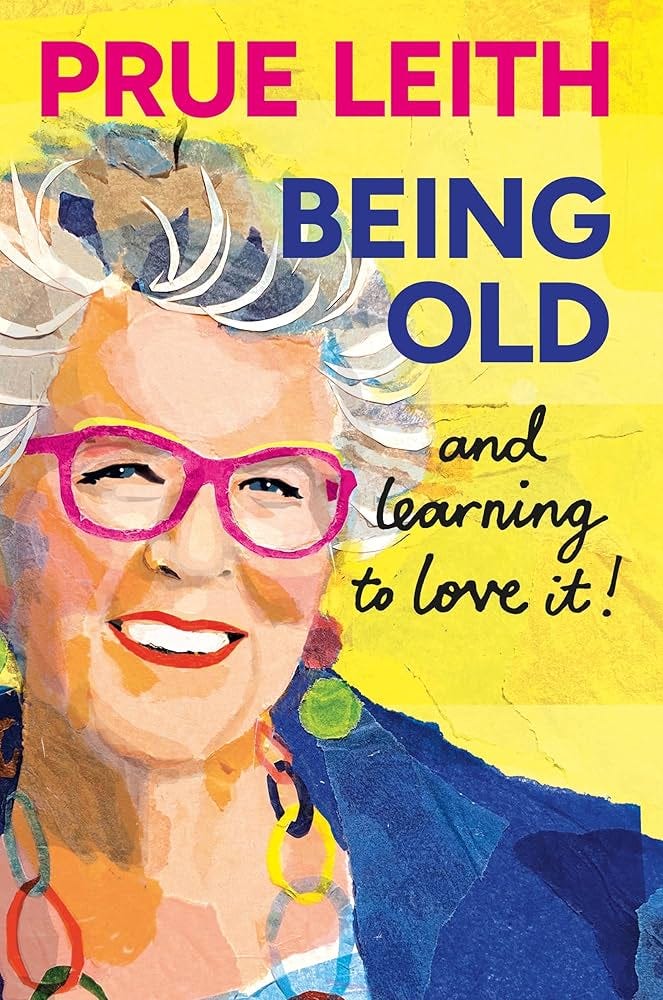
Part memoir, part reflection, the book is candid, uplifting, and unafraid to explore the realities - and the taboos - of growing older. Nothing is off limits: from love and sex, to staying active, finding fame later in life, and navigating friendship, family, and regret.
She tackles the big questions many of us have about ageing - around time, grief, and even assisted dying - with the same honesty she brings to topics like retirement, fashion, travel, and gardening.
Importantly, she doesn’t shy away from complexity and uncomfortable topics. Prue approaches ageing with balance and not as something to gloss over - but as something to engage with fully.
That is exactly what we need more of.
What’s more, when someone so visible, so respected, and so culturally relevant and influential openly embraces ageing - and crucially, the word “old” - it helps challenge the stigma that still surrounds later life.
And that stigma is slowly but surely shifting.
Just five years ago, we saw first-hand how celebrities and public figures were actively advised to avoid talking about - or aligning themselves with - ageing, for fear it would damage their reputation. And whilst that still happens (we see it all too often in politics, with politicians distancing themselves from ageing - even when they themselves are older), the tide is shifting.
Some of those same figures are now building brands - and entire narratives - around positive ageing. Not always perfectly. Not always consistently. But undeniably, more visibly.
Then there are those, like Prue, who didn’t wait for the cultural shift - they’ve helped drive it. And are continuing to, by even insisting the book title use the word ‘Old’, despite being advised otherwise.
Dame Prue Leith herself needs little introduction. I personally first discovered her around the age of 17 in the late 2000s whilst watching Great British Menu, which she judged until 2016. Meanwhile many, particularly internationally, have since come to know her through The Great British Bake Off aka The Great British Baking Show as it’s known in the US.
With her intergenerational appeal - thanks to her wit, warmth, expertise, and unmistakable style - she’s become something of an icon, not least as a true “queen of colour.” But her 60+ year long career spans far beyond television: she’s been a Michelin starred restaurateur, chef, cookery school founder, author, “Businesswoman Of The Year”, and served on multiple boards. And was appointed a dame in 2021 for her contributions to food, broadcasting, and charity
I first had the privilege of connecting with Prue through her long-standing support of our work at Ageism Is Never In Style. From wearing pieces from The Bias Cut, to filming some special style clips for us during lockdown, to proactively taking part in our global viral #ILookMyAge campaign in 2023:
Her involvement took the campaign to another level. It became our first video to surpass 100,000 views, and I still remember the excitement of watching that momentum build in real time. It marked a significant moment - not just for us, but for the visibility of the wider conversation around ageism.
So when her team reached out last month to invite us to interview her about her new book, you can imagine our reaction.
I’m fortunate to be sent many books on ageing and longevity, but I’m selective about what I endorse. Rich with anecdotes, insight, and personal reflection, this is a book I would recommend at any age or stage of life. Because, refreshingly, it frames ageing as a whole-life journey - not something that suddenly begins later on.
And, despite having written over 20 books throughout her career to date, as Prue shared with me, now at 86 this is the first one she has truly written voluntarily as it means so much to her.
So sit back, grab a coffee (or something stronger!), and enjoy our conversation, where we explore confidence, shifting attitudes, and the importance of agency with ageing:
As I often say, it’s never too early - or too late - to reframe how we think about ageing, and I feel Prue’s book and perspective is a welcome addition to this.
Prue is open about the role that luck and privilege have played in her life. She’s equally clear that ageing is not without its challenges. But there are some great joys and freedom that comes with it. And that’s precisely the point: there is light and shade at every stage.
And that, to me, is what age liberation really looks like.
Not perfection. Not denial. But honesty, visibility, and agency.
Because when we normalise ageing, we challenge ageism. When we reclaim “old,” we strip it of stigma.
And when we stop fearing age, we don’t just change the narrative - we change what is possible.
Comments
Nothing yet. Say the first thing.
Sign in to join the conversation.