
Irina Tsukerman is a New York-registered human rights and national security lawyer, geopolitical analyst, and journalist. She earned a B.A. in International/Intercultural Studies and Middle East Studies from Fordham University in 2006 and a J.D. from Fordham University School of Law in 2009. She is president of Scarab Rising, Inc., editor-in-chief of The Washington Outsider, and fellow of the Jerusalem Center for Security and Foreign Affairs and the Arabian Peninsula Institute. Her work focuses on foreign policy, information warfare, security, and Middle Eastern affairs. She serves as Written Content Vice Chair of the American Bar Association’s Science and Technology Committee.
In this interview, Scott Douglas Jacobsen and Irina Tsukerman discuss rising geopolitical and security concerns involving China, Russia, Iran, and India. They examine Chinese research vessels in the Arctic, criminal proxies used by foreign intelligence services, encrypted recruitment of youth, attacks in Toronto, and threats against Sikh activists in Canada. Tsukerman analyzes plausible deniability, transnational organized crime, vigilantism, and the need for stronger international cooperation against foreign interference and political violence across democratic societies today.
Scott Douglas Jacobsen: Welcome back to Maple Monitor with Washington Outsider’s, Editor-in-Chief, Irina Tsukerman. Canada and the United States have been shadowing Chinese research ships in the Arctic as concern grows. Xue Long, Xue Long, sailed north of the U.S. exclusive economic zone in the Bering Sea in July. Data compiled by Steffan Watkins, an independent research consultant and ship tracker shows a Royal Canadian Air Force CP-140 surveillance plane has been operating out of Alaska since early July.
Defense spokesperson, Cheryl Forrest, said in a written statement, “The Canadian Joint Operations Command is actively monitoring maritime traffic in the Arctic, including the vessels Xue Long and Xue Long 2.” “Both vessels are currently operating outside of Canada’s exclusive economic zone.” Suspicious ship under research pretense, just outside of the economic zone.
Another factor is in the Canadian military, we take submarine operations and stuff, they will pursue vessels of suspicion for weeks surreptitiously if they’re significantly not necessarily red October level, but kind of getting at those things, and less theatric; I’m informed it’s quite a boring affair, but harrowing, because there’s little you know, right? And with economic partners, but military enemies, you get strange contexts for reconnaissance and surveillance on either side. And we’ll see how this Xue Long (and 2) continues. What are your thoughts on this particular story today?
Irina Tsukerman: I wouldn’t say particularly surprises me, given the intense competition over both access, critical resources, and military dimensions between China and Western states, and also China’s level of aggressive scouting. So the fact that in one of the most sensitive regions in the world, there’d be a chase after rogue or suspicious operatives and ships, that’s probably not really news, it’s a dog bites man kind of story.
But what’s significant about it is that it’s being reported. It’s being reported because I’m sure some of it has been going on previously, but now the incidents of crashes and surveillance can become so frequent and so obvious that this indicates that this level of suspicion has gone far beyond elite policy and security circles and into the mainstream defense and diplomatic and broader policy circles. And so, we are seeing rising levels of tensions.
It’s not just the US, it’s not just Trump’s posture, and it’s real, and there are different countries being affected by it in various ways. And China is being perceived increasingly less than just an economic competitor and a nuisance and more like a strategic threat. And this story is a very clear indication of that.
Jacobsen: This one is quite interesting. When I was in psychology, I was part of a psychology lab that dealt with crime, particularly youth getting into crime, teenagers in one of the crime capitals, Canada, always a footnote “in Canada.” But regardless, a crime capital within Canada, Surrey, British Columbia, Canada, right in my neck of the woods when I was living near there last year.
I went from one to a less peaceful place. Organized crime is using encrypted messaging apps to enlist youth. Police are calling for the investigative tools proposed in federal Bill C-22, the Lawful Access Act, 2026, which is currently awaiting first reading in the Senate.
Gunshots were fired at the U.S. consulate in downtown Toronto in two separate instances in recent months. Police have made arrests in connection with both incidents.
“Authorities are also examining broader patterns connected to the shootings, including attacks targeting synagogues and Jewish schools.” Almost got a week without it.
Tsukerman: This pattern of activity seems to be consistent with what we’re observing in Europe as well. By both Russian and Iranian agencies, such as the Iranian IRGC, we are seeing increasing use of criminal proxies and private operatives alongside state intelligence and security services, ideologically friendly gangs and random extremists to carry out their bidding. There are several reasons for that.
One is plausible deniability, makes it harder to credit and to trace back. Two, it’s cheaper, simply cheaper than maintaining a huge apparatus. Three, it’s safer because these people are dispensable and if they’re killed or arrested, they cannot reveal anything of value, whereas if you’re a trained officer or a trained agent is caught, they can reveal quite a bit and you’re wasting all the money that you put into co-operating with them.
The fourth reason is that that path takes us further and further. If you are finding new people, you can sell your guns through these very low cost means. That actually helps you become a more established player in the region.
And fifth, it’s less predictable. The security services of those countries to figure out who will be behind, but also how to do that, how to dip the net to figure out who the next target is going to be. It’s the next level of cell structure where in compartmentalization, these people appear random, completely unconnected to each other and they’re not even part of the same cell.
Jacobsen: This is interesting. We don’t talk about the Sikhs and Sikh activism in the series very much, but it’s noteworthy. One of my first interviews actually was a guy named Constable Baltej Singh Dhillon.
I had three interviews with him for that same psychology lab, for community outreach in Surrey, British Columbia, Canada. And he made history as the first RCMP officer to wear a turban after the federal government changed the RCMP uniform rules to permit it. It had previously not been allowed under RCMP uniform policy to do that.
He applied to the RCMP and then he made history in the country. And so every single Sikh member of Canadian society who happens to be in the RCMP, who wants to wear a turban and does, happens to be because of that guy. And now he’s retired from the RCMP and serves as a Canadian senator for British Columbia.
Somewhere I have those interviews from somewhere in the 17th century, a long time ago, in other words. And so this particular story has to do with the federal government sending a note to the United Nations that it is, quote, deeply concerned, unquote, about credible threats against BC-based Sikh activist Maninder Singh. And the threats are made by foreign actors against those on Canadian soil.
It’s interesting that it is not stating who the foreign actors are against a Sikh person because I believe the one activist that was murdered, Mr. Trudeau said Canadian security agencies were pursuing credible allegations of a potential link between agents of the Government of India and the killing. So five UN Special Procedures mandate holders, four Special Rapporteurs and one Independent Expert, wrote to Canada on June 3rd asking for answers and urging action because they said it was an imminent threat to Moninder Singh and his family.
So the letter states, from the federal government of Canada, in other words, the current government, “Canada takes seriously all credible threats against persons within its territory and is deeply concerned by the threats against Bhai Moninder Singh Bual (Moninder Singh), his family and his work, and by the death of his colleague, Hardeep Singh Nijjar. Transnational repression is never justified. Canada is taking robust action to detect, disrupt, and deter transnational repression, online and offline, and to enhance protections and supports for those in Canada who are targeted by such acts.”
Indian Prime Minister Narendra Modi’s government has denied any role in the assassination of Nijjar in Surrey, British Columbia, Canada in 2023. So there’s Surrey again.
So there, it’s all tied in. What are your thoughts on this letter? What are your thoughts on the Special Rapporteur’s, several of them, warnings and the continuing foreign threats to domestic Sikh Canadian citizens?
Tsukerman: I’ll start with the fact that recently there was an incident in the U.S. where a multinational operation led to 24 arrests in the U.S., Canada, and Europe involving defendants connected to three India-based transnational organized crime groups, and one of the indictments charged Lawrence Bishnoi and Satinderjeet “Goldy Brar” Singh with ordering the 2023 assassination of a Sikh political and religious figure identified in court documents as H.S.N. in Surrey, British Columbia. Essentially, what the U.S. Department of Justice alleges to have transpired is that Bishnoi and Brar ordered the assassination.
So there are disputes that don’t necessarily involve the Indian government per se, even if they are linked to Indian interests. That was interesting, and that may lend a new dimension to the current situation, because those foreign actors may be Indian government, or they may also be rival gangs operating in other territories in part of a much larger RICO-type conspiracies, which is entirely possible. Now, I’d be interested in learning about this particular activist and his background, because some Sikh activists and organizations have been accused by Indian authorities of links to extremist or terrorist activity.
So if this individual is in fact part of this extreme network and Canada has not done anything to investigate his activity, or to put an end to some sub-Rosa political extremism that he’s involved in, it wouldn’t be surprising that some people somewhere will take it into their own hands to secure themselves from this guy’s influence, whether they’re criminal, government, or something in between. There will always be somebody engaging in vigilantism if proper authorities do not act to put an end to harmful activities, whether at home or abroad.
I am presuming that similar issues could be resolved in Canada, if not by extradition, in the case of people who’ve been granted citizenship, then at least by joint investigations into criminal and terrorist activity that could address and alleviate some of the concerns without having to involve either third parties of some kind or vigilantes and so forth. I’m surprised that after everything that’s happened and after the U.S. took action to address those concerns, And I’m not saying that foreign actors should be interfering in Canada’s politics, but Canada should also not allow its domestic politics to have a harmful impact on the outside world.
Jacobsen: Thank you very much for the opportunity and your time, Irina.
Scott Douglas Jacobsen is the Lifestyle and Finance Writer and Editor for A Further Inquiry with more than 400 published articles in the outlet. He is the Founder and Publisher of In-Sight Publishing (ISBN: 978–1–0692343; 978–1–0673505) and Editor-in-Chief of In-Sight: Interviews (ISSN: 2369–6885). He writes for International Policy Digest (ISSN: 2332–9416), The Humanist (Print: ISSN, 0018–7399; Online: ISSN, 2163–3576), Basic Income Earth Network (UK Registered Charity 1177066), Humanist Perspectives (ISSN: 1719–6337), Vocal, Medium, The Good Men Project, The New Enlightenment Project, The Washington Outsider, rabble.ca, and other media. His bibliography index can be found via the Jacobsen Bank at In-Sight Publishing. He has served in national and international leadership roles within humanist and media organizations, held several academic fellowships, and currently serves on several boards. He is a member in good standing in numerous media organizations, including the Canadian Association of Journalists, PEN Canada (CRA: 88916 2541 RR0001), Reporters Without Borders (SIREN: 343 684 221/SIRET: 343 684 221 00041/EIN: 20–0708028), and others.
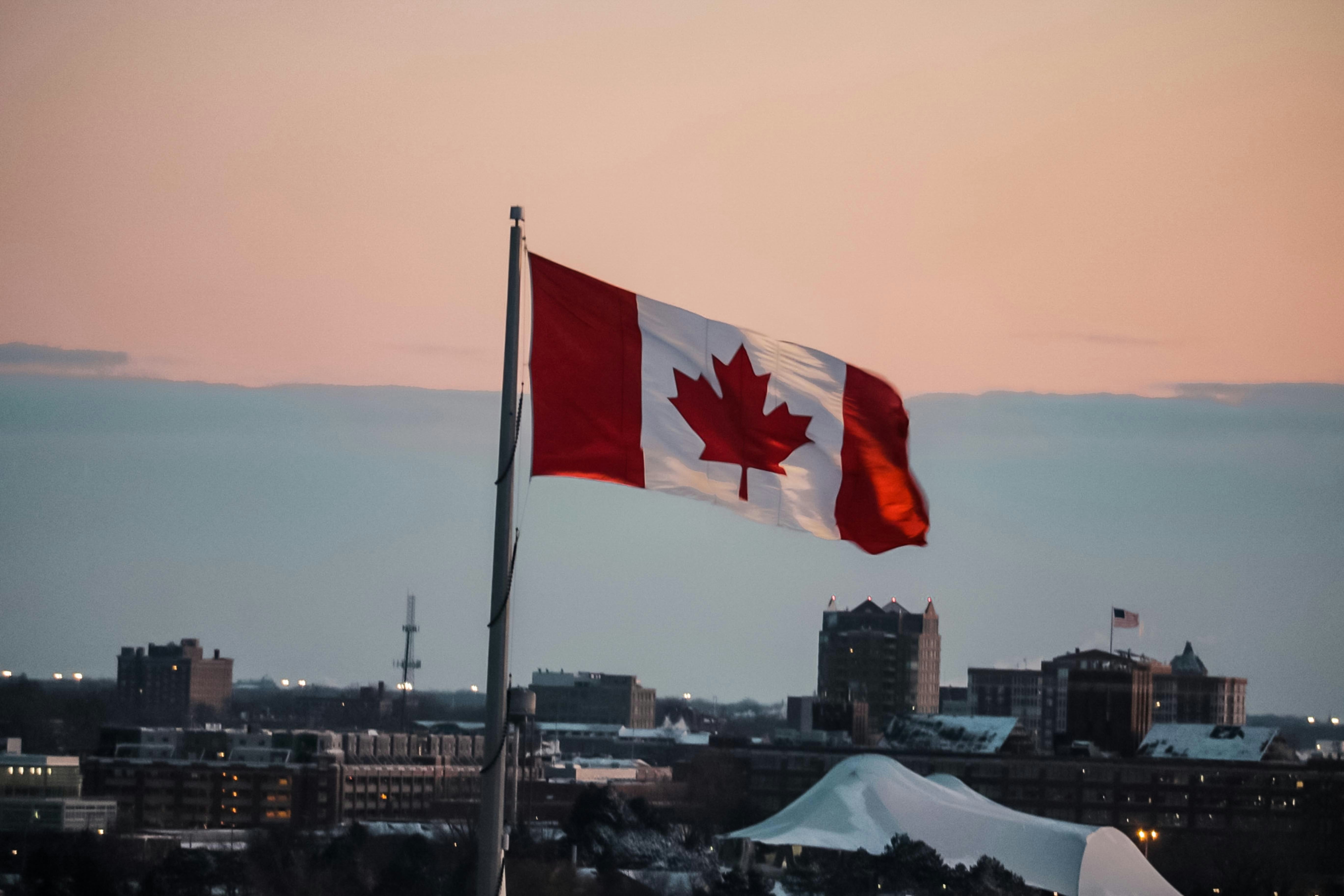
Photo by sebastiaan stam on Unsplash
Thanks for reading A Further Inquiry! This post is public so feel free to share it.
Comments
Nothing yet. Say the first thing.
Sign in to join the conversation.