
Part 1 of 3
Professor Milda Alisauskiene is a leading Lithuanian sociologist of religion at Vytautas Magnus University in Kaunas. Growing up during the Soviet era, she witnessed Lithuania’s national and religious awakening firsthand. She completed her undergraduate studies in 1994 and earned her master’s (1999–2002) at Vilnius University and PhD in sociology at VMU, where she now explores the interplay between religion, national identity, and human rights. Her 2023 monograph analyzes post-independence religious pluralism and the Catholic Church’s role in religion and state relations. Milda’s research sheds light on minority faiths, secular movements, and the ongoing negotiation of religious freedom in a modern EU democracy.
In this interview, Scott Douglas Jacobsen and Professor Milda Alisauskiene discuss Lithuania’s religious transformation from the late Soviet period through independence. Alisauskiene traces the public return of Catholicism, the Church’s role in Sąjūdis and nation-building, and tensions between historical religious privilege and universal human rights. They examine Lithuania’s constitutional distinction between traditional and other religions, minority resistance, Catholic institutional power, and the gradual liberalization of social attitudes toward atheism and religious difference within modern democracy.
Scott Douglas Jacobsen:What initially got you interested in religion, particularly from a sociological perspective?
Milda Alisauskiene: I grew up during Soviet times, but my teenage years coincided with the national and religious awakening. Religion became very interesting to me. There was quite a vivid religious life in my family, which drew my attention to religion as a social phenomenon. I began by studying Catholicism and the Catholic faith. I later continued at the master’s level, focusing more on religious studies. At that time, all of these fields were relatively new.
I began my undergraduate studies in 1994 and completed my master’s studies between 1999 and 2002. During these studies, I realized that the most compelling approach to religion, for me, was sociological. I wrote my master’s thesis in the sociology of religion and then pursued PhD studies in sociology at Vytautas Magnus University, where I continue to work to this day. An overview question would be helpful. Mhmm.
Jacobsen: How has religion evolved from 1991 to the present?
Alisauskiene: We cannot say that something dramatic happened to religion in 1990 when Lithuania declared independence. As with many social phenomena, it is rarely the case that change occurs at a single moment in time. There was a prelude to what followed. I would say that the softening of the Soviet state’s approach to religion had already begun during the lateBrezhnev period.
Beginning in the 1980s, two key events took place in Lithuania. In 1984, there was a celebration of the 500th anniversary of Saint Casimir—not his birthday, but a commemorative anniversary. Moreover, in 1987, there was a celebration of the 600th anniversary of Lithuania’s baptism.
These two anniversaries were permitted by Soviet authorities and publicly celebrated. Large crowds gathered to take part in both events. These moments helped pave the way for the return of religion to the public sphere. Then, of course, the founding of the National Awakening Movement, Sąjūdis, in 1988 was also supported by the Church. Several active priests participated in that movement.
Many of them were dissidents during the Soviet period, so they participated, and it was also evident that they were present. You could see them at meetings, events, and protests where thousands of people were demonstrating against Soviet authorities. On stage, you would always see a priest or two, sometimes even three. That helped pave the way for the return of religion after independence was declared.
The Roman Catholic Church, of course, had a long history in this country before the Soviet period. It played an essential role in the national awakening and the nation-building process at the end of the 19th century and the beginning of the 20th century.
It held an almost state religion position during the First Republic. So, after the collapse of the Soviet Union, the Church found itself at a crossroads. Many politicians faced a similar dilemma. On one hand, there was a vision to return to the role the Roman Catholic Church held during the First Republic—essentially a state religion model.
However, the context had changed. The Universal Declaration of Human Rights, the concept of freedom of religion, andall of that was now part of the discourse. You could not simply revert to the past while ignoring the religious freedoms of others.
Jacobsen: As a side note, regarding the UDHR—given the failure of the League of Nations—would you consider that period a kind of phase change in human history, where institutions and values began to genuinely reflect universality, at least in principle and international application?
Alisauskiene: I think yes. Yes. In this part of the world, it took time to understand the Universal Declaration of Human Rights. We also need to acknowledge that for a long time, states used the UDHR for their purposes.
For example, the Soviet Union emphasized that it was securing the social rights of individuals. In contrast, the United States emphasized political and civil rights. Today, we now recognize the importance of having a universal approach, where all rights should be preserved and respected.
During the Soviet period, what was lacking—and everyone knew it—were political rights, civil rights, and freedom of religion. A critical event concerning human rights during the Soviet period was the Helsinki Accords of 1975. That sparked hope among various minority groups within the Soviet Union that they might gain the freedom to leave the country or practice their religion freely.
That did not happen at the time, but it was already a sign that there was a movement toward the preservation of human rights.
Where was I? Yes, so after the Declaration of Independence, there was a question of what would happen to the Roman Catholic Church. Would it become a state religion? However, at the same time, as a new liberal democracy, we also wanted to adhere to the principles of the Universal Declaration of Human Rights.
Then you see in the Constitution this kind of built-in ambiguity. On one hand, it speaks of freedom of religion. Still, on the other hand, it introduces two categories of religious organizations: traditional and others.
When I conducted my research and published my monograph in 2023, I found evidence that already in 1992—before the Constitution was adopted—minority religious groups were resisting it. They did not want what they considered to be a discriminatory, state-imposed differentiation of religious organizations. They failed. They were accused of being unpatriotic or not supportive of the country.
So, there was this issue. On the one hand, it is exciting to observe how the Roman Catholic Church behaved in this context. Although the state had to adopt, to a certain extent, the principles of the Universal Declaration of Human Rights, the Roman Catholic Church expected that it would establish an international treaty with the Vatican.
This would allow the Church to define its role in the country more firmly. As a result, the Church was not particularly interested in further developing relations with the state that would include other religious groups.
They saw themselves as the central, dominant institution. Others were positioned outside the boundaries they had drawn. There is an assumption, for example, that Ukrainians are Roman Catholics, both groups being Catholic. However, whether those boundaries apply to the whole of society is another matter.
In Lithuania, census data shows that about 75% of the population identify themselves as affiliated with the Roman Catholic Church, whatever that may mean in practice. However, one in four respondents does not affiliate with the Roman Catholic Church. They may belong to other minority religious groups, or they may identify as non-believers, atheists, agnostics, etc.
For historical reasons—although there was a strong free thought movement during the First Republic of Lithuania—Soviet atheism, or state-imposed atheism, came to be viewed, and is still viewed, as an undesirable component of communism or Marxism. It is not welcome in society.
What we observe from research, especially when speaking with older generations of atheists in Lithuania, is that they often avoid disclosing this identity. They tend not to present themselves as atheists because they experience negativity and social ostracism.
Things are changing with younger generations. They are more willing to express this identity openly.
A Further Inquiry is a reader-supported publication. To receive new posts and support our work, consider becoming a free or paid subscriber.
Scott Douglas Jacobsen is the Lifestyle and Finance Writer and Editor for A Further Inquiry with more than 400 published articles in the outlet. He is the Founder and Publisher of In-Sight Publishing (ISBN: 978–1–0692343; 978–1–0673505) and Editor-in-Chief of In-Sight: Interviews (ISSN: 2369–6885). He writes for International Policy Digest (ISSN: 2332–9416), The Humanist (Print: ISSN, 0018–7399; Online: ISSN, 2163–3576), Basic Income Earth Network (UK Registered Charity 1177066), Humanist Perspectives (ISSN: 1719–6337), Vocal, Medium, The Good Men Project, The New Enlightenment Project, The Washington Outsider, rabble.ca, and other media. His bibliography index can be found via the Jacobsen Bank at In-Sight Publishing. He has served in national and international leadership roles within humanist and media organizations, held several academic fellowships, and currently serves on several boards. He is a member in good standing in numerous media organizations, including the Canadian Association of Journalists, PEN Canada (CRA: 88916 2541 RR0001), Reporters Without Borders (SIREN: 343 684 221/SIRET: 343 684 221 00041/EIN: 20–0708028), and others.
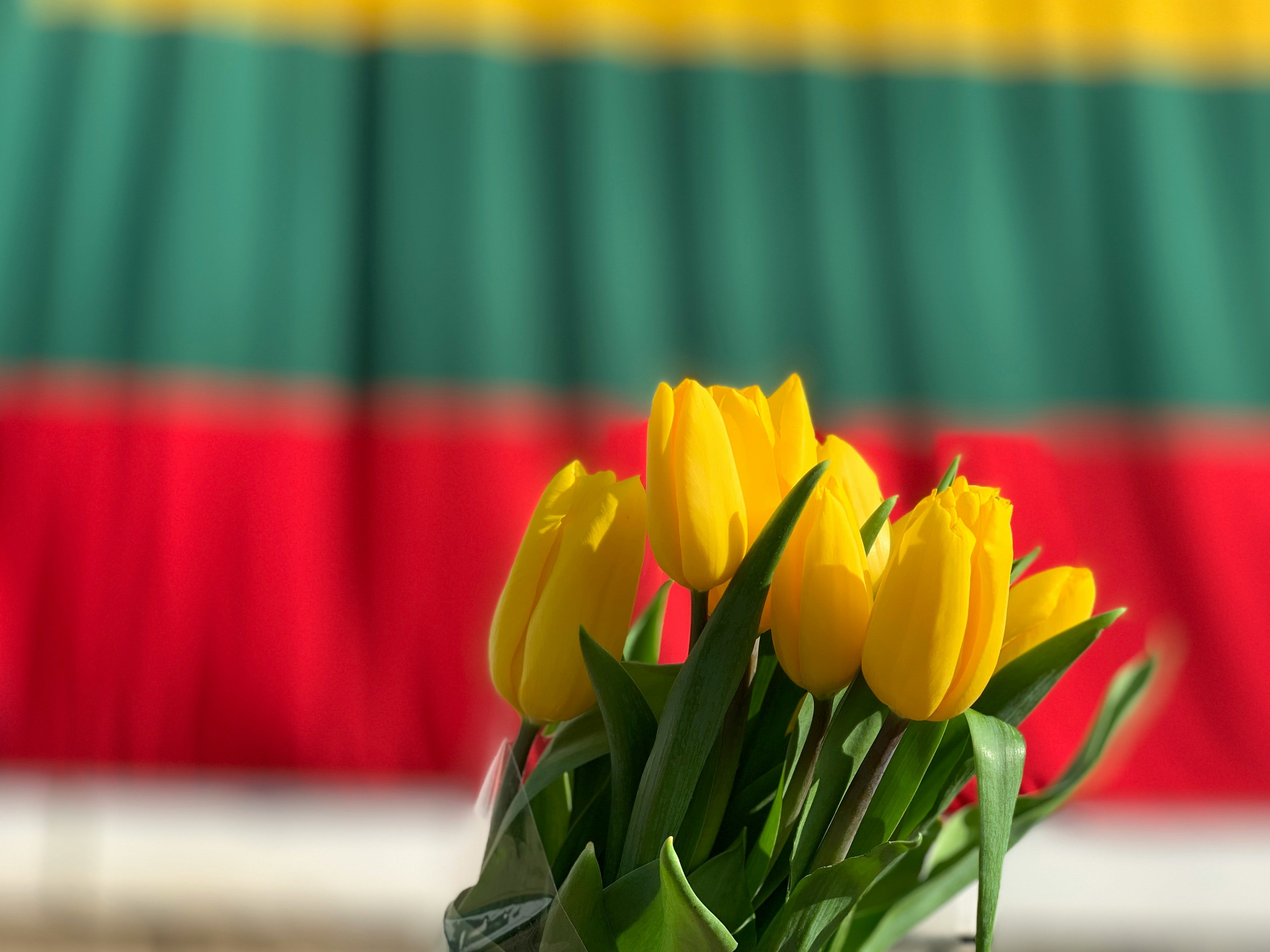
Photo by Justina Pakalnytė on Unsplash
Thanks for reading A Further Inquiry! This post is public so feel free to share it.
Comments
Nothing yet. Say the first thing.
Sign in to join the conversation.