
The Soccer Director
I was recently sitting with the executive director of a premier youth soccer club here in Central Florida. We were talking about the suddenly crowded youth sports advisory market. Landon Donovan has a model. Greg Olsen has a model. There’s GameChanger, Hudl, Buying Sandlot, and forty more former players behind them. The space right now looks like Lake Havasu on the Fourth of July. Loud, choppy, and everybody fighting for the exact same piece of water.
He cut me off before I finished. Told me they were already perfectly happy with their current service.
I asked him what it did, exactly.
It was a discovery database. A place to park your highlight tape and wait for someone to scroll past it. Essentially LinkedIn for student athletes.
Good platform. Great for what it does. A highlight reel on a database is still just a highlight reel on a database, even if you can filter by state.
I told him Afterburn was not building a database. We were building a personal brand. And when we are done building it, we wrap the highlight reel inside it.
If they are LinkedIn, we are a personalized 30 for 30.
The soccer director stopped looking at his phone.
The Infrastructure Being Built Is Not Being Built for the Athlete
Private equity just arrived at the conference level in college sports, and it did not show up to protect the student athlete experience.
The Big 12 Conference approved a five-year strategic partnership with RedBird Capital Partners in April 2026, the first major conference-wide private capital deal in NCAA history. RedBird provides the conference with a $12.5 million capital infusion and makes up to $30 million available to each of the 16 member schools as an opt-in line of credit, repaid at a double-digit interest rate out of future conference distributions.
So the schools that needed the money most will pay the most to access it. That is not a criticism. That is just how capital works when it shows up to a market that did not previously have better options.
What this deal actually signals has nothing to do with the Big 12’s balance sheet. It signals that the infrastructure layer of college athletics is being institutionalized at a pace the athletes inside it have not been prepared for. The U.S. youth sports industry is now a $40 billion annual market growing at 8 to 10% per year. BPEA EQT acquired IMG Academy in an all-cash deal worth $1.25 billion. Unrivaled Sports secured $120 million in growth equity at a valuation over $650 million.
The infrastructure being purchased is the facility, the database, the streaming rights, the uniform. The athlete wearing the uniform is the product driving the valuation. The athlete’s personal brand belongs to whoever builds the best filing system for it, unless the athlete builds it first.
RedBird did not take a position in the Big 12 because they believe in the student athlete experience. They took it because college sports is an undervalued, fragmented asset class with a captive audience and a century of brand equity. The athlete is still the product. The question is whether the athlete knows it yet.
The Lacrosse Captain from Seminole County, FL
A family came to Afterburn about their son. Lacrosse defensive captain. Public high school in Seminole County. Class of 2026. Good athlete, strong instincts, exactly the kind of player who shows up in every recruiting database with the same three lines: position, GPA, highlight reel link. Coaches scroll past profiles like his thirty times a day.
His parents believed their son was being undersold. Not because the database had his numbers wrong. Because the database had no mechanism to show who he actually was or what his personal brand actually stood for.
His father had served in the United States military, came home, and built a company that by any reasonable measure should not exist given where he started. This kid was the oldest of seven children. He had been accountable to six people his entire life before he ever walked onto a lacrosse field. He understood hierarchy not as a concept but as the operating system of his household.
That is not measurable in a database. It does not fit in a filter. You cannot sort for it by state.
We surfaced all of it. He was not just a defensive captain in title. He was the emotional infrastructure of his program. The one coaches trusted with conversations they did not have with anyone else. The one teammates deferred to in moments that had nothing to do with lacrosse.
His brand documentary did not show him running drills. It showed him talking about what accountability looks like when it is not optional. We wrapped his highlight reel inside that documented brand story and gave a Division II program a complete picture of the young man they were recruiting, not just the athlete.
He signed an athletic scholarship worth $120,000.
Not because the database found him. Because the film showed the program something the database structurally cannot.
What the Recruiting Database Was Never Built to Do
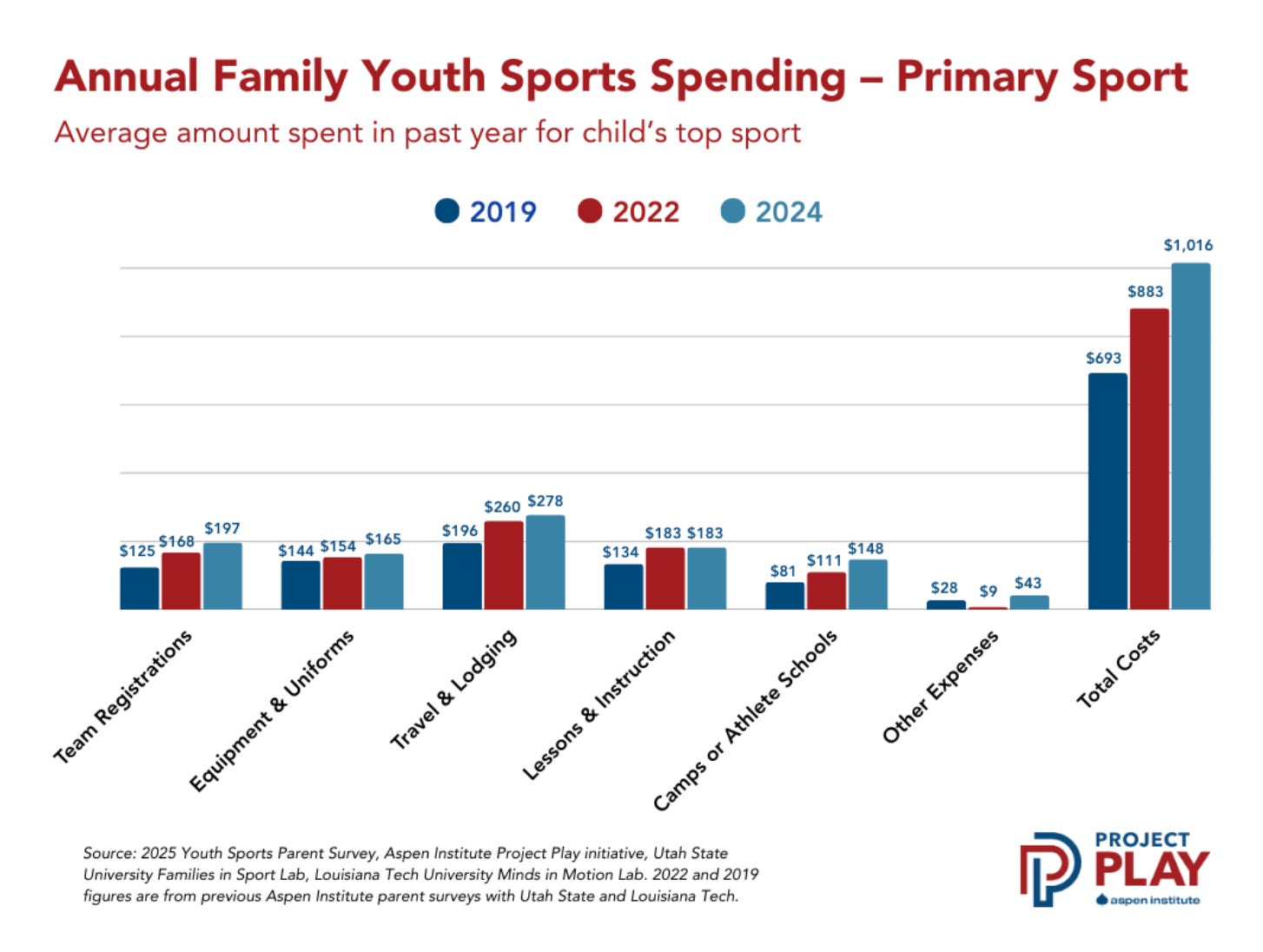
The NIL market hit an estimated $1.9 billion in 2025 and is projected to reach $2.55 billion in 2026. A high school quarterback can now sign an eight-figure deal before playing a single college snap. The average American sports family spent $1,016 on their child’s primary sport in 2024, a 46% increase since 2019.
The capital is real. The infrastructure to protect the people generating it is not.
Evaluators at the highest level need to know more than what you can do. They need to know who you are doing it for. They need to know if you can walk into a boardroom and represent their institution with the same authority you bring onto the field. A discovery database cannot prove any of that. It only proves you are available. Which is also what 50,000 other athletes in the same portal are proving at exactly the same moment.
A documented personal brand changes that equation. The highlight reel tells a coach what happened on Saturday. The brand story tells them who you are on every other day of the week. That is the living record that survives the contract cycle, the transfer portal, and the brand partnership negotiation.
Physical talent gets you in the room. Personal brand keeps you in the building.
Who This Is Actually For
The athletes who build lasting value are not the ones who figure out who they are mid-contract, when the pressure is highest and the leverage is lowest. They are the ones who arrive at the negotiating table already knowing.
Not just the athlete approaching the draft or graduation. The high school junior who is two years away from the most consequential financial event of their family’s life and is currently being evaluated by a system that was built to process volume, not recognize individuals.
The system wants athletes to stay focused on the physical valuation. The forty time. The fastball velocity. The vertical. In the era of House v. NCAA revenue sharing and nine-figure NIL deals, those metrics are the baseline, not the differentiator.
Build the brand story before the institution has the chance to write it for you.
Afterburn builds the personal brand before the institution has the chance to define it for the athlete. Start the conversation here.
Comments
Nothing yet. Say the first thing.
Sign in to join the conversation.