
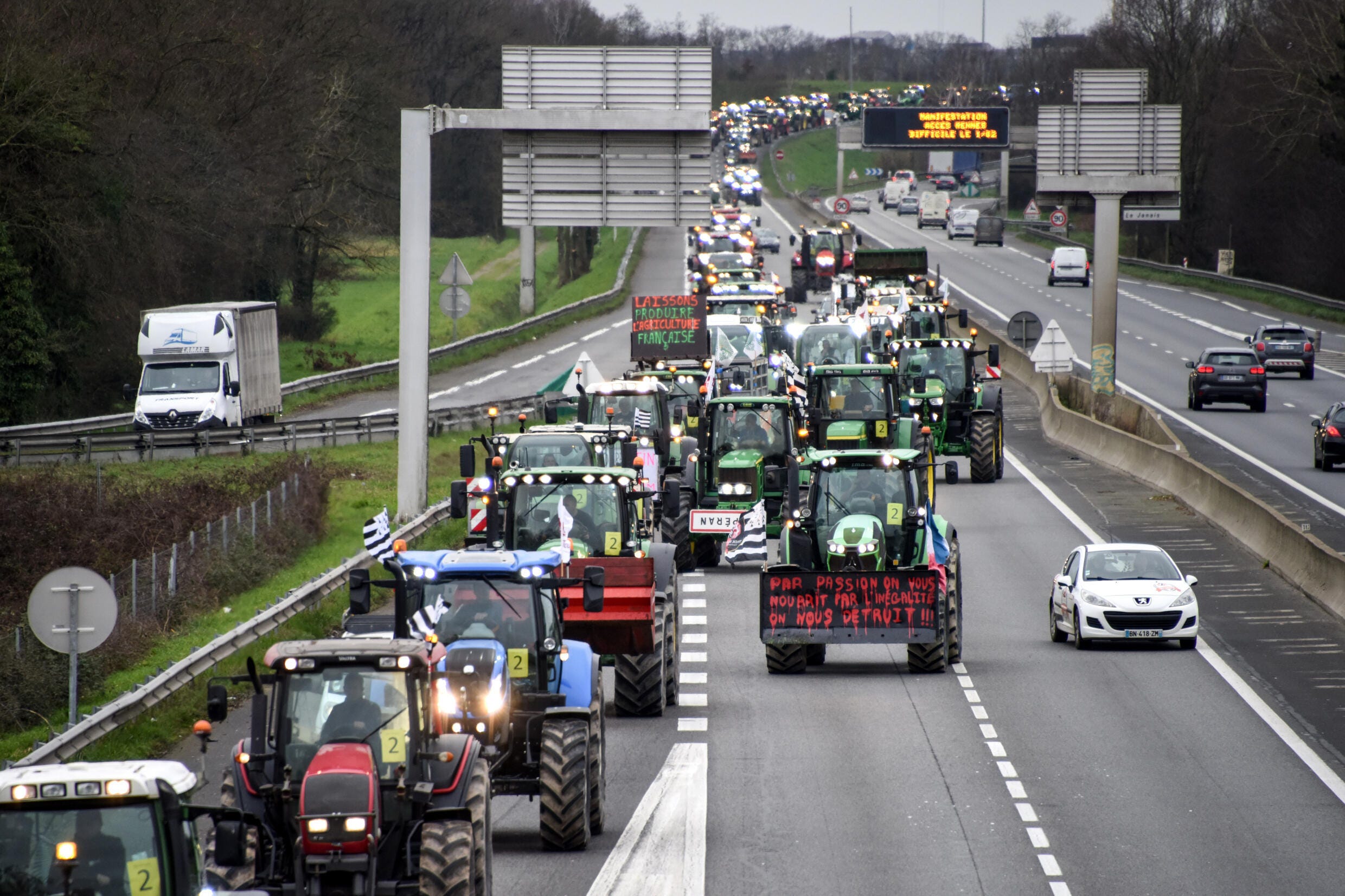
The first time I encountered a French national strike, I assumed something catastrophic had happened.
Trains were canceled.
Schools were closed.
Traffic lights appeared to be functioning on faith alone.
Smoke was rising somewhere in the middle distance.
Yet everyone around me behaved with the emotional urgency of people discussing pollen.
“Ah oui,” Jean-Michel said, shrugging lightly while loading onions into a reusable basket. “La grève.”
The strike.
As though this explained not only the current situation, but perhaps the weather, regional plumbing, and the collapse of the Roman Empire.
Coming from the United States, I found this deeply unsettling.
In America, disruption is treated like a software malfunction. We become furious if a Starbucks mobile order takes longer than four minutes. People start checking weather radar apps and threatening Yelp reviews. Entire emotional support systems collapse if the Wi-Fi flickers during a meeting called “Quick Monday Touch Base.”
France, meanwhile, treats societal inconvenience like a form of seasonal expression.
A transport strike?
Naturally.
Garbage piling up in Paris?
Très compliqué.
Farmers blockading highways with tractors and wheelbarrows full of manure?
Well, obviously. The tomatoes have become political.
It took me a while to realize the French are not protesting because the system is broken.
The protesting is part of the system.
This is not a country that believes discomfort should remain private.
In France, dissatisfaction is considered a community activity.
At first, I kept trying to determine whether things were “getting better.”
This was my first mistake.
French strikes are not problems moving toward resolution. They are atmospheric conditions.
Like fog.
Or jazz.
You don’t conquer them.
You move through them carrying pastries.
The truly astonishing part is how calm everyone remains while society appears to be briefly unraveling.
During one Yellow Vest protest in Paris, it started raining while my daughter and I were walking past an H&M.
I insisted we run inside and buy an umbrella because apparently my survival instincts end where mild dampness begins.
Moments later, metal security gates began slowly descending over the entrance.
The entire store stopped.
Over the loudspeaker, a calm voice announced that protests were approaching down the boulevard and the store was temporarily locking down “for customer safety.”
Nobody screamed.
Nobody panicked.
People simply continued holding sweaters and examining scarves while democracy moved toward us in the distance.
My daughter looked at me in horror and whispered:
“Mom. Is there anything worse than getting trapped inside an H&M?”
Honestly, there was not.
A few minutes later, the gates reopened, the protest rolled past, we bought the umbrella, and everyone carried on with their day as though temporary retail imprisonment during civic unrest was a perfectly normal interruption between errands.
I once watched a man in Terrasson calmly select avocados while an animated debate about pension reform erupted nearby with the intensity of a minor naval conflict.
No one left the produce section.
An old woman continued examining melons.
Someone’s dog was asleep under a display of endives.
Meanwhile, on television, Paris appeared to be experiencing the opening scenes of Les Misérables directed by Michael Bay.
At some point, I realized the French relationship with striking is deeply philosophical.
Americans tend to believe a functioning society is one in which inconvenience is minimized.
The French seem to believe a functioning society is one in which people still care enough to complain publicly and set things on symbolic fire.
During one strike, someone set manure on fire in the middle of a roundabout near Montignac.
Traffic slowed respectfully around it.
At one point, I caught myself trying to take a selfie with it and realized my understanding of “normal public behavior” had shifted considerably since moving to France.
And honestly?
There is something weirdly admirable about that.
In the U.S., most people fantasize privately about overthrowing systems while continuing to answer emails titled:
“Gentle Reminder!”
The French skip directly to:
“No ❤️”
Then they drive a tractor into a government building.
Efficiency.
Of course, there are levels to this.
There are the small strikes.
The medium strikes.
The “perhaps don’t attempt rail travel this week” strikes.
And then there are the truly majestic ones.
The strikes where garbage collectors stop working long enough for Paris to begin resembling an 18th-century painting about human consequence.
The strikes where teachers vanish, trains disappear, and everyone you know says:
“Yes, but this is important,” while calmly drinking coffee at noon.
That contrast never stops amazing me.
France can make civil unrest feel… curated.
There will be a man passionately screaming about labor rights while wearing an excellent scarf.
Someone will absolutely be carrying a baguette.
A grandmother will cross directly through the chaos wearing an apron and the expression of someone mildly annoyed by parking.
And somehow, despite all of it, dinner reservations remain sacred.
That may be the most French thing of all.
The government may be collapsing.
Public transportation may exist only as a rumor.
Half the country may currently be blocking the other half with agricultural equipment.
But at 7:30 pm, people still sit down and discuss duck confit as though civilization is holding beautifully.
Which, in a way, perhaps it is.
Because after living here for a few years, I’ve started to suspect the French understand something Americans don’t:
A society without friction is not necessarily healthier.
Sometimes the noise means people still believe they belong to the outcome.
Sometimes complaining is a form of optimism.
And sometimes, apparently, democracy smells faintly of smoke, espresso, and tractor exhaust.
No posts
Comments
Nothing yet. Say the first thing.
Sign in to join the conversation.