
A Magical Theory of Art is a new series exploring the parallels between art and magic. I’ll be releasing a new essay each month with the full moon.
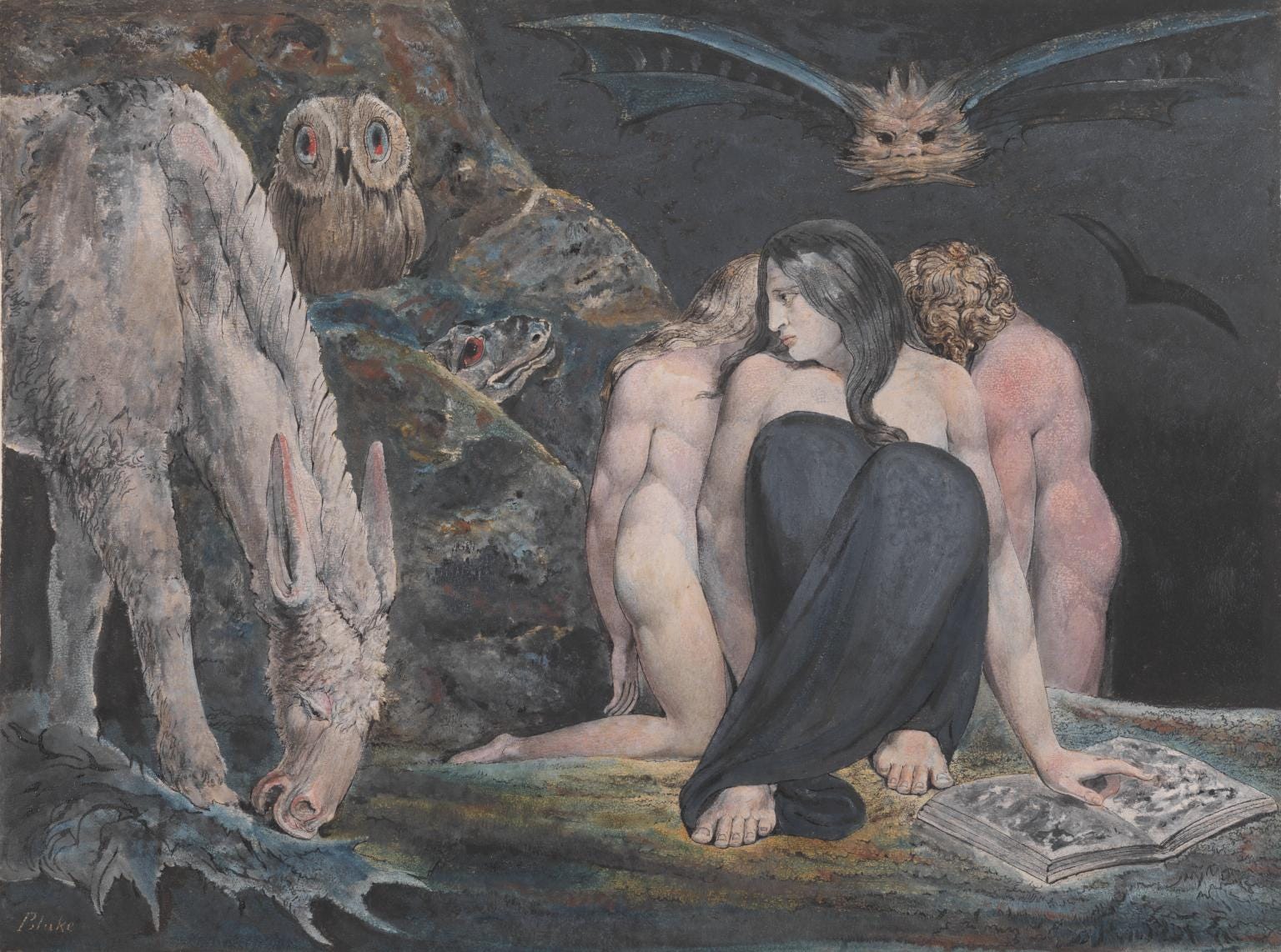
English artist and poet William Blake famously said, “If the doors of perception were cleansed, everything would appear to man as it is, infinite.” As a mystic and prolific writer and painter, Blake exemplifies what I mean by the Artist as Magician: an intermediary between realms, someone able to perceive the “unseen”, with access to a rich phantasmagorical inner world, and capable of giving it form through craft.
To clarify, the “unseen” isn’t necessarily found on some inner plane, although one could argue that the imaginal is always skewing perception one way or another. The Artist as Magician doesn’t need to be a mystic to be able to see the world in a new light and share their way of seeing with others.
To me, the notion of perception is key to understanding what the Magician represents. His creative power lies not in manipulating reality per se, but the viewer’s perception of it—bending it to his will, transforming it, immersing it in an experience of his own making. Reframing it. Giving it meaning. This is what artists do (and advertisers, but that’s a conversation for another day).
In the Tarot, Arcanum I: the Magician embodies this very dynamic: consciousness focused into form. He stands as a fitting emblem for the Artist as Magician.
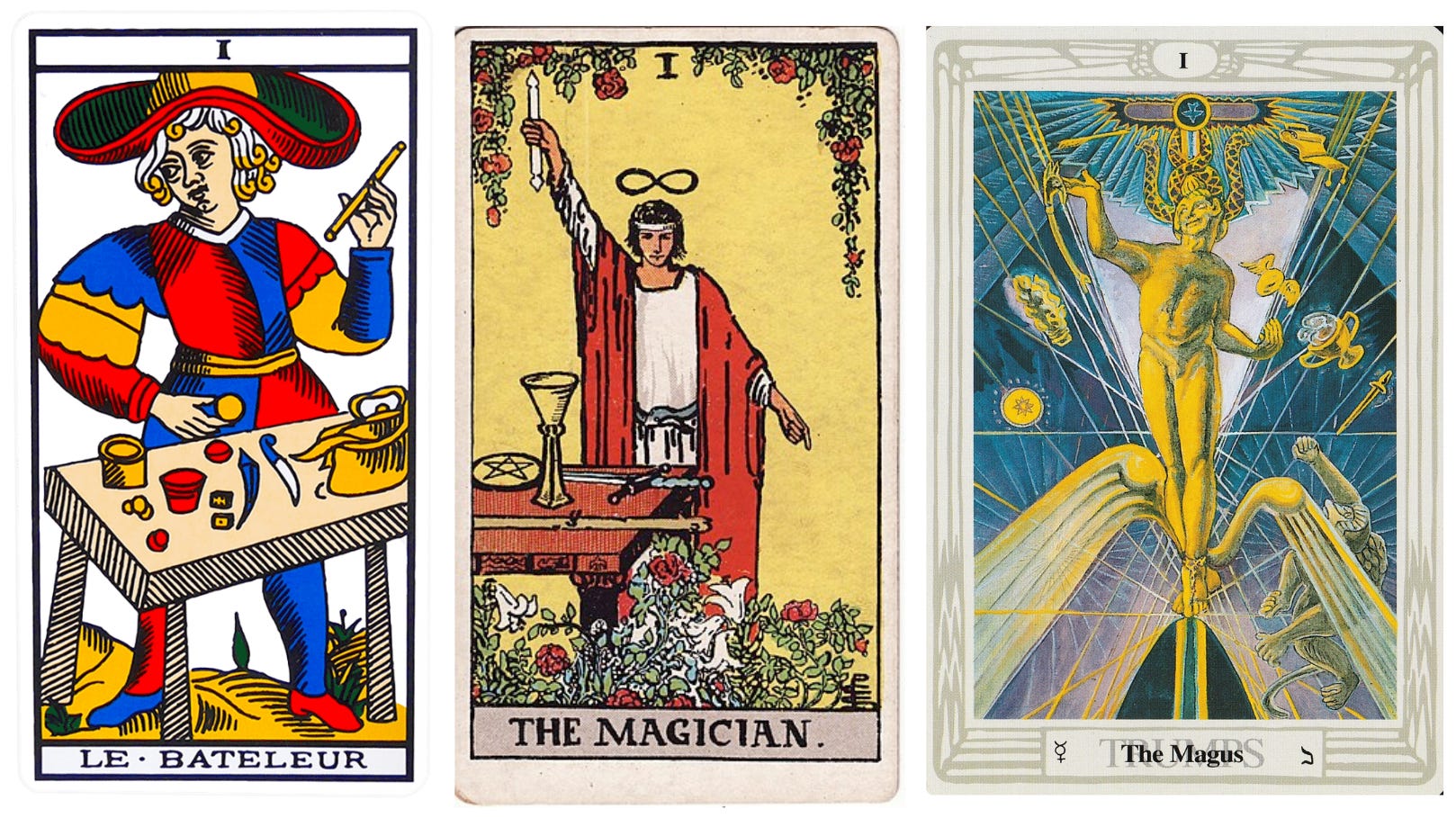
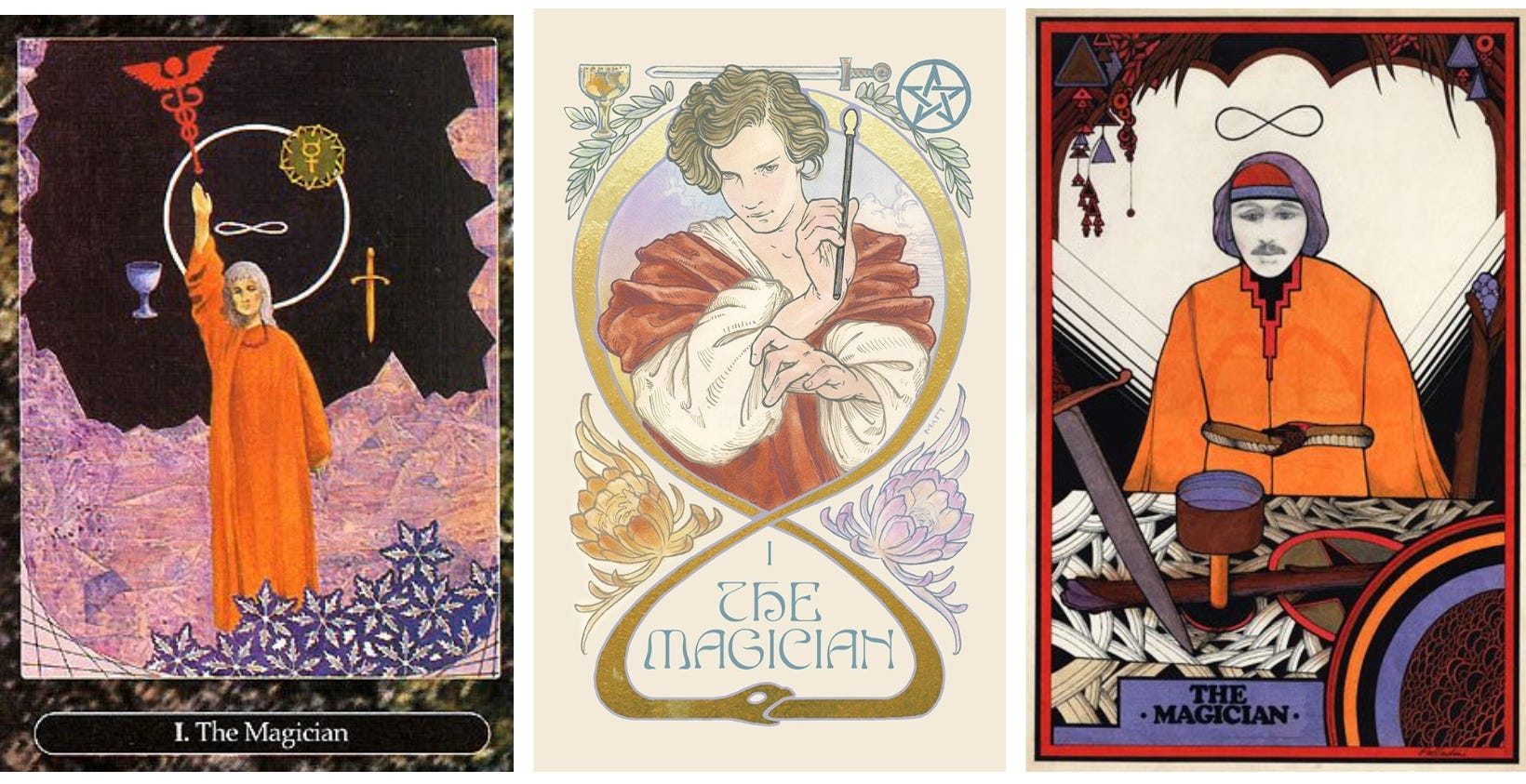
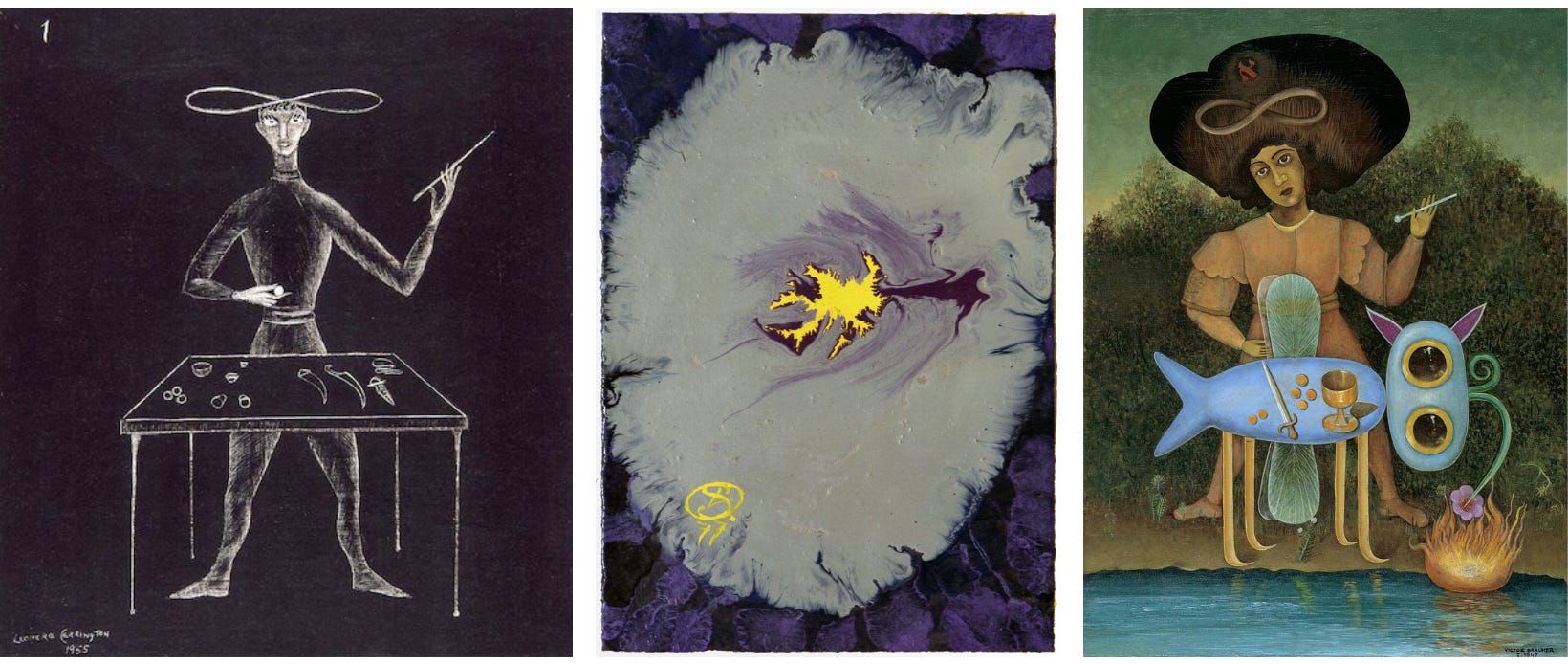
I don’t want this essay to read like a tarot booklet, but I’ll briefly break down some of the key symbolism you’ll notice recurring in artistic representations of the Magician:
Linked to Thoth, Mercury, and Hermes: deities of magic, language, knowledge, and alchemical transformation. Messengers who can cross the boundaries between worlds. Creators with mastery over their powers. Psychopomps and guides through the unseen.
Lemniscate & Ouroboros: Endless cycles of creation and destruction. Nothing fixed, a constant state of flux and transformation. An infinite process of giving and receiving.
The Tools: The four elements. Skillful use of the physical world. Intellect, emotion, vitality/desire, and the body.
The Magician’s Stance: A living conduit, like a lightning rod channeling creative energy. His will directs the inner fire without being consumed by it. Manifestation is an active process.
The Juggler: Skill, dexterity, and mastery. Juggling masks and realities, the Magician reminds us that life itself is a performance, a play of appearances.
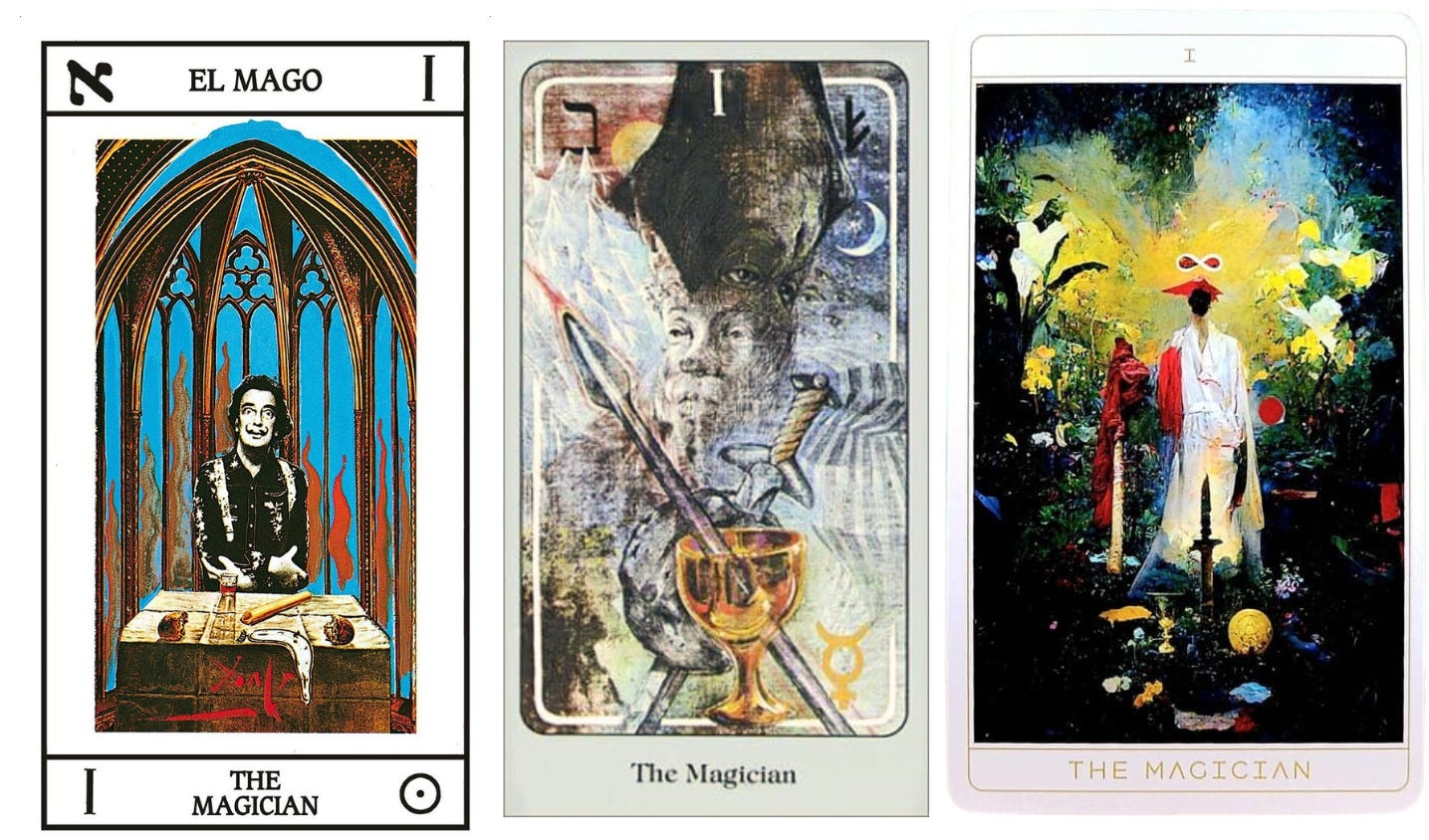
As a visual medium, the tarot has inspired countless artistic reinterpretations, especially since the publication of the iconic Waite–Smith deck in 1909. Here are some examples:
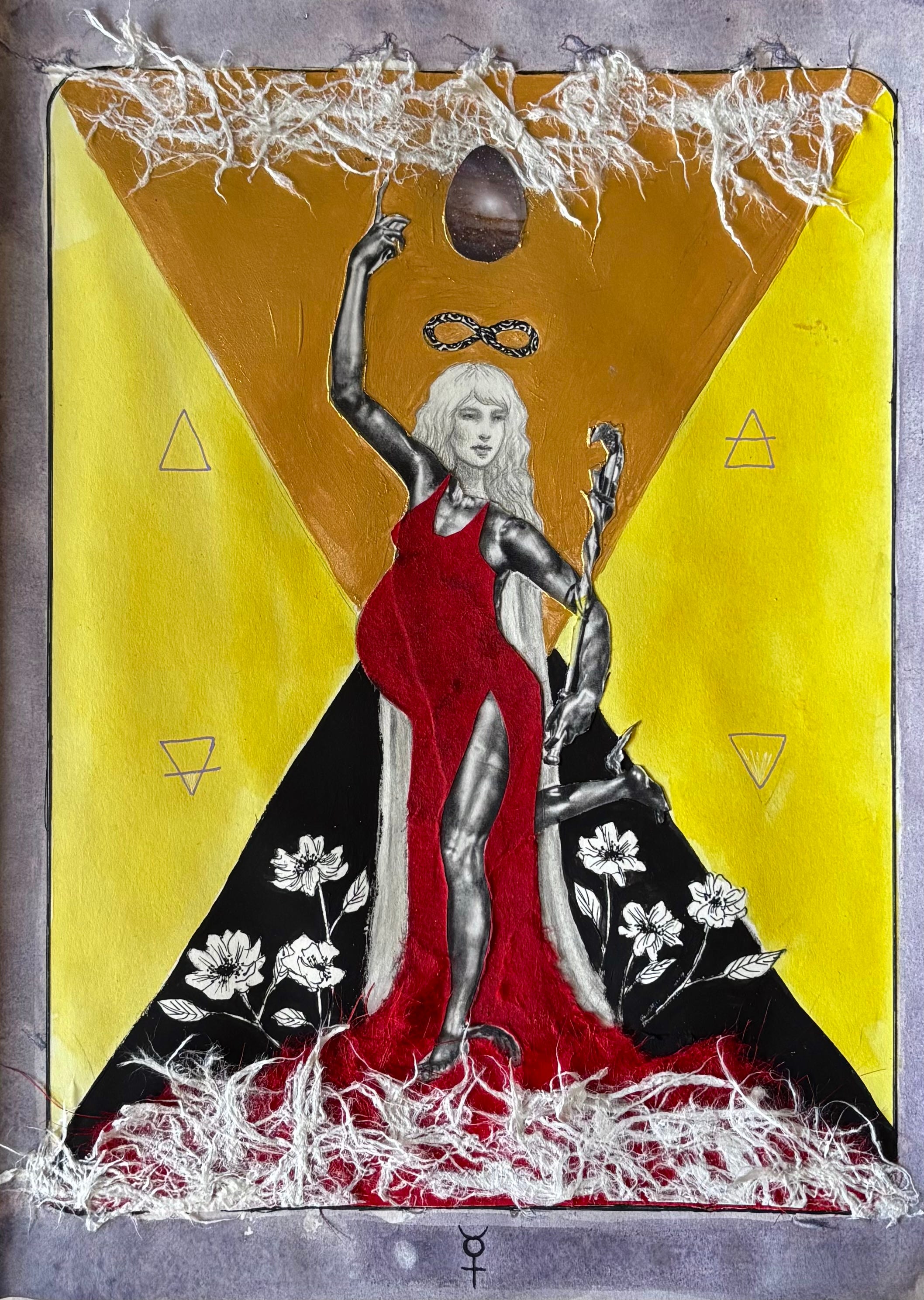
At last, here is my take on the Magician Arcanum. I knew I wanted to weave some personal imagery into this piece, and serendipitously found a statue of Mercury striking the Magician’s pose in one of my collage books. I let the rest of the image unfold from there.
One way I like to connect with tarot archetypes is through automatic writing. I sit down with a pen and paper and meditate on a card until words begin dropping into my field of awareness. While writing this, I asked for a one-liner and the Magician said: “Think. Say. Make. Do. From the centre to the periphery. As Above. So Below. As Within. So Without.”
Pretty standard, even cliché, Magician stuff, I’ll admit. But I think the gold lies in returning to this practice again and again (or sit with it longer), until the more basic associations fall away and something unexpected begins to speak through.
Russian philosopher and esotericist P.D. Ouspensky was one of the first to experiment with this technique. His essay The Symbolism of the Tarot (1913) includes personal meditations on each Major Arcana archetype. Of the Magician, he writes:
I trembled before the depth of the mysteries I touched . . . The words I heard seemed to be uttered by the Great Magician himself, and it was as though he spoke in me.
I was in deep trepidation and at moments I felt there was nothing before me except the blue sky; but within me a window opened through which I could see unearthly things and hear unearthly words [italics mine].
I love that last sentence.
Chilean and French avant-garde filmmaker Alejandro Jodorowsky is also an uber tarot geek. In The Way of Tarot (2004), he gives voice to each Arcanum. His Magician emphasizes the timeless present, where the future is seeded through each action taken:
I, The Magician, take a position at the crossroad of eternity and infinity that we call the present. I am loyal to everything that I am: my body, my intelligence, my heart, my creative force. My table of flesh has its three feet rooted in the ground; I anchor myself somewhere in the diversity, and it is from this point that I take action. Out of the infinite number of possibilities, I have chosen one, my golden pentacle, the traction point that will lead me to Totality.
Now, your turn.
I’m sure there are plenty of songs inspired by The Magician out there, but my favourite one is Andy Shauf’s. The video is an absolute masterpiece, opening the floodgate to a trippy, hallucinatory dimension to get lost in, if only for a few minutes.
Thanks for reading! If you know some great Magician-related art or have some thoughts on the parallels between art and magic, let me know in the comments.
Comments
Nothing yet. Say the first thing.
Sign in to join the conversation.