
The Heaviside Symposium is proud to announce that Sonnet Software founder and Board Chair James Rautio will be a keynote speaker at The Heaviside Symposium in Huntsville, Alabama, January 17-18, 2027. His topic will be: “The Long Road to Maxwell's Equations.”
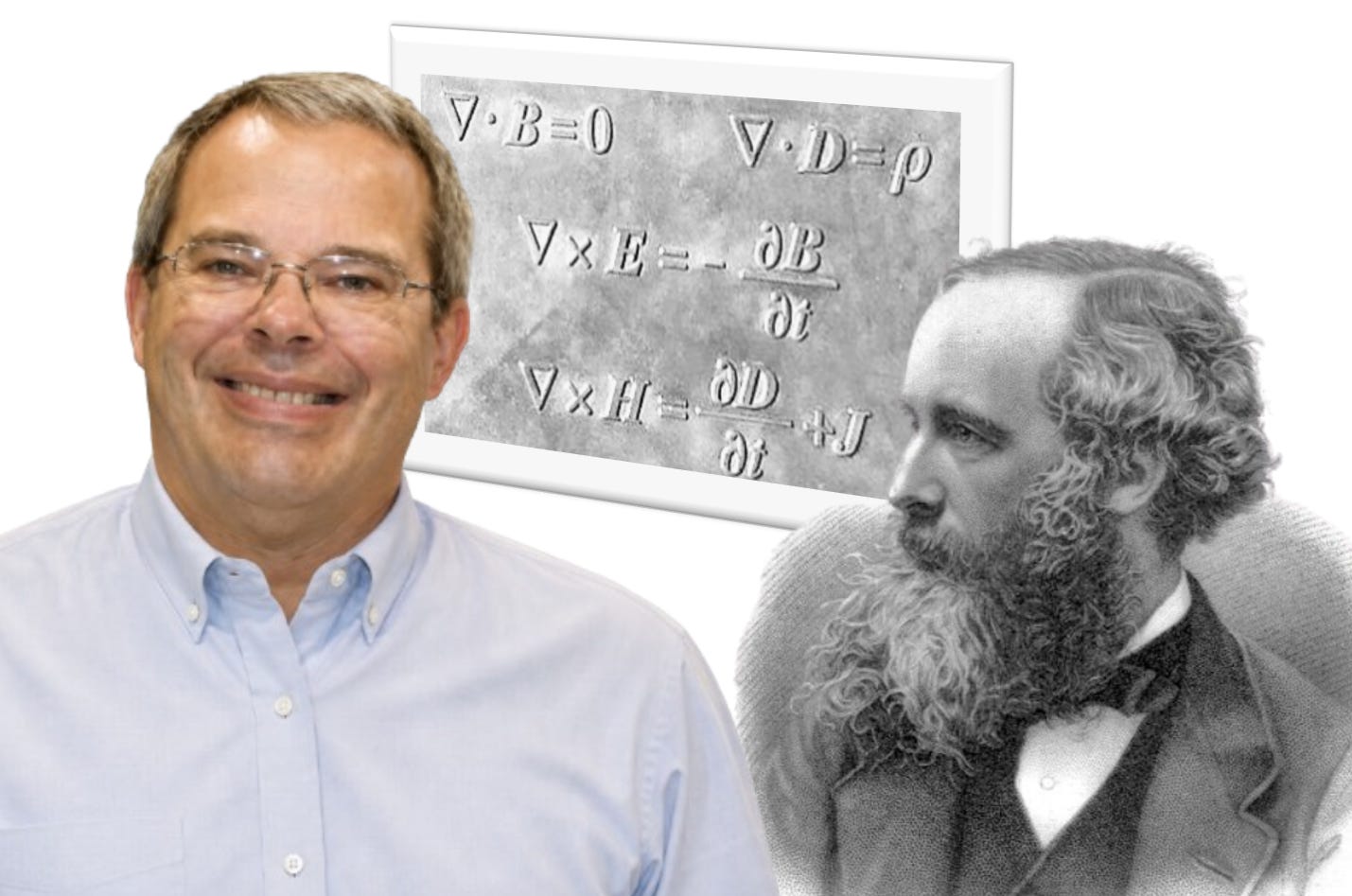
The Long Road to Maxwell’s Equations
Today, every engineering student learns “Maxwell’s equations” as four elegant equations describing electricity, magnetism, and electromagnetic waves. Yet James Clerk Maxwell never wrote them in that form. His original theory, presented in the 1860s, consisted of a far more complicated mathematical framework that many contemporaries found difficult to understand and few accepted.
This talk traces the remarkable journey from Maxwell’s original work to the concise equations familiar today. It follows the contributions of the four principal “Maxwellians”—Oliver Heaviside, George Francis FitzGerald, Oliver Lodge, and Heinrich Hertz—who simplified Maxwell’s mathematics, established the physical reality of electromagnetic waves, and transformed an obscure theory into the foundation of modern electrical engineering.
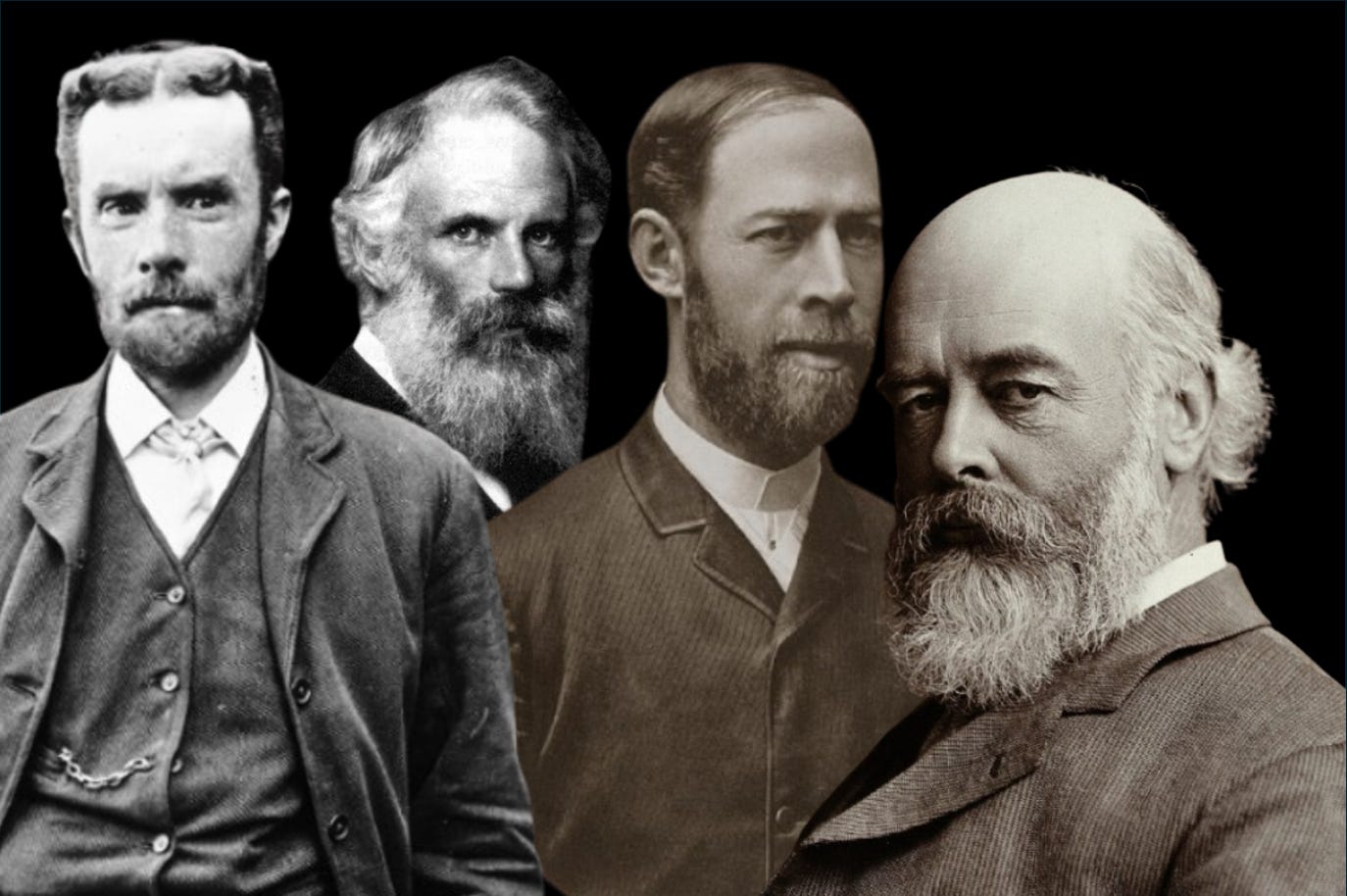
Along the way, the presentation explores why Maxwell’s theory was initially resisted, how Heaviside’s mathematical reformulation reshaped the subject, and why Hertz’s experiments finally convinced the scientific world that light and radio were manifestations of the same phenomenon.
The story reveals that one of history’s greatest scientific revolutions was not the work of a single genius alone, but the product of a generation of determined scientists and engineers whose efforts bridged the gap between profound theory and practical technology.
About Dr. James C. Rautio
James C. Rautio is founder and president of Sonnet Software, a leading developer of electromagnetic simulation software used throughout the microwave and RF industry. An IEEE Fellow, a Corresponding Fellow of the Royal Society of Edinburgh, and ACES Fellow, he earned his Ph.D. under Roger F. Harrington and has spent his career advancing numerical electromagnetics in engineering practice.
Alongside his technical work, Rautio has devoted decades to researching the life and legacy of James Clerk Maxwell. Building on The Life of James Clerk Maxwell, the classic 1882 biography by Lewis Campbell and William Garnett, he has worked to make Maxwell's life and writings more accessible to modern audiences through extensive historical research, lectures, publications, and digital editions of rare source material. He has delivered more than 150 lectures on Maxwell worldwide and was instrumental in preserving and restoring Maxwell's home at Glenlair, helping renew international appreciation for one of science's greatest pioneers.
About The Life of Maxwell
Not long after Maxwell’s untimely death, his friend from childhood, Lewis Campbell, collected family letters and diaries, and drew on his intimate familiarity with Maxwell and his family to write a biography of the late scientist. This biography includes charming contemporaneous sketches and drawing of Maxwell’s childhood by his rather talented first cousin Isabella Wederburn Blackburn. William Garnett took the lead describing Maxwell’s scientific life and accomplishments. The Life of Maxwell by Lewis Campbell and William Garnett is in the public domain. Recently, however, Sonnet Software Founder, James Rautio, released a newly revised and updated version including modern photographs of the restoration efforts at Maxwell’s estate, Glenlair, Cavendish Laboratory artifacts, and a photograph of the recently dedicated statue of Maxwell in Edinburgh with his beloved dog, Toby, and the “colour wheel” he used to explore the primary colors of light. Dr. Rautio’s updated and illustrated The Life of Maxwell is available on Amazon.
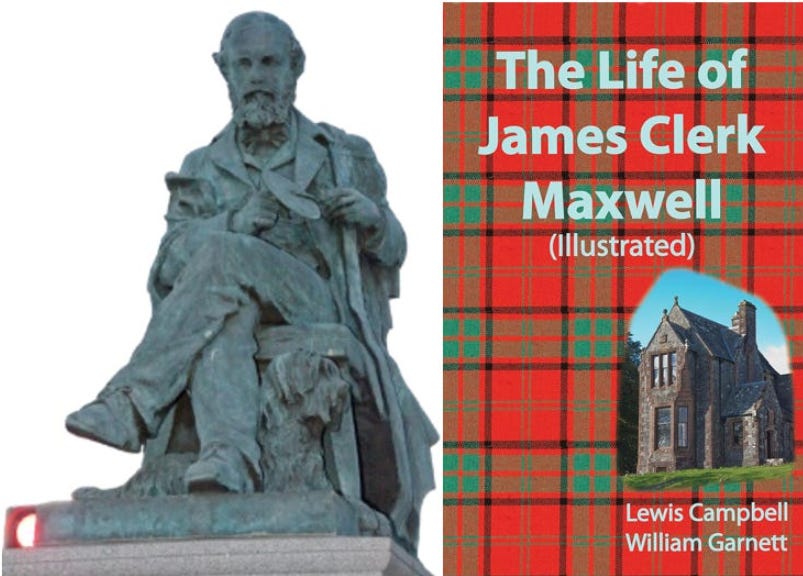
As part of the Heaviside Symposium program, Dr. Rautio will be delighted to autograph copies of his books. Dr. Rautio’s work on Maxwell also includes:
James C. Rautio, “Fire! fire! fire! [fire that destroyed the James Clerk Maxwell home]“ Microwave Magazine, IEEE, Volume 14, Issue 4, June 2013.
James C. Rautio, “Toby’s Statue“, IEEE Microwave Magazine, June 2009, pp 48-60.
James C. Rautio, “Twenty Three Years: The Acceptance of Maxwell’s Theory“, Microwave Journal, Vol. 51, No. 7, July 2008, pg 104.
James C. Rautio, “In Search of Maxwell“, Microwave Journal, Vol. 49, No. 7, July 2006, pp. 76-88.
James C. Rautio, “Maxwell’s Legacy“, IEEE Microwave Magazine, June 2005, pp. 46-53.
About Sonnet Software
Sonnet Software is a leading developer of high-frequency electromagnetic (EM) simulation software used for the design and analysis of RF, microwave, millimeter-wave, and antenna circuits.

Its flagship products are based on the method of moments and are widely used by engineers and researchers in industry, government, and academia to model planar electromagnetic structures with high accuracy.
About The Heaviside Symposium
The Heaviside Symposium will bring together historians, engineers, physicists, mathematicians, and independent scholars over Martin Luther King, Jr. Day weekend (January 17-18, 2027) for two days devoted to exploring Heaviside’s life, work, and enduring influence. Hosted in the “Rocket City,” Huntsville, Alabama at Signals: The Museum of the Information Explosion, participants will meet in an extraordinary venue surrounded by one of the world’s premier collections of historic communications technology, providing an ideal setting for examining the ideas that shaped the modern information age.
Dr. Rautio joins Professor Bruce J. Hunt on the list of distinguished keynote speakers.
A Call for Papers is available, and the opportunity to signup and purchase advanced tickets will be available, soon!
That’s all for now. Remember always to keep calm, and make physics great again.
More soon,
Hans
Sign up for free email updates on the Heaviside Symposium and weekly posts on Fields & Energy. Consider becoming a paid subscriber to support our work.
Comments
Nothing yet. Say the first thing.
Sign in to join the conversation.