
The Heaviside Symposium is proud to announce that Cambridge Professor & Author of “The Scientific Legacy of Oliver Heaviside,” Peter Davidson will be a keynote speaker at The Heaviside Symposium in Huntsville, Alabama, January 17-18, 2027. His topic will be: “Heaviside’s Forgotten Physics: From Cherenkov Shock Cones to Gravito-Magnetism.”
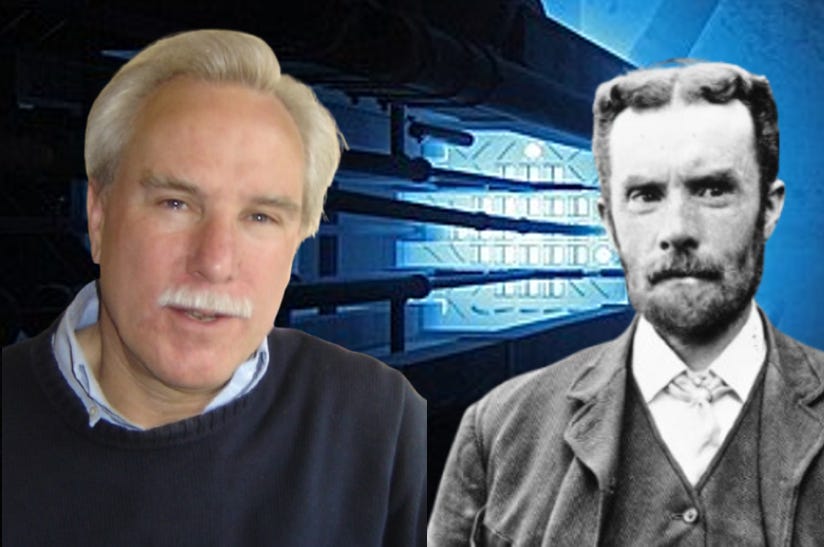
Heaviside’s research in engineering (telegraphy and telephony) and in applied mathematics (vector calculus and the operational calculus) is relatively well known and much talked about, as is his early work in physics (Maxwell’s equation and the Poynting vector), which is rightly celebrated. However, his later work in physics, say that from 1893 onwards, was almost completely ignored for well over half a century, until its rediscovery in the second half of the 20th century. Indeed, in some cases, such as his work on synchrotron radiation, he is still not credited for his discoveries. Perhaps one of the central mysteries that surround the enigmatic Heaviside is why physicists, as distinct from engineers and mathematicians, chose to almost completely ignore much of his seminal work in physics for such a long time.
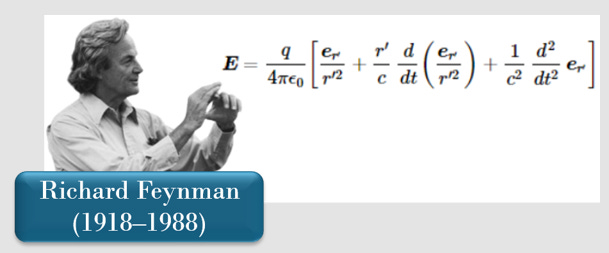
One example of this is the elegant Heaviside-Feynman equation for radiation from a relativistic charge executing arbitrary motion. Written down by Heaviside in 1904, the equation was completely ignored by a generation of physicists, only to be rediscovered by Richard Feynman in 1963 and showcased in the Feynman Lectures in 1963. It was not until the 1999 edition of Jackson’s classic text on electrodynamics that Heaviside was widely credited with the discovery. Similarly, in 1904, Heaviside established many of the properties of synchrotron radiation from orbiting charges. Motivated by recent speculation about atomic structure, Heaviside wanted to calculate the energy radiated from an orbiting electron, and in doing so he discovered the columnated radiation beam from an orbiting charge, correctly establishing the width and intensity of the radiation beam. The discovery of a columnated radiation beam is usually credited to physicists working in the 1940s, such as Julian Schwinger, and the many historical reviews of synchrotron radiation consistently fail to mention Heaviside.

In this talk, we focus on two more of Heaviside’s seminal discoveries in physics, Cherenkov radiation and gravitational waves. Both of these are now recognised by specialists as important discoveries, but neither are widely celebrated in the broader scientific community. In 1888, the year after Ernst Mach first published images of a Mach cone in supersonic flow, Heaviside sketched the radiation cone behind a charge moving through a dielectric at a speed exceeding the phase velocity of light. He returned to this topic several times, but it was not until 1900 that he finally managed to get a complete mathematical description of the shock cone, complete with singularities on the cone surface. His discoveries went unnoticed and, when the 1958 Nobel Prize in physics went to Cherenkov and colleagues for the discovery and theory of Cherenkov radiation, Heaviside was not mentioned once. Indeed, it was not until 1974 that Heaviside’s pre-emptive discovery of Cherenkov radiation was highlighted by Tom Kaiser, who wrote to Nature, complaining that Heaviside had been overlooked. It took another 10 years before one of the Nobel Prize winners finally conceded priority to Heaviside, in 1984.
Heaviside’s work on gravitational waves met with a similar fate. Keen to free Newtonian gravity from instantaneous action at a distance, Heaviside developed, in 1893, what is now known as the theory of gravito-magnetism. This is a theory of gravity that mimics Maxwell’s equations and has two gravitational fields, the conventional Newtonian field, which is associated with all mass and is the analogue of the electric field, and one associated with masses in motion, which is the analogue of the magnetic field. As with Cherenkov radiation, this work was overlooked by physicists, only to be rediscovered in 1969. Gravito-magnetism is now known to be a non-relativistic limit of general relativity. It plays a prominent role in astrophysics.
Peter Davidson is a mechanical engineer, born and educated in Scotland. He worked on industrial research in the UK, for Tube Investments, and the USA, for Westinghouse, before pursuing an academic career.
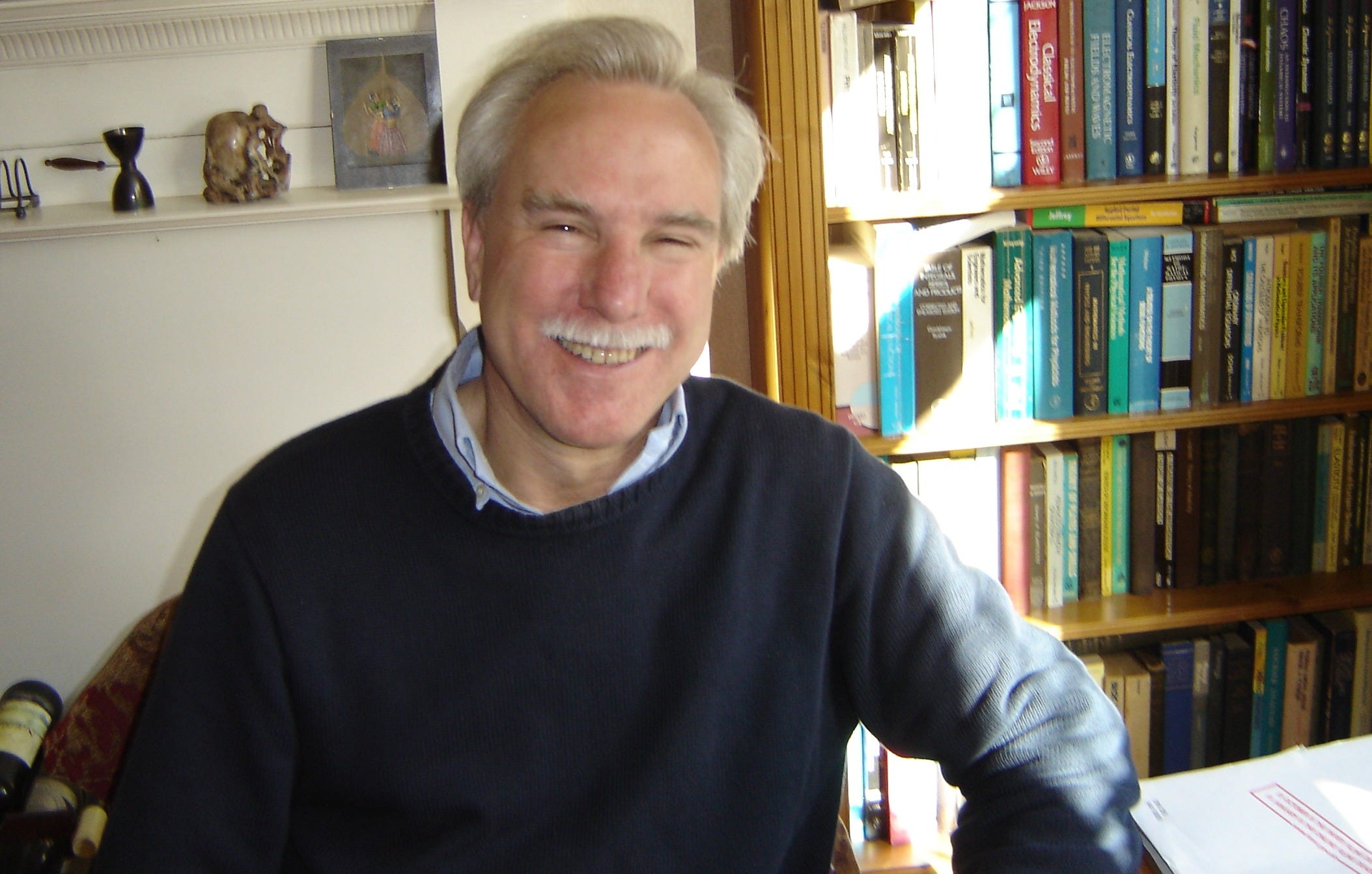
He has been at the University of Cambridge since 1994, where he is now Emeritus Professor of Fluid Mechanics. He is the author of over 100 journal papers in the fields of process metallurgy, turbulence, magnetohydrodynamics, geophysical flows, and planetary dynamos. He is also the author of 8 textbooks, including popular monographs on turbulence and magnetohydrodynamics, as well as a scientific biography of Oliver Heaviside, scheduled for publication just in time for the Heaviside Symposium. He was an associated editor of the Journal of Fluid Mechanics from 2000 to 2025, and was awarded the Institute of Materials 1996 prize for best paper on non-ferrous metals. He was a Visiting Professor at Ecole Normale Supérieure, Paris, in 2015, and Sorbonne University, Paris, in 2019.
To be released in January 2027, this book is a scientific biography of Oliver Heaviside, the maverick genius of physics and engineering whose contributions were long underestimated. Born into Dickensian poverty in London in 1850, Heaviside received little formal education and never held an academic position. Largely self-taught and working in intellectual isolation, he nevertheless produced ideas of extraordinary originality and depth that reshaped multiple scientific disciplines.
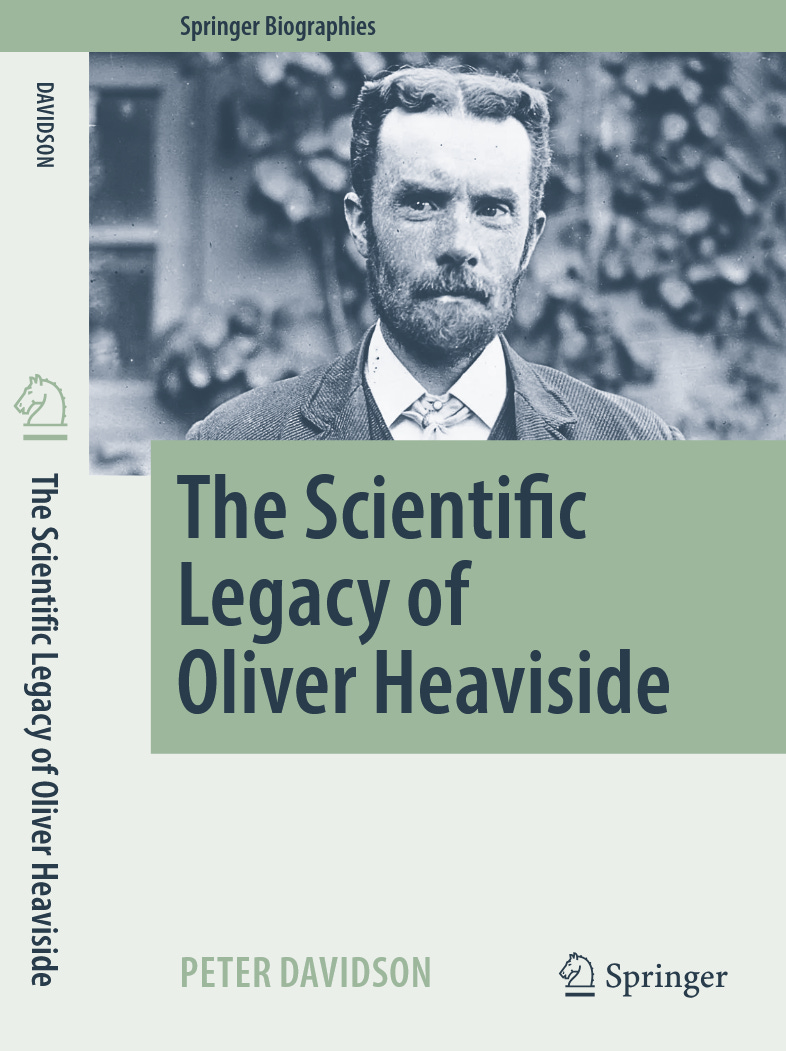
Heaviside made seminal contributions to electrical engineering, including fundamental advances in telegraphy and telephony and the prediction of the ionospheric layer that now bears his name. In physics, his work transformed electromagnetic theory, clarified the behavior of fields generated by moving charges, and anticipated concepts later associated with gravitational waves and Cherenkov radiation. In applied mathematics, he pioneered vector calculus and developed operational methods that proved essential for solving complex differential equations. Much of this work was neglected or misunderstood during his lifetime and for decades thereafter, only to be rediscovered and fully appreciated in the second half of the twentieth century.
Aimed at graduate students and researchers in engineering and the physical sciences, this is not a popular or anecdotal biography. Instead, it offers a detailed, technically informed account of Heaviside’s life and scientific ideas, situating his achievements within their historical context while carefully explaining their conceptual significance. The book provides a thorough reassessment of a singular figure whose legacy continues to influence modern science and technology.
The Heaviside Symposium will bring together historians, engineers, physicists, mathematicians, and independent scholars over Martin Luther King, Jr. Day weekend (January 17-18, 2027) for two days devoted to exploring Heaviside’s life, work, and enduring influence. Hosted in the “Rocket City,” Huntsville, Alabama at Signals: The Museum of the Information Explosion, participants will meet in an extraordinary venue surrounded by one of the world’s premier collections of historic communications technology, providing an ideal setting for examining the ideas that shaped the modern information age.
Professor Peter Davidson joins Dr. James Rautio, and Professor Bruce J. Hunt on the list of distinguished keynote speakers for The Heaviside Symposium.
James Rautio to Keynote The Heaviside Symposium
·
Aug 13
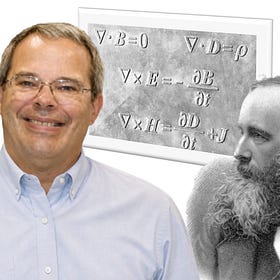
The Heaviside Symposium is proud to announce that Sonnet Software founder and Board Chair James Rautio will be a keynote speaker at The Heaviside Symposium in Huntsville, Alabama, January 17-18, 2027. His topic will be: “The Long Road to Maxwell's Equations.”
Bruce J. Hunt to Keynote The Heaviside Symposium
·
Aug 10
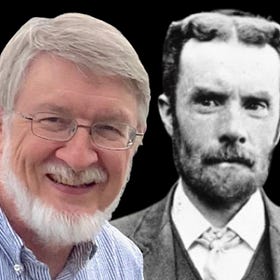
The Heaviside Symposium is proud to announce that UT Austin Professor Emeritus Bruce J. Hunt, author of The Maxwellians and Imperial Science: Cable Telegraphy and Electrical Physics in the Victorian British Empire will be a keynote speaker at The Heaviside Symposium
A Call for Papers is available, and the opportunity to signup and purchase advanced tickets will be available, soon!
Call For Papers: The Heaviside Symposium
·
Aug 1
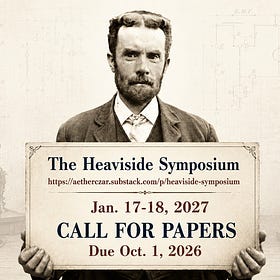
MLK Day Weekend January 17-18, 2027; Hosted by, Signals: The Museum of the Information Explosion in Huntsville, Alabama. Want to present a paper? Email your title and a 150-200 word abstract at the link in this post. The abstract deadline is October 1, 2026. Registration details coming soon.
That’s all for now. Remember always to keep calm, and make physics great again.
More soon,
Hans
Comments
Nothing yet. Say the first thing.
Sign in to join the conversation.