
April releases from the EIA, OPEC, and the IEA point to a market undergoing a rapid shift. The market has moved from expectations of oversupply at the start of the year to a tightening environment driven by disruptions in the Middle East. This shift has already pushed prices higher, though the path forward depends on how demand responds.
The divergence across agencies becomes clearer when comparing their underlying supply and demand assumptions.
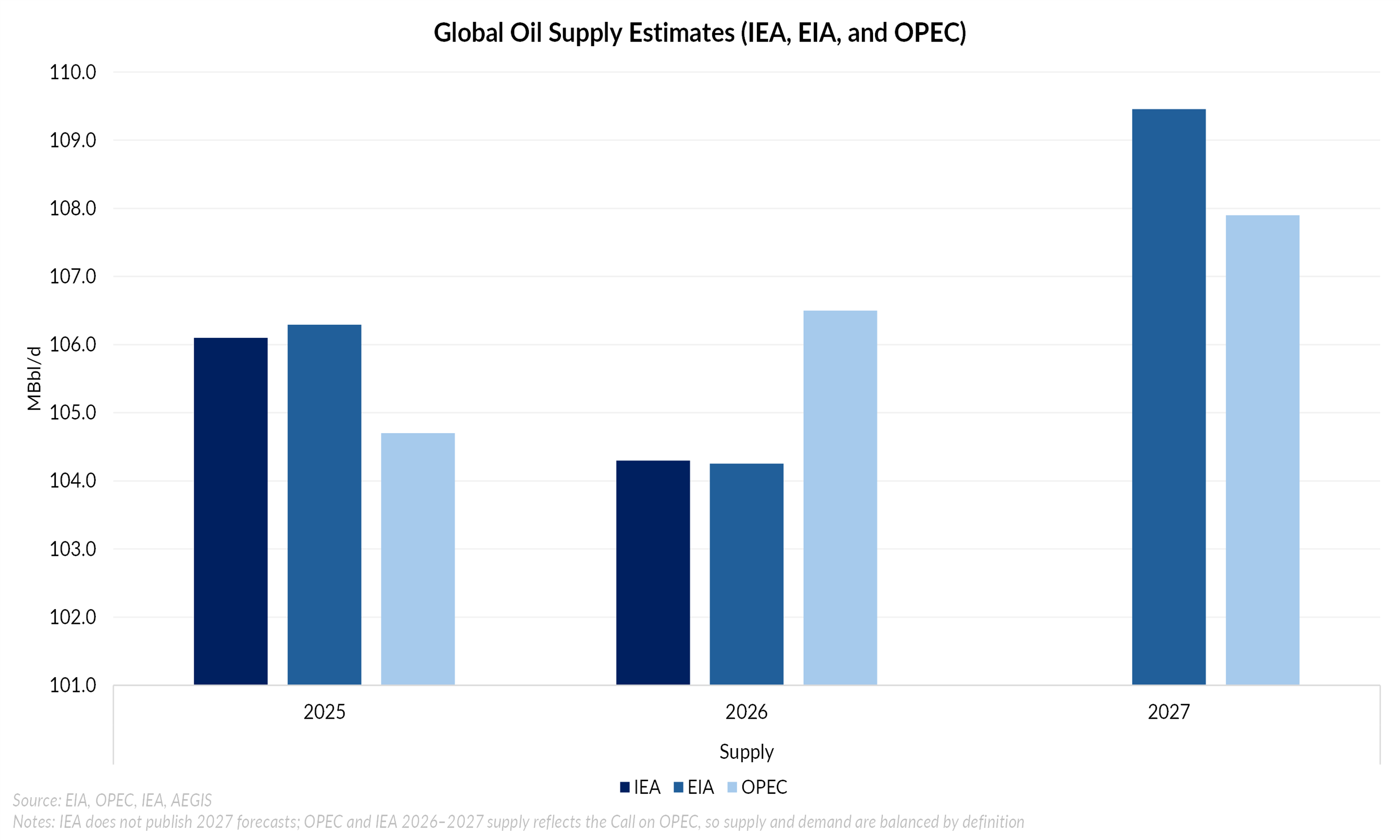
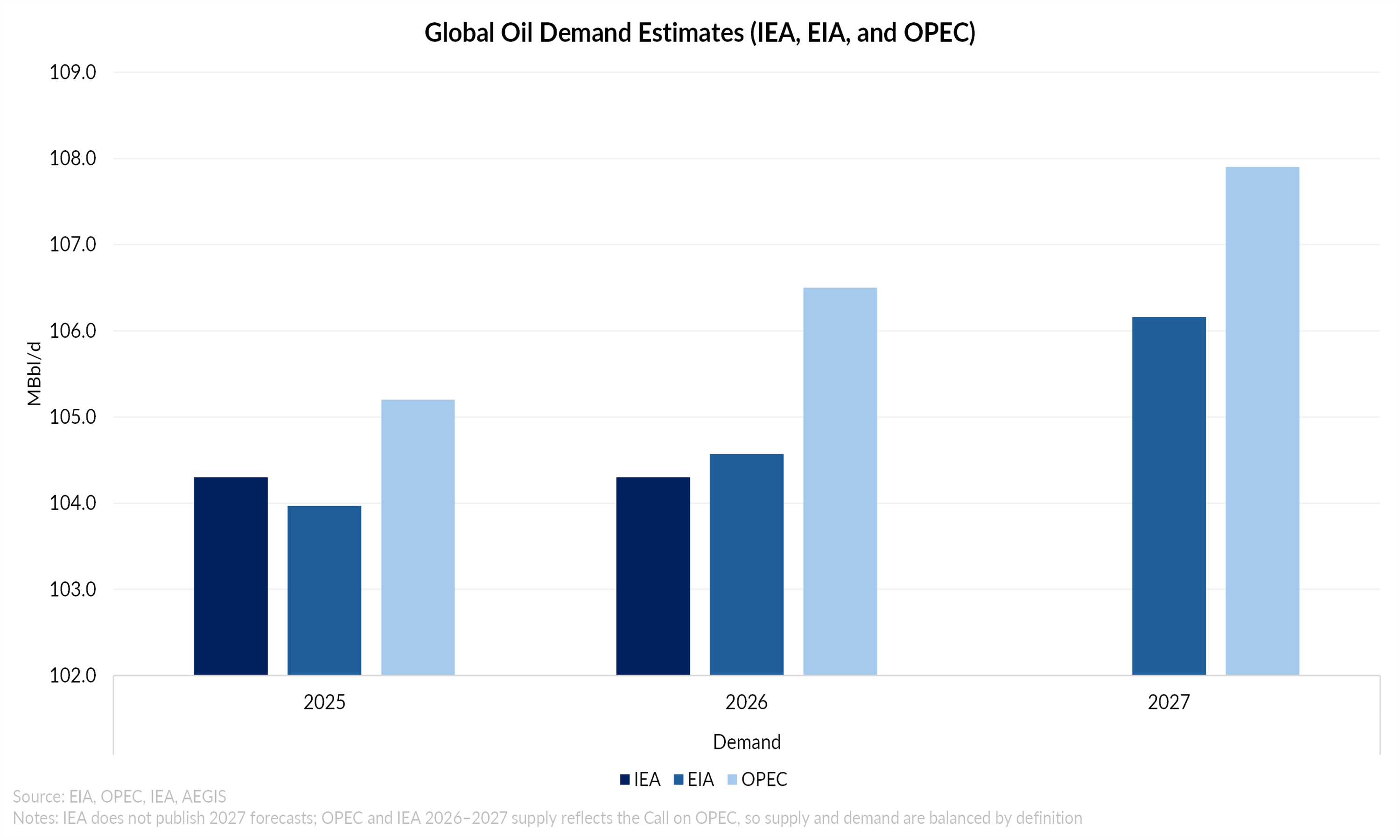
Both the EIA and OPEC estimate that roughly 7.5–8.0 MMbbl/d of crude production was shut in during March, with disruptions worsening into April. The EIA projects outages peaking near 9.1 MMbbl/d before gradually easing as flows normalize later in the year. The loss of supply has tightened prompt balances and increased competition for available barrels, particularly as key export routes remain constrained.
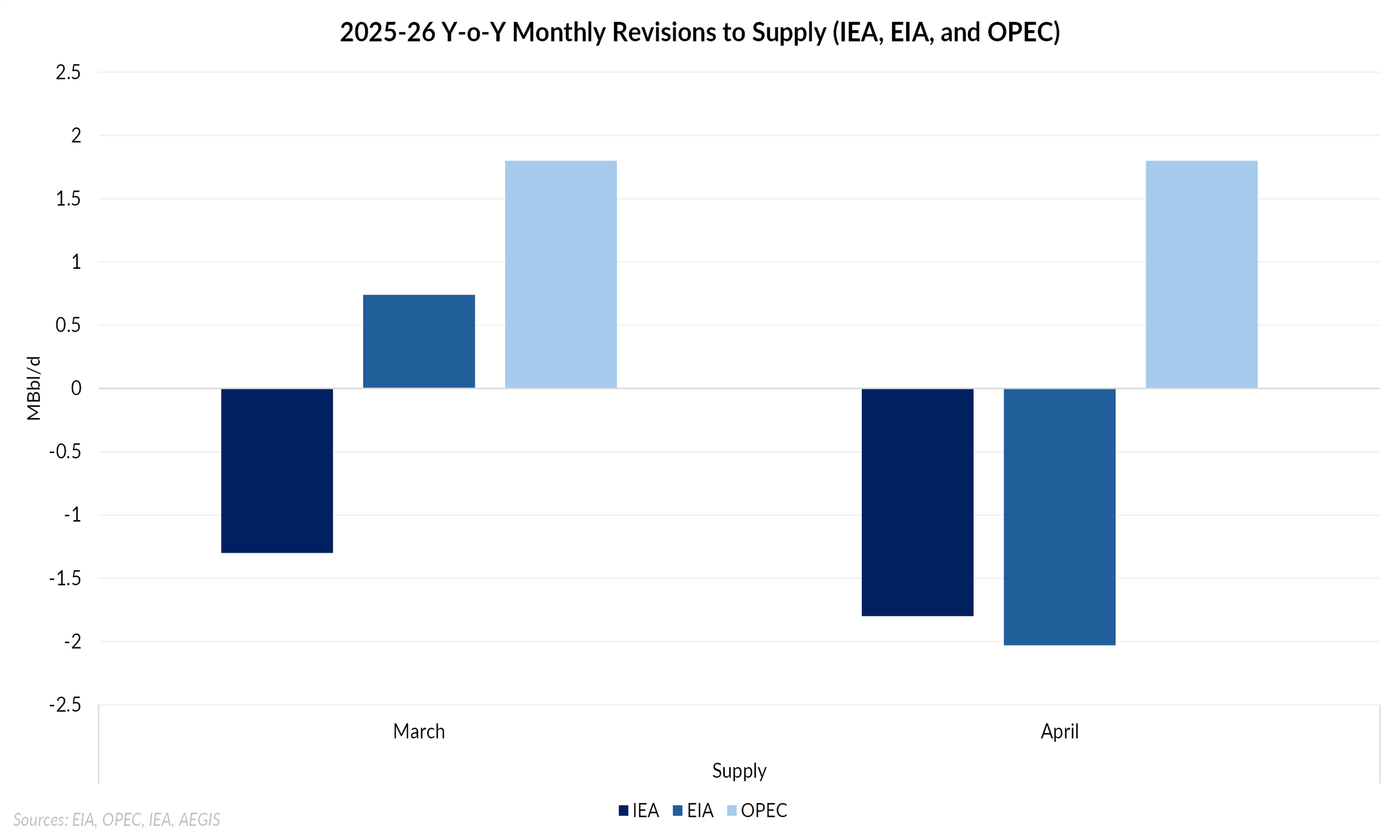
As shown below, supply revisions are concentrated in the EIA and IEA, while OPEC remains largely unchanged given its figures are constructed to balance demand.
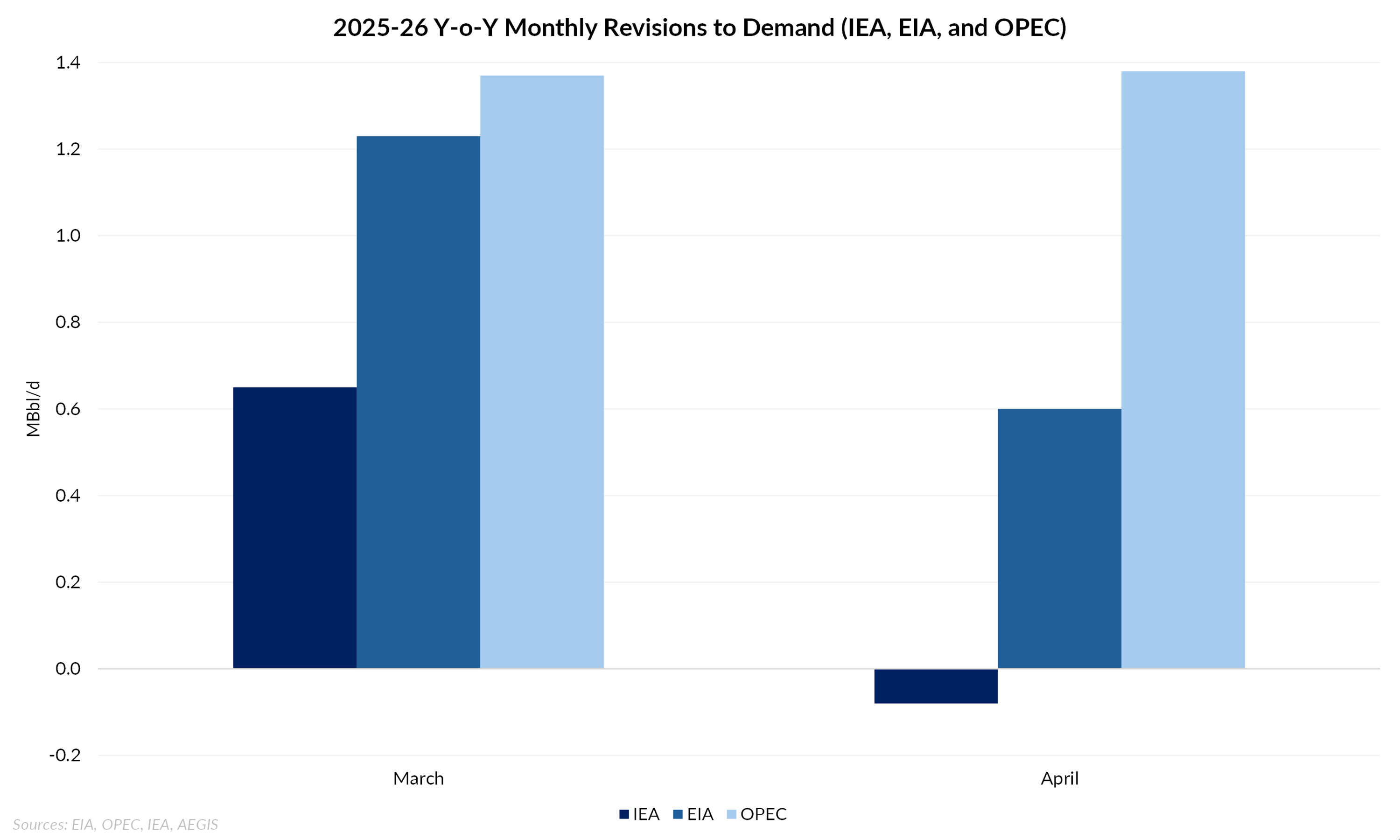
The divergence is most pronounced on the demand side. OPEC maintains a constructive outlook, forecasting global oil demand growth of approximately 1.4 MMbbl/d in 2026, driven primarily by non-OECD economies. In contrast, the EIA has revised demand growth lower to around 0.6 MMbbl/d, citing reduced consumption in Asia due to supply disruptions and higher prices. The IEA sits at the bearish end of the spectrum and now expects global oil demand to decline in 2026, marking the first annual contraction since the pandemic. Previously expected demand growth of roughly 650 Mbbl/d has been reversed, with demand now projected to decline by around 80 Mbbl/d, implying a month-over-month downgrade of approximately 730 Mbbl/d.
Demand revisions, unlike supply, diverge sharply across agencies.
All three agencies agree that near-term balances have tightened significantly, with 2Q26 global inventory draws projected to exceed 4 MMbbl/d. This tightening helps explain the strength in crude prices, as the market is forced to ration demand in the face of sustained supply losses. How much demand is ultimately curtailed remains the key uncertainty.
Looking further out, consensus begins to re-emerge, with all agencies anticipating a return to stock builds by late 2026 or into 2027 as disrupted supply gradually returns. Price direction will depend on the pace of that normalization relative to the extent of demand erosion.
In sum, while the scale of the supply shock is broadly agreed upon, the outlook hinges on demand resilience. OPEC’s more optimistic view contrasts with the more cautious EIA and the more pessimistic IEA. For the market, the key question is whether demand destruction will offset supply losses, or whether tight balances will persist longer than expected.
Disclaimer
Commodity Interest Trading involves risk and, therefore, is not appropriate for all persons. Past performance is not necessarily indicative of future results. Neither this trading advisor nor any of its trading principals offer a trading program to clients, nor do they propose guiding or directing a commodity interest account for any client based on any such trading program.
The "Hedging Advisory Firm of the Year" and "OTC Trading Platform of the Year" awards were presented to AEGIS CTA, LLC and AEGIS SEF, LLC (d/b/a AEGIS Markets), respectively, by Energy Risk, a publication owned by Infopro Digital. These awards are part of the Energy Risk Awards program, which recognizes excellence in commodity trading, risk management, and related services. Award recipients are selected based on editorial judgment, industry nominations, and a review of company performance, innovation, and client feedback.
The “Top Workplaces” award was presented to AEGIS by the Houston Chronicle based on anonymous employee survey results conducted by Energage. Rankings are determined by comparing employee feedback against benchmarks for workplace culture and employee satisfaction.
Statements describing AEGIS as the leading revenue intelligence platform and/or a global leader in hedging technology and solutions (and similar claims) reflect AEGIS’ opinion. These views are based on a combination of industry awards and recognition, the company’s unique technology capabilities, and internal market analysis.
Comments
Nothing yet. Say the first thing.
Sign in to join the conversation.