
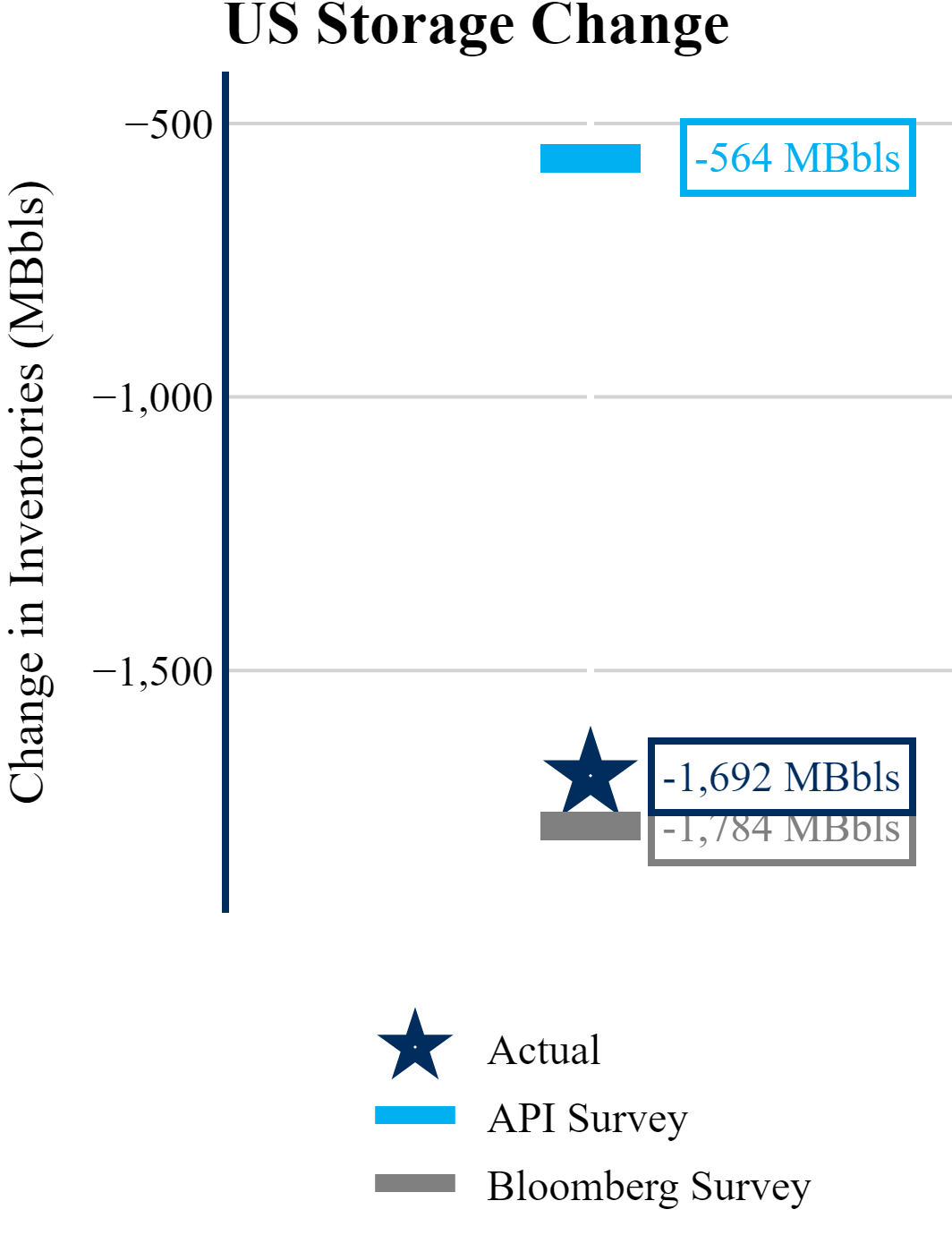
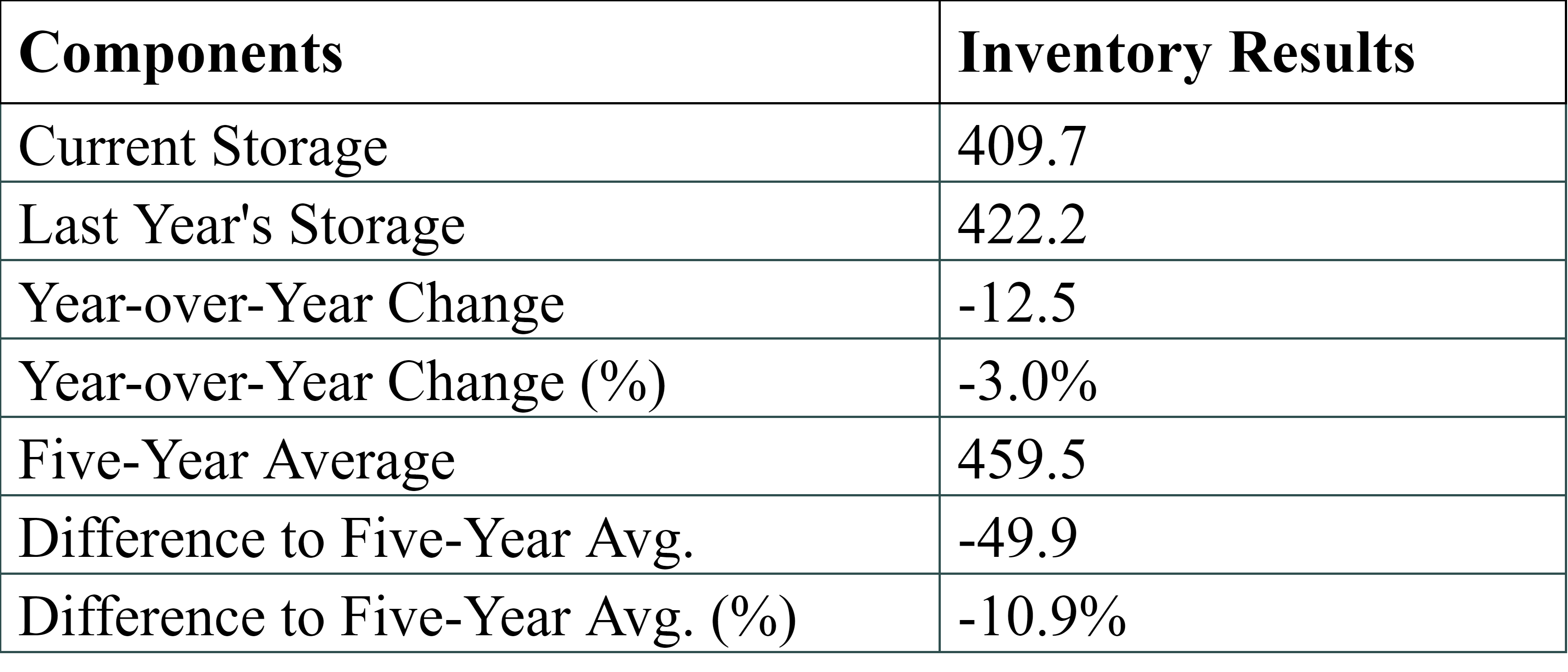
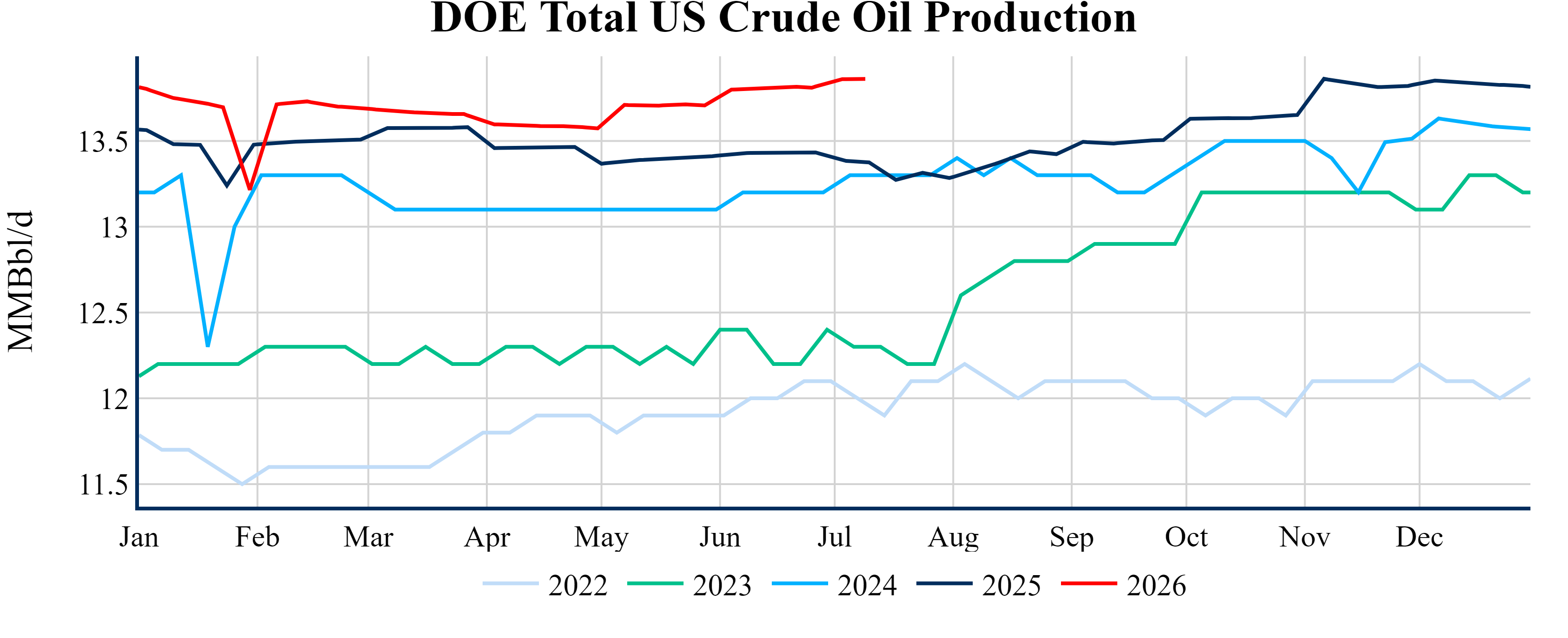
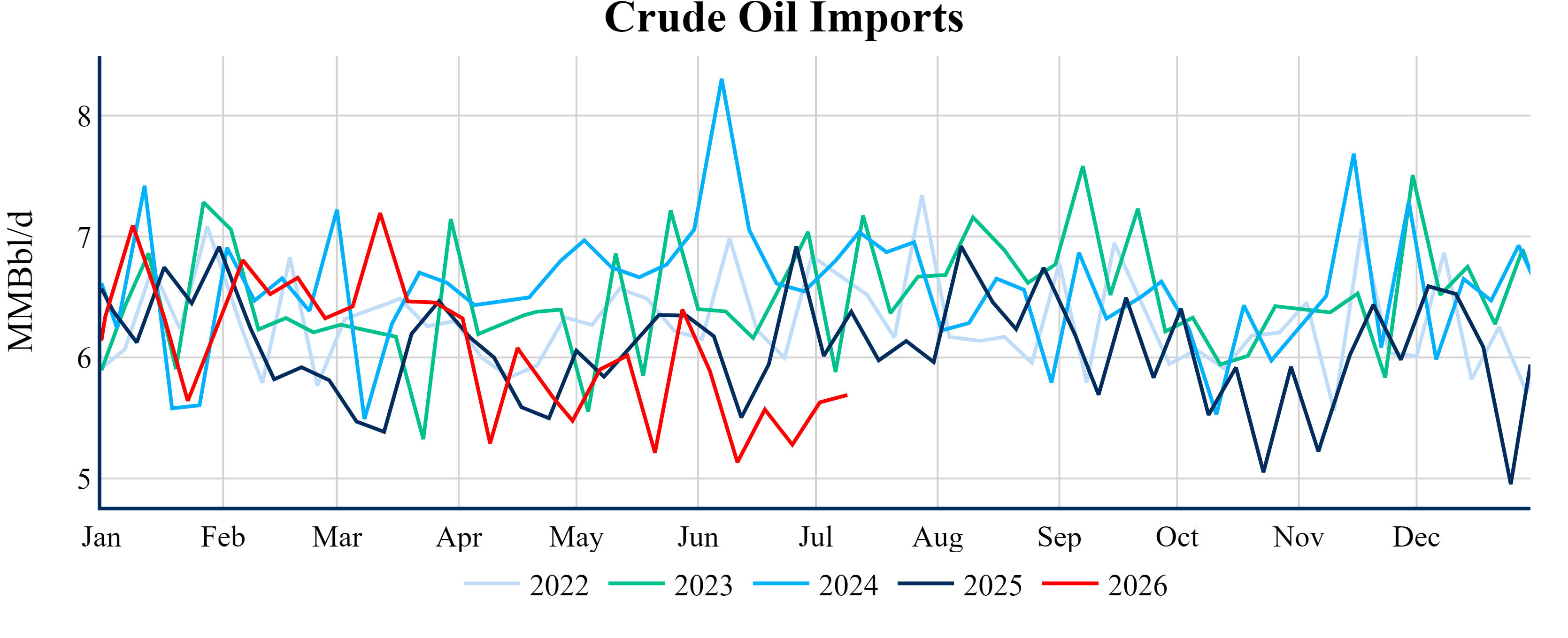
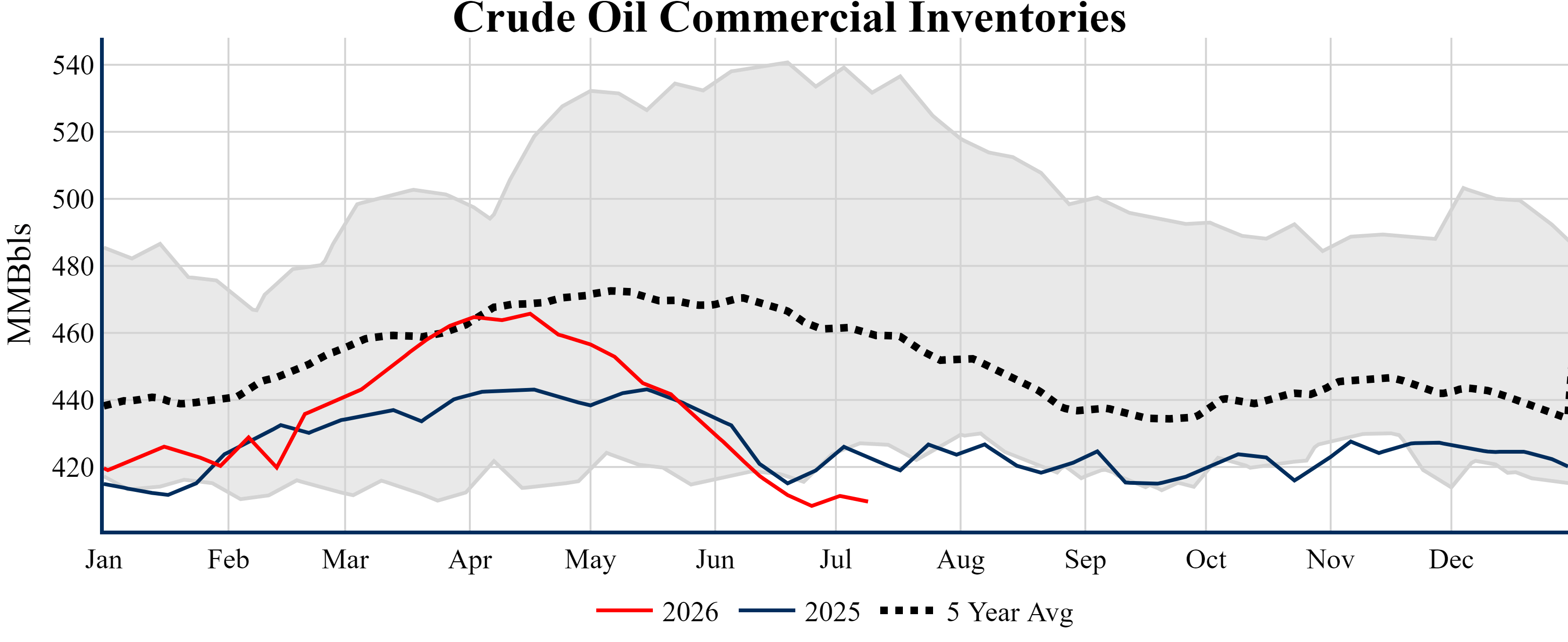
The EIA reported a draw of 1,692 MBbls in U.S. crude-oil inventories, slightly smaller than the Bloomberg consensus of -1,784 MBbls, bringing commercial stocks to 409.7 MMBbls. Inventories now sit 12.50 MMBbls below last year and 49.90 MMBbls below the five-year average. The persistent deficit reflects refiners pulling crude out of storage faster than it is being replaced, with runs holding near seasonal highs while import volumes continue to track well below last year’s pace.
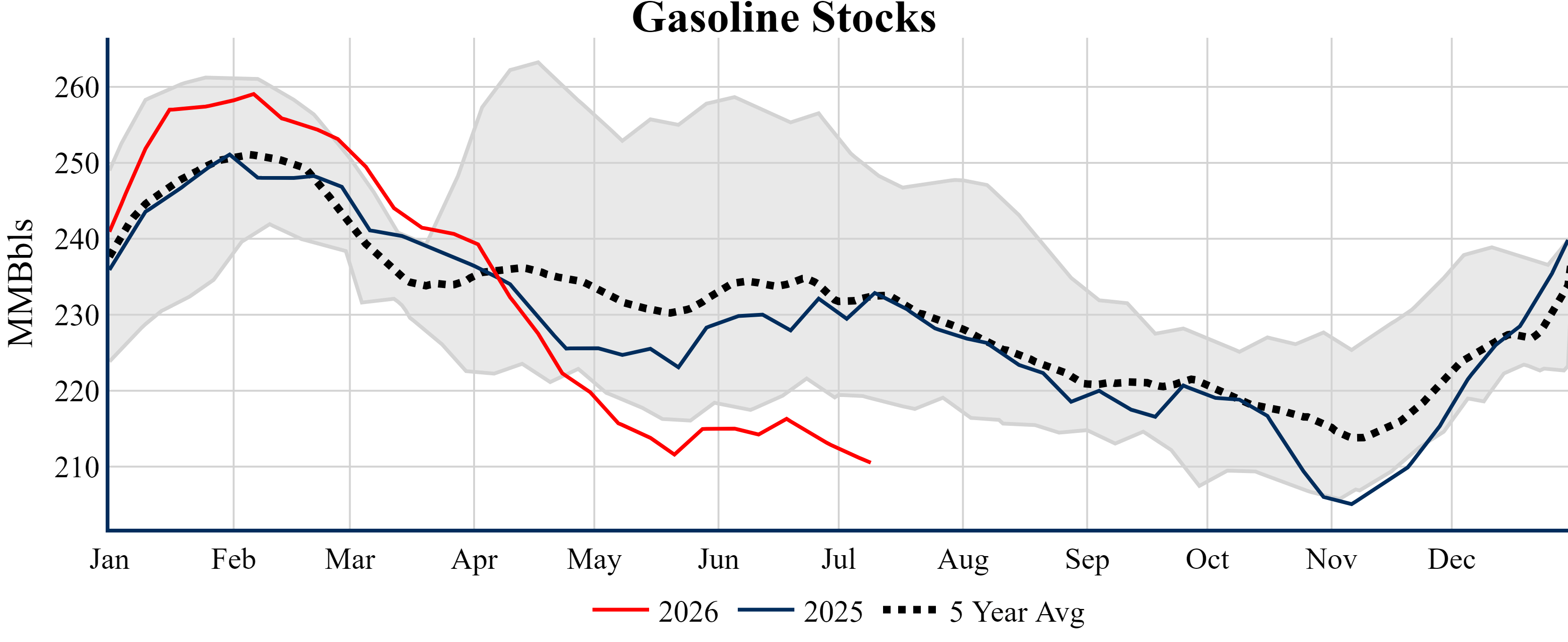
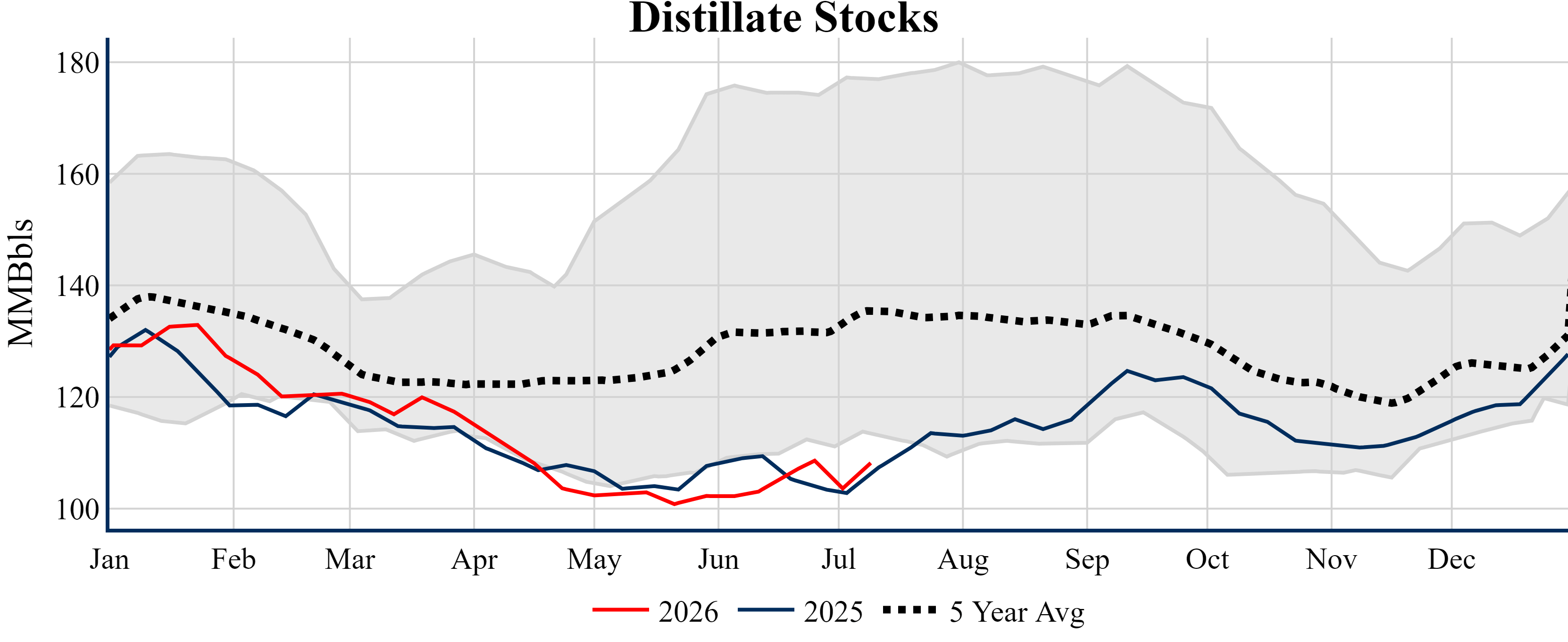
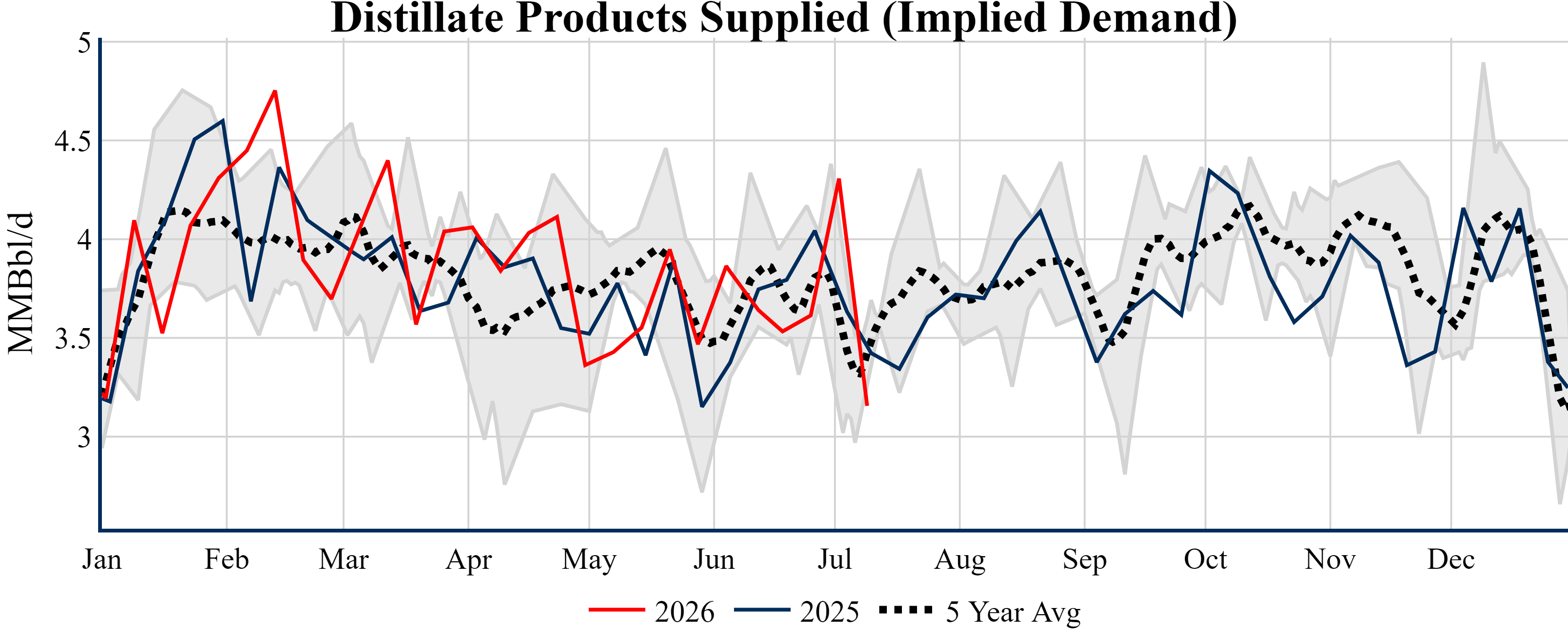
On the products side, gasoline stocks fell 1.5 MMBbls and remain below the five-year average, with both finished gasoline and blending components lower. Production eased just as driving-season demand held firm, leaving refiners drawing down inventory to keep pace with summer consumption. Distillate moved the other way, building 4.6 MMBbls, the largest single product build of the week, though stocks remain below the five-year average. Strong refinery runs are producing diesel faster than soft domestic demand can absorb it, allowing a slow rebuild of what is still a thin inventory cushion heading toward winter.
Thanks for reading AEGIS ! Subscribe for free to receive new posts and support my work.
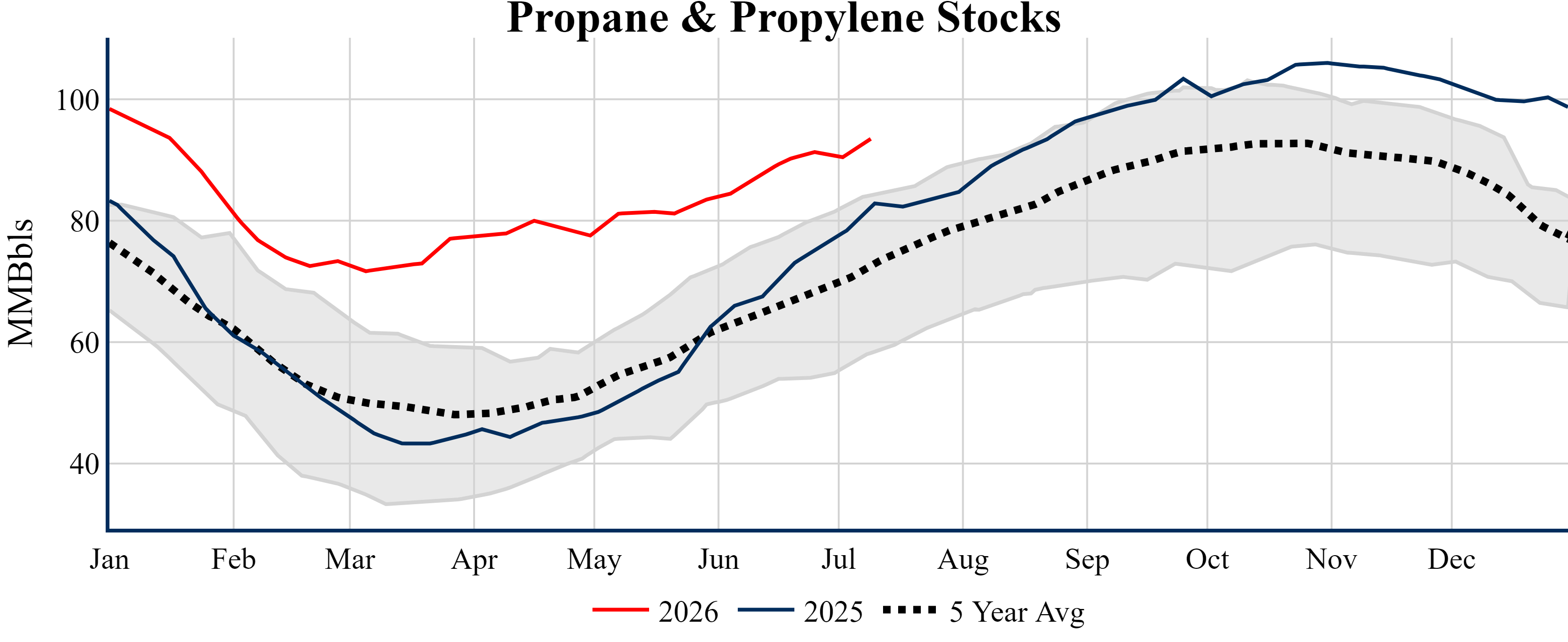
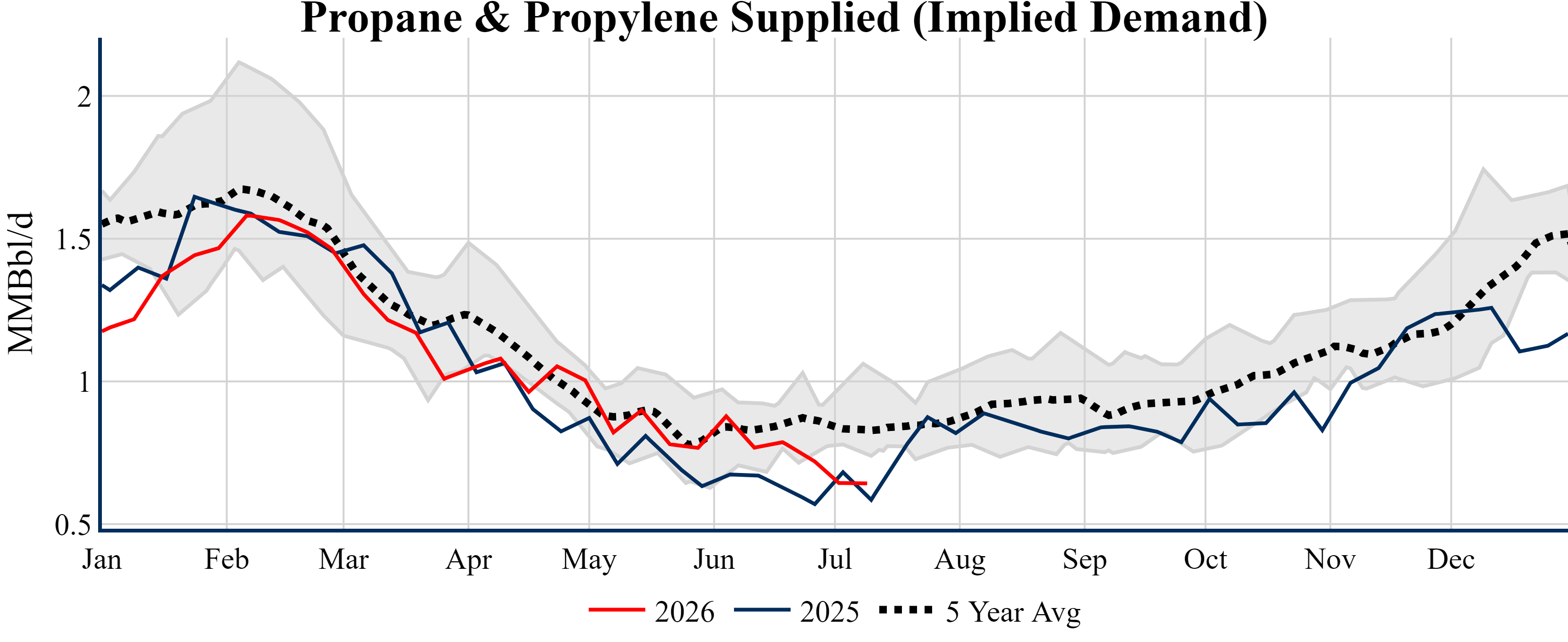
Propane/propylene stocks added another 3.0 MMBbls and now stand well above the five-year average, the loosest inventory position in the complex. Mid-summer is the seasonal injection window, and with heating demand dormant and steady supply flowing from gas processing, the surplus continues to widen. Taken together, builds across distillate, propane, and other products pushed total commercial petroleum inventories up 13.3 MMBbls despite the crude and gasoline draws — a quiet loosening on the product side that the bullish crude headline can mask.
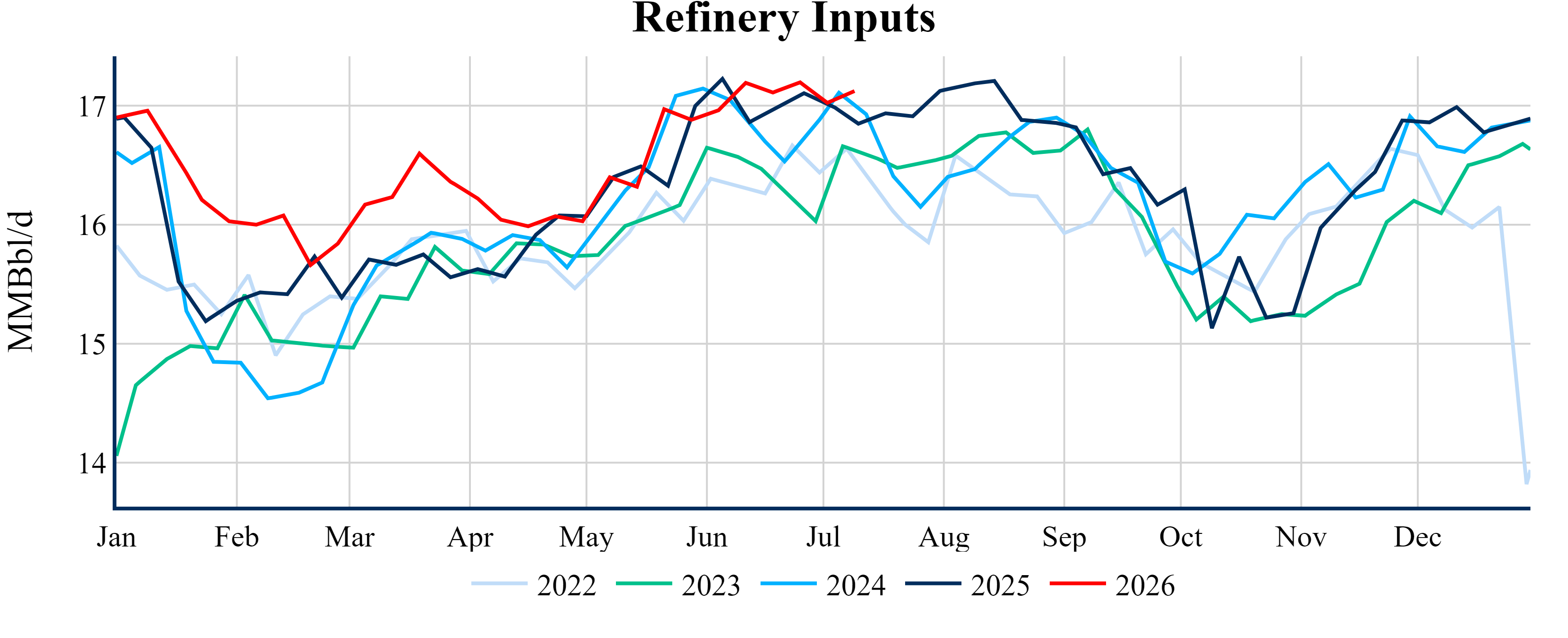
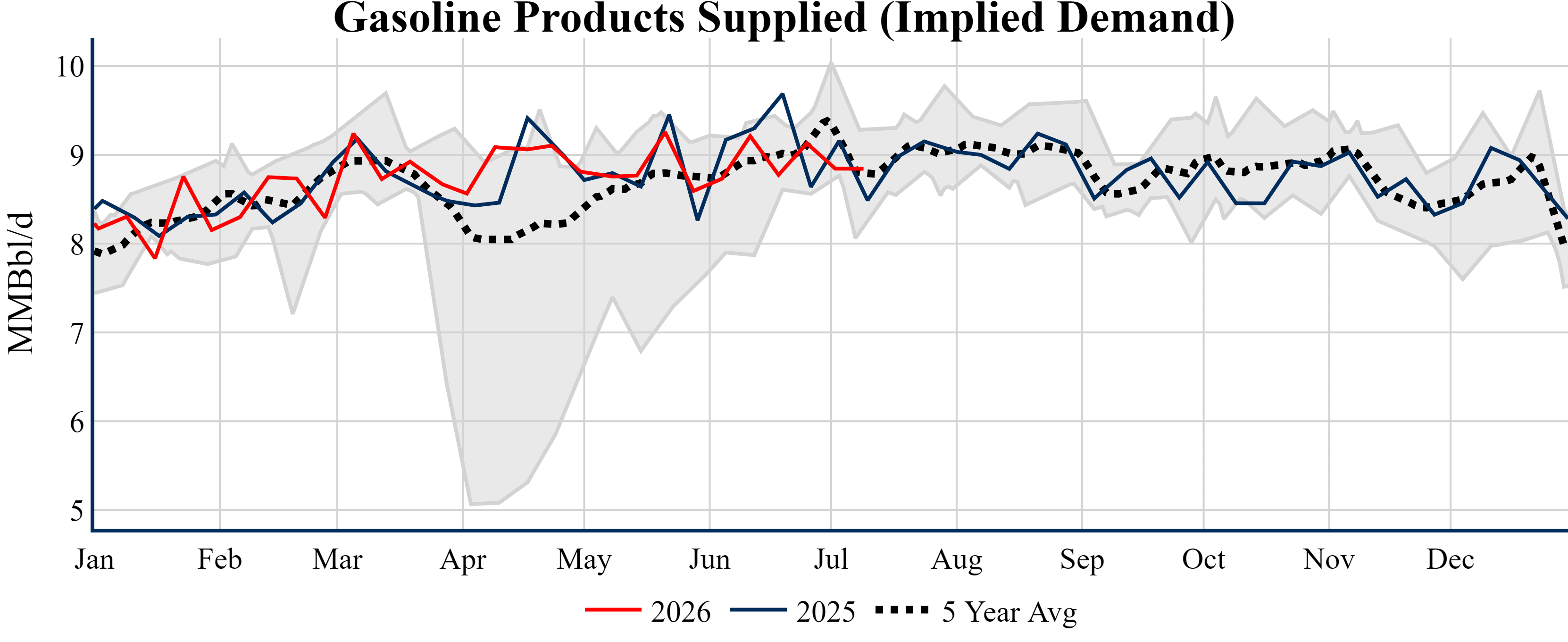
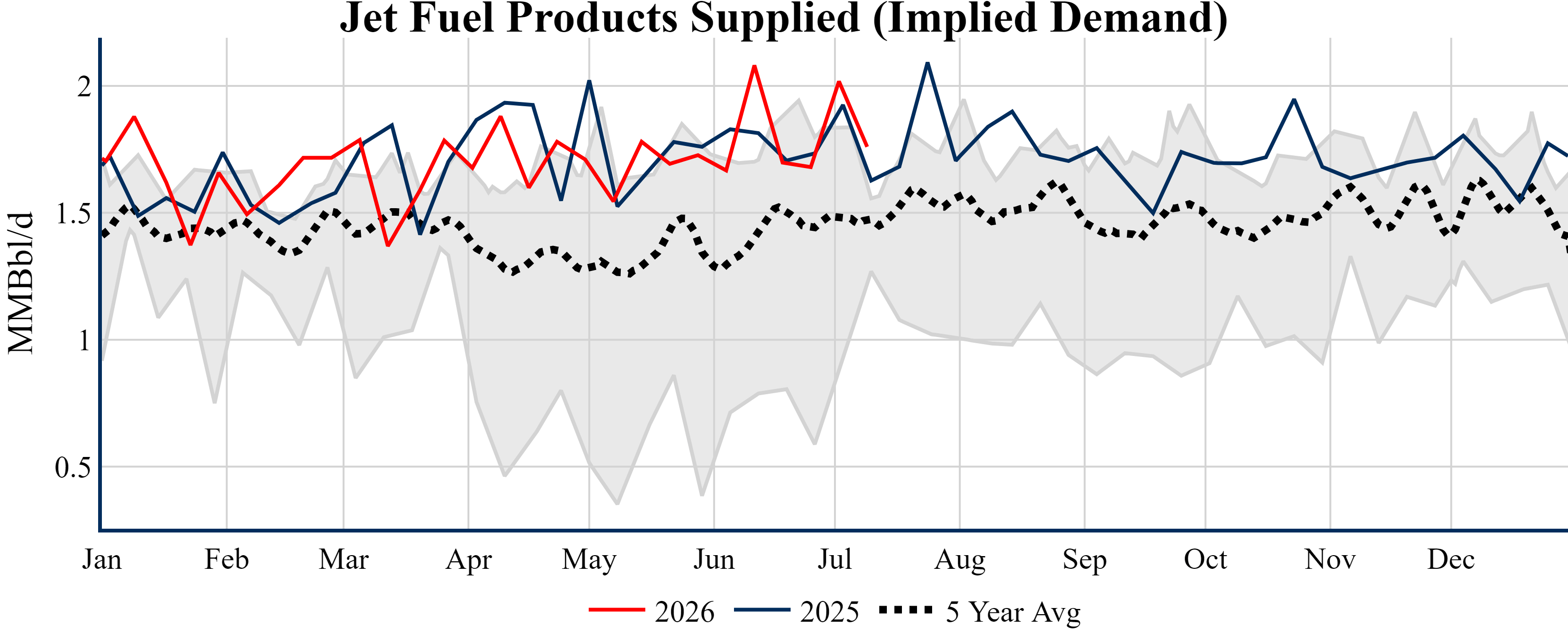
Refinery crude inputs climbed to 17.1 MMBbl/d, up 99 MBbl/d week-over-week and near the top of the historical range for this time of year, as refiners run close to full rates to capture peak gasoline season while rebuilding low distillate stocks. Demand, meanwhile, remains steady but unspectacular: total product supplied averaged 20.3 MMBbl/d over the past four weeks, roughly flat with last year, with road fuels modestly lower and jet fuel higher. The softness in gasoline and diesel consumption likely reflects trimmed discretionary fuel use, while continued growth in air travel keeps jet demand on an upward path.
Commodity Interest Trading involves risk and, therefore, is not appropriate for all persons. Past performance is not necessarily indicative of future results. Neither this trading advisor nor any of its trading principals offer a trading program to clients, nor do they propose guiding or directing a commodity interest account for any client based on any such trading program.
The “Hedging Advisory Firm of the Year” and “OTC Trading Platform of the Year” awards were presented to AEGIS CTA, LLC and AEGIS SEF, LLC (d/b/a AEGIS Markets), respectively, by Energy Risk, a publication owned by Infopro Digital. These awards are part of the Energy Risk Awards program, which recognizes excellence in commodity trading, risk management, and related services. Award recipients are selected based on editorial judgment, industry nominations, and a review of company performance, innovation, and client feedback.
The “Top Workplaces” award was presented to AEGIS by the Houston Chronicle based on anonymous employee survey results conducted by Energage. Rankings are determined by comparing employee feedback against benchmarks for workplace culture and employee satisfaction.
Statements describing AEGIS as the leading revenue intelligence platform and/or a global leader in hedging technology and solutions (and similar claims) reflect AEGIS’ opinion. These views are based on a combination of industry awards and recognition, the company’s unique technology capabilities, and internal market analysis.
Thanks for reading AEGIS ! Subscribe for free to receive new posts and support my work.
Comments
Nothing yet. Say the first thing.
Sign in to join the conversation.