
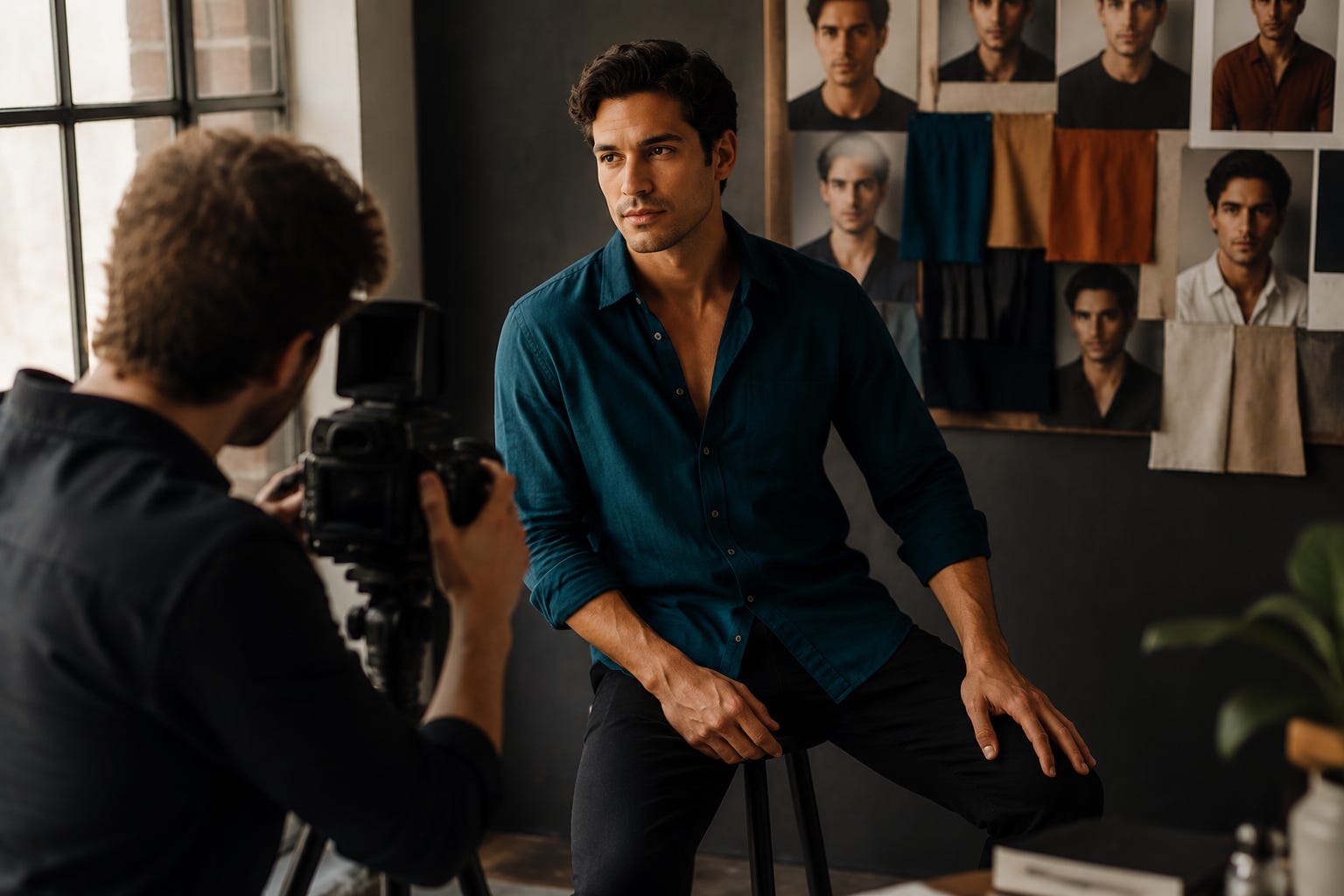
Most actors spend more time choosing a shirt than choosing a strategy. They show up to a $600 shoot hoping the photographer will “capture them,” and they walk out with gorgeous, expensive photos that casting directors scroll right past. After many years on both sides of the casting table, I can tell you the difference between headshots that book and headshots that merely flatter usually comes down to one thing: the brief.
This isn’t about being bossy or micromanaging an artist. It’s about showing up as a collaborator who knows exactly what they’re selling.
Thanks for reading Advice For Actors! Subscribe for free to receive new posts and support my work.
Start With Your Type, Not Your Outfit
Before you even email a photographer, you need to know what you’re selling. I tell my coaching clients this constantly: casting directors aren’t shopping for “you.” They’re shopping for a problem-solver who fits a slot in their breakdown.
Your castable brand is the intersection of:
How you actually read on camera (age range, energy, vibe)
The roles you’ve already been called in for
The roles you could book if you had the right shot
Sit down and write out three or four specific archetypes. Not “leading man” — that’s lazy. I mean: “the slightly burnt-out ER doctor who still cracks jokes,” “the type-A younger sister who runs everyone’s lives,” “the deadpan IT guy who’s secretly the smartest in the room.”
That level of specificity is what your photographer needs. “Book me commercial work” tells them nothing. “I want warm, approachable mom-of-toddlers commercial spots and grounded indie-film best-friend roles” tells them everything.
If you can’t describe your type in one sentence to a stranger, your headshot can’t describe it either.
Lead the Brief With the Business Goal
Here’s the move almost nobody makes: open your brief with why you’re shooting, not what you want it to look like.
When I email a photographer now, the first line is something like: “My goal for this session is two looks I can submit for grounded procedural TV — network drama guest stars, detective, lawyer, doctor — and one warm commercial look for family, insurance, and pharma spots.”
That single sentence reframes the entire shoot. Your photographer stops guessing and starts solving a problem alongside you. Lighting, expression coaching, even how they direct your micro-expressions — all of it shifts when they know what the photo has to do out in the world.
Compare that to “I want natural-looking shots that show my personality.” Every photo on Earth claims to do that. It’s the headshot equivalent of “I’m a hard worker” on a résumé.
What to Actually Communicate to Your Photographer
Once your business goal is clear, get specific about the deliverables. Here’s the checklist I hand every actor I coach.
🎯 1. Looks and Roles
List each “look” you want and tag it to a casting category:
Look 1 — Commercial warm: approachable mom, friendly neighbor, pharma patient
Look 2 — Theatrical grounded: detective, prosecutor, journalist
Look 3 — Theatrical edgier: stressed exec, cynical reporter, antagonist
🎯 2. Vibe and Energy
Use feeling words. “Quiet authority.” “Warm but a little guarded.” “Mischievous.” Photographers are visual people, but they read humans for a living — give them emotional direction, not just technical notes.
🎯 3. Expression and Eyes
This is the part actors botch most. A headshot lives or dies on what’s happening behind the eyes. Tell your photographer you want to play an active thought, not a frozen smile.
I literally give myself a line of dialogue or a secret before each frame — something like “I know you’re lying and I’m about to let you keep talking,” or “you just made me laugh and I’m trying not to show it.” Ask the photographer to call out when your eyes go dead. The good ones do this on instinct. If they don’t, prompt them.
🎯 4. Wardrobe — Solid Colors, Always
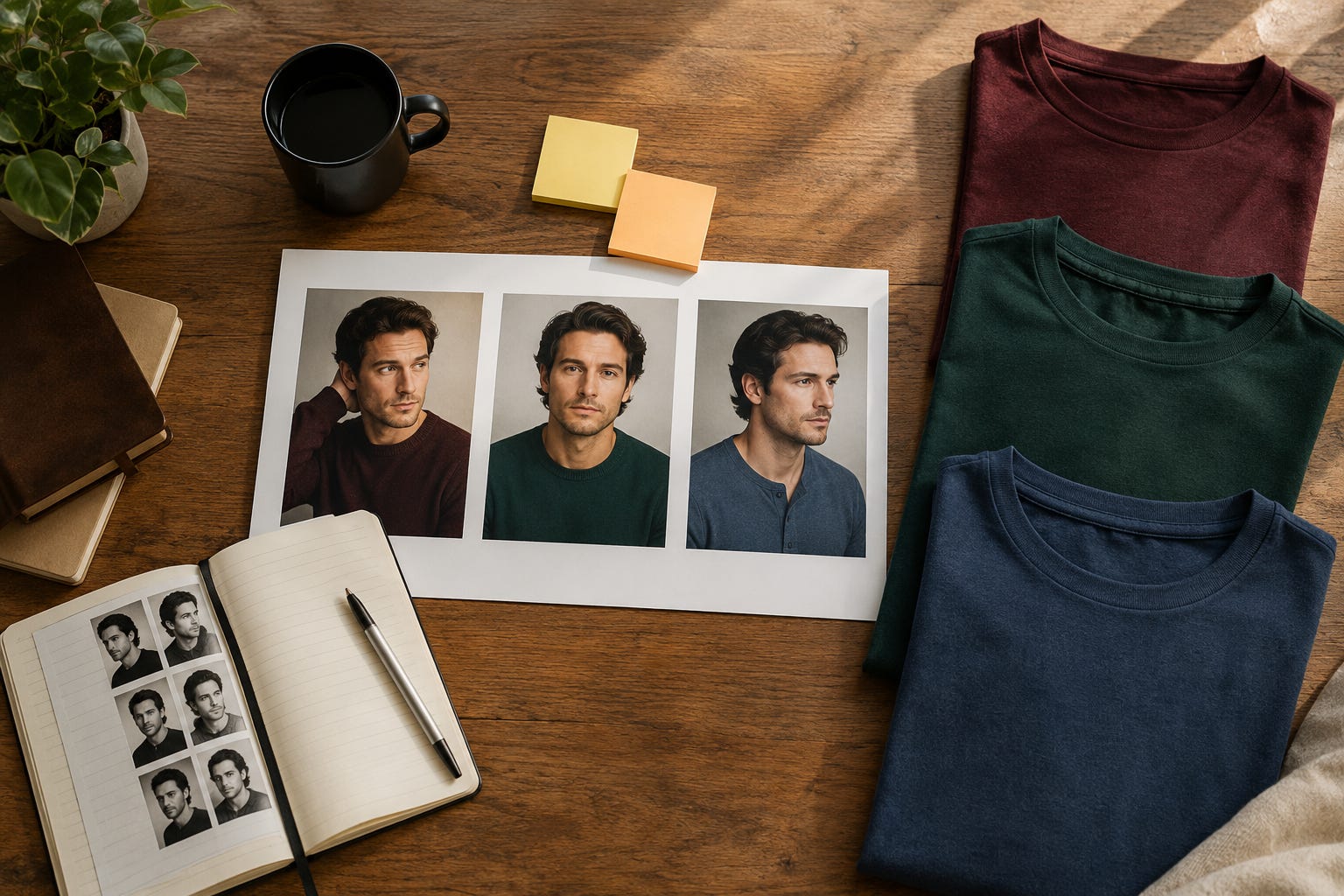
Solid colors in jewel or earth tones. No logos, no busy patterns, no trendy necklines that will date the shot in eighteen months. Bring more than you need — six to eight tops, varied in color and collar.
Wardrobe Element Rules:
Color
✅ Burgundy, forest, slate, mustard, navy
🚫 Neon, pure white, pure blackPattern
✅ Solid
🚫 Stripes, plaid, logosFit
✅ Tailored, not baggy
🚫 Oversized, low-cutTexture
✅ Cotton, knit, light texture
🚫 Shiny, satin, sequins
Bring Reference Images — But Be Smart About It
References are the fastest way to get on the same page as your photographer. There’s a right way and a very wrong way to do it.
The wrong way: sending 40 photos of models with perfect lighting and saying “this vibe.”
The right way: sending three to five actor headshots — not fashion shots, not influencer selfies — that match the casting category you want to hit. Then annotate them:
“I love the eye intention here — feels like she’s about to speak.”
“This is the wardrobe energy for Look 2.”
“This lighting feels too soft for my theatrical look; I want more shadow.”
Pull references from working actors in your range on IMDb or agency rosters. That tells your photographer “this is the market I’m competing in” — which is the whole point.
Vanity Photos vs. Casting-Ready Photos
This is the conversation I have with nearly every actor who hates their last session.
A vanity photo is technically beautiful. The lighting is dreamy, your skin looks airbrushed, you look five years younger than you are. You love it. Your mom loves it. You post it.
A casting-ready photo looks like you on your best ordinary day — like you’d look walking into the audition room. It has a specific person behind the eyes, a character the casting director can drop straight into their breakdown. It might not be your prettiest photo. It’s your most bookable one.
Casting directors don’t book photos. They book the person they believe will walk through the door. Your headshot is a promise — keep it.
Two signs you’re drifting into vanity territory:
You’re retouching out the things that make you specific. Freckles, smile lines, the asymmetry in your eyebrows — those are you. Casting recognizes you by them.
You look like a glossier, younger, smoother version of yourself. Walk in the room and you’ll get the “we were expecting someone else” face. That’s a wasted submission.
Tell your photographer plainly: “I want this to look like me on a great day, not me filtered. Retouching stays minimal — skin texture stays.”
The Vague Brief vs. The Smart Brief
Let me show you exactly what this looks like side by side.
🚫 The Vague Brief
“Hi! So excited for our shoot. I want natural, authentic photos that show my personality. I want to look approachable but also like I could play serious roles. I’ll bring a bunch of outfits and we can figure it out on the day. Whatever you think looks best!”
What the photographer hears: “I have no plan. Please make decisions for me and hopefully I’ll like them.”
✅ The Smart Brief
“My goal is to submit for grounded one-hour drama guest stars (detective/lawyer/doctor) and warm commercial work (mom, neighbor, healthcare). Three looks: (1) Commercial warm — soft natural light, light knit in cream or dusty rose, open smile with an active thought behind it. (2) Theatrical grounded — harder light, navy or charcoal collar, quiet authority, not smiling, eyes carrying a specific intention. (3) Theatrical edgier — moodier light, dark jewel tone, slight tension, the ‘I know something you don’t’ energy. Minimal retouching — keep my skin texture and freckles. Call me out if my eyes go dead between setups.”
Same person. Same money. Completely different shoot — and a completely different audition rate afterward.
What to Avoid
A few quick traps I see actors fall into:
🚫 Don’t book a photographer because their feed is pretty. Book the one whose work books actors in your range. Ask for examples.
🚫 Don’t shoot too many looks. Three strong looks beat seven mediocre ones. Casting wants clarity, not range-as-confusion.
🚫 Don’t bring a friend who’ll make you self-conscious. Bring no one, or someone who knows your work and your type.
🚫 Don’t load up on coffee right before. Jittery eyes read on camera. Water and a real meal.
🚫 Don’t over-direct on the day. Brief beforehand, then trust the room. The brief is the strategy; the shoot is the play.
Walk In Like You Mean It
Briefing your photographer well isn’t about controlling the artist. It’s about respecting the truth that this is a business meeting disguised as a photo session. The photographer is your collaborator. The photos are your sales tool. The casting director is your customer. Align all three around a specific, honest version of your castable self, and the shots stop being merely pretty and start being profitable.
Your action list for this week:
Write your three or four castable archetypes in one sentence each.
Draft your brief with the business goal in the first line.
Pull three to five annotated reference shots from working actors in your range.
Plan wardrobe in solid jewel and earth tones, tailored fit.
Prep two or three internal thoughts to play behind your eyes for each look.
So here’s my question for you: if a casting director saw your next headshot with no name attached, what exactly would they think you play — and is that the career you actually want? Sit with that one before you book the shoot. Then go build the brief that answers it.
Thanks for reading Advice For Actors! Subscribe for free to receive new posts and support my work.
Comments
Nothing yet. Say the first thing.
Sign in to join the conversation.